
Reviewed · COOKING CLASSES
Asakusa Classic Ramen & Crispy Gyoza Cooking Class
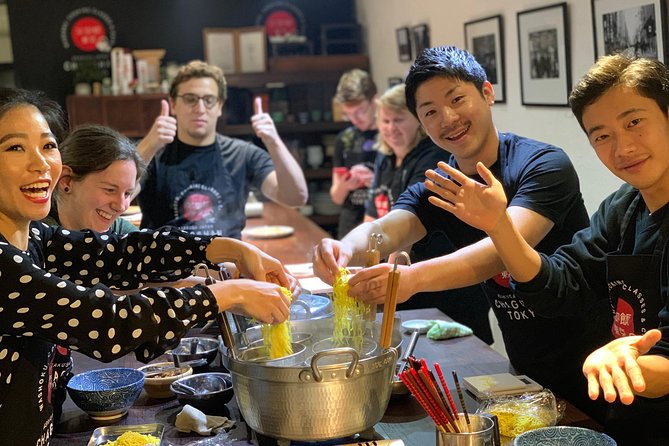
Good ramen begins long before the first slurp. This three-hour Asakusa class gives you two especially useful wins: you learn to fold crispy gyoza by hand, and you finish by assembling a photogenic bowl of ramen made with a from-scratch base and broth. I also like the small size, with no more than eight people, plus the warm teaching style of Masa and Junko. The main consideration is that the ramen is a serious project, so you will learn the method and assemble the bowl, but the instructor handles some of the longer cooking steps.
For $167.81 per person, this is not a cheap meal. It is better viewed as a cooking lesson, a cultural introduction, and lunch or dinner rolled into one. You receive the recipes afterward, ingredients and equipment are supplied, and each person gets a generous serving of ramen and about eight gyoza. If Japanese food is a major reason you came to Tokyo, the price can make sense.
In This Review
- Five reasons this class earns a place in your Tokyo plans
- Arriving in Nishiasakusa and meeting the instructors
- The ramen lesson: flavor before the noodles
- The gyoza lesson: the most repeatable part at home
- What you eat at the end
- Teaching style, language, and atmosphere
- Is $167.81 a fair price?
- Who should book this class?
- Final verdict: book it for the lesson, not just lunch
- FAQ
- How long does the ramen and gyoza class last?
- Where does the class meet?
- What dishes will I make?
- Is equipment provided?
- Can vegetarians and vegans join?
- How many people can join the class?
Five reasons this class earns a place in your Tokyo plans
- Two Japanese staples in one session: Make ramen and gyoza instead of choosing between separate classes.
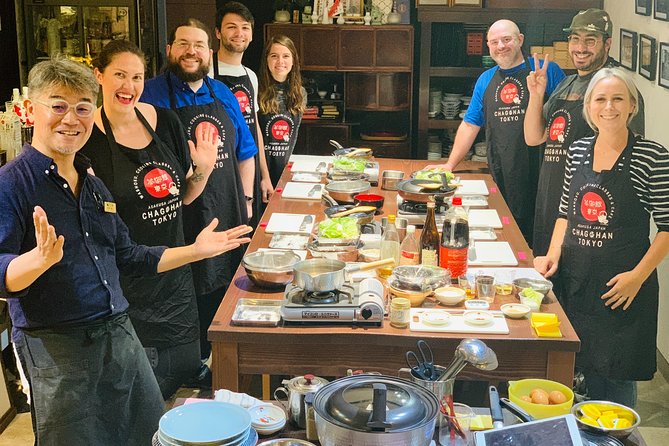
- Masa and Junko lead the class: Masa explains the food and cooking process in clear English, while Junko helps with photos and the flow of the session.
- Hands-on gyoza work: You prepare the filling, use knife skills, fold the dumplings, and learn how to make the bottoms crisp.
- A real kitchen setting: The class takes place at Chagohan Tokyo in the Kappabashi area, rather than in a private home.
- Recipes you can actually use: Gyoza is the easier dish to repeat at home, while the ramen recipe gives you a full roadmap for a more involved project.
Arriving in Nishiasakusa and meeting the instructors
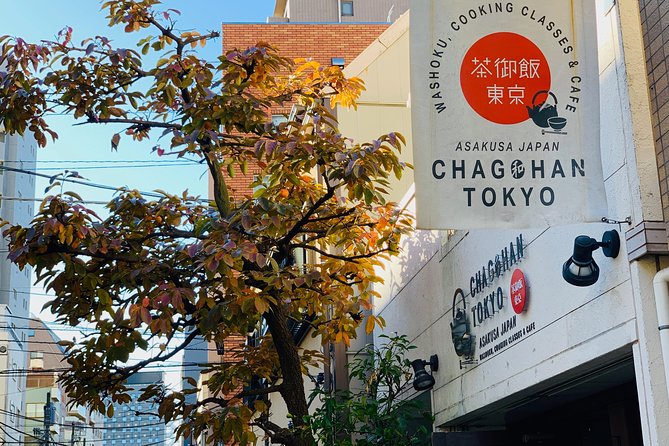
The class meets at Chagohan Tokyo, at 2-chome 17-13 Nishiasakusa, Taito City, Tokyo 111-0035. The activity starts and ends at the same location, which keeps the day simple. It is near public transportation, and the address places you in the Kappabashi area, Tokyo’s well-known kitchen and restaurant-supply district.
That setting suits the subject. You are not just learning a generic version of Japanese food in an anonymous classroom. You are cooking in an area tied to professional kitchens, cookware, knives, and restaurant culture. If you have time before or after class, the surrounding streets give you a natural extension to the food theme, though the class itself remains the main event.
Masa and Junko run the session as a couple. Their approach is friendly and organized, with Masa generally leading the demonstrations and explanations while Junko takes photographs and helps participants. The photos are a thoughtful extra, especially if you want a record of the process without stopping to document every stage yourself.
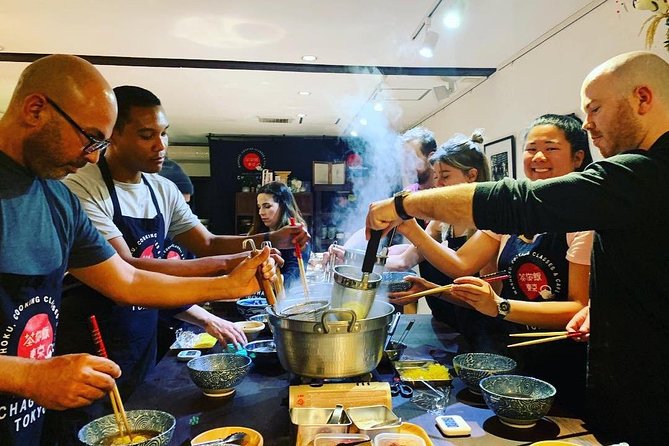
The group is capped at eight people. That number matters in a cooking class. You get enough room to work, and the instructors can watch what you are doing instead of giving a speech to a crowded room. The class suits couples, families with older children, friends, and small company groups.
The schedule offers a morning session from 10 a.m. to 1 p.m. or an afternoon session from 3 p.m. to 6 p.m. The three-hour length is an estimate, so allow a little flexibility around the start and finish.
More Cooking Classes in Tokyo
- Sushi Making Tokyo Roll and Authentic Japanese Sushi Class
★ 5.0 · 3,971 reviews - Tokyo: Roll and Authentic Sushi Making Class in Asakusa
★ 4.9 · 1,957 reviews - Tokyo Shinjuku Chopsticks Making Class
★ 5.0 · 1,763 reviews
The ramen lesson: flavor before the noodles
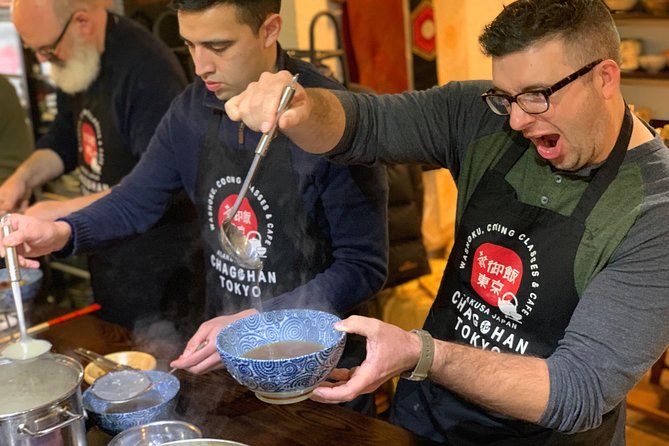
The ramen portion begins with the foundation: the base and broth. You learn how the components create flavor, how toppings fit into the bowl, and why a good ramen bowl is more than noodles placed in soup.
The class focuses on shoyu ramen, a soy-sauce-based style. You are introduced to different kinds of ramen and the ingredients behind a flavorful bowl. Masa also provides background on ramen and Japanese cooking, so the session is not simply a set of instructions. You get some context for the dish you are preparing and the techniques behind it.
One important point is that the ramen process is not equally hands-on at every stage. The broth involves many steps and takes time. You can expect clear explanations and demonstrations, then take part in preparing elements and assembling the final bowl. The longer cooking work is handled by the chef while he explains what is happening.
That is both a strength and a limitation. It means you can enjoy a proper bowl within a three-hour class instead of waiting half a day for stock to develop. But if your main goal is to personally make every part of ramen from raw ingredients, this will not be a fully independent ramen workshop.
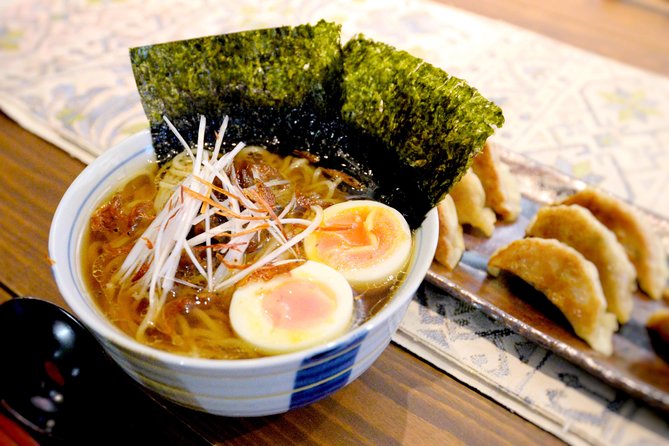
At the end, you assemble the bowl. This is where the separate pieces come together: broth, noodles, and toppings arranged into something that looks as good as it tastes. The final bowl is generous, and the meal gives you a satisfying payoff after the preparation.
I like this structure for first-time cooks. Ramen can look simple from the outside, but a real broth has plenty of moving parts. The class gives you a practical understanding of the process without pretending that a complex stock can be reduced to a five-minute trick.
The gyoza lesson: the most repeatable part at home
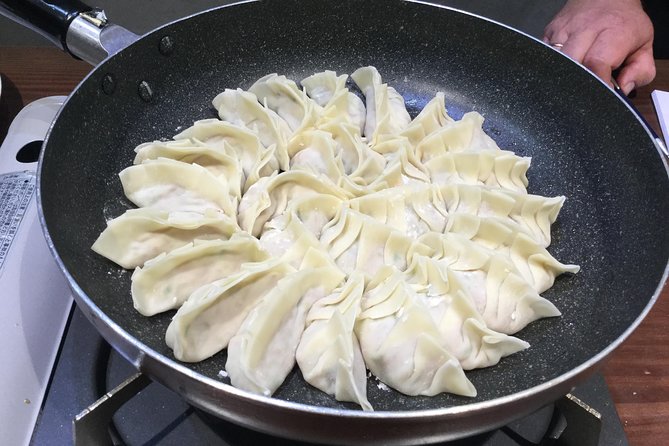
The gyoza work is more hands-on and probably the most useful part for your home kitchen. You prepare the filling, cut vegetables using Japanese kitchen techniques, and fold the dumplings yourself.
The folding takes practice, but the instructors guide you through it step by step. You learn how to create dumplings that are juicy inside and crisp underneath. The cooking method is central here. The aim is not merely to brown the wrappers, but to produce that pleasing contrast between a tender filling and a crunchy base.
Each participant receives around eight gyoza, according to the class details provided by the instructors. That is enough to make the folding worthwhile and enough to form a proper part of the final meal.
Several people find this portion easier to repeat than the ramen. You can make gyoza at home without recreating a long broth process, and the recipe gives you a reference after the class. If you already make Chinese dumplings, the basic idea will feel familiar, but the class can still teach you useful differences in filling, folding, and crisping.
There is knife work during the preparation, so families should think about the age and confidence of their children. The class welcomes families, but younger children may need close supervision. The data specifically recommends older kids because of the amount of cutting involved.
What you eat at the end
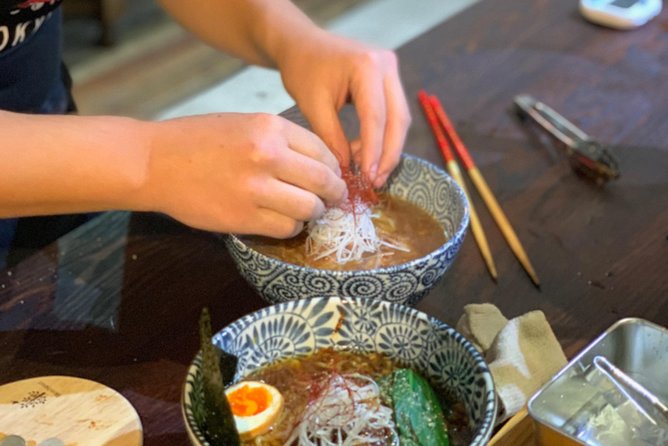
The meal is the reward, but it is also a useful test of what you learned. You sit down with your own bowl of chicken ramen and roughly eight gyoza. The food is prepared with natural ingredients, and the class does not use MSG or artificial additives.
The final meal is not a token tasting. You should expect enough food to leave full. That helps the value calculation, especially since comparable Tokyo meals can add up quickly when you are paying for lunch separately.
The ramen and gyoza also give you two different measures of success. The gyoza shows what you personally shaped and cooked. The ramen lets you see how a more complex dish is assembled and balanced. You may feel more confident reproducing the dumplings than the soup, but you still leave with a useful recipe and a clearer idea of what authentic preparation involves.
The food also photographs well. The finished ramen bowl is deliberately assembled to look appealing, and Junko takes photos throughout the class. If you enjoy food photography, this is a pleasant bonus rather than a staged photo stop.
A completely different kind of day out:
- Tokyo Disney Resort – Tokyo Disneyland & Tokyo DisneySea Park Tickets
★ 4.8 · 99,488 reviews - SHIBUYA SKY Ticket
★ 4.7 · 46,509 reviews - JR Whole Japan Rail Pass
★ 4.8 · 29,150 reviews - Mt Fuji and Hakone 1-Day Bus Tour Return by Bullet Train
★ 5.0 · 26,383 reviews
Teaching style, language, and atmosphere
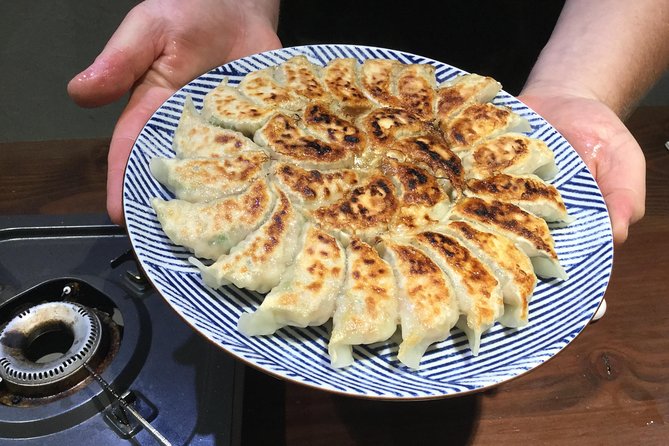
The strongest part of this experience is the instruction. Masa speaks excellent English and explains the steps clearly, with humor and cultural background along the way. Junko adds a welcoming presence and helps capture the event in photos.
The couple’s small-business approach gives the class a personal feel without requiring you to enter someone’s private home. One useful distinction is that this is a proper kitchen setting. If you prefer learning in a dedicated cooking space with an organized work area, this arrangement may feel more comfortable than a home-based lesson.
The class is pitched at beginners, but experienced cooks can still ask questions. Instructions are demonstrated rather than rushed, and the group size allows the hosts to correct technique as you work.
That said, an intimate class is not the same as private tuition. With up to eight participants, you will share attention and workspace. The experience should still feel manageable, but exact hands-on time can vary depending on the group and the pace of the class.
Is $167.81 a fair price?
The cost is $167.81 per person, which puts this well above the price of ordering ramen and gyoza at a restaurant. If you only want to eat these dishes, go to a good ramen shop and save your money.
The price becomes more reasonable when you count what is included:
- About three hours of instruction
- A small group capped at eight people
- Ramen and gyoza preparation in one class
- Ingredients, apron, and utensils
- A full meal at the end
- Digital recipes for making the dishes later
- Photos taken during the experience
- Cultural and cooking background from the instructors
The recipes are especially important. A cooking class has limited value if the lesson disappears from memory the moment you leave. Here, you have written instructions to consult at home. Gyoza should be the practical first project. Ramen will take more planning, patience, and ingredients, but the class gives you a detailed starting point.
I would call the value good for food-focused visitors who want participation rather than another restaurant meal. It is less attractive for anyone traveling on a strict budget or for people who have little interest in cooking.
Who should book this class?
You are a strong match if you love ramen, regularly order gyoza, or want a Tokyo activity that connects food with technique and culture. Couples and friends can enjoy the shared preparation, while families with older children get a structured activity that is more memorable than a quick meal.
It also suits beginners. You do not need to bring an apron or utensils, and the instructors explain the work from the ground up. You can come as you are, which is helpful if this class is part of a packed Tokyo day.
Experienced home cooks may enjoy it for the Japanese perspective, the shoyu ramen method, and the gyoza technique. Just keep your expectations in line: you will not personally execute every stage of the broth from start to finish.
Vegetarian and vegan options are available with advance notice. You should arrange that before the class rather than assume it can be changed at the last minute.
The booking pattern suggests reserving early, since the experience is commonly booked about 27 days ahead. With only eight places, popular dates can disappear. Confirmation arrives within 48 hours of booking, subject to availability.
The cancellation terms are strict. The booking is non-refundable and cannot be changed for any reason. If poor weather or an insufficient minimum group causes the provider to cancel, you can choose another date or receive a full refund. That makes it wise to check your Tokyo schedule carefully before paying.
Final verdict: book it for the lesson, not just lunch
I would recommend the Asakusa Classic Ramen & Crispy Gyoza Cooking Class if you want to understand how Japanese comfort food is made and take part in the process. The small group, excellent English instruction, and generous meal are the main reasons to choose it.
The gyoza lesson offers the most immediate home-kitchen payoff. The ramen portion is more involved, and you will watch the chef complete some of the longer broth work, but that is a realistic way to learn a dish that cannot be rushed.
Book it if you value a warm, personal class with Masa and Junko, want recipes to take home, and can justify the price as both an activity and a meal. Skip it if you only want the cheapest bowl of ramen in Tokyo, or if you need a fully hands-on course where you prepare every part independently.
FAQ
How long does the ramen and gyoza class last?
The class lasts approximately three hours. The morning session runs from 10 a.m. to 1 p.m., and the afternoon session runs from 3 p.m. to 6 p.m. The exact duration may vary slightly.
Where does the class meet?
The class meets at 茶御飯東京 Chagohan Tokyo, 1F, 2-chome 17-13 Nishiasakusa, Taito City, Tokyo 111-0035. The activity ends at the same location.
What dishes will I make?
You will learn to prepare shoyu ramen, including the ramen base, broth, toppings, and final bowl assembly. You will also prepare gyoza filling, fold the dumplings by hand, and learn how to make them crisp outside and juicy inside.
Is equipment provided?
Yes. An apron and utensils are provided, and the ingredients are supplied. You do not need to bring cooking equipment.
Can vegetarians and vegans join?
Yes, vegetarian and vegan options are available with advance notice. You should request the appropriate option before the class.
How many people can join the class?
The maximum group size is eight participants. Groups of eight or more should contact the provider through the contact form.
Just added in Tokyo
- Tokyo: Shinjuku Bar Hopping & Night Walking Tour★ 5.0 · 53 reviews
- Tokyo:Samurai sword and archery class from a samurai descendant★ 5.0 · 121 reviews
- Tokyo Ultimate Daikoku & JDM Experience (R35 GTR Private Tour)★ 5.0 · 27 reviews
- Asakusa: 1400-year history exploration★ 5.0 · 155 reviews
- Authentic Geisha Performance with Dinner in Tokyo★ 4.5 · 101 reviews
- Tokyo: Asakusa Walking Tour with Japanese Comedian★ 5.0 · 43 reviews
- Tokyo Asakusa Temple & Shrine Walking Tour with Local Guide★ 5.0 · 52 reviews
- Asakusa Night Evening Walking Tour with English-Speaking Guide★ 5.0 · 16 reviews
Cooking Classes, compared.
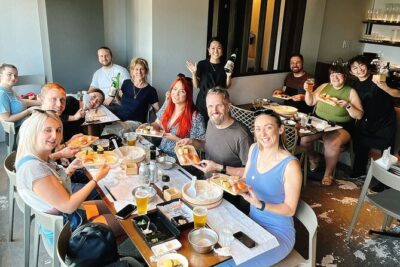
Sushi Making Tokyo Roll and Authentic Japanese Sushi Class
Read our review →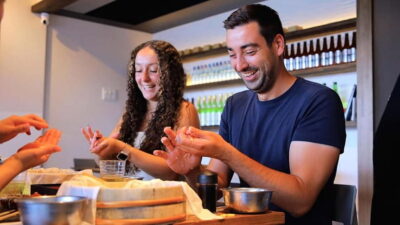
Roll and Authentic Sushi Making Class in Asakusa
Read our review →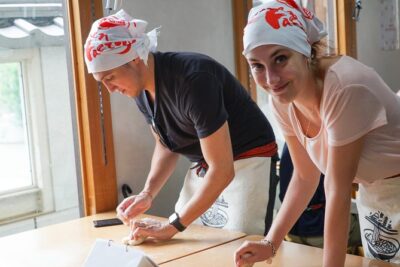
Ramen Cooking Class at Ramen Factory in Kyoto
Read our review →
Sushi Making Class in a Happi Coat near a Famous Spot
Read our review →
Sushi Making Osaka Roll and Authentic Japanese Sushi Class
Read our review →
Tokyo Sushi Making Class in Tsukiji with Professional Chef
Read our review →
Ramen & Gyoza Cooking Class in Tokyo with Local Supermarket Visit
Read our review →Browse the lists this tour appears in