Reviewed · TOKYO TOURS
Ramen & Dumpling Cooking in Tokyo with Chef/Vegan possible
A bowl of ramen becomes a memory. This two-hour Tokyo cooking class takes you beyond eating noodles in a restaurant and lets you make ramen, gyoza, fresh noodles, seasoned eggs, and colorful toppings with chef Yoshi and host Amo. I like the small group of no more than 12 people, which gives you room to ask questions and get hands-on help. I also like the personal setting in a clean Japanese home near Ekoda Station, far from the usual central Tokyo sightseeing circuit.
The main consideration is location. You will need to reach Ekoda Station in Nerima City, rather than simply walk over from a major tourist sight. Also, two hours passes quickly, and some broth and meat preparation is done ahead of time because those steps take so long. Still, at $102.41 per person, the food, instruction, recipes, and friendly cultural exchange make this a strong value for anyone who wants more than a standard restaurant meal.
In This Review
- Key Points at a Glance
- From Ekoda Station to a Tokyo Home Kitchen
- Preparing Ramen With Yoshi
- Fresh Noodles, Seasoned Eggs, and Colorful Toppings
- Folding Gyoza Like a Local
- Amo and Yoshi Make the Class Personal
- Vegetarian and Food Restriction Planning
- Is $102.41 a Fair Price?
- Morning or Noon Timing
- Who Will Enjoy This Class Most?
- Practical Booking Advice
- Should You Book Ramen and Dumpling Cooking in Tokyo?
- FAQ
- Where does the cooking class meet?
- Where does the activity finish?
- How long does the cooking experience last?
- How much does the class cost?
- What food will I prepare?
- Is the class suitable for vegetarians?
- Is a vegan option available?
- How many people can join the class?
- Can I choose a morning or noon session?
- Can I cancel for a full refund?
- When will I receive booking confirmation?
Key Points at a Glance
- Cook in a real Tokyo home: The class takes place in a cozy residential setting near Ekoda Station, giving you a look at daily life beyond central Tokyo.
- Make more than one dish: You prepare ramen, gyoza, fresh noodles, seasoned eggs, and toppings during the session.
- Learn from Yoshi and Amo: Yoshi leads the cooking instruction, while Amo helps create a warm, social atmosphere and meets you at the station.
- Small groups mean useful feedback: The class accepts a maximum of 12 people, with some sessions much smaller.
- Vegetarian adjustments are possible: Vegetarian and no-fish or no-seafood requests have been accommodated when arranged in advance.
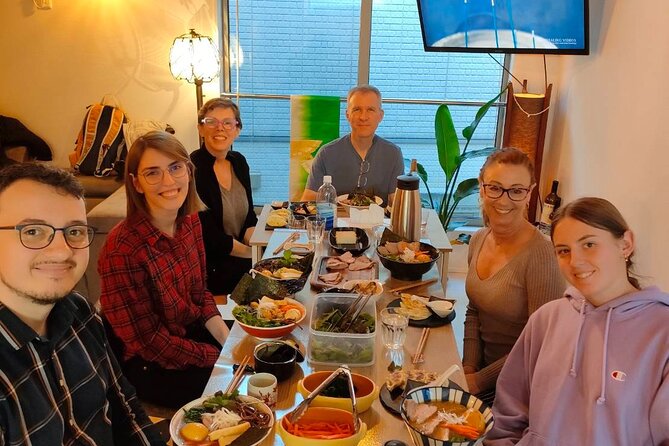
- Come hungry: The finished meal is generous, and you eat the ramen and dumplings you prepare.
From Ekoda Station to a Tokyo Home Kitchen
Your meeting point is Ekoda Station at 1 Chome-78 Asahigaoka, Nerima City, Tokyo 176-0005. The activity ends at the same meeting point, so you do not need to arrange a separate return transfer after lunch.
Amo meets participants at the station and walks them to the home. That is helpful in a residential neighborhood, where finding a private apartment entrance can be less obvious than locating a restaurant sign. One family found the train journey easy and appreciated being met at the station, though you should still allow enough time to identify your meeting point clearly.
The setting is one of the class’s best features. You are not sitting in a polished cooking studio built only for visitors. You enter a clean, comfortable Japanese home and get a glimpse of a quieter part of Tokyo. The trip out also gives you a break from the crowded shopping streets and major sights in the city center.
The tradeoff is simple: this is not the most convenient activity if your day is packed around Shibuya, Asakusa, or Tokyo Station. You will need to plan the train ride to Ekoda and return afterward. For me, that extra effort is worthwhile if you want a more local-feeling experience.
A few more options to weigh up in Tokyo
- Tokyo Disney Resort – Tokyo Disneyland & Tokyo DisneySea Park Tickets
★ 4.8 · 99,488 reviews - SHIBUYA SKY Ticket
★ 4.7 · 46,509 reviews - JR Whole Japan Rail Pass
★ 4.8 · 29,150 reviews
Preparing Ramen With Yoshi
Once you arrive, Yoshi explains how the ramen comes together. He covers local ingredients, the broth process, noodle preparation, toppings, and the choices that affect the final bowl. His background and enthusiasm for ramen give the class a practical focus rather than turning it into a quick demonstration.
The broth is a good example of what you learn and what has been prepared before you arrive. Some of the broth and meat are made ahead of time because the process is extremely time-consuming. You still learn how the broth works and how its flavor develops, but you are not spending the entire two-hour session waiting for stock to cook.
That arrangement is sensible. A class that tried to make every part from the beginning would need to last much longer. The prepared elements leave enough time for you to handle the parts that teach useful home-cooking skills, including noodles, eggs, toppings, and final assembly.
The class is hands-on, with Yoshi offering step-by-step advice and feedback as you work. You are not expected to watch quietly while a chef does everything. The small-group format matters here. If the session has only a few people, you can ask about texture, seasoning, folding, or substitutions without waiting for a large crowd to catch up.
Fresh Noodles, Seasoned Eggs, and Colorful Toppings
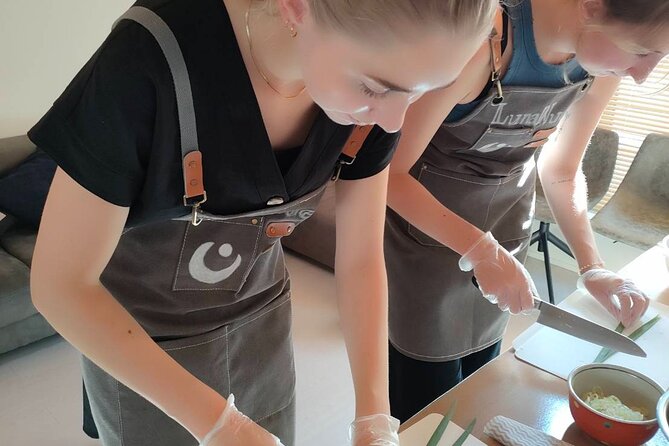
Making the noodles is one of the most memorable parts of the class. You work with fresh dough and learn how the noodles fit into the finished bowl. For many people, this is the difference between an ordinary food demonstration and a real cooking lesson: you leave having practiced a technique you can try again at home.
You also prepare seasoned eggs and arrange colorful toppings. These details may look small, but they change the appearance and texture of ramen. The class shows you how separate ingredients become one balanced bowl instead of simply placing noodles into soup.
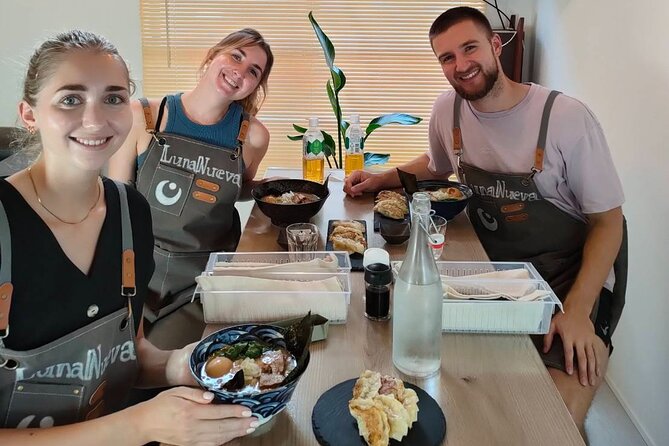
At the end, you plate the noodles, broth, eggs, and toppings yourself. This gives the meal a personal touch, since you create your own signature ramen bowl. It is also useful if you care about presentation at home. A bowl of ramen can taste good and still look untidy, so learning how to arrange it is part of the fun.
The meal is substantial. Several people specifically found it wise to arrive hungry, and that is practical advice. You will eat the ramen and dumplings you make, along with the other prepared elements. If you have a small appetite, pace yourself during the cooking because the final serving is not just a token tasting.
Folding Gyoza Like a Local
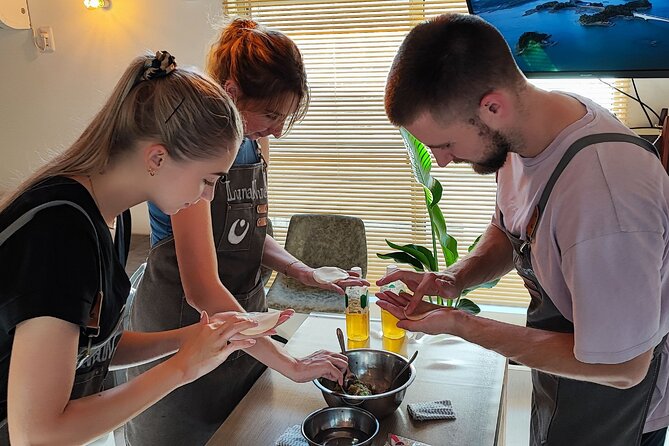
The dumpling portion adds variety to the session. You practice filling and folding gyoza, with Yoshi showing you how to handle the wrappers and shape the dumplings. Gyoza folding can look easy when someone else does it, so having a chef correct your technique is useful.
This part works especially well for families. Children around 12 and 13 have enjoyed the class, and one family with two children found that everyone could take part. The cooking gives different ages something to do at the same time, rather than asking children to sit through a long cultural talk.
You also get to eat the gyoza with the ramen. That makes the class feel like a complete meal rather than a single recipe lesson. If you already know how to make dumplings, you may find the folding section less new, but the combination of dumplings, fresh noodles, broth, and toppings still offers plenty to keep you busy.
A completely different kind of day out:
- Mt Fuji and Hakone 1-Day Bus Tour Return by Bullet Train
★ 5.0 · 26,383 reviews - TOKYO SKYTREE® Ticket
★ 4.7 · 25,136 reviews - teamLab Borderless Tickets: MORI Building DIGITAL ART MUSEUM
★ 4.7 · 24,126 reviews - teamLab Planets TOKYO Ticket
★ 4.7 · 21,663 reviews
Amo and Yoshi Make the Class Personal
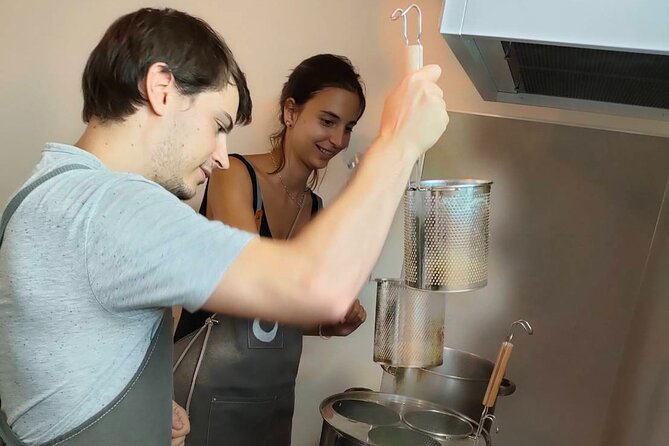
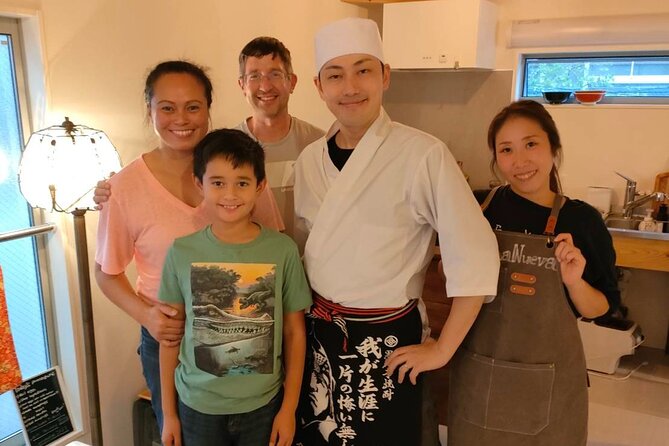
The hosts are a major reason this experience receives such strong praise. Yoshi handles the technical cooking instruction, while Amo helps welcome people, answer questions, and keep the room relaxed. Their energy is friendly without making the class feel stiff or formal.
The pair also share stories and anecdotes connected with the restaurant world and Japanese food. Those conversations add context to the ingredients and techniques. You get a chance to ask about food and Tokyo while working, rather than listening to a guide speak at you from a distance.
The tone is social. Some sessions include two small groups cooking together, which creates a chance to chat without the class becoming crowded. The maximum is 12 people, but the size can be smaller. If you want a private session, confirm the group arrangement when booking, since the stated limit does not mean every class is private.
There are personal touches, too. Yoshi has designed ramen-inspired T-shirts, and one session even included a short hip-hop lesson. These extras are not listed as guaranteed parts of the activity, so I would not book solely for them. They do show the hosts’ playful style, which comes through in the cooking itself.
Vegetarian and Food Restriction Planning
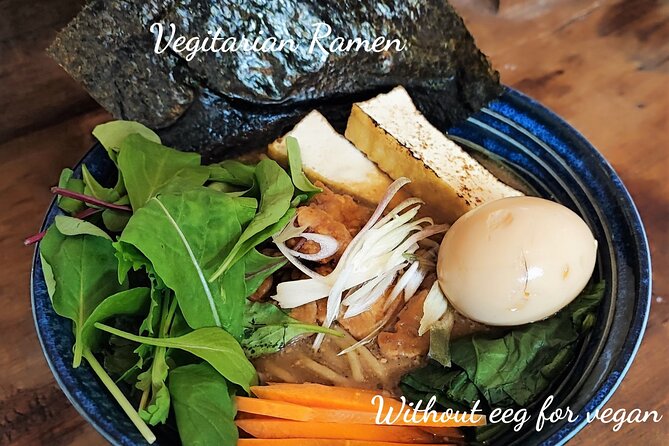
The experience is advertised as vegan possible, and the class has accommodated vegetarian and no-fish or no-seafood requests. One family had two vegetarian options prepared, while another couple received careful support for food restrictions.
You should communicate your needs in advance. The information provided does not spell out every vegan ingredient or guarantee that all requests can be met, so do not wait until you arrive. Ask the provider, Luna Nueva Japanese Cultural Experience, what substitutions are available for your particular diet.
This advance planning can make a major difference with ramen. Broth, seasoning, dumpling fillings, and toppings can contain fish, seafood, meat, or animal-based ingredients. The hosts have shown that they are willing to prepare alternatives, but the kitchen needs notice to do it well.
For a vegan or vegetarian visitor, this class may offer a more satisfying way to understand Japanese food than trying to guess ingredients at a restaurant. For strict dietary needs, get written confirmation before paying.
Is $102.41 a Fair Price?
At $102.41 per person, this is not a cheap lunch. You can eat a bowl of ramen in Tokyo for much less. The price makes sense only if you value the instruction and the setting as much as the meal.
You receive about two hours of active cooking, professional guidance, a substantial meal, access to all required ingredients, and the chance to take the recipes home. You also get a personal introduction to ramen preparation that would be difficult to reproduce by simply ordering dinner at a restaurant.
The value is strongest for couples, families, and food-focused visitors who want a lasting souvenir. A recipe you can make at home has more staying power than another restaurant receipt. Several families still prepare the ramen and dumplings after returning home, which is a good sign that the techniques are practical enough to remember.
The value is weaker if you only want to eat ramen or if your Tokyo schedule is extremely tight. You are paying for participation, conversation, and coaching. If those elements do not interest you, a restaurant meal will cost less and take less time.
Morning or Noon Timing
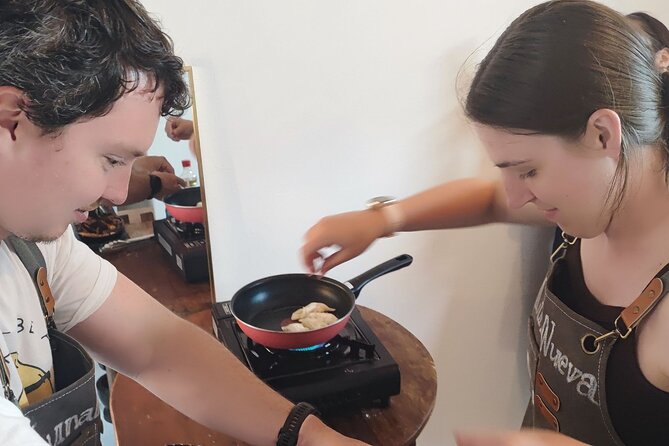
You can choose a morning or noon class. That flexibility helps you fit the activity around sightseeing, though the exact schedule should be confirmed when you book.
A morning session can work well as the main event of your day, especially if you want to visit a different neighborhood afterward. A noon class turns the experience into a hands-on lunch, with the advantage that you can arrive ready to eat.
Because the session lasts about two hours, do not schedule a major timed attraction immediately afterward unless you have included travel time from the residential neighborhood. The activity ends back at Ekoda Station, not at a central Tokyo landmark.
Who Will Enjoy This Class Most?
I would recommend this class to:
- Families with children who enjoy making food
- Couples looking for a shared activity
- Visitors who want a residential side of Tokyo
- Ramen fans curious about broth, noodles, and toppings
- People who like recipes they can recreate at home
- Vegetarians who arrange substitutions in advance
- Anyone who prefers a small, conversational class to a large demonstration
It may not suit you if you dislike group activities, want a fully private lesson, or need every part of the meal made from scratch during the session. The broth and meat are prepared ahead of time, and the maximum group size is 12.
The class also suits repeat visitors especially well. If you have already seen Tokyo’s major sights, cooking in a home near Ekoda offers a different kind of afternoon. You are not ticking off another attraction. You are learning a useful skill while spending time in an ordinary neighborhood.
Practical Booking Advice
Your booking confirmation is expected within 48 hours, subject to availability. The activity uses a mobile ticket, so keep the confirmation accessible on your phone.
Free cancellation is available if you cancel at least 24 hours before the start time. Cancellations or changes made less than 24 hours ahead are not accepted for a refund. The cut-off follows Tokyo local time, so pay attention if you are arranging the class from another time zone.
The experience is near public transportation, but the information does not provide a detailed station route beyond Ekoda Station. Check your train directions before leaving your hotel, and allow time to meet Amo at the station.
Should You Book Ramen and Dumpling Cooking in Tokyo?
I would book this if you want a friendly, hands-on food experience with a strong local feel. The combination of fresh noodles, seasoned eggs, colorful toppings, gyoza folding, and a finished bowl of ramen gives you plenty to do in two hours. Yoshi and Amo also add the warmth that turns a cooking lesson into a personal meeting.
The best reason to go is not simply the promise of good ramen. It is the chance to understand how the bowl is built, practice the techniques, and carry the recipes into your own kitchen. Book ahead if you need vegetarian or vegan adjustments, and allow extra time for the trip to Ekoda.
For a family, food lover, or couple, this is a very good use of a Tokyo morning or noon. If you only want the cheapest ramen in town, eat at a restaurant instead. If you want to make the meal, meet local hosts, and leave with a full stomach and usable skills, this class earns its price.
FAQ
Where does the cooking class meet?
The meeting point is Ekoda Station at 1 Chome-78 Asahigaoka, Nerima City, Tokyo 176-0005, Japan.
Where does the activity finish?
The class ends back at the meeting point near Ekoda Station.
How long does the cooking experience last?
The experience lasts approximately two hours.
How much does the class cost?
The listed price is $102.41 per person.
What food will I prepare?
You will practice making ramen, gyoza, fresh noodles, seasoned eggs, and colorful toppings.
Is the class suitable for vegetarians?
Vegetarian options have been prepared for participants in the past. You should provide your dietary requirements in advance.
Is a vegan option available?
The experience is described as vegan possible. Contact the provider ahead of time to confirm what can be prepared for your specific needs.
How many people can join the class?
The activity has a maximum of 12 participants.
Can I choose a morning or noon session?
Yes. The experience offers morning and noon class options.
Can I cancel for a full refund?
Yes, if you cancel at least 24 hours before the scheduled start time. Cancellations or changes made less than 24 hours before the start are not refunded.
When will I receive booking confirmation?
Confirmation is expected within 48 hours of booking, subject to availability.
Just added in Tokyo
- Exclusive Ramen Kitchen Experience★ 5.0 · 13 reviews
- Experience Award-Winning Spa Treatments in Downtown Tokyo★ 5.0 · 21 reviews
- Japanese Wine Omakase in Shibuya – Guided Tasting, Not Sake★ 5.0 · 15 reviews
- Tokyo – Grand Sumo Tournament★ 4.5 · 76 reviews
- Tokyo: Exclusive Geisha Dinner Experience★ 5.0 · 14 reviews
- Enjoy plus size Kimono★ 4.5 · 14 reviews
- Tokyo’s Authentic and Finest Taiko Drumming Workshop★ 5.0 · 22 reviews
- Hands-on Japanese Cooking in a Shinjuku Home Kitchen with Satoru★ 5.0 · 19 reviews
Tokyo Tours, compared.

Tokyo Disney Resort – Tokyo Disneyland & Tokyo DisneySea Park Tickets
Read our review →
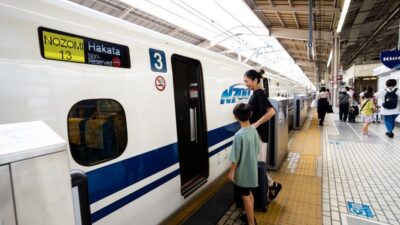

Mt Fuji and Hakone 1-Day Bus Tour Return by Bullet Train
Read our review →

teamLab Borderless Tickets: MORI Building DIGITAL ART MUSEUM
Read our review →