
Reviewed · WALKING TOURS
Tokyo: 2-Hour Vegan and Vegetarian Ramen Guided Walking Tour
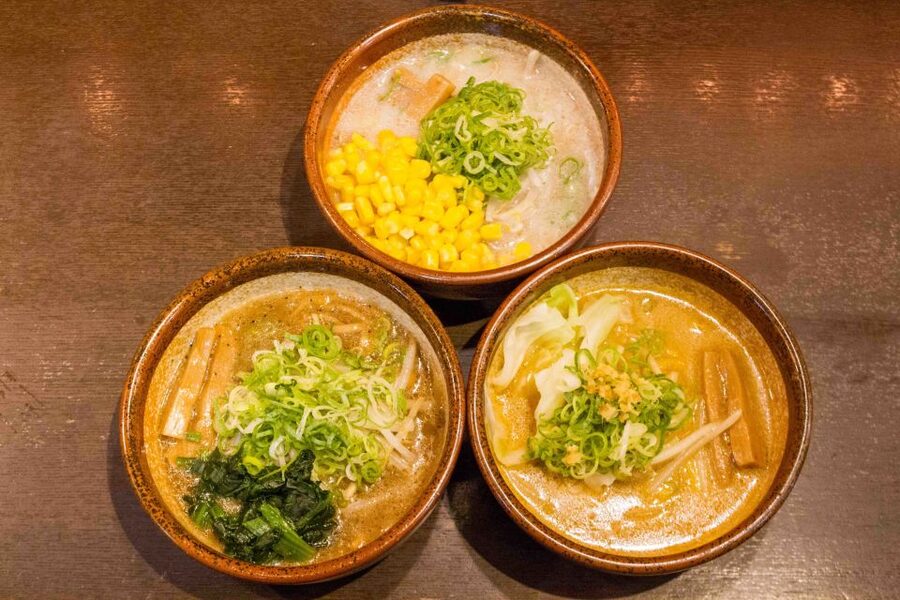
Ramen gets better when you know its story. This two-hour walking and train tour links two ramen shops in Shibuya and Shinjuku, giving you four mini bowls rather than one giant serving. I especially like the chance to compare Hokkaido-style ramen with classic Tokyo tsukemen, and I appreciate how carefully the tour handles vegan, vegetarian, and gluten-free needs.
The guides add real value here. Brian, Bunga, Frank, Makayla, and Sahori have all led highly praised tours, with guests singling out their food knowledge, friendliness, and willingness to answer questions about Tokyo. The main drawback is practical: you pay $96 per person, and train fare between Shibuya and Shinjuku is extra.
In This Review
- Key points at a glance
- Why four small bowls beat one large serving
- Meeting beneath Hachiko in Shibuya
- Stop one: Hokkaido ramen and the northern connection
- The train from Shibuya to Shinjuku
- Stop two: Tokyo-style tsukemen
- Vegan, vegetarian, gluten-free, and broth choices
- The guide can make the difference
- Is $96 a fair price?
- Timing, cancellation, and access
- Who should book this ramen experience?
- Should you book the Tokyo vegan ramen tour?
- FAQ
- How long does the ramen tour last?
- Where does the tour meet?
- How many ramen bowls are included?
- Are the ramen bowls vegan?
- Are non-vegan broth options available?
- Can I request gluten-free noodles?
- Does the tour visit more than one neighborhood?
- Is train fare included?
- Is a drink included?
- Is the tour available as a private experience?
Key points at a glance
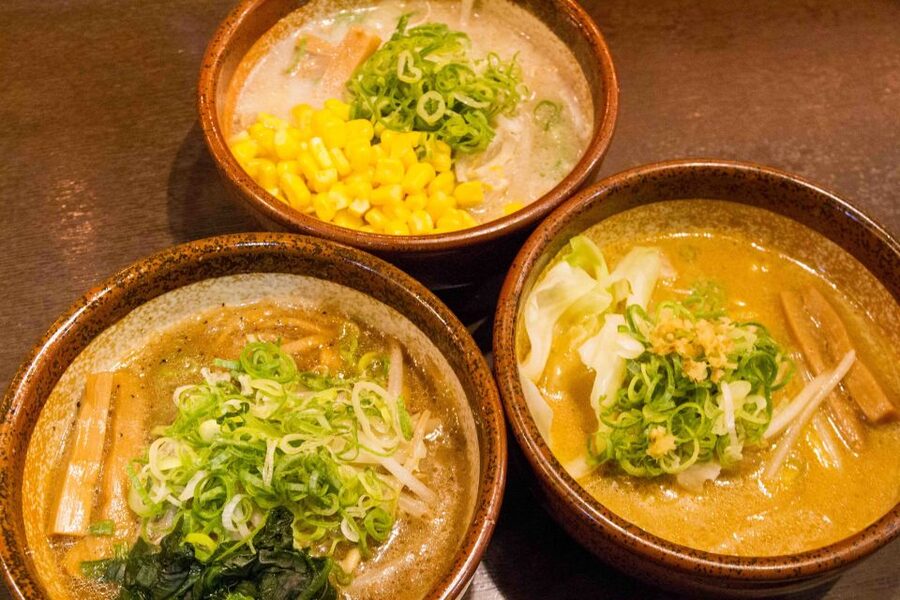
- Four mini bowls in two neighborhoods: Sample several styles without committing to one full bowl.
- A useful regional comparison: Learn how Hokkaido and Tokyo helped shape modern ramen.
- Flexible dietary choices: Vegan ramen is central, with non-vegan broth options and gluten-free noodles available.
- Two very different ramen stops: One focuses on Hokkaido-style ramen, while the other serves Tokyo-style tsukemen.
- Small-group feel: Private and small-group bookings are available, which suits anyone who wants room for questions.
- Simple meeting point: Find the guide by Shibu Hachi Box, across from the Hachiko statue, under the word Shibu.
Why four small bowls beat one large serving
A standard ramen meal can fill you up before you learn much about the dish. This tour takes the smarter approach for a tasting: four mini bowls served across two stops. You get to compare flavors, textures, and cooking styles without spending the rest of the afternoon carrying a bowl-shaped food baby through Tokyo.
The small portions also make the tour useful for first-time ramen eaters. You may have heard that ramen is all about pork, chicken, or fish broth, but this experience shows how much variety is possible without animal ingredients. The food remains the focus, yet the smaller servings leave room for conversation and comparison.
I would think of the tour as a guided tasting rather than a full meal. Four mini bowls can add up to a satisfying lunch, but the exact fullness will depend on portion size and your appetite. If you are very hungry, you may still want to return to your favorite shop later for a regular bowl. One smart tip is to book this early in your Tokyo stay, then revisit the style you liked best.
More Walking Tours in Tokyo
- Tokyo Tsukiji Fish Market Food and Culture Walking Tour
★ 5.0 · 3,184 reviews - Tokyo: Imperial Palace and Shogun Historical Walking Tour
★ 5.0 · 2,251 reviews - Tokyo: Shinjuku Local Bar and Izakaya Guided Walking Tour
★ 4.9 · 1,794 reviews
Meeting beneath Hachiko in Shibuya
The tour begins in one of Tokyo’s easiest landmarks to recognize: the Hachiko statue. Meet in front of Shibu Hachi Box, across from the statue. The guide waits farther to the left, under the word Shibu, holding a Tokyo Ramen Tours sign.
This is a clear meeting point, but Shibuya can be confusing when you are tired or newly arrived. Give yourself time to find the statue and orient yourself around the station. Do not simply stand near any sign with the word Hachiko. Look for the guide’s position and the tour sign.
Starting in Shibuya also gives the experience a lively urban setting before the food begins. You are not being taken to an isolated cooking school or a generic dining room. The tour uses the city itself, then moves by train to Shinjuku. That makes the outing feel connected to daily Tokyo rather than packaged apart from it.
Stop one: Hokkaido ramen and the northern connection
The first ramen shop specializes in authentic Hokkaido-style ramen. The tour uses this stop to explain Hokkaido’s place in ramen history and in the broader ramen world.
The supplied details do not name the shop or specify the exact flavor served, so I would not promise a particular miso, salt, or soy bowl. What you can count on is a tasting built around the Hokkaido tradition, with a vegan bowl available and other broth choices possible depending on your dietary preference.
This regional context matters. Ramen is not one fixed recipe served across Japan. Regional styles developed their own ingredients, broths, noodles, and habits. A guide can help you notice those differences while the bowl is in front of you, which is far more useful than reading a list of ramen styles after the meal.
The Hokkaido stop is also a good test of the tour’s dietary promise. Vegan ramen can be hard to locate on your own in Tokyo, especially if you do not read Japanese or do not know which restaurants prepare a fully plant-based broth. The tour removes much of that search work and brings you to a shop selected for its food.
The train from Shibuya to Shinjuku
Between the two restaurants, you ride the train from Shibuya to Shinjuku. The fare is not included, so bring a transportation card or cash for the ticket.
This is a small cost, but it is worth planning for. The experience is priced at $96, and the additional train fare is easy to overlook when you are comparing tour costs. You do not need to buy a separate tour transfer, yet you should have your card ready so the group does not pause at the station.
I like this part because the neighborhoods are part of the lesson. You are not only tasting two ramen approaches. You are also moving through two of Tokyo’s most popular districts and seeing how food-focused sightseeing can fit into a normal day in the city.
The train ride also means this is not a fully seated restaurant experience. You will walk, navigate a station, and change areas. Wear comfortable shoes and allow enough time to reach the meeting point at the start.
A completely different kind of day out:
- Tokyo Disney Resort – Tokyo Disneyland & Tokyo DisneySea Park Tickets
★ 4.8 · 99,488 reviews - SHIBUYA SKY Ticket
★ 4.7 · 46,509 reviews - JR Whole Japan Rail Pass
★ 4.8 · 29,150 reviews - Mt Fuji and Hakone 1-Day Bus Tour Return by Bullet Train
★ 5.0 · 26,383 reviews
Stop two: Tokyo-style tsukemen
The second ramen shop specializes in classic Tokyo tsukemen, or dipping ramen. Unlike standard ramen, tsukemen separates the noodles from the concentrated dipping broth. You pick up the noodles, dip them into the broth, and adjust each bite to your liking.
That change in format gives the second stop a clear purpose. You are not simply eating a repeat version of the first bowl. You are comparing a northern ramen tradition with a Tokyo style that asks you to interact with the noodles and broth differently.
The tour provides another mini bowl here, along with additional samples so you taste four varieties in total. The exact order and flavor lineup can change, so I would treat the menu as a guided introduction rather than a fixed four-course menu.
If you have only eaten ordinary bowl-style ramen, tsukemen is one of the most useful styles to encounter with a guide beside you. You can ask how to approach it, how the broth differs, and what makes the format distinct. The guide’s explanation turns a new eating method into part of the experience rather than a puzzle at the table.
Vegan, vegetarian, gluten-free, and broth choices
The tour is designed first for vegan and vegetarian diners, a group that can have trouble finding suitable ramen in Tokyo. All four featured ramen tastings are vegan. Gluten-free noodles are also available, which makes the tour more practical for people avoiding wheat.
The information also says non-vegan broth options are available for each bowl. This creates an unusual level of flexibility, but you should state your needs clearly when booking and again to the guide. The safest approach is to explain whether you need fully vegan food, vegetarian food, gluten-free noodles, or simply prefer a particular broth.
The tour does not promise a separate halal itinerary, but one guide indicated that a halal version could be offered if demand grew, since halal ramen options exist. If halal food is important to you, ask the operator directly before booking rather than assuming the standard tour meets every halal requirement.
I like that the food choices are part of the tour’s design instead of an afterthought. You are not being told to sit out while everyone else eats. At the same time, dietary flexibility depends on communicating accurately, so do not rely on a vague request.
The guide can make the difference
Ramen is easy to eat and surprisingly easy to misunderstand. A good guide explains the regional styles, food culture, broth choices, and noodle preparation while keeping the group moving between restaurants.
The guide names praised in the supplied material include Brian, Bunga, Frank, Makayla, and Sahori. Frank received special appreciation for answering broader Tokyo questions, including what to see and where to eat. Makayla was praised for combining an educational approach with a playful manner, while Bunga was described as enthusiastic about ramen and its background.
That range matters because the tour is not only about the bowls. You can use the guide as a practical Tokyo resource, especially if you book near the beginning of your trip. Ask about nearby places, food customs, or how to find other ramen styles. The guide may not be a general sightseeing guide for the entire city, but the experience can give you a useful starting point for planning your meals.
Private and small-group options are available. If you care about asking many questions, checking ingredients, or moving at an easy pace, a smaller group should suit you better than a crowded food tour. The specific group size is not provided, so confirm the arrangement you are booking.
Is $96 a fair price?
At $96 per person, this is not a cheap way to eat ramen. You are paying more than the cost of four ordinary small meals, especially after adding the train fare.
The value comes from access and guidance. Finding four vegan ramen samples on your own could take considerable time, and you might still end up at places that offer only one suitable bowl. Here, the operator selects two restaurants, arranges four tastings, provides an English-speaking guide, explains ramen’s regional background, and includes one drink.
I would call the price fair for visitors who want a focused food lesson and need help finding plant-based ramen. It is less appealing for someone who already knows Tokyo’s ramen scene, speaks Japanese, and mainly wants the cheapest possible meal.
The drink is included, but the train fare is not. There is no mention of extra snacks, a full-size bowl, or hotel pickup, so budget on the assumption that the package covers the four mini bowls, one drink, guiding, and the planned restaurant visits.
Timing, cancellation, and access
The tour lasts two hours, with several possible starting times shown when you check availability. An 11 a.m. Monday booking may be especially appealing if you prefer a quieter group. One such booking ended up with only two participants, though that should not be treated as a guarantee.
The two-hour length works well as a morning or early afternoon activity. It is short enough to fit around other Shibuya or Shinjuku plans, but long enough for two restaurant visits and a train ride. I would avoid scheduling a major timed attraction immediately afterward, since restaurant pacing and station movement can vary.
You can cancel up to 24 hours in advance for a full refund. The reserve-now-and-pay-later option also helps if your Tokyo schedule is still taking shape.
The tour is not suitable for wheelchair users. The walking route, station transfer, and restaurant access may create difficulties, so contact the operator before booking if you have mobility requirements.
Who should book this ramen experience?
I would recommend it most strongly to:
- Vegan and vegetarian diners who want several ramen choices in one outing
- Gluten-free diners who need access to suitable noodles
- First-time Tokyo visitors who want food guidance and neighborhood orientation
- Ramen fans who enjoy learning how regional styles differ
- Couples, families, and small groups who prefer a focused private or small-group experience
- Anyone who wants restaurant ideas early in a Tokyo visit
I would be more cautious if you want a long, relaxed meal at one restaurant. This is a moving tasting with two stops, not a three-hour dinner. It also may not suit you if $96 feels high for a meal or if you dislike walking and public transportation.
Should you book the Tokyo vegan ramen tour?
Book it if you want access to vegan ramen without spending hours searching, and if you enjoy learning while you eat. The combination of four mini bowls, two major Tokyo neighborhoods, Hokkaido-style ramen, and Tokyo tsukemen gives you a useful introduction to the subject.
I would book it near the start of your Tokyo stay. That way, your favorite bowl can guide later meals, just as one participant suggested after finding a preferred style. Bring a transportation card or cash, arrive early at the Hachiko meeting point, and explain every dietary requirement before the first bowl arrives.
For plant-based diners, the tour’s strongest feature is simple: it lets you taste widely and safely in a city where suitable ramen can take work to find. For everyone else, the main reward is the comparison between styles and the guide’s food knowledge. At $96, it is a specialized experience, but the planning help and four tastings make it worthwhile for the right eater.
FAQ
How long does the ramen tour last?
The tour lasts two hours.
Where does the tour meet?
Meet in front of Shibu Hachi Box, across from the Hachiko statue in Shibuya. The guide waits to the left under the word Shibu with a Tokyo Ramen Tours sign.
How many ramen bowls are included?
You receive four mini bowls of ramen.
Are the ramen bowls vegan?
Yes. The four featured ramen tastings are vegan.
Are non-vegan broth options available?
Non-vegan broth options are available for each ramen, according to your dietary needs.
Can I request gluten-free noodles?
Yes. Gluten-free noodles are available.
Does the tour visit more than one neighborhood?
Yes. It visits ramen shops in Shibuya and Shinjuku, with a train ride between the two areas.
Is train fare included?
No. Bring a transportation card or cash to pay for the train from Shibuya to Shinjuku.
Is a drink included?
Yes. One drink is included with the tour.
Is the tour available as a private experience?
Yes. Private and small-group options are available.
Just added in Tokyo
- A One-of-a-Kind Sushi Experience in a Special Place of Japan★ 5.0 · 15 reviews
- Tokyo Cute Bento Cooking Class – Make a Kawaii Character Lunchbox★ 5.0 · 126 reviews
- Japanese Home Cooking Class & Walk in Todoroki Temple Tokyo★ 5.0 · 88 reviews
- Japan Tokyo Tower Observatory Deck E-Ticket★ 4.0 · 34 reviews
- Catch a Baseball Game in Tokyo with a Local – Tickets Included★ 5.0 · 24 reviews
- JDM Experience with Fast&Furious RX-7 (English speaking Driver)★ 5.0 · 57 reviews
- Tokyo Private Day Tour by Car with English speaking Driver Guide★ 4.0 · 29 reviews
- Japan Classic 10 Day – One Life Adventures★ 5.0 · 129 reviews
Walking Tours, compared.
Kyoto Geisha Walking Tour: Gion District & Hidden Gems
Read our review →
Tokyo Tsukiji Fish Market Food and Culture Walking Tour
Read our review →
Gion Magical Night Walking Tour with Geisha Trivia
Read our review →
Imperial Palace and Shogun Historical Walking Tour
Read our review →
Gion Geisha District Walking Tour – Stories of Geisha
Read our review →

Shinjuku Local Bar and Izakaya Guided Walking Tour
Read our review →
Browse the lists this tour appears in