
Reviewed · PRIVATE TOURS IN TOKYO
Get Unique Insights into Tokyo – Private Tour with local Guide
Tokyo rewards curiosity. This private tour makes the city easier to read, pairing major sights with local context and quieter corners. I especially like the one-to-one format, which lets your guide adjust the pace and interests, and the included photos, tea or coffee, and Japanese snack. The main consideration is the enormous choice of stops: seeing Harajuku, Shibuya, Shinjuku, Asakusa, Odaiba, Akihabara, Ueno, and the Imperial Palace area in one outing would be far too much for most people.
At $82.90 per person, the value depends on your group size and chosen length. For a first visit, a four-hour outing can give you a useful sense of Tokyo’s layout, customs, trains, and neighborhoods before you explore alone. Walking is central, and one person described covering more than eight miles, so comfortable shoes matter. Jero and Franz receive especially warm praise for their patience, humor, flexibility, and personal approach.
In This Review
- Key points at a glance
- Why this works as a first Tokyo outing
- Meiji Jingu gives the morning a calm beginning
- Takeshita Street and Harajuku show Tokyo’s youthful side
- Shibuya Crossing is better with local orientation
- Shinjuku brings on the neon after dark
- Odaiba offers a different version of Tokyo
- Asakusa tells the city’s older story
- Akihabara, Ueno, and the Imperial Palace need clear priorities
- Tea, snacks, and photographs add practical value
- How much can you really see in two to six hours?
- Price, private groups, and who gets the best value
- Simple details that make the day easier
- Should you book this Tokyo private tour?
- FAQ
- How long does the private Tokyo tour last?
- What time can the tour start?
- Is this a private tour?
- Is an English-speaking guide available?
- Where does the tour start?
- Where does the tour finish?
- Are transportation and refreshments included?
- Can I cancel for a full refund?
Key points at a glance
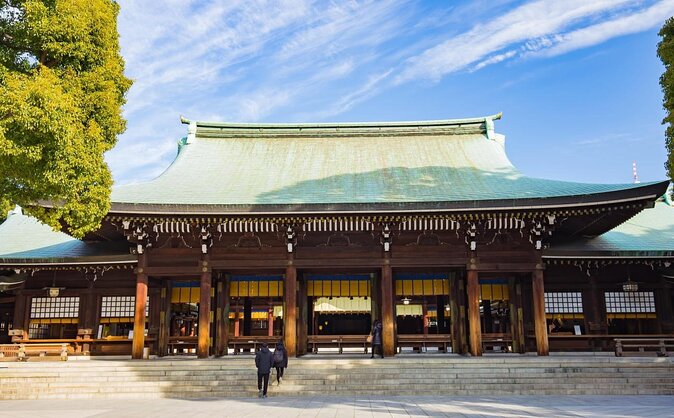
- Start with Meiji Shrine: Learn basic shrine manners and Tokyo’s Shinto traditions in a calm forest setting.
- Follow the city’s contrasts: Move from Harajuku fashion and Shibuya Crossing to Shinjuku neon, with transport between destinations included.
- Choose your focus: The tour lasts roughly two to six hours, and the guide can shape the route around your interests and pace.
- Get useful local help: Expect advice about food, shopping, trains, manners, and places to visit after the tour.
- Leave with photographs: Your guide can take solo and group pictures at major landmarks and send them afterward.
- Finish near Shinjuku Station: The meeting point is by the Giant 3D Cat, giving you easy choices for the rest of your day.
Why this works as a first Tokyo outing
Tokyo can feel like several cities stitched together by trains. A shrine, a youth-fashion street, a famous intersection, and a neon entertainment district may all belong to the same metropolis, but they do not feel remotely alike.
That contrast is the reason this tour makes sense early in your stay. You are not simply checking off sights. You are learning how the city fits together, how to behave at a shrine, how to move between districts, and where you might want to return later.
The private format is the biggest advantage. Your group is not tied to strangers or a fixed commentary track. You can ask questions, slow down for photographs, skip an area, or focus more closely on food, history, shopping, or daily life.
Several people praised Jero for adapting the route after learning their interests and abilities. He also helped some visitors with train directions, meeting arrangements, weather preparation, and even Shinkansen ticket questions. That kind of practical help can be worth as much as the sightseeing itself during your first hours in Japan.
The tour is also suitable for repeat visitors who want a different angle. You can request famous districts, but the guide may also show you less obvious streets and local places that are difficult to identify from a guidebook alone.
More Private Tours in Tokyo
- Tokyo 6hr Private Tour with Government-Licensed Guide
★ 5.0 · 3,902 reviews - Private Tour to Mt. Fuji and Hakone (Fully Licenced Operator)
★ 5.0 · 1,910 reviews - Tokyo Customized Private Tour (Must See Places in 1 Day)
★ 5.0 · 1,499 reviews
Meiji Jingu gives the morning a calm beginning
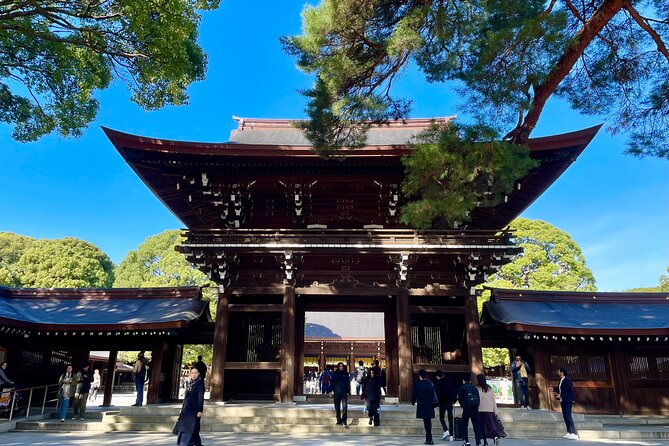
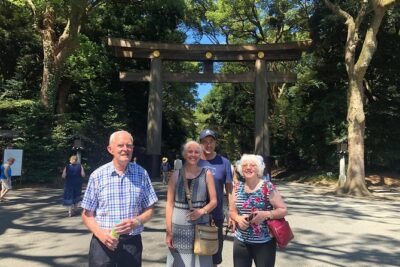
The usual starting point is Meiji Jingu Ichino Torii, at 1-chōme-18-20 Jingūmae in Shibuya. From there, you walk toward Meiji Jingu Shrine in Harajuku.
This is a smart opening. The approach moves you away from traffic and crowds into a broad wooded setting before the city’s louder districts begin. At the shrine, the guide explains its cultural and historical role and shows you how to approach the main building respectfully.
The practical lesson matters. You can learn basic customs and manners rather than copying other people and hoping for the best. One family particularly appreciated being shown how to act at the shrine and how to be a considerate visitor in Japan more generally.
Do not treat this as a quick photo stop. Meiji Jingu works because of the change in mood. You begin with quiet paths, ritual, and space, then later move into fashion streets and giant video screens.
If you have limited mobility or prefer a shorter walk, say so when arranging the tour. The route can be adjusted, but the experience is still primarily a walking tour. One especially energetic outing covered over eight miles, which shows how much ground is possible but also why you should discuss your preferred pace.
Takeshita Street and Harajuku show Tokyo’s youthful side
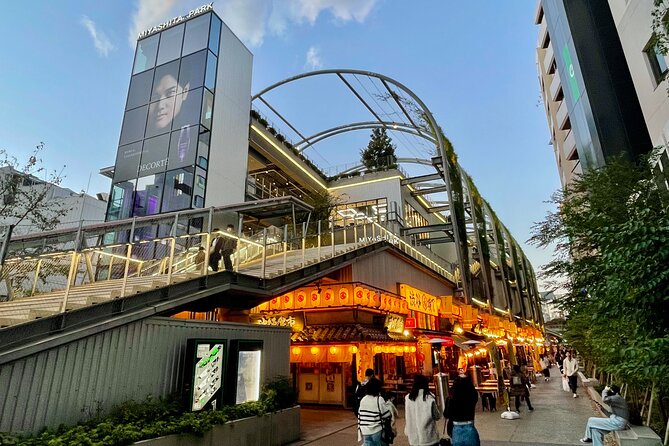
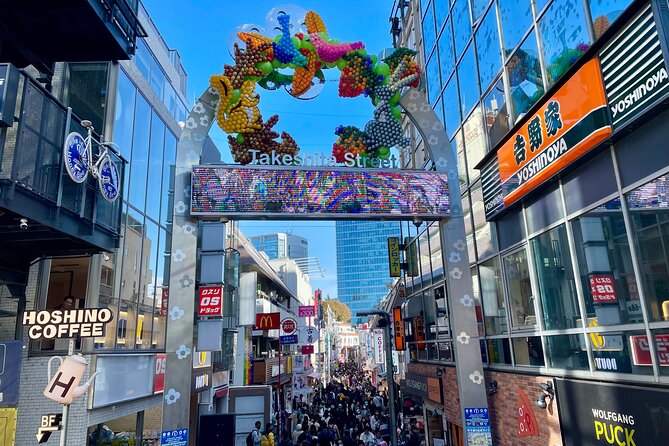
After the shrine, the route heads toward Takeshita Street. This colorful shopping lane is one of Harajuku’s best-known addresses, with fashion, novelty shops, and youthful street culture packed into a small area.
It can be crowded, especially at popular times. That is part of the point, but it may not suit anyone seeking a slow, quiet stroll. Your guide helps by explaining what makes Harajuku important rather than leaving you to wander through a blur of storefronts.
The route can also include Cat Street and Omotesando. Together, these streets show different sides of the district. Takeshita Street feels playful and youthful, Cat Street has a more relaxed street-style character, and Omotesando presents polished shops and broad avenues.
That range makes the neighborhood more useful than a single shopping stop. You get a quick lesson in how Tokyo’s fashion districts overlap without being identical.
The guide may tailor this portion to your interests. If you care about clothing, pop culture, design, or people-watching, Harajuku can take up more of your time. If shopping is not your priority, you can keep moving toward Shibuya.
Shibuya Crossing is better with local orientation
Shibuya Crossing is the tour’s big urban spectacle. When the signals change, pedestrians move across the intersection from several directions, surrounded by screens, music, shops, and high-rise buildings.
The crossing itself takes only a few minutes. The useful part is learning how it fits into Shibuya, including the nearby Hachiko statue and the best places for photographs.
Your guide can take pictures of you alone or with your group. This is a small but valuable service, since the person taking the picture is often missing from the group’s best memories. Several accounts praise the number of photographs and videos provided afterward.
Shibuya is also a good place to ask practical questions. You can get suggestions for places to eat, shop, and spend time later. The guide may point out choices suited to your interests rather than handing you a generic list.
The drawback is crowding. A private guide cannot make Shibuya quiet, and the experience is less about a long historical visit than about seeing Tokyo’s modern energy at close range. Still, it is an efficient introduction to the city’s scale.
A completely different kind of day out:
- Tokyo Disney Resort – Tokyo Disneyland & Tokyo DisneySea Park Tickets
★ 4.8 · 99,488 reviews - SHIBUYA SKY Ticket
★ 4.7 · 46,509 reviews - JR Whole Japan Rail Pass
★ 4.8 · 29,150 reviews - Mt Fuji and Hakone 1-Day Bus Tour Return by Bullet Train
★ 5.0 · 26,383 reviews
Shinjuku brings on the neon after dark
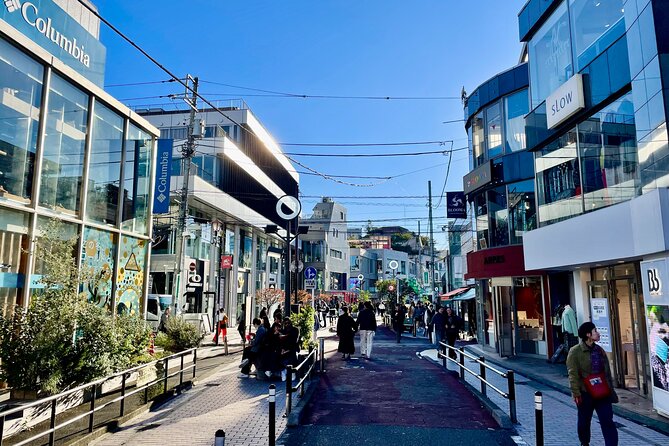
After Shibuya, the tour uses the train to reach Shinjuku. Transportation between destinations is included, which keeps the outing moving and gives you a brief introduction to Tokyo’s rail system.
For a newcomer, this transfer has real value. Tokyo’s stations can seem confusing, and a guide can show you how to move through them with less stress. One participant specifically appreciated riding the JR line and gaining a better sense of public transportation.
Shinjuku changes the mood again. The district is known for towering buildings, bright signs, shopping, restaurants, and entertainment. The route finishes near Kabukicho Tower, where the guide presents the neon side of the city.
The official end point is near the Giant 3D Cat at 3-chōme-23-18 Shinjuku. From there, you are close to Shinjuku Station and can continue your evening. Ask the guide how to reach your next destination before parting. That simple question can save time, especially if you are still learning Tokyo’s rail network.
This portion may feel more crowded and commercial than Meiji Jingu. That contrast is deliberate. In a few hours, you see Tokyo move from sacred woodland to fashion street to giant city intersection to electric nightlife.
Odaiba offers a different version of Tokyo
Odaiba is included among the possible destinations, but it is not part of every short route. If selected, the itinerary can include Aqua City, DECKS Tokyo Beach, the nostalgic Hikariya Yokocho, and the Unicorn Gundam statue.
This is the futuristic side of the tour. The broad commercial areas and landmark statue offer a different setting from the tight streets of Harajuku or Shinjuku. It can be a good choice if you like modern architecture, pop-culture sights, waterfront attractions, and large-scale public spaces.
There is an important planning point here: Odaiba is not something to casually add to a two-hour outing already covering central Tokyo. Ask the guide to build a realistic route around it. The private format helps, but Tokyo’s distances still matter.
Asakusa tells the city’s older story
Asakusa presents another major change. During the Edo period, it was Tokyo’s main entertainment district, associated with kabuki theaters, geisha houses, and street performers. The district still carries that festive character, even though its role has changed.
The value here is context. Asakusa helps explain Tokyo before the towers, giant screens, and modern shopping districts. It gives you a more traditional setting and a chance to discuss how the city has changed over time.
Like Odaiba, Asakusa is best treated as a route choice rather than an automatic add-on. A tour built around Meiji Jingu, Harajuku, Shibuya, and Shinjuku has a clear west-central Tokyo flow. Adding Asakusa means crossing the city and spending more time in transit.
If your priority is temples, older neighborhoods, and traditional culture, ask for an Asakusa-focused plan. If you want a first look at modern Tokyo, stay with the western districts.
Akihabara, Ueno, and the Imperial Palace need clear priorities
Akihabara, known locally as Akiba, grew from a postwar black market for radio parts into one of Tokyo’s best-known centers for electronics, games, anime, and related pop culture. It is a strong choice for anyone interested in those subjects.
The area is specific rather than universally appealing. If you do not care about electronics or pop culture, you may prefer to give the time to a shrine, food stop, or older neighborhood.
Nearby Ueno offers a different experience. Ueno Park is known for cultural attractions, seasonal beauty, and its connection to Kaneiji Temple. It gives you greenery and open space in northeastern Tokyo, along with a chance to discuss the city’s cultural institutions and past.
The Imperial Palace East Gardens provide yet another change. These gardens occupy part of the former Edo Castle grounds and include stone walls, gates, and moat remains. The setting offers a peaceful pause and a direct link to Japan’s feudal period.
These three choices show why the tour should not be judged by how many names can fit into a description. You cannot properly explore every district in a few hours. The better plan is to choose two or three themes and let the guide connect them.
Tea, snacks, and photographs add practical value
Tea or coffee and a typical Japanese snack are included. This is not a full meal, and food and drinks beyond those provisions are not included, so plan accordingly.
The refreshment is useful during a walking route. One guide was praised for arriving with warm tea drinks, a thoughtful touch on a cool morning. Another account specifically mentioned trying matcha, which suggests the snack or drink may introduce you to something you might otherwise skip.
Photography is another strong extra. The guide can take solo and group photos at landmarks, then send them to you after the tour. You can stay present instead of handing your phone to a stranger at every stop.
Do not assume the photographs replace your own camera time. Tell the guide which pictures matter most, especially if you want a particular landmark or group arrangement.
How much can you really see in two to six hours?
The advertised duration is approximately two to six hours. That range is useful, but it also means you need to choose carefully.
A two-hour session is best for a narrow introduction, perhaps Meiji Jingu, Harajuku, and one nearby area. A four-hour session gives you more breathing room and can connect several major districts with train travel. A longer outing can include more stops, but you should still expect plenty of walking.
The strongest use of four hours is not trying to visit every listed area. It is choosing a route that combines one traditional place, one modern district, and practical orientation. For example, Meiji Jingu, Harajuku, Shibuya, and Shinjuku form a sensible first-visit sequence.
The guide can adjust for weather, energy, age, and interests. That flexibility appears repeatedly in the personal accounts, including families, people dealing with jet lag, and visitors with only a short time in Tokyo.
Book this early in your trip if you want advice for the days ahead. The guide can suggest food, shopping, nightlife, transport, and further places to explore. You may enjoy the outing most when you use it as a city lesson rather than a race for photographs.
Price, private groups, and who gets the best value
At $82.90 per person, the price is easiest to justify for solo visitors, couples, families, or small groups who want personal attention. Group discounts are offered, so the per-person cost may become more attractive as your party grows.
You are paying for a private English-speaking guide, transport between destinations, flexible timing, local recommendations, landmark photographs, and a drink and snack. The key value is not simply the number of sights. It is the reduced planning burden and the chance to ask questions throughout the walk.
For a large group on a tight budget, the cost may feel high compared with exploring by train alone. You also need to budget separately for meals and any other drinks.
I think this tour suits:
- First-time Tokyo visitors who want a fast orientation.
- People with only one day or a short stop in the city.
- Families who need the route adjusted to their pace.
- Repeat visitors seeking less familiar streets and local suggestions.
- Anyone uneasy about Tokyo’s rail system or shrine manners.
- Solo visitors who want photographs without asking strangers.
It is less suited to someone who prefers a fixed museum-style tour, dislikes walking, or wants a single district explored at great length.
Simple details that make the day easier
The starting point is Meiji Jingu Ichino Torii. The end point is near the Giant 3D Cat in Shinjuku, close to Shinjuku Station. Pickup is offered, and the tour has a mobile ticket.
Confirmation arrives when you book. The activity is near public transportation, and most people can participate. Since the tour is private, only your group joins the guide.
The free-cancellation rule is straightforward: cancel at least 24 hours before the local start time for a full refund. Changes or cancellations inside that 24-hour window are not accepted for a refund.
Wear shoes you can walk in for several hours. Bring enough water and allow room in your schedule for a meal if your tour crosses lunchtime. If you are arriving after a long flight, mention jet lag or any physical limits before the route begins. The guide has shown a willingness to adapt, but clear communication makes that easier.
Should you book this Tokyo private tour?
Book it if you want a personal first look at Tokyo, especially if you are unsure how to organize your first day. The most praised qualities are the guides’ warmth, flexibility, practical advice, and ability to combine famous places with less obvious stops.
Request Jero if he is available, since many accounts single out his patience, humor, care, and local knowledge. Franz is also praised as an excellent guide, including for a family outing and a tour adjusted around jet lag.
Choose the four-hour option if you want a useful balance of shrine, shopping street, Shibuya, Shinjuku, and train orientation. Choose a shorter route if you need a gentle introduction. For Asakusa, Odaiba, Akihabara, Ueno, or the Imperial Palace East Gardens, ask for a plan built around those areas rather than trying to squeeze them all into one day.
At $82.90 per person, this is not the cheapest way to see Tokyo. But for a private guide, flexible route, included transport between stops, photos, and advice you can use for the rest of your visit, it offers solid value for newcomers who want to get their bearings quickly.
FAQ
How long does the private Tokyo tour last?
The tour lasts approximately two to six hours. You can choose your preferred duration during booking.
What time can the tour start?
Morning and afternoon start times are available. The experience also allows you to choose your ideal start time during booking.
Is this a private tour?
Yes. Only your group participates in the activity, with a private tour guide.
Is an English-speaking guide available?
Yes. English-speaking guides are available.
Where does the tour start?
The listed starting point is Meiji Jingu Ichino Torii at 1-chōme-18-20 Jingūmae, Shibuya, Tokyo 150-0001, Japan.
Where does the tour finish?
The tour finishes near the Giant 3D Cat at 3-chōme-23-18 Shinjuku, Shinjuku City, close to Shinjuku Station.
Are transportation and refreshments included?
Transportation between tour destinations is included. Tea or coffee and a typical Japanese snack are provided, but other food and drinks are not included.
Can I cancel for a full refund?
Yes. You must cancel at least 24 hours before the experience start time, based on local time, to receive a full refund. Changes or cancellations made less than 24 hours before the start are not accepted.
Just added in Tokyo
- Ramen and Gyoza Cooking Class in Tokyo★ 5.0 · 21 reviews
- Ramen Tasting – Mini Bowl Ramen Tour★ 5.0 · 127 reviews
- REAL, All-Inclusive Tokyo Food and Drink Adventure (leave the tourists behind)★ 5.0 · 25 reviews
- Ramen Making from Scratch with Tokyo Mom(Vegan Option Available)★ 5.0 · 39 reviews
- Japanese Katsu Curry Cooking Class–near YANAKA, Tokyo!★ 5.0 · 18 reviews
- Professional Cosplay Photography Experience with English Guide★ 5.0 · 16 reviews
- Haneda Airport: One Way Private Transfer to Tokyo|Yokohama Hotels★ 4.0 · 28 reviews
- Private departure transfer from Tokyo city to Tokyo Haneda Airport(HND)★ 4.5 · 123 reviews
Private Tours in Tokyo, compared.
Tokyo 6hr Private Tour with Government-Licensed Guide
Read our review →
Private Tour to Mt. Fuji and Hakone (Fully Licenced Operator)
Read our review →
Tokyo Customized Private Tour (Must See Places in 1 Day)
Read our review →
Mount Fuji Full-Day Private Tour from Tokyo (Customizable)
Read our review →
Tokyo 4hr Private Tour with Government-Licensed Guide
Read our review →
Tokyo Customized Private Tour: See Top Attractions in 1 Day
Read our review →
Mt Fuji Private Tour with English Speaking Driver
Read our review →
Mt. Fuji & Hakone Private Day Tour with English-Speaking Driver
Read our review →Browse the lists this tour appears in