
Reviewed · COOKING CLASSES
Ramen and Gyoza Cooking Class in Tokyo
Great ramen starts with the broth. This 90-minute class in Tokyo’s Yanaka neighborhood makes Japanese food feel approachable, with a short lesson on ramen and gyoza history followed by hands-on cooking. I especially like the three gyoza styles, including cheese and kimchi, and the clear attention to vegan cooking. The main thing to consider is the price, $91.76 per person, which is a fair deal for a private class but more than a simple ramen meal.
You’ll meet at a Japanese-style house near Ueno and Nippori, then return to the same spot after cooking and eating. The setting suits families, couples, and adult groups, though the minimum booking is two people and the start time is fixed at 11:00 a.m.
In This Review
- The details that matter
- Why this class works for food-minded visitors
- Arriving in Yanaka at 11 a.m.
- The opening lesson: ramen, gyoza, and Japanese food culture
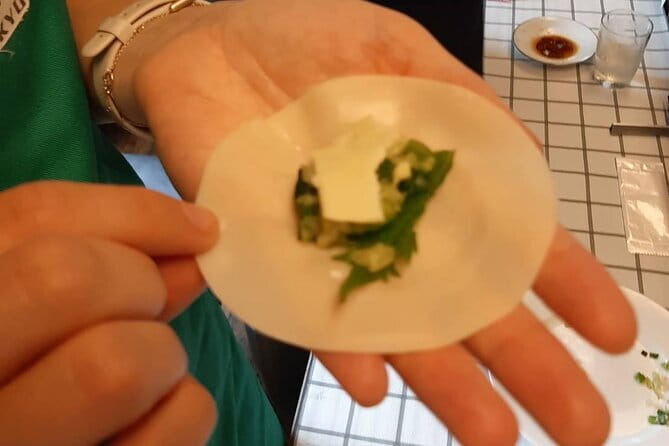
- Making three types of gyoza
- Building miso ramen with a proper broth
- Communication, teaching, and the role of Sioji
- What the 90-minute schedule means for you
- The practical value of learning recipes at home
- Who should book this experience
- Booking, cancellation, and the final call
- FAQ
- Where does the ramen and gyoza class meet?
- What time does the class begin?
- How long does the experience last?
- Is the class private?
- Are vegan options available?
- What is the cancellation policy?
The details that matter
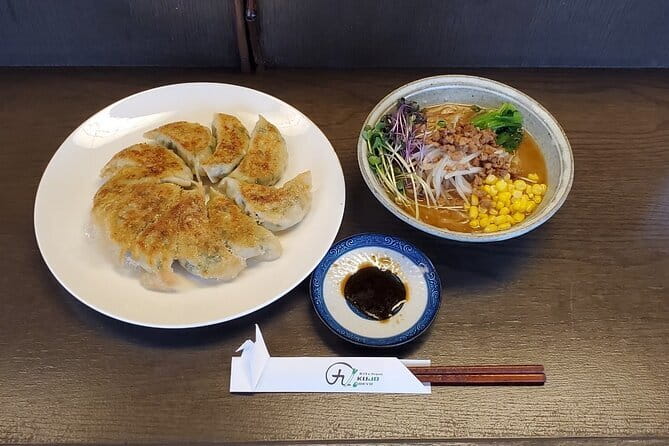
- Three kinds of gyoza: Make standard fried dumplings, cheese dumplings, and kimchi dumplings in one class.
- Miso ramen from scratch: Prepare miso ramen with a broth based on kelp and chicken or scallops.
- A full vegan option: Vegan participants receive miso ramen with kelp and vegetable broth.
- A private 90-minute lesson: Only your group takes part, creating a more personal pace.
- Food culture beyond recipes: A short lecture explains how ramen and gyoza became part of Japanese cuisine.
- Yanaka location: The class meets at 1-chōme 2-10 in Yanaka, Taito City, close to Ueno and Nippori.
Why this class works for food-minded visitors
Tokyo offers endless chances to eat ramen and gyoza. This class gives you a way to understand what is in the bowl and on the plate. You are not simply handed a finished meal. You make the food, learn a little about its background, and leave with recipes you can try at home.
That last part is important. The cooking is designed for beginners, and past participants have said they felt ready to make ramen and gyoza in their own kitchens. The recipes are presented as practical rather than fussy. You do not need advanced knife skills or restaurant experience to take part.
I also like the way the class connects food with regional differences across Japan. Ramen is not one fixed dish. Noodles, broth, seasoning, and toppings vary from place to place. Even though this class focuses on miso ramen, the introduction can help you make better choices when you eat around Japan.
Gyoza has its own Japanese story. Dumplings were introduced to Japan and then developed into a familiar local food with its own style. The lesson is brief, not a long academic talk, but it gives your meal a little context before you start cooking.
More Cooking Classes in Tokyo
- Sushi Making Tokyo Roll and Authentic Japanese Sushi Class
★ 5.0 · 3,971 reviews - Tokyo: Roll and Authentic Sushi Making Class in Asakusa
★ 4.9 · 1,957 reviews - Tokyo Shinjuku Chopsticks Making Class
★ 5.0 · 1,763 reviews
Arriving in Yanaka at 11 a.m.
The meeting point is 谷中スペース, at Japan, 110-0001 Tokyo, Taito City, Yanaka, 1-chōme 2-10. It is near public transportation and close to both Ueno Station and Nippori, making it a useful stop during a day in northeastern Tokyo.
Yanaka feels different from the glass towers and packed shopping streets found in other parts of the city. The class takes place in a Japanese-style house, which gives the experience a more relaxed feel than a commercial cooking studio. You can expect to spend the full session in this one location, rather than moving between several stops.
The 11 a.m. start time is practical. You can reach the area in the morning, take the class, and still have most of the afternoon for Yanaka, Ueno, or another part of Tokyo. You should allow enough time to find the exact meeting point, since the address includes a Japanese name that may be easier to show on your phone than to pronounce.
A mobile ticket is provided. Confirmation is sent within 48 hours of booking, subject to availability, so do not assume your reservation is final until you receive it.
The opening lesson: ramen, gyoza, and Japanese food culture
The class begins with a short explanation of ramen and gyoza. This is a useful start because both dishes are now strongly associated with Japan, even though neither began there in its modern Japanese form.
The point is not to give you a long lecture. Instead, the introduction explains how these foods changed after reaching Japan and became part of everyday eating. That background helps you understand why Japanese cooks care about details such as broth, noodles, fillings, folding, and cooking methods.
The ramen section also introduces the differences found around Japan. A bowl from one region may use a different style of broth or noodle from a bowl somewhere else. The class uses miso ramen as its main example, allowing you to learn one dependable recipe while also gaining a useful guide for future ramen stops.
This is one of the better reasons to choose a cooking class instead of spending the same time at a restaurant. A restaurant can show you the finished result. Here, you learn what makes the dish different before you order your next bowl.
Making three types of gyoza

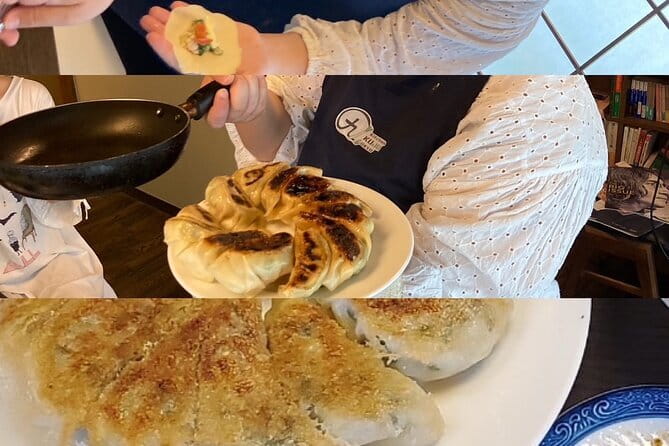
The gyoza portion is the most playful part of the class. You make three varieties:
- Regular fried gyoza
- Cheese gyoza
- Kimchi gyoza
The regular version gives you the basic format. The cheese and kimchi versions show how Japanese home cooking and casual food culture continue to adapt familiar dishes. They also add variety to the meal without requiring three separate classes.
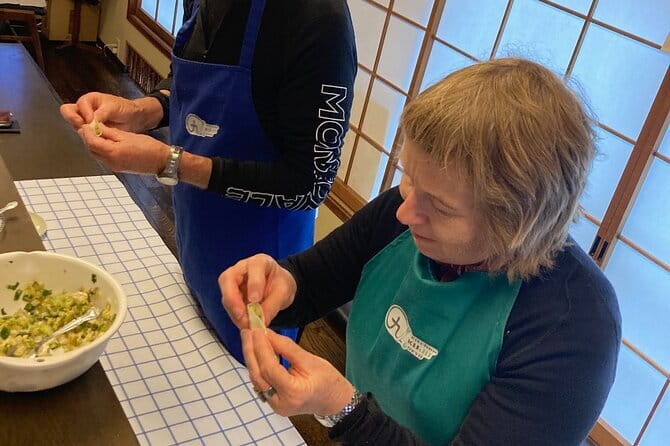
The class is hands-on, so you should expect to take part in preparing and shaping the dumplings rather than simply watching a demonstration. The experience has been described as suitable for beginners, with patient instruction and help with communication.
If you have never made dumplings before, the shape may take a little practice. That is part of the fun. The class is private, so your group can ask for help without worrying about keeping up with a large room of strangers. The private format also matters for families, since children can take part in a more relaxed setting.
The cheese and kimchi options make this section especially useful for people who already know standard gyoza. You get a familiar base, then two versions with different flavors. If you enjoy the cooking, you can repeat the format at home and create your own fillings.
A completely different kind of day out:
- Tokyo Disney Resort – Tokyo Disneyland & Tokyo DisneySea Park Tickets
★ 4.8 · 99,488 reviews - SHIBUYA SKY Ticket
★ 4.7 · 46,509 reviews - JR Whole Japan Rail Pass
★ 4.8 · 29,150 reviews - Mt Fuji and Hakone 1-Day Bus Tour Return by Bullet Train
★ 5.0 · 26,383 reviews
Building miso ramen with a proper broth
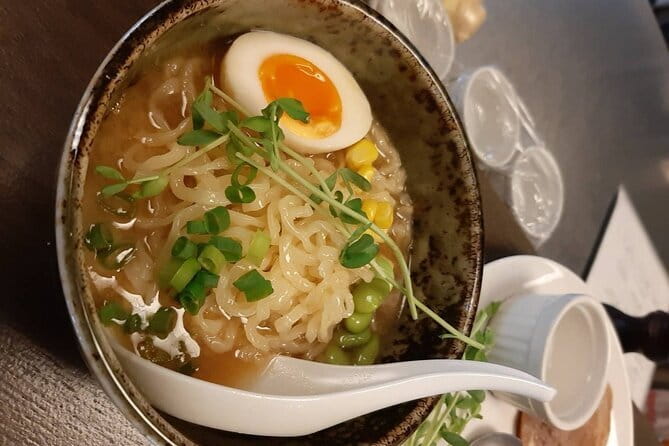
The ramen is made with miso and an original soup. The standard broth uses kelp with chicken or scallops, two ingredients that help explain the layered flavor often found in Japanese cooking.
Kelp provides a basic savory foundation. Chicken or scallops add another element, giving the soup more depth than a simple miso-and-water mixture. The class also includes toppings, so the finished bowl is not just noodles and broth.
The vegan version uses kelp and vegetables instead of chicken or scallops. This is not treated as an afterthought. The class has experience accommodating vegan participants, and the kitchen prepares a separate broth approach for them.
Vegetarian visitors should clarify their needs when booking if necessary, since the published information specifically confirms vegan availability rather than every possible dietary request. Still, the class has shown a practical willingness to adapt. A participant who identified as vegetarian praised the easy accommodation, patient instruction, and support from a translator.
Ramen preparation also gives you a useful lesson in balance. Miso is strong and salty, so the broth, noodles, and toppings need to work together. You will get more from the class if you pay attention to how each ingredient changes the final bowl, not just to the cooking steps.
Communication, teaching, and the role of Sioji

The host is referred to as Sioji in the class feedback. He is praised for being friendly, patient, welcoming, and generous with explanations. A translator is also employed to help with communication, which is reassuring if you are concerned about following cooking instructions in English.
The teaching style appears to be warm and personal rather than formal. The class has welcomed more than 500 foreign visitors since it began in 2018, excluding the coronavirus period, and the private structure allows the host to adjust the pace for the group.
That does not mean every moment will be polished like a professional culinary school. This is a small food experience in a home-style setting. Its appeal comes from direct contact, conversation, and the chance to ask questions while you cook.
The feedback also suggests that Sioji enjoys the class himself. That energy matters in a short experience. You are more likely to remember a lesson when the person leading it is clearly happy to share the food rather than simply moving through a script.
What the 90-minute schedule means for you
An hour and a half is enough time to cover both dishes without taking over your entire day. It is also short enough for children or visitors who do not want a lengthy cooking course.
The likely rhythm is simple: meet at 11 a.m., hear the food background, prepare gyoza, make ramen, add toppings, and eat what you have made before returning to the meeting point. The exact order may vary, but the experience is designed as one compact session.
Because the class is private, the pace should feel more manageable than a large group lesson. You can ask questions about broth, fillings, and Japanese food customs as they come up. The tradeoff is that a private class usually costs more per person than joining a large shared workshop.
At $91.76 per person, the value depends on what you want from the morning. If you only want a bowl of ramen, the price is high. If you want a meal, instruction, cultural context, several gyoza variations, a vegan option, and a recipe you can use at home, the cost is easier to justify.
The class also has a perfect 5.0 rating from 21 reviews, with 100 percent recommending it. That is a small sample, but the praise is consistent: good food, friendly hosts, clear communication, and recipes that feel possible to repeat at home.
The practical value of learning recipes at home

The strongest benefit is that the class keeps going after your holiday. Several participants were pleased that the recipes felt simple enough to make without buying ready-made food. One person even described developing a serious appetite for gyoza after learning three styles.
That is a good test for any cooking class. You should leave with more than a full stomach. You should have a better idea of what to buy, how the dish is assembled, and how to prepare it again.
The lesson may also change how you read a ramen menu in Japan. Once you understand that broth and noodles vary by region, you can pay closer attention to local specialties instead of ordering at random. The class is not a full guide to every ramen style, but it gives you a useful starting point.
For home cooks, the three gyoza fillings are another advantage. Regular, cheese, and kimchi versions offer enough variety to keep the recipe interesting. You can make the standard filling for a traditional meal, then use cheese or kimchi when you want something different.
Who should book this experience
I would recommend the class to:
- First-time visitors who want a food activity with cultural context
- Couples looking for a private indoor experience
- Families with children who enjoy hands-on activities
- Vegetarian and vegan diners who want a clearly available alternative
- Beginner cooks who want recipes they can repeat at home
- Ramen fans planning to eat across several regions of Japan
It may be less suitable if you want a long professional cooking course or a broad tour of Tokyo’s food markets. The lesson is focused on two dishes and lasts about 90 minutes.
You should also check the minimum booking rule. At least two people are required, so this is not designed for a solo booking unless you arrange to meet the minimum in another way.
Booking, cancellation, and the final call
Free cancellation is available up to 24 hours before the 11 a.m. start time for a full refund. Changes or cancellations made within 24 hours are not accepted for a refund, and the local Tokyo cut-off time applies.
The experience requires a minimum number of participants. If the provider cancels because that minimum is not reached, you will be offered another date or experience, or receive a full refund.
Book this class if you want to cook, not just eat. The private Yanaka setting, patient instruction, three gyoza styles, and vegan ramen option make it a strong choice for a food-focused morning. The price is the main question, but the class earns it if you value personal teaching and recipes you can use after Japan.
Skip it if your schedule is tight, you dislike hands-on cooking, or you are mainly looking for the cheapest possible meal. For everyone else, this is a friendly, practical introduction to two Japanese comfort foods, with enough history and technique to make your next ramen stop more interesting.
FAQ
Where does the ramen and gyoza class meet?
It meets at 谷中スペース, Japan, 110-0001 Tokyo, Taito City, Yanaka, 1-chōme 2-10. The location is near public transportation and close to Ueno Station and Nippori.
What time does the class begin?
The class starts at 11:00 a.m.
How long does the experience last?
The cooking class lasts approximately 1 hour and 30 minutes.
Is the class private?
Yes. Only your group participates in the activity.
Are vegan options available?
Yes. Vegan participants can make miso ramen with broth made from kelp and vegetables.
What is the cancellation policy?
You can cancel at least 24 hours before the start time for a full refund. Cancellations or changes made less than 24 hours before the experience are not refunded or accepted.
Just added in Tokyo
- Ramen Tasting – Mini Bowl Ramen Tour★ 5.0 · 127 reviews
- REAL, All-Inclusive Tokyo Food and Drink Adventure (leave the tourists behind)★ 5.0 · 25 reviews
- Ramen Making from Scratch with Tokyo Mom(Vegan Option Available)★ 5.0 · 39 reviews
- Japanese Katsu Curry Cooking Class–near YANAKA, Tokyo!★ 5.0 · 18 reviews
- Haneda Airport: One Way Private Transfer to Tokyo|Yokohama Hotels★ 4.0 · 28 reviews
- Professional Cosplay Photography Experience with English Guide★ 5.0 · 16 reviews
- Get Unique Insights into Tokyo – Private Tour with local Guide★ 5.0 · 195 reviews
- Private departure transfer from Tokyo city to Tokyo Haneda Airport(HND)★ 4.5 · 123 reviews
Cooking Classes, compared.
Sushi Making Tokyo Roll and Authentic Japanese Sushi Class
Read our review →
Roll and Authentic Sushi Making Class in Asakusa
Read our review →
Ramen Cooking Class at Ramen Factory in Kyoto
Read our review →
Sushi Making Class in a Happi Coat near a Famous Spot
Read our review →
Sushi Making Osaka Roll and Authentic Japanese Sushi Class
Read our review →
Tokyo Sushi Making Class in Tsukiji with Professional Chef
Read our review →
Ramen & Gyoza Cooking Class in Tokyo with Local Supermarket Visit
Read our review →Browse the lists this tour appears in