
Reviewed · DAY TRIPS
Kyoto Private Day Trip – Enjoy Your First-Time Visit to Kyoto!
Kyoto packs centuries into seven hours. I like the smart mix of Fushimi Inari, Kiyomizu-dera, Nijo Castle, and Kinkakuji, and I especially like having a private guide who can adjust the day to your pace, interests, and family needs. Guides such as Josh, Kai, Fumi, Jun, and Tetsu have earned praise for clear explanations, good timing, and useful local suggestions.
The main catch is cost control. The advertised price is $99.10 per person, but transportation, entrance tickets, lunch, and personal expenses are extra. You also walk a lot, and squeezing Kyoto’s major sights into seven hours means a brisk day rather than a leisurely one.
In This Review
- The Kyoto highlights packed into one private day
- Starting near Kyoto Station
- Fushimi Inari and the tunnel of red gates
- Kiyomizu-dera and Kyoto from the wooden stage
- Sanneizaka, Ninen-zaka, and the walk downhill
- Hanamikoji Street and the Gion atmosphere
- Nijo Castle and the Tokugawa story
- Kinkakuji, Kyoto’s Golden Pavilion
- What the private guide adds
- Walking, weather, and family needs
- What lunch and transportation really cost
- Customizing the day two weeks ahead
- Who should book this Kyoto day trip?
- Should you book it?
- FAQ
- How long does the Kyoto private day trip last?
- Which sights are included?
- Are entrance fees included?
- Is transportation included?
- Can I customize the route?
- Where does the tour start and finish?
- Can I cancel for a full refund?
The Kyoto highlights packed into one private day
- Four major sights in one route: Visit Fushimi Inari, Kiyomizu-dera, Nijo Castle, and Kinkakuji, with time also set aside for Sanneizaka and Hanamikoji Street.
- A private guide for your group: You do not share the activity with strangers, so the guide can adjust the pace and explain the places that interest you most.
- Useful for a first visit: The day gives you a clear introduction to Kyoto’s major religious, royal, and historic sights.
- Custom planning is available: Contact the guide two weeks ahead if you select the customizable option.
- Transportation is your responsibility: The standard price does not include trains, buses, taxis, or other rides. A limo option is available at an added cost.
- Strong guide feedback: The overall rating is 4.9 from 97 ratings, with 99 percent recommending the experience.
Starting near Kyoto Station
The meeting point is the Bus Ticket Centre and Information Centre at 902 Higashishiokoji-cho in Kyoto’s Shimogyo Ward. This location is near public transportation and gives you a practical starting place for a full day around the city.
The activity ends back at the same meeting point. That is useful if you are staying near Kyoto Station or plan to continue by train afterward. It also means you should allow enough time to return to the station before making a tight evening reservation.
Finding the guide should be straightforward, but Kyoto Station is large. One family had trouble locating the guide at first because they approached from another part of the station. They found her at the agreed spot, but I would arrive early and keep the meeting instructions open on your phone.
The tour lasts about seven hours. That sounds generous until you consider the distances between the southern, eastern, central, and northern parts of Kyoto. Your guide can help keep the day moving, but you should not expect long, quiet visits at every stop.
More Day Trips in Kyoto
- [Kyoto & Nara Day Tour] Sagano Scenic Railway & Nara Park & Fushimi Inari Taisha Thousand Torii Gates & Togetsukyo Bridge & Bamboo Grove & Kimono Forest (Departing from Osaka)
★ 4.9 · 10,942 reviews - Kyoto Nara Day Trip │ Kiyomizu-dera Temple + Fushimi Inari-taisha Shrine + Nara Park (Departing from Osaka/Kyoto)
★ 4.7 · 3,408 reviews - Day Trip to Amanohashidate & Ine no Funaya & Miyama Thatched Village in the Sea of Kyoto (Departure from Osaka or Kyoto)
★ 5.0 · 1,212 reviews
Fushimi Inari and the tunnel of red gates
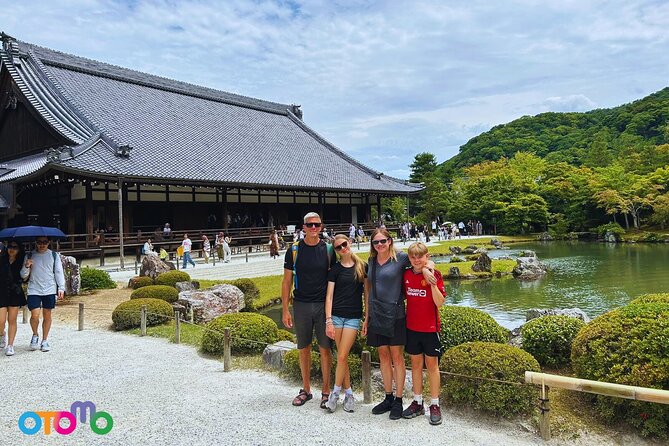
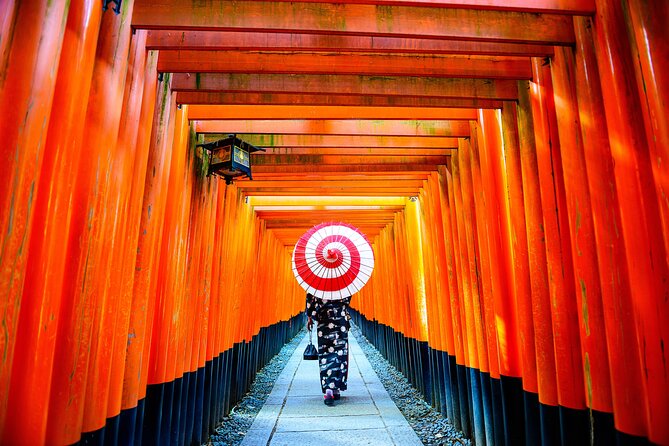
The first stop is Fushimi Inari Taisha, one of Kyoto’s most recognizable sights. Its approach is lined with thousands of vermilion torii gates, creating the famous Senbon-torii, or thousand-gate corridor.
The gates were placed as offerings connected with prayers for safety and fulfilled wishes. Walking beneath them gives you one of Kyoto’s most memorable visual experiences. The repeated gates create a sense of mystery, and the shrine offers a strong first impression of Japan’s Shinto traditions.
The planned visit is about 32 minutes. That is enough to see the main gate area and walk into the torii corridor, but not enough for a long climb through the entire mountain shrine complex. If you want a more extended walk here, discuss it with your guide before the day begins. You may need to shorten another stop.
Fushimi Inari is also a good place for your guide to explain the difference between a Shinto shrine and a Buddhist temple. That context helps later at Kiyomizu-dera and Kinkakuji, where the buildings and rituals have a different character.
Kiyomizu-dera and Kyoto from the wooden stage
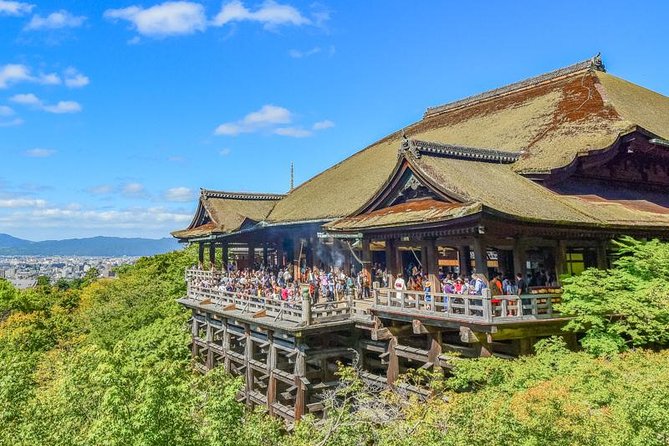
Kiyomizu-dera is one of Kyoto’s best-known temples and a UNESCO World Heritage site. Its large wooden stage gives you a broad view over the surrounding city and wooded hills, making this one of the most rewarding stops for photographs.
The temple began with the enshrinement of a statue of Kannon, a figure associated with compassion. Your guide can add meaning to the buildings, religious customs, and legends instead of leaving you to see only a famous photo location.
The scheduled visit is 45 minutes. That is a sensible introduction, but it will feel short if you want time for every hall, view, and shop along the approach. The temple area includes slopes and busy pedestrian sections, so comfortable shoes matter.
An important pricing note needs attention here. The supplied cost information lists admission as not included and also gives an admission figure of ¥5,370 per person for Kiyomizu-dera. It separately gives ¥5,370 per person as the estimated standard tour expenses. Those figures do not read clearly together, so confirm the current ticket and estimated cost before booking.
Sanneizaka, Ninen-zaka, and the walk downhill
After Kiyomizu-dera, the route continues through Sanneizaka for about an hour. This is not simply a transfer between sights. It is one of the most pleasant sections of the day for seeing Kyoto’s traditional streetscape.
Sanneizaka forms part of the approach to Kiyomizu-dera and is linked with Kita no Mandokoro, the wife of Toyotomi Hideyoshi. Along with nearby Ninen-zaka, it is protected as an Important Preservation District for Groups of Traditional Buildings.
You can expect old-style buildings, small shops, food stops, and a strong sense of place. The route gives you a break from temple interiors and lets you experience Kyoto at street level. Your guide can also point out details you might otherwise walk past.
The drawback is the footing. This part of the day includes walking on sloped and sometimes uneven streets. Add crowds and frequent stops for photos, and the pace can become tiring. A guide can adjust the route for children or for someone with limited stamina. One guide was praised for quickly changing the plan to suit a family member’s capabilities.
More Private Tours in Kyoto
- Kyoto 6hr Private Tour with Government-Licensed Guide
★ 5.0 · 1,369 reviews - 10 Must-see Spots in Kyoto One Day Private Tour (up to 7 people)
★ 5.0 · 1,108 reviews - Kyoto 4hr Private Tour with Government-Licensed Guide
★ 5.0 · 629 reviews - Kyoto: Private Tour with Local Licensed Guide
★ 4.8 · 463 reviews
Hanamikoji Street and the Gion atmosphere
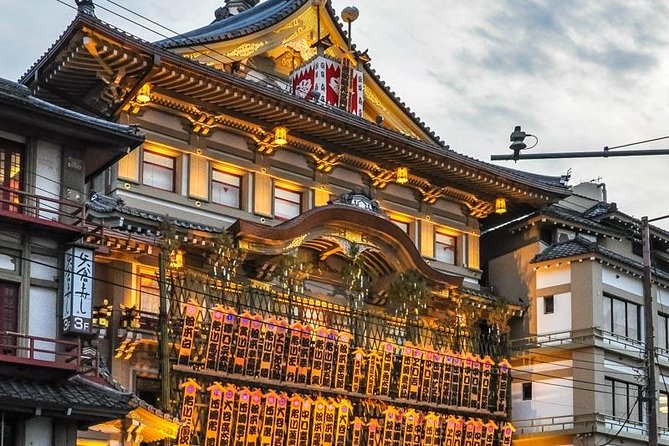
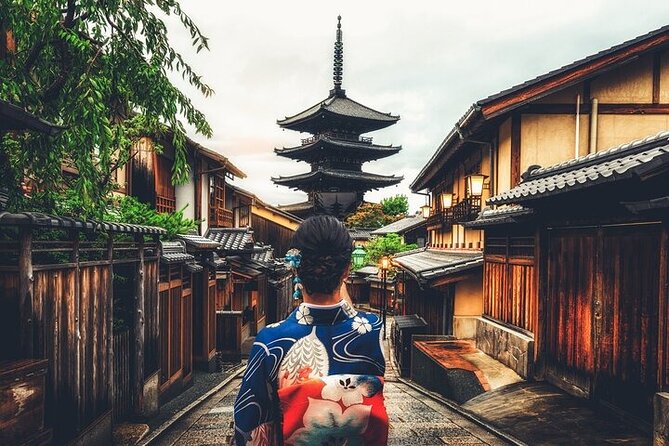
Hanamikoji Street receives about ten minutes. That is a short stop, but it introduces you to the Gion area and its traditional wooden buildings.
The street is known for Kyoto-style architecture and its connection with the historic entertainment district. You will not have time for a full Gion visit in ten minutes, so think of this as a quick orientation and photo stop rather than a major attraction.
Your guide may explain the difference between a historic district and a stage-managed tourist display. That kind of background is one reason to choose a private guide instead of simply following a map. You can ask questions and get help understanding local customs.
Please keep expectations modest here. If Gion is a major priority, ask about spending more time in the area through the customizable option. The standard seven-hour schedule gives greater weight to the four headline sights.
Nijo Castle and the Tokugawa story
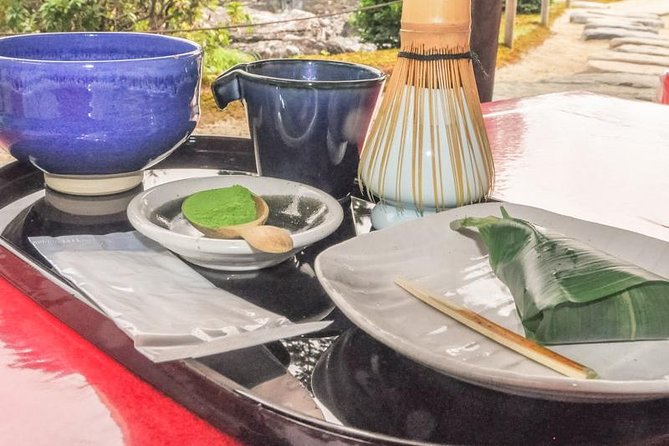
Nijo Castle shifts the day from religious buildings to political history. It was connected with the rise and fall of the Tokugawa shogunate and preserves an important chapter of Japan’s past.
The castle is known for its handsome old architecture, gardens, and rooms tied to the country’s military government. After the crowded temple approaches, the garden offers a calmer place to pause.
The planned stop lasts about 55 minutes. That gives you time for a useful visit, though the castle grounds can reward a slower pace. If you are particularly interested in Japanese political history, ask the guide to focus on the castle’s role in the Tokugawa period.
Admission is not included. The tour information also says that all transportation, food, drinks, entrance fees, and other expenses at the visited sites are paid by you. Bring a payment method that works for the day and ask your guide about the current entrance costs.
Kinkakuji, Kyoto’s Golden Pavilion
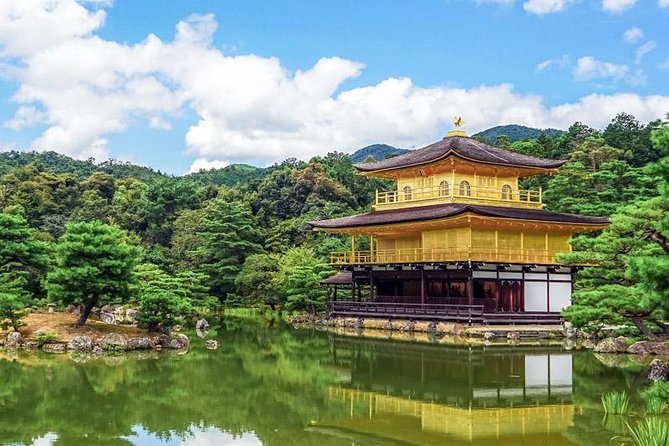
Kinkakuji, also called the Golden Pavilion, is the final major stop and one of Kyoto’s most photographed sights. The gold-covered building reflects in the pond, creating the image many people associate with Kyoto.
The pavilion is linked with the idea of the Golden Land. Its visual impact is immediate, but the visit is not only about taking a picture. The grounds and surrounding setting help explain why this temple remains one of Kyoto’s essential stops.
The planned visit is about 40 minutes. Kinkakuji is busy throughout the year, so your guide’s timing can make a real difference. Josh was praised for arranging the day around major busy periods, helping the group avoid the worst crowd conditions. That kind of timing is a genuine advantage when four major sights are involved.
Still, do not expect solitude. Kinkakuji is a must-see, but it is also one of Kyoto’s most visited places. The private format does not remove the crowds. It simply gives you someone who can keep the visit organized and provide context.
What the private guide adds

The strongest part of this experience is the guide, not transportation or special access. The guide helps you connect the sights, manage the clock, and make choices when the day becomes crowded or weather changes.
Several guides received specific praise. Josh helped with timing, lunch, shopping suggestions, and clear explanations. Kai adjusted a day around the group’s needs, recommended a restaurant, and offered additional advice for the rest of the Kyoto visit. Fumi created a flexible plan and helped show the city’s highlights.
Jun was praised for meeting on time and arranging an efficient first-day introduction. Tetsu listened carefully to the group’s interests and added his own suggestions. Tokiko was described as enthusiastic about Kyoto and able to show a great deal even after a late arrival.
Language support is another practical benefit. The tour is designed to reduce language problems, and one guide, Kai, was noted for strong English after living in Ireland. Another guide was praised for translating cultural differences clearly.
The quality can depend on the individual guide. One unhappy customer felt a customized tour did not provide the expected use of time or value. That warning matters. If you choose the customized option, reply to the provider and give clear priorities, walking limits, food needs, and must-see places. Do not assume a personalized plan will be created without your input.
Walking, weather, and family needs
This is an active day. Fushimi Inari includes gates and shrine paths, Kiyomizu-dera involves slopes, and Sanneizaka requires steady walking. Comfortable clothing and shoes are not a minor suggestion here.
The experience can work for families. A guide was praised for being patient with two children, keeping the group safe, and adapting explanations. Another guide changed the route to suit a family member’s physical ability.
Rain does not automatically ruin the day. One group enjoyed the experience despite wet weather, and a private guide can adjust the order or pace when conditions change. Even so, rain can make slopes and stone streets more tiring, so bring suitable clothing and allow extra patience.
The activity states that most people can participate, but it does not promise a fully step-free route. If mobility is a concern, discuss it before booking and ask how the standard stops can be adjusted.
What lunch and transportation really cost
Lunch is not included. Several guides helped choose restaurants, including an okonomiyaki restaurant and a tea house for dessert and tea. Another guide reserved a lunch at Ikedaya for a customized group.
These examples show the value of asking your guide for help, but they do not mean meals are included or guaranteed. You pay for your own food and drinks. A private guide may help you choose a place that fits your taste, timing, and budget.
Transportation is also extra. The standard arrangement does not include fares between sights. If you choose the Taxi Preference option, you also pay the guide’s taxi fares. A limo option is available for those who want to move around Kyoto by private car, but that adds to the total price.
The $99.10 starting price is easiest to justify if you value planning help, personal attention, and efficient sightseeing. It is less attractive if you are comfortable using Kyoto’s buses and trains, researching admission fees, and explaining the sights yourself.
The stated estimated standard expenses are ¥5,370 per person, but the admission information is not presented consistently. Treat that number as an estimate, not a final all-in price. Ask for a current breakdown of tickets and transport before you commit.
Customizing the day two weeks ahead
The customizable option can be a strong choice if you have already seen one or more of the standard sights, need a slower pace, or want more time in Gion, shopping areas, gardens, or food stops.
You are asked to contact the guide two weeks before the tour to create a personalized plan. If you do not respond, the standard schedule will be used. That rule is important, especially if you are paying more for customization.
Hotels can be used as meeting points only when they are in Kyoto city. Otherwise, the regular meeting point is the Bus Ticket Centre and Information Centre near Kyoto Station.
Give the guide useful information rather than a vague request. List your top sights, preferred walking pace, lunch interests, children’s needs, and any place you have already visited. The better your information, the more useful the private format becomes.
Who should book this Kyoto day trip?
I would recommend it most strongly to first-time visitors with only one full day in Kyoto. You get the city’s classic shrine, temple, castle, historic street, and Gion area in one organized outing.
It also suits families and small private groups that want help with timing and local customs. The positive guide feedback repeatedly centers on patience, flexibility, explanations, photographs, restaurant help, and adapting the schedule.
You may want another option if you prefer slow temple visits, long meals, or independent travel. Seven hours is a lot of sightseeing, but it is also a tight schedule. You will see the essentials, not every corner of each site.
The 4.9 rating from 97 ratings and 99 percent recommendation figure are encouraging, but the lower-rated experience shows why communication matters. Your guide can be excellent and still struggle if the expectations for a customized tour are not agreed in advance.
Should you book it?
Book this tour if you want a well-organized first look at Kyoto and value a guide who can explain culture, adjust the pace, and help you make the most of a short visit. The combination of Fushimi Inari, Kiyomizu-dera, Sanneizaka, Hanamikoji, Nijo Castle, and Kinkakuji gives you a strong sense of the city’s main sights.
Before booking, budget for transportation, tickets, lunch, and other costs. Wear good walking shoes, answer the customization request promptly, and confirm the unclear ¥5,370 estimate. If you do those things, this private day trip offers a practical way to see Kyoto’s essential sights without spending your first day sorting out the route alone.
FAQ
How long does the Kyoto private day trip last?
The experience lasts approximately seven hours.
Which sights are included?
The standard day includes Fushimi Inari Taisha, Kiyomizu-dera Temple, Sanneizaka, Hanamikoji Street, Nijo Castle, and Kinkakuji Temple.
Are entrance fees included?
No. Entrance fees are not included in the tour price. Kiyomizu-dera, Nijo Castle, and Kinkakuji list admission as an additional expense.
Is transportation included?
No. Transportation fees are paid by you. If you choose the Taxi Preference option, you also pay taxi fares for the guide.
Can I customize the route?
Yes. Select the customizable tour option and contact the guide two weeks before the tour. If you do not respond, the standard schedule will be used.
Where does the tour start and finish?
It starts at the Bus Ticket Centre and Information Centre near Kyoto Station and ends back at the meeting point.
Can I cancel for a full refund?
Yes, if you cancel at least 24 hours before the experience start time. Cancellations made less than 24 hours in advance are not refunded, and late changes are not accepted.
Just added in Kyoto
- The “Golden Route” and Ancient Japan by DIAMIR Erlebnisreisen – 14-Day Tour★ 2.0 · 2 reviews
- Japan: Castles & Cuisine by G Adventures – 6-Day Kyoto to Osaka Tour★ 4.5 · 4 reviews
- Cycle Japan by Explore! – 13-Day Kyoto to Tokyo Tour★ 4.7 · 12 reviews
- Cycle Japan by Intrepid Travel – 11-Day Kyoto to Tokyo Tour★ 4.8 · 2 reviews
- Classic Japan by Intrepid Travel – 11-Day Kyoto to Tokyo Tour★ 4.4 · 14 reviews
- Ancient & Modern Japan 14-Day Tour by Exodus Adventure Travels★ 4.4 · 40 reviews
- 5 Day Cultural Adventure of Kyoto, Nara & Osaka by Tourist Journey★ 2.5 · 2 reviews
- 12 Days Kinosaki Onsen Escape: A Journey Through Japan’s Timeless Towns by UME Travel★ 4.8 · 5 reviews
Day Trips, compared.
![[Kyoto & Nara Day Tour] Sagano Scenic Railway & Nara Park & Fushimi Inari Taisha Thousand Torii Gates & Togetsukyo Bridge & Bamboo Grove & Kimono Forest (Departing from Osaka)](https://media.japanvisits.com/wp-content/uploads/kyoto-nara-day-tour-sagano-scenic-railway-nara-park-fushimi-inari-taisha-thousand-torii-gates-togetsukyo-bridge-bamboo-grove-kimono-forest-departing-from-osaka-k110001-400x257.jpg)
Kyoto Amanohashidate & Ine Funaya & Ine Bay Scenic Day Trip (Departing from Osaka or Kyoto)
Read our review →
Kyushu: Mount Aso, Kusasenri & Takachiho Gorge Day Tour (Optional Takachiho Boat Ride Experience)
Read our review →
Kyushu One-Day Tour: Yufuin no Mori Train & Yufuin Town & Nyoirin-ji Temple & Dazaifu & Hell Hot Springs (Departing from Fukuoka)
Read our review →
Browse the lists this tour appears in