

Reviewed · CASTLES AND HISTORIC SITES
Matsumoto Castle Tour & Samurai Experience
History becomes easier to remember when you can act it out. This three-hour experience combines a guided visit to Matsumoto Castle with a hands-on samurai sword lesson, giving you both serious history and a playful way to connect with it. You walk from Matsumoto Station, enter one of Japan’s finest surviving castles, then put on samurai clothing and practice basic movements with a theatrical sword.
I especially like the castle interpretation, which can cover architecture, defense, weapons, samurai life, and the story of Matsumoto itself. I also like the family-friendly sword class, where you choose an outfit and sword, learn simple kata, and pose for memorable photographs. The main thing to understand is that this is stage combat and movement practice, not sword cutting or a lesson with a genuine katana.
The tour costs $88.53 per person, which is a fair price if you want a guide and the samurai activity. It is less compelling if you only want to see the castle, since the admission fee alone is much lower and the castle can be visited without joining a tour.
In This Review
- Key details before you book
- Why Matsumoto Castle deserves your time
- Inside the five-story castle tower
- The Nakamachi Kurassic-kan sword session
- How the guides shape the experience
- Is $88.53 good value?
- Practical advice for a smoother visit
- Who should book this Matsumoto experience?
- Should you book it?
- FAQ
- How long does the Matsumoto Castle and samurai experience last?
- Where does the tour begin and end?
- Are admission fees included?
- Will I use a genuine katana?
- Can children join the activity?
- Are the castle stairs difficult?
Key details before you book
- Matsumoto Castle is a National Treasure: Its black-and-white exterior, five-story tower, and surviving feudal structure make it one of Japan’s essential castle visits.
- The tower climb is demanding: The stairs are steep, narrow, and sometimes more like a ladder than a normal staircase. Low beams also require care.
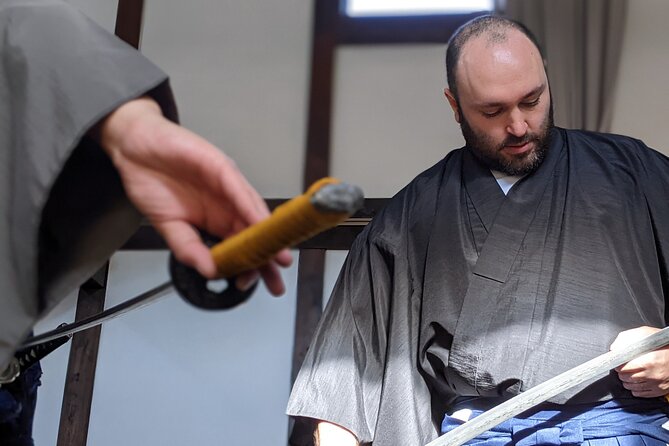
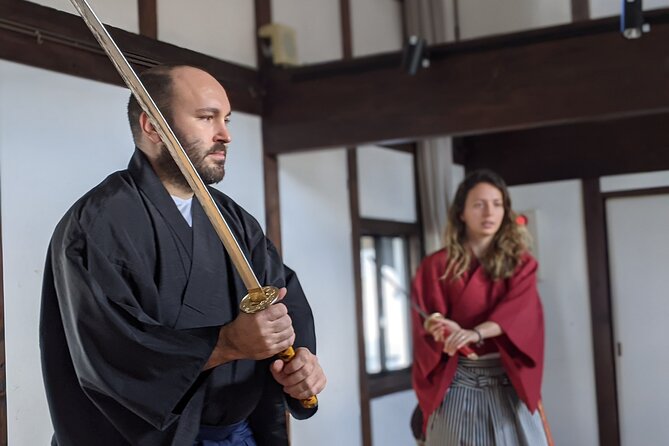
- The sword session uses theatrical weapons: You practice safe movements and kata with training swords, not sharp blades.
- You choose your samurai costume: Outfits and swords are supplied for the activity, including children’s outfits and foam swords for children under six.
- The guides add local context: Guides such as Tim, Tom, Naomi, Kei, Matt, and others have been praised for clear English, humor, local tips, and a relaxed pace.
- The group is limited to 15 people: That keeps the activity smaller than a large coach tour, though the exact feel depends on the day’s group.
Why Matsumoto Castle deserves your time
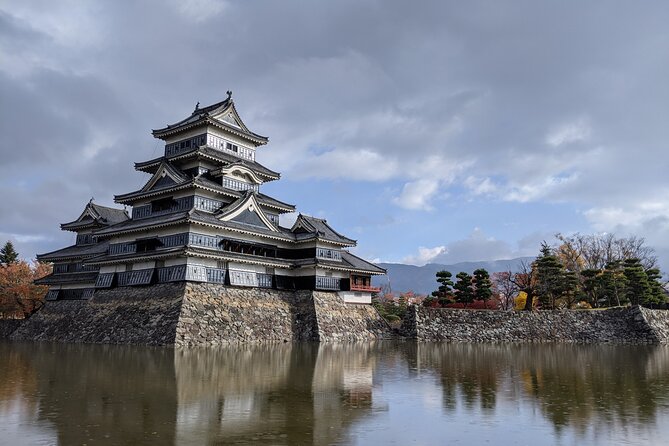
Matsumoto Castle is often called Crow Castle because of its dark outer walls. Against the surrounding mountains, the black-and-white design has a striking look that is quite different from the pale, brightly painted castles many people picture when they think of Japan.
Construction began in 1592, during the period when Japan’s feudal rulers were strengthening their positions and preparing for conflict. The castle’s main tower is the oldest surviving castle donjon in Japan, and Matsumoto is one of only five castles designated as National Treasures.
That designation matters because this is not a modern reconstruction built mainly for display. The structure has survived as an actual historic building, with the awkward stairs, low ceilings, timber interiors, and defensive features that make an old castle feel real rather than polished.
The tour begins at Matsumoto Station, at 1 Chome-1 Fukashi. From there, your English-speaking guide leads you toward the castle and may point out places of interest along the way. The walk gives you time to hear about Matsumoto, the region, and the setting before you enter the main attraction.
I like this start because it gives the castle some context. You are not simply handed a ticket and sent inside. A guide can help explain why the city developed as it did and how the castle fitted into feudal power structures.
The quality of this part can vary with the individual guide. Tom, who has lived in Japan for decades and previously worked as a teacher, received praise for explaining both Japanese history and practical ideas for the rest of a trip. Tim was also praised for his humor and preparation, including carrying slippers for the cold castle floors.
That last detail may sound minor, but it is useful. Matsumoto Castle can be chilly inside, especially in colder months, and you remove your shoes before entering. Bring warm socks, and consider packing a spare pair. One person specifically described the interior floors as feeling like ice in March.
More Castles and Historic Sites in Nagano
- Matsumoto Castle Tour & Samurai Experience
★ 4.9 · 128 reviews - 1-Day Tour from Nagano and Matsumoto Kamikochi & Matsumoto Castle
★ 5.0 · 105 reviews - Full-Day Tour: Matsumoto Castle & Kamikochi Alpine Valley
★ 4.8 · 78 reviews
Inside the five-story castle tower
You receive about an hour and a half for the castle portion. The guide’s job is not only to point out attractive views, but to help you read the building.
Look for the defensive logic in the windows, openings, narrow passages, and changing levels. Samurai castles were designed for protection as well as display, and the building’s cramped interior gives you a better sense of that than a flat museum floor would.
The tower rises through several levels, and reaching the top requires a serious climb. The stairs are steep and narrow, with large steps that can feel close to climbing a step ladder. You should use the handrails, take your time, and keep children close.
This is the tour’s clearest physical drawback. Most people can participate, but the castle is not an easy walk. Anyone with limited mobility, a fear of steep stairs, or difficulty with balance should think carefully before booking.
At the upper levels, you get views over Matsumoto and toward the surrounding mountains when conditions allow. The view is a reward for the climb, but the inside of the tower is the main attraction. You are seeing the original structure rather than walking through a modern visitor center dressed up as a castle.
The castle section can be highly informative when matched with the right guide. Several guides have been praised for explaining architecture, fighting methods, samurai culture, weapons, town history, and defensive planning. A guide may also answer questions about other places in Japan, which is handy if Matsumoto is one stop on a longer trip.
Still, I would keep expectations sensible. This is a general-interest tour, not an academic seminar. One detailed criticism described a guide who could not answer some deeper questions about combat and castle history. The provider’s own approach favors guides with long-term local experience and strong communication, rather than requiring every guide to be a professional historian.
For most people, that makes the tour more conversational and approachable. If you already have advanced knowledge of Japanese military history, you may want to supplement the visit with a museum guidebook or specialist source.
The Nakamachi Kurassic-kan sword session
After the castle, you continue to Nakamachi Kurassic-kan for the samurai activity. The session lasts about an hour and focuses on basic sword handling, stance, drawing and returning the sword, and simple attack and defense movements.
You get to pick a sword and samurai outfit for the activity. That small element gives the class a personal touch, especially for children and teenagers. It also turns the lesson into something visual and memorable, with photographs that look far more dramatic than a standard souvenir snapshot.
The instructor demonstrates the movements first, then leads you through the sequence. The class is designed for beginners and families, so you do not need previous martial arts experience. The movements are taught as kata and stage combat, with an emphasis on safe handling and performance.
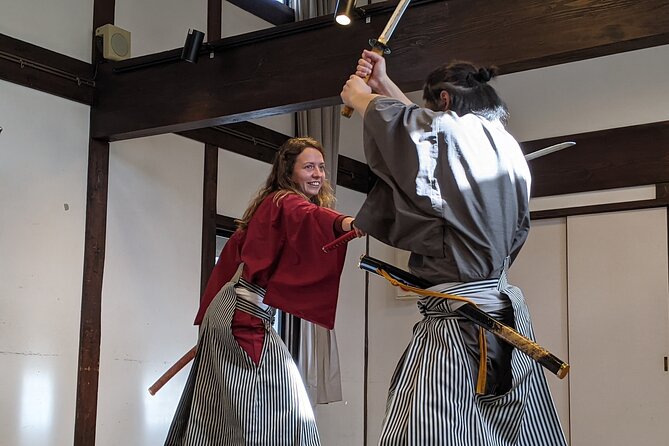
Some sessions include role-playing or a short sequence that resembles a fight scene. You are learning how to move, pose, draw, and return the sword properly, not fighting another person with live blades.
That distinction is important. Japanese law treats genuine katanas as weapons requiring strict licensing. The swords used here are theatrical or training swords, and no cutting or slicing of objects takes place. If you are expecting a Japanese version of a live blade-cutting class, this is the wrong activity.
If you want a safe introduction to samurai movement, however, the format makes sense. Children can participate without a minimum age requirement, and children under six can take part free with a child-sized outfit and foam sword. The family reviews consistently point to patient instructors who can keep younger children and chatty nine-year-olds involved.
The instructors have also been praised for humor and clear demonstrations. Miharu Sensei, Kei, and other teachers are mentioned warmly, with particular praise for patience, timing, and the ability to help both adults and teenagers enjoy the session.
I like that the sword activity does not pretend to be something it is not. You learn a short routine, handle a safe prop, and get a taste of the discipline and posture associated with samurai performance. It is entertainment, but it is not empty entertainment because the instructor explains the movements and gives you something to practice.
How the guides shape the experience
The guide can make a large difference during the castle visit. The strongest feedback centers on guides who explain clearly, move at a comfortable speed, answer questions, and add small touches that show care.
Naomi has been praised for her friendly manner and strong explanations. Tim and Collin were described as an effective team, while Kei received praise for helping a solo participant understand both the castle and the sword lesson. Tom was appreciated for mixing local history with useful suggestions for other Japanese cities.
You may not receive one of those exact guides, but the recurring strengths are worth noting. This is a walking tour, so a guide who notices when you need a pause or adjusts the pace can make the castle stairs easier to manage.
The English level also matters. The activity includes an English-speaking guide, and the sword instructor may work with an interpreter, as Tom did during one session with Miharu Sensei. That arrangement can work well, since the instructor focuses on demonstration while the guide explains instructions and context.
There is some uncertainty here. Individual guiding styles differ, and the experience is not presented as a fixed script delivered by a castle historian. If you want a precise specialist lecture, this may not satisfy you. If you prefer a friendly local guide who can connect the building to daily life in Matsumoto, it is more likely to fit.
A completely different kind of day out:
- 1-Day Snow Monkeys, Zenko-ji Temple & Sake in Nagano
★ 5.0 · 1,020 reviews - Nagano: Snow Monkeys, Zenkoji Temple & Sake Day Trip
★ 4.9 · 833 reviews - [Nagoya Kamikochi Hiking Tour] One-Day Nature Forest Hiking Tour of Kamikochi & Taisho Pond & Tashiro Pond & Kappa Bridge & Myojin Pond & Hotaka Mountain Range & Hotaka Shrine Okumiya (Departure from Nagoya)
★ 4.7 · 423 reviews - From Tokyo: Snow Monkey 1 Day Tour with Beef Sukiyaki Lunch
★ 4.6 · 295 reviews
Is $88.53 good value?
The price is $88.53 per person, and the experience runs about three hours. Admission to Matsumoto Castle is included, as are the English-speaking guide, the sword lesson, the outfit, and the training sword.
The castle ticket itself is not the main reason to pay this amount. One piece of tour feedback cited an admission price of 700 yen, so the premium is really paying for the guide and the one-hour samurai session.
That can be good value if you would otherwise pay separately for a guided castle visit and a cultural activity. You also avoid having to arrange the costume rental and sword class yourself. The combination saves time and gives your visit a clear shape, especially if you have only one day in Matsumoto.
The value is strongest for families, first-time visitors to Matsumoto, and anyone who wants more than photographs of the castle exterior. Teenagers with an interest in samurai are likely to enjoy the hands-on part, while adults who like architecture and local history get a substantial castle visit.
The value is weaker for independent visitors who already know the castle well or who mainly want to walk through it at their own speed. In that case, you could buy admission and spend the difference on another activity.
The group maximum is 15 people. That is small enough to feel personal in comparison with a large bus tour, though it is not a private tour. The meeting point is near public transportation at Matsumoto Station, and the experience returns there at the end.
Practical advice for a smoother visit
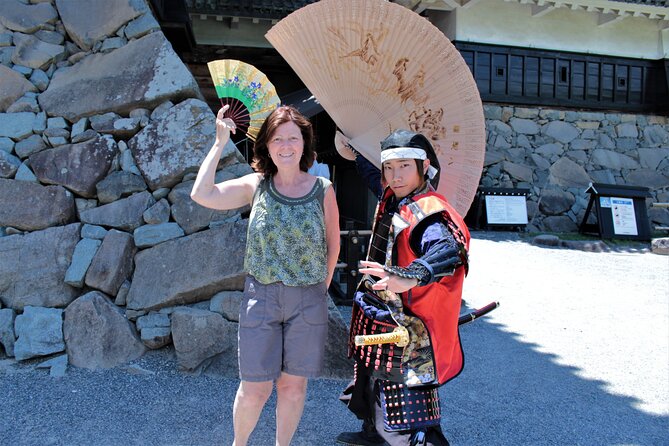
Wear shoes that are easy to remove and put back on. You will need to take off your shoes inside the castle, and the floor can be very cold, so warm socks are more than a small comfort.
Give yourself extra care on the tower stairs. Hold the rail, watch for people above and below you, and pay attention to low beams. The castle’s rough edges are part of its appeal, but they also demand more attention than a modern building.
Keep the sword lesson in the right frame of mind. You will not cut bamboo, mats, or other objects, and you will not use a sharp katana. You will practice a safe routine in costume, with a theatrical or training sword.
The activity has no minimum age requirement, and children under six can participate free with foam swords and children’s outfits. Even so, parents should consider whether their child can follow movement instructions and manage the castle stairs.
The tour offers free cancellation up to 24 hours before the start time. Cancellations made within 24 hours are not refunded, and changes inside that window are not accepted.
Who should book this Matsumoto experience?
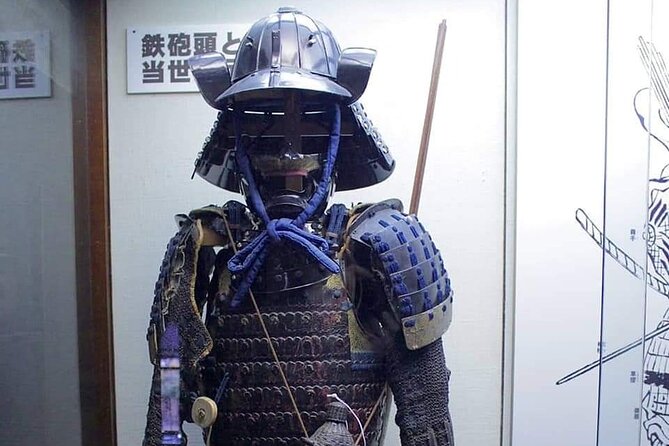
I would recommend it most strongly to families with children from roughly school age upward, teenagers interested in samurai, and adults who want history presented in a lively way.
It also suits anyone visiting Matsumoto for the first time. The walk from the station, local explanations, castle tour, and sword session create an efficient introduction to the city without requiring you to plan several separate bookings.
Solo visitors can enjoy it too. One person specifically appreciated having a guide explain the castle and being included in the sword lesson. The small group limit helps, though the activity will naturally feel more social when several families or couples join.
I would be more cautious if steep stairs are a serious concern or if you expect genuine martial arts training. The castle is physically demanding, and the sword class is a safe performance lesson rather than combat instruction.
Should you book it?
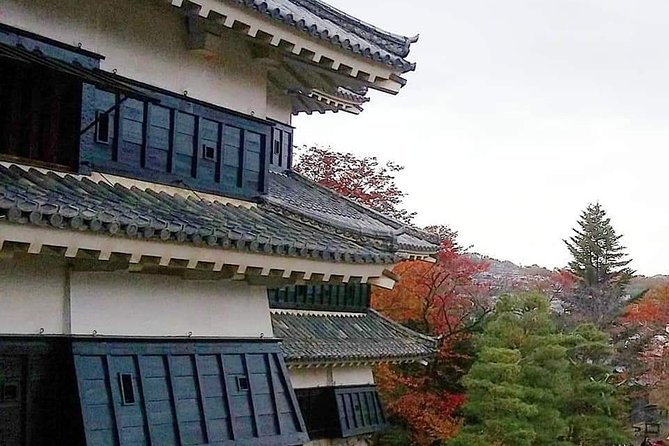
Book this tour if you want Matsumoto Castle explained by an English-speaking guide and you like the idea of finishing with a samurai costume and sword routine. The combination works because the castle provides the historical setting, while the activity gives you a physical way to remember what you learned.
Skip it if you only want castle admission, prefer complete independence, or are specifically seeking sharp-sword practice. For everyone else, the $88.53 price is reasonable for a three-hour experience that blends a National Treasure, local context, and good family fun.
FAQ
How long does the Matsumoto Castle and samurai experience last?
The experience lasts approximately three hours. About one and a half hours are allocated to Matsumoto Castle, followed by about one hour for the samurai activity, with walking and transitions included in the overall visit.
Where does the tour begin and end?
The meeting point is Matsumoto Station at 1 Chome-1 Fukashi, Matsumoto, Nagano 390-0815, Japan. The activity ends back at the meeting point.
Are admission fees included?
Yes. Admission to Matsumoto Castle and the samurai activity is included, along with the English-speaking guide, samurai outfit, and sword rental during the lesson.
Will I use a genuine katana?
No. The activity uses theatrical or training swords because genuine katanas are regulated as weapons in Japan. You practice safe sword movements and kata, and the session does not include cutting or slicing objects.
Can children join the activity?
Yes. There is no minimum age requirement. Children under six can participate free, with children’s outfits and foam swords included at no extra cost.
Are the castle stairs difficult?
Yes. The stairs inside Matsumoto Castle are steep and narrow, with some large steps that can feel similar to a ladder. You should also watch for low beams inside the old structure.
Just added in Nagano
- [Nagoya Kamikochi Hiking Tour] One-Day Nature Forest Hiking Tour of Kamikochi & Taisho Pond & Tashiro Pond & Kappa Bridge & Myojin Pond & Hotaka Mountain Range & Hotaka Shrine Okumiya (Departure from Nagoya)★ 4.7 · 423 reviews
- Wasabi Farm Walking Tour & Lunch★ 4.5 · 20 reviews
- Snow Monkey Park & Miso Production Day Tour from Nagano★ 5.0 · 18 reviews
- Snow Monkeys, Hokusai & Sake: A Perfect Day in Nagano★ 5.0 · 19 reviews
- Ski or Snowboard Lesson in Shiga Kogen (4Hours)★ 5.0 · 34 reviews
- Snow Monkey & Shibu Onsen Afternoon Tour (Depart: Iiyama & Nozwa)★ 5.0 · 54 reviews
- 1-Day Tateyama-Kurobe Tour: Walking on the ‘Roof of Japan’★ 5.0 · 20 reviews
- Nagano Spring: 1-Day Cherry Blossoms & Snow Monkeys Guided Tour★ 5.0 · 31 reviews
Castles and Historic Sites, compared.


Imperial Palace and Shogun Historical Walking Tour
Read our review →
Tokyo Castle & Imperial PalaceーShogun Walking Tour
Read our review →
Nijo-jo Castle and Ninomaru Palace Guided Tour
Read our review →
Samurai Ninja Museum Guided tour and Experience
Read our review →Browse the lists this tour appears in