

Reviewed · CASTLES AND HISTORIC SITES
Matsumoto Castle Tour & Samurai Experience
History comes alive in Matsumoto. This three-hour tour pairs one of Japan’s best-preserved feudal castles with a hands-on samurai lesson, giving you both the setting and the activity. I especially like the chance to enter Matsumoto Castle’s original tower and then put on samurai clothing for basic sword practice.
I also like the human touch. Guides such as Naomi, Shin, Matt, Tim, and Sayuko have been praised for clear explanations and a friendly manner, while instructors including Kei and Kae bring patience and good humor to the sword class. The main consideration is physical: the castle stairs are steep and narrow, and you walk through parts of the building without shoes, which can feel cold in winter.
In This Review
- Key points at a glance
- Why Matsumoto is the right place for a samurai lesson
- Meeting at Matsumoto Station and walking to the castle
- Two hours inside Matsumoto Castle
- The castle’s outdoor setting and photo opportunities
- Dressing as a samurai and choosing your sword
- What makes the sword class worth your time
- Guide quality and group atmosphere
- Is $88 a fair price?
- Timing, crowds, and what to bring
- Who should book this Matsumoto experience?
- Should you book it?
- FAQ
- How long does the Matsumoto Castle and Samurai Experience last?
- Where is the meeting point?
- Is the tour conducted in English?
- Is admission to Matsumoto Castle included?
- Are samurai clothing and swords provided?
- Is the tour suitable for people with mobility impairments or wheelchair users?
Key points at a glance
- Original 1593 to 1594 castle tower: See one of Japan’s oldest surviving castle towers, with five exterior tiers and six interior stories.
- Two very different activities: Spend about two hours on castle history and one hour learning basic samurai sword positions and movements.
- English-speaking support: A live English guide explains the castle and can translate during the Japanese-led sword lesson.
- Costume and sword rental included: You dress as a samurai and select a sword for the activity at no extra rental charge.
- A useful starting point: Meet at the front of the JR Line ticket office near Starbucks inside Matsumoto Station on the second floor.
- Plan for real castle stairs: The tower is preserved in its original form, not rebuilt as a modern museum, so access is demanding.
Why Matsumoto is the right place for a samurai lesson
Matsumoto gives this experience a stronger setting than a generic sword demonstration. The city is home to an authentic feudal castle, and local pride in that building remains part of daily life. You are not simply learning a few staged movements in a hotel room. First, you see the place where regional lords once held power. Then you learn how the samurai ideal is represented through sword training.
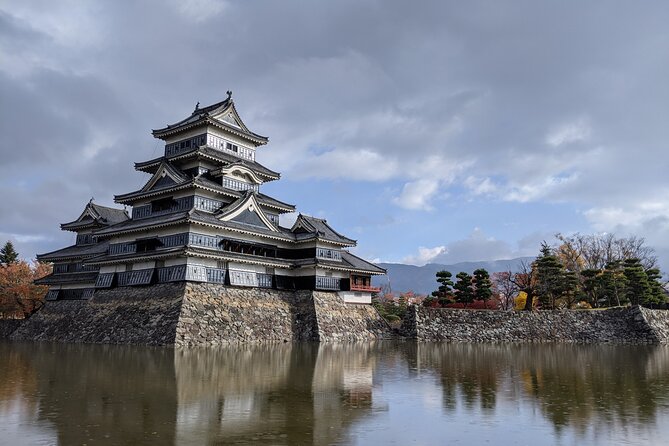
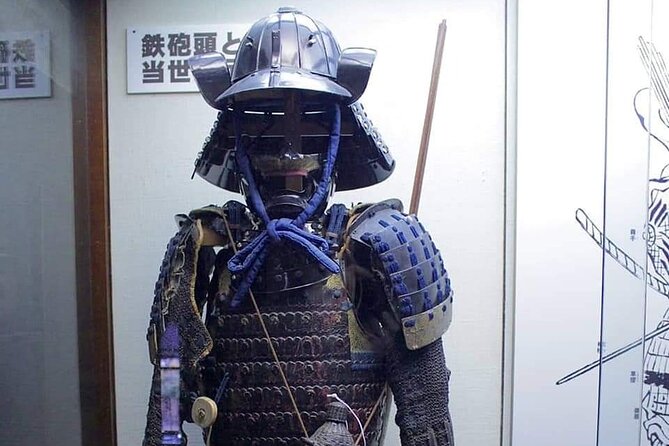
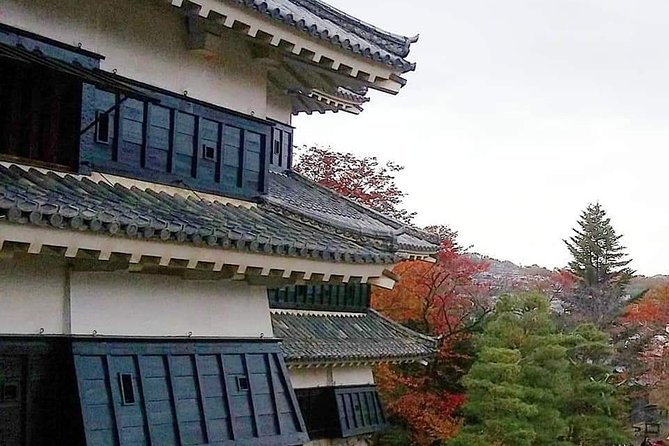
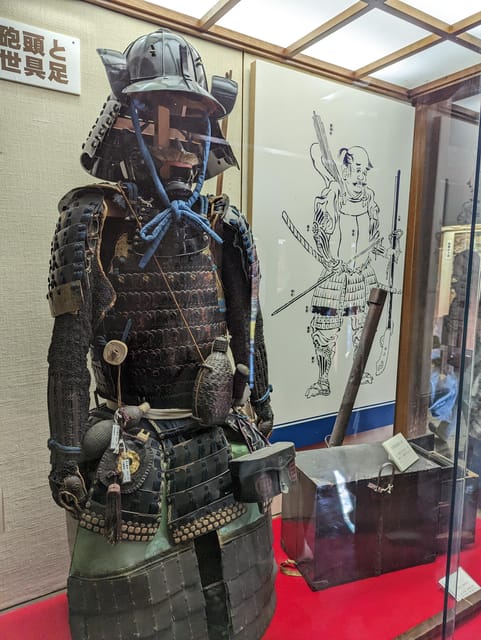
Matsumoto Castle was first built in 1593 and 1594. It is one of only five castles in Japan designated a National Treasure, and its main tower is the oldest original five-tiered, six-story castle tower still in Japan. That matters because the structure itself is the lesson. You can see the timber, narrow passages, defensive design, and steep internal stairways rather than walking through a modern replica.
The combination also gives the day a sensible rhythm. The castle supplies context and atmosphere. The sword class gives you something active to do. I find that useful because a purely historical visit can become tiring, while a sword activity without context can feel like dress-up with little meaning.
More Castles and Historic Sites in Nagano
- 1-Day Tour from Nagano and Matsumoto Kamikochi & Matsumoto Castle
★ 5.0 · 105 reviews - Full-Day Tour: Matsumoto Castle & Kamikochi Alpine Valley
★ 4.8 · 78 reviews - Matsumoto Castle Tour & Samurai Experience
★ 5.0 · 69 reviews
Meeting at Matsumoto Station and walking to the castle
The meeting point is inside Matsumoto Station, at the front of the JR Line ticket office and near Starbucks on the second floor. This is a practical location, especially if you arrive by train and do not know the city yet. You avoid hunting for a small street address, and the guide can lead you from the station toward the castle.
The walk itself can add useful background. Guides have used the route to explain how Matsumoto developed and to point out local landmarks before reaching the castle. That short introduction helps you get your bearings and makes the castle feel connected to the town rather than isolated behind its moat.
Matsumoto is a small city, so do not expect a long urban tour before the main attraction. The value here is not in covering a huge number of sights. It is in having an English-speaking guide explain what you are seeing and why it mattered.
Several guides have made a strong impression by adjusting the pace to the group. Tim, for example, has been praised for keeping the tour organized while making time for questions. Shin has been noted for explaining both Matsumoto and wider Japanese customs. That flexibility is helpful if your group wants detailed historical answers or simply a clear overview.
Two hours inside Matsumoto Castle
The castle portion takes about two hours, though the exact timing can shift. Holiday periods and busy weekends may create queues, and the full tour can finish earlier or later than planned. Your guide helps manage that uncertainty and keeps the visit moving toward the sword class.
From outside, Matsumoto Castle is famous for its black-and-white appearance, but the interior is where this tour earns its keep. You learn about the local samurai lords, the growth of Matsumoto City, social classes, residential areas, and the castle’s defensive methods. Those details turn a striking building into a place with a working purpose.
You may hear about how the castle was organized to protect its rulers and control movement. The narrow openings and awkward approaches make more sense when a guide explains their defensive role. Without that context, you might simply see a series of dark rooms and steep stairs. With it, the building becomes a carefully planned military residence.
One important point: Matsumoto Castle is maintained as an original structure, not arranged like a modern museum. Compared with Osaka Castle, you should expect fewer polished displays and less easy movement through the building. You get more authenticity, but less comfort. The floors are wooden, shoes must be removed, and the interior can be cold, especially in winter.
Bring warm socks if you visit during the colder months. One family found the bare floors particularly uncomfortable for children, and this is an easy issue to prevent. The castle is also not suitable for wheelchair users or people with mobility impairments. The stairways are steep and narrow, and crowded sections can slow the climb.
The climb is part of the character of the visit, but it is not gentle. Take your time and use care. If you have knee, balance, or mobility concerns, you should think seriously about this tour before booking.
The castle’s outdoor setting and photo opportunities
The grounds provide a welcome change after the interior climb. You can photograph the castle from different angles, with its dark exterior contrasting against the surrounding scenery. The castle’s setting is one reason the stop feels memorable even for people who are not castle specialists.
Your guide can also help you notice details you might otherwise pass. A visit on your own may show you the major structure, but it may not explain which areas relate to defense, residence, rank, or city planning. One useful benefit of the guided format is learning the importance of places you may have already walked past without recognizing.
There is usually some time for photographs and, depending on the pace and crowd levels, souvenir shopping near the castle. Do not treat that extra time as guaranteed, since queues inside the tower can affect the schedule. If shopping matters to you, ask your guide early about the available time.
A completely different kind of day out:
- 1-Day Snow Monkeys, Zenko-ji Temple & Sake in Nagano
★ 5.0 · 1,020 reviews - Nagano: Snow Monkeys, Zenkoji Temple & Sake Day Trip
★ 4.9 · 833 reviews - [Nagoya Kamikochi Hiking Tour] One-Day Nature Forest Hiking Tour of Kamikochi & Taisho Pond & Tashiro Pond & Kappa Bridge & Myojin Pond & Hotaka Mountain Range & Hotaka Shrine Okumiya (Departure from Nagoya)
★ 4.7 · 423 reviews - From Tokyo: Snow Monkey 1 Day Tour with Beef Sukiyaki Lunch
★ 4.6 · 295 reviews
Dressing as a samurai and choosing your sword
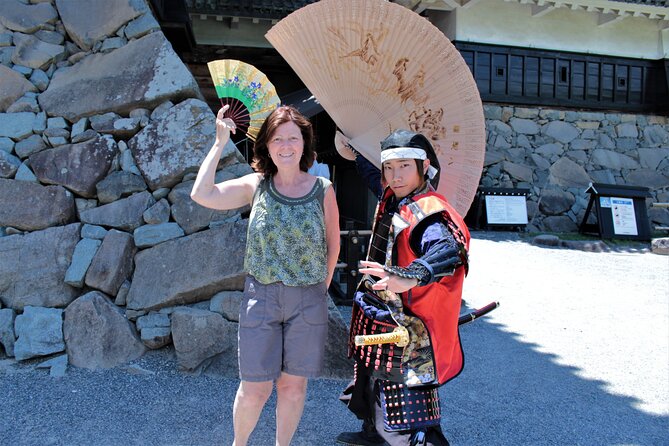
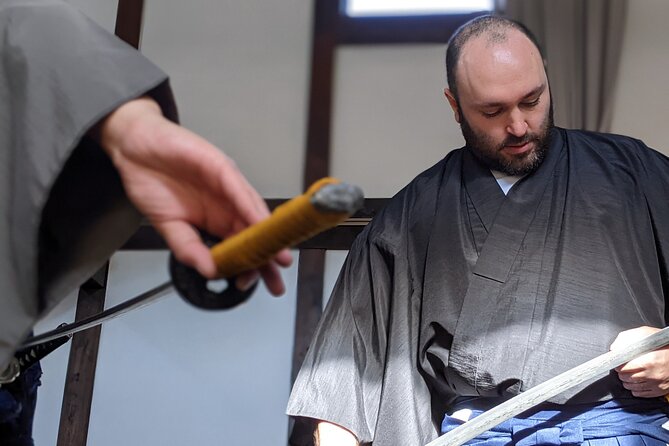
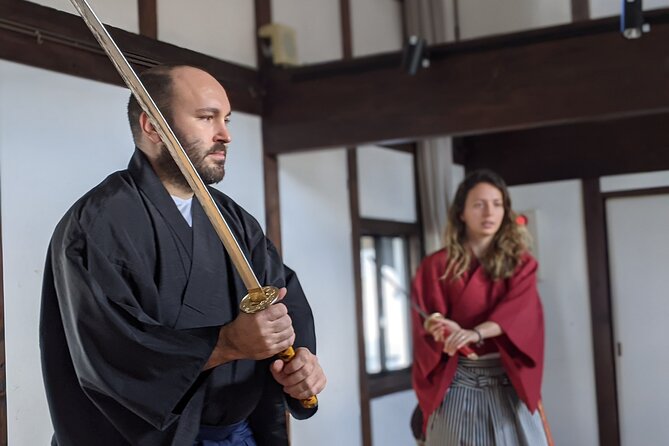
After the castle, you move to the samurai activity for about one hour. The experience begins with samurai clothing and sword selection. That change of setting helps mark the difference between looking at history and taking part in a carefully guided activity inspired by it.
The clothing is supplied as part of the experience, as are the swords used during the lesson. You do not need to arrange costume rental separately. The provided outfit also makes photographs more fun, and guides have often taken pictures and videos during the session.
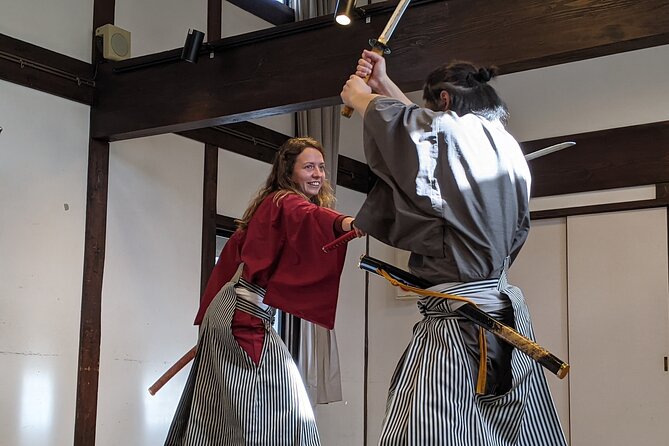
The activity is not presented as advanced combat training. You learn basic attacking and defensive stances, how to hold and use the sword, and a few traditional movements under the direction of a master. The focus is on following instructions, trying the technique, and enjoying the experience.
That makes it a good choice for mixed groups. Adults can take the historical side seriously while children and teenagers enjoy the active portion. A family with children aged 14 and 16 particularly enjoyed the exercises, and younger participants have also found the class to be the favorite part of their Japan visit.
What makes the sword class worth your time
The strongest part of the activity is the instructor. The samurai teachers are Japanese instructors with a clear passion for the art, and the English-speaking guide helps bridge any language gap. Kae, Kei, Kai, and other instructors have been praised for being patient, encouraging, funny, and easy to follow.
That patience matters. Sword movements may look simple when demonstrated, but copying the position and timing is harder than it appears. One useful feature of the lesson is that you quickly gain respect for the skill involved. The instructor makes the class approachable without pretending that a one-hour session turns you into a trained swordsman.
You can expect a lively lesson rather than a lecture. You will stand in basic positions, practice controlled movements, and receive guidance from the instructor. The mood is friendly, and the teachers emphasize enjoyment while still showing how the weapon shaped samurai identity.
The English support varies slightly depending on the instructor. Some lessons may be taught partly in Japanese with interpretation from the guide. That has not prevented people from following along, but you should expect a cultural exchange rather than a fully English technical seminar.
The class also gives the castle visit a better ending. After spending two hours studying the world of samurai lords, you handle a sword and learn why posture, control, and discipline matter. It is a simple activity, but the connection to the castle makes it more meaningful.
Guide quality and group atmosphere
The guide can shape this experience almost as much as the castle itself. The strongest accounts describe guides who combine facts with stories and adjust explanations to the group. Matt, Tim, Shin, Naomi, Noemi, and Sayuko have all been praised for friendly service and clear historical detail.
Small groups are possible, and one party of three found the experience close to a private tour. Group size may vary, so I would not book it expecting a guaranteed private outing. Still, the format allows room for questions when the group is small.
This is also a good tour for travelers who want more than a list of dates. Guides have answered questions about Matsumoto, feudal society, Japanese customs, and the castle’s place in local history. If you enjoy asking detailed questions, the walking time and castle visit give you plenty of openings.
The guide can also help with practical matters. One guide made extra efforts to assist a pregnant participant, offering seats and checking how she felt. That does not remove the physical demands of the castle, but it suggests a considerate approach to individual needs when the structure allows it.
Is $88 a fair price?
At $88 per person, this is not the cheapest way to see Matsumoto Castle. You pay more than the basic admission fee because the price includes an English-speaking guide, castle entry, the full samurai activity, and rental of the outfit and sword.
I think the price is reasonable if you want both history and participation. The castle alone may satisfy independent visitors who enjoy reading signs and exploring at their own pace. The added value here is the explanation of social classes, city development, local lords, and defensive planning, followed by an activity that would be difficult to arrange casually on your own.
The tour also reduces the effort of connecting the two experiences. You meet at the station, walk with a guide to the castle, receive historical context, and then continue to the sword session. For a first visit to Matsumoto, that structure can save time and prevent the day from becoming a series of disconnected stops.
The value is strongest for families, first-time visitors to Japan, history fans, and anyone who wants photographs in samurai clothing. It is weaker for visitors who dislike guided pacing, have already studied Matsumoto Castle in detail, or only want a quiet architectural visit.
Timing, crowds, and what to bring
Allow the full three hours, but keep part of your schedule open afterward. The advertised split is about two hours at the castle and one hour for the samurai class, yet weekend and holiday crowds can affect the castle portion.
Wear clothing that makes it easy to remove and put on shoes. You will be without shoes inside the castle, so warm socks are a smart choice in winter. Comfortable footwear also helps for the walk from the station and the castle stairs.
Bring a camera or phone. The costume portion is especially suited to group photographs, and guides have been praised for taking pictures and videos. Ask before the lesson begins if you want a particular pose or group shot.
You do not need to budget for food or snacks as part of the tour. Meals, souvenirs, and other personal purchases are not included, so plan those separately.
Free cancellation is available up to 24 hours before the start time, and you can reserve now and pay later. Those terms are useful if your route through central Japan is still changing, but they do not remove the need to arrive at the correct Matsumoto meeting point. Matsumoto is not the same city as Nagano, an important distinction when planning rail travel.
Who should book this Matsumoto experience?
I would choose this tour if you want a focused introduction to Matsumoto and prefer an active ending to a museum-style visit. It suits families, couples, small groups, and solo visitors who enjoy asking questions and taking part rather than simply looking around.
It is especially good for anyone interested in samurai life but unsure how to find a genuine-feeling activity. The setting, the castle visit, the local guide, and the instructor-led practice all support the theme without making claims that one hour of training equals historical combat instruction.
You should think twice if you have limited mobility, use a wheelchair, or dislike steep stairs and bare wooden floors. You should also skip it if your schedule cannot absorb a possible delay caused by castle crowds.
Should you book it?
Book it if you want the best balance of Matsumoto’s main sight and a memorable hands-on activity. The castle supplies the depth, while the sword class supplies the fun. At $88, the package makes sense when you value clear English guidance, included admission, costume rental, and a well-organized connection between the two parts.
For the most comfortable visit, choose a quieter period if possible, bring warm socks, and meet at the station early enough to avoid confusion. If the stairs are manageable for you, this is a strong three-hour introduction to Matsumoto’s feudal past, with the samurai lesson likely to become the part you talk about later.
FAQ
How long does the Matsumoto Castle and Samurai Experience last?
The experience lasts about three hours. The estimated schedule includes two hours at Matsumoto Castle and one hour for the samurai activity.
Where is the meeting point?
Meet at Matsumoto Station, at the front of the JR Line ticket office near Starbucks Coffee inside the station on the second floor.
Is the tour conducted in English?
Yes. The experience includes a live English-speaking guide. The Japanese sword instructor may use Japanese during the lesson, with translation from the guide when needed.
Is admission to Matsumoto Castle included?
Yes. Castle admission is included in the $88 price, along with entry to the samurai activity.
Are samurai clothing and swords provided?
Yes. Samurai outfits and swords are rented for use during the activity and are included.
Is the tour suitable for people with mobility impairments or wheelchair users?
No. The tour is not suitable for people with mobility impairments or wheelchair users. The castle has steep, narrow stairs, and visitors remove their shoes inside.
Just added in Nagano
- [Nagoya Kamikochi Hiking Tour] One-Day Nature Forest Hiking Tour of Kamikochi & Taisho Pond & Tashiro Pond & Kappa Bridge & Myojin Pond & Hotaka Mountain Range & Hotaka Shrine Okumiya (Departure from Nagoya)★ 4.7 · 423 reviews
- Snow Monkey Park & Miso Production Day Tour from Nagano★ 5.0 · 18 reviews
- Snow Monkeys, Hokusai & Sake: A Perfect Day in Nagano★ 5.0 · 19 reviews
- Wasabi Farm Walking Tour & Lunch★ 4.5 · 20 reviews
- Ski or Snowboard Lesson in Shiga Kogen (4Hours)★ 5.0 · 34 reviews
- Snow Monkey & Shibu Onsen Afternoon Tour (Depart: Iiyama & Nozwa)★ 5.0 · 54 reviews
- 1-Day Tateyama-Kurobe Tour: Walking on the ‘Roof of Japan’★ 5.0 · 20 reviews
- Nagano Spring: 1-Day Cherry Blossoms & Snow Monkeys Guided Tour★ 5.0 · 31 reviews
Castles and Historic Sites, compared.


Imperial Palace and Shogun Historical Walking Tour
Read our review →
Tokyo Castle & Imperial PalaceーShogun Walking Tour
Read our review →
Nijo-jo Castle and Ninomaru Palace Guided Tour
Read our review →
Samurai Ninja Museum Guided tour and Experience
Read our review →Browse the lists this tour appears in