
Reviewed · WALKING TOURS
Matsumoto Discovery – Half Day Walking Tour
Matsumoto rewards a slower look. This three-hour walking tour links the city’s famous black castle with old shopping streets, spring water wells, shrines, and everyday local life. I like the chance to shape the route around your interests, and I like that the tour begins and ends at Matsumoto Station. The main consideration is that the castle involves steep, narrow stairs, and the walking itself can feel brisk for anyone with limited mobility.
The price is $64.73 per person, including an English-speaking guide and Matsumoto Castle admission. That is fair value if you want context, local suggestions, and help making sense of the city in a short visit. One less positive point is the guide-dependent nature of the experience: most feedback praises guides such as Tom, Shin, Naomi, Kevin, and Sylvain, but one guest found the guiding flat and preferred the castle’s own daily tour.
In This Review
- Key points at a glance
- Why Matsumoto works so well on foot
- Matsumoto Castle: the reason to make the trip
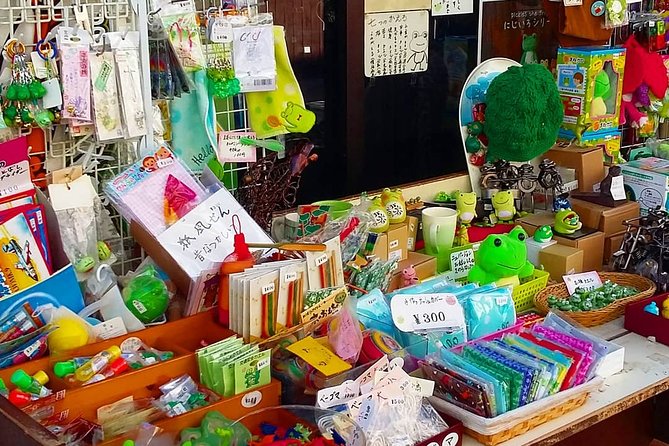
- Nawate Street and the frog-filled shopping stop
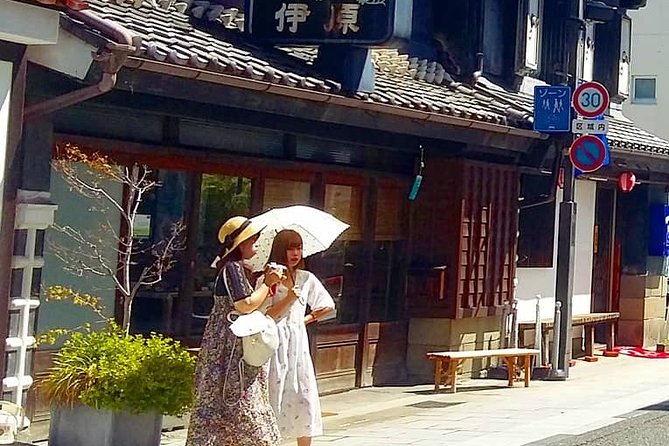
- Nakamachi Street and the old kura storehouses
- Choosing a custom route beyond the standard walk
- What the guide adds to the experience
- Price, pace, and practical value
- The main weakness: quality depends on the guide
- Who should book this Matsumoto walk?
- Should you book Matsumoto Discovery?
- FAQ
- How long does the Matsumoto Discovery tour last?
- Where does the tour begin?
- Where does the tour finish?
- Is Matsumoto Castle admission included?
- What other places are visited?
- Is transportation included?
- How many people can join the tour?
- Can I cancel for a full refund?
Key points at a glance
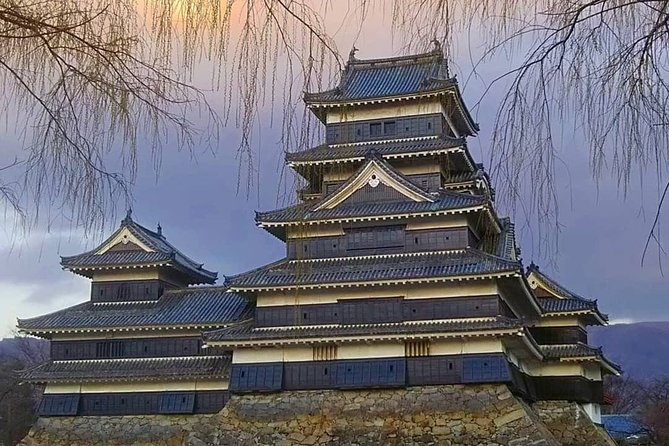
- Matsumoto Castle takes about two hours: Admission is included, and the guide adds useful context to the castle’s samurai-era rooms, structure, and stories.
- The route is flexible: You can choose from attractions such as the castle, Matsumoto City Museum of Art, Japan Ukiyoe Museum, and Daio Wasabi Farm in nearby Azumino City.
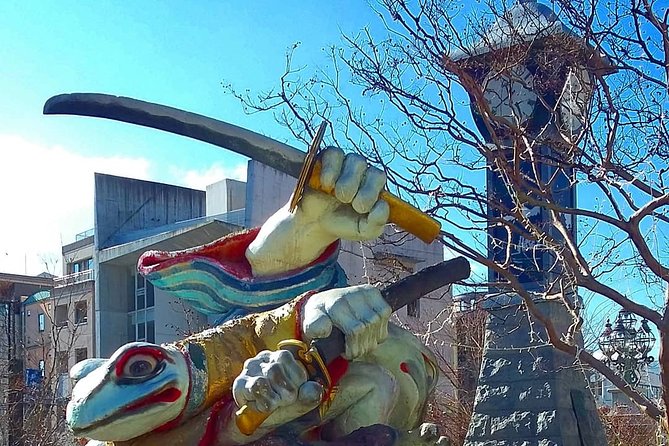
- Nawate Street has a frog theme: Small shops, snacks, souvenirs, and Yohashira Shrine make this a pleasant change from the castle visit.
- Nakamachi shows old merchant Matsumoto: Its black-and-white kura storehouses give the historic district a distinct look.
- Local guides shape the experience: Guides have helped visitors find restaurants, understand local customs, notice overlooked historic details, and adjust plans around lunch or personal interests.
- The group is capped at 15 people: A small group or private-style outing may allow more questions and a more personal pace.
Why Matsumoto works so well on foot
Matsumoto is easy to approach by train, but its appeal is not limited to the castle grounds. The city brings together a National Treasure, old commercial streets, art museums, shrines, traditional crafts, cafes, and small details that are easy to miss when you walk alone with a map.
Starting at Matsumoto Station gives you a useful point of reference. You meet your guide at 1 Chome-1 Fukashi, then walk into the downtown area and toward the castle district. At the end, you return to the station area unless you arrange another downtown drop-off point.
I like this setup because it helps you get your bearings early in a Matsumoto visit. A guide can point out how the modern city fits over the older castle town. One guest particularly enjoyed learning that a modern intersection marked the meeting point of two ancient roads, a detail most people would pass without a second glance.
The tour lasts about three hours, but the listed timing gives two hours to Matsumoto Castle and 30 minutes each to Nawate Street and Nakamachi Street. That means the castle is the main event. The other stops provide a compact introduction to the city rather than long shopping sessions.
More Walking Tours in Nagano
- Food & Cultural Walking Tour around Zenkoji temple in Nagano
★ 5.0 · 58 reviews - Matsumoto Castle Town Walking Tour
★ 4.8 · 58 reviews - From Matsumoto/Nagano: Nakasendo Trail Walking Tour
★ 4.9 · 33 reviews
Matsumoto Castle: the reason to make the trip
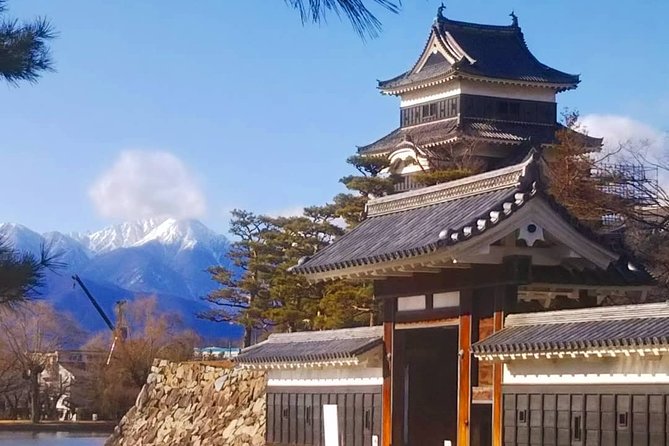
Matsumoto Castle is one of only five castles in Japan designated as National Treasures. Construction began in 1592, and its black-and-white exterior gives it a stern, handsome appearance that differs from the pale castles often pictured in Japan.
The surviving donjon is also described as the oldest remaining castle donjon in Japan. That age matters once you enter. This is not a modern reconstruction designed mainly for a quick photograph. You move through an old timber structure, with the building itself providing much of the drama.
Your guide can connect the architecture with the castle’s military purpose and the lives of the people who used it. Guides have explained castle history, samurai life, local customs, temples, shrines, temari balls, and the city’s spring water wells. That broader context turns the visit from a climb through old rooms into a clearer picture of Matsumoto as a castle town.
You should prepare for the stairs. They are steep and narrow, and the climb can be demanding. One 76-year-old guest managed it and felt rewarded, but that does not make the ascent easy. Wear shoes with a firm grip, take your time, and do not assume that a short walking tour means an effortless outing.
The two-hour allocation is useful because you are unlikely to feel rushed through the castle. You have time to look at the structure, ask questions, and pause before continuing through the city. The castle is also the part of the route where a guide can provide the greatest added value. You can read basic information independently, but a good guide helps you understand what you are seeing and answers questions as they arise.
Tom received especially strong praise for his castle explanations and for the stories he shared about life as an expatriate married to a Japanese citizen. He is also a retired teacher, which may help explain why several guests appreciated his clear, conversational approach. Other guides, including Sayuko, Naomi, Kevin, Matt, Matthew, and Shin, were also praised for detailed explanations and an ability to tailor the walk.
Nawate Street and the frog-filled shopping stop
After the castle, the tour moves to Nawate Street, a short shopping district lined with small stores. The recurring frog theme gives the street an easy identity. You might find snacks, small souvenirs, novelty goods, and local items rather than large department-store shopping.
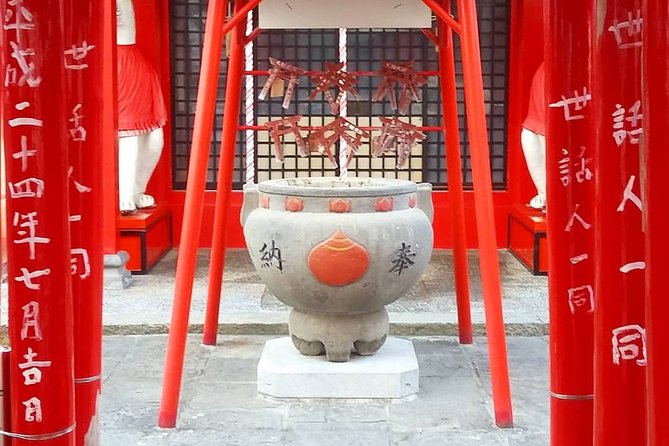
The frog connection is not the only reason to visit. Yohashira Shrine is also on Nawate Street, giving you a brief look at a religious site within the shopping area. This mix of shrine, snacks, and small shops feels more connected to ordinary city life than a major sightseeing complex.
Allow about 30 minutes here. That is enough for a walk and a quick look around, but not enough for an extended shopping spree. If you want to buy snacks or souvenirs, tell your guide early so the pace does not leave you watching the shop shutters close behind you.
One visitor enjoyed returning to the frog-themed area after the castle, while another appreciated being shown local streets beyond the main sights. That is a useful clue about the tour’s character. The guide is not simply moving you between fixed photo stops. The best version of this walk adds nearby details and points out places you might otherwise miss.
Nakamachi Street and the old kura storehouses
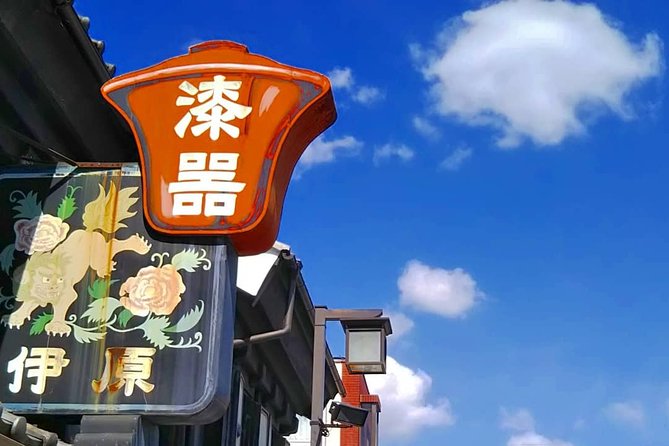
Nakamachi Street offers a different mood. The area is known for traditional storehouses called kura, with black-and-white walls arranged in a criss-cross pattern. These buildings once served practical purposes, but today they help preserve the visual character of the old commercial district.
This is where a guide’s local knowledge can make a modest street more interesting. Without context, you may simply see attractive facades and shops. With an explanation, you can better understand how the castle town developed and how older buildings remain part of the modern city.
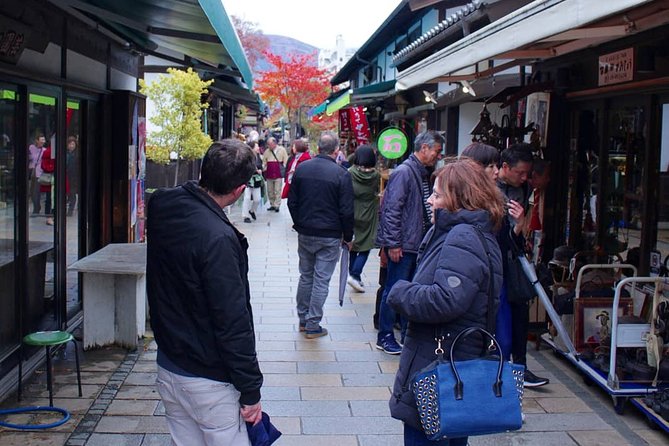
The stop lasts about 30 minutes and is free to enter. You may find shops, cafes, and small businesses along the street, but the exact visit depends on the guide’s route and your interests. Do not expect a long museum visit here. Think of Nakamachi as a short, atmospheric walk that adds texture after the castle.
I like this pairing of Nawate and Nakamachi. One has its frogs, snacks, and shrine. The other has old storehouses and a more traditional street appearance. Together, they show two sides of downtown Matsumoto without requiring a full day of sightseeing.
A completely different kind of day out:
- 1-Day Snow Monkeys, Zenko-ji Temple & Sake in Nagano
★ 5.0 · 1,020 reviews - Nagano: Snow Monkeys, Zenkoji Temple & Sake Day Trip
★ 4.9 · 833 reviews - [Nagoya Kamikochi Hiking Tour] One-Day Nature Forest Hiking Tour of Kamikochi & Taisho Pond & Tashiro Pond & Kappa Bridge & Myojin Pond & Hotaka Mountain Range & Hotaka Shrine Okumiya (Departure from Nagoya)
★ 4.7 · 423 reviews - From Tokyo: Snow Monkey 1 Day Tour with Beef Sukiyaki Lunch
★ 4.6 · 295 reviews
Choosing a custom route beyond the standard walk
The experience can be adjusted to your specifications. The listed possibilities include Matsumoto City Museum of Art, the Japan Ukiyoe Museum, and Daio Wasabi Farm in nearby Azumino City.
That flexibility matters because Matsumoto visitors often arrive with different priorities. You may care most about the castle and samurai-era architecture. You may prefer Japanese art, ukiyo-e prints, food, gardens, or a rural stop outside the city. A private or small-group booking gives you a better chance of discussing those interests before the walk begins.
Daio Wasabi Farm is not a simple extra stop to squeeze into the standard three-hour route. It is in nearby Azumino City, so you should confirm the plan, timing, and transportation arrangements before booking a custom version. Transportation and personal expenses are not included in the stated price.
The same point applies to the museums. The basic route focuses on the castle, Nawate Street, and Nakamachi Street. If you want to replace one of those stops with an art museum, ask in advance so you know how the available time will be divided.
What the guide adds to the experience
The strongest reason to book is the human layer. You get an English-speaking guide with National Government Licensed Guide Interpreter certification, and the guide can explain more than dates and building names.
Shin has been praised for revealing parts of Matsumoto that are easy to miss, helping with natural interactions with local people, and suggesting restaurants. Sylvain has adjusted plans for lunch, talked with guests over soba, helped locate ibuprofen at a drugstore, and suggested other local experiences. Those details show the practical value of a local guide, especially when your visit is short.
A guide can also adapt the tone of the walk. Kevin was praised for being well prepared and for explaining Japanese culture in clear English. Matt, described as English and Japanese speaking, was appreciated for his command of Matsumoto Castle and local history. Naomi took one guest to a park with many cherry trees and helped with an attraction ticket.
These are useful qualities if you enjoy asking questions. You can ask about food, customs, local streets, religious sites, or the difference between a historic feature and a modern replacement. The tour is less useful if you want complete silence, a fixed audio-guide pace, or a detailed museum program with no flexibility.
The group limit is 15 people. That is not always a tiny group, but it is small enough for questions to be possible. Some departures may be much smaller. One person had a solo experience, while other groups described the outing as intimate and easy to manage.
Price, pace, and practical value
At $64.73 per person, the tour is not the cheapest way to see Matsumoto Castle. You could visit the castle independently and walk the two shopping streets without paying for a guide. The tour earns its price when you value interpretation, orientation, language help, and a route shaped around your interests.
Castle admission is included, which removes one extra cost. Transportation, snacks, souvenirs, insurance, and other personal expenses are not included. Since the standard route is on foot, you should budget for your own food and drinks if you want a break.
The tour is a good fit for a first visit, a short stop between train connections, or a morning when you want to understand the city before exploring alone. It can also work well for families with older children. A family with children aged 10 to 15 enjoyed the castle and the city buildings, though the steep stairs still require care.
This is not the right choice if you dislike walking or have difficulty with steep stairs. Most people can participate, but the castle’s interior is physically demanding. The tour also requires good weather. If poor weather causes cancellation, you are offered another date or a full refund.
Free cancellation is available until 24 hours before the start time. Within 24 hours, the amount paid is not refunded, and changes are not accepted. Keep that cutoff in mind when you are arranging a rail-heavy Japan itinerary.
The main weakness: quality depends on the guide
I would not ignore the one clear warning. One person found the guide neither enthusiastic nor well informed and felt that the castle’s own daily tours might be better for someone already traveling with company.
That criticism is important because a walking tour is only as good as the person leading it. The overall rating is 4.9 from 43 ratings, with 98 percent recommending the experience, and the many positive comments repeatedly praise personal attention, clear explanations, and flexibility. Still, no guide-led product is perfectly uniform.
You can reduce the risk by sharing your interests when you book or confirming them before the walk begins. Ask for extra castle detail, local food suggestions, art, shopping, family pacing, or a custom route. A clear conversation gives the guide something useful to work with.
Who should book this Matsumoto walk?
I would choose this tour if you want the castle explained rather than simply photographed. It is especially useful for solo visitors, first-time visitors, families, and anyone with only a few hours in town.
It also suits people who like small discoveries: a spring water well, a historic road alignment, a shrine beside a shopping street, a temari ball, or a restaurant suggestion that does not appear in a basic guidebook. Those details can make Matsumoto feel like a lived-in place instead of a stop between the Northern Alps and Tokyo.
I would skip it if you already know Matsumoto well, prefer to set your own pace, or mainly want a quiet independent castle visit. In that case, the castle’s own daily tours may be enough, and you can explore Nawate and Nakamachi on your own.
Should you book Matsumoto Discovery?
Book it if Matsumoto Castle is a priority and you want help understanding the building, the town, and the customs around you. The included admission, station meeting point, flexible route, and strong record of guide-led experiences make the $64.73 reasonable for a short visit.
Before booking, consider the stairs, weather requirement, and guide-dependent quality. If you want a custom museum or Daio Wasabi Farm route, confirm the plan and transportation details first. For most first-time visitors with three hours to spare, this is a useful, friendly introduction to Matsumoto that gives you both the headline sight and a better feel for the streets around it.
FAQ
How long does the Matsumoto Discovery tour last?
The tour lasts approximately three hours.
Where does the tour begin?
It begins at Matsumoto Station, at 1 Chome-1 Fukashi, Matsumoto, Nagano 390-0815, Japan.
Where does the tour finish?
It normally returns to Matsumoto Station, though you can end downtown at another location you choose.
Is Matsumoto Castle admission included?
Yes. Entry to Matsumoto Castle is included in the tour price.
What other places are visited?
The standard route includes Matsumoto Castle, Nawate Shopping District, and Nakamachi Street. Other possible attractions include the Matsumoto City Museum of Art, Japan Ukiyoe Museum, and Daio Wasabi Farm.
Is transportation included?
No. Transportation and personal costs such as snacks and souvenirs are not included.
How many people can join the tour?
The activity has a maximum group size of 15 people.
Can I cancel for a full refund?
Yes, if you cancel at least 24 hours before the experience start time. Cancellations within 24 hours are not refunded. If poor weather causes the tour to be canceled, you can choose another date or receive a full refund.
Just added in Nagano
- [Nagoya Kamikochi Hiking Tour] One-Day Nature Forest Hiking Tour of Kamikochi & Taisho Pond & Tashiro Pond & Kappa Bridge & Myojin Pond & Hotaka Mountain Range & Hotaka Shrine Okumiya (Departure from Nagoya)★ 4.7 · 423 reviews
- Snow Monkey Park & Miso Production Day Tour from Nagano★ 5.0 · 18 reviews
- Snow Monkeys, Hokusai & Sake: A Perfect Day in Nagano★ 5.0 · 19 reviews
- Wasabi Farm Walking Tour & Lunch★ 4.5 · 20 reviews
- Ski or Snowboard Lesson in Shiga Kogen (4Hours)★ 5.0 · 34 reviews
- Snow Monkey & Shibu Onsen Afternoon Tour (Depart: Iiyama & Nozwa)★ 5.0 · 54 reviews
- 1-Day Tateyama-Kurobe Tour: Walking on the ‘Roof of Japan’★ 5.0 · 20 reviews
- Nagano Spring: 1-Day Cherry Blossoms & Snow Monkeys Guided Tour★ 5.0 · 31 reviews
Walking Tours, compared.
Kyoto Geisha Walking Tour: Gion District & Hidden Gems
Read our review →
Tokyo Tsukiji Fish Market Food and Culture Walking Tour
Read our review →
Gion Magical Night Walking Tour with Geisha Trivia
Read our review →
Imperial Palace and Shogun Historical Walking Tour
Read our review →
Gion Geisha District Walking Tour – Stories of Geisha
Read our review →

Shinjuku Local Bar and Izakaya Guided Walking Tour
Read our review →
Browse the lists this tour appears in