
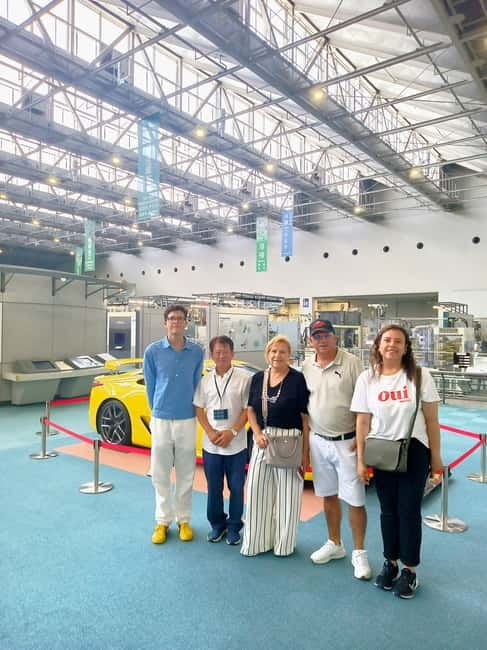
Reviewed · MUSEUMS AND GALLERIES
Nagoya: Toyota Commemorative Museum Guided Tour
Toyota began with thread, not traffic. This guided visit makes that unusual story easy to follow, from Sakichi Toyoda’s ingenious G-type automatic loom to the company’s first passenger car, the Toyoda Model AA. I especially like the live machinery demonstrations and the way the museum connects Toyota’s rise to Nagoya and Aichi.
I also like the choice between a focused 90-minute tour and a fuller three-hour visit. The main drawback is practical: the museum is not suitable for wheelchair users or people with mobility impairments, and the $77 price is much higher than a simple self-guided museum admission would be if available separately.
- Watch historic looms operate: Sakichi Toyoda’s G-type automatic loom is shown as a working piece of industrial innovation, not just a glass-case relic.
- Follow Toyota’s unusual beginning: The company grew from textile machinery before it became a global car maker.
- See car production in motion: Demonstrations cover pressing, welding, and assembly, giving you a clearer sense of how a vehicle is made.
- Meet the Toyoda Model AA: Toyota’s first passenger car provides a memorable link between early experiments and modern vehicles.
- Choose your depth: The 90-minute course suits a tight schedule, while the three-hour option gives the machinery and story more room.
- Learn with an English-speaking guide: Guides such as Kono add local context about Toyota’s importance to Nagoya and Aichi.
In This Review
- Why Toyota’s story starts with a loom
- The red-brick factory gives the visit a sense of place
- The Automotive Pavilion turns production into a process
- The Toyoda Model AA connects invention with ambition
- The three-hour course rewards curiosity
- What the $77 price really buys you
- A useful stop for industrial history fans
- Do not confuse Nagoya’s museum with Toyota’s other museums
- My recommendation for booking
- FAQ
- Where does the Toyota guided tour take place?
- Is this the Toyota Kaikan Museum?
- How long does the tour last?
- Is the tour offered in English?
- What is included in the price?
- Is the museum open every Monday?
Why Toyota’s story starts with a loom
Many company museums begin with a founder, a logo, and a polished timeline. This one begins with a machine that made cloth production faster and safer. That choice gives the whole visit a stronger sense of cause and effect.
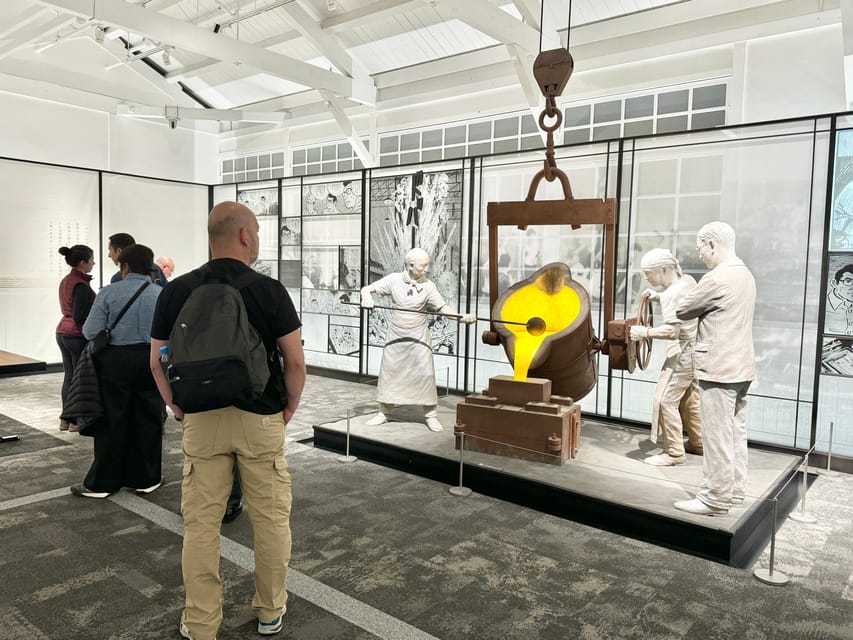
Sakichi Toyoda’s G-type automatic loom is the first major stop. The machine matters not only because it is old, but because it helped solve real problems in textile production. You see the loom operating and learn how its automatic functions changed the work.
For you, the live demonstration is the key. A stationary loom can look like a tangle of metal bars and moving parts. Once it runs, the purpose becomes clearer. You can watch the timing, motion, and mechanical coordination that made the invention important.
This is also where the tour explains Toyota’s first identity. Before cars, Toyota was a textile company. That detail can get lost in the modern Toyota story, but it is central to understanding how the company developed technical skills, manufacturing discipline, and a habit of improving machines.
I find this opening more interesting than a quick march toward the car displays. It gives the company’s later success a foundation. Toyota did not simply decide to build automobiles and become famous overnight. Its industrial story began with machinery, production problems, and repeated attempts to make a better process.
The red-brick factory gives the visit a sense of place

The museum occupies a preserved red-brick factory building in Nagoya. The setting helps because you are not viewing industrial history in a blank modern hall. The brick walls and old factory atmosphere fit the machines inside.
You meet your guide next to the ticket counter inside the museum. Look for a yellow sign with the DeepExperience logo. That small detail matters at a busy attraction, especially if you arrive close to the start time and do not want to wander around looking for the right person.
The tour is offered in English, with private or small-group arrangements available. An English guide can do more than translate labels. The best moments come when the guide explains why a machine mattered and how one stage of Toyota’s development led to another.
Kono received particular praise for explaining Toyota’s importance to Japan, Nagoya, and Aichi Prefecture. That regional angle is useful. Toyota is not just a familiar car badge here. Its growth is closely tied to the industrial identity of the area, and a guide can make that connection clearer than a quick independent visit.
The experience has a reported rating of 4.7 from 22 ratings. That is a small sample, but the strongest praise centers on the guides, the company’s evolution, and the value of having the story explained rather than simply looking at objects.
More Museums and Galleries in Nagoya:
- teamLab Borderless Tickets: MORI Building DIGITAL ART MUSEUM
★ 4.7 · 24,126 reviews - teamLab Planets TOKYO Ticket
★ 4.7 · 21,663 reviews - Tokyo: teamLab Planets TOKYO Digital Art Museum Entry Ticket
★ 4.6 · 9,779 reviews
The Automotive Pavilion turns production into a process
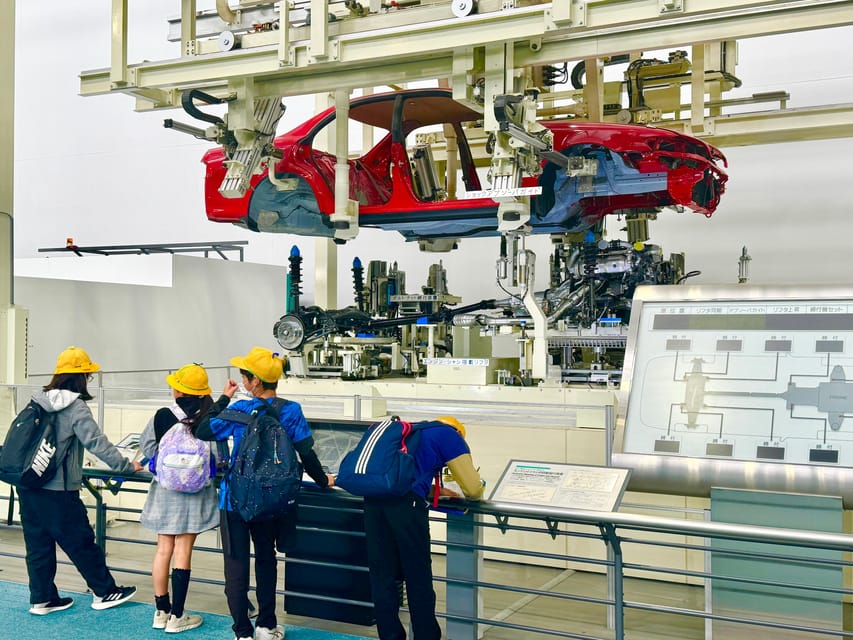
After the Textile Machinery Pavilion, the tour moves to the Automotive Pavilion. Here the focus shifts from individual machines to the connected stages of car manufacturing.
You see displays and operating machinery related to pressing, welding, and assembly. These are not just broad labels on a wall. Skilled operators bring equipment to life and explain how important vehicle parts were developed and produced.
That makes this section useful even if you are not a serious car enthusiast. You do not need to recognize every component to understand the basic lesson: a finished car depends on many precise stages, each with its own tools and decisions.
The pressing displays show how shaped metal parts begin to take form. Welding demonstrates how those parts are joined. Assembly brings the separate pieces closer to the complete vehicle. The sequence gives you a practical way to think about manufacturing instead of treating a car as one finished object that somehow appeared in a showroom.
The machinery is also the reason I would choose a guided visit over a rushed walk through the museum. When equipment is operating, you have a better chance of understanding what you are seeing if someone points out the important movement and explains its purpose.
There is a tradeoff. Industrial demonstrations can take time, and the longer course may feel slow if you only want to see Toyota’s famous cars. If you are curious about how factories work, though, the extra minutes are well spent.
The Toyoda Model AA connects invention with ambition
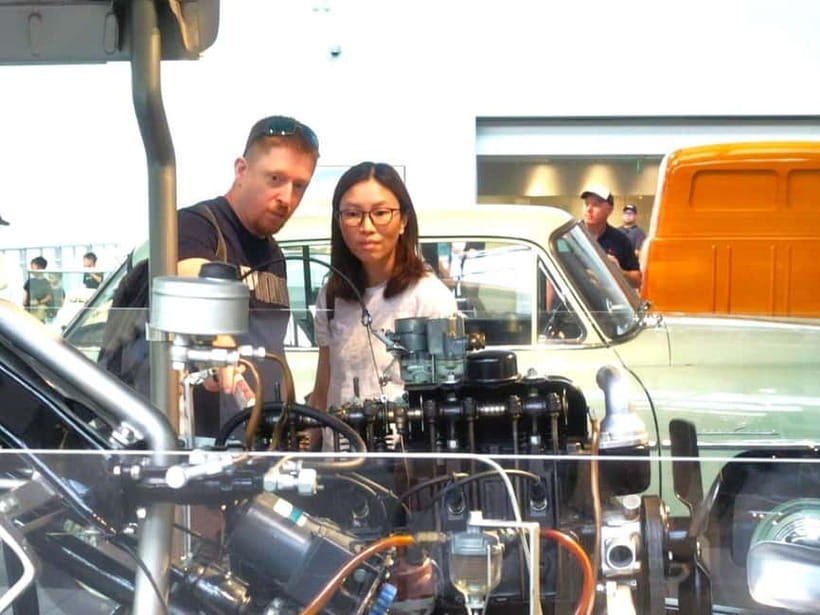
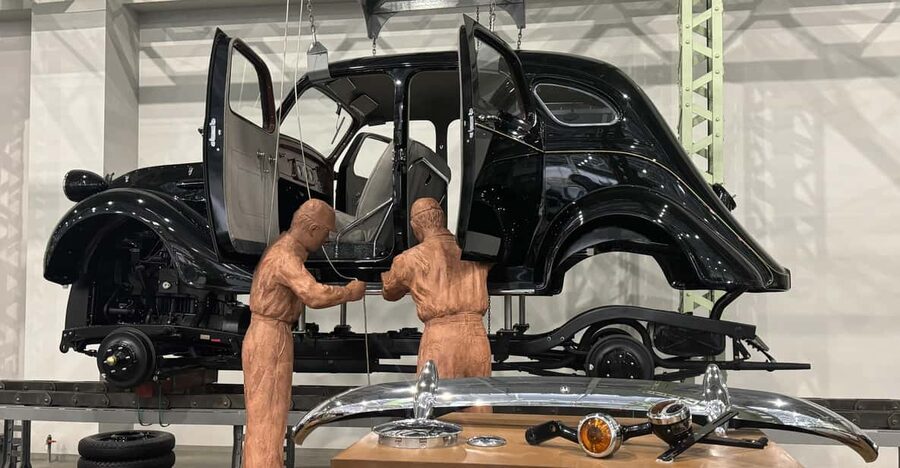
The Toyoda Model AA is one of the tour’s visual anchors. It was Toyota’s first passenger car, and seeing it after the textile machinery makes the company’s change in direction easier to grasp.
The car is more than a photo opportunity. It represents the point when Toyota’s mechanical experience moved into automobile production. You can look back at the loom section and see a company learning how to design, build, and improve complex machines, then look at the Model AA as an early result of that ambition.
The museum also presents other milestones in Toyota’s automotive development. The displays help you trace technological change over time, rather than treating the first car as an isolated curiosity.
I would not come expecting a vast collection devoted only to rare automobiles. The main strength here is the relationship between machines, methods, and vehicles. You are learning how Toyota built things, not simply admiring a line of polished cars.
That distinction helps set expectations. Someone looking for a dedicated automobile collection may prefer the Toyota Automobile Museum in Nagakute City. Someone interested in Toyota’s industrial development should choose the Nagoya museum described here.
The three-hour course rewards curiosity
The 90-minute option is the practical choice if you have a packed Nagoya schedule. It covers both the textile and automotive areas and gives you the main story, the key machines, and the major vehicles. Plan at least the full 90 minutes, rather than assuming you can squeeze it into a spare hour.
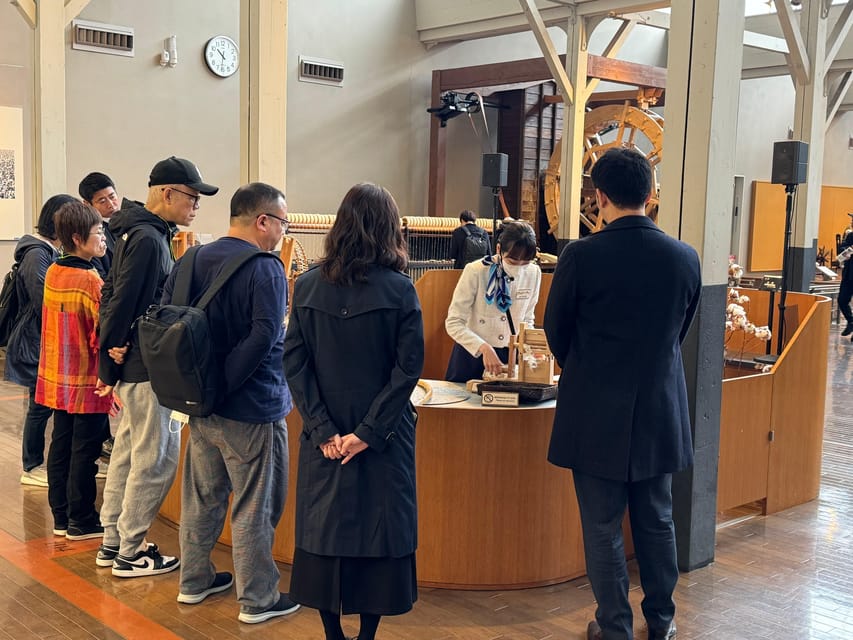
The three-hour course gives the subject more breathing room. You have time to stay with the working machinery, hear more explanation, and follow the shift from textile production to car manufacturing without rushing from one display to the next.
I would choose the longer tour if you enjoy engineering, factory design, Japanese business history, or Toyota itself. It also suits anyone who prefers to ask questions and examine the demonstrations closely.
The shorter tour is better for a first taste or a family schedule with limited patience for technical detail. The supplied information does not describe special child-focused programming, so I would choose based on your group’s interest in machines rather than assume the visit is designed around children.
Starting times vary, so check availability when you book. The museum is closed on Mondays, or on the following day when Monday is a national holiday. That is an easy schedule trap in Japan, so confirm the date before arranging your Nagoya day.
A few more options to weigh up in Nagoya
- LEGOLAND® Japan Ticket
★ 4.7 · 11,787 reviews - Port of Nagoya Public Aquarium Ticket
★ 4.8 · 4,343 reviews - Shirakawa-go & Takayama Old Town Day Tour (Optional Hida Beef Lunch)
★ 4.6 · 3,936 reviews - Hida Takayama & Shirakawa-go Gassho Village Day Trip (Departing from Nagoya, optional observatory tour included)
★ 4.7 · 2,837 reviews
What the $77 price really buys you
At $77 per person, this is not a bargain admission ticket. The value comes from the guide, the live demonstrations, and the organized explanation of a story that could otherwise feel scattered.
A self-guided visit might let you move at your own pace, but you would need to connect the loom technology, Toyota’s automobile production, and the company’s regional importance yourself. This tour puts those pieces in order and gives you an English-speaking person to explain the machinery as it operates.
The price makes more sense for a private or small group than for someone who only wants to see the Toyoda Model AA and take a few photographs. It is also easier to justify on the three-hour course, since you receive more time with the museum and its working displays.
You should decide based on your interest, not just the Toyota name. If you enjoy manufacturing and company origins, the tour offers substance. If your interest ends at modern cars, $77 may feel high for a museum visit with a long technical section.
Food and drinks are not included, and transportation to the museum is not included either. You need to plan those parts separately. Bring water and comfortable shoes, particularly for the longer option.
A useful stop for industrial history fans
This is a particularly good fit for you if you like seeing how things are made. The pressing, welding, and assembly displays give the automotive section a working, practical feel, while the loom demonstrations show that Toyota’s story began outside the car industry.
It also suits anyone interested in Japan’s industrial growth. The guide can explain how Toyota’s success affected Nagoya and Aichi, adding local meaning to a company that is often viewed only as a worldwide brand.
Car enthusiasts will find memorable vehicles and production history, but the visit is not limited to car spotting. The textile pavilion is essential, not an optional prelude. Skipping it would remove the part of the story that makes Toyota’s transformation so striking.
Photographs are allowed, though flash photography is prohibited in certain areas. Bring a camera, but follow the museum’s instructions around operating machines and displays.
The main audience limitation is mobility. The activity is not suitable for wheelchair users or people with mobility impairments. Since the visit involves moving through two pavilions and spending time near machinery, you should take that restriction seriously rather than treat it as a minor footnote.
Do not confuse Nagoya’s museum with Toyota’s other museums
This tour takes place at the Toyota Commemorative Museum of Industry and Technology in Nagoya city. It is not the Toyota Kaikan Museum in Toyota City, and it is not the Toyota Automobile Museum in Nagakute City.
The distinction matters because the three museums serve different purposes. The Nagoya museum focuses on Toyota’s industrial beginnings, textile machinery, production methods, and the road into automobile manufacturing.
If you go to the wrong city, a carefully timed tour day can fall apart. Check the full museum name and location before setting out, especially if you are building your itinerary around Toyota-related sights.
The meeting point is inside the museum, next to the ticket counter. Find the guide holding the yellow DeepExperience sign. This is simple, but knowing it in advance saves time and reduces confusion at the start.
My recommendation for booking
I would book this tour if you want the story behind Toyota, not just its cars. The strongest reasons are the working G-type loom, the clear production demonstrations, and the chance to understand why Toyota matters so much to Nagoya and Aichi.
Choose the 90-minute course if your schedule is tight. Choose the three-hour course if machinery and manufacturing genuinely interest you, since the extra time lets the displays make sense instead of becoming a fast parade of labels.
I would skip it if you want only a classic-car collection, need full wheelchair access, or find factory processes tedious. For everyone else, $77 is a fair price for guided interpretation and live demonstrations, though it remains a specialist experience rather than an automatic choice for every Nagoya itinerary.
FAQ
Where does the Toyota guided tour take place?
It takes place at the Toyota Commemorative Museum of Industry and Technology in Nagoya city.
Is this the Toyota Kaikan Museum?
No. This tour is not a visit to the Toyota Kaikan Museum in Toyota City or the Toyota Automobile Museum in Nagakute City.
How long does the tour last?
You can choose a 90-minute course or an in-depth course lasting about three hours. You should allow at least the full stated time for your selected option.
Is the tour offered in English?
Yes. The tour includes a live English-speaking guide.
What is included in the price?
Admission to the Toyota Commemorative Museum of Industry and Technology is included, along with access to the Textile Machinery Pavilion and Automotive Pavilion.
Is the museum open every Monday?
No. The museum is closed on Mondays, and it is also closed on the following day when Monday is a national holiday.
Just added in Nagoya
- Hida Takayama & Shirakawa-go Gassho Village Day Trip (Departing from Nagoya, optional observatory tour included)★ 4.7 · 2,837 reviews
- Shirakawa-go & Takayama Old Town Day Tour (Optional Hida Beef Lunch)★ 4.6 · 3,936 reviews
- Nagoya Castle Ticket★ 4.6 · 326 reviews
- Port of Nagoya Public Aquarium Ticket★ 4.8 · 4,343 reviews
- LEGOLAND® Japan Ticket★ 4.7 · 11,787 reviews
- Ghibli Park Ticket in Aichi★ 4.4 · 2,205 reviews
- Nagoya Endoji Food and Cultural Tour★ 5.0 · 12 reviews
- Sumo Tournament Experience in Nagoya★ 5.0 · 12 reviews
Museums and Galleries, compared.

teamLab Borderless Tickets: MORI Building DIGITAL ART MUSEUM
Read our review →

teamLab Planets TOKYO Digital Art Museum Entry Ticket
Read our review →



Browse the lists this tour appears in