
Reviewed · WORKSHOPS
Nagoya: Traditional Japanese Sweets-Making Workshop
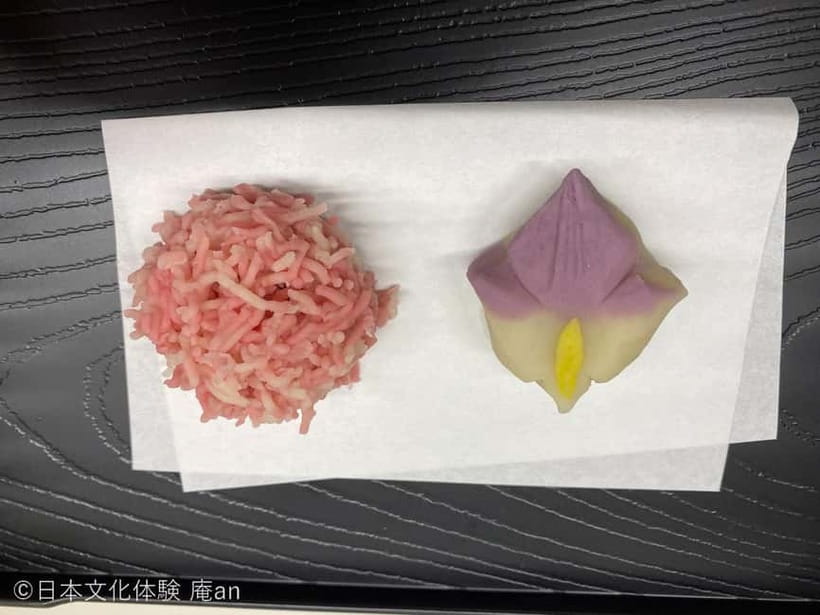
Sweet-making becomes edible art here. This 65-minute Nagoya workshop gives you a hands-on introduction to nerikiri, two seasonal Japanese sweets shaped from white and red bean paste supplied by long-established Kyoto shops. I like the low $11 price and the chance to eat your creations on the spot. The main drawback is that instruction is primarily in Japanese, with English support provided as much as possible.
I also like the simple format: you make two sweets, plate them, and see the result before the hour is over. The atmosphere appears friendly and easy to follow, with recent participants praising the clear demonstrations and gentle teaching. Still, you must climb to the third floor because the venue has no elevator, and late arrivals cannot be accommodated.
In This Review
- Key points at a glance
- What you actually make in 65 minutes
- Why Kyoto bean paste matters in a Nagoya class
- A classroom format with friendly instruction
- The seasonal designs give the activity its character
- Eating the sweets on the spot
- Getting there from Nagoya Station
- Is $11 a good value?
- Who will enjoy this workshop most?
- Practical booking advice
- Final verdict: should you book it?
- FAQ
- How long does the Nagoya sweets-making workshop last?
- How many Japanese sweets will I make?
- Can I eat the sweets at the venue?
- Is English instruction available?
- Where is the workshop located?
- Is the venue accessible by elevator?
Key points at a glance
- Two seasonal nerikiri sweets: You shape two traditional Japanese confections that match the time of year.
- Kyoto-made bean paste: The white and red bean paste comes from long-established Kyoto shops, giving the activity a strong regional food connection.
- A short, affordable class: At $11 per person and 65 minutes, this fits neatly into a Nagoya sightseeing day.
- Japanese-led instruction: The instructor teaches in Japanese, with English translation offered as much as possible.
- Eat your artwork: You can taste both sweets at the venue instead of carrying them around town.
- Easy central access: The workshop is one minute from Exit 3 of Kokusai Center Station and about 13 minutes on foot from Nagoya Station.
What you actually make in 65 minutes
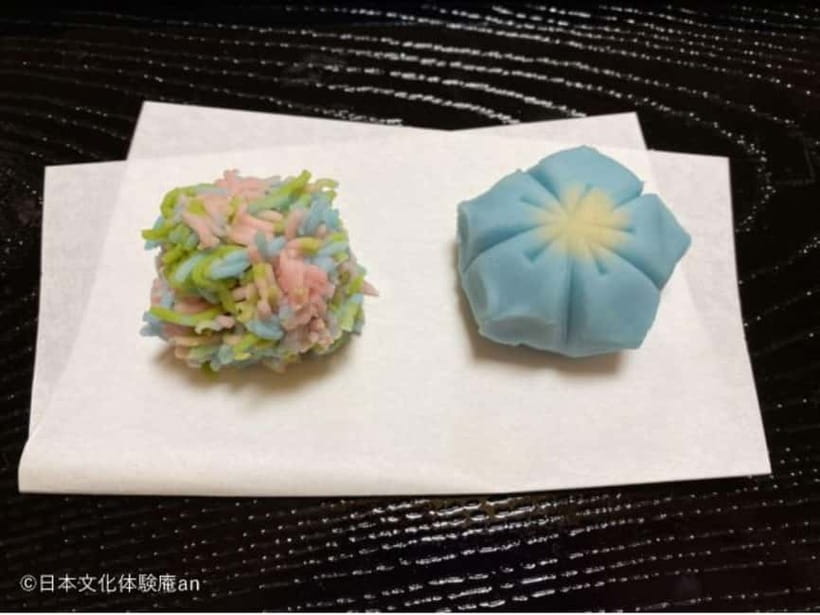
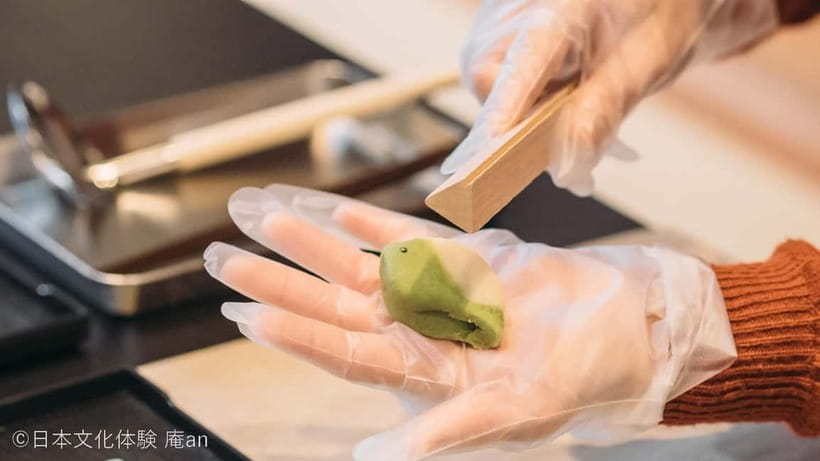
The focus is nerikiri, a refined Japanese sweet made with bean paste and shaped by hand. You make two pieces, with forms and designs selected to reflect the season. That seasonal element matters. Nerikiri is not simply a sugary snack. Its color, shape, and decoration often connect with flowers, leaves, weather, or other images from the calendar.
You do not need to arrive with baking experience. The activity is built around watching a demonstration and then trying the same steps yourself. The supplied reviews describe the directions as clear and easy to understand, even with Japanese as the main teaching language. One recent participant also found the English strong enough to follow comfortably.
The exact designs can change with the season, so you should not expect the same finished sweets every month. That gives the class a little freshness for repeat visitors, though it also means you may not know the precise shapes until you arrive.
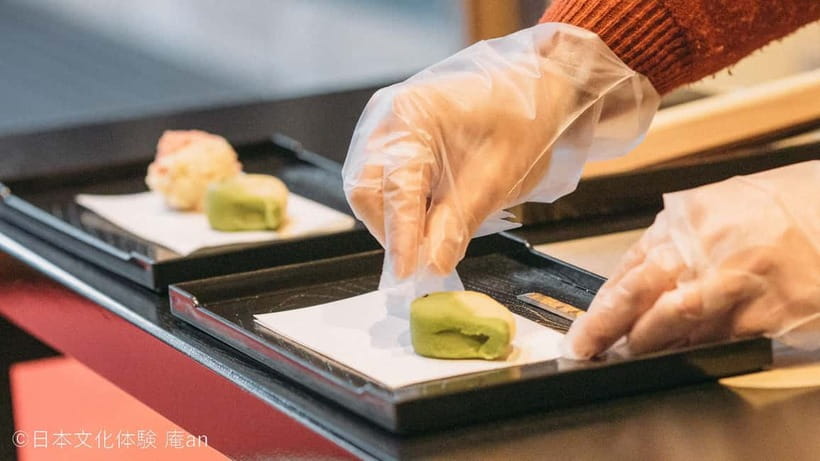
The likely rhythm is straightforward. You receive the ingredients and guidance, watch the instructor demonstrate the method, shape the paste into two sweets, and arrange them on a plate. At the end, you can eat them immediately. That final step is important. Your work is not just a souvenir or a photograph. It is also the afternoon treat.
A few more options to weigh up in Nagoya
- Nagoya: Japanese Traditional Sweets making and Tea Ceremony
★ 4.9 · 76 reviews - Matcha Making Class in Tokyo with Authentic Japanese Sweets Set
★ 5.0 · 744 reviews - Matcha Making Class in Osaka with Authentic Japanese Sweets Set
★ 5.0 · 509 reviews
Why Kyoto bean paste matters in a Nagoya class
The workshop takes place in Nagoya, but the main bean paste comes from established shops in Kyoto. That detail adds useful context to a small activity. The paste is the base of the sweets, so its texture and taste matter as much as your shaping technique.
White bean paste and red bean paste offer different colors and flavors, and the two varieties help create the finished designs. The workshop lets you work with real ingredients rather than a demonstration material made only for practice. You get to handle the same type of paste used to form traditional sweets, then taste the result.
For you, this makes the class more than a craft session. It is a brief food lesson, a design exercise, and a chance to learn why Japanese sweets are often made to look delicate. The finished pieces may be small, but their presentation is part of the experience. When you place them on a plate, the food becomes a little edible picture.
That said, you should keep expectations sensible. This is not described as a full confectionery course, and the 65-minute schedule leaves limited time for a long explanation of Japanese sweets. Its value is in trying the process yourself, not in mastering every technique.
A classroom format with friendly instruction
The atmosphere appears closer to a small cultural class than a private cooking lesson. One recent participant described a classroom setting of about 20 people. That size can make the session feel social and upbeat, though it may provide less individual attention than a private workshop.
The instructor is Japanese, and the official language is Japanese. English translation is available as much as possible if requested, so it is wise to contact the venue ahead of time if English support is important to you. The feedback points to a calm teaching style. The instructor demonstrated clearly and spoke gently, which helps when you are copying a hand movement or trying to understand the order of the steps.
I would treat the language arrangement as manageable, but not identical to an English-language class. You may need to watch closely, follow the demonstration, and ask for clarification when needed. That is not necessarily a problem. Food shaping is visual, and the action often explains more than a long speech.
The class suits solo participants, couples, families, and small groups. You do not need to arrive with a large party to enjoy it. The activity has a clear beginning and end, which makes it easy to fit into a busy visit to Nagoya.
The seasonal designs give the activity its character
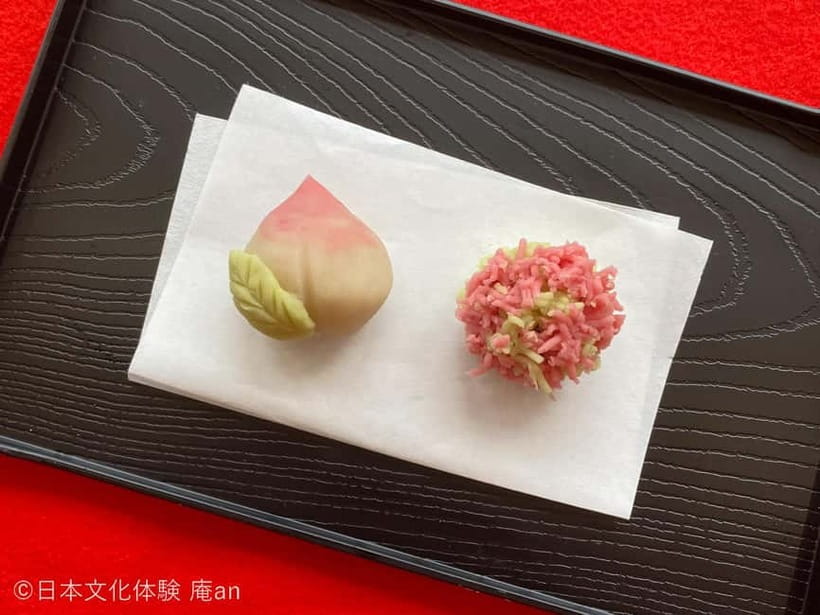
The best reason to choose this workshop is the changing seasonal theme. Traditional Japanese sweets often mirror the time of year, and nerikiri is especially suited to that idea because the paste can be shaped and colored with care.
In spring, the visual theme might suggest flowers. In another season, you might see shapes connected with leaves or other natural images. The available information does not promise a particular design, so you should view the seasonal element as part of the surprise rather than plan around one exact motif.
This approach also gives you a small window into Japanese aesthetics. The goal is not to pile on decorations. It is to create a simple form that looks balanced and recognizable. You are working with food, but you are also paying attention to shape, color, and presentation.
That makes the workshop a good choice for anyone who enjoys quiet, hands-on activities. It is less suited to someone looking for a fast-paced cooking class with several dishes, lots of equipment, or a large meal. You will make two sweets, not a complete menu.
A completely different kind of day out:
- LEGOLAND® Japan Ticket
★ 4.7 · 11,787 reviews - Port of Nagoya Public Aquarium Ticket
★ 4.8 · 4,343 reviews - Shirakawa-go & Takayama Old Town Day Tour (Optional Hida Beef Lunch)
★ 4.6 · 3,936 reviews - Hida Takayama & Shirakawa-go Gassho Village Day Trip (Departing from Nagoya, optional observatory tour included)
★ 4.7 · 2,837 reviews
Eating the sweets on the spot
Once the two nerikiri are finished, you can eat them at the venue. This is convenient and keeps the experience focused. You do not need to protect fragile sweets in your day bag while walking around Nagoya.
The tasting also gives you a proper ending. You make the sweets, see how they look, and then find out how the bean paste tastes. Since the paste comes from Kyoto shops with long-established traditions, the food itself is a key part of the activity, not just a material for shaping.
A take-out box is available for 100 JPY if you want to carry the sweets with you. That is a useful option if you would rather save them for later, take them back to your accommodation, or show them to someone who did not join the class.
The class also offers an experience completion certificate for 300 JPY. A nominative certificate requires your name in advance. Otherwise, the name field is left blank. This is an optional extra, not part of the basic $11 price, so I would only add it if you enjoy collecting small mementos or need a record of the activity.
Getting there from Nagoya Station
The meeting point is easy to reach. The venue is a one-minute walk from Exit 3 of Kokusai Center Station on Nagoya’s Sakura-dori Subway Line. From the Sakura-dori side of Nagoya Station, it takes about 13 minutes on foot.
That location works well before or after central Nagoya sightseeing. If you are walking from Nagoya Station, allow enough time to find the correct route and arrive early. The workshop cannot be held for late arrivals, even when the delay is unavoidable.
The address is on the third floor, and there is no elevator. This is the main physical access issue to keep in mind. If stairs are difficult for you, contact the provider before booking to check whether the venue can meet your needs. The available details do not promise an alternative entrance or lift.
The operating hours are 10:00 to 17:00. Reservations received after 17:00 are processed the next day, so do not expect an immediate response late in the evening.
Is $11 a good value?
At $11 per person, this is one of the easier cultural activities to fit into a Japan itinerary. You receive a 65-minute, hands-on class, ingredients, instruction, and two sweets to eat. The price is low enough that you are paying mainly for the guided activity rather than a costly meal or a full professional course.
The value is strongest if you want something active. You are not simply watching a demonstration. You shape the sweets yourself and leave with a better sense of how traditional Japanese confectionery is made.
The price does not include the optional take-out box or certificate. Those extras are inexpensive, but remember to add them if you want either one. The basic experience already includes the sweets-making set, so you can keep the cost close to the advertised price.
For a family, the class can also be economical. Children under two who sit on a parent’s lap are free. The information does not state a broader child discount, so older children should be booked according to the normal pricing rules.
Who will enjoy this workshop most?
I would recommend it to you if you want a short cultural activity with a clear result. It is especially appealing if you like Japanese food, food photography, seasonal design, or crafts that you can try without a full day of commitment.
It also fits well into a flexible Nagoya schedule. The location near Kokusai Center Station makes it practical between other central stops. At 65 minutes, it will not take over your day, but it is long enough to feel like a real activity rather than a quick photo opportunity.
Families and couples should find the format approachable. Solo participants can join too, and the classroom setup means you are not required to bring a group. The class may also work for visitors who do not speak Japanese, provided they are comfortable learning through demonstrations and requesting English support.
I would hesitate if you need a fully English-speaking instructor, cannot climb three flights of stairs, or are likely to arrive late. I would also choose another activity if you want to prepare a broad range of Japanese dishes. This workshop has a narrow focus, and that is both its strength and its limit.
Practical booking advice
Book a time that leaves a buffer before and after the workshop. The provider will not hold the class for delays, and a missed session can still incur a cancellation fee. Free cancellation is available up to 24 hours in advance for a full refund, but check the exact policy before making last-minute changes.
If you want English translation, contact the venue ahead of time rather than assuming every instruction will be repeated in English. The teaching is Japanese-led, but clear demonstrations and gentle instruction have made the class understandable for many English-speaking participants.
You can also reserve now and pay later, which helps if your Nagoya plans are still shifting. Keep the meeting point details handy: Exit 3 at Kokusai Center Station is the simplest arrival point, and the workshop is on the third floor.
Final verdict: should you book it?
Book this workshop if you want an affordable, hands-on taste of Japanese culture and enjoy making something with your own hands. The Kyoto bean paste, seasonal nerikiri designs, clear demonstrations, and chance to eat the finished sweets make the $11 cost easy to justify.
Skip it if stairs, Japanese-led instruction, or a classroom of roughly 20 people would make you uncomfortable. For everyone else, this is a compact and pleasant way to add a little food craft to a Nagoya itinerary, with enough substance to remember after the last sweet is gone.
FAQ
How long does the Nagoya sweets-making workshop last?
The workshop lasts 65 minutes.
How many Japanese sweets will I make?
You will make two seasonal traditional Japanese sweets called nerikiri.
Can I eat the sweets at the venue?
Yes. You can eat your handmade sweets on the spot.
Is English instruction available?
The instructor teaches in Japanese. English translation will be provided as much as possible, and you should contact the venue if you would like English support.
Where is the workshop located?
It is a one-minute walk from Exit 3 of Kokusai Center Station on the Subway Sakura-dori Line. It is about a 13-minute walk from the Sakura-dori side of Nagoya Station.
Is the venue accessible by elevator?
No. The venue is on the third floor, and there is no elevator.
Just added in Nagoya
- Hida Takayama & Shirakawa-go Gassho Village Day Trip (Departing from Nagoya, optional observatory tour included)★ 4.7 · 2,837 reviews
- Shirakawa-go & Takayama Old Town Day Tour (Optional Hida Beef Lunch)★ 4.6 · 3,936 reviews
- Nagoya Castle Ticket★ 4.6 · 326 reviews
- Port of Nagoya Public Aquarium Ticket★ 4.8 · 4,343 reviews
- LEGOLAND® Japan Ticket★ 4.7 · 11,787 reviews
- Ghibli Park Ticket in Aichi★ 4.4 · 2,205 reviews
- Nagoya Endoji Food and Cultural Tour★ 5.0 · 12 reviews
- Sumo Tournament Experience in Nagoya★ 5.0 · 12 reviews
Workshops, compared.
Sushi Making Tokyo Roll and Authentic Japanese Sushi Class
Read our review →
Gion Make Your Own Chopsticks with Engraving Option
Read our review →
Roll and Authentic Sushi Making Class in Asakusa
Read our review →
Ramen Cooking Class at Ramen Factory in Kyoto
Read our review →
Tokyo Asakusa Chopsticks Workshop: Make Your Own Pair
Read our review →
Ring Making Workshop : Vintage Japanese Coin Ring
Read our review →Browse the lists this tour appears in