
Reviewed · TEA CEREMONIES
Nagoya: Japanese Traditional Sweets making and Tea Ceremony
Make sweets, then whisk your own matcha. This 95-minute Nagoya experience brings you close to two elegant parts of Japanese food culture: seasonal nerikiri and a guided tea ritual. I like the use of bean paste from long-established Kyoto shops, and I like that you make two different sweets instead of simply watching a demonstration.
The main consideration is language. The instructor speaks Japanese, with English translation provided as much as possible, although several sessions have had fluent English-speaking hosts. The venue is also on the third floor with no elevator, so you will need to manage the stairs.
In This Review
- Key points at a glance
- A calm cultural break in central Nagoya
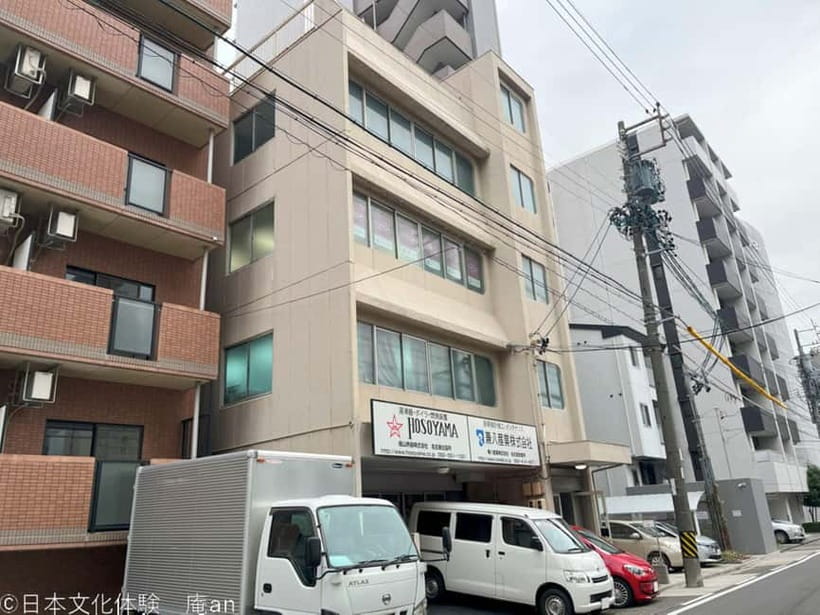
- Finding Kokusai Center Station and the third-floor studio
- Starting with nerikiri, Japan’s seasonal art sweet
- Making the second sweet, kinton nerikiri
- A short break before the tea lesson
- Grinding and preparing Uji matcha
- Why the sweets and matcha work well together
- English support and the family experience
- What the $18 price really includes
- Who should book this Nagoya activity?
- Should you book the nerikiri and matcha class?
- FAQ
- How long does the Japanese sweets and tea experience last?
- How much does the activity cost?
- Where does the experience take place?
- What sweets will I make?
- What kind of matcha is used?
- Is English available?
- Is the venue accessible by elevator?
- Can I take the sweets home?
- What is the cancellation policy?
Key points at a glance
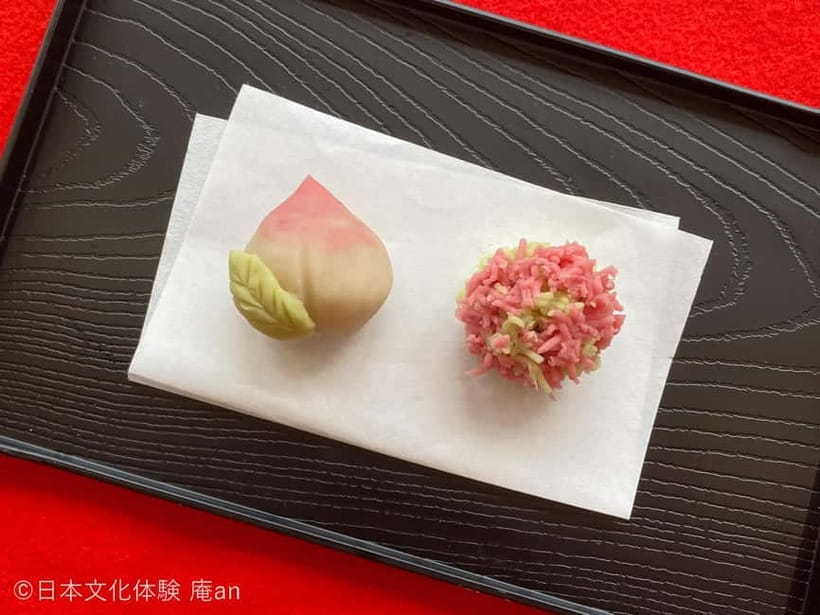
- Two handmade seasonal sweets: Shape a flower-style nerikiri and a kinton nerikiri, with designs that can reflect the time of year.
- Kyoto-sourced ingredients: The white and red bean paste comes from long-established Kyoto shops, giving the class a more serious food focus.
- Uji matcha experience: Watch a matcha grinding demonstration, prepare your own tea, and learn how to drink it properly.
- A central Nagoya location: The venue is one minute from Exit 3 of Kokusai Center Station and a 13-minute walk from Nagoya Station.
- Good family activity: Children have taken part successfully, including a six-year-old who received extra support from the hosts.
- Strong value at $18: The price covers both the sweets-making and tea experiences, with optional add-ons costing only 100 yen for a box or 300 yen for a certificate.
A calm cultural break in central Nagoya
Nagoya is easy to treat as a transport stop. You arrive by shinkansen, visit a castle or museum, eat something good, and move on. This class gives you a reason to slow down for a little over an hour.
At $18 per person, it is priced below many hands-on cultural activities in Japan. You are not paying only for a cup of tea or a small snack. You get instruction, ingredients, two sweets to make, a matcha preparation experience, and time to eat what you have created.
I especially like the balance between craft and food. Nerikiri is delicate and precise, but you do not need to be artistic to enjoy the process. The class lets you try, adjust, laugh at the occasional lopsided flower, and still finish with something attractive and edible.
The overall rating of 4.9 from 76 reviews reflects a very consistent experience. The most praised features are the patient teaching, clear demonstrations, quality ingredients, and the way the activity works for families and first-time visitors.
More Tea Ceremonies in Nagoya:
- Experience Japanese calligraphy & tea ceremony at a traditional house in Nagoya
★ 5.0 · 16 reviews - Kyoto: Tea Ceremony in a Traditional Tea House in Kiyomizu
★ 4.9 · 3,519 reviews - Kyoto: Tea Ceremony Ju-An at Jotokuji Temple
★ 4.9 · 3,207 reviews
Finding Kokusai Center Station and the third-floor studio
The meeting point is practical for a short stay in Nagoya. From Exit 3 of Kokusai Center Station on the Sakura-dori Subway Line, it is about a one-minute walk. From the Sakura-dori side of Nagoya Station, allow around 13 minutes on foot.
That location matters if you have a train to catch or only one free day in the city. You do not need to make a long trip to a distant neighborhood for the class. The published coordinates are 35.1715323, 136.891893, which can help if you are using a map app.
The room is on the third floor, and there is no elevator. Build in enough time to find the entrance and climb the stairs without rushing. This is also important for anyone with limited mobility, since no alternative access is listed.
The experience runs between 10:00 and 17:00, with specific starting times available when you book. Arrive promptly. The hosts cannot hold the class for late arrivals, and a missed start can be costly because cancellation fees may apply.
Starting with nerikiri, Japan’s seasonal art sweet
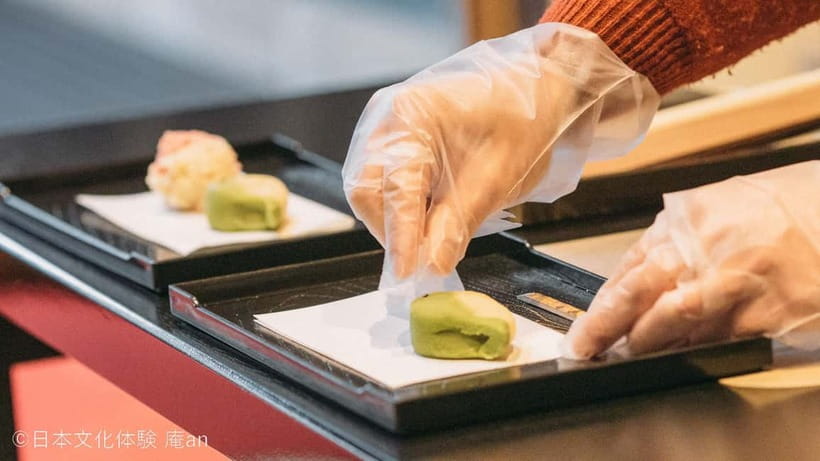
The class begins with an explanation of Japanese traditional sweets. You then start with the coloring of white bean paste before shaping it into nerikiri.
Nerikiri is a high-grade Japanese sweet made from colored white bean paste. It is often formed into seasonal flowers, leaves, fruit, or other natural shapes. Its appeal is visual as much as culinary. A small sweet can suggest a ginkgo leaf, a chestnut, or a flower associated with the season.
The use of bean paste from established Kyoto shops gives this part of the activity a useful point of comparison. You are not working with an anonymous mass-produced mixture. You can pay attention to its texture, sweetness, and ability to hold a shape.
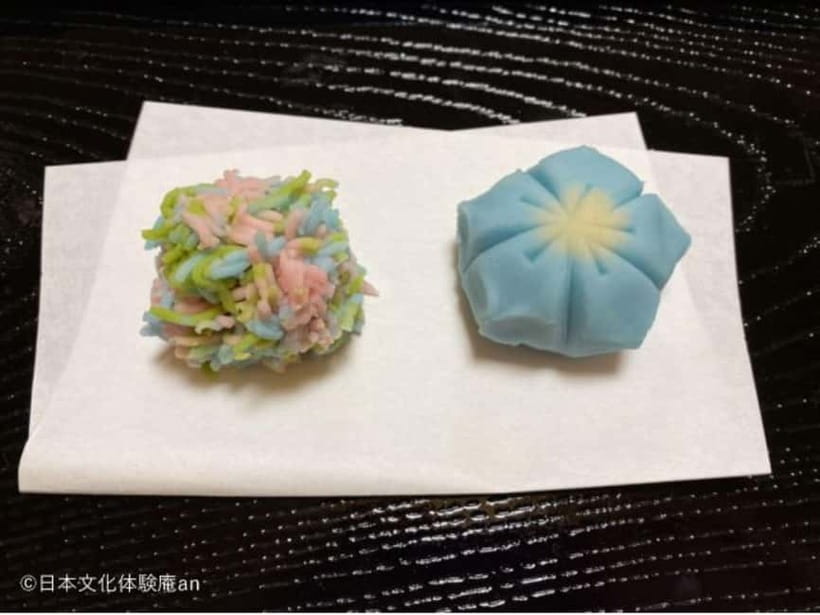
Your first project is a flower-shaped nerikiri. The teacher explains how to color and handle the paste, then shows you how to form the details. The process calls for gentle pressure and careful fingers. Push too hard and the shape loses its clean edges. Use too little pressure and the design may not hold.
That small challenge is part of the fun. This is not a pastry class where every result must look professional. The teachers guide you closely, and the finished sweet remains enjoyable even if your flower looks more personal than perfect.
The strongest teaching praise centers on clear instructions and patient support. Saki and Mariko are two instructors specifically praised for their teaching, while other sessions have also been led by hosts who explained the process in fluent English. The instructor’s name may vary by date, so do not assume you will meet one particular teacher.
Making the second sweet, kinton nerikiri
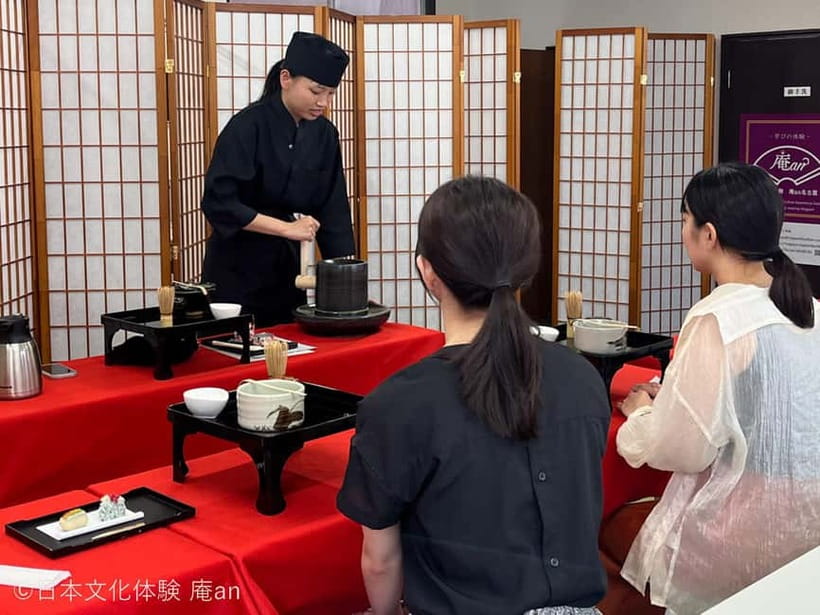
The second project is kinton nerikiri. The schedule places both sweets before a short break, so you get a satisfying stretch of hands-on work before moving to tea.
Kinton has a different look from the flower-shaped sweet. Instead of focusing mainly on smooth petals, it uses a more textured appearance. Seasonal versions can suggest items such as chestnuts or other natural forms.
Making two types is a smart choice. One sweet teaches you about coloring and shaping. The other gives you a chance to work with a different texture and finish. By the second attempt, you have already learned how carefully the bean paste responds to your hands.
You will also gain a better sense of why Japanese sweets are often linked to the calendar. Their shapes and colors are not random decoration. A ginkgo leaf or chestnut connects the food to a particular season and gives a small snack a sense of place and time.
The sweets are yours to eat later with matcha. If you want to take them away instead, a box costs 100 yen. That is a useful extra for anyone who wants to save the sweets for a hotel room or share them with someone who did not attend.
A few more options to weigh up in Nagoya
- Nagoya: Traditional Japanese Sweets-Making Workshop
★ 4.6 · 14 reviews - Matcha Making Class in Tokyo with Authentic Japanese Sweets Set
★ 5.0 · 744 reviews - Matcha Making Class in Osaka with Authentic Japanese Sweets Set
★ 5.0 · 509 reviews - Tokyo: Matcha Making Experience with Mochi Sweets in Asakusa
★ 4.9 · 388 reviews
A short break before the tea lesson
After roughly 55 minutes, there is a break. The tea section begins around the 65-minute mark, leaving about 10 minutes between the two parts.
This pause helps. Making nerikiri requires concentration, especially when you are trying to copy a delicate shape. A short rest gives you time to look at your sweets, take pictures, and reset before the more formal tea portion.
The break also keeps the experience from feeling like one long demonstration. You have time to enjoy the change in pace. The first half is tactile and playful. The second half is quieter and more deliberate.
Grinding and preparing Uji matcha
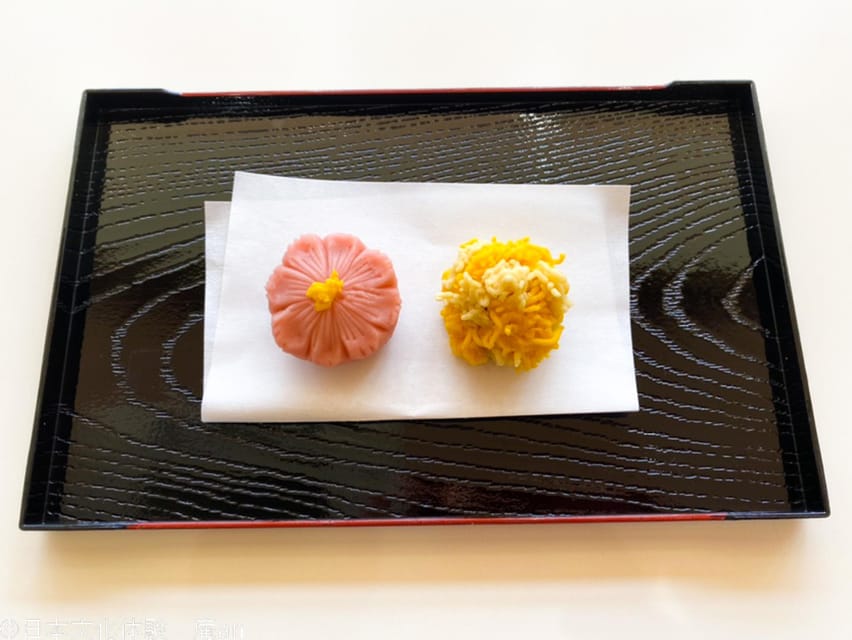
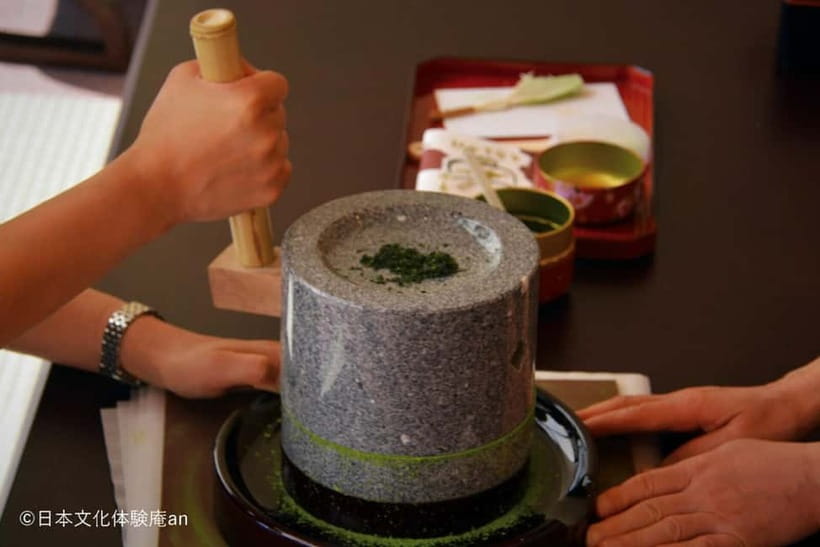
The tea section begins with an explanation of tea, followed by a matcha grinding demonstration. The class uses Uji matcha, described as a special single-origin matcha.
That detail makes the tea portion more than a quick drink served alongside dessert. You see that matcha begins as a prepared ingredient requiring careful handling before it reaches the bowl. The demonstration gives you a basic sense of the work behind the powder.
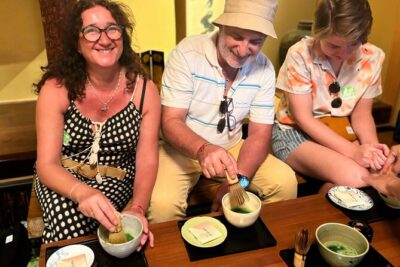
You then take part in the tea ceremony experience and prepare your own matcha. The teacher explains the process and the proper way to drink it. This is particularly useful if you have seen matcha served in Japan but were unsure about the etiquette.
Keep your expectations measured. This is an introduction to tea ceremony, not a full formal tea ceremony with every traditional procedure. One useful description of the activity calls it a worthwhile experience but not a complete ceremony.
That is not a serious flaw at this price. In fact, the shorter format may suit you better if you want a practical introduction rather than a long, highly formal performance. You get to make the tea yourself, learn the basic steps, and understand how the sweet and tea are meant to work together.
Why the sweets and matcha work well together
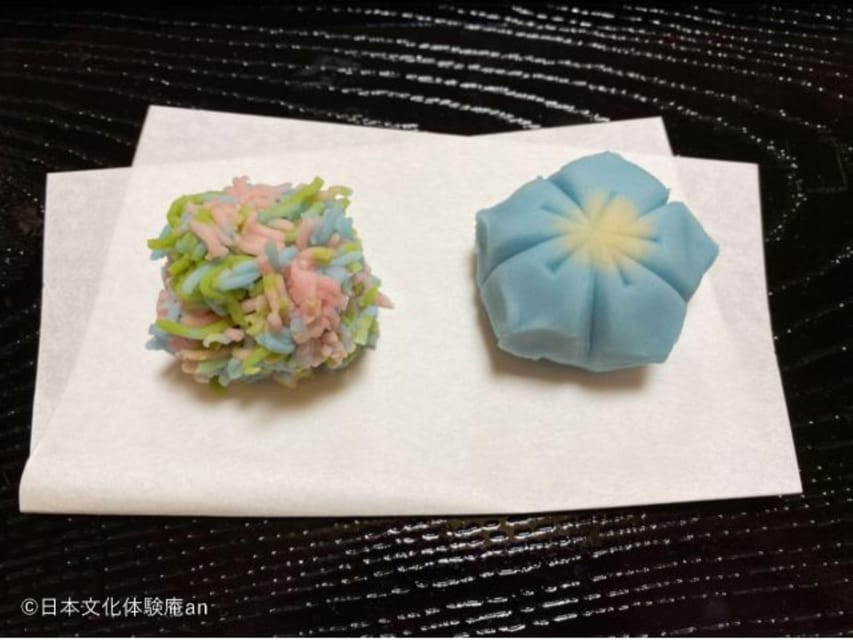
High-quality white and red bean paste is sweet, but its sweetness is gentle and rounded rather than like a brightly flavored Western confection. Matcha brings bitterness, a grassy edge, and a lingering finish.
Eating the sweets with your own tea helps explain the pairing. The sugar softens the matcha, while the tea keeps the bean paste from feeling heavy. You do not need to be a tea expert to notice the contrast.
The final eating and drinking time is scheduled near the end, after the picture session. This gives you a chance to enjoy both sweets while the class is still fresh in your mind.
A picture session is also included around the 85-minute mark. Your finished sweets are naturally the stars of the photograph. If your first flower is slightly uneven, that is fine. The handmade quality is the point.
English support and the family experience
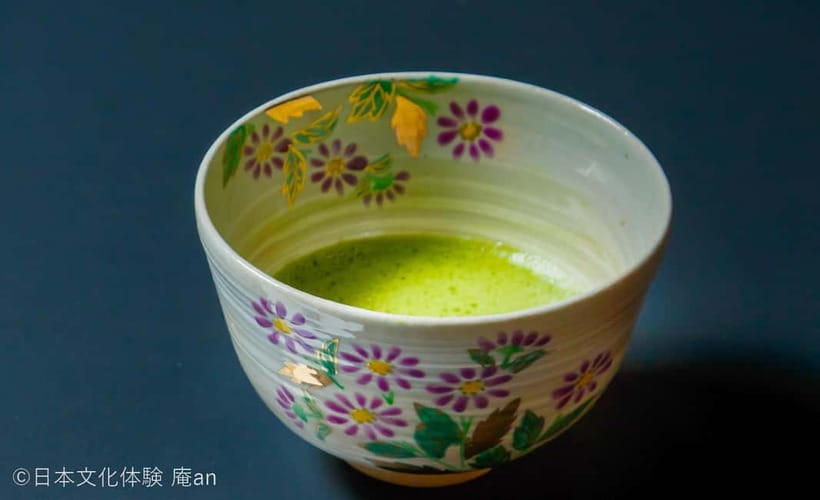
The official language is Japanese, with English translation provided as much as possible. That makes the choice of date and instructor relevant for English-speaking visitors.
Some sessions have had fluent English-speaking instructors, and clear English delivery has been praised by families and first-time participants. Other times, you may receive a mix of spoken explanation, demonstration, and translation. If English support is important to you, contact the provider in advance and ask for it to be added.
The class has worked well for families. A six-year-old took part with support from the hosts, and the activity gave the whole family something to do together. Children under two who sit on a parent’s lap are free, according to the stated policy.
I would still think about your child’s patience and ability to handle a seated craft activity. The class is hands-on, but it is not a free-play session. Children need to listen, follow instructions, and handle the paste carefully.
For adults, couples, friends, and solo visitors, the class offers an easy social setting without requiring advanced Japanese. You can focus on the objects in front of you, copy the demonstration, and enjoy the finished food.
What the $18 price really includes
The $18 fee covers both parts of the experience: making two kinds of Japanese traditional sweets and taking part in the tea ceremony experience.
That is good value for central Nagoya. You receive quality bean paste from Kyoto suppliers, seasonal designs, instruction, matcha, and the chance to prepare and consume the finished items. The class also gives you cultural context that you would miss by simply buying wagashi at a shop.
The optional costs are modest:
- A take-out box for the sweets costs 100 yen.
- An experience completion certificate costs 300 yen.
- A nominative certificate requires you to provide names in advance. Otherwise, a blank space is left for your name.
The certificate is not necessary for most visitors, but it could be a pleasant extra for children or anyone collecting activity mementos. The box is more practical if you want to carry the sweets away.
You can reserve now and pay later, which keeps your plans flexible. Free cancellation is available up to 24 hours before the experience for a full refund, but cancellation charges apply after that point. Also note that reservations received after 17:00 are processed the next day.
Who should book this Nagoya activity?
I would recommend it to you if you want a short cultural activity with real participation. It is a good fit for anyone curious about wagashi, visitors who want a gentle introduction to matcha, and families looking for something everyone can do together.
It also works well on a busy Nagoya schedule. The central location and 95-minute length make it easier to fit between sightseeing plans, provided you leave enough time for the subway or walk from the station.
You may want to choose another activity if you specifically want a full, highly formal tea ceremony. This class teaches the basics and lets you make your own matcha, but it is designed as a combined sweets and tea workshop.
You should also contact the provider before booking if you need detailed English instruction or cannot use stairs. The available information confirms Japanese instruction and English support as much as possible, but it does not promise a fully English-language session every time.
Should you book the nerikiri and matcha class?
Book it if you want to understand Japanese sweets by making them, not just photographing them in a shop window. The strongest reasons are the seasonal designs, Kyoto-sourced bean paste, clear hands-on guidance, and the chance to drink matcha with something you shaped yourself.
At $18, the class offers a lot for a compact experience. It is educational without becoming stiff, creative without demanding artistic talent, and suitable for families as well as adults.
Skip it only if stairs are a problem, you need guaranteed full English instruction, or your main goal is an elaborate traditional tea ceremony. For everyone else, this is a sensible and tasty way to give a Nagoya day a more personal Japanese touch.
FAQ
How long does the Japanese sweets and tea experience last?
The full experience lasts 95 minutes.
How much does the activity cost?
The price is $18 per person.
Where does the experience take place?
It is one minute from Exit 3 of Kokusai Center Station on Nagoya’s Sakura-dori Subway Line. It is also about a 13-minute walk from the Sakura-dori side of Nagoya Station.
What sweets will I make?
You will make two seasonal Japanese sweets: a flower-shaped nerikiri and a kinton nerikiri.
What kind of matcha is used?
The experience uses Uji matcha described as special single-origin matcha.
Is English available?
The instructor’s language is Japanese, and English translation is provided as much as possible. You can contact the provider if you would like English support added.
Is the venue accessible by elevator?
No. The venue is on the third floor and there is no elevator.
Can I take the sweets home?
Yes. A sweets take-out box is available for 100 yen.
What is the cancellation policy?
You can cancel up to 24 hours in advance for a full refund. Reservations received after 17:00 are processed the following day, and cancellation fees apply after the relevant deadline.
Just added in Nagoya
- Hida Takayama & Shirakawa-go Gassho Village Day Trip (Departing from Nagoya, optional observatory tour included)★ 4.7 · 2,837 reviews
- Shirakawa-go & Takayama Old Town Day Tour (Optional Hida Beef Lunch)★ 4.6 · 3,936 reviews
- Nagoya Castle Ticket★ 4.6 · 326 reviews
- Port of Nagoya Public Aquarium Ticket★ 4.8 · 4,343 reviews
- LEGOLAND® Japan Ticket★ 4.7 · 11,787 reviews
- Ghibli Park Ticket in Aichi★ 4.4 · 2,205 reviews
- Nagoya Endoji Food and Cultural Tour★ 5.0 · 12 reviews
- Sumo Tournament Experience in Nagoya★ 5.0 · 12 reviews
Tea Ceremonies, compared.
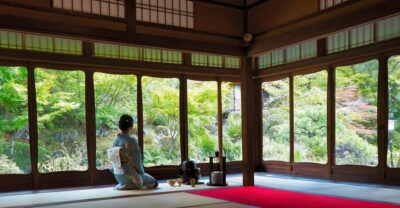
Tea Ceremony in a Traditional Tea House in Kiyomizu
Read our review →
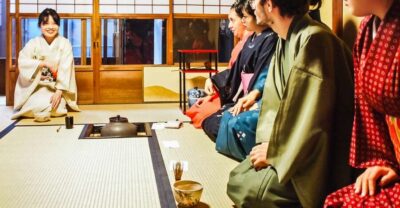
World Heritage Kyoto & Nara Uji Authentic Matcha Experience
Read our review →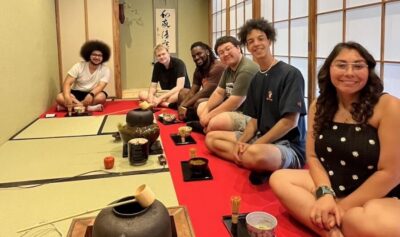
Browse the lists this tour appears in