
Reviewed · CASTLES AND HISTORIC SITES
Ninja Experience in Osaka
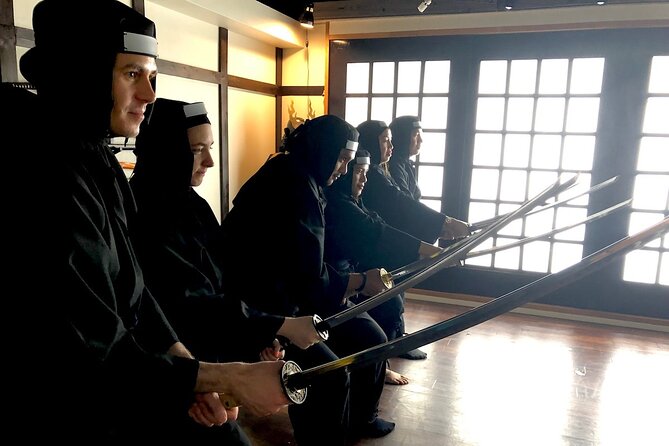
Put on black, learn to move quietly. Osaka’s Ninja-Do offers a lively one-hour introduction to ninja skills, with costume rental and plenty of time for photos. I like the mix of simple training and playful staging, and I like that the small group, capped at eight people, gives the instructor room to work with each person. The main catch is timing: one family found the session lasted closer to 45 minutes than a full hour.
The activity is especially strong for families, younger children, and anyone wanting an easy first Japanese cultural experience. English instruction, a friendly sensei, and a price of $30.80 per person keep it approachable, though serious martial arts students should expect a fun introduction rather than demanding physical training.
In This Review
- Key points at a glance
- What the Ninja-Do experience is really like
- Arriving at the Osaka dojo
- Putting on the ninja costume
- Learning to walk like a ninja
- Handling the sword and shuriken
- The sensei makes the difference
- Is one hour enough for the price?
- Who should book this Osaka activity?
- Pairing Ninja-Do with Shinsekai and Abeno Harukas
- Booking and cancellation details
- Should you book Ninja-Do?
- FAQ
- Where does the Ninja Experience in Osaka begin?
- Where does the activity end?
- How long does the ninja experience last?
- What activities are included?
- How many people can join the class?
- Is the experience suitable for children?
- What is the cancellation policy?
Key points at a glance
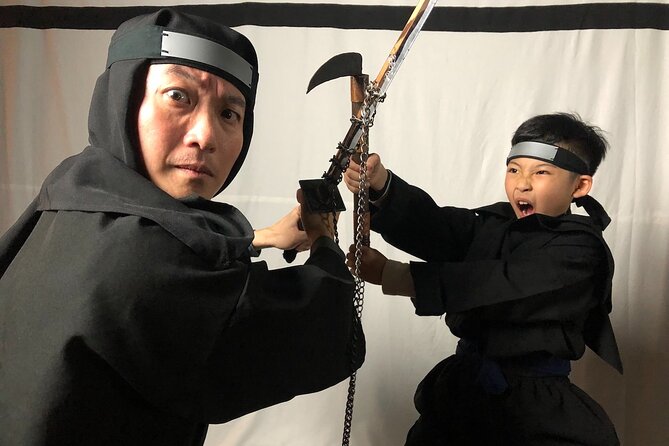
- Sword and shuriken practice: You learn basic ninja-style handling of a sword and throwing-star technique in a controlled setting.
- Costumes included: Rental ninja clothing turns the lesson into a ready-made photo session.
- Small class size: The maximum of eight people allows for personal attention and individual practice.
- Family-friendly teaching: Children, skeptical teenagers, and adults can all take part.
- Near Shinsekai: Ninja-Do sits close to Shinsekai and Abeno Harukas, making it easy to pair with other Osaka sights.
- Short, flexible outing: The session lasts about an hour, although you should allow for the possibility of a shorter 45-minute class.
What the Ninja-Do experience is really like
Ninja-Do is less a hard-core combat class than a compact stage show with lessons built into it. You put on a ninja costume, learn how ninja moved and trained, handle traditional-looking equipment, and pose for photographs in the dojo setting.
That balance is the key to understanding the activity. If you want a serious martial arts course, this will probably feel light. If you want a memorable Osaka activity that gives children and adults something active to do, it makes much more sense.
The class introduces the idea that ninja trained both body and mind while working as spies. The instructor connects the movements and weapons to that role, so you get a simple cultural explanation rather than only a sequence of photo poses.
The published rating is five stars from 31 ratings, with a 100 percent recommendation rate. That matches the strongest pattern in the feedback: the instructor’s warmth, humor, and ability to keep different ages involved are more important to the experience than the amount of physical exercise.
More Castles and Historic Sites in Osaka
- Osaka Castle Ticket
★ 4.7 · 12,450 reviews - Osaka Castle: Museum and Tower Entry Ticket
★ 4.5 · 2,380 reviews - Ultimate Osaka Walking Tour: Castle, Dotonbori & Hidden Gems
★ 5.0 · 862 reviews
Arriving at the Osaka dojo
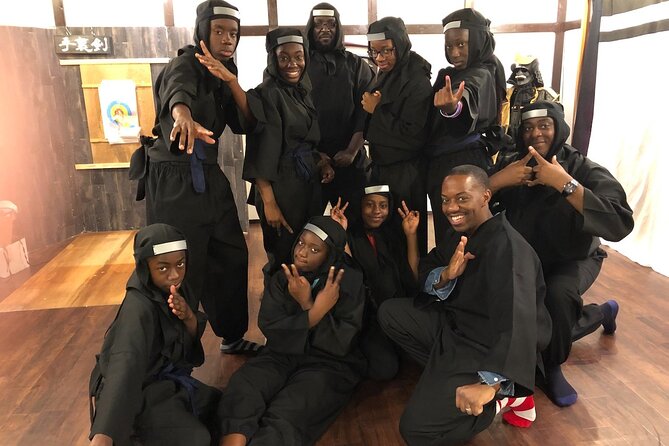
The meeting point is 忍者堂 Ninja-DoJapan, at 1-chōme 18, Taishi, Nishinari Ward, Osaka 557-0002. The dojo is on the fourth floor of the Wakaba Building.
You should plan your route carefully. One person had trouble finding the building, even though the activity itself was worth recommending afterward. Since the address includes Japanese characters and the dojo is inside a building, keeping the mobile ticket and the full meeting address ready on your phone is sensible.
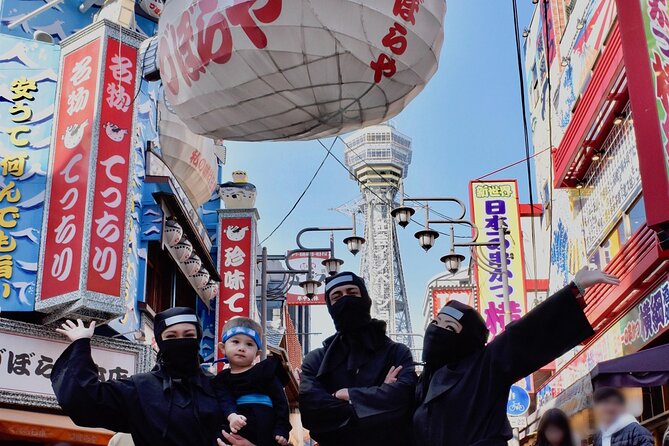
The location is near public transportation and close to two useful Osaka stops. Shinsekai is known for its old-school entertainment streets and the Tsutenkaku area, while Abeno Harukas rises nearby as Japan’s tallest commercial building. You can place the ninja session between sightseeing stops instead of giving it a full day of its own.
The activity returns to the same meeting point. That makes planning easier, especially if you are visiting with children or need to leave bags and shopping plans for later. The exact luggage arrangements are not specified, so I would avoid arriving with more than you can comfortably manage.
Putting on the ninja costume
Costume rental is included in the experience, and it changes the mood right away. A standard lesson can feel formal or abstract. Put on ninja clothing, add the dojo setting, and even a shy child has a clear role to play.
The costumes also make the photo portion worthwhile. You are not simply taking a quick group picture at the start. The session includes repeated chances to pose, practice movements, and capture the setting with your own camera or phone.
One solo participant was allowed to set up a tripod for photographs and video. That is useful if you are visiting alone and want more than a quick selfie. Still, the information does not promise professional photographs or a photographer, so you should plan to use your own device.
The photos are part of the appeal, not an afterthought. Families can take pictures of children with swords, in fighting stances, or in front of the dojo decorations. The music and set design also help create a playful atmosphere, according to one particularly positive account.
Learning to walk like a ninja
The first training section covers how to walk. That may sound simple, but it gives the lesson a clear starting point. You learn to think about posture, movement, and quiet steps rather than rushing straight to the weapons.
This part also works well for children because it turns a basic motion into a game. The instructor can demonstrate, then give each person a chance to copy the movement. Several comments point to personal attention, including one account from a solo participant who received one-on-one time.
Do not expect a long technical lesson in ninja footwork. The session is short, and the goal is to let you try the idea rather than master it. I see this as a strength for a family outing, since the pace stays accessible and nobody needs prior experience.
The walking exercise also gives the instructor a chance to explain how ninja trained the body and mind. That small piece of context adds value. You are not only dressing up and waving props around, though the playful side remains central.
More Castles and Historic Sites in Japan:
- Tokyo: Imperial Palace and Shogun Historical Walking Tour
★ 5.0 · 2,251 reviews - Tokyo: Samurai Restaurant Show Ticket with 2 Drinks
★ 4.5 · 1,307 reviews - Kyoto Samurai Experience
★ 5.0 · 1,294 reviews - Tokyo Castle & Imperial PalaceーShogun Walking Tour
★ 4.7 · 1,068 reviews
Handling the sword and shuriken
The sword lesson is one of the main draws. You learn how to wield a sword in a ninja style, with the instructor guiding the movements. A separate section covers shuriken, the star-shaped throwing weapon associated with ninja stories and popular culture.
The experience presents these weapons as training tools in a controlled class. The supplied information does not describe the exact materials, distances, or safety equipment, so you should follow the instructor’s directions closely and treat the equipment with care.
The sword portion seems to work for both children and adults because it combines movement with a clear visual result. You can see the stance, hold the prop, and take photographs without needing to understand a complex martial arts system.
The shuriken activity adds variety. Without it, the class might feel like a costume photo session with one demonstration. Adding several forms of practice gives the hour a better rhythm: movement, weapon handling, photos, and light historical explanation.
One important expectation check: this is not described as full combat training. You will get an entertaining introduction to ninja techniques, not a qualification, a long self-defense class, or advanced instruction.
The sensei makes the difference
The instructor is repeatedly praised for being kind, funny, friendly, and attentive. Sensei Tsujimura is named in one account as both informative and entertaining. Another says the sensei helped turn a doubtful teenager into someone fully engaged with the activity.
That matters because costume activities can feel awkward at first. A good instructor gives you permission to be playful without making anyone feel foolish. The teaching style appears to welcome adults who are only joining because their children asked them to come.
English ability is another practical advantage. One family specifically praised the instructor’s English, and other comments describe the explanations as clear. The supplied information does not promise a particular language level for every session, but English support is clearly part of the appeal.
The small maximum of eight people should help maintain this personal tone. A larger class could turn the activity into a line of people waiting to hold a sword. With eight or fewer, the instructor has more room to correct positions, explain the exercise, and take individual photos.
That said, the exact attention you receive can depend on the group. If the class fills, you may share the dojo with several families or mixed-age groups. The small size is good, but it does not mean a private lesson.
Is one hour enough for the price?
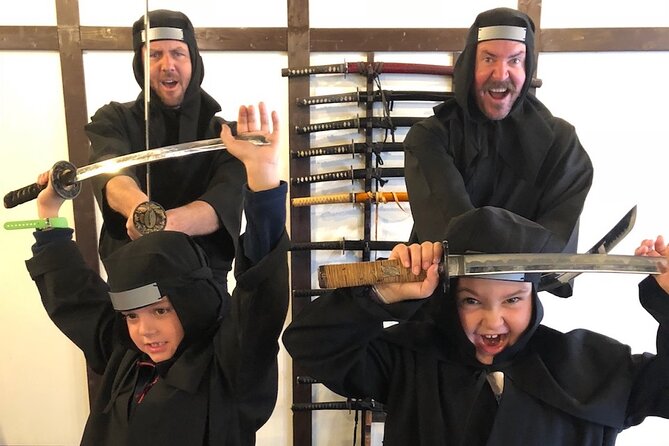
At $30.80 per person, the experience sits in the affordable range for a short Osaka activity. You are paying for instruction, costume rental, a themed setting, and access to several activities rather than a simple photo opportunity.
I think the price works best when you treat the class as a compact entertainment stop. Families get an activity that can hold a child’s attention, and adults get photos plus a short introduction to ninja culture. A solo visitor can still find value, especially if taking photographs is important.
The value is less convincing if you expect a full hour of strenuous training. One account says the experience lasted no more than 45 minutes. The advertised duration is approximately one hour, so the actual pace may vary. Keep your schedule flexible and do not place a tightly timed reservation immediately afterward.
Cost also depends on how many people in your group will enjoy dressing up. If nobody wants photos and the adults want serious martial arts instruction, the price may feel high for a brief lesson. If your group includes children who love ninja stories, the combination of costume, weapons, music, and personal instruction can make $30.80 feel reasonable.
Who should book this Osaka activity?
This is a strong choice for families with younger children. The teaching is described as kind and easy to follow, and children can participate in both the lesson and the photo session. One parent said the experience was especially good for younger kids.
It also suits teenagers who may resist a standard museum visit. The report of a skeptical teenager becoming engaged suggests that the activity has enough action and humor to win over someone who is not naturally interested in cultural tours.
Adults can enjoy it too, especially if they are willing to play along. The sword practice, shuriken activity, and costume photographs give you a shared memory rather than another quiet sightseeing stop.
Solo visitors are not left out. One person attended alone, received individual attention, and used a tripod for personal photos and video. The group limit also reduces the chance that you will feel lost in a crowd.
I would be more cautious if you have mobility or physical concerns, since the program involves walking practice and handling equipment. The activity states that most people can participate, and service animals are allowed, but it does not provide detailed physical-access information. Contact the provider if you need specific assistance.
Pairing Ninja-Do with Shinsekai and Abeno Harukas
The location makes the activity easy to add to a day around southern Osaka. Shinsekai is nearby, so you can combine the dojo with its distinctive streets, food stops, and retro entertainment atmosphere.
Abeno Harukas offers a very different experience. Its height and modern commercial setting contrast with the costume lesson and old ninja imagery. Putting the two together gives you a varied day: a hands-on class first, then shopping, city views, or a visit to the building.
I would not book Ninja-Do as the only event of your day. Its short length works better as one piece of a wider plan. The activity ends where it begins, so you can continue exploring without arranging a second pickup point.
Because nearby attractions are busy at different times, leave room between the ninja class and any fixed reservation. The possibility of a 45-minute session gives you some spare time, but the advertised duration is about one hour and should be your planning guide.
Booking and cancellation details
You receive confirmation at the time of booking, and the ticket is mobile, so there is no need to print a voucher unless you prefer a paper backup.
Free cancellation is available when you cancel at least 24 hours before the start time. A cancellation made less than 24 hours before the activity does not qualify for a refund, and changes inside that same period are not accepted. The cut-off follows Osaka local time.
The class accepts service animals, is near public transportation, and is open to most people. It has a maximum of eight participants, though the information does not state that every departure is private or that every class reaches the maximum.
Should you book Ninja-Do?
Book it if you want a short, cheerful Osaka activity with costumes, basic ninja training, and good photo chances. It is especially useful for families, children, teenagers, and solo visitors who want an active break from temples, shops, and observation decks.
Skip it if you want demanding martial arts instruction or a guaranteed full hour of practice. The possible 45-minute duration is the main caution.
For most people, the best way to judge the $30.80 price is to count the whole package: a friendly English-capable instructor, sword and shuriken lessons, costume rental, a small group, and a convenient location near Shinsekai. If those pieces fit your Osaka plans, Ninja-Do offers a fun memory without taking over your day.
FAQ
Where does the Ninja Experience in Osaka begin?
It begins at 忍者堂 Ninja-DoJapan, 1-chōme 18, Taishi, Nishinari Ward, Osaka 557-0002. The dojo is on the fourth floor of the Wakaba Building.
Where does the activity end?
The activity ends back at the same meeting point at Ninja-Do.
How long does the ninja experience last?
The stated duration is approximately one hour. One account found the session lasted about 45 minutes, so it is wise to allow flexibility in your schedule.
What activities are included?
The program includes ninja walking practice, a sword lesson, shuriken-star practice, and other basic training activities. Ninja costume rental is included.
How many people can join the class?
The maximum group size is eight participants.
Is the experience suitable for children?
Yes. The activity is described as suitable for most people, and it has been particularly well received by families with younger children and teenagers.
What is the cancellation policy?
You can cancel for a full refund up to 24 hours before the experience start time. Cancellations or changes made less than 24 hours in advance are not accepted for a refund.
Just added in Japan
- A One-of-a-Kind Sushi Experience in a Special Place of Japan★ 5.0 · 15 reviews
- Tokyo Cute Bento Cooking Class – Make a Kawaii Character Lunchbox★ 5.0 · 126 reviews
- Japanese Home Cooking Class & Walk in Todoroki Temple Tokyo★ 5.0 · 88 reviews
- Japan Tokyo Tower Observatory Deck E-Ticket★ 4.0 · 34 reviews
- Catch a Baseball Game in Tokyo with a Local – Tickets Included★ 5.0 · 24 reviews
- JDM Experience with Fast&Furious RX-7 (English speaking Driver)★ 5.0 · 57 reviews
- Tokyo Private Day Tour by Car with English speaking Driver Guide★ 4.0 · 29 reviews
- Japan Classic 10 Day – One Life Adventures★ 5.0 · 129 reviews
Castles and Historic Sites, compared.


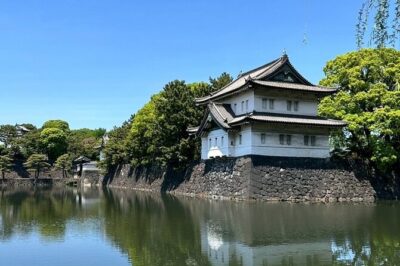
Imperial Palace and Shogun Historical Walking Tour
Read our review →
Tokyo Castle & Imperial PalaceーShogun Walking Tour
Read our review →
Nijo-jo Castle and Ninomaru Palace Guided Tour
Read our review →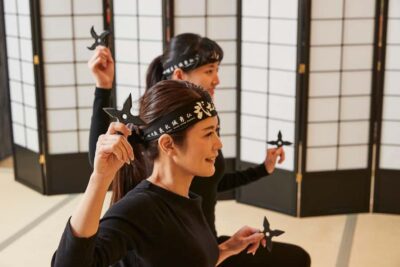
Samurai Ninja Museum Guided tour and Experience
Read our review →Browse the lists this tour appears in