
Reviewed · MUSEUMS AND GALLERIES
Osaka: Kamigata Ukiyo-e Museum Admission Ticket
Osaka’s old theater district hides a fine art stop. The Kamigata Ukiyo-e Museum gives you a close look at woodblock prints made for Osaka audiences, especially the kabuki actors who performed in Dotonbori during the Edo and Meiji periods. I like the museum’s strong local focus and its affordable price of $4.51 per person. I also like the unusual use of gold, silver, and copper powders, which gives some prints a more lavish finish than you might expect from a small museum.
The main consideration is scale. This is a compact museum visit, not a full-day attraction despite the ticket being valid for one day. You should also know that the separate ukiyo-e woodblock printing course is not included, and the museum may have a wait during busy periods.
In This Review
- Key points to know before you go
- Why Kamigata ukiyo-e matters in Osaka
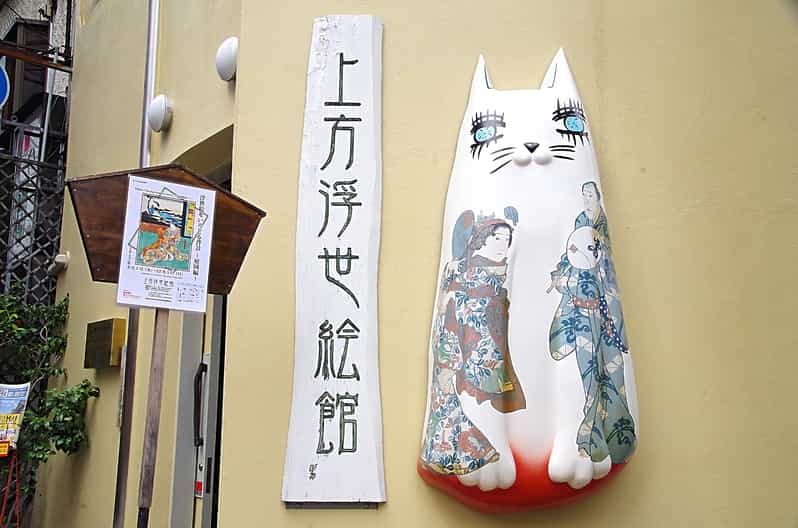
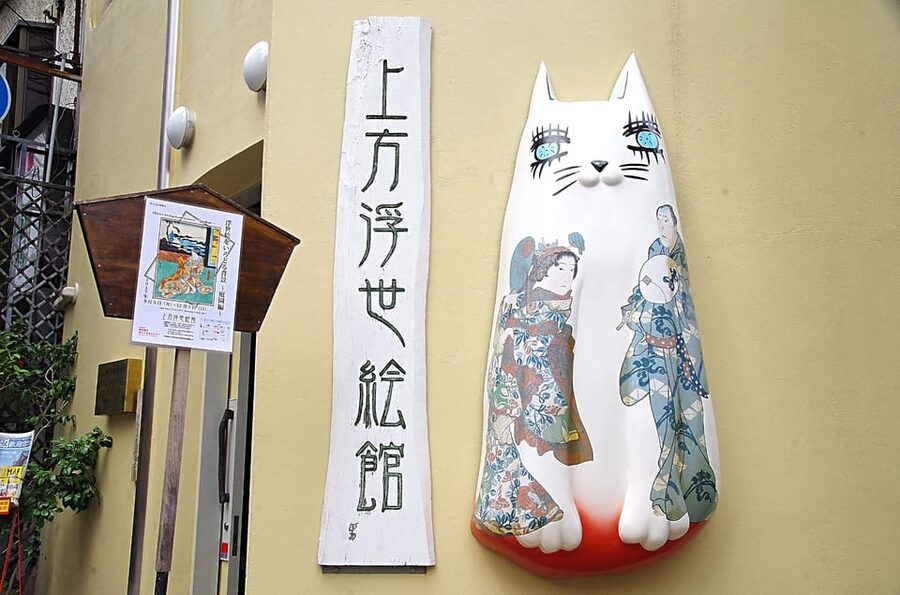
- Entering the Dotonbori museum
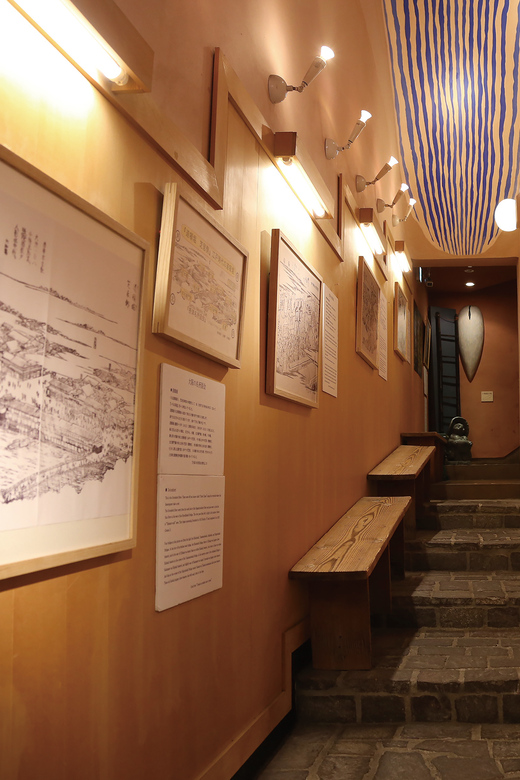
- What you see inside the museum
- The woodblock process, explained without guesswork
- Why the kabuki displays are the main attraction
- Gold, silver, and copper details worth seeking out
- Price, timing, and practical value
- Who will enjoy this museum most
- Pairing the museum with Dotonbori
- Should you book the Kamigata Ukiyo-e Museum?
- FAQ
- Where is the Kamigata Ukiyo-e Museum located?
- What kind of art does the museum display?
- What makes Kamigata ukiyo-e different?
- How much does admission cost?
- How long is the ticket valid?
- How long can I use the voucher after purchase?
- Can I cancel the ticket?
- Is the woodblock printing course included?
- Is photography allowed?
- Is the museum open every day?
- Are children admitted free?
Key points to know before you go
- Osaka’s own ukiyo-e tradition: The museum focuses on Kamigata prints, a style linked to Osaka and Kyoto rather than Tokyo’s better-known Edo tradition.
- Kabuki is the main subject: Expect actor portraits connected to Dotonbori’s historic theaters.
- Fine decorative details: Gold, silver, and copper powders appear on selected works.
- Easy Dotonbori location: You can pair the museum with a walk through Osaka’s famous theater and food district.
- Low admission price: At $4.51, it is an inexpensive cultural stop, especially for art fans and first-time visitors curious about Japanese printmaking.
- Open-ticket flexibility: You do not need to choose a participation date, and the voucher remains valid for three months from purchase.
Why Kamigata ukiyo-e matters in Osaka
Many first-time visitors hear ukiyo-e and think of famous landscapes, beautiful women, or dramatic samurai prints associated with Edo, modern Tokyo. Kamigata ukiyo-e offers a different angle. Its central subject is the kabuki actor, and its setting is the theater world of Osaka.
That local connection is the museum’s real appeal. These prints were tied to performances in Dotonbori, which was once a major theater area. The actor images were not simply decorative pictures. They connected audiences with performers, roles, and productions that mattered to Osaka’s entertainment culture.
I find that context useful because it changes how you look at the artwork. Instead of seeing only a stylized face and costume, you can think about the print as a record of popular theater. It captures the performers who drew people into Dotonbori and helped shape the city’s cultural identity.
Kamigata prints also developed their own visual character. The museum explains the history and techniques behind this tradition, helping you see why Osaka’s work should not be treated as a lesser copy of Edo ukiyo-e. The distinction is one of the main reasons to choose this museum over a general Japanese art display.
More Entry Tickets in Japan:
- Tokyo Disney Resort – Tokyo Disneyland & Tokyo DisneySea Park Tickets
★ 4.8 · 99,488 reviews - Universal Studios Japan Studio Pass
★ 4.8 · 89,883 reviews - Universal Studios Japan Express Pass
★ 4.7 · 53,138 reviews
Entering the Dotonbori museum
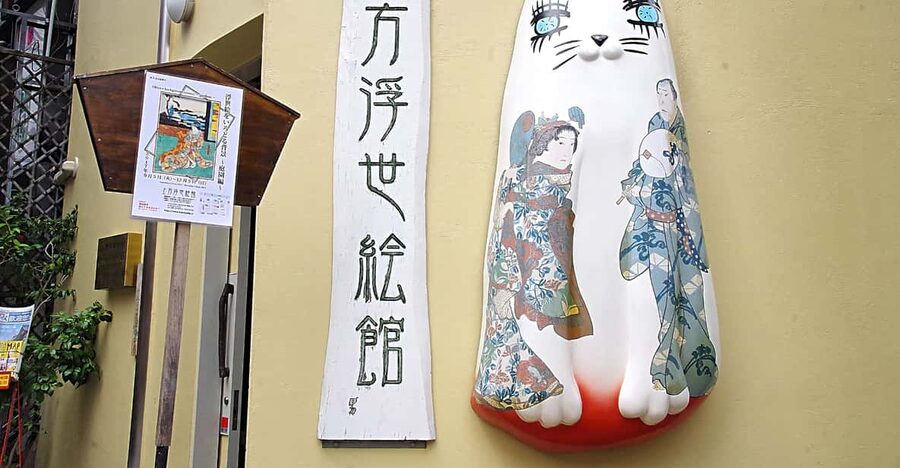
The location is convenient if you already plan to spend time in Dotonbori. This part of Osaka is known for theater, signs, restaurants, and crowds, so the museum gives you a quieter cultural stop within one of the city’s most famous districts.
That setting adds meaning to the visit. You are not studying Osaka theater prints in an unrelated part of town. You are looking at art connected to the same district’s performance tradition, then stepping back outside into modern Dotonbori.
The ticket is an open ticket, so you do not need to specify a participation date when booking. You show the QR code voucher at the ticket window and receive a physical admission ticket. The flexibility is useful if your Osaka schedule depends on weather, meals, shopping, or other timed activities.
There is one practical catch. The museum can have a waiting period during peak times. Since the admission is valid for one day rather than tied to a specific start time, you have more room to adjust, but you should still avoid arriving with an overly tight schedule.
What you see inside the museum
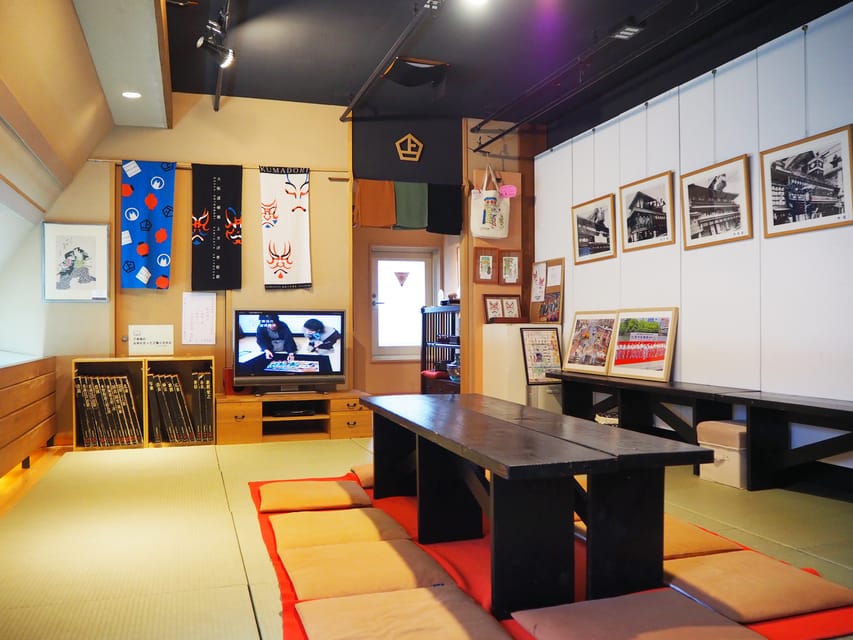
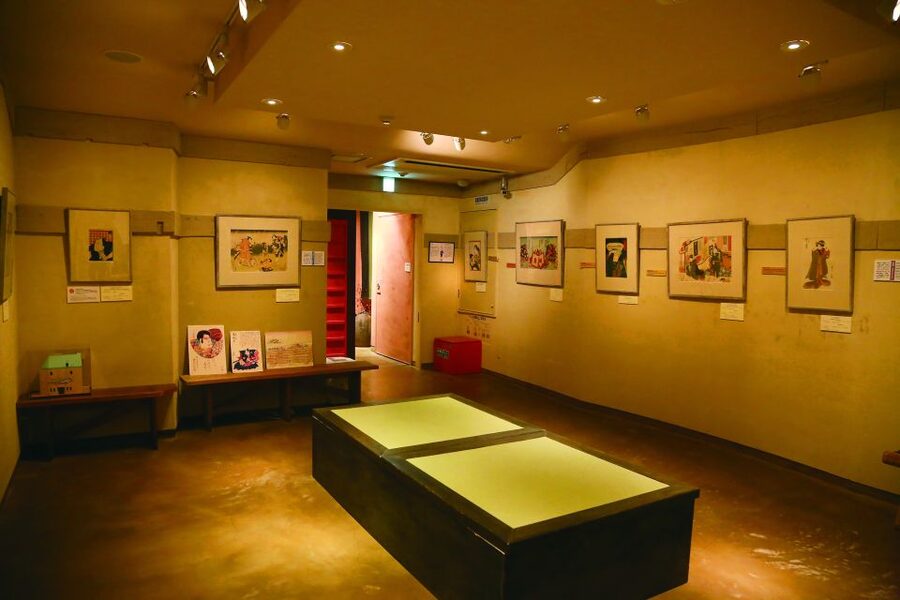
The core of the museum is its collection of Kamigata ukiyo-e prints. The displays focus on kabuki actors from the Edo and Meiji periods, giving you a direct look at the performers who appeared on Dotonbori stages.
You can expect the visit to center on close viewing rather than a large number of rooms or broad historical exhibits. The supplied visit length is listed as one day because the ticket remains valid for that period, not because you need a full day inside. I would plan it as a short, focused stop and leave time for the rest of Dotonbori.
The prints deserve a slow look. Woodblock art can seem simple at first because the image is flat and sharply outlined. Look closer at the costume patterns, facial expressions, hair, and small areas of color. These details helped turn a printed actor image into a recognizable portrait for theater fans.
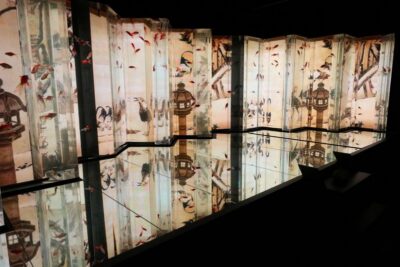
The museum also highlights prints decorated with gold, silver, and copper powders. These materials bring sparkle and depth to selected works. They are especially useful for understanding how artists and printers added luxury to a medium produced through repeated woodblock impressions.
You may find that the metallic decoration is more noticeable in person than in photographs. Digital images often flatten the surface and miss the way powdered metal catches light. This is one reason the museum works well as an in-person experience rather than something you can fully replace with an online image search.
The woodblock process, explained without guesswork
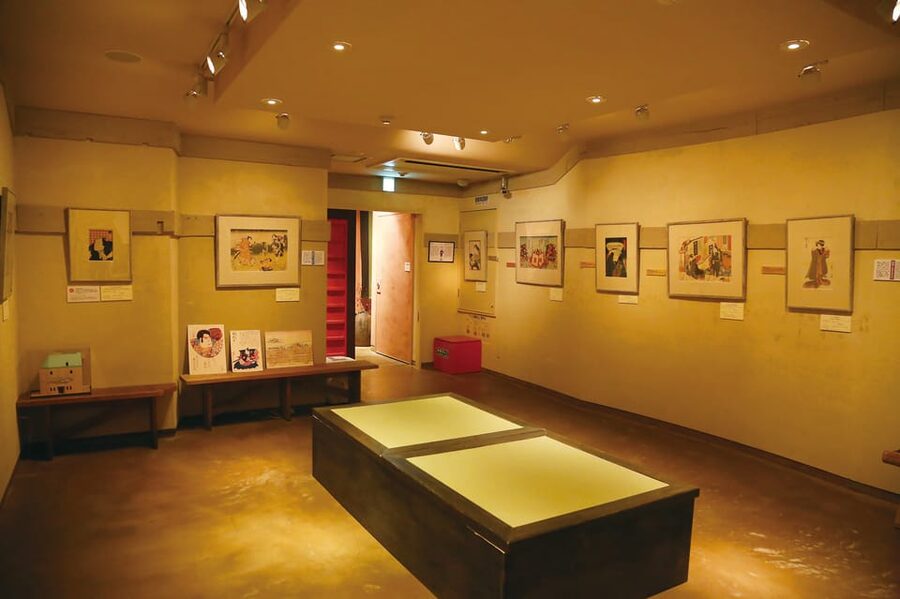
A good ukiyo-e display should show more than finished pictures, and this museum provides information about the production process and techniques. That matters because each print was created through a demanding series of steps.
A design had to be prepared, blocks had to be carved, and paper had to pass through the printing process for the different colors. Metallic powders added another layer of care. A tiny shift could affect the final alignment, while the wrong amount of pigment could change the balance of the image.
You do not need a specialist art background to appreciate this. The displays are intended to explain the history and methods in an engaging way, so you can connect the finished image with the labor behind it.
I recommend paying attention to the difference between the bold outline and the softer areas of color. That contrast helps you understand how the blocks contributed to the final look. You may also start noticing how much information is carried by costume and pose, particularly in actor portraits.
A basic hands-on printing session has also been associated with museum visits, but be careful when budgeting. The ukiyo-e woodblock printing experience course is specifically listed as not included with this admission ticket. If that activity is important to you, confirm its availability and price separately instead of assuming the $4.51 ticket covers it.
More Museums and Galleries in Japan:
- teamLab Borderless Tickets: MORI Building DIGITAL ART MUSEUM
★ 4.7 · 24,126 reviews - teamLab Planets TOKYO Ticket
★ 4.7 · 21,663 reviews - Tokyo: teamLab Planets TOKYO Digital Art Museum Entry Ticket
★ 4.6 · 9,779 reviews - teamLab Botanical Garden Osaka Ticket
★ 4.4 · 7,975 reviews
Why the kabuki displays are the main attraction
The actor prints give the museum a clear identity. If you want a general survey of every ukiyo-e subject, this may feel narrow. If you are interested in Japanese theater, Osaka culture, or the way popular performers were presented before modern celebrity photography, the focus is a strength.
Kabuki portraits can look theatrical, and that is the point. The poses, makeup, costumes, and expressions helped identify a performer and role. The image was connected to a live stage tradition, even though the print itself could be carried away and viewed at home.
This makes the collection approachable. You do not need to recognize every actor or understand every story to appreciate the drama of the images. The museum’s explanations provide a route into the subject, while the visual details give you plenty to study on your own.
I would especially recommend this stop if you have already visited Dotonbori for its restaurants and neon signs. The museum reveals an older layer of the same district. Modern Osaka’s entertainment culture did not appear from nowhere. It has roots in the theater world represented by these prints.
Gold, silver, and copper details worth seeking out
The metallic powders are among the most memorable features of this experience. Gold, silver, and copper accents show how printmakers could create a sense of richness without turning the entire image into a heavy display piece.
Look for how these touches work with the rest of the design. A metallic area may highlight clothing, accessories, or another small part of the composition. That restraint is important. The powder is not just decoration added at random. It helps direct your eye.
These details also give you a useful reminder about preservation. Photography is allowed, but flash and large equipment are prohibited. That rule protects the artwork and keeps the galleries manageable. A phone or small camera should be suitable, but do not plan on bringing bulky photographic gear.
I would treat photographs as souvenirs, not replacements for looking carefully. Metallic surfaces can be difficult to capture, and the museum’s value lies in seeing the works at close range.
Price, timing, and practical value
At $4.51 per person, this is an easy purchase to justify if you are spending time in Dotonbori. The price is low enough that you do not need a major commitment, yet the visit offers something more specific than another general sightseeing stop.
The best value comes from matching your expectations to the museum. You are paying for admission to a specialized collection and its interpretive displays. You are not paying for transportation, food, a guide, or the separate printing course.
The one-day validity gives you useful flexibility, but it does not mean the museum itself requires a full day. I would fit it around other plans in the district. If you see a line, you may be able to return later, provided the museum is open and your ticket remains valid.
The voucher can be used for three months from the purchase date. You can cancel for a full refund up to 24 hours in advance if the ticket is unused and still within its expiration period. Once you have used it, or once it expires, cancellation and refunds are not available.
The museum closes every Monday. If Monday is a public holiday, it closes the following day instead. Check the calendar before setting out, particularly if your Osaka visit falls around a holiday weekend.
Who will enjoy this museum most
I would recommend the museum to several kinds of visitors:
- Art lovers who want a focused look at Japanese woodblock printing.
- Kabuki fans who are interested in actor portraits and theater culture.
- Osaka first-timers who want more than food and shopping in Dotonbori.
- Families with older children who can follow the displays and appreciate the printing process.
- Budget-conscious visitors looking for a low-cost cultural activity.
- Repeat visitors who have already seen the major city sights and want a narrower local subject.
Children under 13 must be accompanied by a guardian. Admission information says children under 3 enter free, and it also states that preschool children aged 6 and under enter free. Because those age descriptions overlap and may be interpreted differently, I would confirm the applicable child policy if you are visiting with a child between 3 and 6.
Elementary, junior high, and high school students must bring a student ID or another proof of age. Preschool children aged 6 and under are listed as free, while the separate information also lists children under 3 as free.
This is probably less suitable if you want a large museum with many unrelated collections, a guided tour, or a long hands-on workshop included in the admission. It is also not the best choice if you have no time in Dotonbori and would need to make a special cross-city trip just for a short museum visit.
Pairing the museum with Dotonbori
The museum works best as part of a neighborhood plan. Spend time exploring Dotonbori, then use the museum to understand why this district became associated with theater and popular entertainment.
You can also reverse the order. Start with the prints while you are fresh, then walk through the district with the theater connection in mind. The second approach may help you notice how much Osaka’s modern identity still depends on performance, food, spectacle, and public gathering.
Do not make the visit feel rushed simply because the museum is small. Give yourself time to read the explanations and inspect the metallic details. A short stop can still be a thoughtful one, especially when the subject is this closely tied to the neighborhood around it.
The museum’s compact focus is also useful on a rainy day or during a packed Osaka itinerary. You do not need to sacrifice a whole afternoon. Just remember that a wait may occur at peak times, and the museum is closed on Mondays, with a Tuesday closure when Monday is a holiday.
Should you book the Kamigata Ukiyo-e Museum?
I would book this ticket if you want an inexpensive, local art experience in Dotonbori. The kabuki actor prints, Osaka-centered history, and gold, silver, and copper details give it a clear purpose. The 4.7 rating from 30 reviews also supports the idea that this small museum delivers a pleasant visit, with one recent booking praising the beautiful prints and a basic hands-on printing session.
Book with realistic expectations. This is a specialized museum, not a full-day attraction, and the admission does not include the separate printing course. For $4.51, though, it offers strong value, especially when you combine it with a walk through the district that inspired much of the collection.
FAQ
Where is the Kamigata Ukiyo-e Museum located?
It is located in Dotonbori, Osaka, in the historic theater district.
What kind of art does the museum display?
The museum displays Kamigata ukiyo-e woodblock prints, with a strong focus on kabuki actors from the Edo and Meiji periods.
What makes Kamigata ukiyo-e different?
Kamigata ukiyo-e is connected to Osaka and Kyoto culture, particularly the kabuki theater tradition, and has a style distinct from Edo ukiyo-e.
How much does admission cost?
The listed price is $4.51 per person.
How long is the ticket valid?
The ticket is valid for one day. It is an open ticket, so you do not need to specify a participation date.
How long can I use the voucher after purchase?
The voucher expires three months after the purchase date.
Can I cancel the ticket?
You can cancel up to 24 hours in advance for a full refund if the ticket is unused and remains within its expiration period.
Is the woodblock printing course included?
No. The ukiyo-e woodblock printing experience course is not included with the admission ticket.
Is photography allowed?
Yes, photography is allowed. Flash and large photographic equipment are prohibited.
Is the museum open every day?
No. The museum is closed every Monday. If Monday is a holiday, it closes the following day.
Are children admitted free?
The information lists free admission for children under 3 and also says preschool children aged 6 and under enter free. Children under 13 must be accompanied by a guardian, and school students must show student identification or proof of age.
Just added in Japan
- Japanese Home Cooking Class & Walk in Todoroki Temple Tokyo★ 5.0 · 88 reviews
- A One-of-a-Kind Sushi Experience in a Special Place of Japan★ 5.0 · 15 reviews
- Tokyo Cute Bento Cooking Class – Make a Kawaii Character Lunchbox★ 5.0 · 126 reviews
- Japan Tokyo Tower Observatory Deck E-Ticket★ 4.0 · 34 reviews
- Catch a Baseball Game in Tokyo with a Local – Tickets Included★ 5.0 · 24 reviews
- JDM Experience with Fast&Furious RX-7 (English speaking Driver)★ 5.0 · 57 reviews
- Tokyo Private Day Tour by Car with English speaking Driver Guide★ 4.0 · 29 reviews
- Japan Classic 10 Day – One Life Adventures★ 5.0 · 129 reviews
Museums and Galleries, compared.
teamLab Borderless Tickets: MORI Building DIGITAL ART MUSEUM
Read our review →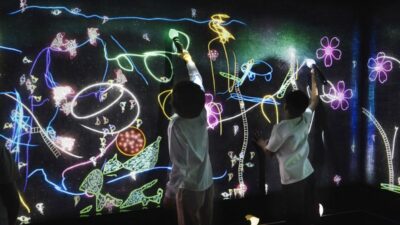
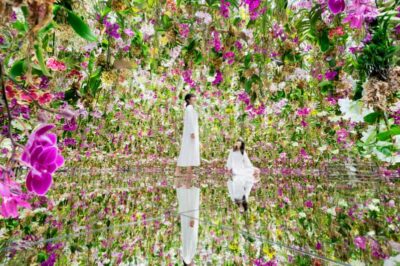
teamLab Planets TOKYO Digital Art Museum Entry Ticket
Read our review →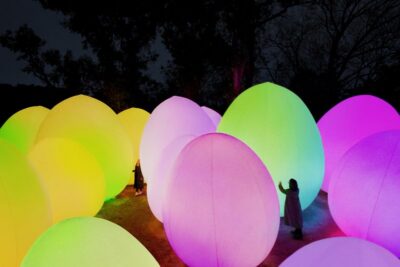

Browse the lists this tour appears in