
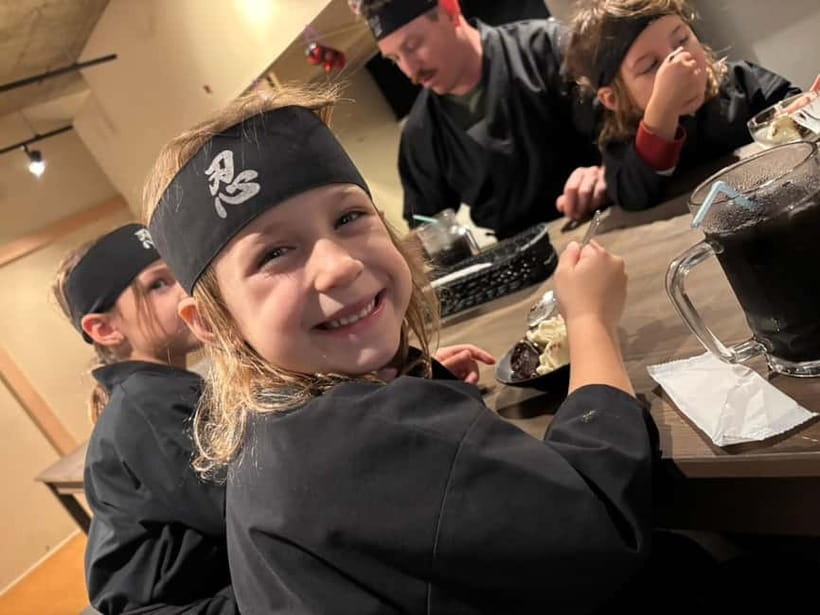
Reviewed · CASTLES AND HISTORIC SITES
Osaka: Ninja Experience Cafe in Dotonbori
Ninja training, right in the heart of Osaka. This playful indoor experience lets you put on a ninja costume, handle three traditional-style weapons, and take action-movie photos without leaving Dotonbori. I especially like the small groups of up to 10 and the patient, step-by-step instruction in English and Japanese.
I also like that children and adults can join the same activity, while nonparticipants can watch from the cafe and order a ninja-themed drink. The main drawback is practical: the cafe sits on the fourth floor with no elevator, and changing into the costume can be awkward if you wear a skirt.
In This Review
- Key points at a glance
- Getting to the fourth-floor ninja cafe
- Changing into a ninja costume
- Shuriken, blowgun, and katana practice
- Beyond weapons: the secret room and climbing rope
- Taking photos inside the cafe
- Ninja-themed food and drinks for observers
- What the $45 price gets you
- Why families praise the activity
- The small-group difference
- Who should book this Osaka activity?
- Booking, timing, and practical advice
- Should you book the Dotonbori Ninja Experience Cafe?
- FAQ
- Where is the Ninja Experience Cafe located?
- Is there an elevator in the building?
- What weapons can I practice with?
- Is a ninja costume included?
- Are instructors available in English?
- How many people can join the group?
- Can someone attend without joining the training?
- Are young children allowed to participate?
- How long does the experience last?
Key points at a glance
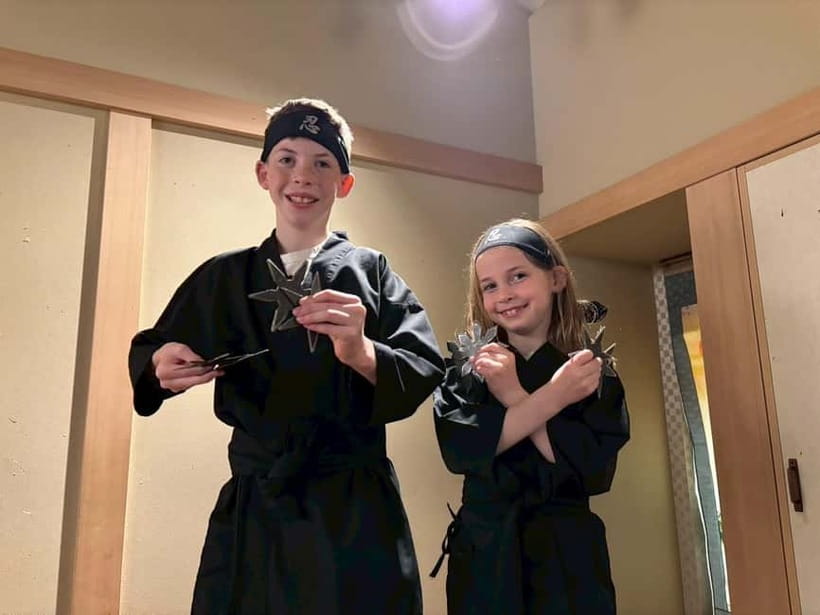
- Three weapons in one session: Practice with shuriken throwing stars, a blowgun, and a katana.
- A real costume change: You do not just pose beside a display. You put on ninja clothing and gear before training.
- A compact, personal group: The class is limited to 10 participants, with some sessions potentially feeling very private.
- Secret-room details: The experience can include a ninja secret room, climbing rope, and comparisons between ninja and samurai swords.
- Good rainy-day plan: Everything takes place indoors, making it useful during Osaka’s wet or steamy weather.
- Easy photo time: You can take pictures anywhere in the cafe, with staff helping capture photos and videos.
Getting to the fourth-floor ninja cafe
The cafe is in Dotonbori, one of Osaka’s best-known entertainment areas. The meeting point is not at street level. Look for the sign at the entrance to the stairs, then walk up to the fourth floor.
That staircase matters. The building has no elevator, so you need to carry strollers up by hand. Anyone with mobility concerns should consider this before booking. It is also worth arriving with enough time to find the entrance, since a fourth-floor cafe can be easy to miss among Dotonbori’s signs and crowds.
The location is useful for a half-day plan. You can schedule the class between meals, shopping, or a visit to the nearby canal area. Since the activity lasts one to two hours, it does not take over your day. The exact length may depend on the pace of the group and the available starting time.
More Castles and Historic Sites in Osaka
- Osaka Castle Ticket
★ 4.7 · 12,450 reviews - Osaka Castle: Museum and Tower Entry Ticket
★ 4.5 · 2,380 reviews - Ultimate Osaka Walking Tour: Castle, Dotonbori & Hidden Gems
★ 5.0 · 862 reviews
Changing into a ninja costume
The fun begins when you stop being an observer and put on the outfit. Costume rental is included, along with ninja gear for the training session. That change gives the experience more energy than a simple demonstration. You are not just learning about ninja weapons. You are playing the part.
Wear practical clothing underneath. The staff specifically advise avoiding skirts because you need to change into the outfit. Comfortable clothes will also make the training easier, especially for younger children who may need help getting ready.
This is a good point for families to set expectations. The activity is playful, not a formal martial arts course. You will receive guidance, handle the equipment, and practice the basic motions, but the goal is safe entertainment and cultural fun rather than serious weapons training.
Children under three cannot take part. Older children can join, and the instructions are designed to keep the activity manageable for kids. The best family photos often come after everyone is dressed, before the costume gets wrinkled from practice.
Shuriken, blowgun, and katana practice
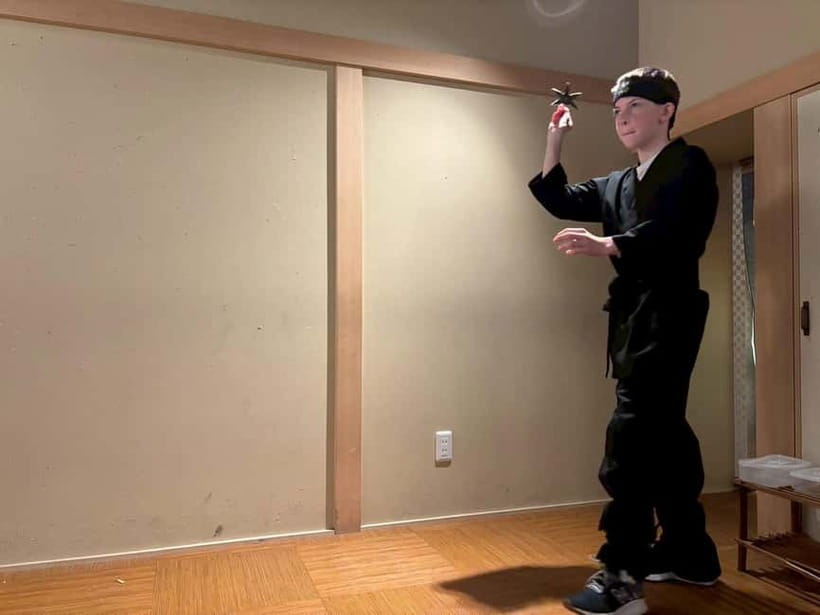
The core of the session covers three weapons: shuriken, blowgun, and katana. Each one offers a different kind of activity, which helps keep the class moving.
Shuriken, often called throwing stars, provide the most obvious action-movie moment. You receive instruction before trying them, so you do not have to arrive knowing the correct motion. The appeal is simple: you get to test your aim and see how the weapon feels in practice.
The blowgun changes the pace. It requires controlled breathing and careful focus rather than a quick throwing movement. For children, this can be an appealing challenge because it feels unusual and different from the games they know at home.
The katana portion gives you a chance to compare a ninja sword with a samurai sword. That comparison is a useful touch because it adds context instead of treating every Japanese blade as the same thing. You can expect the instructor to explain the equipment and guide you through safe handling.
The class includes instruction in English and Japanese. That makes a real difference for a hands-on activity. Clear guidance matters more here than a long lecture, and the small group size gives the instructor room to help participants one by one.
Beyond weapons: the secret room and climbing rope
The session can include more than the three listed weapons. Details from the experience include a ninja secret room and a climbing rope, giving you a look at the playful world of hidden passages, stealth, and escape skills associated with ninja stories.
The secret room is especially useful for younger children, who may enjoy the setting as much as the weapons. It gives the cafe a little theatrical charm and helps the activity feel like a complete ninja adventure rather than three short stations.
The climbing rope adds another physical element, though you should not book this expecting a full obstacle course. The available information describes it as part of the ninja-themed setting, not as a long ropes challenge. Think of it as an extra feature that rounds out the visit.
A strong session should balance explanation, practice, and photos. The instructors guide you through the weapons step by step, while the cafe setting supplies the story and atmosphere. That mix is why the experience works for adults who want a funny holiday memory and children who want to act like a character from an adventure film.
More Castles and Historic Sites in Japan:
- Tokyo: Imperial Palace and Shogun Historical Walking Tour
★ 5.0 · 2,251 reviews - Tokyo: Samurai Restaurant Show Ticket with 2 Drinks
★ 4.5 · 1,307 reviews - Kyoto Samurai Experience
★ 5.0 · 1,294 reviews - Tokyo Castle & Imperial PalaceーShogun Walking Tour
★ 4.7 · 1,068 reviews
Taking photos inside the cafe
You can take photos anywhere in the cafe, and staff can help with photo and video moments. This is one of the better reasons to choose a hosted activity instead of simply renting a costume somewhere.
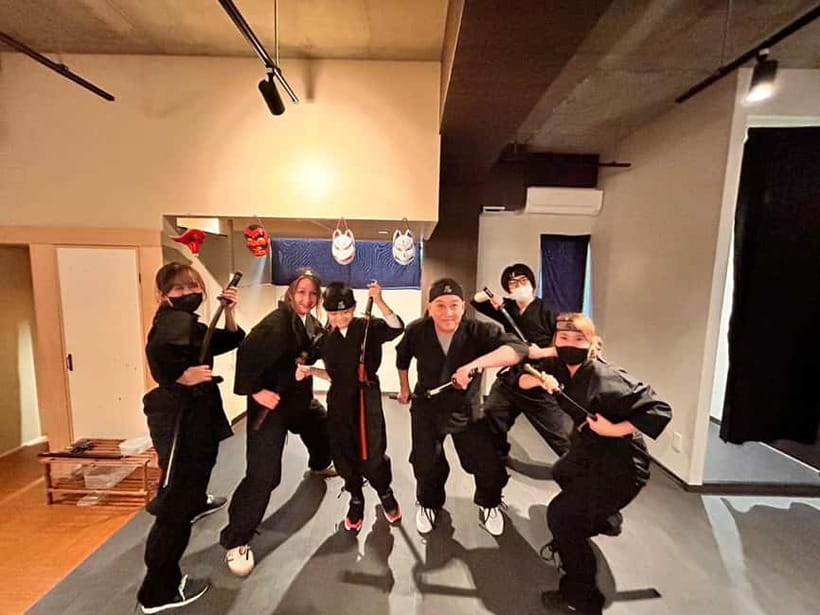
The staff can frame the shot while your whole group is dressed. You can pose with the weapons, use the cafe’s ninja details as a backdrop, and record short clips for Instagram, YouTube, or a personal travel blog. If your group includes children, ask for the photo before and after the training, since young ninjas may be more cooperative at one point than another.
The photo element also helps nonparticipants feel included. Someone who does not want to handle weapons can watch, take pictures, and enjoy the cafe. This is useful for parents with a very young child, a relative who prefers to observe, or a friend who wants the atmosphere without the training.
There is a cost for companions who do not join the ninja practice. They are asked to order one drink at the cafe. That is a fair arrangement, but you should count it into the group budget before booking.
Ninja-themed food and drinks for observers
The cafe is not only a changing room and practice area. Nonparticipants can order ninja-themed food and drinks while watching the class. The supplied details do not specify a menu, so I would treat the food as an extra part of the setting rather than the main reason to visit.
For a family, this arrangement can work well. One adult can take photos while another joins the training, then swap roles if the cafe allows. For a mixed-age group, the drink requirement gives a nonparticipating companion a clear way to spend the hour.
Do not expect the cafe purchase to be included in the $45 activity price. The listed price covers the ninja training, instructor guidance, costume rental, and photo opportunities. Food and drinks are separate, as is the required drink for a companion who does not participate.
What the $45 price gets you
At $45 per person, this is not a cheap way to fill 30 minutes. It is priced as a hosted activity with costume rental, instruction, equipment, and a small group format. I think the value is strongest when you plan to take part fully, rather than simply stopping in for a quick photo.
You are paying for the staff-led structure. The instructor explains how to use each weapon, keeps the session safe, and helps the group move from one activity to the next. That guidance is particularly valuable for families, since you do not need to teach yourself or manage the equipment alone.
The price also includes the costume, which saves you from arranging a separate rental. The photo access adds value for groups that care about good holiday images. If you are traveling with children who have been asking about ninja culture, the experience can become one of the day’s main memories rather than a forgettable stop.
The value is less convincing for a person who is not interested in dressing up or taking part. In that case, you may prefer to watch from the cafe, order a drink, and let the rest of your group participate. The activity is built around doing, not passive sightseeing.
Why families praise the activity
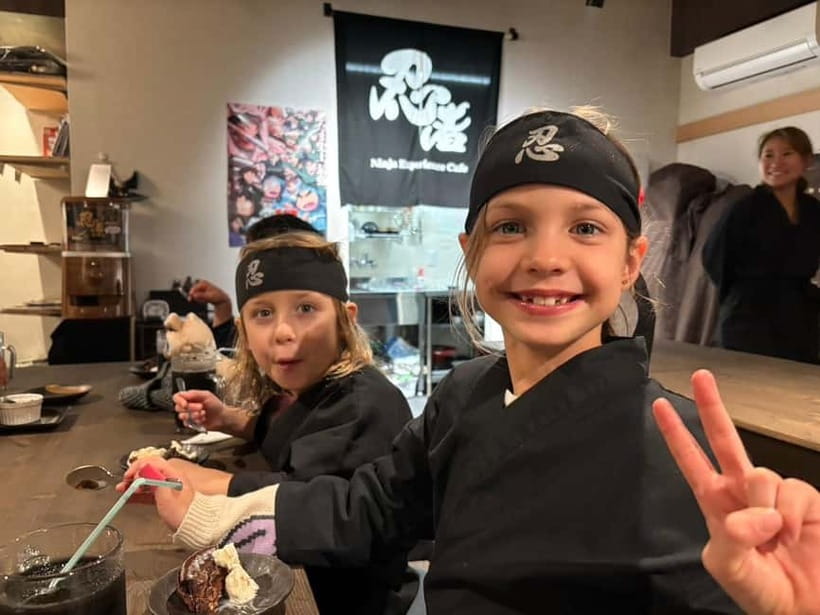
The strongest praise centers on children having fun and continuing to talk about the experience afterward. That is a useful sign for parents. A class can be technically interesting but still lose a child’s attention. Here, the costume, weapons, secret-room details, and photo moments give children several things to remember.
The activity also suits adults. One adult participant described enjoying both the cultural explanation and the chance to practice. That balance matters because parents do not have to sit through an activity designed only for children.
The instructors are a major part of the appeal. Friendly, careful guidance helps the session feel welcoming instead of intimidating. A small group of no more than 10 participants gives the staff a better chance to adjust explanations and help each person get a turn.
If your children are very young, remember the age limit. Kids under three cannot participate, and even older children will have different levels of interest in changing clothes and following instructions. The cafe option gives adults a way to stay involved when a child needs a break.
The small-group difference
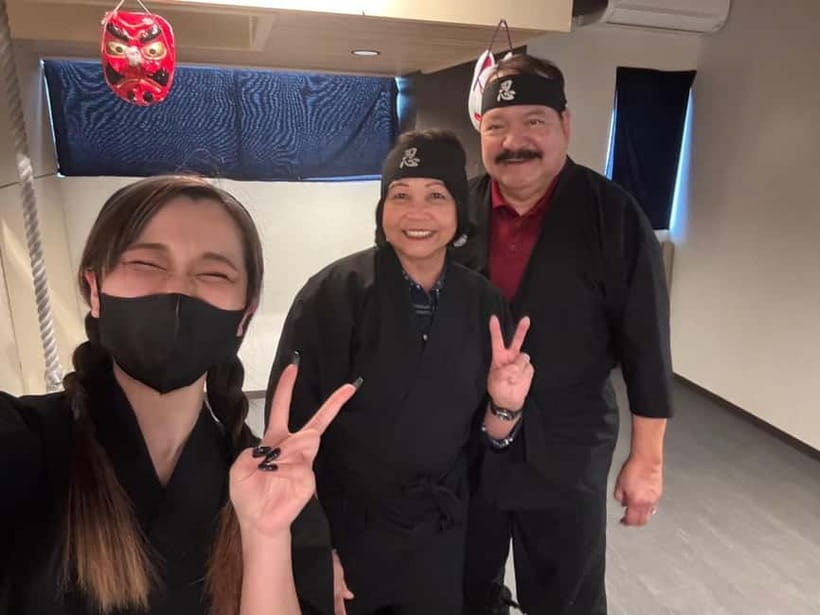
A maximum of 10 participants is a useful middle ground. You get the shared energy of a group activity, but you are not lost in a large class. That matters during weapon practice, where you want to see the demonstration and have enough space for your turn.
Some sessions may be especially small. A private-feeling class allows the instructor to spend more time with each person and can make the practice feel less rushed. It also helps shy children, who may hesitate in a packed room.
The tradeoff is that the experience may feel more like a themed lesson than a major staged show. If you want elaborate production, a large cast, or a long historical presentation, this is probably not the right choice. If you want to handle the equipment yourself and get personal instruction, the format makes sense.
Who should book this Osaka activity?
I would recommend it most strongly for families with children over three, couples who enjoy playful activities, and small groups looking for something different from temples, shopping, and food stops. It is also a smart choice for a rainy afternoon because the entire experience is indoors.
It suits people who want photos as much as facts. You will learn about the weapons and the differences between ninja and samurai swords, but the lesson stays active and light. You do not need a background in Japanese history to enjoy it.
I would think twice if you dislike costumes, have difficulty climbing several flights of stairs, or want a serious martial arts lesson. The fourth-floor walk-up is a real concern for anyone using a stroller, and the activity is not suitable for children under three.
English and Japanese instruction makes the class accessible to international visitors. Still, the quality of the experience will depend partly on your willingness to join in. The more you pose, practice, and ask questions, the more you will get from the hour.
Booking, timing, and practical advice
The activity runs for one to two hours, with starting times based on availability. I would place it on your schedule when you have enough breathing room afterward. Dotonbori is a busy area, and you may want time for a meal or a walk after changing back into regular clothes.
You can reserve now and pay later, which helps if your Osaka plans are still shifting. Cancellation is free up to 24 hours before the activity for a full refund. Those terms are useful, but you should still check the booking conditions for your selected time.
Bring a phone with enough battery for photos. Staff can help capture moments, but your own device remains the easiest way to keep the images. Wear clothes that are easy to change out of, avoid skirts if possible, and remember that strollers must be carried up the stairs.
Should you book the Dotonbori Ninja Experience Cafe?
Book it if you want a cheerful, hands-on Osaka activity with costumes, simple cultural context, and plenty of photo opportunities. The three weapons, secret-room details, climbing rope, and friendly instruction give the hour more substance than a costume photo alone.
I would call it a particularly good choice for families and mixed-age groups. A participant can train, an observer can take pictures and order a drink, and everyone can share the same themed setting. At $45, the value depends on joining fully, but the small group and included costume make the price reasonable for a hosted experience.
Skip it if stairs are a problem or if you want a formal historical tour. For everyone else, this is an easy way to add a little comic-book action to a Dotonbori day, rain or shine.
FAQ
Where is the Ninja Experience Cafe located?
The cafe is in Dotonbori, Osaka, on the fourth floor of its building. Look for the sign at the entrance to the stairs and walk up to the cafe.
Is there an elevator in the building?
No. The building does not have an elevator, so strollers must be carried up to the fourth floor manually.
What weapons can I practice with?
The activity includes training with shuriken, a blowgun, and a katana. The instructors guide you through each one.
Is a ninja costume included?
Yes. Ninja costume rental is included in the activity.
Are instructors available in English?
Yes. Instruction is offered in Japanese and English.
How many people can join the group?
The group is limited to 10 participants.
Can someone attend without joining the training?
Yes. Nonparticipants can observe, take photos, and order ninja-themed food or drinks at the cafe. A companion who does not join the training must order one drink.
Are young children allowed to participate?
Children under three are not allowed to participate. The activity is designed to be safe and enjoyable for older children and adults.
How long does the experience last?
The activity lasts approximately one to two hours. Starting times depend on availability.
Just added in Japan
- A One-of-a-Kind Sushi Experience in a Special Place of Japan★ 5.0 · 15 reviews
- Tokyo Cute Bento Cooking Class – Make a Kawaii Character Lunchbox★ 5.0 · 126 reviews
- Japanese Home Cooking Class & Walk in Todoroki Temple Tokyo★ 5.0 · 88 reviews
- Japan Tokyo Tower Observatory Deck E-Ticket★ 4.0 · 34 reviews
- Catch a Baseball Game in Tokyo with a Local – Tickets Included★ 5.0 · 24 reviews
- JDM Experience with Fast&Furious RX-7 (English speaking Driver)★ 5.0 · 57 reviews
- Tokyo Private Day Tour by Car with English speaking Driver Guide★ 4.0 · 29 reviews
- Japan Classic 10 Day – One Life Adventures★ 5.0 · 129 reviews
Castles and Historic Sites, compared.
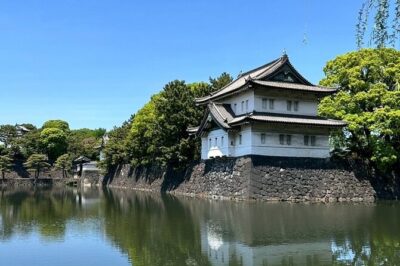
Imperial Palace and Shogun Historical Walking Tour
Read our review →
Tokyo Castle & Imperial PalaceーShogun Walking Tour
Read our review →
Nijo-jo Castle and Ninomaru Palace Guided Tour
Read our review →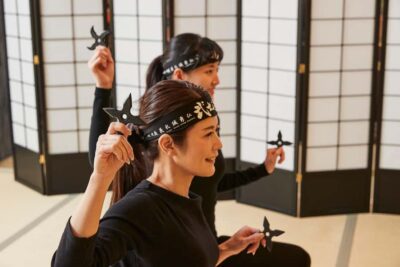
Samurai Ninja Museum Guided tour and Experience
Read our review →Browse the lists this tour appears in