
Reviewed · CASTLES AND HISTORIC SITES
Osaka: Private Samurai Experience – Train with Sword Master
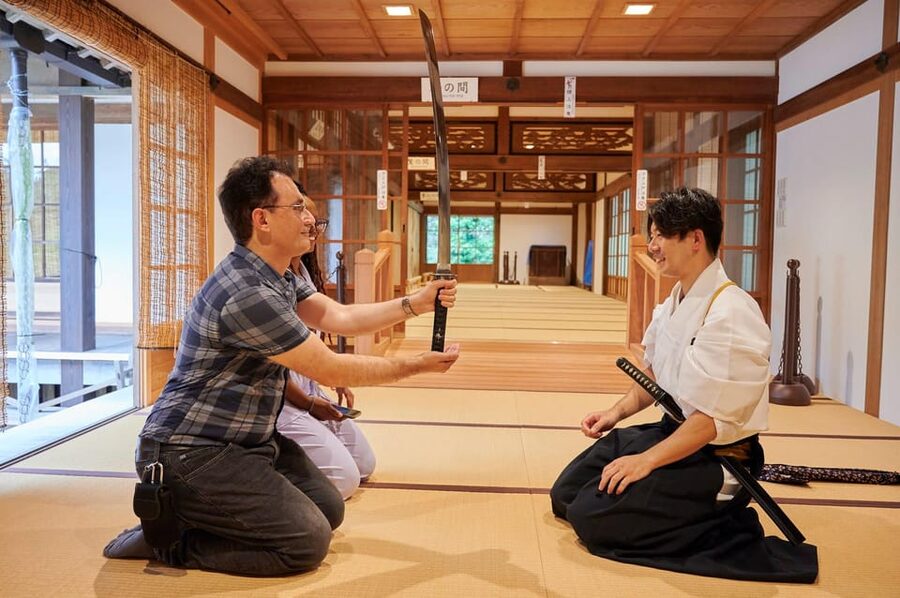
Step into Japan’s sword tradition. This private Osaka experience takes you from Minoh Station to a temple training ground normally closed to the public, where sword master Tatsuya Watanabe teaches basic techniques and explains the discipline behind them. I especially like the private temple setting and the chance to watch a special sword performance rather than simply pose with a costume blade. The main consideration is that the session is conducted in Japanese, with an interpreter translating, so explanations depend partly on the quality and pace of that translation.
You also get more than a short martial arts demonstration. The program combines a guided temple visit, roughly 1.5 hours of practical training, a look at traditional weapons, and a discussion of samurai values. At $158 per person, it is not a cheap add-on, but the private access, small-group format, translator, and direct instruction from a school headmaster give the price real weight.
In This Review
- Key points to know before booking
- From Minoh Station to a private temple setting
- What the 1.5-hour training session is really like
- The sword performance with Tatsuya Watanabe
- Why the restricted training ground matters
- How the temple visit adds value
- What the $158 price includes
- Language, timing, and practical planning
- Who will get the most from this experience?
- Should you book the Osaka samurai experience?
- FAQ
- Where does the experience begin?
- Where does the activity take place?
- How long does the experience last?
- Which languages are available?
- Is this a private activity?
- What is included in the price?
- Can I cancel or pay later?
Key points to know before booking
- Train at a restricted temple site: Ryuan-ji, or in some arrangements Saiko-ji, opens secluded areas normally closed to the public.
- Meet a genuine classical sword teacher: Tatsuya Watanabe leads the instruction and is the headmaster, or soke, of Suishin-ryu.
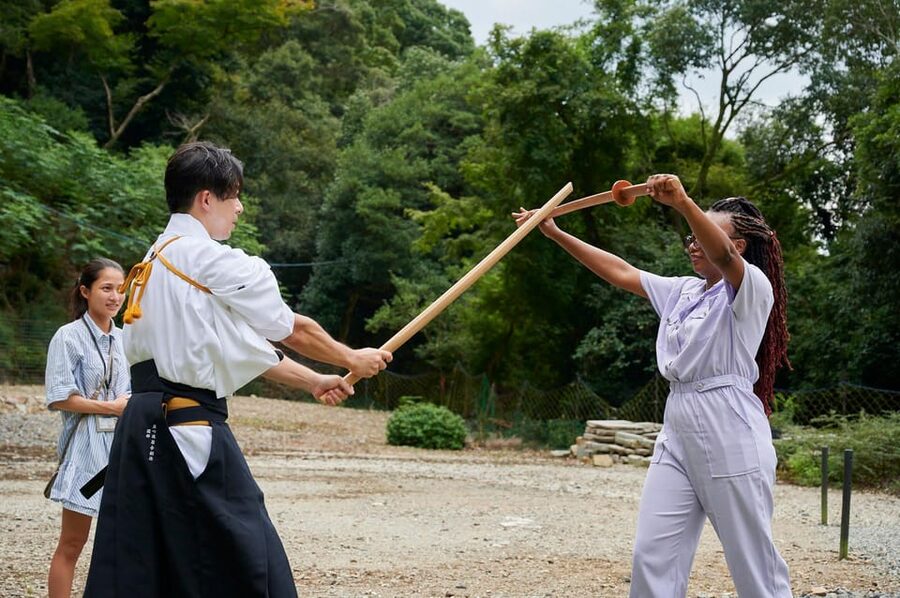
- Expect hands-on practice: You learn posture, holding, striking, cutting motions, and basic sword techniques with a wooden sword.
- Watch a private performance: Watanabe demonstrates the control, precision, and calm movement behind traditional swordsmanship.
- Plan for language support: English, Japanese, and French are offered, with interpreters such as Benoit, Aimu, and Claire assisting in different sessions.
- Allow about three hours: The activity begins and ends at Minoh Station and includes the temple visit, training, and return.
From Minoh Station to a private temple setting
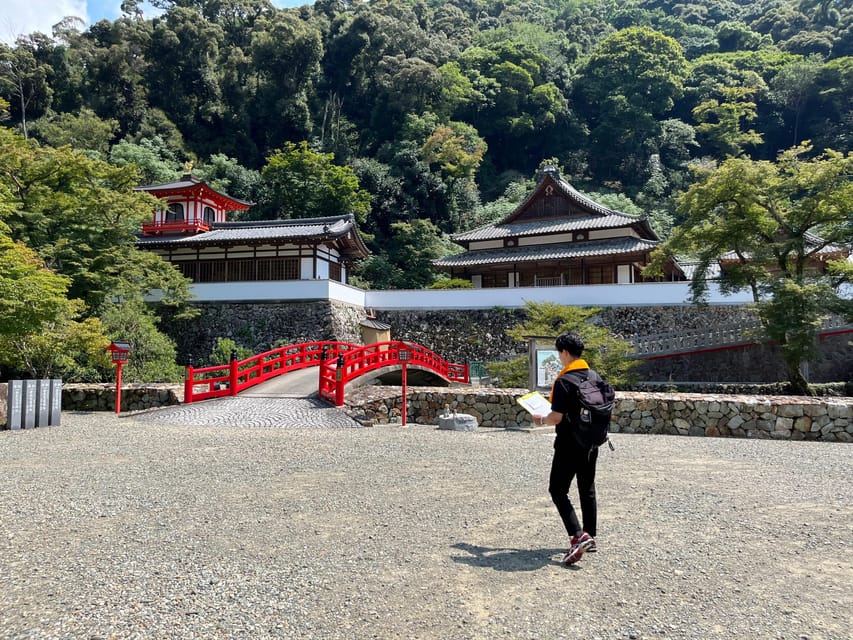
Your meeting point is easy to find: stand in front of Minoh Station and look for the guide holding the yellow DeepExperience sign. This simple arrangement matters because the experience begins in an ordinary station setting and then shifts into a much quieter part of Osaka.
The guide leads you toward the temple, explaining the area along the way. Benoit, one of the English-speaking interpreters, has been praised for adding useful facts about Minoh and explaining the program clearly. Other sessions have included Aimu and Claire, so the exact interpreter may vary.
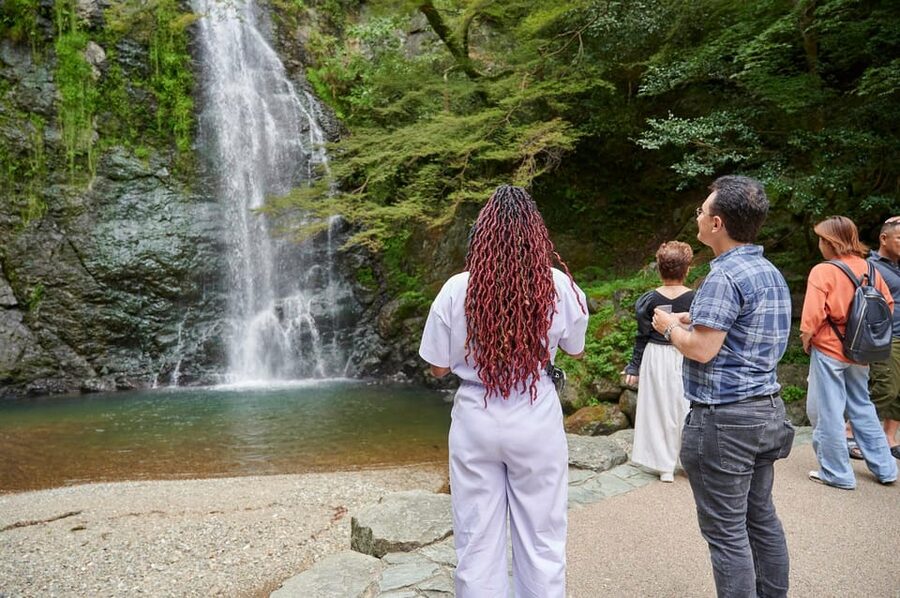
Minoh gives you a welcome change from central Osaka. You are not heading to a staged attraction in a shopping district. Instead, the program takes place around a historic Buddhist temple in a forested setting, where the atmosphere is quiet and removed from the city.
The temple is important to the experience because it gives the training a sense of place. You are not simply learning a few theatrical sword poses in a rented studio. You are handling a wooden sword in a sacred setting connected with long-standing Japanese religious and cultural traditions.
That said, this is not a full temple sightseeing tour. The temple visit supports the sword lesson, rather than replacing it. If you want a detailed architectural tour or a long meditation session, this may feel too focused on martial arts.
More Castles and Historic Sites in Osaka
- Osaka Castle Ticket
★ 4.7 · 12,450 reviews - Osaka Castle: Museum and Tower Entry Ticket
★ 4.5 · 2,380 reviews - Ultimate Osaka Walking Tour: Castle, Dotonbori & Hidden Gems
★ 5.0 · 862 reviews
What the 1.5-hour training session is really like
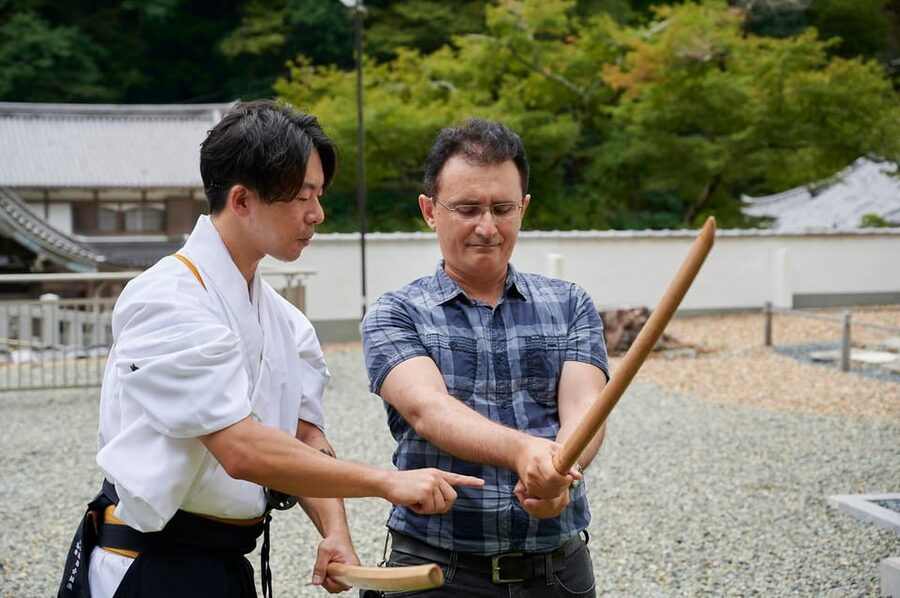
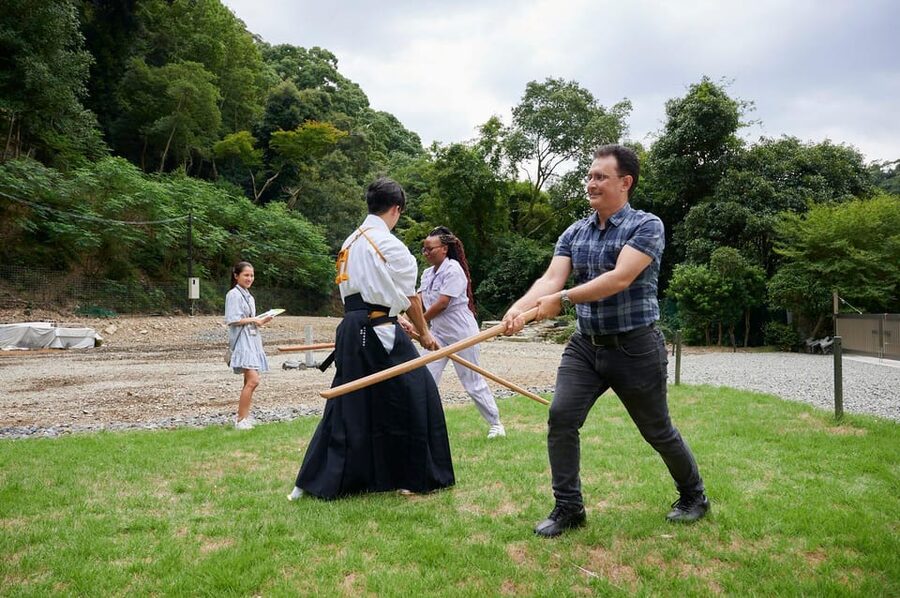
The practical lesson centers on basic swordsmanship. You learn how to hold the weapon, position your body, improve your posture, and make controlled strikes and cutting motions. The emphasis is not on speed or flashy movement. Watanabe focuses on fluidity, discipline, balance, and the calm mental state behind the technique.
You begin with a wooden sword, often called a bokken. This is the sensible choice for first-time participants. It lets you concentrate on footwork, hand position, and the path of the blade without the added danger of handling a sharp weapon.
The lesson is active, but it is not presented as a competitive fight. You are not being trained to spar against another participant. Instead, Watanabe shows movements and then corrects your technique. Several participants have found the individual tips especially useful, since the instruction covers small details of posture and the way a strike finishes.
The translator plays an important role. Watanabe speaks Japanese, while the activity offers English, Japanese, and French support. Benoit has translated the technical instructions during training, helping participants understand not only what to do but also why the movement matters.
You should expect the session to be physically engaging, though the provided details do not specify a fitness requirement or a minimum level of athletic ability. The focus is on learning basic techniques, not completing an intense workout. Wear clothes that allow comfortable movement, although no specific dress code is provided.
The lesson can appeal to complete beginners because it starts with fundamentals. It can also suit people who already practice martial arts and want to see a traditional Japanese approach. Just keep your expectations realistic. Three hours will not turn you into a swordsman. It can, however, give you a clear sense of the discipline, repetition, and body control involved.
The sword performance with Tatsuya Watanabe
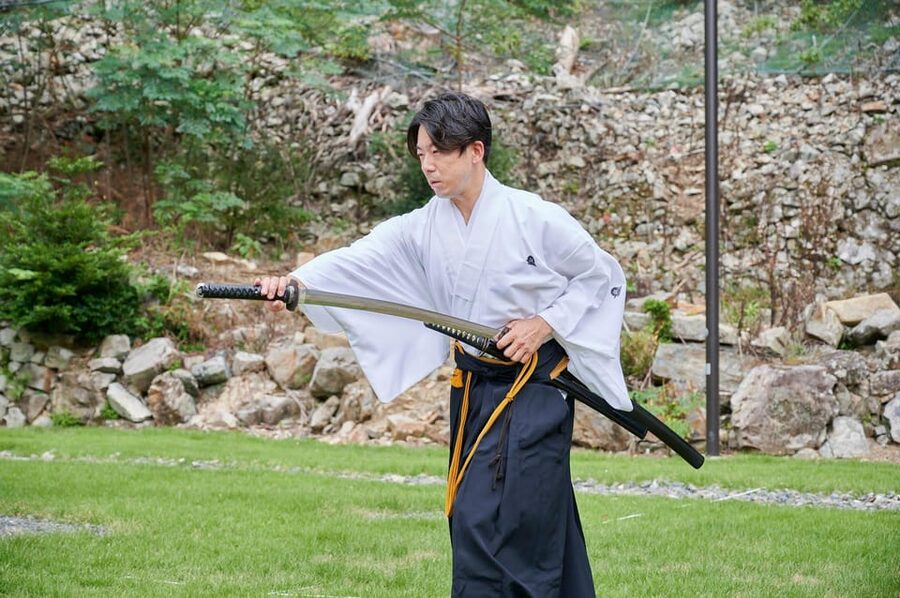
The demonstration is one of the strongest parts of the program. Before or around the training, Watanabe performs with a level of control that makes the lesson easier to understand. His movements show why swordsmanship is not simply about force. Timing, posture, breathing, focus, and economy all matter.
His background gives the performance unusual weight. Watanabe began kendo as a teenager, then studied Yagyū Shinkage-ryu, one of Japan’s well-known classical schools of kenjutsu, during university. He later trained across other lineages and was appointed soke of Suishin-ryu while still in his twenties.
The title soke means headmaster or legitimate successor of a traditional school. In Watanabe’s case, that responsibility includes more than preserving physical techniques. He also works to carry forward the school’s philosophy, spirit, and aesthetic values.
That context helps you read the demonstration properly. It is not just a stunt built for visitors. The performance presents swordsmanship as a practice involving concentration and self-discipline. The quiet, measured movements can be as striking as any dramatic cut.
Some sessions have also included a look at personal weapons and an old sword dating to 1370. The exact items shown may depend on the day and the arrangements, so you should not treat every object as guaranteed. Still, the possibility of seeing historic blades inside the temple adds a rare museum-like element to the lesson.
One important caution: the promotional information describes a special sword performance, while individual accounts describe different levels of contact with real swords, including paper cutting. Treat any sharp-sword demonstration or handling as dependent on the instructor’s judgment and the conditions that day. Your core training is with a wooden sword.
Why the restricted training ground matters
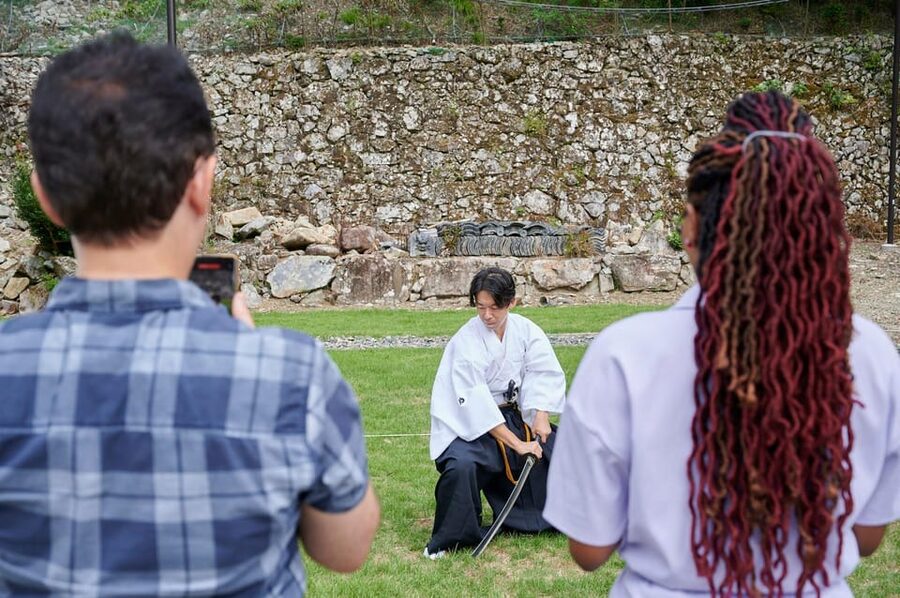
The private training area is more than a backdrop. Because the space is normally closed to the public, you receive access that an ordinary temple visitor does not. That privacy helps the lesson feel focused and respectful.
A busy public temple can be beautiful, but it is not always a good place to learn controlled sword movements. Crowds, phones, and passing conversations would work against the quiet concentration Watanabe teaches. Here, the secluded setting supports the meditative side of the craft.
The setting also creates a useful connection between the temple and the sword tradition. Japanese martial arts have often been tied to ideas of discipline, service, self-control, and spiritual practice. The program explains those links without reducing samurai culture to movie costumes and battle scenes.
I like that balance. You still get the fun of holding a sword and practicing a few recognizable movements, but the experience asks you to slow down and pay attention. The result is closer to a cultural lesson with physical practice than to a theatrical samurai show.
Still, the word samurai can create inflated expectations. You should not expect armor, a staged battle, a full historical reenactment, or a lesson in military history. This is a modern cultural program taught through a living sword tradition.
More Castles and Historic Sites in Japan:
- Tokyo: Imperial Palace and Shogun Historical Walking Tour
★ 5.0 · 2,251 reviews - Tokyo: Samurai Restaurant Show Ticket with 2 Drinks
★ 4.5 · 1,307 reviews - Kyoto Samurai Experience
★ 5.0 · 1,294 reviews - Tokyo Castle & Imperial PalaceーShogun Walking Tour
★ 4.7 · 1,068 reviews
How the temple visit adds value

The temple portion gives you time to understand where you are before the sword work begins. The guide explains the heritage of the site and the surrounding Minoh area as you approach the restricted section.
Ryuan-ji is described as a sacred place with spiritual and historical importance. Saiko-ji may be used in some arrangements, so check your confirmation for the exact temple. Either way, the appeal comes from entering a quieter religious site and seeing areas not usually open to the public.
For me, the best part of this arrangement is the contrast. You begin at a railway station, walk through Minoh, and then find yourself in a secluded temple area learning movements once associated with warrior training. That change of setting makes the program more memorable than a standard indoor class.
The temple should not be treated as a decorative prop. Participants are entering a functioning sacred environment, so respectful behavior matters. Listen to the guide, follow instructions about where you may stand, and avoid treating the weapons or religious spaces as photo props.
The amount of temple interpretation may vary with the guide and the timing. The activity has a fixed schedule, and the main goal is sword instruction. If your priority is religious architecture, ask how much time will be devoted to the temple on your date.
What the $158 price includes
At $158 per person, this is a premium activity by Osaka standards. The fee includes the sword experience and guide service. It also covers the special access, private group format, translation support, and instruction from Watanabe.
The value depends on what you want from a cultural activity. If you are looking for a quick photo opportunity, the cost may feel high. If you value direct contact with a classical sword school, private access to a temple area, and a carefully guided session, the price is easier to justify.
You are paying for time and access, not just equipment. A wooden sword is inexpensive. The valuable parts are the teacher, the interpretation, the restricted setting, and the chance to see a traditional practice explained by someone responsible for preserving it.
The private-group format is another advantage. You are not folded into a large class where the instructor has little time to correct your stance. The supplied information does not give a maximum group size, so you should not assume the group will be limited to two or three people. Still, private booking means the session is reserved for your party rather than being an open public class.
The activity allows free cancellation up to 24 hours before the start time, with a full refund. You can also reserve now and pay later. Those policies help if your Osaka schedule is still shifting, though you should confirm the final time when booking.
Language, timing, and practical planning
The advertised duration is three hours, with availability shown by starting time. The information also describes the activity as 270 minutes in one place, while the itinerary identifies about 1.5 hours of class time. Plan your day generously rather than scheduling a tight restaurant reservation immediately afterward.
The program starts and finishes at Minoh Station. That is helpful because you do not need to find the temple independently. Meet in front of the station, identify the yellow DeepExperience sign, and arrive ready to walk with your guide.
English, Japanese, and French support is available. Watanabe may speak Japanese during the instruction, so the interpreter is not a minor extra. The translation lets you follow safety guidance, understand corrections, and grasp the meaning behind the movements.
Late arrival is not something to plan on, but the staff have shown flexibility when participants were delayed. You should still arrive on time. Missing the opening explanation or the first demonstration could make the later practice harder to follow.
The experience provider is DeepExperience, Inc. The guide fee and sword experience fee are included, but the supplied details do not list transportation from central Osaka, food, drinks, equipment to take home, or personal insurance. Plan and budget for those separately if needed.
Who will get the most from this experience?
I would recommend this for you if you want a personal cultural activity away from Osaka’s usual sights. It suits couples, families, and friends, and the format can work especially well for a parent and older child who want to share something hands-on.
It is also a strong choice for anyone curious about martial arts. You do not need to arrive with kendo experience. The lesson begins with basic movements, and the teacher’s corrections help you understand how much precision goes into even a simple strike.
People interested in Japanese history and religion will appreciate the temple setting and the discussion of samurai values. You will get more from the activity if you are willing to listen to the philosophy, not just wait for the sword demonstration.
I would be more cautious about booking it for very young children, though the supplied information does not give an age limit. Sword practice requires attention and careful obedience to instructions. Ask the provider about suitability for your child before paying.
You may also want to skip it if you want a large-scale show, armor photography, or a broad survey of Japanese martial arts. This is a quiet, instructional encounter with one sword tradition.
Should you book the Osaka samurai experience?
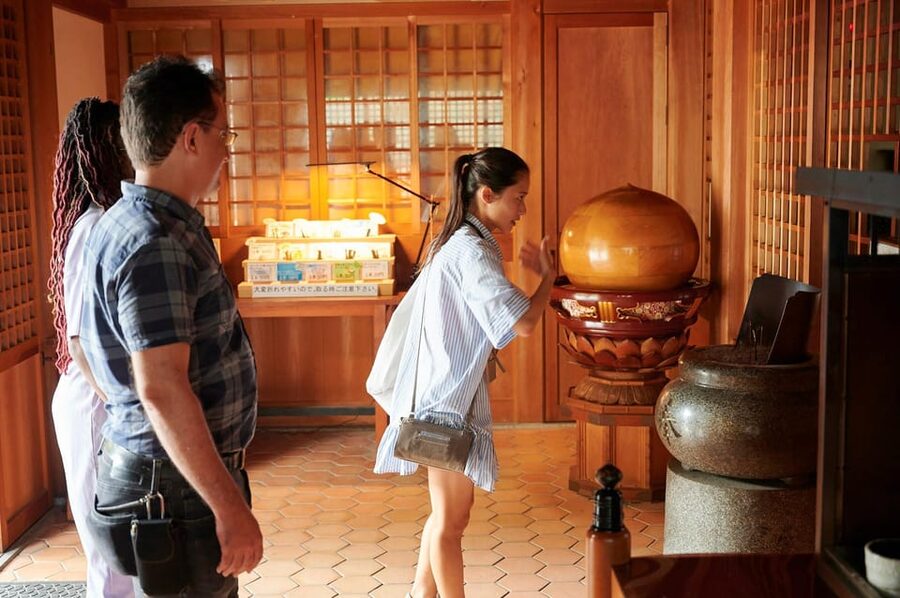
Book it if you want access and instruction that ordinary sightseeing does not provide. The combination of Minoh, a restricted temple area, a private performance, wooden-sword practice, and Watanabe’s direct teaching gives the activity real substance.
The strongest reasons to go are the setting and the teacher. Watanabe brings decades of study and the responsibility of a classical school headmaster, while the interpreter makes the experience approachable for English and French speakers. The opportunity to see traditional weapons may be an added highlight.
The main drawbacks are the price, the limited three-hour format, and the dependence on translation. You will learn foundations, not master swordsmanship, and the exact temple access or weapon demonstration may vary.
For an unusual Osaka day, I think the $158 price can be fair, particularly if you value private cultural access more than ticking off another major attraction. Arrive on time at Minoh Station, keep an open mind, and treat the sword as a discipline rather than a souvenir prop. That is when this experience makes the most sense.
FAQ
Where does the experience begin?
Meet your guide in front of Minoh Station. The guide will hold a yellow sign with the DeepExperience logo.
Where does the activity take place?
The program takes place in secluded areas of Ryuan-ji Temple or Saiko-ji Temple, depending on the arrangement. These training areas are normally closed to the public.
How long does the experience last?
The advertised duration is three hours, although the activity information also lists 270 minutes. The itinerary includes a temple visit, a class of about 1.5 hours, and return to Minoh Station.
Which languages are available?
Live guide support is available in English, Japanese, and French. Interpreters may translate the sword master’s Japanese instruction.
Is this a private activity?
Yes. It is offered as a private group experience rather than a public group class.
What is included in the price?
The price includes the sword experience fee and the guide fee.
Can I cancel or pay later?
You can cancel up to 24 hours before the activity for a full refund. The booking option also allows you to reserve now and pay later.
More Train Experiences in Japan
- Mt Fuji and Hakone 1-Day Bus Tour Return by Bullet Train
★ 5.0 · 26,383 reviews - [Kyoto & Nara Day Tour] Sagano Scenic Railway & Nara Park & Fushimi Inari Taisha Thousand Torii Gates & Togetsukyo Bridge & Bamboo Grove & Kimono Forest (Departing from Osaka)
★ 4.9 · 10,942 reviews - Mt Fuji & Hakone Cruise, Drum Show Bullet Train 1 Day from Tokyo
★ 4.0 · 7,413 reviews - Tokyo Mt Fuji 5th St & Hakone Cruise Bus Tour w/Bullet Train
★ 4.4 · 5,024 reviews
Just added in Japan
- A One-of-a-Kind Sushi Experience in a Special Place of Japan★ 5.0 · 15 reviews
- Tokyo Cute Bento Cooking Class – Make a Kawaii Character Lunchbox★ 5.0 · 126 reviews
- Japanese Home Cooking Class & Walk in Todoroki Temple Tokyo★ 5.0 · 88 reviews
- Catch a Baseball Game in Tokyo with a Local – Tickets Included★ 5.0 · 24 reviews
- Japan Tokyo Tower Observatory Deck E-Ticket★ 4.0 · 34 reviews
- JDM Experience with Fast&Furious RX-7 (English speaking Driver)★ 5.0 · 57 reviews
- Tokyo Private Day Tour by Car with English speaking Driver Guide★ 4.0 · 29 reviews
- Japan Classic 10 Day – One Life Adventures★ 5.0 · 129 reviews
Castles and Historic Sites, compared.


Imperial Palace and Shogun Historical Walking Tour
Read our review →
Tokyo Castle & Imperial PalaceーShogun Walking Tour
Read our review →
Nijo-jo Castle and Ninomaru Palace Guided Tour
Read our review →
Samurai Ninja Museum Guided tour and Experience
Read our review →Browse the lists this tour appears in