
Reviewed · MUSEUMS AND GALLERIES
Osaka: teamLab Botanical Garden Entry Ticket
Light meets living plants. Osaka’s teamLab Botanical Garden turns the 240,000-square-meter Nagai Botanical Garden into an outdoor art space after dark, pairing trees, water, music, and glowing installations. You can wander at your own pace rather than follow a fixed tour route.
I like the low $11 price, especially for an evening activity that can fill several hours. I also like the setting: teamLab’s work is spread among roughly 1,200 plant species, so the garden itself remains part of the experience. The main drawback is that this is outdoors, with dark paths, exposed roots, insects, and weather to consider.
The best approach is to arrive early, get oriented, and stay until it is properly dark. Some installations begin quietly, with simple bubbles of light, but later sections become more atmospheric and interactive. Wear shoes made for walking, bring insect repellent, and do not plan on grabbing dinner inside the garden.
In This Review
- Key points before you book
- Why Nagai Botanical Garden makes a better setting than a black-box gallery
- Starting with the daytime garden and central pond
- Waiting for darkness to bring the installations to life
- Walking through art that responds to people
- The practical walk, dark paths, and evening comfort
- How the $11 ticket holds up
- Families, older visitors, and accessibility
- Crowds, timing, and getting the mood right
- Rules that can affect your visit
- Who should book teamLab Botanical Garden Osaka?
- Final call: Is the $11 ticket worth it?
- FAQ
- Where is teamLab Botanical Garden located?
- How much does admission cost?
- How long is the ticket valid?
- Is the experience indoors or outdoors?
- What should I wear?
- Are food and drinks available inside?
- Can I take photographs?
- Can children and wheelchair users enter?
Key points before you book
- A botanical garden first, an art show second: Nagai’s plants, pond, trees, and open grounds provide the setting for every installation.
- The $11 admission is strong value: You receive a full-day entry ticket, with the nighttime art making the visit especially worthwhile.
- The experience changes after sunset: Light displays, projections, sound, and music become more striking as darkness arrives.
- You can move at your own pace: There is plenty of room to wander, pause, take photos, and return your attention to the plants.
- The pond and glowing egg-shaped lights are highlights: Water reflections and large illuminated forms create some of the most memorable scenes.
- Plan for an outdoor evening: Comfortable shoes, long pants, a long-sleeved shirt, and insect repellent are practical choices.
Why Nagai Botanical Garden makes a better setting than a black-box gallery

TeamLab is known for digital art, but this Osaka experience works because the technology does not erase the natural setting. The garden’s trees, water, flowers, and paths give the lights something real to interact with.
During the day, Nagai Botanical Garden is a conventional public garden with around 1,200 species of plants. Its 240,000 square meters give you room to stroll, stop near the central pond, and notice the cultivated plant collections before the evening program begins.
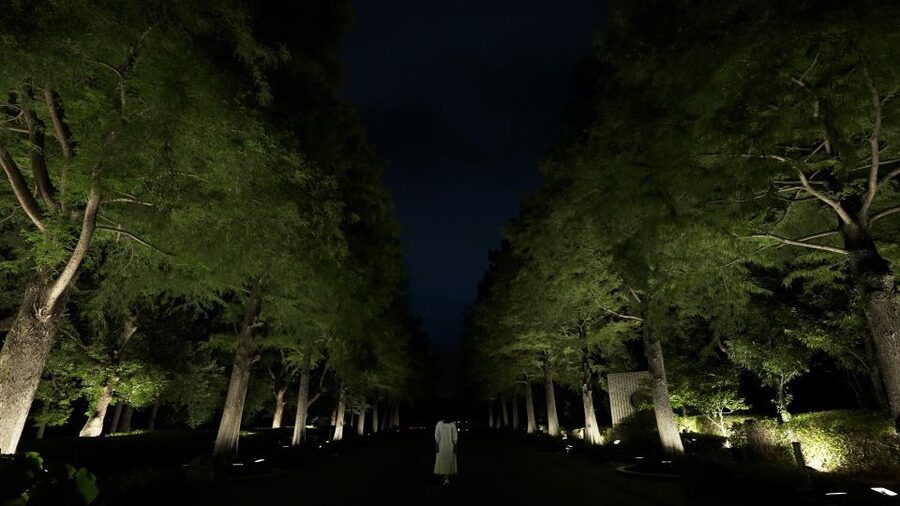
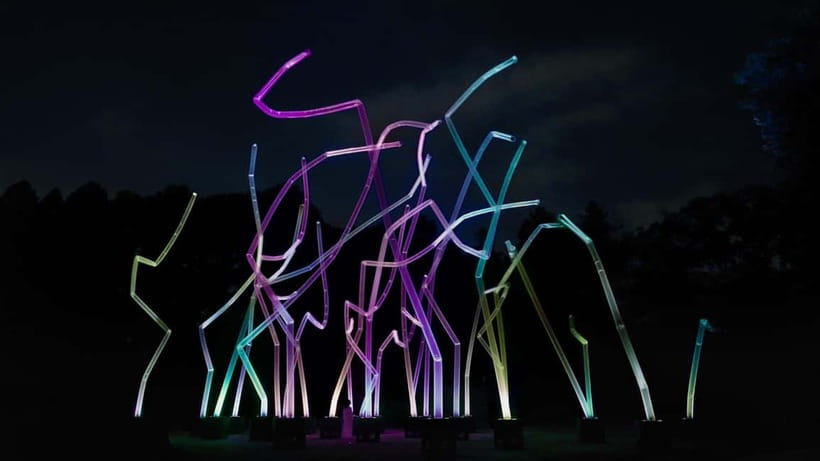
At night, the same trees and paths take on a different mood. Light can outline a trunk, glow through foliage, reflect on the pond, or shift as people pass nearby. The idea is not to replace nature with a screen. Instead, non-material technology adds color and movement without physically changing or damaging the plants.
That distinction matters. You are not walking through a dark warehouse packed with digital projections. You are outside, listening to music and natural sounds while the garden remains visible in fragments. The result can feel calm, strange, playful, or slightly otherworldly, depending on the installation and the weather.
I especially like that the art asks you to slow down. You may arrive expecting a quick photo stop, but the strongest moments come when you watch how light behaves on leaves, water, and other people.
More Entry Tickets in Japan:
- Tokyo Disney Resort – Tokyo Disneyland & Tokyo DisneySea Park Tickets
★ 4.8 · 99,488 reviews - Universal Studios Japan Studio Pass
★ 4.8 · 89,883 reviews - Universal Studios Japan Express Pass
★ 4.7 · 53,138 reviews
Starting with the daytime garden and central pond
Your ticket is valid for one day, so check the available starting times when booking. The practical choice is to arrive with enough time to see some of the botanical garden before the night installations become the main attraction.
The daytime portion gives you useful context. You can see the scale of the grounds, identify the central pond, and get a feel for the paths before darkness makes navigation less obvious. If you arrive only for the evening program, the garden can feel like a series of isolated scenes. Arriving earlier helps you understand the place as a living garden rather than just a backdrop.
The pond is worth seeking out. In daylight, it offers a quiet pause among the garden’s plants. After dark, water becomes one of the best surfaces for light and color, and the reflections add depth to the scenes around it.
Do not expect a guided lecture on every plant. The ticket is primarily admission, not a formal garden tour. Still, the garden’s plant collections add value for anyone who enjoys seeing how a botanical institution grows and protects different species.
You may find that the daytime visit feels less dramatic than the nighttime art. That is not a flaw, but it is useful to know. The real payoff comes when you combine the two halves and watch the familiar garden change.
Waiting for darkness to bring the installations to life
The art does not reach its full effect the instant you enter. One installation may seem modest at first, with small bubbles or points of light. Give it time. As you move farther through the garden, the work becomes more layered and the darkness makes the colors stronger.
Several elements repeatedly make the biggest impression:
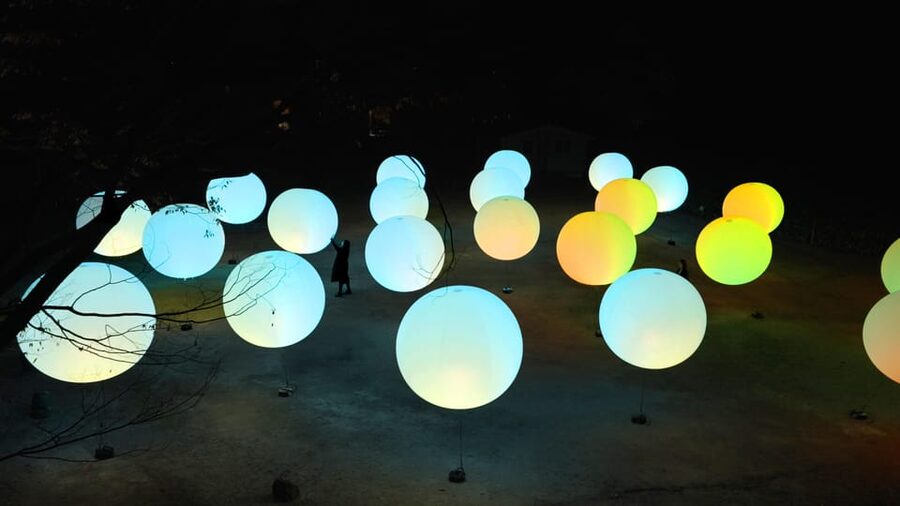
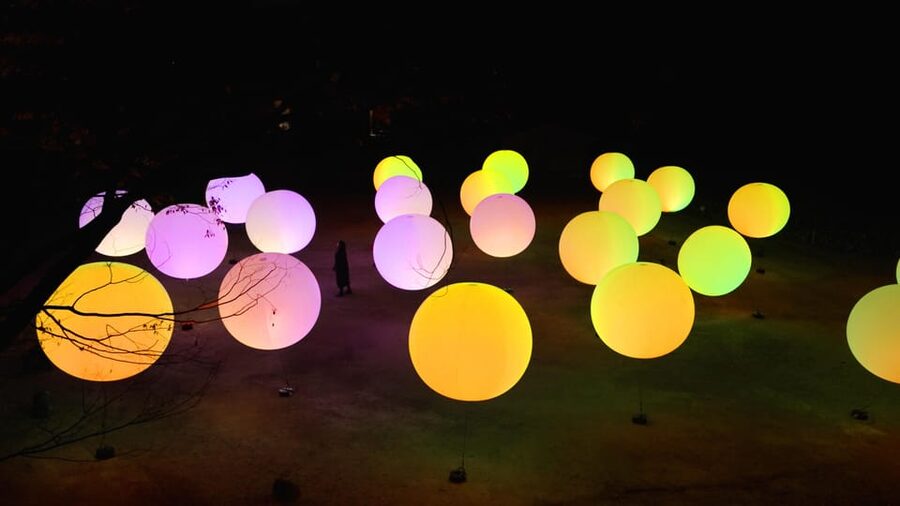
- Glowing egg-shaped forms that visitors can walk around or move between
- Light displays placed among trees and plants
- Reflections across the pond
- Music and electronic sound blended with the garden atmosphere
- Installations that react to visitors or the surrounding natural setting
The egg-shaped lights are particularly easy to enjoy with children. Young children can play around them, while adults often find the forms surprisingly peaceful after the initial novelty wears off.
Other pieces are less obvious and reward patience. A projection may seem simple when you first see it, then become more interesting as people move through the area or as the sound changes. This is why rushing from one display to the next weakens the experience.
A useful timing tip is to arrive early enough to enter without stress, then remain until the sky is fully dark. One visitor found that 6 p.m. provided enough darkness to appreciate the show, but the exact effect depends on the season and available entry time. In spring and early summer, you may need to wait longer for the strongest contrast between light and sky.
Walking through art that responds to people
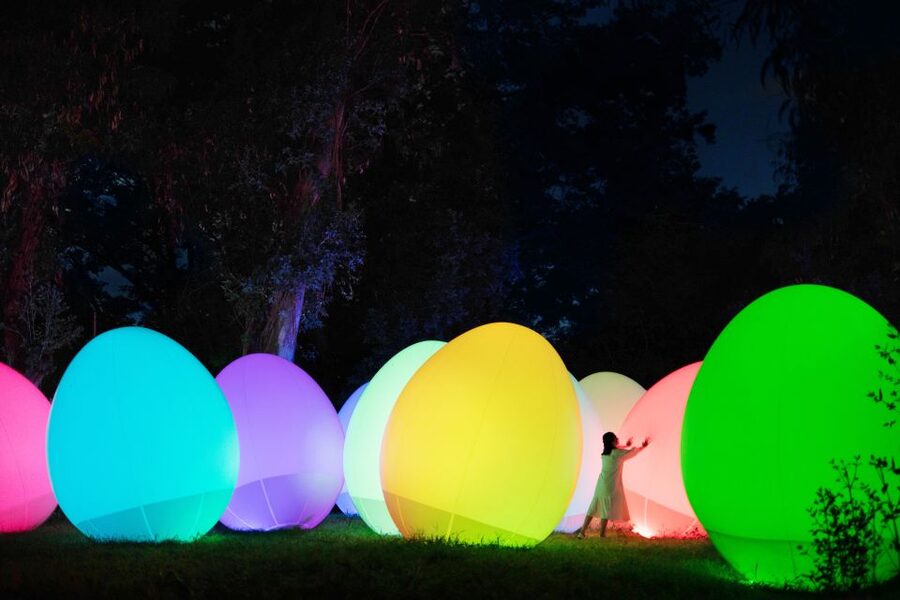
The central teamLab idea is that you are not only looking at the artwork. Your movement helps complete it.
As you pass through some areas, the lights and sound interact with the presence of people. The effect is not always dramatic. Some installations are quiet and atmospheric, while others feel playful and more direct. This variety keeps the walk from becoming a single repeated light show.
I prefer this format to a line of fixed displays because it gives you room to make your own route. You can stop for a photo, step aside, listen, and let other people pass. The experience works best when you treat it as an evening walk rather than a checklist.
The outdoor setting also makes the art less predictable. Wind, clouds, moonlight, and the condition of the plants can change how a display feels. A full moon has added extra atmosphere for some visitors, while cherry blossoms in spring can look especially striking when lit at night.
Photography is allowed, but the rules are strict. Drones, tripods, selfie sticks, flash photography, and flashlights are prohibited. You can use a handheld phone or camera, but do not let picture-taking become the whole point. The most memorable parts may be the ones you simply watch.
More Museums and Galleries in Japan:
- teamLab Borderless Tickets: MORI Building DIGITAL ART MUSEUM
★ 4.7 · 24,126 reviews - teamLab Planets TOKYO Ticket
★ 4.7 · 21,663 reviews - Tokyo: teamLab Planets TOKYO Digital Art Museum Entry Ticket
★ 4.6 · 9,779 reviews - teamLab Botanical Garden Osaka Ticket
★ 4.4 · 7,975 reviews
The practical walk, dark paths, and evening comfort
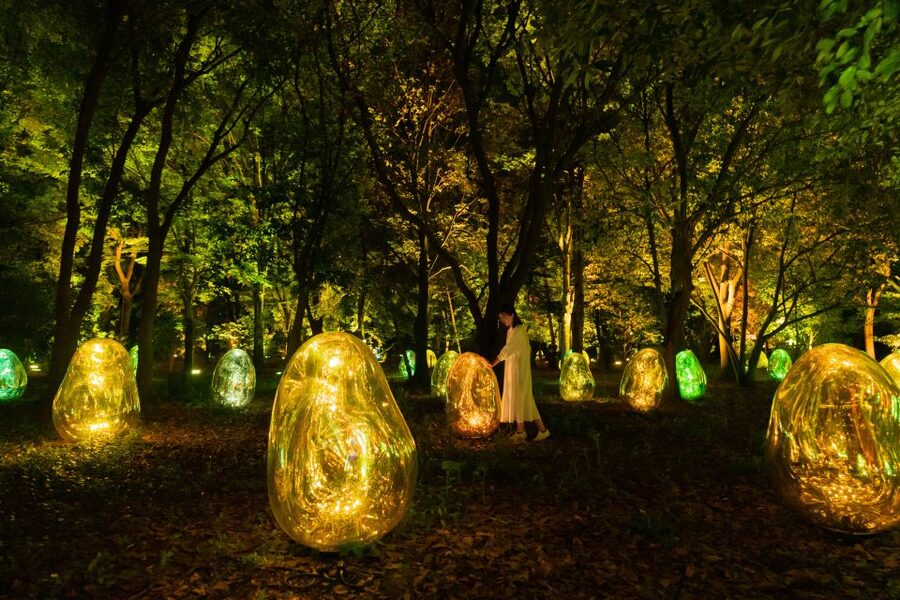
This is a walking experience, not a quick indoor attraction. Comfortable shoes are essential. The garden is large, and you may spend much of the evening moving between installations or standing while you take in a scene.
Some borders and roots can be difficult to see after dark. Take care around large tree roots and the unlit edges of flower beds, especially if you are walking with children or anyone who has difficulty on uneven ground.
The suggested clothing is sensible:
- Long pants help with insects and brush
- A long-sleeved shirt gives extra protection
- Insect repellent is worth bringing
- Comfortable shoes matter more than stylish ones
The attraction is outdoors, so check the weather before you commit. Rain or uncomfortable heat can change the mood and make a long walk less pleasant. The garden’s atmospheric quality is a strength in good weather, but it also means you cannot treat this like an all-season indoor museum.
There are no restaurants or cafes on site. Vending machines are available, but you should not count on a full meal or relaxed restaurant break. Food, alcohol, and large bags are not allowed inside, so eat beforehand and pack lightly.
The nearest subway station is not right at the entrance. The walk from the station has been described as roughly 15 minutes, which is manageable for most people but worth remembering late at night. Finding a taxi after the event can also be difficult in this part of Osaka, so plan your return route before entering.
How the $11 ticket holds up
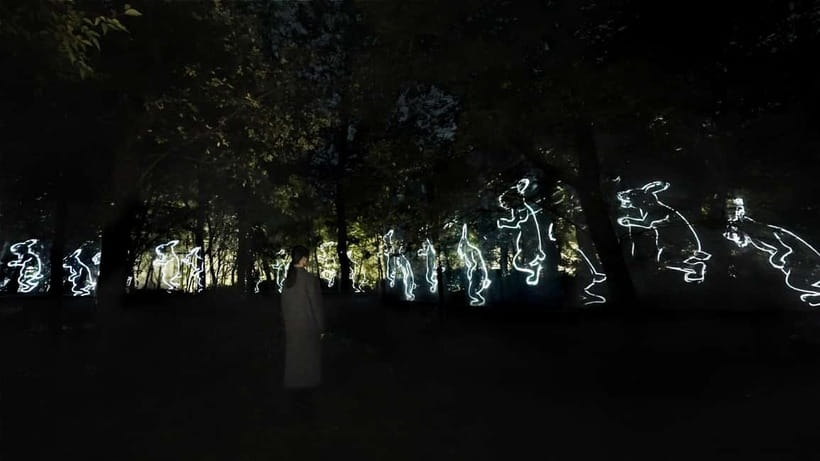
At $11 per person, this is one of the easier Osaka attractions to recommend on value alone. You are not paying only for a short projection show. The ticket covers entry to a very large botanical garden, and the nighttime program adds a second identity to the same place.
The value is strongest for people who enjoy slow walks and visual art. You can take your time, pause at the pond, and spend an evening outside without paying theme-park prices. The admission also works well as a first-night activity because it is relaxed rather than tightly scheduled.
Still, price should not create unrealistic expectations. This is not the same type of experience as teamLab’s large indoor installations in Tokyo. One visitor specifically found it decent but less substantial than the Tokyo version. Osaka’s program is more open-air, more dependent on darkness and weather, and generally less concentrated.
That difference is part of its appeal, but it also means you should not book it expecting wall-to-wall digital spectacle. If you want constant visual intensity, this may feel quiet at the beginning. If you like the connection between art and nature, the slower pace is a benefit.
At this price, I think the admission is fair even if one or two displays do not impress you. The garden setting, pond, music, and freedom to wander give the evening enough substance.
Families, older visitors, and accessibility
Children are welcome, but everyone under 18 must be accompanied by an adult. The required ratio is one adult for every three children, so larger family groups should plan accordingly.
Children may enjoy the glowing egg-shaped lights and the interactive sections, but darkness and uneven ground call for close supervision. This is not a brightly lit playground. Keep children near you around roots, water, and unlit borders.
Wheelchair users and children in strollers may enter, although some artworks may not be accessible. For exact route information, contact the venue by phone before visiting. The grounds are broad, and the experience involves outdoor paths, so accessibility may vary from one installation to another.
Older visitors can enjoy the garden at a comfortable pace, but allow extra time and wear shoes with good support. One older couple found the route easy to follow and the nighttime setting romantic, while another visitor found the roots and dark flower-bed edges troublesome. Both points are useful: the atmosphere can be gentle, but the ground still demands attention.
Crowds, timing, and getting the mood right
The entrance may be staggered, which helps prevent the garden from feeling packed. Even so, busy periods can fill quickly. Arriving early gives you a better chance to enter smoothly and see the first displays before larger waves of people arrive.
Once inside, you are free to roam. That freedom is one of the best features of the experience. You do not have to stay with a group, and you can linger at a favorite installation instead of being moved along.
The mood changes with your approach. If you rush through while trying to collect photos, the garden may feel like a string of disconnected lights. If you slow down, listen to the music, and watch people alter the displays, it becomes more atmospheric.
Spring adds cherry blossoms. Summer may bring warmer conditions and more insects. Autumn and winter can make the air cooler and the lights sharper. The supplied information does not promise a specific seasonal display, so treat blossoms and other seasonal details as bonuses rather than guarantees.
Rules that can affect your visit
There is no re-entry. Once you leave, you cannot return on the same ticket, so use the restroom and make any food or transport decisions before exiting.
Large bags and luggage are prohibited, along with pets, smoking, drones, selfie sticks, tripods, flash photography, flashlights, alcohol, drugs, and food. These restrictions protect the installations and keep the paths clear, but they also mean you should pack carefully.
Arrive before the final entry time. Late arrival can mean denied entry, even if you hold a valid ticket. Since the ticket is non-refundable, missing the time is an expensive and avoidable mistake.
A guide is not part of the standard entry-ticket description, but one booking included praise for Tomoko Matsukiyo. Do not assume that a guided tour or personal host comes with every ticket.
Who should book teamLab Botanical Garden Osaka?
I would choose this for an evening when you want something different from Osaka’s shopping streets, observation decks, and food districts. It suits couples, families with older children, photographers who can work without a tripod, and anyone who enjoys art that changes as people move through it.
It is also a good fit if you want a calm start to your Osaka visit. The garden gives you space to slow down, and several scenes are peaceful rather than loud or frantic.
I would think twice if you dislike outdoor walking, need a guaranteed indoor plan, or expect the same scale as a major Tokyo teamLab venue. You should also reconsider if you need frequent food breaks, carry large luggage, or have difficulty walking on dark and uneven paths.
Final call: Is the $11 ticket worth it?
Yes, for most visitors who have a free evening and suitable weather. The combination of a large botanical garden, interactive light art, music, and a central pond creates more variety than the modest price suggests.
Book it if you can arrive early, stay until darkness settles, and give the installations time to unfold. Skip it if you want a fast, indoor, highly concentrated digital show. For an outdoor night walk that feels peaceful, playful, and occasionally magical, teamLab Botanical Garden is a very good Osaka choice.
FAQ
Where is teamLab Botanical Garden located?
It is located in Osaka on Honshu, Japan, inside Nagai Botanical Garden.
How much does admission cost?
The listed price is $11 per person.
How long is the ticket valid?
The ticket is valid for one day. Check availability for the available starting times.
Is the experience indoors or outdoors?
It is an outdoor experience in Nagai Botanical Garden. Weather can affect your comfort, so check the forecast before booking.
What should I wear?
Wear comfortable shoes, long pants, and a long-sleeved shirt. Insect repellent is also recommended.
Are food and drinks available inside?
There are no restaurants or cafes on site. Vending machines are available, but food is not allowed inside the venue.
Can I take photographs?
Yes, photography is allowed. Flash photography, drones, tripods, selfie sticks, and flashlights are prohibited.
Can children and wheelchair users enter?
Children may enter with an adult aged 18 or older, with one accompanying adult required for every three children. Wheelchair users and children in strollers may enter, but some artworks may not be accessible.
Just added in Japan
- MT. FUJI/ Private Tour delivered and guided by a top-tier driver★ 5.0 · 27 reviews
- Fuji Speedway Self Drive & Mt. Fuji Private Tour pickup & dropoff★ 5.0 · 14 reviews
- Mt.Fuji Trekking 1 Day Tour up to the summit★ 5.0 · 14 reviews
- Mt fuji & Hakone customizable day tour w/ English speaking driver★ 5.0 · 45 reviews
- Seasonal Mt. Fuji Scenic Views, Fruit Picking and Ropeway Ride!★ 4.5 · 35 reviews
- Customisable Mt.Fuji Private Day Trip, English Speaking Driver★ 5.0 · 22 reviews
- Private Mt Fuji Tour from Tokyo: Scenic BBQ and Hidden Gems★ 5.0 · 146 reviews
- Private Mount Fuji Tour in Luxury Vehicle with English Guide★ 4.5 · 39 reviews
Museums and Galleries, compared.

teamLab Borderless Tickets: MORI Building DIGITAL ART MUSEUM
Read our review →
teamLab Planets TOKYO Digital Art Museum Entry Ticket
Read our review →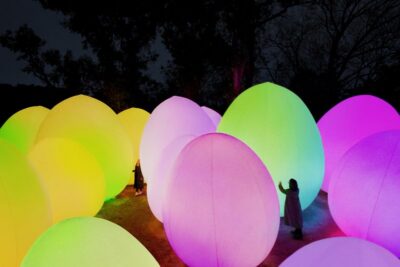



Browse the lists this tour appears in