
Reviewed · WALKING TOURS
Private Echizen Knife Making Factory and walking Tour
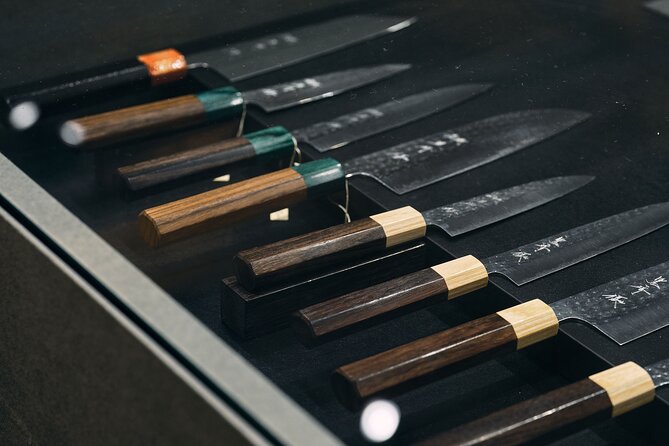
Knife making gets personal here. This private Fukui tour takes you inside two working Echizen factories, where you can see handles shaped from wood, watch blades being made, and speak with the craftspeople behind them. I especially like the direct access to working craftsmen and the chance to try part of the process yourself.
I also like the contrast between Yamaken Woodworks and Ryusen Hamono: one focuses on beautiful wooden handles, while the other shows how blades become finished knives. The main consideration is price, at $163.30 per person, with an English guide costing an additional ¥10,000 per person.
In This Review
- Key points about this Echizen knife tour
- Why Echizen is worth the side trip from Fukui
- Yamaken Woodworks and the craft of the knife handle
- Ryusen Hamono, where the blades take shape
- What the private format adds
- Is $163.30 good value?
- Getting there and planning the day
- Who will enjoy this experience most?
- What the strongest praise tells you
- Practical details before you book
- Should you book the Echizen knife-making tour?
- FAQ
- Where does the Echizen knife-making tour start?
- Where does the tour finish?
- How long does the tour take?
- What factories are included?
- Is a hands-on activity included?
- Is an English guide included in the price?
- Is transportation included?
- Can I cancel for a full refund?
Key points about this Echizen knife tour
- Two working factories in one visit: See wooden knife handles at Yamaken Woodworks, then follow the blade-making process at Ryusen Hamono.
- A hands-on element: You do not only watch. You also take part in one stage of knife making.
- Private experience: Only your own group joins the activity, making it easier to ask questions and set the pace.
- A strong choice for knife fans: The tour offers access to real factories, working blacksmiths, and factory shops selling the finished products.
- Allow about two and a half hours: The factory visits take about one hour and ten minutes at Ryusen Hamono and one hour at Yamaken Woodworks, with additional time built into the overall schedule.
- Plan your transport carefully: Driving is the easiest way to reach the area, though the walk from Oshio Station takes about 35 minutes.
Why Echizen is worth the side trip from Fukui
Echizen, in Fukui Prefecture, is a serious place for Japanese knife making. This is not a city-center demonstration arranged only for visitors. The tour takes you to working factories in the Echizen area, where handles and blades are made as part of a long-established local craft.
That setting gives the experience its appeal. You are not simply looking at a display of finished knives. You can see separate stages of production and learn how different specialists contribute to the final tool.
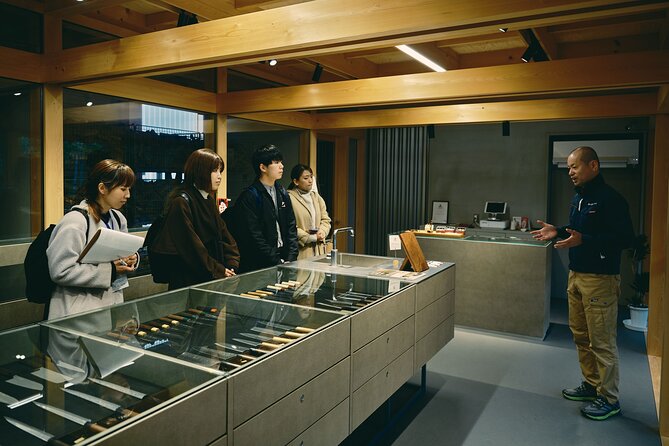
For me, the greatest value is the contact with the people doing the work. At both factories, you can speak with actual craftspeople about their jobs. That makes the knives easier to understand. A finely finished chef’s knife can look simple in a shop, but the factory visit shows the care hidden in its handle, blade, and finish.
The area does require some planning. The meeting point is at 48-6-1 Ikenokamichō, Echizen, Fukui 915-0873, and the first factory is at 46-1-10 Ikenokamichō. One detailed account described a 35-minute walk from Oshio train station through rice fields. That walk can be part of the day, but driving is the easier choice if you want to arrive with less effort.
Strong winds made the return walk difficult on one occasion, so check the weather before you set out. The activity requires good weather and may be moved or canceled if conditions are poor.
More Walking Tours in Japan:
- Kyoto Geisha Walking Tour: Gion District & Hidden Gems
★ 4.7 · 3,273 reviews - Tokyo Tsukiji Fish Market Food and Culture Walking Tour
★ 5.0 · 3,184 reviews - Kyoto: Gion Magical Night Walking Tour with Geisha Trivia
★ 4.9 · 2,393 reviews
Yamaken Woodworks and the craft of the knife handle
Your first stop is Yamaken Woodworks, a factory devoted to knife handles. This gives the tour a useful opening because it begins with the part of the knife you hold every day.
Inside, you can enjoy the smell of wood while seeing the detailed work that goes into shaping and finishing handles. The sensory part matters. A handle factory feels different from a blade workshop, and the aroma of wood helps make the process easy to remember.
You also have a chance to speak directly with the craftspeople. Ask about the kinds of wood they use, the stages involved, and how a handle must fit the knife and the hand. The supplied details do not specify the wood types or the exact activity at this stop, so you should treat this as a chance to ask questions rather than expect a fixed lecture.
Next to the factory is a shop selling handles made there. This is an unusual shopping stop. You are seeing the work first, then viewing the products in a shop beside the place where they were created.
That arrangement adds context to anything you consider buying. Instead of seeing a handle as a decorative extra, you can look at its shape and finish with a better sense of the labor involved.
The stop lasts about one hour, and admission is included. Since this is a private tour, you can spend that hour asking about details that interest you instead of trying to keep up with a large group.
Ryusen Hamono, where the blades take shape
The second stop is Ryusen Hamono, a knife factory and shop with a focus on blades and finished knives. The visit lasts about one hour and ten minutes, making it the longer of the two factory stops.
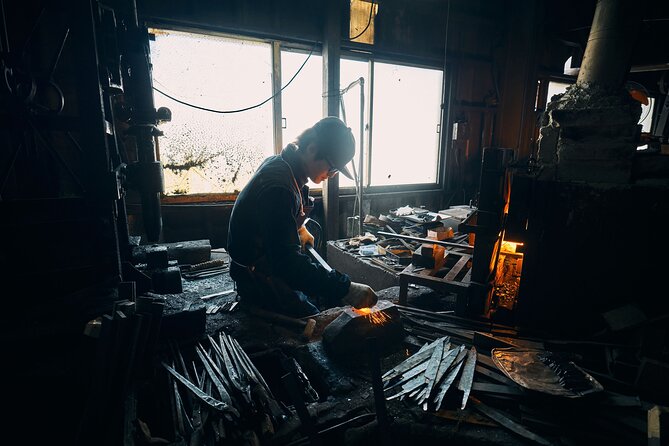
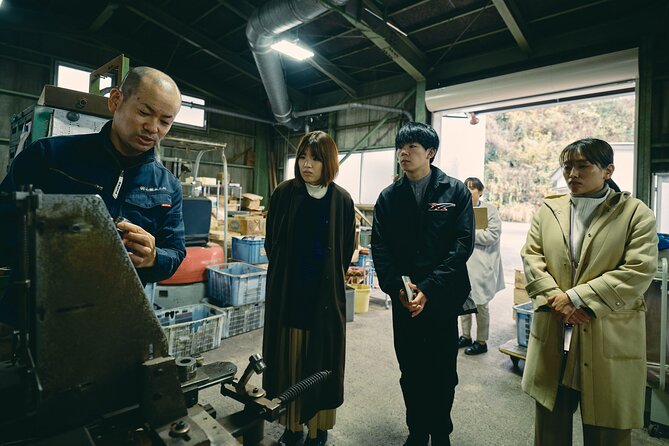
Here, you can meet working knife-making blacksmiths and learn about the process behind high-quality Echizen knives. The word blacksmiths is important. You are not only looking at machinery or finished displays. The experience is centered on people who work directly with the blades.
The exact stages you see may depend on the day’s production and factory conditions. Still, the purpose is clear: you get a look at how the blades are made and a chance to learn from the people responsible for that work.
The tour also includes a hands-on experience at this factory. The information does not specify exactly which step you will perform, so do not book this expecting a complete knife-making class. Think of it as a short, supervised taste of the craft within a factory visit.
That distinction matters. If you want to spend a full day forging, grinding, sharpening, or fitting a knife, this is not that type of course. If you want to understand the process and physically try one part of it, the format should suit you well.
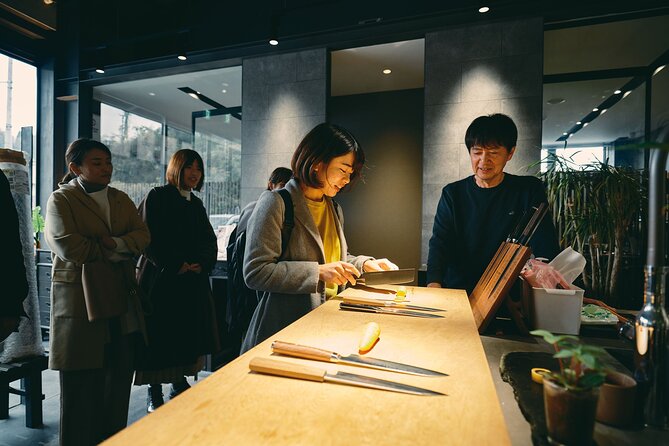
After the factory visit, you can look through Ryusen Hamono’s shop. The store carries an assortment of attractive, high-quality knives. This is likely to be the most tempting part for anyone who collects Japanese kitchen tools, though the tour details do not state what prices, brands, or specific knife styles will be available on the day.
The shop works best as the final part of the visit. By then, you have seen how handles and blades are made, so you can judge the finished knives with more appreciation.
What the private format adds
This is a private activity, meaning only your own group takes part. That is a real advantage in a factory setting.
You can ask questions without worrying about holding up a large party. If you are interested in handle construction, you can focus on Yamaken Woodworks. If blades are your priority, you can spend more of your attention at Ryusen Hamono.
A private tour also makes the experience feel less like a quick stop on a standard sightseeing route. The factories are the main event, and the pace can be more personal.
There is one important limit. A private tour does not automatically mean an English-speaking guide is included. An English guide costs ¥10,000 per person in addition to the listed tour price. Check the language arrangement carefully before booking, especially if you want detailed explanations of technical processes.
Without an English guide, you may need to rely on the communication arrangement provided by the operator. The tour description confirms access to the factories and craftsmen, but it does not explain how much English is spoken at each stop.
A completely different kind of day out:
- Tokyo Disney Resort – Tokyo Disneyland & Tokyo DisneySea Park Tickets
★ 4.8 · 99,488 reviews - Universal Studios Japan Studio Pass
★ 4.8 · 89,883 reviews - Universal Studios Japan Express Pass
★ 4.7 · 53,138 reviews - SHIBUYA SKY Ticket
★ 4.7 · 46,509 reviews
Is $163.30 good value?
At $163.30 per person, this is not a bargain-priced sightseeing activity. You are paying for a private visit to two working factories, access to craftspeople, a shop visit, and a hands-on segment over roughly two and a half hours.
The value is strongest if you have a real interest in Japanese knives, woodworking, blacksmithing, or traditional manufacturing. For someone who simply wants a general introduction to Fukui, the price may feel high for the duration.
The extra English guide fee also affects the calculation. At ¥10,000 per person, it can make the total noticeably higher. On the other hand, an English guide may be worthwhile if factory methods and technical explanations are central to your reason for booking.
I would compare this experience with the cost of buying a quality Echizen knife. If you already plan to purchase one, the factory access gives meaning to that purchase. You see the people and stages behind the object rather than picking up a knife with no connection to its origin.
The tour may also save time compared with trying to arrange separate factory visits. Two locations are combined into one outing, and the private format removes the uncertainty of joining a large scheduled group.
Getting there and planning the day
The meeting point is in Ikenokamichō, Echizen, and the tour returns to the same meeting point. That makes planning simpler, but you still need to arrange your own route to the start.
The area is near public transportation. Oshio Station is close enough for a walk of about 35 minutes, based on the experience described by one couple. Their route passed through rice fields, which can make the approach part of the local experience, but it is not the quickest option.
Driving is described as the easiest way to arrive. If you rent a car in Fukui, this tour fits well into a day focused on Echizen crafts. If you use trains, allow extra time for the walk and pay attention to the weather.
The tour lasts about two hours and thirty minutes, although the two listed factory visits total about two hours and ten minutes. The remaining time likely allows for moving between the stops and the meeting arrangements. Do not plan a tightly timed connection immediately afterward.
The mobile ticket is convenient, and confirmation is normally received at booking. If you book within seven days of the activity, confirmation may take up to 48 hours and remains subject to availability.
Who will enjoy this experience most?
I would recommend this tour first to people who already care about Japanese knives. You will get the most from it if you want to understand how a knife is made, ask questions at the source, and look at finished products after seeing the factories.
It also suits:
- Home cooks who want more knowledge before buying a Japanese knife
- Woodworkers interested in handle construction
- Visitors collecting traditional Japanese crafts
- Couples or small groups who prefer private visits
- Anyone willing to leave Fukui’s main sightseeing routes for a specialist experience
Families and casual sightseers can participate, since most people can take part, but the subject is specialized. The tour does not offer a broad selection of attractions. It focuses closely on knife making.
You should also be comfortable with the possibility that the hands-on part is brief. The activity is a factory tour with an experience included, not a full technical workshop.
What the strongest praise tells you
The most highly praised qualities are the craftsmanship, the access to the production process, and the unusual nature of the outing. A perfect rating from the supplied feedback reflects how strongly the tour connects with people who make the effort to reach this out-of-the-way knife-making area.
One especially useful detail is the warning about transport and wind. The walk from Oshio Station can be enjoyable, passing through rice fields, but strong winds made the return challenging on one occasion. I would choose the walk only if you have enough time and the forecast looks comfortable.
The other strong point is the tour’s informative quality. The experience provides more than a shop visit because it explains how the knives come together and gives you contact with the people making them.
That is why this tour is more valuable than simply visiting a knife store. A store shows you what is for sale. These factories show you why the tools cost what they do.
Practical details before you book
The activity includes the factory tour, shop visits, and hands-on experience. Food and drinks are not included, so plan those separately.
Free cancellation is available if you cancel at least 24 hours before the local start time. Changes or cancellations made less than 24 hours before the start are not accepted for a refund.
The activity can be canceled because of poor weather or because the minimum number of participants is not met. In either case, you can receive a different date or experience, or a full refund.
The experience provider is Craft Invitation. Since the tour ends where it begins, you do not need to arrange a separate return transfer from the final factory.
Should you book the Echizen knife-making tour?
Book it if you want a close look at real knife production and would value meeting the craftspeople behind the products. The combination of Yamaken Woodworks, Ryusen Hamono, a hands-on segment, and factory shops gives serious knife fans plenty to think about in a short visit.
Skip it if you are looking for a low-cost activity, a full-day workshop, or a general tour of Fukui. The price is easier to justify when knife making is one of your main interests, and the added English guide fee should be part of your budget.
For the right visitor, this is a memorable side trip: practical, specific, and tied to the place where the craft is still being practiced.
FAQ
Where does the Echizen knife-making tour start?
The meeting point is 48-6-1 Ikenokamichō, Echizen, Fukui 915-0873, Japan.
Where does the tour finish?
The activity ends back at the meeting point.
How long does the tour take?
The total duration is approximately two hours and thirty minutes.
What factories are included?
The tour visits Yamaken Woodworks for knife handles and Ryusen Hamono for blade making and finished knives.
Is a hands-on activity included?
Yes. You can experience part of the knife-making process at Ryusen Hamono.
Is an English guide included in the price?
No. An English guide costs an additional ¥10,000 per person.
Is transportation included?
Transportation to and from the meeting point is not listed as included. The area is near public transportation, and driving is described as the easiest way to arrive.
Can I cancel for a full refund?
Yes, if you cancel at least 24 hours before the experience start time. Cancellations made less than 24 hours before the start are not refundable.
Just added in Japan
- A One-of-a-Kind Sushi Experience in a Special Place of Japan★ 5.0 · 15 reviews
- Tokyo Cute Bento Cooking Class – Make a Kawaii Character Lunchbox★ 5.0 · 126 reviews
- Japanese Home Cooking Class & Walk in Todoroki Temple Tokyo★ 5.0 · 88 reviews
- Japan Tokyo Tower Observatory Deck E-Ticket★ 4.0 · 34 reviews
- Catch a Baseball Game in Tokyo with a Local – Tickets Included★ 5.0 · 24 reviews
- JDM Experience with Fast&Furious RX-7 (English speaking Driver)★ 5.0 · 57 reviews
- Tokyo Private Day Tour by Car with English speaking Driver Guide★ 4.0 · 29 reviews
- Japan Classic 10 Day – One Life Adventures★ 5.0 · 129 reviews
Walking Tours, compared.

Kyoto Geisha Walking Tour: Gion District & Hidden Gems
Read our review →
Tokyo Tsukiji Fish Market Food and Culture Walking Tour
Read our review →
Gion Magical Night Walking Tour with Geisha Trivia
Read our review →
Imperial Palace and Shogun Historical Walking Tour
Read our review →
Gion Geisha District Walking Tour – Stories of Geisha
Read our review →

Shinjuku Local Bar and Izakaya Guided Walking Tour
Read our review →
Browse the lists this tour appears in