
Reviewed · SUMO EXPERIENCES
Sumo Practice Viewing Guided Tour and Photo with Sumo Wrestlers
Sumo practice is quieter and tougher than expected. This Tokyo tour takes you into Tatsunami-beya, a working sumo stable where wrestlers train each morning, not a staged theater show. I like the close view of the training and the chance to photograph a wrestler afterward. I also like the licensed English guide, who explains the rules and etiquette before the room goes silent. The main drawback is simple: practice can mean watching six to eight wrestlers repeat exercises in silence, so this suits curious observers more than anyone seeking a lively performance.
At $118.60 per person, the experience is fairly priced if you value access to a sacred training space and a guide who helps explain what you are seeing. The photo and JTB Sunrise Tours souvenir add something extra, but the real value is the practice itself. You should also know that the active yokozuna may not train on the morning you visit, and the audio equipment has not worked perfectly for everyone.
In This Review
- Key points to know before you book
- Entering Tatsunami-beya in Tokyo
- A 10-minute lesson before the wrestlers begin
- Watching 45 minutes of silent morning practice
- Why the stable setting matters
- The 15-minute photo and question period
- How the price compares with the experience
- What to bring, and what to leave behind
- Cancellation and confirmation details
- Who will enjoy this quiet sumo experience most?
- Should you book Tatsunami-beya?
- FAQ
- Where does the sumo practice tour begin?
- How long does the tour last?
- Can I talk during the sumo practice?
- Is a photo with a sumo wrestler included?
- Will the yokozuna appear during the visit?
- What should I avoid bringing or wearing?
Key points to know before you book
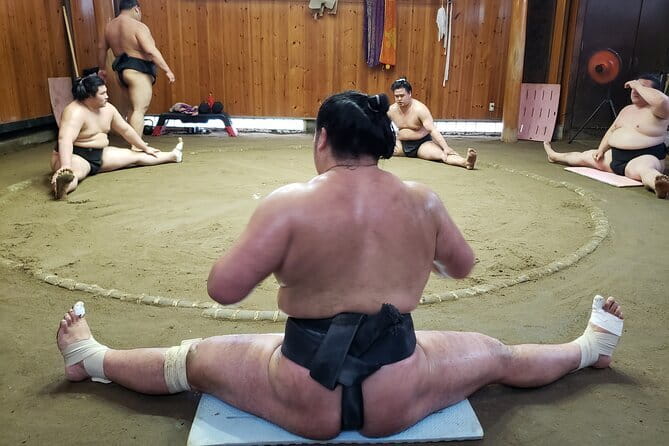
- Tatsunami-beya is a real working stable: Wrestlers live and train here, and the training hall is treated as a sacred place.
- Silence is part of the experience: You cannot talk or whisper during practice, so the audio guide carries the explanation.
- You sit close to the action: Seating is on cushions over tatami flooring, with chairs available if sitting on the floor is difficult.
- The session may be shorter or longer: The advertised practice viewing is about 45 minutes, but it depends on how many wrestlers train that day.
- A photo comes after practice: You can take a commemorative picture with the wrestlers, then see personal belongings and ask questions.
- The yokozuna is not guaranteed: Tatsunami-beya houses an active yokozuna, but that wrestler does not appear at every session.
Entering Tatsunami-beya in Tokyo
The morning begins at 8:30 am outside Tatsunami-beya at 1-chōme-16-5 Hashiba in Taito City. This is not in the center of the usual Asakusa sightseeing circuit, so allow time to reach the entrance. From Asakusa Station, the stable is about a 30-minute walk. You can also use the Toei Bus East 42-Ko route or the Taito Ward Kita-Megurin loop bus.
That walk can be useful. It gives you time to switch from sightseeing mode to observation mode. You are not heading into a grand stadium with signs, vendors, and cheering crowds. You are going to a place where people train every day, and that difference shapes the whole visit.
A licensed English guide interpreter meets the group and explains what will happen. The opening lecture lasts about 10 minutes. This briefing matters because the rules are strict, and they are rooted in respect rather than theater etiquette.
You must keep quiet during practice. Do not whisper, stand, move around, stretch your legs toward the ring, or use flash photography. Take off your shoes, keep your phone silent or switched off, and remove your hat and sunglasses indoors. Strong perfume and fabric softener scents are prohibited, since wrestlers are training at close range and distractions are not welcome.
More Sumo Experiences in Tokyo
- Tokyo: Sumo Show Experience with Chicken Hot Pot and a Photo
★ 4.8 · 6,678 reviews - Tokyo: Sumo Live Show with Photo in Shinjuku
★ 5.0 · 3,438 reviews - Tokyo: Sumo Show and Dining Experience
★ 4.8 · 2,742 reviews
A 10-minute lesson before the wrestlers begin
The first short talk gives you basic information about sumo and the proper way to watch. Without it, you might mistake repeated movements for a simple gym workout. With it, the exercises have a clearer purpose.
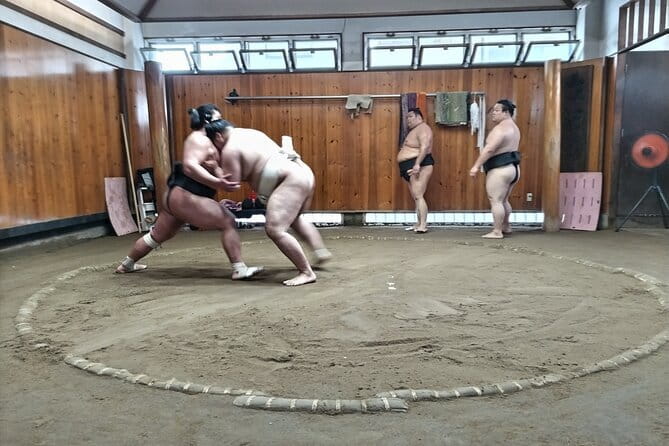
Sumo is full-contact wrestling, but morning practice is built on repetition, discipline, strength, and control. You will see wrestlers work through training movements as they prepare for the six annual Grand Sumo Tournaments. The guide’s job is to explain enough of this system so you understand what is happening without interrupting it.
This is also the moment to ask practical questions. Once practice starts, conversation stops. The tour uses an audio guide during the viewing, allowing you to listen to explanations while keeping the stable quiet.
The English presentation is one area where expectations should stay realistic. One account praised the narration as informative and genuine, while another found the guide’s English and audio device difficult to understand. That means the quality of your experience may depend partly on how clearly you receive the commentary. The stable itself remains the main attraction, but the explanations help you read the scene.
Watching 45 minutes of silent morning practice
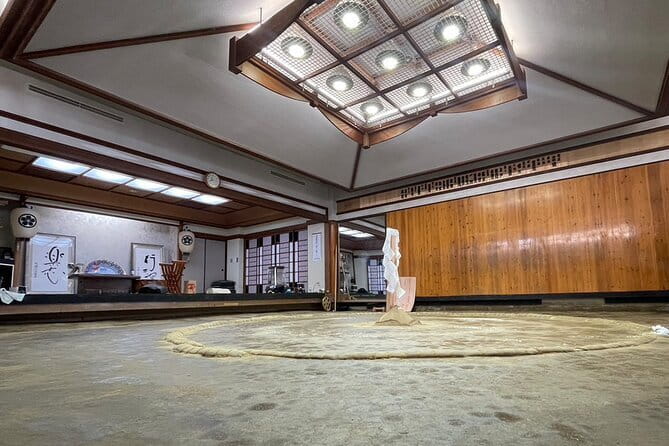
After the briefing, you sit on a wooden floor with cushions over tatami mat flooring. This puts you close to the training area, but it also requires some physical flexibility. If you have trouble sitting on the floor, request a chair in the remarks when booking. Do not wait until arrival if you already know you need one.
The practice viewing is scheduled for about 45 minutes. The timing is not fixed because the wrestlers’ routine changes with the number of people training that day. If fewer wrestlers are present, the viewing may be shorter and the tour can end early. If practice runs longer, you may stay later. There is no refund when the session is shorter.
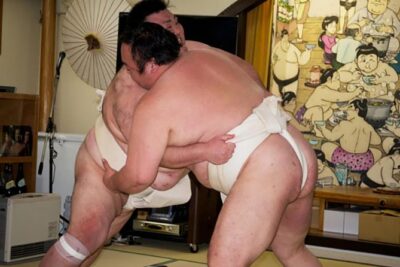
The strongest part of this tour is its closeness. You are not watching distant figures in a large arena. You can see the effort of each movement and the concentration required to repeat it. The quiet makes small sounds matter: footwork, breathing, contact, and the movement of bodies across the training space.
Yet the quiet is also the reason this tour will not suit everyone. You cannot cheer, ask questions, or shift around freely. A session may involve only six to eight trainees doing exercises, with no dramatic bout or formal contest. If you expect a compact version of a tournament, you may leave disappointed.
I would book this for someone who likes watching craft and routine. It has more in common with observing a serious rehearsal than attending a sports event. The payoff is not constant action. It is seeing the work behind professional sumo.
Why the stable setting matters
A sumo stable is both a home and a training hall. Wrestlers live and train there while working toward higher ranks, including yokozuna, the highest rank in professional sumo. That makes the setting more personal than a public tournament.
The rules help protect that atmosphere. You cannot eat or drink inside, and you should use a restroom before entering because availability is limited. You cannot leave midway unless necessary, and large baggage, suitcases, and strollers are not permitted.
These restrictions may feel fussy if you are used to ordinary sightseeing. Here, they are part of the bargain. You are being allowed into a place where wrestlers train hard every day. Keeping still, quiet, and unobtrusive is the price of that access.
Tatsunami-beya has the special distinction of housing an active yokozuna. That adds interest, but do not treat it as a promise. The yokozuna does not appear at every practice session. You should book for the stable and the training, not for one particular wrestler.
A completely different kind of day out:
- Tokyo Disney Resort – Tokyo Disneyland & Tokyo DisneySea Park Tickets
★ 4.8 · 99,488 reviews - SHIBUYA SKY Ticket
★ 4.7 · 46,509 reviews - JR Whole Japan Rail Pass
★ 4.8 · 29,150 reviews - Mt Fuji and Hakone 1-Day Bus Tour Return by Bullet Train
★ 5.0 · 26,383 reviews
The 15-minute photo and question period
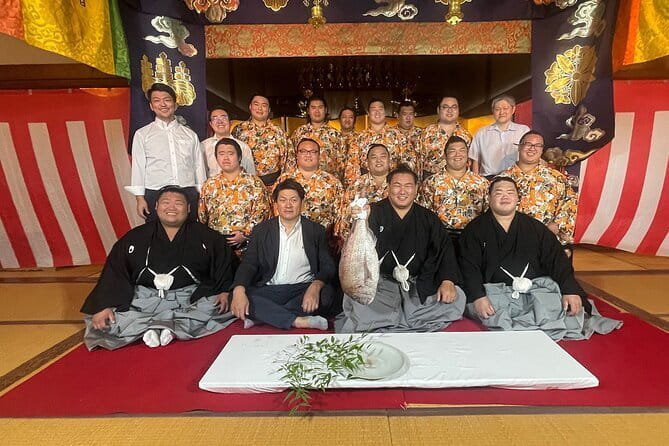
When practice ends, the tone changes. You can take a commemorative photo with the wrestlers, which gives the visit a clear personal finish. This is one of the strongest features for anyone who wants a lasting record of the morning.
The photo is not the main reason to book, but it is a useful extra. You have just watched the wrestlers train in silence, and the picture gives you a more direct connection to the people you observed. Follow the staff’s instructions and do not touch a wrestler without permission.
The final portion also includes a viewing of personal belongings and a question-and-answer corner. This helps fill in the human side of sumo, though the amount of time available may vary. The scheduled period is about 15 minutes, so this is not an extended interview.
You also receive original JTB Sunrise Tours merchandise. It is a small souvenir rather than a major part of the value, but it rounds out the experience. Food and drinks are not included, and none should be brought into the stable.
How the price compares with the experience
At $118.60, this is not a cheap morning activity. You are paying for the licensed English interpreter, audio guide service, access to a working stable, the practice viewing, a photo with wrestlers, and original merchandise.
The price makes more sense if you have already seen Tokyo’s larger attractions and want something difficult to arrange independently. A sumo tournament is a public event, but entry to a training stable is a different kind of access. You are paying for the setting and the chance to observe a private routine under carefully controlled conditions.
The value drops if you mainly want entertainment. There is no promise of a bout, a long demonstration, or a yokozuna appearance. The viewing can be shorter than 45 minutes, and the format requires silence from start to finish.
I see it as good value for a first-time sumo fan, a visitor interested in Japanese customs, or anyone who prefers a small cultural encounter over a standard sightseeing stop. It is weaker value for children or restless adults who need a fast-moving activity.
The tour has a maximum of 45 participants. That is worth noting at this price. The exact feeling inside the stable will depend on the group and the day’s layout, but a full group may make the experience feel less personal than the idea of a small stable visit suggests.
What to bring, and what to leave behind

Wear clothing that allows you to sit comfortably on the floor. The stable provides cushion seating, but you should request a chair in advance if needed. You will remove your shoes, so practical footwear helps.
Keep your phone on silent or turn it off. Flash photography is forbidden, and you should not use your phone in a way that distracts the wrestlers. Leave tripods, large bags, suitcases, and strollers behind.
Do not bring food or drinks into the stable. Avoid perfume and strongly scented fabric softener. These details may sound minor, but in a quiet room with people training nearby, they matter.
Children from birth through age three cannot join. Anyone under 18 needs written parental permission. Anyone under 15, or not yet enrolled in middle school, must be accompanied by a parent or guardian.
The activity is near public transportation, and most people can participate. Still, the floor seating, strict no-exit rule, limited restroom access, and need to remain still are important practical concerns. If any of those will be difficult, consider another Tokyo activity.
Cancellation and confirmation details
Confirmation arrives within 48 hours of booking, subject to availability. You can cancel for a full refund up to 24 hours before the local start time. Changes or cancellations made inside that 24-hour window are not accepted for a refund.
The tour returns to the meeting point when it ends. The listed duration is about 1 hour 20 minutes to 2 hours, depending on the length of practice and the number of wrestlers present.
Who will enjoy this quiet sumo experience most?
I recommend it most strongly to people who want to see the discipline behind a sport. You will enjoy it if you can sit quietly, follow rules without fuss, and pay attention to repeated movements.
It also suits anyone who has been unable to attend a Grand Sumo Tournament. You will not get the noise or spectacle of a public match, but you will see a side of sumo that a tournament ticket cannot provide.
Families should read the age rules carefully. Older children may find the practice meaningful, but the no-talking format and floor seating may test younger attention spans. Anyone expecting a photo with a guaranteed yokozuna should also adjust those expectations.
If you need constant narration, the audio guide is helpful but not flawless. Bring patience, and focus on the physical details in front of you rather than expecting every explanation to come through perfectly.
Should you book Tatsunami-beya?
Book this tour if you want authentic access to sumo practice, can respect a strict silent setting, and value seeing daily training over watching a polished show. The close view, licensed guide, photo opportunity, and chance to enter a working stable make it a memorable cultural experience.
Skip it if you want an active wrestling match, a guaranteed appearance by a yokozuna, or a flexible morning where you can come and go. At $118.60, the tour earns its price through access, not spectacle.
For the right person, the silence is not a flaw. It is what lets you notice the strength, control, and seriousness of the training.
FAQ
Where does the sumo practice tour begin?
The meeting point is Tatsunami-beya Sumo Stable at 1-chōme-16-5 Hashiba, Taito City, Tokyo 111-0023. The start time is 8:30 am, and the activity ends back at the meeting point.
How long does the tour last?
The total activity takes approximately 1 hour 20 minutes to 2 hours. Practice viewing is scheduled for about 45 minutes, but the length can change according to the number of wrestlers training.
Can I talk during the sumo practice?
No. Talking and whispering are strictly prohibited while practice is underway. An audio guide lets you listen to explanations from the National Government Licensed English Guide Interpreter without disturbing the wrestlers.
Is a photo with a sumo wrestler included?
Yes. After practice, you can take a commemorative photo with the wrestlers. Touching wrestlers without permission is forbidden.
Will the yokozuna appear during the visit?
Not necessarily. Tatsunami-beya houses an active yokozuna, but the yokozuna does not attend every practice session.
What should I avoid bringing or wearing?
Do not bring food, drinks, large baggage, suitcases, or strollers. Avoid excessive perfume and fabric softener scents. Inside the stable, remove your shoes, hat, and sunglasses, and keep your phone silent or turned off.
Just added in Tokyo
- A One-of-a-Kind Sushi Experience in a Special Place of Japan★ 5.0 · 15 reviews
- Tokyo Cute Bento Cooking Class – Make a Kawaii Character Lunchbox★ 5.0 · 126 reviews
- Japanese Home Cooking Class & Walk in Todoroki Temple Tokyo★ 5.0 · 88 reviews
- Japan Tokyo Tower Observatory Deck E-Ticket★ 4.0 · 34 reviews
- Catch a Baseball Game in Tokyo with a Local – Tickets Included★ 5.0 · 24 reviews
- JDM Experience with Fast&Furious RX-7 (English speaking Driver)★ 5.0 · 57 reviews
- Tokyo Private Day Tour by Car with English speaking Driver Guide★ 4.0 · 29 reviews
- Japan Classic 10 Day – One Life Adventures★ 5.0 · 129 reviews
Sumo Experiences, compared.
Sumo Show Experience with Chicken Hot Pot and a Photo
Read our review →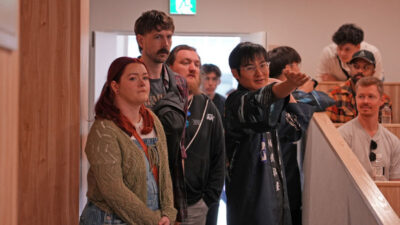
Tokyo Shinjuku Sumo Show & Experience with Photo
Read our review →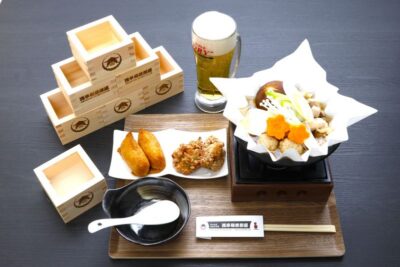
Asakusa Sumo Club Sumo Show Admission with Chankonabe in Tokyo
Read our review →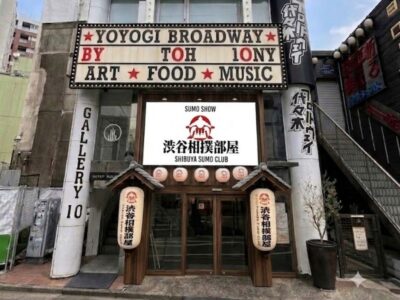
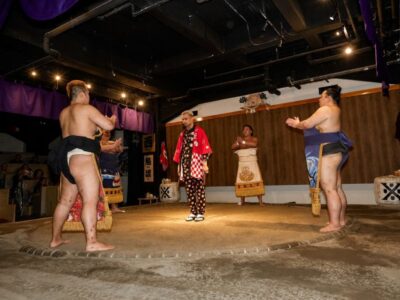
Tokyo Ginza Sumo Experience: Performance vs Pure Practice
Read our review →Browse the lists this tour appears in