
Reviewed · SUMO EXPERIENCES
Sumo Wrestlers Morning Practice Tour – Tokyo Sumida District
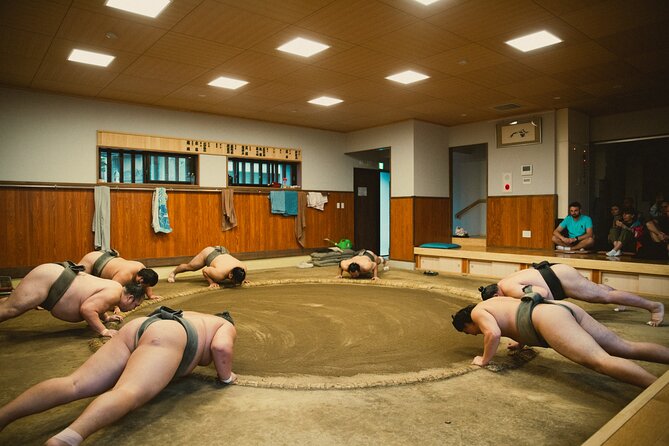
Sumo starts before breakfast. This two-hour visit to a Tokyo sumo stable gives you something a tournament cannot: a close look at the daily discipline behind the sport. I like the chance to watch wrestlers train from only a short distance away, and I like the English-speaking guide who explains the rules, customs, and movements as the session unfolds. The main drawback is simple: you sit cross-legged on the floor for about 90 minutes, and the practice may be shorter or less dramatic than you expect.
This is not a staged show. The wrestlers are working, not performing for an audience. That makes the visit feel genuine, but it also means you must stay silent, avoid moving around, and accept that you may see drills rather than full-contact bouts. The early start is another tradeoff, though you will be back near Tokyo Skytree with most of the day still ahead.
In This Review
- Key points to know before you book
- Meeting at Tokyo Skytree before sunrise
- Entering a working sumo stable
- Ninety minutes of silent, serious training
- What the guide adds to the experience
- Meeting the wrestlers after practice
- Why the early start is worth considering
- Is $83.23 a fair price?
- Sitting on the floor is the main physical issue
- Etiquette that protects the experience
- Who will enjoy this morning most?
- Should you book the Sumida sumo practice tour?
- FAQ
- Where does the tour meet?
- What time should I arrive?
- How long does the tour last?
- How far is the stable from the meeting point?
- Are there chairs inside the stable?
- Can I take photographs or videos?
- What happens if I am late?
Key points to know before you book
- Watch training from close range: You sit inside the stable, near the training area, rather than viewing sumo from a distant arena seat.
- Meet at 7:10am: The group leaves the Oshiage meeting point at 7:30am sharp, with about a 15-minute walk to the stable.
- Expect floor seating: There are no chairs, and you need to sit cross-legged without pointing your feet toward the ring.
- The guide bridges the language gap: English explanations help you understand the sport and avoid mistakes inside this highly respectful setting.
- Photos may be possible afterward: A photo with wrestlers is sometimes offered, but it is not wise to assume every athlete will be available.
- Plan for a quiet morning: Phones must be silent, flash and shutter sounds are prohibited, and no social media uploads are allowed.
Meeting at Tokyo Skytree before sunrise
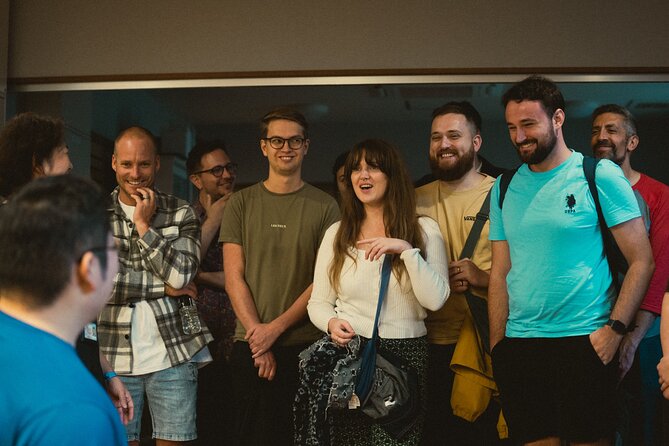
The tour begins at 7:30am near the foot of Tokyo Skytree, at 1-chōme-8-21 Oshiage in Sumida City. You should arrive by 7:10am. That extra time matters because the group leaves for the stable at 7:30am sharp.
The meeting point is close to public transportation and easy to identify if you are already familiar with Tokyo Skytree. Still, give yourself plenty of time. Oshiage Station has several exits and connecting lines, and Tokyo train stations can be confusing when you are trying to find a specific street corner before breakfast.
From the meeting point, you walk for about 15 minutes. This is not a long trek, but rain can make the route less comfortable. Bring a small towel if your feet may get wet, since you will soon be removing your shoes inside the stable.
The walk is part of the experience. You leave the busy sightseeing rhythm of central Tokyo and enter a residential part of Sumida where sumo training takes place as part of everyday life. The exact stable location is not used as the public meeting point, so you should not plan to go directly there on your own. If you are late, contact the tour provider first. You cannot enter without making contact.
More Sumo Experiences in Tokyo
- Tokyo: Sumo Show Experience with Chicken Hot Pot and a Photo
★ 4.8 · 6,678 reviews - Tokyo: Sumo Live Show with Photo in Shinjuku
★ 5.0 · 3,438 reviews - Tokyo: Sumo Show and Dining Experience
★ 4.8 · 2,742 reviews
Entering a working sumo stable
Inside the stable, you remove your shoes before stepping onto the raised wooden floor. This is a working training space with strict customs, not a theater with a casual audience area.
Your guide helps explain what is happening and translates when needed. That support is useful because much of the value comes from understanding why the wrestlers repeat certain movements and how the training fits into sumo culture. The sport has roots in Shinto, and the stable’s rules reflect that religious and ceremonial background.
You should wear modest clothing. Sunglasses and hats are not allowed inside, and you should use the restroom before arriving because leaving during practice can interrupt the session.
The group can include up to 25 people. That is a reasonable size for a small stable, but your exact view depends on where you sit. Most people may have a clear front-row position, while others may sit behind another row. If you care strongly about being closest to the action, arrive on time and follow the guide’s seating instructions.
Ninety minutes of silent, serious training
The main part of the visit lasts about 90 minutes. You sit on the floor and watch the wrestlers go through their morning routine. The appeal is seeing their concentration, discipline, flexibility, speed, and physical effort at close range.
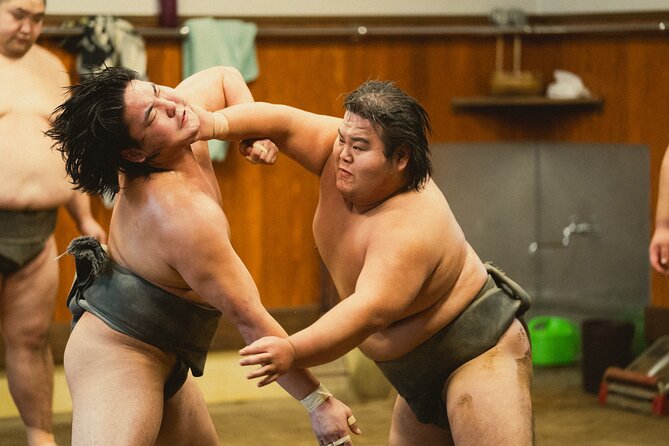
Expect training, not a competition. You may see warmups, repeated exercises, technical drills, and some wrestling, depending on the day. The session is controlled by the stable and can end earlier or run longer than expected. A practice may not include the dramatic, full-contact exchanges shown in promotional photographs or tournament footage.
That distinction is important. If you want polished bouts, cheering crowds, and a formal competition setting, attend a grand tournament instead. If you want to understand how athletes prepare when nobody is asking them to entertain you, this is the better choice.
The quiet atmosphere can feel intense. You cannot stand up, wander around, stretch your legs toward the ring, or chat during practice. Showing the soles of your feet toward the wrestlers is considered impolite, so cross-legged seating is required. The ring and sandy ground are sacred areas. Never step down into them.
Phones must remain on silent. Photos are allowed without flash or shutter sounds, but you cannot upload photos or videos from the visit to social media. This rule protects the privacy of the stable and keeps the morning from becoming a noisy photo session.
What the guide adds to the experience
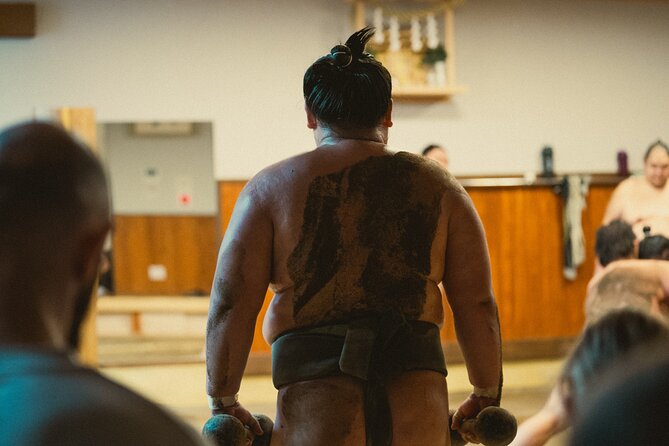
Sumo has rules that are easy to miss if you only watch a match. A guide can explain what the wrestlers are doing, why certain rituals matter, and how the training connects to the sport’s traditions.
The language help is particularly useful after practice, when questions may come up about the wrestlers’ lifestyle, diet, training, and daily routine. A question-and-answer session with the stable master or manager can be one of the strongest parts of the morning.
Guide quality can shape the visit. Yuriko received specific praise for being patient and informative, while other feedback suggests that the explanations may feel light during the training itself. The post-practice conversation often supplies more background than the quiet observation period.
I would treat the guide as an interpreter and cultural escort rather than a nonstop lecturer. The wrestlers need silence while they train, so detailed commentary cannot continue throughout the session. If you want more explanation, save your questions for the appropriate time afterward.
A completely different kind of day out:
- Tokyo Disney Resort – Tokyo Disneyland & Tokyo DisneySea Park Tickets
★ 4.8 · 99,488 reviews - SHIBUYA SKY Ticket
★ 4.7 · 46,509 reviews - JR Whole Japan Rail Pass
★ 4.8 · 29,150 reviews - Mt Fuji and Hakone 1-Day Bus Tour Return by Bullet Train
★ 5.0 · 26,383 reviews
Meeting the wrestlers after practice
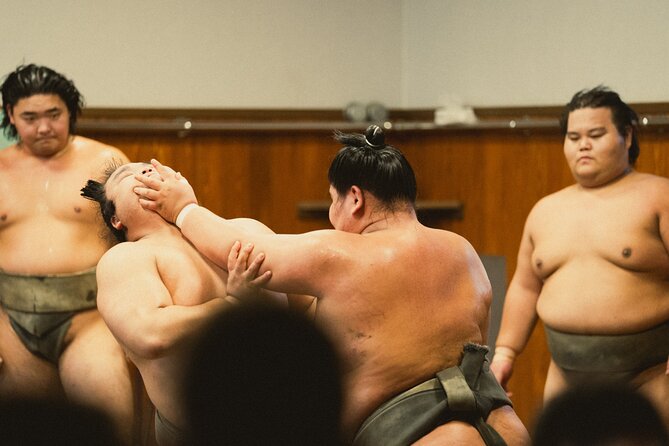
After training, you may have the chance to take photographs with some of the wrestlers. This is a memorable finish because the athletes you have just watched at work may seem approachable and friendly once the formal practice has ended.
Keep your expectations flexible. The available photo opportunity can depend on the day, the stable’s schedule, and which wrestlers are free. A group photo with every wrestler is not guaranteed. Photos must still follow the stable’s rules, with no flash or artificial shutter sound.
The interaction works best when you remain respectful and brief. These athletes have already completed a demanding morning session, and the tour is a privilege rather than a right to unlimited access. Follow the guide’s instructions and let the stable control the pace.
Why the early start is worth considering
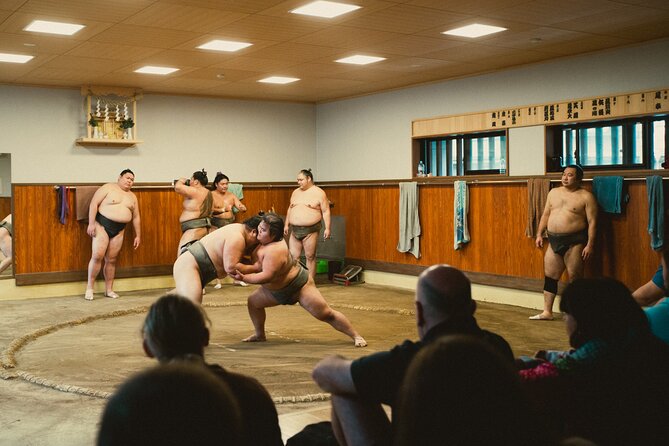
The 7:30am start is the price of admission for seeing a real morning practice. You need to be at the meeting point by 7:10am, so this is not a tour for anyone hoping to sleep late.
The upside is a useful Tokyo schedule. The practice ends back near Tokyo Skytree, leaving the rest of the day available for sightseeing. You could continue around Sumida, visit Tokyo Skytree, or use nearby train connections to reach another part of the city.
The morning timing also gives the experience a special character. You are seeing sumo as part of the stable’s daily routine, before a day of sightseeing crowds and scheduled attractions takes over. That practical connection to ordinary life is a major reason to choose this tour.
Tournament season can change the schedule. Check the direct message from the provider if your visit falls during a tournament period, since the usual timing may not apply.
Is $83.23 a fair price?
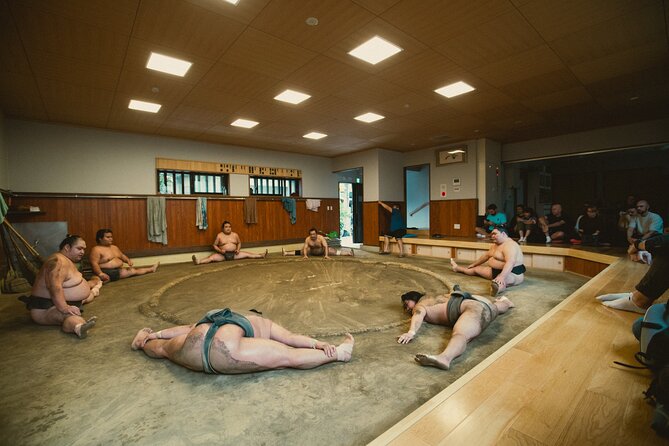
At $83.23 per person, this is not a budget activity. You are paying for access to a private training environment, a guide, language assistance, local coordination, and the chance to observe a stable that you could not simply enter on your own.
The value depends on what you want from sumo. If you only need a quick look at the sport, the price may feel high. A tournament ticket, when available, gives you a much larger spectacle. But a tournament does not normally place you inside the morning routine, explain the customs at close range, or offer a possible conversation and photograph afterward.
The strongest value comes from the access and context. You see the unglamorous work behind the sport: repetition, discipline, flexibility, and silence. That can change your understanding of sumo more than watching a single bout from a distant seat.
The 4.9 rating from 54 ratings and 98 percent recommendation suggest that the format works very well for people who arrive with realistic expectations. The lower praise centers on the gap between promotional images and actual training. In plain terms, this is good value for cultural access, but less convincing if you expect nonstop wrestling action.
Sitting on the floor is the main physical issue
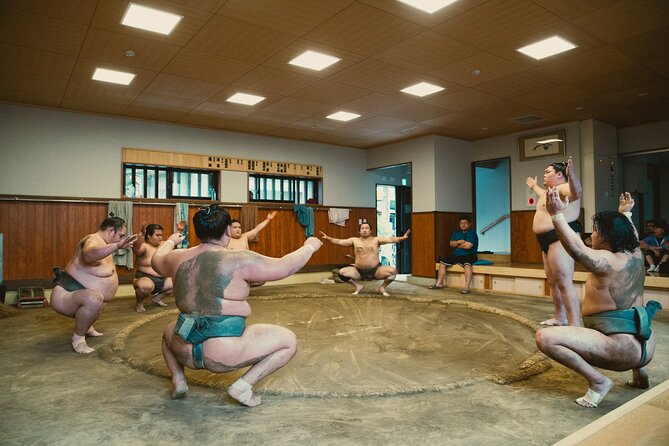
The stable has no chairs. You sit cross-legged on the floor for around an hour and a half, with limited opportunity to change position.
For many people, this is manageable. For others, it can be the deciding issue. The instructions are strict because pointing your feet toward the ring is impolite, and standing or moving during practice distracts the wrestlers. If you cannot sit on the floor quietly for that long, you should choose another sumo experience.
The tour is listed for ages six and older. Children must be able to watch quietly and remain still. If a child becomes noisy or keeps moving, the family may be asked to leave the stable. That is fair in this setting, but parents should be honest about their child’s patience before booking.
Most people can participate, but the floor seating is more important than the general participation note suggests. Contact the provider before booking if you have a specific physical concern, since the stated format does not include chairs.
Etiquette that protects the experience
The rules are not decorative. They allow the stable to continue its normal work without turning practice into a public show.
Remember these basics:
- Remove your shoes as soon as you enter.
- Sit cross-legged and keep your feet pointed away from the ring.
- Stay seated and still during practice.
- Keep your phone silent.
- Use no flash, shutter sound, food, gum, candy, or smoke.
- Water is allowed.
- Do not step onto the ring or sandy ground.
- Wear modest clothing.
- Do not post photos or videos on social media.
- Follow the guide’s instructions at all times.
The best attitude is to watch first and photograph second. You may be very close to the wrestlers, but closeness does not make the stable informal. Respect is what keeps the experience special.
Who will enjoy this morning most?
I would recommend this tour to you if you want cultural context, close access, and a quieter alternative to a tournament. It suits visitors who are curious about the discipline behind sumo, enjoy watching physical technique, and can follow strict etiquette without fuss.
It is especially useful if you have never watched sumo before. The guide can help you understand the basic rules and the meaning behind the training, so you are better prepared if you later attend a tournament.
Families can book, but only if children can remain quiet and seated. The experience also suits photographers who can work without flash or sound, though the ban on social media uploads may disappoint anyone hoping to create instant online content.
I would hesitate to recommend it if your main goal is dramatic full-contact wrestling. Training can be repetitive, calm, or shorter than expected. That is not a flaw in an authentic practice, but it is a mismatch for anyone expecting a staged performance.
Should you book the Sumida sumo practice tour?
Book it if you want to see sumo as a disciplined daily craft rather than a two-minute contest. The close viewing, English guidance, possible stable-master discussion, and chance of a photo create a rare Tokyo experience for people who respect the rules.
Skip it if floor seating is difficult, you dislike early mornings, or you need guaranteed action and a full-group photograph. For everyone else, $83.23 is a reasonable price for access that is hard to arrange independently, provided you understand that the wrestlers are there to train, not entertain.
FAQ
Where does the tour meet?
The meeting point is at 1-chōme-8-21 Oshiage, Sumida City, Tokyo, near the foot of Tokyo Skytree. The tour also ends back at the meeting point.
What time should I arrive?
You should arrive by 7:10am. The group leaves at 7:30am sharp.
How long does the tour last?
The experience lasts about two hours, including the walk, practice, and ending photo opportunity. The practice may finish earlier or later depending on the day.
How far is the stable from the meeting point?
The walk from the meeting point to the stable takes about 15 minutes.
Are there chairs inside the stable?
No. You must sit cross-legged on the floor for approximately 1.5 hours.
Can I take photographs or videos?
Photos are allowed without flash or shutter sounds. Videos are also allowed, but you cannot upload photos or videos to social media platforms.
What happens if I am late?
Contact the provider if you will miss the meeting time. You may need to go to the stable by yourself, and you cannot enter without contacting the provider first.
Just added in Tokyo
- Very popular in Harajuku♡Animal petting zoo★ 4.6 · 39 reviews
- Yokohama Port: Private Customizable Tour with Transfer★ 5.0 · 19 reviews
- Wagyu & Sake 8 Course Tasting Dinner in Shinjuku★ 4.9 · 20 reviews
- Warner Bros. Studio Tour Tokyo – The Making of Harry Potter★ 4.8 · 181 reviews
- Yanaka District: Historical Walking Tour in Tokyo’s Old Town★ 4.8 · 117 reviews
- Tokyo: Classic Tsukiji Food Tour★ 4.9 · 78 reviews
- Tokyo: Tsukiji Fish Market Tour with 6 Stops & Seafood Lunch★ 4.5 · 165 reviews
- Tokyo Wagyu & Sake Pairing Tasting Experience with Local Flavors★ 5.0 · 108 reviews
Sumo Experiences, compared.
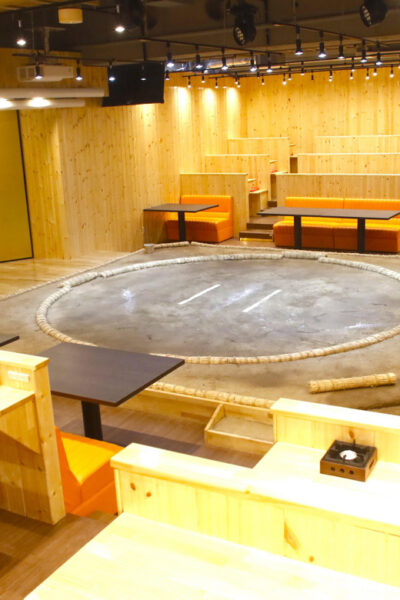
Sumo Show Experience with Chicken Hot Pot and a Photo
Read our review →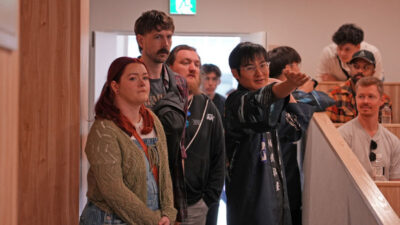
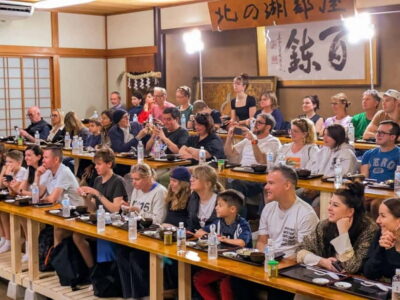
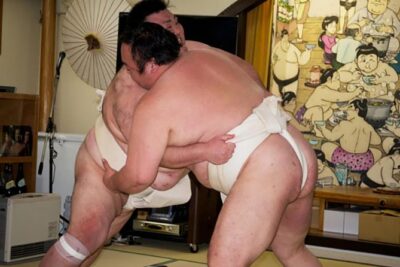
Tokyo Shinjuku Sumo Show & Experience with Photo
Read our review →
Asakusa Sumo Club Sumo Show Admission with Chankonabe in Tokyo
Read our review →
Tokyo Ginza Sumo Experience: Performance vs Pure Practice
Read our review →Browse the lists this tour appears in