
Reviewed · TEMPLES AND SHRINES
Takayama: Onigiri and miso soup making at a buddhist temple
Slow food, sacred setting, real local flavor.
This one-hour class takes you into a Japanese temple kitchen, called the kuri, where you prepare onigiri and miso soup with guidance from temple staff. I like the hands-on cooking and the calm setting, which gives the meal more meaning than a standard cooking lesson. I also like that the class is conducted in English, with time to discuss food, gratitude, and Buddhist customs.
The main limitation is the short schedule. One hour is enough to make and eat the dishes, but it leaves little room for a long cultural talk or a leisurely tour of the temple. Parking may also be unclear, so I would plan to arrive on foot or arrange transport rather than count on finding a space.
In This Review
- Key points to know before booking
- Entering the temple through the correct gate
- What happens during the one-hour class
- Making onigiri by hand
- Preparing miso soup with local guidance
- The Buddhist meaning behind an ordinary meal
- Eating in the quiet temple kitchen
- How good is the English instruction?
- Value at $25 per person
- Who should book this experience?
- Practical tips for a better visit
- Should you book the Takayama temple cooking class?
- FAQ
- Where does the onigiri and miso soup class take place?
- How long does the activity last?
- How much does the experience cost?
- Is the class taught in English?
- What food will I prepare?
- Is a meal included?
- Are vegetarian options available?
- Where is the meeting point?
- How early should I arrive?
- Can children or wheelchair users take part?
Key points to know before booking
- The class takes place in the temple’s kuri, a working kitchen space rather than a regular tourist cooking studio.
- You make both onigiri and miso soup, then eat what you prepare as breakfast or lunch.
- English instruction is included, with clear, step-by-step help from the cook or guide.
- Buddhist ideas shape the lesson, including respect for ingredients, gratitude, and food as part of daily spiritual practice.
- Small-group teaching is possible, and several sessions have offered personal attention from guides such as Kazuki and Tama.
- The $25 price is strong value, especially because it includes instruction, ingredients, and the finished meal.
Entering the temple through the correct gate
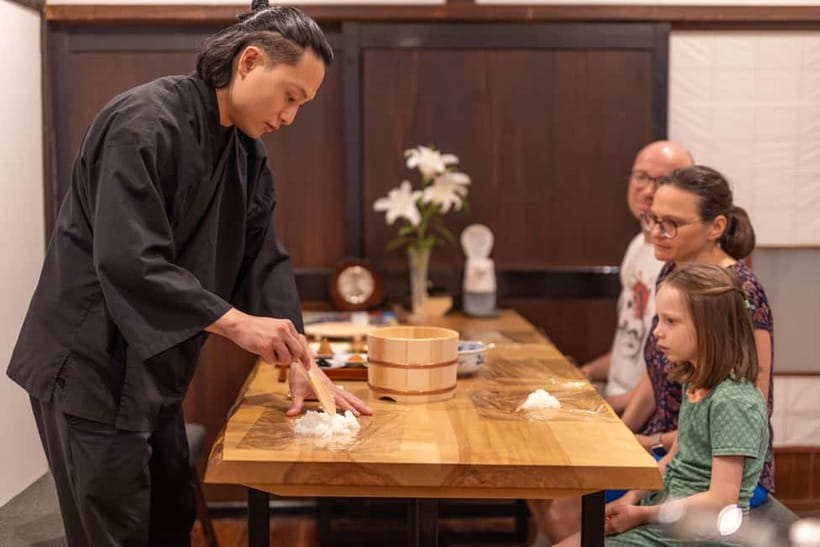
Finding the meeting point should be simple, but you need to pay attention at the entrance. You will see two gates in front of the temple. Enter through the gate closer to the traffic lights, walk straight toward the entrance, and follow the directions there.
Arrive 10 minutes before the start time. This matters in a one-hour activity because a late arrival can cut into the cooking rather than simply making you miss a short introduction.
Transportation is not included. Parking information appears to be inconsistent, so I would not build your plan around driving directly to the temple. If you are staying in Takayama, check the route from your accommodation in advance and allow time to find the correct gate.
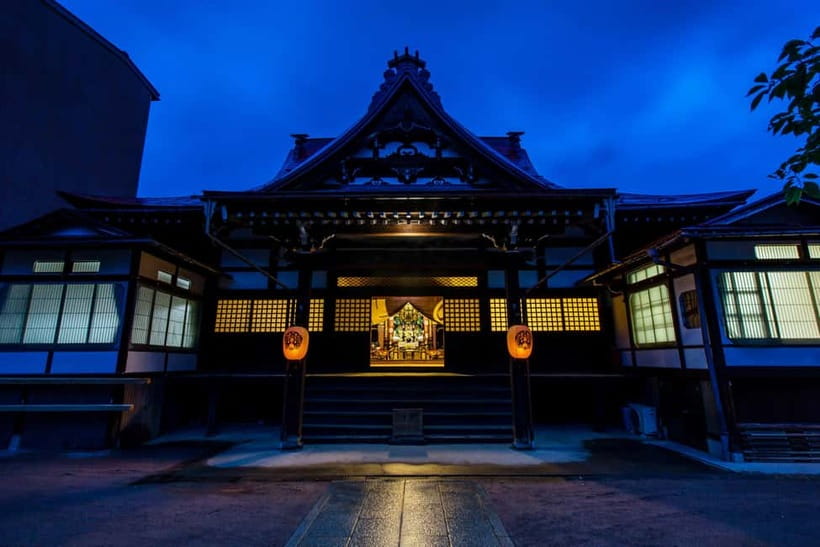
The setting itself is part of the appeal. You are not simply sitting in a classroom decorated with Japanese objects. You are entering a functioning Buddhist temple and preparing food in its kitchen space. That gives the class a quieter, more grounded feel.
More Temples and Shrines in Takayama:
- Takayama Rice Ball and Miso Soup Making at a buddhist temple
★ 5.0 · 13 reviews - [Kyoto & Nara Day Tour] Sagano Scenic Railway & Nara Park & Fushimi Inari Taisha Thousand Torii Gates & Togetsukyo Bridge & Bamboo Grove & Kimono Forest (Departing from Osaka)
★ 4.9 · 10,942 reviews - Mount Fuji & Hakone – Lake Ashi Torii Gate, Hakone Shrine, Hakone Pirate Ship, Hakone Ropeway, Owakudani, Lake Yamanaka & Oshino Hakkai Day Trip: Sea, Land, and Air Panoramic Tour from Tokyo
★ 4.8 · 7,989 reviews
What happens during the one-hour class
The activity is designed to move at a steady pace. You learn the basic preparation of onigiri and miso soup, receive guidance as you work, and eat the result before the hour ends.
The cooking is suitable for beginners. You do not need previous Japanese cooking experience, and the strongest part of the teaching is the clear, practical instruction. You are shown what to do, then given a chance to shape the rice balls and take part in preparing the soup.
Several guides have been praised for their warm teaching style. Kazuki is described as a welcoming host and skilled cook, while Tama is noted for being friendly and helpful. Other sessions have included instructors who explained each stage carefully and supplied a recipe to take home.
The experience can feel personal, especially when the group is small. One session had a single participant with the master chef, while another was described as intimate, organized, and hygienic with personal attention for everyone. Group size can vary, so you should not assume every booking will be private, but the format is built around direct help rather than a large demonstration.
Making onigiri by hand
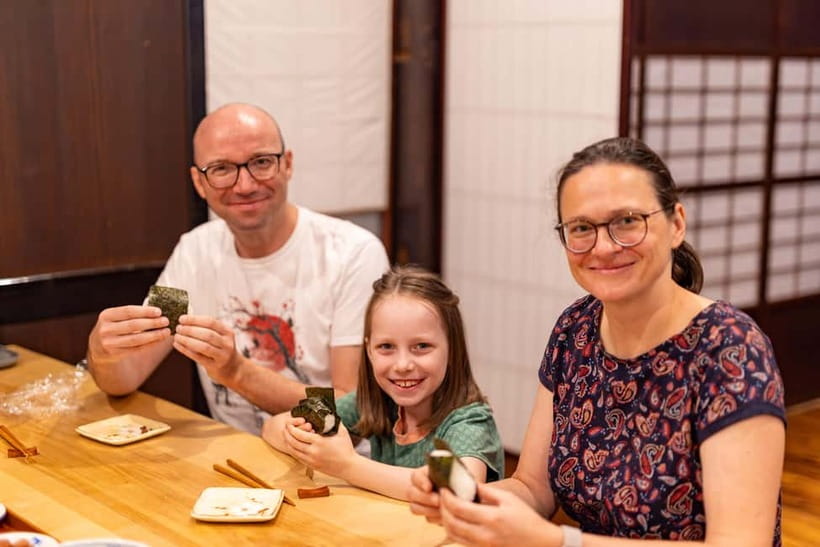
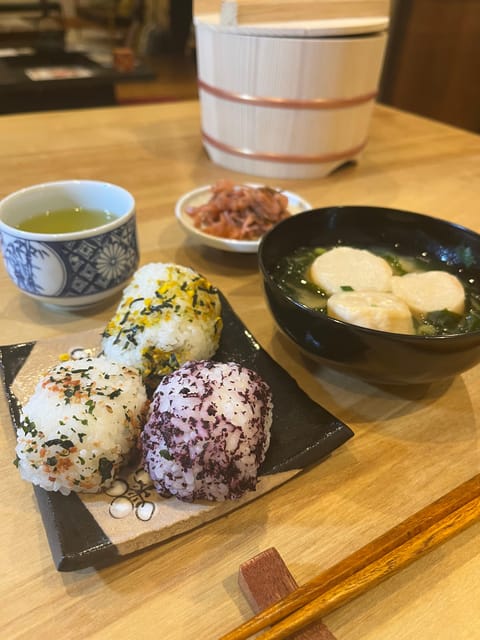
Onigiri is one of Japan’s most familiar everyday foods: seasoned rice shaped by hand, often with fillings or other ingredients. It is simple food, but shaping it well takes a little practice. That is exactly why a guided lesson helps.
You work with fresh, seasonal ingredients and learn how the rice is handled and formed. The point is not to produce a restaurant-style plate. It is to understand how a basic Japanese meal comes together and to leave knowing you can try it again at home.
I like this part because onigiri connects cooking with ordinary Japanese life. It is a packed meal, a quick breakfast, a picnic food, and a comfort food. Making it yourself gives you a better sense of the care behind something that can look very modest.
The class also lets you eat what you make. That sounds obvious, but it changes the lesson. You are not preparing food only for a photograph or a take-home box. You shape the rice, sit down in the temple setting, and taste the result while the process is still fresh in your mind.
Preparing miso soup with local guidance
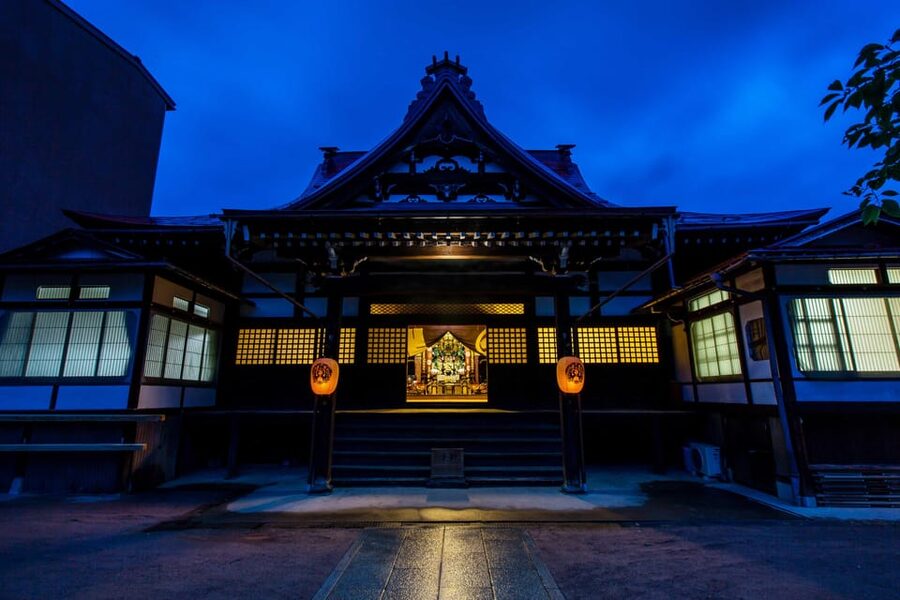
Miso soup is another everyday staple, yet its flavor depends on choices that are easy to miss when you only order it in a restaurant. The instructor explains the preparation and ingredients, then helps you understand how the soup fits into a Japanese meal.
The quality of the soup receives particularly strong praise. Several people have called it the best miso soup they had tasted, and one described it as delicious and plentiful. Those comments point to the value of eating the soup immediately after preparing it, when it is warm and part of the complete meal.
The class is not advertised as an advanced fermentation course. You should expect to learn how to prepare miso soup, not spend an hour making miso paste from scratch. The emphasis is on the meal and the customs around it.
If you are interested in ingredients, the discussion can go beyond the basic recipe. One instructor explained where to find the ingredients used in the lesson and shared personal views on food. That sort of conversation is useful because it gives you a starting point for cooking the dish after you return home.
A few more options to weigh up in Takayama
- Kanazawa: World Heritage Shirakawa-go Morning Guided Tour
★ 4.9 · 988 reviews - Kanazawa: World Heritage Shirakawa-go & Two Local Experience
★ 4.9 · 274 reviews - Kanazawa/Takayama: Shirakawago & Takayama Private Day Tour
★ 4.8 · 172 reviews - Departing from Takayama [Regular sightseeing bus] World Heritage Sites Shirakawago and Gokayama Ainokura
★ 4.5 · 137 reviews
The Buddhist meaning behind an ordinary meal
The temple setting is not just decoration. The lesson links cooking with Buddhist ideas about mindfulness, gratitude, and respect for food.
You might begin with a prayer or a moment of paying respects to the temple’s patron. This gives the class a quiet opening and reminds you that the meal is part of a wider practice, not only a set of cooking instructions.
The teaching stays practical. You learn about Japanese food while also hearing how people relate to ingredients and meals. The spiritual discussion may be brief because the class lasts only an hour, but even a small amount of context can change how you view the food on the table.
This is where the experience differs from a typical cooking class in a rented studio. You are not only learning a recipe. You are seeing how food can express care, discipline, gratitude, and community.
Some participants have also been invited to attend morning prayer on another day. That is not listed as part of the one-hour cooking activity, so you should not book expecting it. Still, it suggests that the temple may offer a wider connection to its daily life when circumstances allow.
Eating in the quiet temple kitchen
After the preparation, you eat the onigiri and miso soup as breakfast or lunch. The meal is included in the price, and vegetarian-friendly options are available.
The food is straightforward, filling, and made for immediate eating. You may also encounter several variations of mochi in some sessions. That detail has not been promised as a standard part of every class, so treat it as a possible extra rather than a guarantee.
The atmosphere helps the meal. Eating quietly in the temple kitchen gives you time to notice the ingredients and think about the preparation. It is a welcome change from rushing between major sights in Takayama.
The class is also a good lunch choice if you want something more meaningful than a quick restaurant stop. You spend the hour learning, eating, and talking with the instructor. For many people, that combination makes the activity feel complete rather than like a short demonstration followed by a snack.
How good is the English instruction?
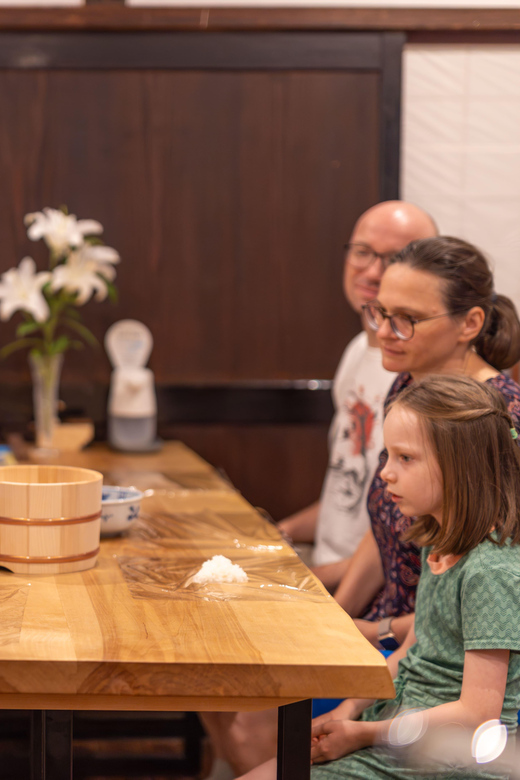
English is the stated language of the class, and communication is one of its strongest features. The instructors are able to explain the process, answer questions, and discuss Japanese food and culture.
One chef was praised for excellent English, making it easy to talk about ingredients and personal views on food. Another instructor was described as having perfect English skills and a strong ability to explain local customs. Clear communication matters here because the class is hands-on. You need to understand not only what to do, but why each step matters.
The tone appears friendly rather than formal. Guides have been described as kind, welcoming, charismatic, and patient. That makes the experience suitable for people who want to ask questions without feeling they are interrupting a lecture.
Still, the depth of conversation may depend on the instructor and the group. One person felt that more time and context about the food would have improved the class. That is a fair point. If you want a long seminar on Buddhism or Japanese culinary history, this is too short. If you want a clear introduction with cultural touches, the format works well.
Value at $25 per person
At $25 per person, this is a good-value activity in Takayama. The price includes the ingredients, instruction, and a meal of onigiri and miso soup. You are also paying for access to a setting that would be difficult to experience through an ordinary restaurant visit.
The value is strongest for people who would otherwise pay for lunch and want to learn something at the same time. You are not merely watching a chef prepare food. You are taking part, eating the result, and receiving cultural context in English.
The one-hour duration keeps the cost and time commitment manageable. You can fit the class between sightseeing plans without giving up half a day. The trade-off is that the lesson cannot cover everything. More time would allow for a fuller explanation of ingredients, Buddhist practice, and regional food customs.
Free cancellation up to 24 hours before the activity and the option to reserve now and pay later make the booking less rigid. Check the available start times before arranging the rest of your day, since the class schedule can vary.
Who should book this experience?
I would recommend this class to:
- Food lovers who want to cook rather than simply eat
- First-time visitors looking for an easy introduction to Japanese cuisine
- People interested in Buddhism and the role of gratitude in daily life
- Couples and small groups who enjoy relaxed, hands-on activities
- Anyone wanting an English-language experience in Takayama
- Visitors who appreciate a short activity with a meal included
It is less suitable for children under 10 and wheelchair users. People with altitude sickness should not take part. The activity is also not the best choice if you want a long, advanced cooking course or a detailed temple tour.
You should be comfortable working in a kitchen and following instructions. The class is beginner-friendly, but it is still an active lesson rather than a seated tasting.
Practical tips for a better visit
Wear clothing that lets you move comfortably and arrive early enough to find the correct gate. Since the activity lasts only one hour, have your route sorted before you leave.
Do not assume transportation or parking is included. The meeting instructions point you to the gate near the traffic lights, and parking information may not match what you have been told elsewhere.
If you are choosing between breakfast and lunch, either works. The meal is substantial enough for a light breakfast or a simple lunch, and the quiet temple setting may feel especially pleasant early in the day.
Ask questions about ingredients, food customs, and where to find similar products in Japan. The English-speaking instructors are one of the best reasons to take this class, and the conversation can add as much value as the recipe itself.
Take the recipe home if it is provided during your session. The real success of the class is that you can repeat the meal after your trip instead of leaving with only a photograph.
Should you book the Takayama temple cooking class?
Yes, if you want a short, affordable activity that combines food with Japanese spiritual culture. The $25 price, included meal, English guidance, and peaceful temple setting make it a strong choice for a free hour in Takayama.
Book it with the right expectations. You will learn the basics of onigiri and miso soup, not complete a full culinary course. The cultural discussion may be brief, and the group size can change. But the friendly instruction, tasty food, and chance to prepare a meal in a real temple kitchen give this experience more substance than its short length suggests.
FAQ
Where does the onigiri and miso soup class take place?
The activity takes place at a Buddhist temple in Takayama, in the temple’s kitchen space called the kuri.
How long does the activity last?
The cooking and meal experience lasts one hour.
How much does the experience cost?
The listed price is $25 per person.
Is the class taught in English?
Yes. The instructor language is English.
What food will I prepare?
You will prepare onigiri, Japanese rice balls, and miso soup.
Is a meal included?
Yes. The onigiri and miso soup you prepare are included as breakfast or lunch.
Are vegetarian options available?
Yes. Vegetarian-friendly options are available.
Where is the meeting point?
There are two gates in front of the temple. Enter through the gate closer to the traffic lights, walk straight to the entrance, and follow the directions.
How early should I arrive?
You should arrive 10 minutes before the scheduled start time.
Can children or wheelchair users take part?
Children under 10 and wheelchair users are not suitable for this activity. People with altitude sickness should also not take part.
Just added in Takayama
- Takayama Old Town Walking Tour with Local Guide★ 4.5 · 50 reviews
- Takayama Local Cuisine, Food & Sake Cultural Tour with Government-Licensed Guide★ 5.0 · 17 reviews
- Takayama Half Day Tour (Private Guide)★ 5.0 · 15 reviews
- Private Transfer from Takayama to Kanazawa Including Shirakawago★ 5.0 · 17 reviews
- Takayama Rice Ball and Miso Soup Making at a buddhist temple★ 5.0 · 13 reviews
- Takayama: Authentic Sake Tasting at a Historic Brewery★ 5.0 · 65 reviews
- Takayama Full-Day Private Tour with Government Licensed Guide★ 4.5 · 13 reviews
- Shuriken Experience in Takayama★ 5.0 · 46 reviews
Temples and Shrines, compared.
![[Kyoto & Nara Day Tour] Sagano Scenic Railway & Nara Park & Fushimi Inari Taisha Thousand Torii Gates & Togetsukyo Bridge & Bamboo Grove & Kimono Forest (Departing from Osaka)](https://media.japanvisits.com/wp-content/uploads/kyoto-nara-day-tour-sagano-scenic-railway-nara-park-fushimi-inari-taisha-thousand-torii-gates-togetsukyo-bridge-bamboo-grove-kimono-forest-departing-from-osaka-k110001-400x257.jpg)
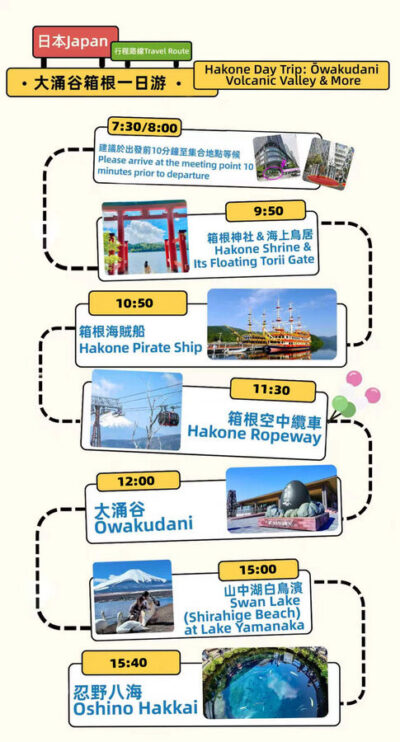
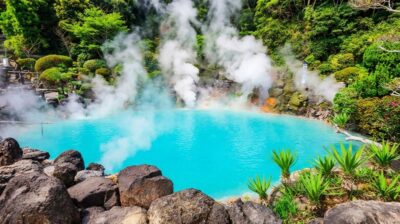
Kyushu One-Day Tour: Yufuin no Mori Train & Yufuin Town & Nyoirin-ji Temple & Dazaifu & Hell Hot Springs (Departing from Fukuoka)
Read our review →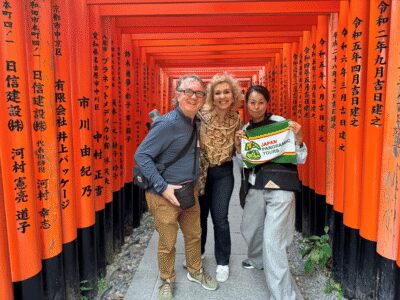
Fushimi Inari, Kinkakuji, Bamboo Grove 1 Day Bus Tour
Read our review →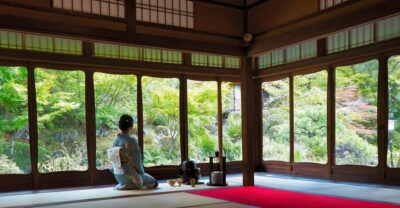
Tea Ceremony in a Traditional Tea House in Kiyomizu
Read our review →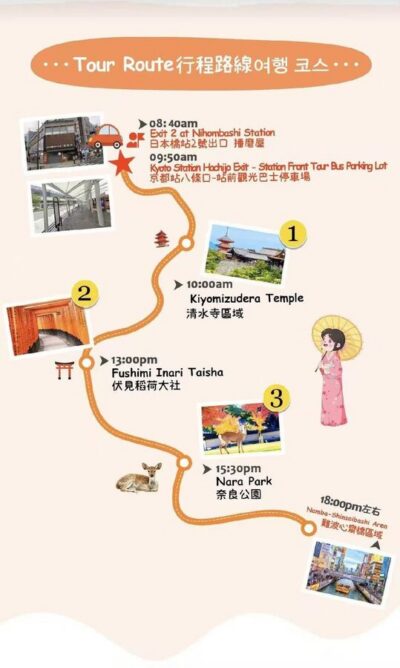
Kyoto Nara Day Trip │ Kiyomizu-dera Temple + Fushimi Inari-taisha Shrine + Nara Park (Departing from Osaka/Kyoto)
Read our review →
Browse the lists this tour appears in