
Reviewed · CYCLING AND E-BIKE TOURS
Tokyo Bike Tour: Shibuya & Hidden Tokyo
Tokyo looks like a hard city to cycle. That is part of the surprise. This three-hour ride uses quieter streets, parks, and local routes to connect Shibuya’s famous sights with corners you would probably miss on foot or from a train window. I like the relaxed pace and the small groups, capped at six people. I also like that guide Taichi can explain local customs, suggest cafes and restaurants, and adjust the route when a group has already seen a major sight.
The main thing to consider is that this is not a casual bicycle cruise. You need to ride confidently at about 15 kilometers per hour, handle pavements, cross traffic lights, and move through tight or crowded spaces. The regular bicycles are non-electric, and the route can cover roughly 9 to 10 miles, with a few gradual hills.
In This Review
- Key points before you book
- Why cycling makes sense in western Tokyo
- Meeting near Yoyogi Park and starting smoothly
- Yoyogi Park: an easy introduction to Tokyo’s open space
- Shibuya Crossing and Hachiko without the subway shuffle
- Cat Street and the back routes around Harajuku
- Aoyama Street and Aoyama Cemetery
- Japan National Stadium and the Gaien area
- Taichi’s guiding style and the value of a small group
- Safety, traffic, and physical effort
- Timing, price, and who gets good value
- How to fit the ride into your Tokyo plans
- Who should book this Shibuya bicycle tour?
- FAQ
- Where does the Tokyo bike tour begin?
- Where does the tour end?
- How long does the bike tour last?
- What areas does the tour visit?
- How large is the group?
- What cycling ability do I need?
- Can I cancel for a refund?
Key points before you book
- A compact route with wide coverage: In three hours, you cycle through Shibuya, Harajuku, Aoyama, Yoyogi, and Gaien rather than staying around one landmark.
- A maximum of six people: Small numbers make it easier to hear Taichi, ask questions, and keep a comfortable pace.
- A local guide who adapts the ride: The route can shift slightly if you have already visited Shibuya Crossing or have a particular interest.
- Quiet streets beside major sights: You see residential lanes, parks, alleys, and less polished corners alongside Tokyo’s best-known places.
- Real cycling requirements: You must be comfortable riding on pavements, dealing with cross traffic, and maintaining about 15 kilometers per hour.
- Useful for your first days in Tokyo: The ride helps you understand how Shibuya, Harajuku, Aoyama, and the surrounding areas fit together.
Why cycling makes sense in western Tokyo
Tokyo is best understood in layers. The subway gets you from station to station quickly, but it hides the short stretches between neighborhoods. Walking gives you those details, but covering Shibuya, Harajuku, Aoyama, and Gaien in one outing takes time and energy.
A bicycle gives you a middle ground. You move far enough to see several districts, yet slowly enough to notice small shrines, side streets, local businesses, and changes in the city’s character. You also avoid the stop-start rhythm of a train-based sightseeing day.
The route is guided, which matters more here than it might in a smaller city. Tokyo’s streets can change from broad avenues to narrow lanes in a few minutes. Taichi leads the way, signals clearly, and watches the group behind him. This takes away the need to stop constantly and check a map.
That does not mean the ride is effortless. You are still cycling in a large capital city. You need good control of your bike and enough confidence to follow directions without hesitation. If you only ride occasionally in parks, read the requirements carefully before booking.
More Bike Tours in Tokyo
- Tokyo Great Cycling Tour
★ 5.0 · 811 reviews - Tokyo Top Highlights 3h Guided E-bike Tour
★ 5.0 · 714 reviews - 3h Tokyo E-Bike Tour: Hidden Gems, and Local Life with guide
★ 5.0 · 670 reviews
Meeting near Yoyogi Park and starting smoothly
The meeting point is Umayamichi Park in Sendagaya, at 5-chome-24-11. It is about a 10-minute walk from Shinjuku Station and only a minute from Yoyogi Station, making it one of the easier starting points for a Tokyo activity.
Starting near Yoyogi is useful. You are not thrown straight into the busiest part of Shibuya. The park and surrounding streets provide a more manageable setting to get comfortable with the bicycle and the group’s pace before reaching the major crossings and commercial districts.
The bicycles suit riders from 155 to 195 centimeters tall, and participants must weigh no more than 120 kilograms. The bikes are non-electric. Several ride descriptions praise their light feel and good condition, though one description found the bicycle less polished than the rest of the tour while also noting that its smaller wheels made it easy to handle.
Plan on a steady pace of approximately 15 kilometers per hour. The route includes slight gradual climbs, but the ride is described as mild rather than strenuous. Heat can still matter, especially in late June. The moving air helps, but you should dress for the weather and bring water.
Yoyogi Park: an easy introduction to Tokyo’s open space
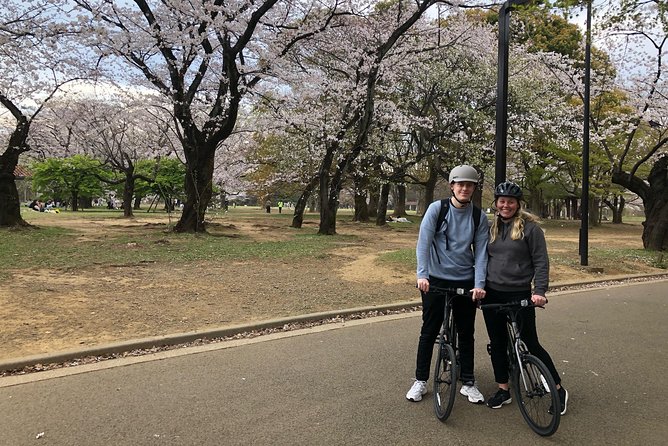
Yoyogi Park is the first listed stop and a sensible place to begin. Tokyo has a reputation for concrete, signs, and crowds, but Yoyogi offers a broad change of pace. It gives you a chance to see how residents use open space in a city where land is precious.
The stop also sets up the tour’s main theme: Tokyo is not only its postcard sights. The park links the areas around Yoyogi, Harajuku, and Shibuya, and cycling helps you understand that they are close neighbors rather than isolated points on a map.
You should expect a stop for explanation rather than a long park visit. With only three hours, the guide needs to keep the ride moving. That is a strength if you want a broad look at western Tokyo, but a limitation if you prefer extended time at each place.
Shibuya Crossing and Hachiko without the subway shuffle
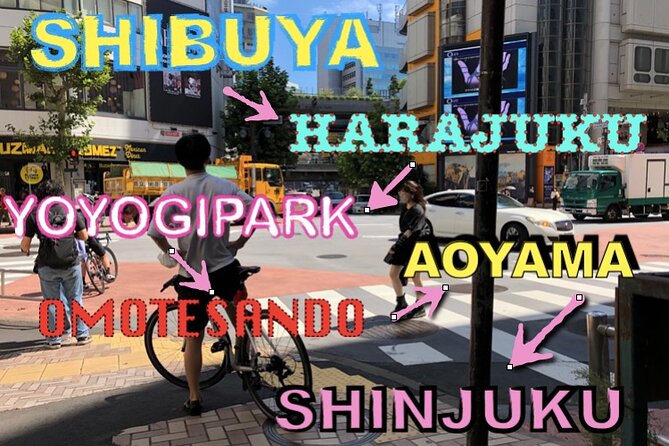
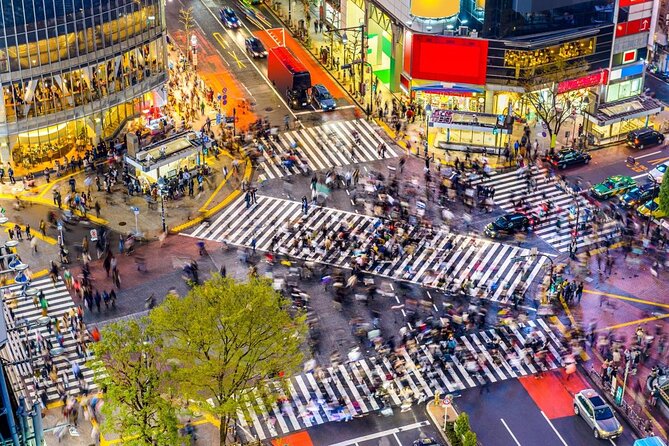
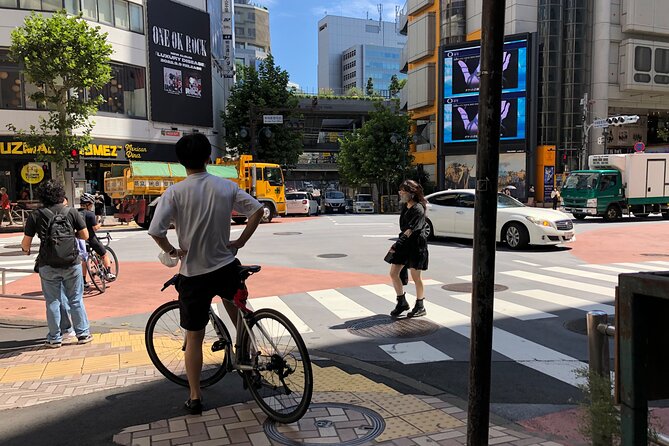
Shibuya Crossing is the tour’s big-ticket moment. The famous intersection is a quick lesson in Tokyo’s scale and order: many people, carefully managed movement, and a city that somehow keeps its rhythm.
Seeing it by bicycle gives you a different arrival. Instead of emerging from a station and joining the crowd immediately, you approach with a guide who can explain where you are and help you handle the busy area. Photos at the crossing may be possible, and Taichi has taken pictures for riders during the tour.
Nearby, Hachiko provides a quieter story beneath the commercial energy. The statue honors the loyal dog associated with Shibuya Station and has become one of Tokyo’s most popular meeting points. It is a brief stop, but it gives the district a human detail that balances the giant screens and traffic.
There is a practical advantage here. If you have already visited Shibuya Crossing, the guide has shown flexibility and adjusted the route for some groups. You can mention this when meeting Taichi, though the exact adjustment depends on the day and the group.
A completely different kind of day out:
- Tokyo Disney Resort – Tokyo Disneyland & Tokyo DisneySea Park Tickets
★ 4.8 · 99,488 reviews - SHIBUYA SKY Ticket
★ 4.7 · 46,509 reviews - JR Whole Japan Rail Pass
★ 4.8 · 29,150 reviews - Mt Fuji and Hakone 1-Day Bus Tour Return by Bullet Train
★ 5.0 · 26,383 reviews
Cat Street and the back routes around Harajuku
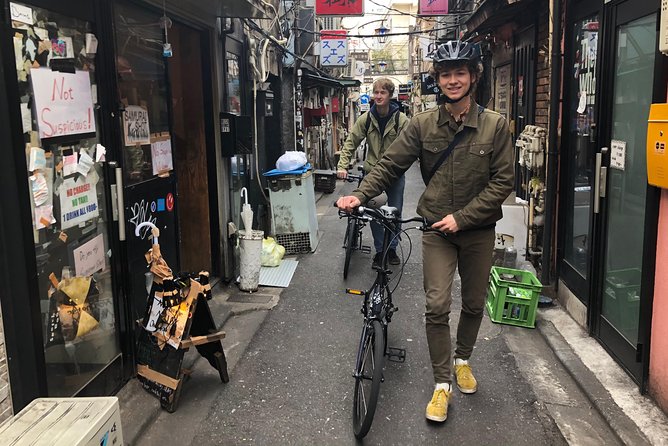
The ride continues toward Shibuya Cat Street, a pedestrian-friendly shopping route known for its youthful style and independent character. The tour does not treat it as a simple shopping stop. Instead, it forms part of the transition between Shibuya and Harajuku.
The most interesting part is likely the way you reach and leave the area. The tour is built around backstreets, alleys, residential areas, and routes that public transport cannot show you. You might pass from a well-known fashion district into a much quieter part of Tokyo within minutes.
This is where the bicycle format earns its price. On foot, you could explore Cat Street well, but reaching the outer neighborhoods and Aoyama in the same morning would take more planning. On a train, you would miss the spaces between the stations.
Do not expect a dedicated shopping break. If you want time to browse stores, eat, or linger over coffee, plan a return visit after the ride. The tour’s goal is orientation and variety, not a slow retail afternoon.
Aoyama Street and Aoyama Cemetery
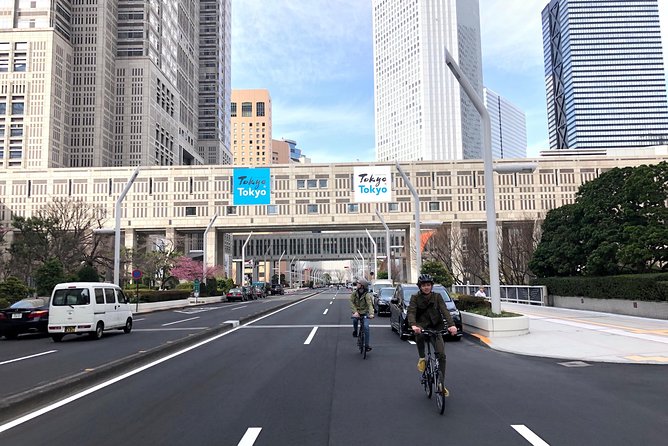
Aoyama changes the tone again. The district is associated with polished avenues, design, fashion, and expensive addresses, but the ride also seeks out quieter and more reflective spaces.
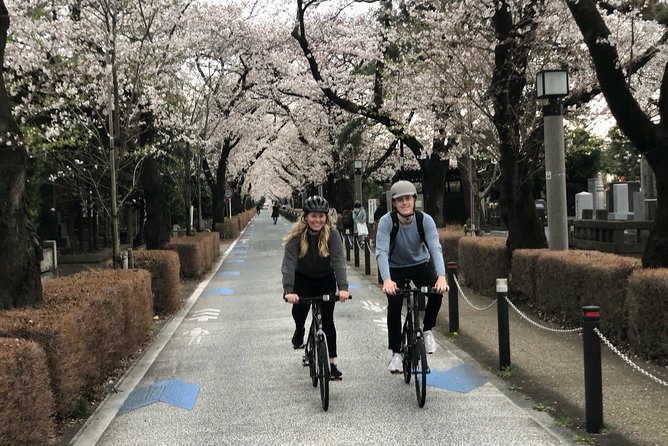
Aoyama Cemetery offers a welcome pause from the city’s traffic and commercial buzz. It is a place where Tokyo’s history feels less staged and more woven into daily life. You get a sense of how old resting places, trees, roads, and modern buildings share limited space.
This stop also shows why a local guide helps. A cemetery may not be high on a first-time sightseeing list, yet it can reveal more about a city than another observation deck. Taichi’s explanations cover local culture and history, and his calm manner is especially useful when the route shifts between busy streets and quieter lanes.
The ride may pass through areas that feel less polished or more ordinary. That is a feature, not a flaw, if you want a broader picture of Tokyo. You are not being shown only the city’s most photogenic corners.
Japan National Stadium and the Gaien area
The Japan National Stadium adds a modern landmark to the route. After parks, old neighborhoods, a cemetery, and commercial streets, the stadium gives the tour another perspective on Tokyo’s public architecture and sporting life.
The Gaien area helps tie the route together. By this point, you have seen several versions of western Tokyo: the open space of Yoyogi Park, the crowds of Shibuya, the style-focused streets near Harajuku and Cat Street, the refined avenues of Aoyama, and the quieter cemetery grounds.
The stadium is likely a stop for context and photographs rather than an interior visit. The tour information does not include admission or a stadium tour, so do not book this expecting to go inside. Its value is as part of the city ride and the wider picture of the district.
Taichi’s guiding style and the value of a small group
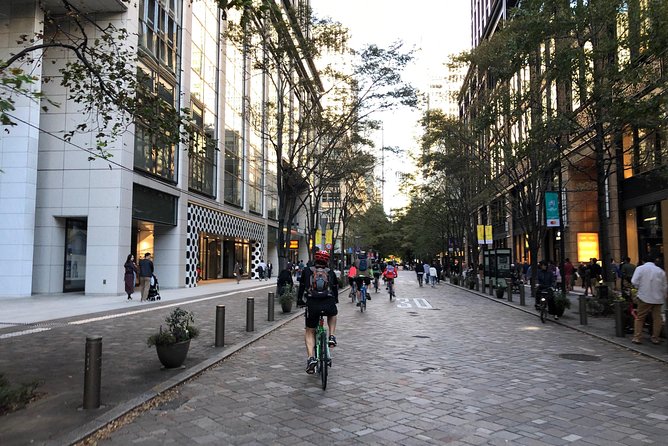
The guide can make or break a bicycle tour. Here, Taichi is repeatedly praised for clear directions, local knowledge, patience, and a calm way of handling city traffic. He also helps with simple Japanese phrases, explains bicycle courtesy, answers questions, and offers suggestions for places to eat or drink.
That practical help is worth more than a string of memorized facts. You can ask about a neighborhood you plan to visit later, get ideas for a cafe, or learn how to ride more considerately in Japan. One particularly personal ride even included a route adjustment connected to the rider’s interest in stand-up comedy.
The maximum group size is six. That is small enough for direct conversation and quick stops, but it does not guarantee a private tour. If fewer people book, the experience may feel very personal. Some rides have operated with only one participant, allowing Taichi to tailor the route more closely.
For groups of four or more, contact the organizer directly. This matters for families or friends who want to ride together, since the standard booking arrangement may need extra coordination.
Safety, traffic, and physical effort
The strongest practical advantage is the guide’s route knowledge. Taichi uses smaller streets where possible, gives hand signals, and keeps an eye on the group. That can make a major difference in a city that seems intimidating from the sidewalk.
Still, you are responsible for your own riding. The tour requires confidence on pavements, at cross traffic lights, and in crowded or narrow spaces. You must follow Japanese traffic rules and the guide’s instructions.
I would not recommend this ride to someone who has not ridden a bicycle for years unless that person feels genuinely comfortable getting back on one. Several descriptions call the ride gentle and safe, but they also make clear that basic city-riding ability is necessary.
The tour is open to participants aged 13 and older. It runs in light rain, but sudden weather changes can cause cancellation. If poor weather cancels the ride, you can choose another date or receive a full refund. For your own comfort, a cool, dry day will make the experience much more pleasant than a hot or wet one.
Timing, price, and who gets good value
The price is $64.73 per person for about three hours. That is not the cheapest way to see Shibuya, but it compares well with the amount of ground covered and the planning it removes.
You are paying for the bicycle, route design, traffic guidance, local commentary, and access to areas you might not connect on your own. If you tried to reproduce the same outing independently, you would need to plan a route, rent a suitable bike, navigate unfamiliar traffic, and decide which minor streets are worth your time.
The value is strongest for first-time visitors, short stays, and anyone who wants a clear sense of western Tokyo early in a trip. It is also useful for repeat visitors who have already seen the major sights and want a less obvious route.
The value is weaker if you dislike cycling, want a long stop at every landmark, or prefer an electric bicycle. You might also find the price less appealing if your main goal is only Shibuya Crossing and Hachiko, both of which are easy to visit independently.
Two daily departure times make it easier to fit the ride into a full Tokyo schedule. Booking about eight days ahead is sensible, especially if you want a particular date or a smaller group.
How to fit the ride into your Tokyo plans
I would place this tour near the beginning of your stay. It gives you a working map of Shibuya, Harajuku, Aoyama, Yoyogi, and Gaien before you return to them on foot.
Use the guide’s suggestions as a menu, not a fixed plan. If Taichi points out a cafe, restaurant, side street, or neighborhood that interests you, save it for later. The bicycle tour is a survey of the area, while your later walks can focus on the places that caught your attention.
Allow extra time around the three-hour activity. The tour ends back at Umayamichi Park, so you will need to return to the nearby station or continue with your own plans from there. The exact ride can shift slightly with weather, traffic, group ability, and interests.
Free cancellation is available if you cancel at least 24 hours before the start time. Changes or cancellations inside that window are not accepted for a refund, except when the operator cancels because of weather.
Who should book this Shibuya bicycle tour?
I would choose this experience if you want to see more than the standard Tokyo checklist and feel comfortable on a regular bicycle. It suits active couples, families with teenagers, solo riders, and repeat visitors who want local context rather than another crowded attraction.
It is especially useful for anyone with limited time. In three hours, you connect several districts and learn which ones deserve a longer visit. The small group, clear traffic guidance, and personal suggestions also give the ride more character than a large coach outing.
I would skip it if you are not confident cycling in city conditions, need an electric bike, or want a slow, stop-heavy sightseeing tour. Tokyo’s streets may feel safe with Taichi leading, but you still need to ride with purpose.
If you meet those requirements, I think the tour is a strong buy. You get major sights, quiet lanes, parks, local stories, and a better feel for how the neighborhoods connect, all in one well-paced outing.
FAQ
Where does the Tokyo bike tour begin?
The tour begins at Umayamichi Park, 5-chome-24-11 Sendagaya, Shibuya, Tokyo 151-0051, Japan. The meeting point is about a 10-minute walk from Shinjuku Station and one minute from Yoyogi Station.
Where does the tour end?
The activity ends back at the same meeting point at Umayamichi Park.
How long does the bike tour last?
The tour lasts approximately three hours.
What areas does the tour visit?
The route covers Shibuya, Harajuku, Aoyama, and Gaien. Stops include Yoyogi Park, Shibuya Crossing, Hachiko, Cat Street, Aoyama Street, Aoyama Cemetery, and Japan National Stadium.
How large is the group?
The maximum group size is six people. Groups of four or more should contact the organizer directly.
What cycling ability do I need?
You should be able to ride confidently on pavements, cross traffic lights, manage crowded or narrow spaces, and maintain about 15 kilometers per hour. You must follow Japanese traffic rules and the guide’s instructions.
Can I cancel for a refund?
You can cancel at least 24 hours before the local start time for a full refund. Cancellations or changes made less than 24 hours before the start time are not refunded. If poor weather cancels the tour, you will be offered another date or a full refund.
Just added in Tokyo
- Mount Fuji Full Day Sightseeing Tour from Tokyo★ 4.5 · 101 reviews
- Mt Fuji Customizable Private Tour English Speaking Driver Pick-up★ 5.0 · 69 reviews
- From Tokyo Kamakura, Hachimangu Shrine and Enoshima Full Day Tour★ 4.5 · 36 reviews
- Tokyo: Harajuku Meiji Shrine to Shibuya Crossing Guided Tour★ 5.0 · 27 reviews
- Discover the Art of Ikebana in Tokyo’s Historic Yanaka District★ 5.0 · 60 reviews
- Shinjuku Food and Drink Walking Tour★ 5.0 · 13 reviews
- Freely set up plans Guided Private Tours in Tokyo★ 4.5 · 130 reviews
- Flavors of Japan Food Tour in Tokyo★ 5.0 · 39 reviews
Cycling and E-Bike Tours, compared.
3h Tokyo E-Bike Tour: Hidden Gems, and Local Life with guide
Read our review →
Arashiyama Bamboo Forest & Hidden Gems Bike Tour (Early Bird)
Read our review →
5 Top Highlights of Kyoto Full Day Bike Tour (E-bike option)
Read our review →

Hiroshima 2hr Peace Cycling Tour with Local Guide
Read our review →Browse the lists this tour appears in