
Reviewed · CYCLING AND E-BIKE TOURS
Tokyo downtown bicycle tour Tokyo Backstreets Bike Tour
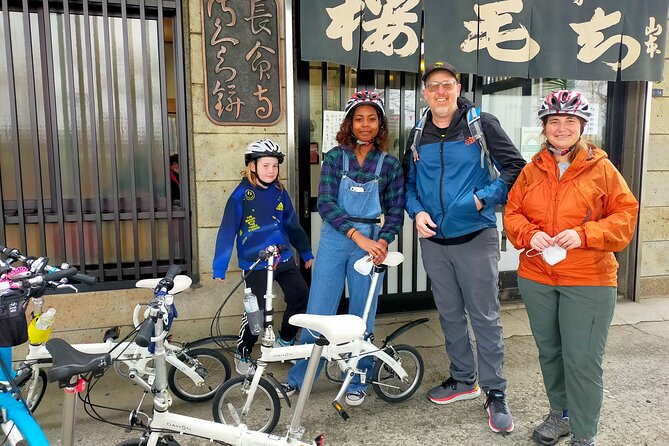
Tokyo gets more interesting on two wheels. This four-hour ride leaves the big avenues behind for neighborhood lanes, small temples, traditional sweets, and everyday scenes around Asakusa, Sumida, and Kyojima. I like the small maximum of six people, which gives guide Takeshi room to answer questions and adjust the route. I also like that bikes, helmets, water, and a sakuramochi snack are included. The main consideration is that this is an active outing, and the route requires good weather.
The ride covers famous sights such as Senso-ji and Tokyo Skytree, but its real strength is the quieter space between them. You may visit a shrine linked with lucky cats, pass old-fashioned shopping streets, and see parts of Tokyo that are easy to miss on foot. Just remember that this is not a private tour by default, and the small folding bikes are designed for people between 140 and 180 centimeters tall.
In This Review
- Five things to know before you ride
- Why this bike tour works in Tokyo
- Yamamotoya and the first taste of old Tokyo
- Honryuin Matsuchiyama Shoden and Imado Shrine
- Traditional crafts in the Taito area
- Senso-ji by bicycle, then on foot
- Kyu Yasuda Garden and the Ryogoku sumo district
- Oyokogawa Water Park and Tokyo Skytree
- Kyojima Minami Park and everyday neighborhood life
- Bikes, safety, and the physical effort
- Group size, guide style, and flexibility
- Is $65.41 a fair price?
- Who should book this ride?
- Final verdict: a smart half-day in eastern Tokyo
- FAQ
- How long is the Tokyo Backstreets Bike Tour?
- What is the price per person?
- How many people can join the tour?
- Is the tour private?
- Are bicycles and helmets provided?
- What type of bicycles are used?
- What height range suits the supplied bicycles?
- Can I request a tandem bicycle?
- Where does the tour start and finish?
- What happens if the weather is poor?
Five things to know before you ride
- A small group of six or fewer: You get more direct attention than on a large city tour.
- A flexible route: Takeshi can adjust the plan to suit your interests and pace.
- Traditional sakuramochi included: The stop at Yamamotoya adds a tasty local touch.
- About 15 kilometers is possible: One outing covered roughly that distance in four hours, though the exact route can vary.
- Quiet lanes lead to major sights: You see Senso-ji, Ryogoku, and Skytree without spending the whole ride on main roads.
- Folding bikes fit 140 to 180 centimeters: Tell the operator in advance if you are taller, or if you need a tandem bike.
Why this bike tour works in Tokyo
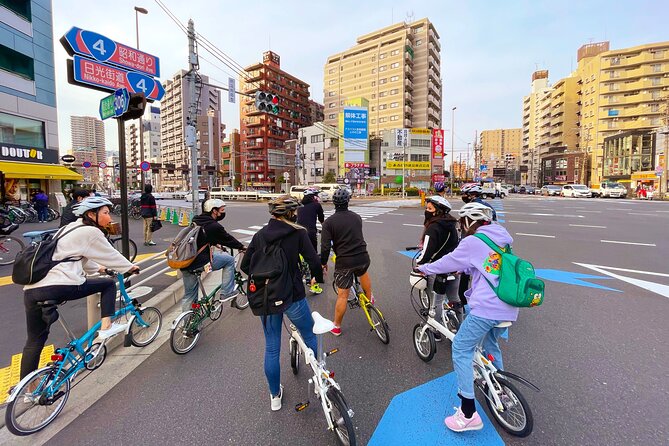
Tokyo can feel enormous. On foot, you may spend much of a morning moving between two sights. By bicycle, you can connect temples, gardens, shopping streets, and the Sumida area in one half-day without turning the day into a march.
This ride is designed around that advantage. You are not simply pedaling from one major sight to another. You move through local neighborhoods, stop often, and hear about the places you pass. The pace is described as easy, with roads that generally have light traffic. That makes the outing more about seeing daily life than chasing speed.
The tour is also a useful choice early in a Tokyo visit. You get an introduction to the Asakusa and Sumida areas, learn some background about Japanese customs, and collect ideas for places to return to later. One couple used the outing to get their bearings and received local restaurant suggestions for later in their stay.
I would not choose it if you want a high-speed athletic ride or a checklist of every major Tokyo landmark. The route favors small discoveries, and some stops are brief. That is part of the appeal, but it means the experience is best for people who enjoy context and local streets as much as headline attractions.
More Bike Tours in Tokyo
- Tokyo Great Cycling Tour
★ 5.0 · 811 reviews - Tokyo Top Highlights 3h Guided E-bike Tour
★ 5.0 · 714 reviews - 3h Tokyo E-Bike Tour: Hidden Gems, and Local Life with guide
★ 5.0 · 670 reviews
Yamamotoya and the first taste of old Tokyo
The first stop is Yamamotoya, known for Chomeiji sakuramochi. This traditional sweet is made with red bean paste and wrapped in a salt-pickled cherry leaf. The shop is said to have created the first sakuramochi, giving the snack a useful connection to Japanese food culture rather than making it just a quick refreshment.
You spend about 10 minutes here, and admission is included. It is a short stop, but it sets the tone for the ride: food, local tradition, and small-scale places that are easy to overlook when you stick to Tokyo’s major roads.
The sakuramochi may not appeal to every palate. The cherry leaf has a salty, distinctive taste, and red bean paste is quite different from Western cake fillings. I would still try it, since the point is to taste something tied to the neighborhood.
Honryuin Matsuchiyama Shoden and Imado Shrine
Next comes Honryuin Matsuchiyama Shoden, a temple connected with Senso-ji and founded in 595. You spend around 20 minutes here, looking at the temple’s unusual daikon and pouch symbols.
The daikon represents minds trapped in ignorance and releasing poison, while the pouch relates to good fortune. These details give your guide something concrete to explain, and they help you see Japanese religious imagery as more than decoration. A short stop here can add meaning to symbols you may notice elsewhere in Tokyo.
The following visit is Imado Shrine, founded in 1063. It is now known as a power spot for people hoping to find love or marriage, and it is associated with the beckoning cat, or fortune cat. The stop lasts about 15 minutes.
This is a good example of the tour’s mix of history and present-day belief. You are not only looking at an old religious site. You are also seeing how people continue to connect shrines with hopes for luck, relationships, and a better future.
Because both temple stops are relatively short, you should not expect a long, formal lesson at each one. The value comes from the guide’s explanations and from seeing them as part of a wider neighborhood ride.
Traditional crafts in the Taito area
The Edo Taito Traditional Crafts Center takes about 20 minutes. It displays Japanese handmade crafts and gives you a look at the skill behind traditional work.
This stop works well for anyone who wants more than scenic photographs. Tokyo is often presented through towers, neon, and major temples, but craftsmanship offers another way to understand the city. You can see the care that goes into objects made by hand, then continue through districts where older ways of working and shopping remain visible.
The craft center may be a quieter stop than Senso-ji, so it will appeal most if you enjoy design, local production, and cultural background. If you are traveling with children, the change of pace can also help break up the riding.
A completely different kind of day out:
- Tokyo Disney Resort – Tokyo Disneyland & Tokyo DisneySea Park Tickets
★ 4.8 · 99,488 reviews - SHIBUYA SKY Ticket
★ 4.7 · 46,509 reviews - JR Whole Japan Rail Pass
★ 4.8 · 29,150 reviews - Mt Fuji and Hakone 1-Day Bus Tour Return by Bullet Train
★ 5.0 · 26,383 reviews
Senso-ji by bicycle, then on foot
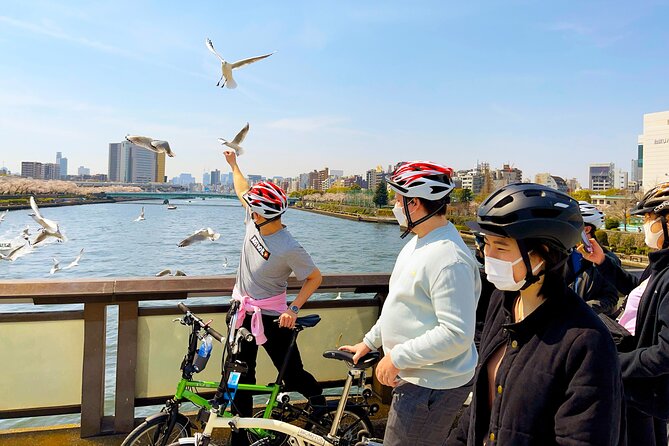
At Senso-ji, the bicycle gives you a quick approach to the Kaminarimon gate. You then leave the bikes and walk inside the temple grounds for about 20 minutes.
This is a smart arrangement. Riding directly to the area saves time, but walking is the right way to experience the temple precinct. Senso-ji is one of Tokyo’s best-known sights, so this stop supplies a familiar landmark within a route that otherwise focuses on less visited places.
Do not expect the bicycle to take you through the temple grounds. You park and explore on foot. The short timing also means you will get an overview rather than a long visit. If Senso-ji is a personal priority, tell Takeshi when booking or at the start, since the itinerary can be adjusted.
Kyu Yasuda Garden and the Ryogoku sumo district
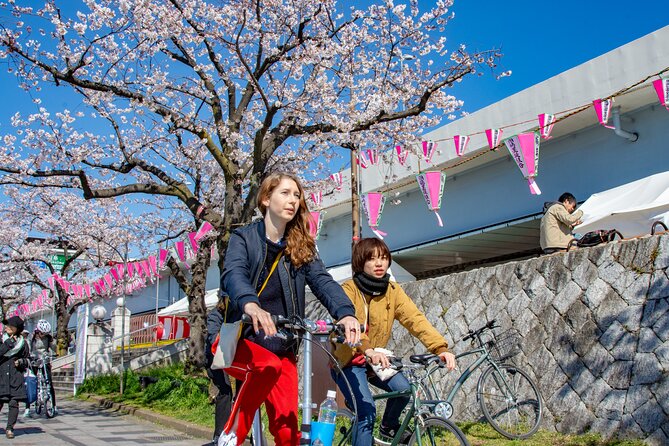
The ride continues to Kyu Yasuda Garden, where you walk through a Japanese garden built in the 17th century. The stop lasts about 20 minutes.
After the roads and city movement, a garden offers a welcome pause. It also shows a different side of Tokyo, where carefully arranged outdoor spaces provide calm inside a very large city. The visit is short, but it adds variety to the day and keeps the outing from becoming a string of urban streets.
At Ryogoku Kokugikan, the city’s sumo stadium, you spend about five minutes cycling past and may have time for photographs. This is a quick photo stop rather than a sumo match or stadium visit. If you want an extended look at sumo, you would need to plan that separately.
Still, the brief pass through Ryogoku helps connect the ride with one of Japan’s best-known sports traditions. It also shows the benefit of using a bicycle: you can see the outside of the stadium without spending a large part of the tour getting there.
Oyokogawa Water Park and Tokyo Skytree
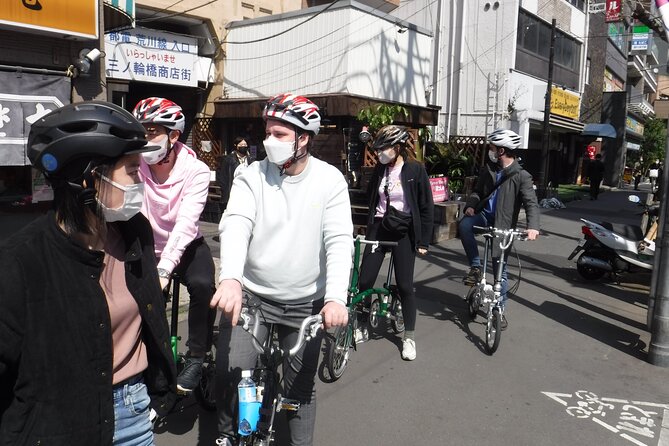
About 30 minutes are spent cycling through Oyokogawa Water Park toward Tokyo Skytree. This is one of the longer riding sections, giving you time to watch the city change as you move through parks and local streets.
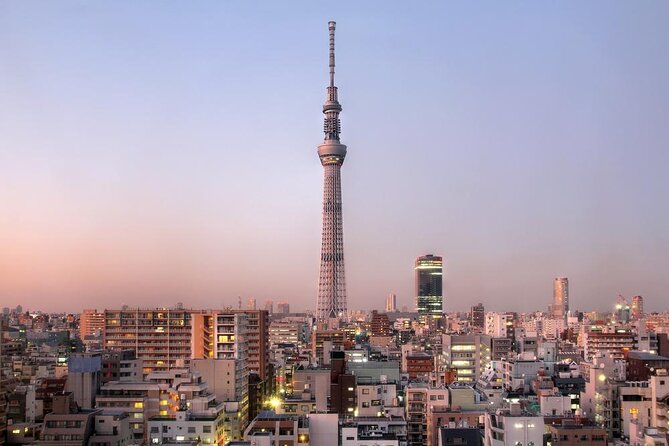
The route then passes under Tokyo Skytree for around 10 minutes. You do not go up the tower on this experience, so treat this as an exterior view and photo opportunity. The tower is a useful landmark, and seeing it from below gives the ride a clear sense of place.
This section is also where the bicycle’s value becomes plain. Walking from the Asakusa area to Skytree and then onward would take much longer, while the bike lets you link several districts in one morning or afternoon. You still stop often enough to avoid a nonstop ride.
Kyojima Minami Park and everyday neighborhood life
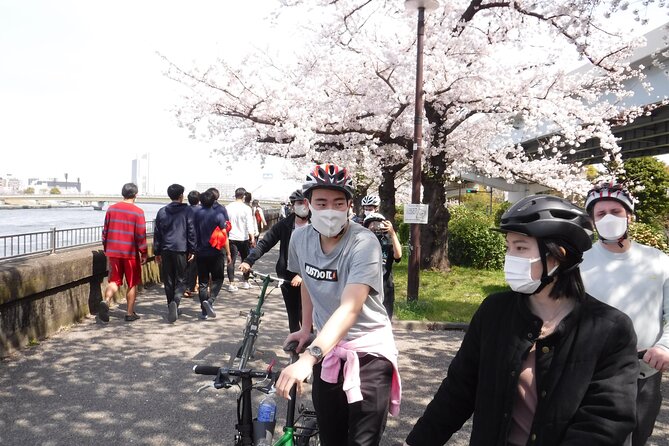
The final major stop is Kyojima Minami Park, with about 30 minutes in old-fashioned shopping malls and local streets. This is likely to be the most revealing part of the day for anyone interested in ordinary Tokyo life.
You may see the kind of neighborhood setting that rarely appears in a first-time sightseeing plan. The focus is not on grand architecture. It is on shops, streets, and the daily rhythm of people living in the area.
That makes the ending especially useful. After seeing temples, gardens, a sumo stadium, and Skytree, you finish with a closer look at how the surrounding district functions. The tour then returns to the original meeting point.
Bikes, safety, and the physical effort
The supplied bicycles are folding bikes with 14 to 20 inch wheels. They are intended for riders between 140 and 180 centimeters tall. If you are over 180 centimeters, contact the operator before booking so the bike arrangement can be discussed.
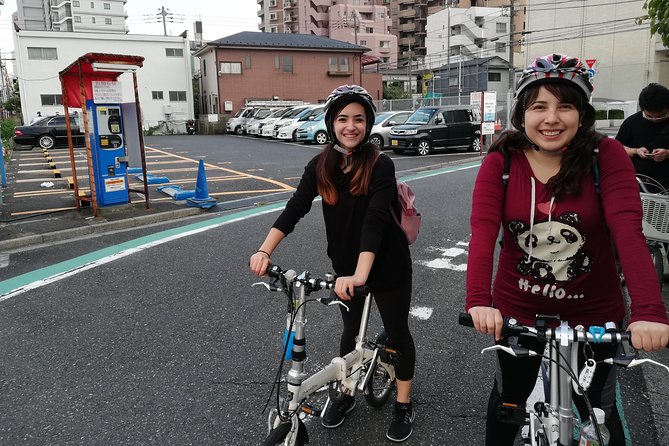
Helmets are provided, but wearing one is not mandatory. I would use the helmet, especially if you are not accustomed to cycling in Tokyo. The route is described as easy to follow, and the roads used during several outings had little traffic, but city cycling still calls for attention.
The ride is not presented as strenuous. One outing covered about 15 kilometers in roughly four hours, including stops. That works out to a relaxed sightseeing pace rather than a fitness challenge, though summer heat can make any ride feel harder. A family outing had to contend with rain and ended early, so check the forecast and dress for the season.
A tandem bike is possible if you request it at least three days before the booked date. This is useful for a child or another rider who cannot comfortably use a separate bicycle. The operator must know in advance, so do not assume one will be available on arrival.
Group size, guide style, and flexibility
The tour has a maximum of six people. That small size matters in Tokyo, where a large group can be awkward on narrow streets and difficult to keep together. It also gives you a better chance to ask about food, customs, neighborhoods, or places you pass.
Takeshi is the guide named throughout the tour information, and his role appears to be a major part of the experience. He provides explanations, takes photographs, offers water and a snack, and pays attention to the group’s needs. The route can also be customized, which is valuable if you have already seen Senso-ji or want more time around gardens, crafts, or local streets.
The flexibility has a limit. This is not automatically a private booking, and the group may include other people. One booking expected a private outing but found another participant included. The small group kept the experience comfortable, but you should book this knowing that shared participation is possible.
The meeting point is at Tokyo Backstreets Bike Tour Japan, inside the Synapse shared office at 2-24-14 Higashimukojima, Sumida City, Tokyo 131-0032. The activity ends at the same place. It is near public transportation, but the address can feel confusing at first, so allow time to locate the office and contact the guide if needed.
Is $65.41 a fair price?
At $65.41 per person, the tour costs more than renting a bicycle and exploring without a guide. The price includes the bike, helmet, water, and traditional sweet, but its real value comes from the route and the explanations.
You are getting about four hours of guided movement across several parts of eastern Tokyo. The tour connects temples, a museum, a garden, a sumo landmark, Skytree, a water park, and local shopping streets. Doing all of that independently would require route planning, navigation, and more time spent figuring out how to move between stops.
The small group also strengthens the value. You are not paying for a large coach-style sightseeing circuit. You get a guide who can answer questions, take photos, and make some adjustments. Group discounts may improve the price for families or friends booking together.
I would call the price fair for a first visit, especially if you value local context and want to cover more ground than walking allows. If you already know eastern Tokyo well, or simply prefer to rent a bike and wander alone, the guided explanation may not justify the extra cost.
Free cancellation is available when you cancel at least 24 hours before the start time. Poor weather can cause cancellation, in which case you are offered another date or a full refund. The tour also requires a minimum number of participants, so the same alternatives apply if that minimum is not met.
Who should book this ride?
I would recommend it to couples, families, first-time visitors, and repeat visitors who want to see a less familiar side of Tokyo. It suits people who enjoy light exercise, short cultural stops, and learning how neighborhoods fit together.
Families can make it work. A nine-year-old previously used a tandem bike with a parent, while children aged 12 and 14 rode their own bikes. The route was described as easy, but you should still consider each child’s cycling confidence and height.
The tour is also a good choice if jet lag has you awake early. Cycling gives you gentle activity and daylight while putting a guide between you and the problem of navigating Tokyo’s backstreets alone.
I would skip it if you need a fully private experience, dislike cycling, want extensive time inside each attraction, or are visiting during weather that may disrupt the ride. The experience is strongest when you are happy to trade a few major sights for local streets and personal attention.
Final verdict: a smart half-day in eastern Tokyo
I would book this tour if you want a relaxed way to connect Asakusa, Sumida, Ryogoku, Skytree, and Kyojima while still seeing ordinary neighborhood life. The 4.9 rating from 117 reviews and 99 percent recommendation rate match the tour’s clearest strengths: comfortable bikes, a friendly guide, a flexible route, and a calm pace.
The best reason to go is not one single stop. It is the combination of sakuramochi, small religious sites, traditional crafts, gardens, sumo, Skytree, and local shopping streets in one outing. You cover more ground than walking, but the day still leaves room to stop, look around, and ask questions.
Book it early if you need a tandem bike, are taller than 180 centimeters, or want to request a particular focus. For most visitors seeking an active and personal introduction to Tokyo’s eastern neighborhoods, this is a strong-value half-day experience.
FAQ
How long is the Tokyo Backstreets Bike Tour?
The tour lasts approximately four hours.
What is the price per person?
The listed price is $65.41 per person.
How many people can join the tour?
The maximum group size is six travelers.
Is the tour private?
Not necessarily. The tour is a small-group experience, and other participants may join your booking.
Are bicycles and helmets provided?
Yes. Bikes and helmets are provided. Helmet use is not mandatory.
What type of bicycles are used?
The operator uses folding bicycles with 14 to 20 inch wheels.
What height range suits the supplied bicycles?
The bicycles are suitable for people between 140 and 180 centimeters tall. You should inform the operator in advance if you are over 180 centimeters.
Can I request a tandem bicycle?
Yes. You must request a tandem bike at least three days before the booked date.
Where does the tour start and finish?
The tour starts at Tokyo Backstreets Bike Tour Japan inside the Synapse shared office at 2-24-14 Higashimukojima, Sumida City, Tokyo 131-0032. It ends back at the same meeting point.
What happens if the weather is poor?
The tour requires good weather. If it is canceled because of poor weather, you are offered a different date or a full refund.
Just added in Tokyo
- A One-of-a-Kind Sushi Experience in a Special Place of Japan★ 5.0 · 15 reviews
- Tokyo Cute Bento Cooking Class – Make a Kawaii Character Lunchbox★ 5.0 · 126 reviews
- Japanese Home Cooking Class & Walk in Todoroki Temple Tokyo★ 5.0 · 88 reviews
- Japan Tokyo Tower Observatory Deck E-Ticket★ 4.0 · 34 reviews
- Catch a Baseball Game in Tokyo with a Local – Tickets Included★ 5.0 · 24 reviews
- Japan Classic 10 Day – One Life Adventures★ 5.0 · 129 reviews
- JDM Experience with Fast&Furious RX-7 (English speaking Driver)★ 5.0 · 57 reviews
- Tokyo Private Day Tour by Car with English speaking Driver Guide★ 4.0 · 29 reviews
Cycling and E-Bike Tours, compared.
3h Tokyo E-Bike Tour: Hidden Gems, and Local Life with guide
Read our review →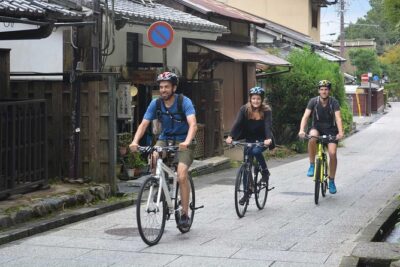
Arashiyama Bamboo Forest & Hidden Gems Bike Tour (Early Bird)
Read our review →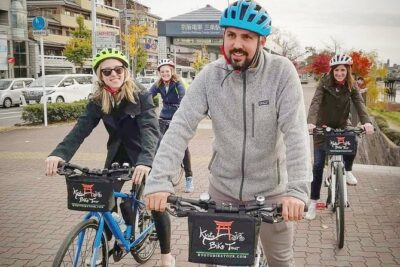
5 Top Highlights of Kyoto Full Day Bike Tour (E-bike option)
Read our review →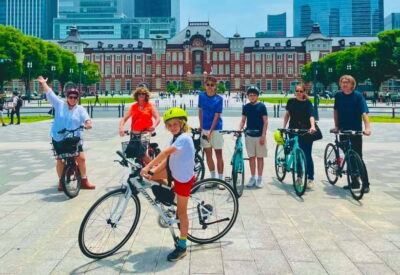
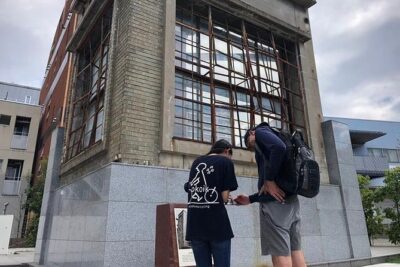
Hiroshima 2hr Peace Cycling Tour with Local Guide
Read our review →Browse the lists this tour appears in