
Reviewed · SUMO EXPERIENCES
Tokyo: Grand Sumo May Tournament
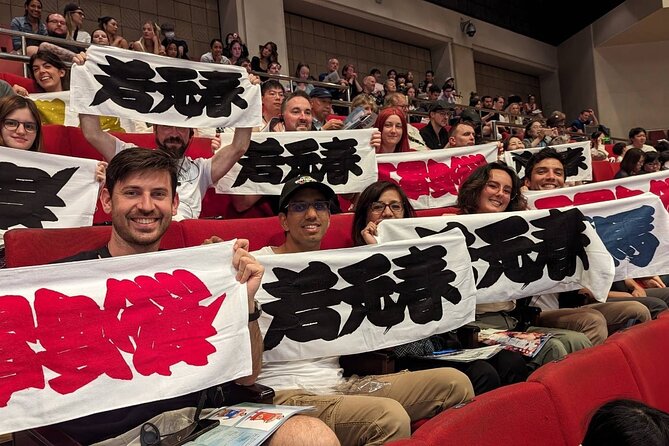
Sumo makes an afternoon unforgettable. This Tokyo experience combines live tournament action with a walking tour of Ryogoku, so you learn the rituals, rankings, and local customs instead of simply watching large men collide. I especially like the guide’s real-time explanations through personal earphones and the chance to finish with chanko-nabe, the hot-pot meal associated with sumo wrestlers. The main drawback is price: at $198.20 per person, you pay a sizable premium for the guide and arranged ticket.
You meet in Ryogoku, Tokyo’s sumo district, then spend about six hours moving from neighborhood sights to Ryogoku Kokugikan. Book early, since the experience is typically reserved about 41 days ahead and tournament tickets can disappear quickly. Guide quality can vary, too. Aki, Yoko, Ken, Ali, Yosh, Yasu, Ichirio, and Sue-san have all received warm praise, while a few customers found their guide too quiet.
In This Review
- Key points to know before booking
- Why Ryogoku is the right place to learn sumo
- Inside Ryogoku Kokugikan from 3 to 6 p.m.
- Chair B or C, and why your seat matters
- What the guide adds, and where the value becomes uncertain
- Chanko-nabe after the final bout
- Timing, walking, and the six-hour commitment
- Who will enjoy this sumo afternoon most
- Should you book the Grand Sumo May Tournament tour?
- FAQ
- How long does the experience last?
- Is the Ryogoku walking tour required?
- What is included in the tour price?
- Are seats in chairs or on the floor?
- Is chanko-nabe included?
- Can I cancel for a full refund?
Key points to know before booking
- The afternoon follows sumo’s story: Begin with two hours around Ryogoku, then watch bouts at Ryogoku Kokugikan from 3 to 6 p.m.
- Live commentary changes the experience: Your English-speaking guide explains rituals, rankings, rules, and bouts through personal earphones.
- The arena visit includes more than your seat: Expect murals, championship prizes, the sumo museum, and paintings or photographs of past yokozuna.
- Chanko-nabe is optional: The hearty wrestler-style hot pot takes place near the arena after the tournament, with drinks ordered separately.
- Chair seating is available: The tour uses balcony B or C chairs, a practical choice if you prefer not to sit on cushions on the floor.
- The group may be larger than expected: The activity can include up to 35 people, despite the emphasis on personal attention.
Why Ryogoku is the right place to learn sumo
Ryogoku is not just a convenient station stop. It is Tokyo’s traditional sumo quarter, and the streets around the arena help explain why the sport feels woven into local life.
The optional walking portion runs from 1 to 3 p.m. You visit sumo-related landmarks, see the outside of a sumo stable, and stop at a sumo shrine. One guide, Ken, even sang a sumo song and shared local sumo lore during this part of the afternoon. That sort of small detail gives the neighborhood a human touch that a seat inside the arena cannot provide.
You are not entering a stable for a training session, and the itinerary does not promise access inside. You may see where wrestlers train and live from outside, but the value lies in the context. Your guide can point out how the area connects to the sport and explain what you are about to see later.
This walk is optional, but I think it is the part that gives the ticket meaning. Sumo can seem slow or puzzling when you first watch it. Learning about its customs before the bouts helps you notice details that might otherwise pass by: the ceremonial movements, the importance of rank, and the formal rhythm around each match.
The walk lasts two hours, so wear comfortable shoes. Ryogoku is well served by public transport, and the meeting point is convenient, but hotel pickup and drop-off are not included. You need to get yourself to the neighborhood.
More Sumo Experiences in Tokyo
- Tokyo: Sumo Show Experience with Chicken Hot Pot and a Photo
★ 4.8 · 6,678 reviews - Tokyo: Sumo Live Show with Photo in Shinjuku
★ 5.0 · 3,438 reviews - Tokyo: Sumo Show and Dining Experience
★ 4.8 · 2,742 reviews
Inside Ryogoku Kokugikan from 3 to 6 p.m.
The main event is the afternoon at Ryogoku Kokugikan. Your guide leads you inside and introduces you to several parts of the arena before settling in for the bouts.
The arena visit includes:
- Ten-meter murals
- Championship prizes
- The sumo museum, for about 15 minutes
- Paintings and photographs of successive yokozuna
- The tournament bouts
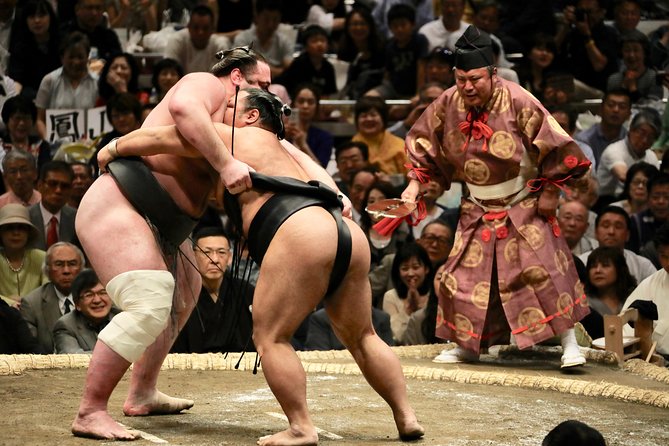
- Ring-entering ceremonies by grand champions and top-division wrestlers
The exact flow can vary, but the point is clear: you do not simply walk in, find your chair, and wait for the action. The guide helps you understand the building and the sport before the matches become the focus.
The tournament itself is the strongest reason to choose this experience. The big matches feature top-division wrestlers and grand champions, with formal ceremonies before the bouts. Sumo is about strength, but it is also about posture, timing, ceremony, and a very controlled sense of drama. The atmosphere builds as the afternoon progresses.
For someone new to the sport, the guide’s commentary is especially useful. You listen through earphones as the guide explains what is happening in real time. With a group of three or more, headsets are supplied for each person so you can hear clearly even when the guide is some distance away.
This setup received strong praise from people who wanted more than a basic ticket. Yoko, for example, prepared a gift bag with tournament information, sumo profiles, and an introduction to the sport. She also explained the rituals during the bouts. That is the kind of help that turns unfamiliar movement into something you can follow.
Still, the guide system is not perfect for everyone. Two low ratings focused on a quiet guide and the need to ask many questions. The operator responded that the guide had received other positive feedback and would be encouraged to speak up more. My advice is simple: if you want a lively lesson, ask questions early and often. Your experience may depend heavily on which guide leads your group.
Chair B or C, and why your seat matters
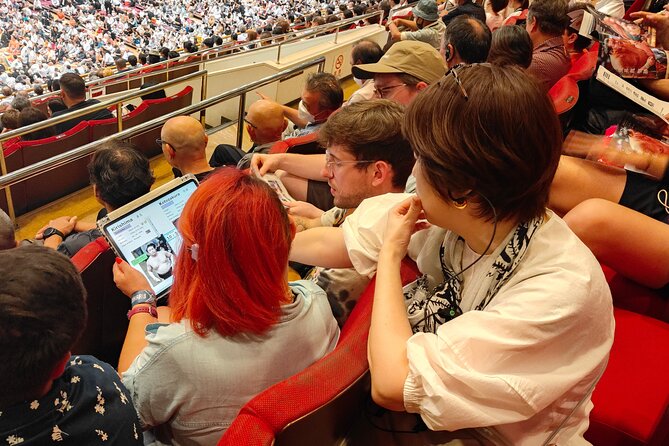
The seating option deserves attention before you pay. This tour uses chair seats on the arena balcony, in either chair B or chair C. You sit in a normal chair throughout the tournament, which many people will find far easier than the traditional first-floor arrangement.
First-floor box seats use a flat floor area measuring about 1.3 by 1.3 meters, with cushions for four spectators. That can feel close to the action, but sitting on the floor for several hours is not comfortable for everyone. The balcony chair option gives you more practical comfort, especially if you have stiff knees or simply want to watch without thinking about your posture.
The tradeoff is the view. Balcony seating is not the same as being close to the ring. You gain a chair and a broad view of the arena, but you lose some of the intimacy of a lower-level seat. The available information does not promise a particular row or exact position within B or C, so do not book expecting a front-row view.
Some people specifically praised their second-floor seats. Others expected a more personal experience and felt the ticket markup was too high. If the sumo tournament itself is a must-see for you, arranged seating can be worth paying for. If you are comfortable finding a ticket and learning the rules on your own, the added cost may feel harder to justify.
What the guide adds, and where the value becomes uncertain
The advertised experience is a private tour with personalized attention, but the stated maximum is 35 participants. That is an important distinction. You should expect expert guidance, but not necessarily a one-to-one escort all afternoon.
The strongest guides bring the sport to life. Aki was praised for explaining sumo culture and history clearly. Ichirio answered questions in an easy-to-understand way. Yoko was friendly and thorough, and Yasu was remembered for being helpful throughout the day. Ali was also praised for her knowledge and warm manner.
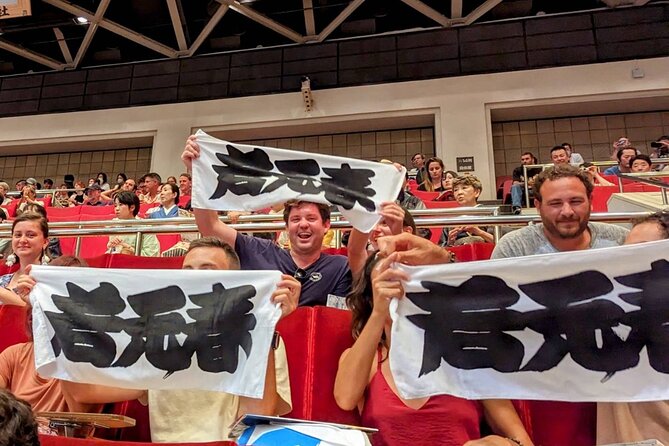
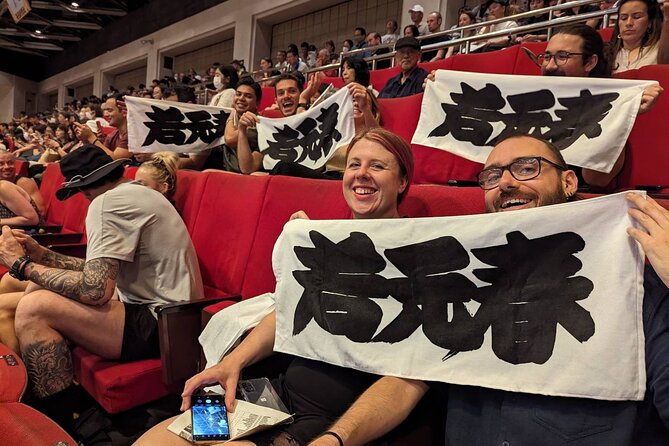
The included information package is useful. It covers the tournament, rankings, and profiles of prominent wrestlers. You also receive cheer-up goods to support a particular wrestler. These are small touches, but they give you something to follow during the matches and make the afternoon feel less anonymous.
The weaker experiences had a common problem: the guide did not offer enough explanation without prompting. If you want silence during the bouts, that may suit you. If you are paying for an interpreter and teacher, it can be frustrating.
The price is therefore paying for several things at once:
- Access to a tournament ticket during a high-demand event
- An English-speaking sumo expert
- A walking tour of Ryogoku
- Arena orientation and museum access
- Live bout commentary
- Tournament information and wrestler profiles
- Cheer-up goods
- Optional dinner arrangements if selected
At $198.20 per person, this is not a cheap way to attend sumo. It is a package for someone who values interpretation and convenience. The price also protects you from the headache of trying to secure a ticket when popular dates sell out quickly.
One low-rated customer compared the cost with the much lower face value of a ticket and felt the tour was not worthwhile. That criticism is fair. You should book it for the explanation and structure, not because it is the least expensive way into the arena.
A completely different kind of day out:
- Tokyo Disney Resort – Tokyo Disneyland & Tokyo DisneySea Park Tickets
★ 4.8 · 99,488 reviews - SHIBUYA SKY Ticket
★ 4.7 · 46,509 reviews - JR Whole Japan Rail Pass
★ 4.8 · 29,150 reviews - Mt Fuji and Hakone 1-Day Bus Tour Return by Bullet Train
★ 5.0 · 26,383 reviews
Chanko-nabe after the final bout
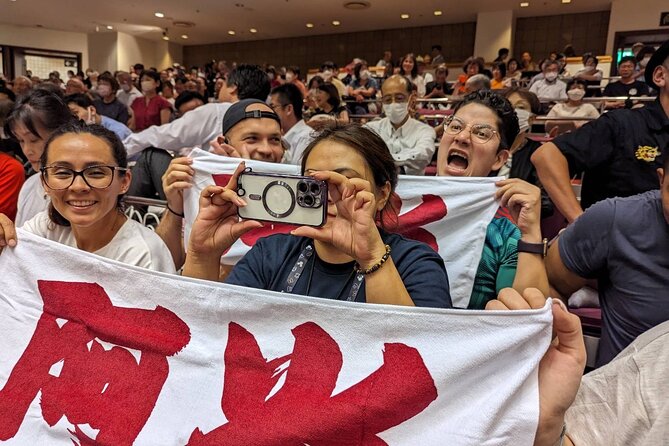
The optional dinner takes place after the tournament, around 6 p.m., at a chanko-nabe restaurant near the arena. Chanko-nabe is a nutrient-heavy hot pot linked with sumo wrestlers’ diets. It is meant to help build bodies and muscle, and it makes a filling end to a long afternoon.
The practical advantage is that the guide takes you to a selected restaurant and the meal is ready when you arrive. One customer appreciated not having to wait after the matches. The short walk from the arena also keeps the evening easy.
You should check the food carefully if you dislike fish. One customer found that fish was mixed into much of the hot pot, affecting nearly everything in the meal. The supplied details do not specify every ingredient, so ask before ordering if you have strong preferences or dietary concerns.
Drinks are not included and must be ordered separately. The dinner is optional, so you can skip it if you want to leave after the tournament or choose your own meal nearby. I like adding it because the dish connects the afternoon’s spectacle with the daily food culture of wrestlers. It is not simply a convenient dinner stop.
Timing, walking, and the six-hour commitment
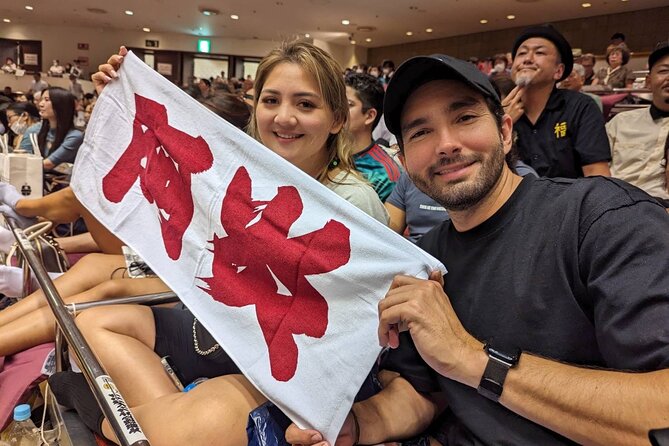
The full experience lasts about six hours, with the schedule built around the tournament:
- 1 to 3 p.m.: Optional Ryogoku walking tour
- 3 to 6 p.m.: Arena visit and tournament bouts
- From 6 p.m.: Optional chanko-nabe dinner, lasting about one hour
That makes this a substantial block in your Tokyo itinerary. You need to reach Ryogoku for the early afternoon meeting, stay through the tournament, and then decide if you want dinner.
The walking portion is not just filler, but you can omit it if your main goal is the arena. Skipping it means losing the historical and cultural background that makes the matches easier to understand. I would keep it if this is your first sumo tournament.
The tour is near public transportation, and most people can participate. Hotel transfers are not included, so build in enough time to reach the meeting point. Your confirmation arrives when you book, and the ticket is mobile, which means you should have access to it on your phone.
Because this is a fixed tournament schedule, late changes may be difficult. You can cancel for a full refund up to 24 hours before the local start time. Cancellations or changes made inside that 24-hour window are not accepted for a refund.
Who will enjoy this sumo afternoon most
I would recommend this experience to you if:
- You are new to sumo and want the customs explained
- You want an English-speaking guide during the bouts
- You value securing a tournament ticket ahead of time
- You like connecting a sporting event with local culture
- You prefer a chair over a floor cushion
- You want an optional meal arranged near the arena
It is also a strong choice for families and mixed groups. A sumo fan can watch the matches, while someone unfamiliar with the sport gets a clear introduction. The profiles, rankings, and cheering items help everyone choose a wrestler to follow.
You may prefer to go alone if you already understand sumo, can arrange your own ticket, and do not need help with the rules. The price premium will be harder to defend in that case.
Also think about guide style. This is not a scripted audio tour. A lively guide can make the afternoon special, but a quiet guide may leave you doing much of the questioning. The operator has used several guides, including Aki, Ken, Yoko, Ali, Yosh, Yasu, Ichirio, and Sue-san, and the quality of the experience seems tied partly to that personal match.
Should you book the Grand Sumo May Tournament tour?
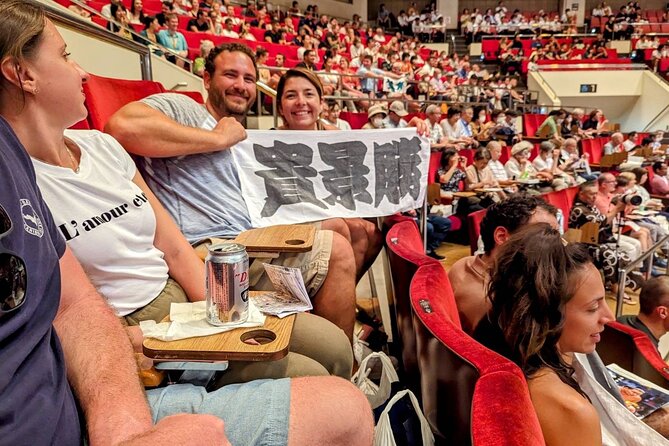
Book it if seeing sumo is a priority and you want the sport explained as you watch. The neighborhood walk, arena orientation, live commentary, chair seating, and optional chanko-nabe give you a full afternoon rather than a bare admission ticket.
I would not book it simply to save money. At $198.20, you are paying for access, planning, and interpretation. Reserve well ahead, especially if your Tokyo dates are fixed, and choose the chair option if floor seating sounds uncomfortable.
For a first sumo tournament, this is a very good introduction, with the caveat that you should ask questions and confirm the dinner option if you have food concerns. For an experienced fan, the tour makes sense mainly when securing a ticket is difficult or you want company and local guidance.
FAQ
How long does the experience last?
The main experience lasts about six hours. The walking tour runs from 1 to 3 p.m., the arena visit from 3 to 6 p.m., and the optional chanko-nabe dinner adds about one hour after 6 p.m.
Is the Ryogoku walking tour required?
No. The two-hour walking tour is optional. It covers sumo-related landmarks and helps explain the sport before you watch the tournament.
What is included in the tour price?
The price includes all fees and taxes, English-language guiding by a sumo expert, tournament information, rankings, profiles of prominent wrestlers, and cheer-up goods. For groups of three or more, headsets are provided for each person.
Are seats in chairs or on the floor?
The chair option uses balcony chair B or C seats. First-floor box seats use cushions on a flat floor area, so check the selected option before booking if chair seating is important to you.
Is chanko-nabe included?
Chanko-nabe is an optional part of the experience. Drinks are not included and must be ordered separately.
Can I cancel for a full refund?
Yes. You must cancel at least 24 hours before the experience start time, based on local time. Cancellations or changes made less than 24 hours before the start are not eligible for a refund.
Just added in Tokyo
- A One-of-a-Kind Sushi Experience in a Special Place of Japan★ 5.0 · 15 reviews
- Tokyo Cute Bento Cooking Class – Make a Kawaii Character Lunchbox★ 5.0 · 126 reviews
- Japanese Home Cooking Class & Walk in Todoroki Temple Tokyo★ 5.0 · 88 reviews
- Japan Tokyo Tower Observatory Deck E-Ticket★ 4.0 · 34 reviews
- Catch a Baseball Game in Tokyo with a Local – Tickets Included★ 5.0 · 24 reviews
- Japan Classic 10 Day – One Life Adventures★ 5.0 · 129 reviews
- JDM Experience with Fast&Furious RX-7 (English speaking Driver)★ 5.0 · 57 reviews
- Tokyo Private Day Tour by Car with English speaking Driver Guide★ 4.0 · 29 reviews
Sumo Experiences, compared.
Sumo Show Experience with Chicken Hot Pot and a Photo
Read our review →
Tokyo Shinjuku Sumo Show & Experience with Photo
Read our review →
Asakusa Sumo Club Sumo Show Admission with Chankonabe in Tokyo
Read our review →
Tokyo Ginza Sumo Experience: Performance vs Pure Practice
Read our review →Browse the lists this tour appears in