
Reviewed · SUMO EXPERIENCES
Tokyo – Grand Sumo Tournament
Sumo turns sport into ceremony. This experience gives you a reserved way into a Grand Sumo Tournament at Ryogoku Kokugikan, where the crowd cheers with the force of a major league game and every bout carries centuries of ritual. I like the guaranteed admission and the chance to watch Japan’s national sport in its proper setting. I also like that upgraded seats may be available. The main concern is the price: at $565 per person, this is costly for a two-hour, ticket-only event with no transport or guide.
You meet at Ryogoku Edo NOREN at 10:00 a.m., then make your own way to the venue. The paper-ticket format is simple, but you must confirm exactly what you are buying before paying. Some past bookings connected with this operator included guides, temples, training demonstrations, and cultural instruction, while this tournament product is described as no tour guide. That difference matters.
In This Review
- Key points before you book
- Why Ryogoku Kokugikan matters
- What your two hours actually include
- How to follow the action without a guide
- The atmosphere is the main attraction
- Choosing between Tokyo and Osaka
- The $565 price: when does it make sense?
- Getting to the meeting point
- What past bookings reveal about the operator
- Who should book this experience?
- Practical details you should not miss
- FAQ
- Where does the Tokyo experience meet?
- What time does the experience start?
- Where does the Tokyo tournament take place?
- Is transportation included?
- Is a tour guide included?
- What does the ticket format involve?
- Are upgraded seats available?
- Can I cancel or change the booking?
- Should you book the Tokyo Grand Sumo Tournament?
Key points before you book
- Grand tournament dates: Tokyo tournaments are scheduled for January 11 to 25 and May 10 to 24, 2026. The March 8 to 22, 2026 tournament takes place in Osaka.
- Ryogoku setting: Tokyo’s Kokugikan is the country’s best-known sumo venue and the natural place to watch a major tournament.
- Ticket-only format: Admission is included, but transportation, guiding, and any meal are not.
- Paper ticket: You receive a physical ticket rather than relying only on a mobile pass.
- Two-hour estimate: The listed duration is about two hours, so this is a focused match-day experience rather than a full district tour.
- High price: $565 is a serious outlay, making seat location and tournament dates especially important.
Why Ryogoku Kokugikan matters
Ryogoku is Tokyo’s sumo district. The Kokugikan is not just a sports hall. It is the city’s main stage for grand tournaments, and the setting gives the event weight that a casual demonstration cannot match.
Sumo is built from repeated gestures: the formal entrance, the stamping, the crouch, the stare, and the explosive clash. To a first-time viewer, a bout can seem over almost before it begins. That is part of the sport’s character. The long buildup creates tension, then the actual contest may last only seconds.
The audience adds much of the electricity. Fans cheer, react to close calls, and follow the action with the seriousness you would expect at a major professional game. If you enjoy sports for the shared mood as much as the rules, this is a strong cultural choice.
You also get a glimpse of the religious side of sumo. Shinto and Buddhist ideas appear in its rituals and symbolism, and the sport’s ceremony is not decoration added for tourists. It is part of what sumo is.
More Sumo Experiences in Tokyo
- Tokyo: Sumo Show Experience with Chicken Hot Pot and a Photo
★ 4.8 · 6,678 reviews - Tokyo: Sumo Live Show with Photo in Shinjuku
★ 5.0 · 3,438 reviews - Tokyo: Sumo Show and Dining Experience
★ 4.8 · 2,742 reviews
What your two hours actually include
The basic product is admission to the tournament. The stated itinerary lists Ryogoku Kokugikan as the stop, with admission included and upgraded seats available for an additional fee.
That means you should expect the central experience to be watching live matches from your assigned seat. You are not promised a stable visit, a training session, a temple stop, an interactive lesson, or a meal.
This point needs special care because related sumo experiences connected with the same business have included very different activities. Some people have met professional sumo athletes, watched training, learned basic moves, visited a Buddhist temple or Shinto shrine, and walked through the Ryogoku area. Other bookings involved a professional athlete demonstrating techniques in a training space. Those are valuable experiences, but they should not be assumed here.
The tournament ticket gives you something more authentic in one sense: you see the sport in competition, with real fans and real stakes. The tradeoff is that you receive less personal explanation. Without a guide, you may need to learn the basic structure before arriving.
How to follow the action without a guide
You do not need to understand Japanese to enjoy the atmosphere, but a little preparation will help. Sumo is easy to watch and harder to interpret.
The key ideas are simple:
- The wrestler who forces his opponent out of the ring or makes him touch the ground first wins.
- A bout begins after a long pre-match routine.
- Wrestlers compete in different ranks, and top-ranked champions receive special attention.
- Ritual movements reflect the sport’s religious and cultural roots.
- The referee, called a gyoji, directs the bout in traditional dress.
The most highly praised guides in related experiences were Ken, Shin, Kevin, and Li. Ken was often singled out for his warmth, quick communication, personal stories, and ability to explain the culture. Shin and Li were associated with demonstrations and hands-on instruction. That is useful background, but do not expect those individuals to accompany you on this ticket-only event unless your confirmation specifically says so.
The atmosphere is the main attraction
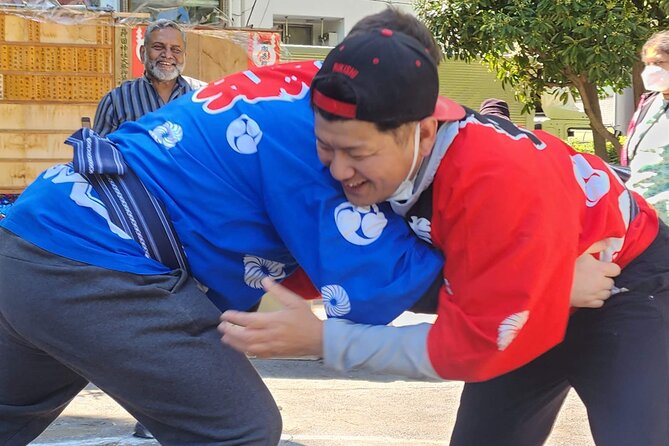
The best reason to choose this experience is the feeling inside the arena. Sumo fans are not quiet observers. They respond loudly when a wrestler gains an edge, and the room can turn from patient silence to a roar in a heartbeat.
That atmosphere helps explain why a live tournament is worth considering even if you know little about the sport. You can watch the crowd, notice which wrestlers receive the strongest support, and see how the event moves between ritual and physical force.
The sport also has a strange rhythm. A bout can involve a long pause, a sudden charge, and an instant result. If you expect continuous action like baseball or football, you may find the pacing unusual. If you appreciate ceremony and short bursts of power, it becomes easier to enjoy.
One drawback is that two hours may feel brief for the price. Sumo tournaments run for much longer than the stated activity time, and this booking does not explain precisely which portion of the day your ticket covers. Ask for the exact session and seat details before committing.
A completely different kind of day out:
- Tokyo Disney Resort – Tokyo Disneyland & Tokyo DisneySea Park Tickets
★ 4.8 · 99,488 reviews - SHIBUYA SKY Ticket
★ 4.7 · 46,509 reviews - JR Whole Japan Rail Pass
★ 4.8 · 29,150 reviews - Mt Fuji and Hakone 1-Day Bus Tour Return by Bullet Train
★ 5.0 · 26,383 reviews
Choosing between Tokyo and Osaka
The advertised dates cover two cities. Tokyo hosts the January 11 to 25 and May 10 to 24, 2026 tournaments. Osaka hosts the March 8 to 22, 2026 tournament.
The Tokyo option is the natural match for this product because the meeting point is Ryogoku Edo NOREN and the listed venue is Ryogoku Kokugikan. If you choose the Osaka date, do not assume the same meeting point, venue, or local instructions apply. Confirm the details in writing.
For a first visit to Japan, Tokyo’s Ryogoku setting has a special advantage. You can connect the tournament with the neighborhood’s sumo identity, even though this particular booking does not include a guided district walk.
The $565 price: when does it make sense?
At $565 per person, this is not a budget outing. The price may make sense if you place a high value on guaranteed access during a popular tournament and want to avoid the uncertainty of finding tickets after arriving in Japan.
Prebooking is useful because major sumo tournaments can fill up. You also avoid language barriers when arranging admission. A paper ticket gives you something tangible, though it may require careful handling before the event.
Still, the value depends heavily on the seat. An upgraded seat could improve your view, but the extra charge raises the total even further. Before booking, ask:
- What seating section is included?
- Is the $565 price fixed for every date and seat?
- How much does an upgrade cost?
- What part of the tournament schedule does the ticket cover?
- Is the ticket delivered in advance or provided at the meeting point?
The description also includes the phrase Admission Ticket Free beside the duration. That conflicts with the stated $565 price. Treat the $565 figure as the relevant advertised cost, but ask the operator to clarify the wording before purchase.
Getting to the meeting point
The listed start point is Ryogoku Edo NOREN, 1-chome 3-20 Yokoami, Sumida City, Tokyo 130-0015. The start time is 10:00 a.m., and the activity is said to end back at the meeting point.
The booking does not include transportation. You are responsible for reaching the meeting point and getting to the arena unless the operator gives different instructions after booking.
Ryogoku is near public transportation, which helps. Build in extra time for Tokyo’s large stations, finding the correct exit, and locating the meeting point. A 10:00 a.m. meeting leaves little room for a wrong turn.
The experience is capped at 20 people, although the tournament itself will of course contain a much larger crowd. A small meeting group can make ticket handoff and instructions easier, but it does not turn the event into a guided tour.
What past bookings reveal about the operator
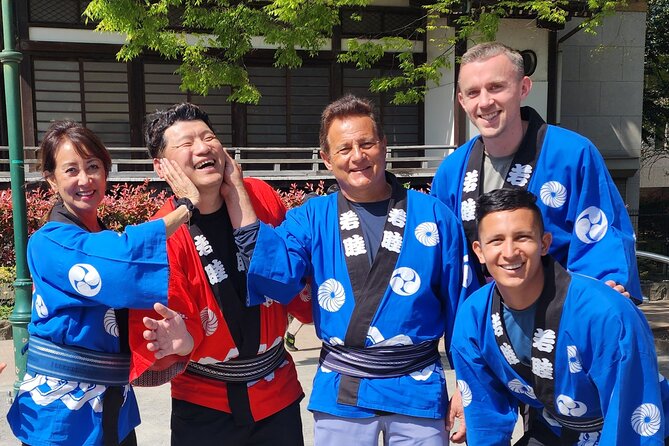
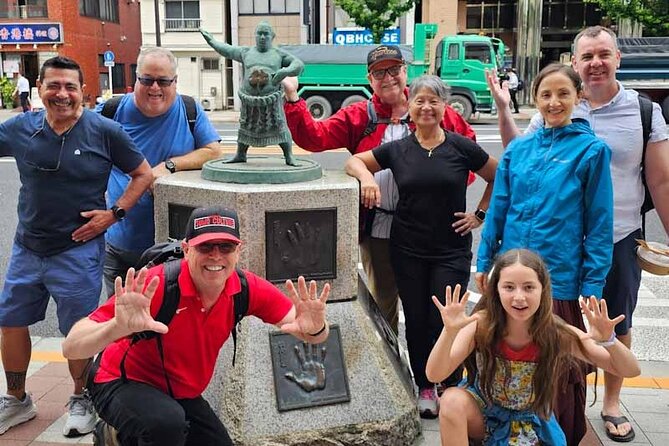
The strongest pattern is enthusiasm for the human side of the experience. Ken and Shin have been praised for warmth, flexibility, and passion for Japanese culture. Some families enjoyed learning sumo movements, meeting an athlete, and getting suggestions for lunch afterward. One family found the activity especially good because it worked for parents and children together.
There have also been very different outcomes. Some people expected access to a stable and training sessions, then found that the activity offered a demonstration, a museum visit, or cultural stops instead. One outdoor demonstration was reportedly cut short after a police noise complaint. Another experience changed because training schedules and closures shifted.
Those details do not necessarily describe this tournament ticket. They do show why you should read the exact product description rather than rely on photographs or the general reputation of the company. Sumo training is controlled by professional schedules, and tournament admission is a separate type of experience.
The operator’s responses to unhappy customers were defensive in places. That is worth noting because clear communication matters when you are spending $565. Get the venue, seat category, meeting process, and included services confirmed before the cancellation deadline.
Who should book this experience?
I would recommend it most strongly to you if sumo is a major reason for visiting Japan, or if you want one memorable sporting event during a Tokyo stay. The live crowd and formal rituals offer a genuine connection to Japanese culture.
It also suits visitors who value certainty. If you do not want to search for tickets, manage Japanese booking systems, or risk arriving at a sold-out event, prearranged admission has real value.
Families can enjoy the spectacle, but younger children may find the slow buildup between bouts less gripping. A little advance explanation will help them understand why the rituals matter.
I would be more cautious if you want a personal lesson, a stable visit, or time with wrestlers. This product does not promise those things. Look for a separate, clearly described training or cultural tour instead.
Practical details you should not miss
Confirmation is provided at booking. The experience allows service animals, is near public transportation, and is listed as suitable for most people. No special fitness requirement is stated.
The ticket is non-refundable and cannot be changed for any reason. That makes date selection important, especially since the listed price is high. Check your Japan itinerary carefully before booking.
Because this is a paper-ticket event, keep the ticket safe and follow the meeting instructions exactly. If the operator offers an upgraded seat, ask for the precise section and viewing advantage rather than paying based on the word upgrade alone.
FAQ
Where does the Tokyo experience meet?
The listed meeting point is Ryogoku Edo NOREN, 1-chome 3-20 Yokoami, Sumida City, Tokyo 130-0015.
What time does the experience start?
The stated start time is 10:00 a.m.
Where does the Tokyo tournament take place?
The itinerary lists Ryogoku Kokugikan in Tokyo.
Is transportation included?
No. Transportation is not included, so you must make your own way to the meeting point and venue unless later instructions say otherwise.
Is a tour guide included?
No. This product is described as a ticket-only event with no tour guide.
What does the ticket format involve?
The experience provides a paper ticket.
Are upgraded seats available?
Yes. Upgraded seats may be available for an additional fee.
Can I cancel or change the booking?
No. The experience is non-refundable and cannot be changed for any reason.
Should you book the Tokyo Grand Sumo Tournament?
Book it if seeing a live grand tournament is high on your Japan wish list and guaranteed admission is worth a premium. The crowd, ceremony, and setting at Ryogoku Kokugikan can create one of the most memorable sporting nights, or days, of a Tokyo visit.
I would not book it without confirming the seat, session, exact meeting procedure, and the difference between this ticket-only product and the operator’s guided sumo activities. At $565, you deserve clear details. If you want the real tournament and are comfortable arranging your own transport, this can be a powerful cultural experience. If you mainly want to meet wrestlers or learn the sport hands-on, choose a different product.
Just added in Tokyo
- Exclusive Ramen Kitchen Experience★ 5.0 · 13 reviews
- Experience Award-Winning Spa Treatments in Downtown Tokyo★ 5.0 · 21 reviews
- Japanese Wine Omakase in Shibuya – Guided Tasting, Not Sake★ 5.0 · 15 reviews
- Tokyo: Exclusive Geisha Dinner Experience★ 5.0 · 14 reviews
- Enjoy plus size Kimono★ 4.5 · 14 reviews
- Tokyo’s Authentic and Finest Taiko Drumming Workshop★ 5.0 · 22 reviews
- Hands-on Japanese Cooking in a Shinjuku Home Kitchen with Satoru★ 5.0 · 19 reviews
- Calligraphy on T-shirt or lantern near Skytree Tokyo★ 5.0 · 43 reviews
Sumo Experiences, compared.
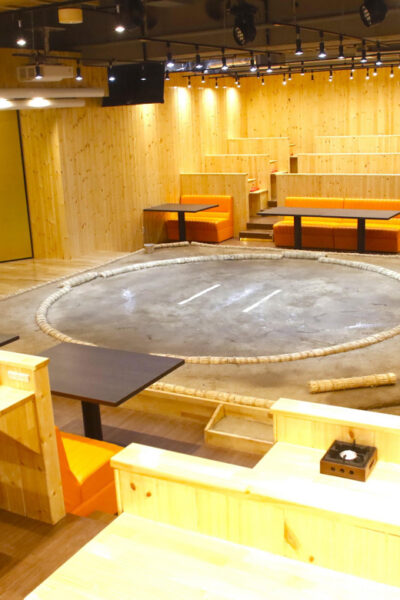
Sumo Show Experience with Chicken Hot Pot and a Photo
Read our review →
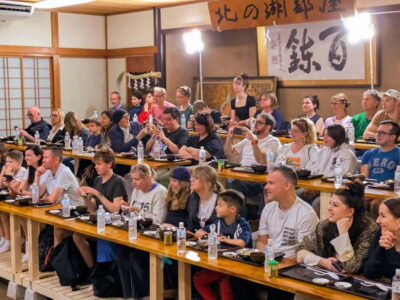
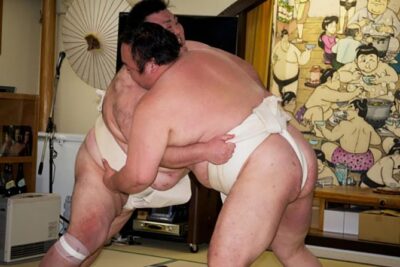
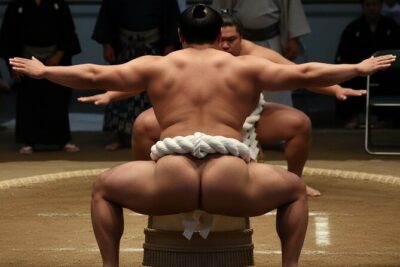
Tokyo Shinjuku Sumo Show & Experience with Photo
Read our review →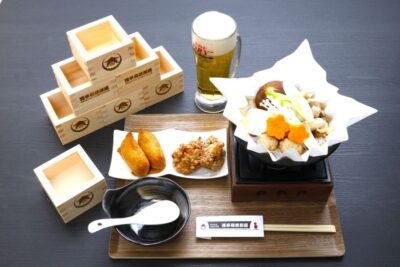
Asakusa Sumo Club Sumo Show Admission with Chankonabe in Tokyo
Read our review →
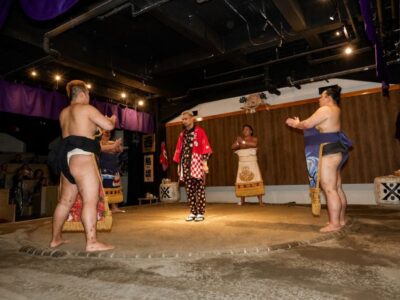
Tokyo Ginza Sumo Experience: Performance vs Pure Practice
Read our review →Browse the lists this tour appears in