
Reviewed · FOOD TOURS
Tokyo Street Food Tour – 7 Japanese Foods
Come hungry, leave pleasantly stuffed. This two-hour Tokyo food walk takes you beyond sushi and ramen to the everyday snacks sold in the Musashi Koyama and Togoshi Ginza neighborhoods. I like the local setting and the range of food, from award-winning karaage to handmade onigiri and Japanese pudding. I also like that the group is capped at eight people, which leaves room for questions and conversation.
The main drawback is portion size. Seven tastings, plus a free soft drink, can add up to a full lunch, and one review specifically warns you to pace yourself. The tour also involves walking between shopping streets, so it is better suited to you if you have a moderate level of fitness rather than wanting a sit-down meal with no movement.
In This Review
- Key points to know before booking
- Why Togoshi Ginza makes a good food-tour setting
- Starting with Musashi Koyama Shopping Street Palm
- Karaage and yakitori: Tokyo’s chicken snacks
- Onigiri with more than 40 filling choices
- Curry bread and Japanese pudding
- Arriving at Togoshi Ginza Shopping Street
- Guides make the food more meaningful
- Is $91.45 a fair price?
- Walking, meeting points, and practical concerns
- Who will enjoy this food walk most?
- Should you book the Togoshi Ginza food tour?
- FAQ
- How long does the Tokyo Street Food Tour last?
- How many foods are included?
- Is a drink included?
- Where does the tour start?
- Where does the tour finish?
- How large is the group?
- Can I cancel for a full refund?
Key points to know before booking
- The food goes well beyond sushi and ramen: You may taste karaage, yakitori, onigiri, curry bread, pudding, and other local snacks.
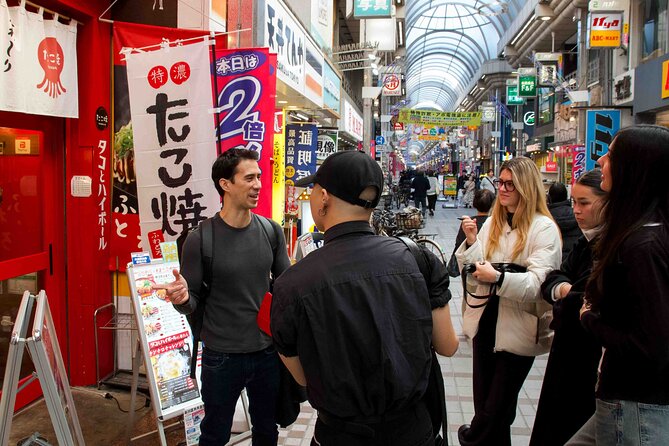
- The route visits Musashi Koyama and Togoshi Ginza: These shopping streets offer a more ordinary side of Tokyo than the city’s best-known sightseeing districts.
- The small group matters: With a maximum of eight people, you can ask about ingredients, customs, and the story behind each dish.
- The food is substantial: This is lunch, not just a few tiny samples, so arrive ready to eat but do not have a large breakfast.
- Guides shape the experience: Makayla, Bunga, Sahori, and Frank are praised for friendly conversation, food knowledge, and explanations of each dish.
- The tour ends at Togoshi Ginza: You finish at the shopping street rather than returning to the starting point, which is useful if you plan to keep exploring.
Why Togoshi Ginza makes a good food-tour setting
Tokyo is full of famous eating districts, but the city’s daily food culture is often easiest to understand in shopping streets. Togoshi Ginza is the kind of place where small shops serve local residents, and food is bought for the walk home, a quick lunch, or an afternoon snack.
That makes this route useful for you if you want to see Tokyo outside the usual sightseeing circuit. The focus is not on grand restaurants or dishes designed for photographs. It is on familiar foods sold by specialist shops and long-running local businesses.
The experience begins at Park City Musashikoyama THE MALL, at 3-chōme-15-1 Koyama in Shinagawa City. From there, you pass through Musashi Koyama Shopping Street Palm before reaching Togoshi Ginza Shopping Street. The first part lasts about 30 minutes, followed by roughly an hour at the main shopping street, though the full experience is advertised at about two hours.
That timing deserves a small note. The published stops add up to 90 minutes, and one account describes about an hour and a half of walking and grazing. You should allow closer to two hours so you are not rushing to your next plan.
More Food Tours in Tokyo
- Tokyo: Shinjuku Food Tour (13 Dishes at 4 Local Eateries)
★ 5.0 · 6,603 reviews - Tokyo: Shinjuku Food Tour (15 Dishes and 4 Eateries)
★ 4.9 · 2,033 reviews - Best of Shinjuku: Izakaya Food Tour (4 Stops, 14+ Tastings)
★ 5.0 · 1,863 reviews
Starting with Musashi Koyama Shopping Street Palm
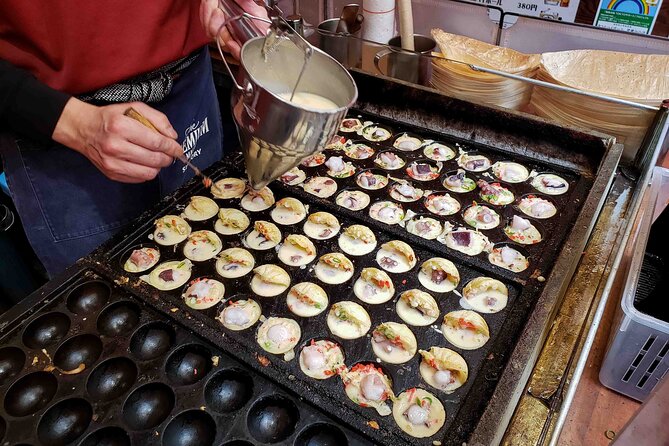
The opening stretch uses Musashi Koyama Shopping Street Palm as an introduction to the area. This covered arcade has been operating for decades, and it gives you an early look at the neighborhood before the group moves on to Togoshi Ginza.
I like this beginning because it avoids dropping you straight into a list of dishes. You first get a sense of the streets, shops, and local rhythm. The guide can then explain how the food fits into the neighborhood instead of treating every snack as an isolated sample.
This is also where you begin tasting. The exact order can vary, but the planned foods include five named specialties:
- Crispy karaage from an award-winning vendor
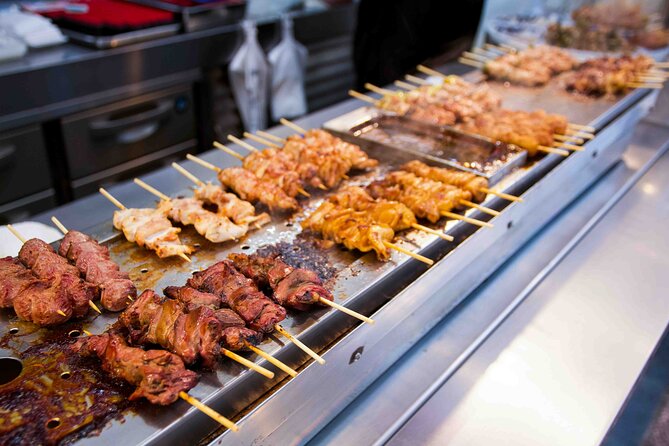
- Juicy yakitori from a restaurant operating since 1926
- Handmade onigiri with more than 40 possible fillings
- Japanese beef curry bread
- Creamy Japanese pudding
The remaining tastings are part of the seven-food lunch, but the supplied details do not identify them by name. That is worth keeping in mind if you are booking because of one particular dish. The route promises seven types of food, but it does not guarantee a fixed menu for every date.
Karaage and yakitori: Tokyo’s chicken snacks
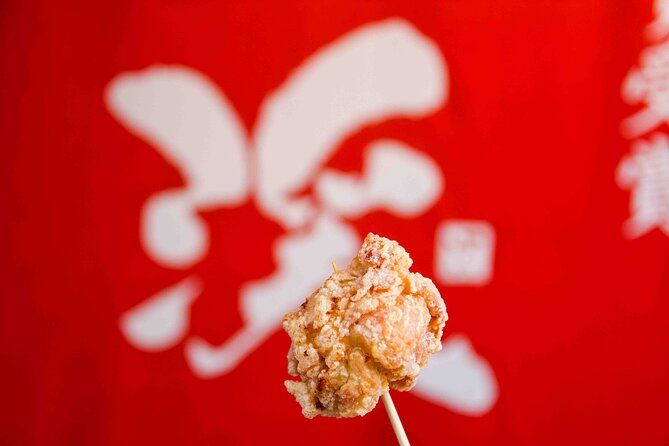
Karaage is Japanese fried chicken, usually prized for its crisp coating and juicy meat. Here, the stop is at an award-winning vendor, which gives the first tasting a clear sense of occasion without turning the tour into a formal restaurant visit.
I would treat this as one of the safest choices for mixed groups. Fried chicken is familiar, but the Japanese preparation gives it a local angle, and the guide can place it within the wider food culture of the shopping street.
Yakitori brings a different texture and flavor. These chicken skewers are charcoal-grilled, and the restaurant has been running since 1926. That long history is one of the more useful details on the route because it connects your snack to a business that has served the area for generations.
You may find the chicken-heavy opening filling. The portions are described as generous, and the tour includes seven foods rather than seven tiny bites. If you are not very hungry, share portions when possible or slow down early. The later sweets will be easier to enjoy if you do not treat the first two stops as a race.
Onigiri with more than 40 filling choices
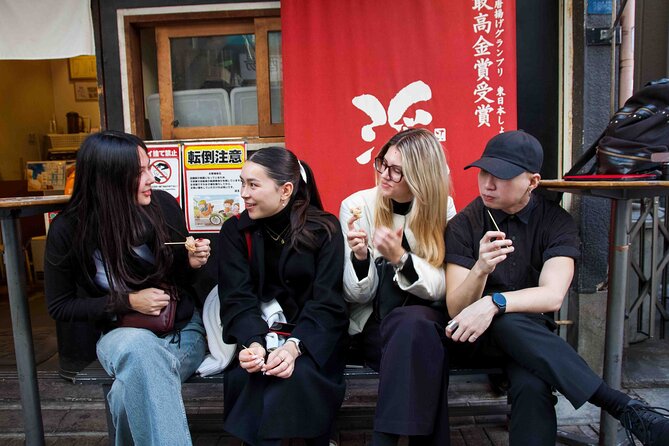
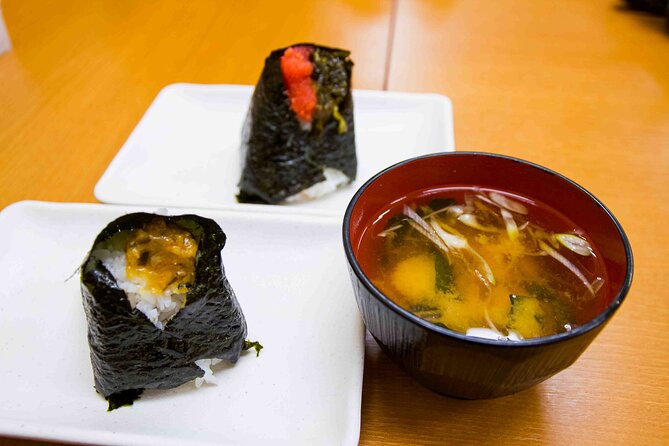
Onigiri is one of Japan’s most practical foods: seasoned rice shaped around a filling and often wrapped with seaweed. It is simple, portable, and closely tied to everyday Japanese eating.
The onigiri stop is especially interesting because the shop offers more than 40 filling choices. Traditional options may be available, but the listed examples also include bacon with cream cheese and spicy tuna. That range shows how a familiar Japanese food can adapt to changing tastes without losing its basic form.
For you, this may be one of the most useful tastings on the tour. Karaage and yakitori are easy to associate with street food, but onigiri helps explain what people in Japan might grab for a quick, satisfying meal. It is also a good chance to ask your guide about unfamiliar fillings if you are unsure what to choose.
The many options can create a small problem for a short tour. You will not have time to sample everything. If you are given a choice, ask the guide for a recommendation rather than spending too long deciding.
A completely different kind of day out:
- Tokyo Disney Resort – Tokyo Disneyland & Tokyo DisneySea Park Tickets
★ 4.8 · 99,488 reviews - SHIBUYA SKY Ticket
★ 4.7 · 46,509 reviews - JR Whole Japan Rail Pass
★ 4.8 · 29,150 reviews - Mt Fuji and Hakone 1-Day Bus Tour Return by Bullet Train
★ 5.0 · 26,383 reviews
Curry bread and Japanese pudding
Curry bread is a savory pastry filled with Japanese beef curry. The bread is baked fresh, and the combination gives you a taste of how Japanese cooks have adapted curry into a popular bakery snack.
This stop adds needed variety after the chicken and rice. The exterior is bread rather than batter or grilled meat, while the filling is warm and savory. If you enjoy Japanese curry but do not want another bowl of noodles or rice, this is a useful introduction.
The pudding provides the sweet finish to the named foods. Japanese pudding is known for its smooth, creamy texture, and this stop gives the tour a clear change of pace. One review also singles out a final dango shop as especially good, though the official food list does not identify dango as one of the seven fixed tastings. Menus can change, so I would enjoy the possibility without treating it as a promise.
The balance of savory snacks and sweets is one of the tour’s strengths. You are not eating seven versions of the same thing. Still, you should expect a food-focused outing rather than a light sampling walk.
Arriving at Togoshi Ginza Shopping Street
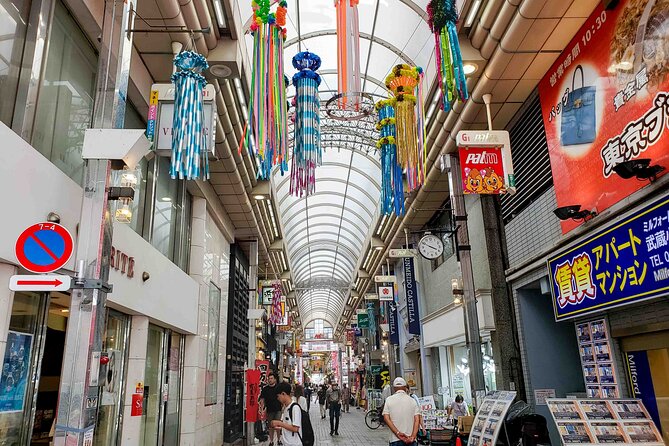
After the first section, you walk to Togoshi Ginza Shopping Street, the main part of the route. The walk helps connect the two neighborhoods and gives you time to talk with the guide between tastings.
The street is lined with small, independent food shops. The tour uses these storefronts for local delicacies, so the experience feels tied to the neighborhood rather than built around a single restaurant. You can see how food is displayed, sold, and eaten in a normal shopping area.
This section lasts about an hour, but the full pace depends on the group and the shops visited. The maximum group size is eight, and some departures may be much smaller. One Sunday outing had only two people, while another group had four. A small group like that can feel almost private, especially if you enjoy asking questions or prefer not to wait for a large crowd.
The route finishes at Togoshi Ginza Shopping Street, at the shopping street association building in Togoshi, Shinagawa City. That ending is practical. You can continue looking around the street, find another meal later, or make your way onward without backtracking to the starting point.
Guides make the food more meaningful
The food is the main attraction, but the guide can determine how much you take away from it. The strongest praise centers on guides who explain the background of each dish and keep conversation flowing while you walk.
Makayla is described as personable, fun, and well informed about the area and its foods. Sahori is praised for leading a small group through a less tourist-focused part of Tokyo, while Bunga made the route feel like a memorable first taste of the city. Frank is noted for selecting good stops and explaining the history of both the foods and the venues.
One review specifically praises a guide’s English as impeccable. The available comments also describe guides as friendly, sweet, and easy to talk with. Since guide assignments can change, you should not book expecting one particular person unless the provider confirms it.
The small-group format gives the guide room to adjust. If you dislike a food, one account indicates that the guide was willing to work around individual preferences. That does not mean every item can always be replaced, but it suggests that the format is more personal than a rigid group tasting.
Is $91.45 a fair price?
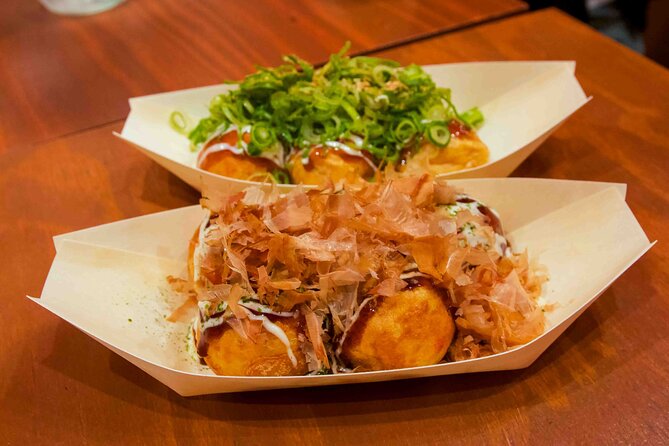
At $91.45 per person, this is not the cheapest way to eat in Tokyo. You could buy several snacks on your own for less, especially if you already know where to go and can navigate Japanese menus and shopping streets comfortably.
The value comes from the combination of food, guiding, and access to a neighborhood you might not choose on your own. You receive seven types of street food, one soft drink, local context, and a planned route through two shopping streets. The guide also saves you from guessing which storefronts are worth trying.
I see the price as reasonable for a first Tokyo visit if you value structure and conversation. It is less compelling for an experienced Tokyo eater who enjoys researching small shops independently. The tour also makes more financial sense if you consider it lunch, not an appetizer before lunch.
The average booking point is 52 days in advance. That suggests you should plan ahead if the date matters, though the small maximum group may be part of the reason early booking is useful.
Walking, meeting points, and practical concerns
You meet at Park City Musashikoyama THE MALL in Koyama, Shinagawa City. The tour ends at Togoshi Ginza Shopping Street, so check your plans before booking and allow time to get to the starting point.
The experience is near public transportation, but no hotel pickup or drop-off is included. You are responsible for reaching the meeting point and continuing from the final stop. A mobile ticket is provided, which keeps the booking simple once you are on the way.
The tour requires a moderate level of physical fitness. You will walk between shopping streets and stop at several storefronts, often while eating on the go. Comfortable walking shoes make sense, and you should avoid scheduling a tight appointment immediately afterward.
Service animals are allowed. The available information does not specify details about allergies, vegetarian substitutions, wheelchair access, or dietary restrictions, so ask the provider before booking if those issues affect your choice.
Free cancellation is available up to 24 hours before the start time. Cancellations or changes made within 24 hours are not accepted for a refund, based on local time.
Who will enjoy this food walk most?
I would recommend this tour to you if you want a first look at ordinary Tokyo food culture without spending hours figuring out where to eat. It suits solo visitors, couples, families, and small groups who like walking and trying several foods in one outing.
It is also a good fit if you have already eaten sushi and ramen and want more variety. Karaage, yakitori, onigiri, curry bread, and pudding show different sides of Japanese eating, from grilled meat to bakery food and sweets.
Families should consider the amount of food and the walking pace. One outing included a parent and daughter, and the small group created plenty of room for conversation. Children who enjoy sampling food may have a great time, but picky eaters may find seven tastings too ambitious.
You may want to skip it if you prefer a slow restaurant lunch, need a guaranteed dietary menu, or dislike eating while walking between shops. It is also not the best choice if your Tokyo schedule is packed around central attractions, since the tour takes place in Shinagawa rather than the city’s most famous sightseeing areas.
Should you book the Togoshi Ginza food tour?
Book it if you want a relaxed introduction to local Tokyo snacks, a small group, and a neighborhood that feels removed from the standard sightseeing route. The strongest reasons are the variety of seven tastings, the long-running food businesses, and guides such as Makayla, Sahori, Bunga, and Frank who add context and good conversation.
Think carefully about the price and the food volume. At $91.45, you are paying for guidance and access rather than cheap street food, and the portions may be generous enough to replace lunch. If that sounds useful, this is a well-focused way to spend two hours. If you want the freedom to choose your own shops or have strict dietary needs, explore Togoshi Ginza independently instead.
FAQ
How long does the Tokyo Street Food Tour last?
The experience is advertised as approximately two hours. The listed stops account for about 90 minutes, and one description places the walking and food portion at about an hour and a half, so you should allow the full two hours.
How many foods are included?
Seven types of Japanese street food are included as lunch. Named examples include karaage, yakitori, onigiri, curry bread, and Japanese pudding. The supplied details do not name all seven foods.
Is a drink included?
Yes. One free soda or other soft drink is included.
Where does the tour start?
The meeting point is Park City Musashikoyama THE MALL, 3-chōme-15-1 Koyama, Shinagawa City, Tokyo 142-0062, Japan.
Where does the tour finish?
The tour ends at Togoshi Ginza Shopping Street, Japan, 142-0041 Tokyo, Shinagawa City, Togoshi, 1-chōme-15-16, near the shopping street association building.
How large is the group?
The maximum group size is eight people. Some departures may be smaller, including groups of two or four.
Can I cancel for a full refund?
Yes, if you cancel at least 24 hours before the experience start time. Cancellations or changes made less than 24 hours before the start time are not refundable.
Just added in Tokyo
- Tokyo Sunset Boat Party with Music Drinks and Vibes★ 5.0 · 15 reviews
- Premium 14-Piece Sushi & Cultural Discovery with Chef Interaction★ 5.0 · 57 reviews
- 【SUMO FESTIVAL】Tokyo Ginza: Sumo Show & Photo Experience★ 4.5 · 41 reviews
- Tokyo Sumo Experience with Live Show & Audience Challenge★ 5.0 · 38 reviews
- Tokyo Sumo Morning Training/ Sumo Practice with Wrestlers★ 5.0 · 135 reviews
- Tokyo Morning Tour : Meiji Shrine, Asakusa and Fish Market★ 5.0 · 102 reviews
- Tokyo: Visit Sumo Morning Practice with English Guide★ 4.5 · 22 reviews
- Christmas Magic in Tokyo! Private & Family-Friendly Walking Tour★ 5.0 · 26 reviews
Food Tours, compared.
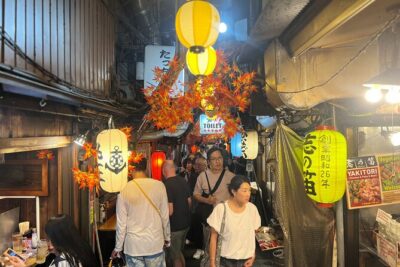
Shinjuku Food Tour (13 Dishes at 4 Local Eateries)
Read our review →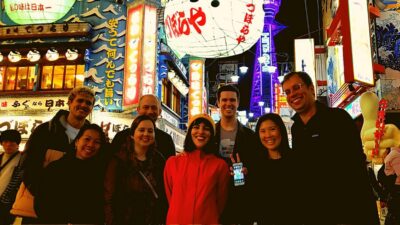
Shinsekai Food Tour with 13-15 Dishes at 5 Eateries
Read our review →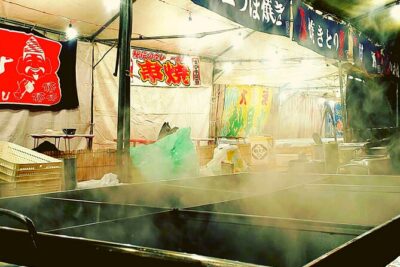
Osaka Food Tour: 13 Dishes at 5 Local Eateries
Read our review →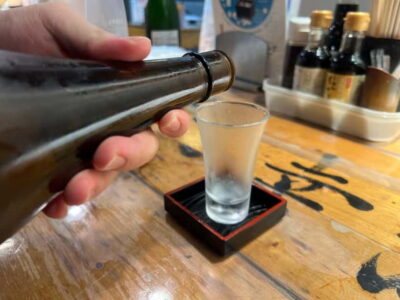
Shinjuku Food Tour (15 Dishes and 4 Eateries)
Read our review →
Best of Shinjuku: Izakaya Food Tour (4 Stops, 14+ Tastings)
Read our review →
Kyoto Night Foodie Tour in Gion (9+ dishes + 6 Sake tastings)
Read our review →
Hungry Osaka Street Food Tour:15 Tastings & 3 Drinks with a Local
Read our review →
Tokyo Night Foodie Tour in Shinjuku – Seasonal Sushi, Wagyu Beef
Read our review →Browse the lists this tour appears in