
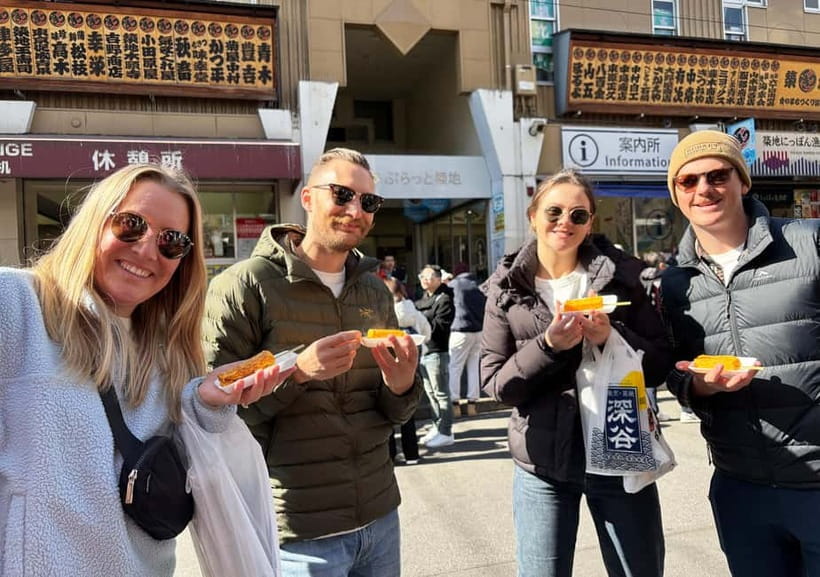
Reviewed · MARKETS AND FOOD HALLS
Tsukiji Fish Market: Street Food & Culture Walking Tour
Come hungry, leave better informed. This two-hour walk gives you a useful introduction to Tsukiji Outer Market, combining seafood, wagyu, traditional snacks, and Japanese food customs with a visit to Tsukiji Hongwanji Temple. I especially like the fresh-grated wasabi offered during the experience and the freedom to choose what you want to sample rather than being pushed through one fixed meal.
The guides also earn strong praise for their food knowledge and personal attention. Kawa, George, Mao, Tomo, Chihiro, Kenny, and Daichi are among the guides singled out for clear English, good vendor choices, and helpful explanations. The main consideration is the market calendar: on Wednesdays, Sundays, and national holidays, about half the shops may be closed, so your visit can feel less complete.
In This Review
- Key things to know before you book
- Why Tsukiji works best with a guide
- Starting at Tsukiji Hongwanji Temple
- Eighty minutes among Tsukiji’s food stalls
- Tuna, wagyu, and the value of choosing your own bites
- What the guide adds to the market experience
- Timing, closures, and the Wednesday problem
- Is the $22 price good value?
- Accessibility and practical comfort
- Who should book this Tsukiji tour?
- Should you book it?
- FAQ
- Where does the tour begin?
- How long does the experience last?
- What foods can I try?
- Is fresh wasabi included?
- Do I need to bring cash?
- Are food purchases included in the $22 price?
- Can I take the tour on a Wednesday or Sunday?
- Is the tour offered in English?
- Is the tour wheelchair accessible?
- Can I book a small group?
Key things to know before you book
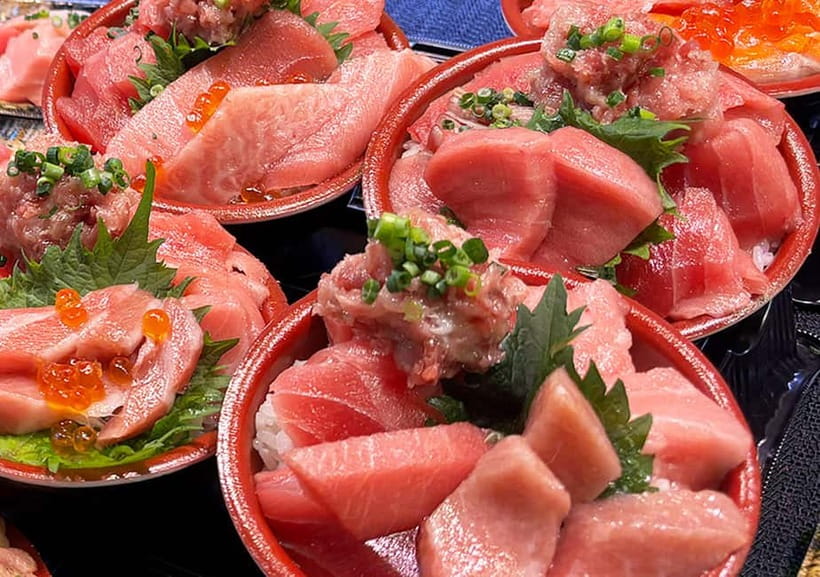
- Fresh wasabi changes the meal: The guide’s special wasabi set adds a clean, sharp flavor to seafood and other dishes.
- The tasting is flexible: You can try tuna, wagyu, scallops, eel, fish cake, dumplings, omelet, octopus, and other market foods, with many purchases made according to your appetite and budget.
- The temple sets the cultural tone: Tsukiji Hongwanji introduces the area through architecture, purification customs, and local history before the food stops begin.
- Wednesday is a compromise: Tours still operate, but around half the outer-market shops may be closed.
- Two hours is a useful length: You get an orientation without spending half your day in one market.
- Bring cash: This is an important practical detail for buying food and souvenirs at individual stalls.
Why Tsukiji works best with a guide
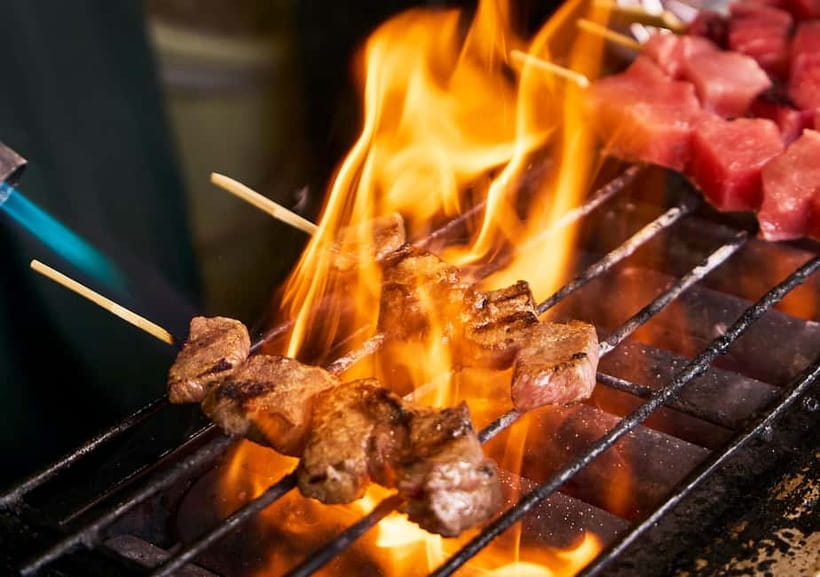
Tsukiji is easy enough to reach, but less easy to understand once you arrive. The outer market is a dense collection of food shops, counters, small restaurants, ingredient sellers, and specialty stores. Without guidance, you can certainly browse, but you may not know which foods are worth trying, how to use unfamiliar ingredients, or which stalls offer a fair price.
That is where this tour earns its $22 price. You are not paying for a long bus ride or a grand attraction ticket. You are paying for a local interpreter who helps you read the market.
I like this kind of tour early in a Tokyo visit. It gives you a practical introduction to Japanese ingredients and helps you return later with more confidence. Several guides also share tips for shopping on your own after the walk, which adds value beyond the two-hour schedule.
The experience has a 4.8 rating from 259 reviews, with repeated praise for the food choices, guide personalities, and explanations of local customs. The strongest theme is not simply that the food tastes good. It is that the guides make unfamiliar food feel approachable.
More Food Tours in Tokyo
- Tokyo: Shinjuku Food Tour (13 Dishes at 4 Local Eateries)
★ 5.0 · 6,603 reviews - Tokyo: Shinjuku Food Tour (15 Dishes and 4 Eateries)
★ 4.9 · 2,033 reviews - Best of Shinjuku: Izakaya Food Tour (4 Stops, 14+ Tastings)
★ 5.0 · 1,863 reviews
Starting at Tsukiji Hongwanji Temple
The tour begins at Tsukiji Hongwanji Temple, with two listed meeting options at the temple itself. Confirm the exact meeting point for your booking, since the meeting arrangement can vary. There has been occasional confusion about where to meet, although one guide called to make sure the group connected successfully.
The temple is a smart first stop. Its striking exterior, carvings, and unusual architectural style provide a change of pace from the food stalls. Inside, you get a quiet beginning before entering the market crowds.
The guided temple visit lasts about 20 minutes. That is enough time to hear about the site, observe the interior, and learn about purification customs before entering a shrine or temple area. One guest specifically appreciated learning how to carry out the purification procedure, while another enjoyed hearing about the surrounding temples and shrines.
I would not book this tour expecting an extended religious sightseeing visit. The temple portion is an introduction, not a full architectural tour. Still, it gives the morning a useful sense of place. Tsukiji is not only a place to eat fish. It is a neighborhood where food, commerce, faith, and daily life overlap.
Eighty minutes among Tsukiji’s food stalls
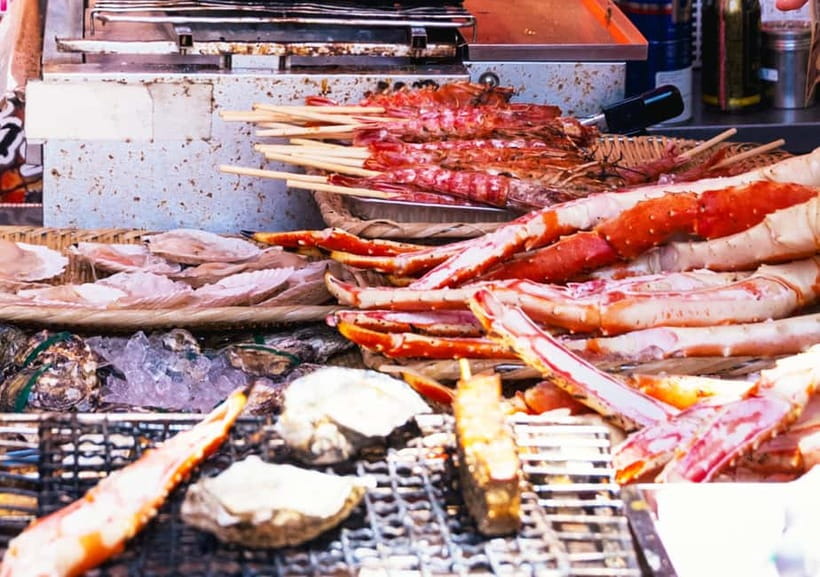
Most of the experience takes place in the outer market. The main market visit and tasting section lasts about 80 minutes, followed by another 20-minute guided portion in the market area. Together, those 100 minutes give you time to look, ask questions, sample food, and learn how the shops operate.
The exact food selection changes with the day and the vendors open at the time. You might encounter:
- Fresh tuna and sushi
- Wagyu, including sirloin skewers
- Grilled scallops
- Eel
- Fish cake
- Japanese omelet
- Dumplings
- Skewered octopus
- Traditional rice snacks
- Other seafood and market specialties
The reviews make clear that this is not a single plated tasting menu. You are guided from one food stop to another, and you may choose what appeals to you. Some people eat a great deal, while others sample selectively. That flexibility matters because Tsukiji can become expensive if you purchase everything that catches your eye.
One of the tour’s strengths is the way guides adjust to the group. Kawa is praised for asking about preferences and explaining each bite in detail. Tomo is noted for tailoring recommendations to the group. Kenny is praised for keeping the experience intimate and helping guests avoid long lines. Naoto reportedly handled lines while others explored nearby stalls, which made the process easier for the group.
These small touches can make a big difference. A market food tour should not feel like a race from one counter to the next. You want enough explanation to understand what you are eating, along with enough freedom to say yes, no, or perhaps later.
Tuna, wagyu, and the value of choosing your own bites
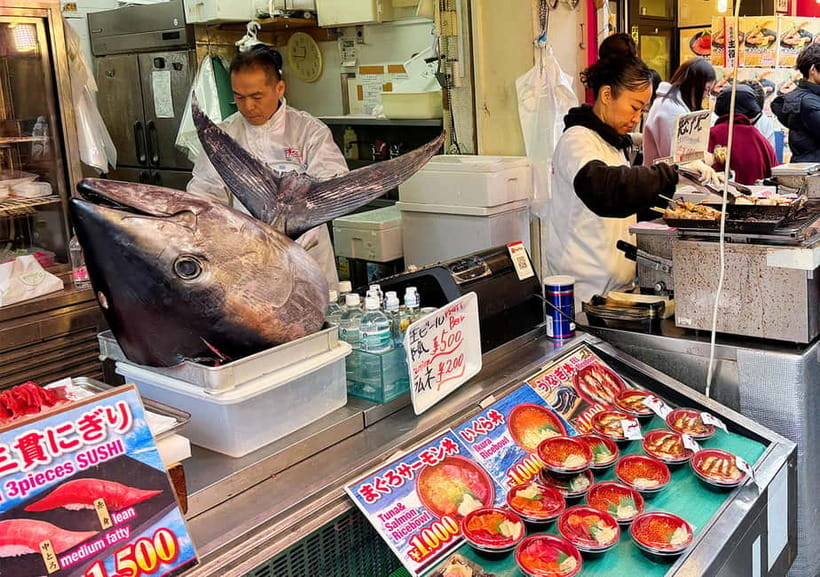
The food is the obvious draw, but the range is what makes the tour useful. Tuna gives you a direct taste of Tsukiji’s seafood identity. Wagyu adds a different texture and flavor, while grilled scallops, eel, octopus, and fish cake show how broad Japanese market food can be.
Several people particularly enjoyed the wagyu skewer. Others highlighted sushi, sashimi, grilled scallops, and eel. A fish-cutting demonstration was also praised, although it may not be available in the same form when shops are closed or the market schedule changes.
The tour is a good fit if you are curious but cautious. Your guide can explain ingredients and cooking methods before you commit. One guide was praised for helping a guest feel comfortable trying unfamiliar foods. That is more useful than simply pointing at a stall and saying it is good.
You also get a glimpse of Japanese food craftsmanship. The market is not just about raw fish. It is about careful cutting, grilling, seasoning, preservation, and presentation. Traditional preservation methods help develop umami, and guides explain how ingredients are used in Japanese cooking.
The fresh wasabi is a memorable detail. Several people singled it out, and one guide was praised for grating it fresh. It is sharper and more fragrant than the familiar green paste served in many restaurants. Used with tuna or other seafood, it can make you rethink how wasabi is meant to taste.
More Markets and Food Halls in Tokyo
- Tokyo Tsukiji Fish Market Food and Culture Walking Tour
★ 5.0 · 3,184 reviews - Tokyo: Tsukiji Fish Market Food and Walking tour
★ 5.0 · 1,724 reviews - Senkyaku Banrai Toyosu Manyo Club Onsen Experience in Tokyo
★ 4.7 · 1,690 reviews - Tokyo: Tsukiji Fish Market Guided Walking Tour
★ 4.9 · 1,397 reviews
What the guide adds to the market experience
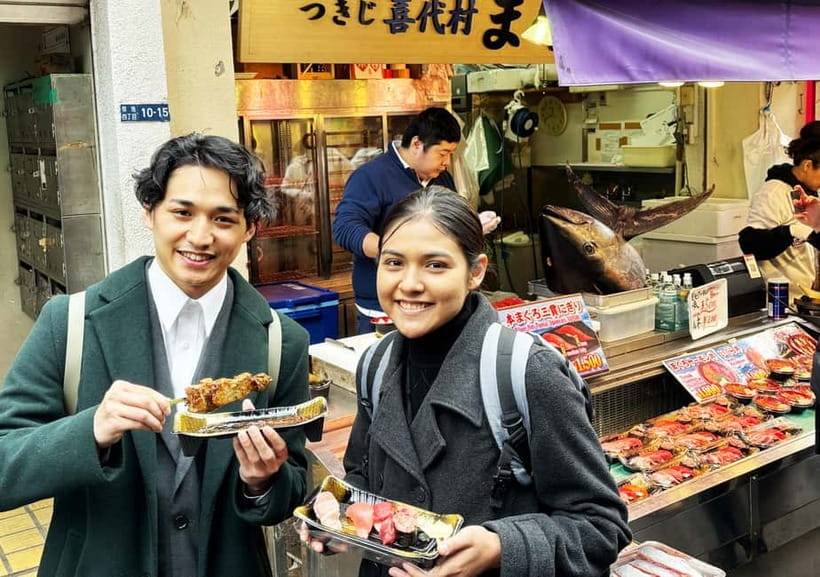
The market itself supplies the sights, smells, and food. The guide supplies the context. That distinction is important.
A good guide can explain why one ingredient is prized, how a food is prepared, or what to look for when shopping. The most praised guides are described as friendly, clear, and attentive, rather than simply reciting facts. George receives repeated praise for his English and detailed explanations. Kawa is often described as careful and responsive. Mao, Tomo, Chihiro, Daichi, and Kenny also receive strong approval for combining food advice with cultural information.
This personal approach is especially helpful when the market is crowded. It can be hard to stop and study a shop sign while people are moving around you. A guide helps you focus on the interesting details instead of trying to decode the whole market at once.
The experience may also be very small. One person described having what felt like a private tour, while another found the group intimate. Group size can vary, but a small group is available, and that is worth considering if you prefer to ask questions or request particular foods.
There is one fair criticism: the market is accessible enough that an independent visitor could explore it with some preparation. If you have already researched Tsukiji and feel comfortable ordering Japanese food, you may find the tour less necessary. The value comes from the explanations, introductions, and food decisions, not from access to a restricted site.
Timing, closures, and the Wednesday problem
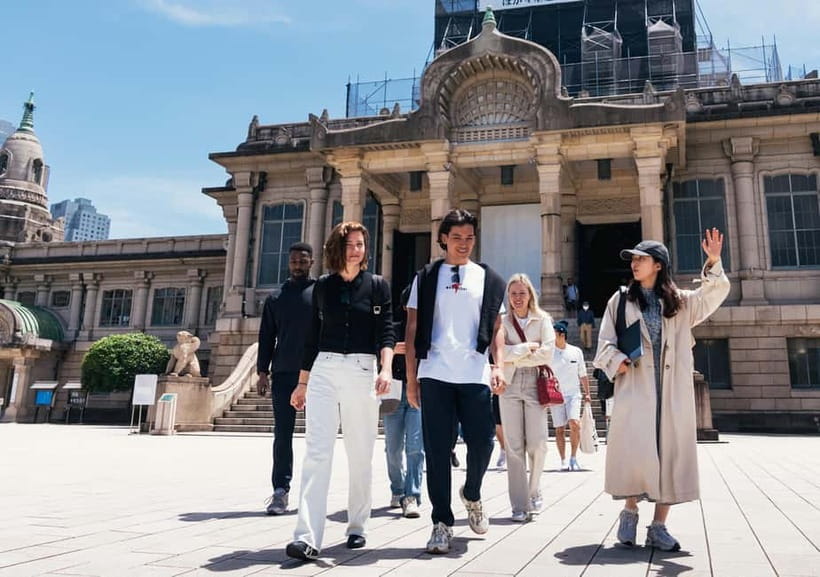
Plan the day carefully. On Wednesdays, Sundays, and national holidays, about half of the Tsukiji Outer Market shops may be closed. The tour still runs, and some shops remain open, but you should expect fewer choices and a different atmosphere.
This is not a minor footnote if the market is your main reason for booking. A Wednesday visit was specifically described as less satisfying because fewer stalls were operating and a fresh-fish cutting display was not available. If you can choose freely, I would avoid those closure days.
The tour lasts two hours, and starting times depend on availability. The pace should suit most visitors, but you will be walking and standing at food counters. In hot weather, one guide made a point of finding shade for the group, which shows the kind of practical care you can appreciate in summer.
Bring cash. The tour information specifically calls for it, and individual food purchases may be separate from the $22 tour price. Since the experience lets you spend as much or as little as you want on market food, cash gives you control over the day.
Is the $22 price good value?
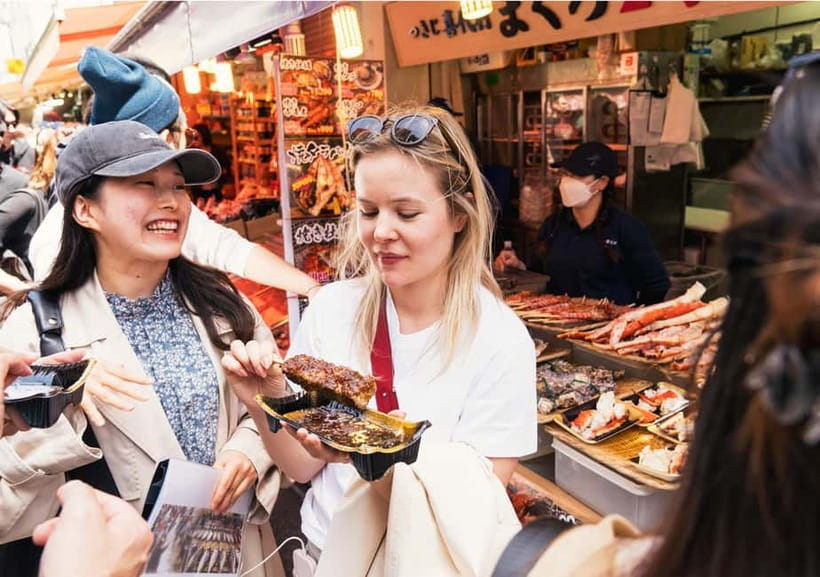
At $22 per person, this is inexpensive for a guided food experience in central Tokyo. The price is especially fair if you use the tour as your market orientation and then return later to shop independently.
You should understand what you are buying. The fee includes the guided walk, the temple visit, market guidance, and food-related instruction. The food situation is flexible, and comments about spending as much or as little as you want indicate that not every bite is part of one fully prepaid meal. Bring extra cash if you want tuna, wagyu, sushi, scallops, or several snacks.
That flexibility is a strength for mixed groups. One person may want a sashimi bowl, while another prefers grilled food or a small sweet. You are not locked into the same menu. On the other hand, anyone expecting a completely inclusive food tour should check the exact booking terms before paying.
The guide’s recommendations can also help you avoid poor-value purchases. George was praised for finding good food at reasonable prices, and other guides helped direct people to worthwhile shops. At a market where attractive displays can tempt you into impulse purchases, that advice has real value.
Accessibility and practical comfort
The activity is listed as wheelchair accessible, and a small-group option is available. Still, the market is an active commercial area with crowds, narrow passages, and food counters, so you may want to confirm your specific needs before booking.
English is the listed tour language, and the guides are repeatedly praised for speaking clearly. The duration is short enough to fit before lunch, after breakfast, or alongside other central Tokyo sightseeing.
You should wear comfortable shoes and bring cash. Napkins and wipes have been provided by guides in some cases, but I would not rely on that. The food is handled in a market setting, so a little practical preparation helps.
Who should book this Tsukiji tour?
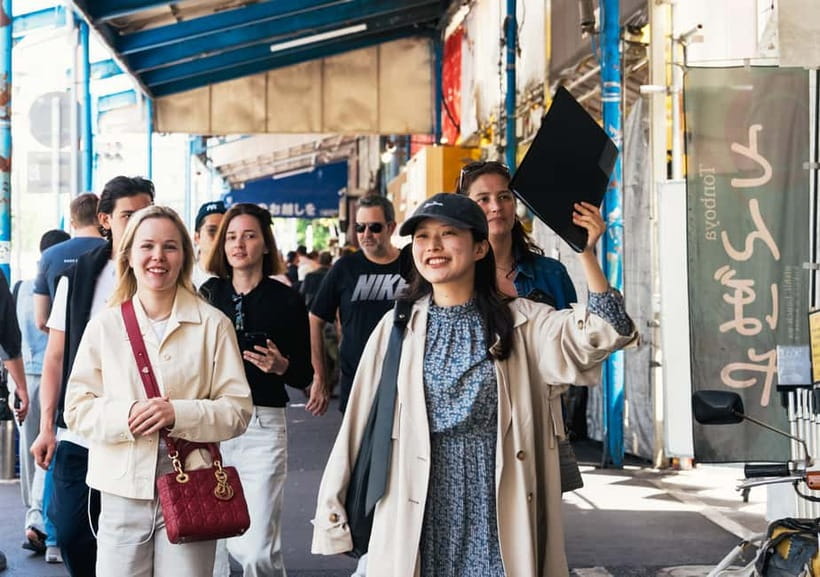
I would recommend it most strongly to:
- First-time visitors to Tokyo
- People who want to try Japanese food but need help choosing
- Families or groups with different appetites
- Visitors interested in food traditions, not just eating
- Anyone who wants a short introduction before exploring Tsukiji alone
- People who value a small-group, conversational experience
You may not need it if you have already spent time in Tsukiji, speak Japanese, or prefer to make every food decision yourself. Independent exploration is possible, and the market is not a museum requiring a guide.
Still, the combination of temple, food stalls, fresh wasabi, market history, and vendor advice gives the tour more substance than a simple snack crawl. It helps you understand why the food matters.
Should you book it?
Yes, if you want an affordable and friendly introduction to Tsukiji with real food choices and useful cultural context. I would book it on a day when most shops are open, carry cash, and arrive ready to sample several small portions rather than expecting one formal meal.
The best reason to go is the guide. A strong guide turns a crowded market into a readable place, helps you try foods you might otherwise skip, and leaves you with enough confidence to return on your own. At $22, that is a sensible investment, especially near the start of a Tokyo trip.
FAQ
Where does the tour begin?
The tour begins at Tsukiji Hongwanji Temple. Two starting location options are listed at the temple, so confirm the exact meeting point for the option you book.
How long does the experience last?
The tour lasts two hours. It includes about 20 minutes at Tsukiji Hongwanji Temple, about 80 minutes of guided market exploration and food tasting, and another 20 minutes in the outer market area.
What foods can I try?
Possible tastings include tuna, sushi, wagyu, grilled scallops, eel, fish cake, Japanese omelet, dumplings, skewered octopus, rice snacks, and other traditional market foods. The selection can vary.
Is fresh wasabi included?
The experience highlights a special wasabi set from the guide, and several guides have offered freshly grated wasabi. Check the exact details of your booking if you need to confirm what is included.
Do I need to bring cash?
Yes. Cash is specifically listed as something to bring. It is useful for purchasing individual foods and other items from market shops.
Are food purchases included in the $22 price?
The tour includes food tasting, but the experience also allows you to spend as much or as little as you want at the stalls. Check the booking terms to confirm which tastings are covered and bring cash for additional purchases.
Can I take the tour on a Wednesday or Sunday?
Yes, tours are still possible on Wednesdays, Sundays, and national holidays. However, about half of the Tsukiji Outer Market shops may be closed on those days.
Is the tour offered in English?
Yes. English is the listed tour language, and the experience includes a live English-speaking guide.
Is the tour wheelchair accessible?
Yes, the activity is listed as wheelchair accessible. You may still wish to confirm the practical arrangements for your specific needs because the tour takes place in an active market.
Can I book a small group?
Yes. A small-group option is available, although the exact group size depends on the option selected.
More Walking Tours in Tokyo
- Tokyo: Imperial Palace and Shogun Historical Walking Tour
★ 5.0 · 2,251 reviews - Tokyo: Shinjuku Local Bar and Izakaya Guided Walking Tour
★ 4.9 · 1,794 reviews - Tokyo: Asakusa Walking Tour with Sensoji Temple Visit
★ 4.8 · 1,583 reviews - Tokyo Castle & Imperial PalaceーShogun Walking Tour
★ 4.7 · 1,068 reviews
Just added in Tokyo
- A One-of-a-Kind Sushi Experience in a Special Place of Japan★ 5.0 · 15 reviews
- Tokyo Cute Bento Cooking Class – Make a Kawaii Character Lunchbox★ 5.0 · 126 reviews
- Japanese Home Cooking Class & Walk in Todoroki Temple Tokyo★ 5.0 · 88 reviews
- Japan Tokyo Tower Observatory Deck E-Ticket★ 4.0 · 34 reviews
- Catch a Baseball Game in Tokyo with a Local – Tickets Included★ 5.0 · 24 reviews
- JDM Experience with Fast&Furious RX-7 (English speaking Driver)★ 5.0 · 57 reviews
- Tokyo Private Day Tour by Car with English speaking Driver Guide★ 4.0 · 29 reviews
- Japan Classic 10 Day – One Life Adventures★ 5.0 · 129 reviews
Markets and Food Halls, compared.
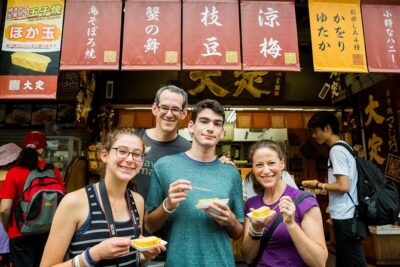
Tokyo Tsukiji Fish Market Food and Culture Walking Tour
Read our review →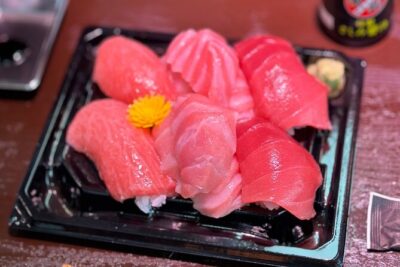

Senkyaku Banrai Toyosu Manyo Club Onsen Experience in Tokyo
Read our review →
Nishiki Market Brunch Walking Tour (7 Tastings + Brunch)
Read our review →
Tokyo Sushi Making Class in Tsukiji with Professional Chef
Read our review →
Tsukiji Fish Market Guided Tour and Sushi Making with Pro Chef
Read our review →Browse the lists this tour appears in