
Reviewed · MARKETS AND FOOD HALLS
Tsukiji Fish Market: Street Food & Culture Walking Tour
Arrive hungry, leave with a better sense of Tokyo.
This two-hour walk brings you into Tsukiji Jogai Market, where food stalls, seafood counters, and traditional cooking techniques provide the main show. I like the chance to explore with a local guide instead of simply wandering from stall to stall, and the fish-cutting demonstration adds a special skill-based feature that most casual market visits lack. The tour also includes a short visit to Tsukiji Hongwanji Temple, giving the morning some cultural balance.
The strongest parts are the fresh food stops and the helpful guides, including George and Tomo, who have received particular praise for explaining the market’s food and customs clearly. The main concern is the group size, which can reach 30 people. In a crowded market, a large group may mean waiting, missed stalls, or difficulty hearing a quiet guide.
In This Review
- Key points before you book
- Starting at Tsukiji Hongwanji Temple
- Forty-five minutes of street food at Tsukiji Jogai Market
- The fish-cutting demonstration and seafood bowl
- Thirty minutes where professional traders work
- A short visit to Tsukiji Hongwanji Temple
- What the guides add to the experience
- Is $33.16 a fair price?
- Who will enjoy this market walk?
- Timing, weather, and practical planning
- Should you book the Tsukiji food tour?
- FAQ
- How long does the Tsukiji Fish Market tour last?
- Where does the tour begin?
- Where does the tour end?
- Is the tour wheelchair accessible?
- Is the tour stroller accessible?
- What is included in the experience?
- Are meals included?
- How many people can join the tour?
- Can I cancel for a full refund?
Key points before you book
- The tour lasts about two hours, with 45 minutes of food exploration, a 30-minute fish-cutting show, 30 minutes around the market, and 15 minutes at Tsukiji Hongwanji Temple.
- The fish-cutting demonstration is the most distinctive feature, showing a chef filleting a whole fish with traditional methods.
- Food is central to the experience, but meals are listed as not included, so bring money for anything you want to eat.
- The meeting point is Tsukiji Hongwanji Temple, at 3-chōme-15-1 Tsukiji, near public transportation.
- The tour is wheelchair and stroller accessible, a useful feature in a market district where access can otherwise be tiring.
- The maximum group size is 30, so ask at the start how the group will stay together in busy lanes.
Starting at Tsukiji Hongwanji Temple
The tour begins at the main hall of Tsukiji Hongwanji Temple, at 3-chōme-15-1 Tsukiji, Chuo City. This is a practical meeting point because it is near public transportation and gives you a clear landmark rather than an anonymous street corner.
The temple visit comes at the end of the listed route, but the meeting point itself helps set the tone. Tsukiji is not only a place to eat seafood. It is also an older commercial district with religious, culinary, and neighborhood traditions packed close together.
The route ends back at the meeting point. That makes the outing easy to fit into a Tokyo morning, especially if you have another activity planned nearby. The tour is mobile-ticket based, and confirmation is provided when you book.
More Food Tours in Tokyo
- Tokyo: Shinjuku Food Tour (13 Dishes at 4 Local Eateries)
★ 5.0 · 6,603 reviews - Tokyo: Shinjuku Food Tour (15 Dishes and 4 Eateries)
★ 4.9 · 2,033 reviews - Best of Shinjuku: Izakaya Food Tour (4 Stops, 14+ Tastings)
★ 5.0 · 1,863 reviews
Forty-five minutes of street food at Tsukiji Jogai Market
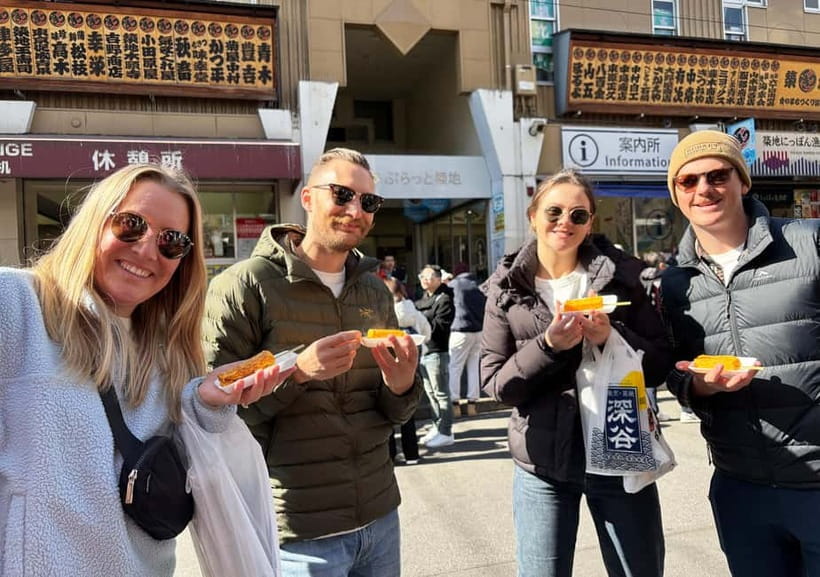
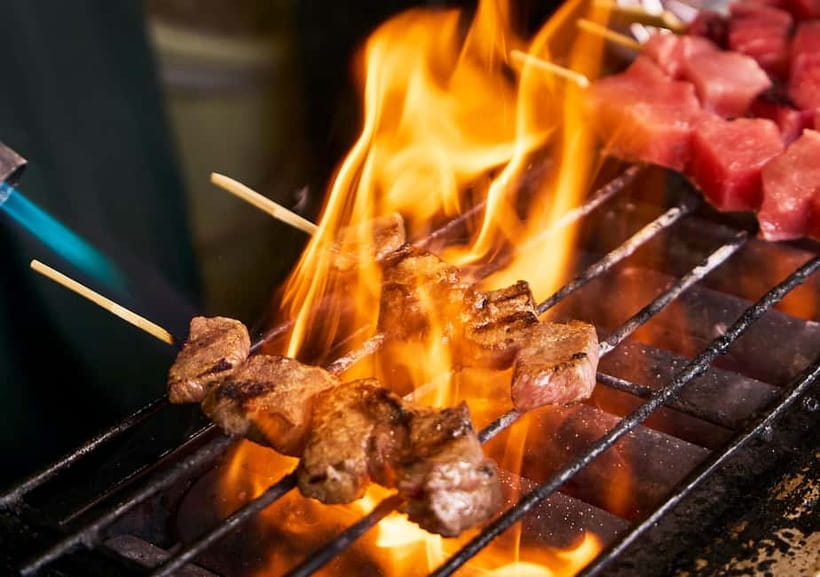
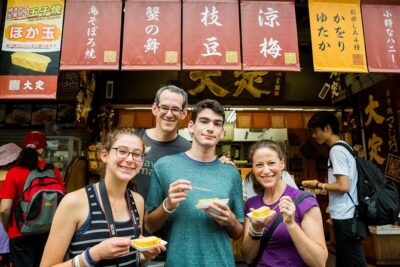
The first major section takes place in Tsukiji Jogai Market, the outer market area known for food shops and places to eat. Your guide leads you through the stalls and helps explain Japanese ingredients, cooking customs, and the role food plays in daily life.
I like this format because Tsukiji can feel confusing at first. There are many signs, small counters, and tempting smells, but a first-time visitor may not know which stalls are worth attention or how different foods fit into Japanese cooking. A local guide can turn the market from a collection of snacks into a lesson in ingredients and eating habits.
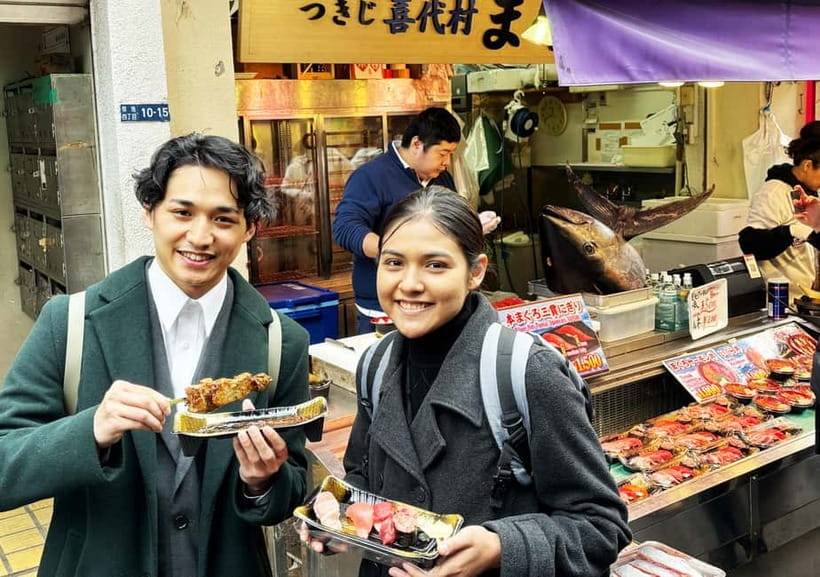
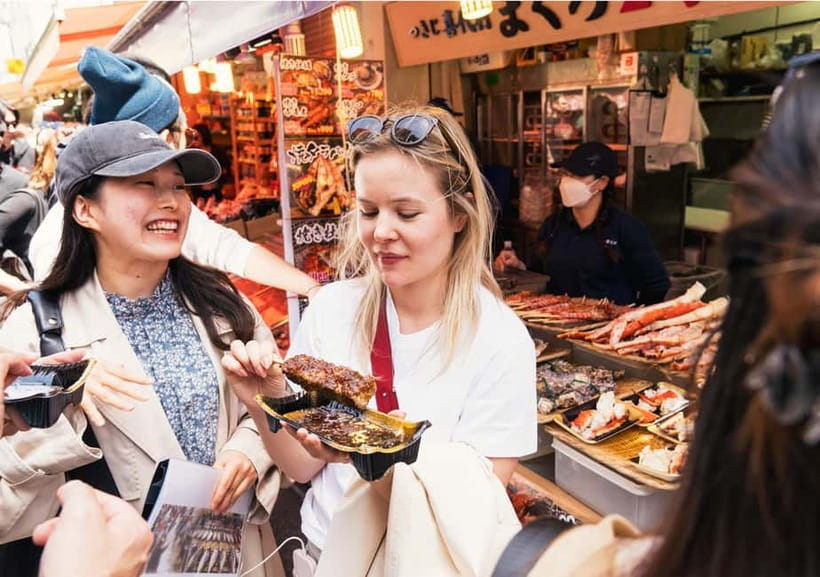
The food element is also very hands-on. You are not simply listening to a talk about Japanese cuisine. You are moving through the market and deciding what looks appealing. The guide can point out popular choices and help you make sense of what you are seeing.
Still, keep your expectations realistic. Meals are not included in the tour price. The description presents the experience as a street-food outing, but you should budget separately for anything you choose to eat. This is important because a low tour price can look less low once you add several market snacks.
The market section may also involve waiting. One three-star account described a lot of stopping and standing, with the visit feeling more like a series of food-stall stops than a steady history walk. If you prefer a fast-moving sightseeing route, the pauses may test your patience. If you enjoy taking your time around food, they may feel more natural.
The fish-cutting demonstration and seafood bowl
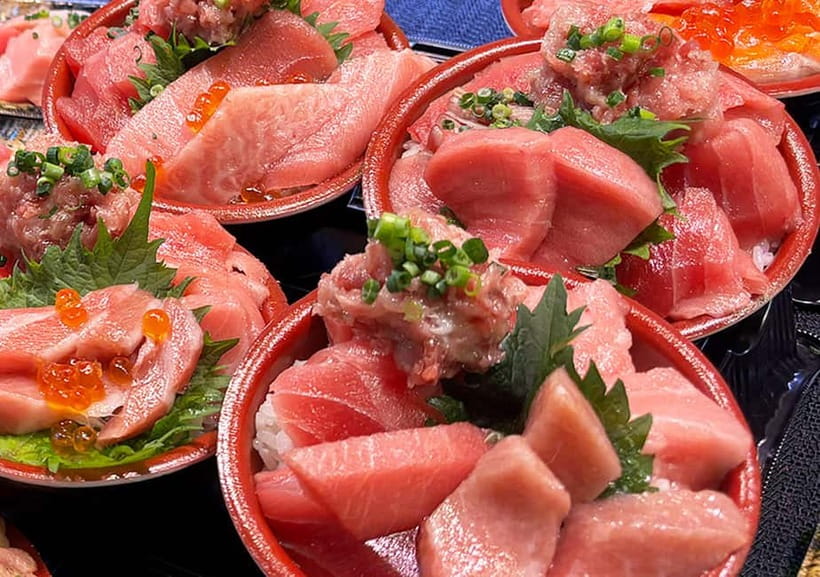
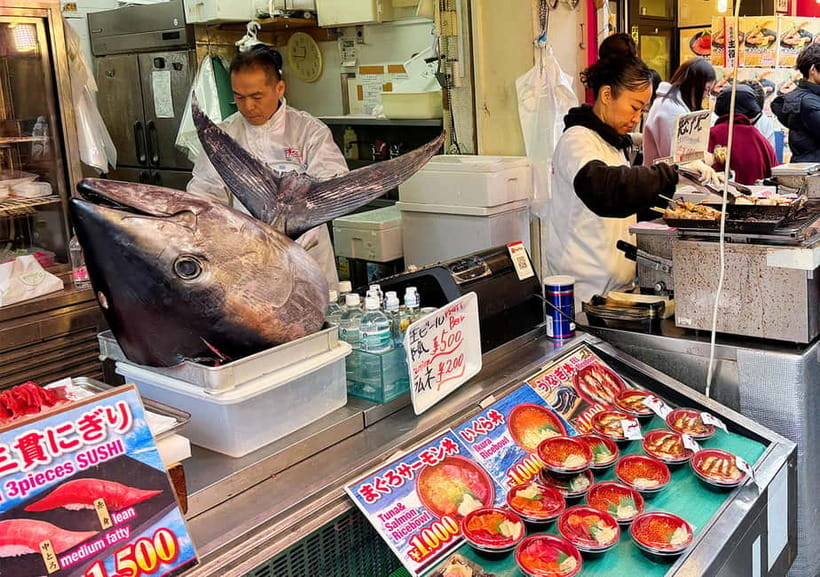
The 30-minute fish-cutting session is the tour’s clearest special feature. A skilled chef fillets a whole fish using traditional techniques, then you have the chance to enjoy a fresh seafood bowl afterward.
This demonstration gives you something more than another tasting stop. Fish preparation in Japan depends on precision, speed, and respect for the ingredient. Watching the process helps explain why knife work and presentation matter so much in Japanese cooking.
The seafood bowl provides a direct link between the demonstration and the meal. You see the craft, then encounter the finished food. That connection makes this part more memorable than a simple stop at a counter.
There is one detail worth clarifying before you go. The tour information says the fish-cutting admission is included, but meals are not included, while also describing a seafood bowl afterward. I would ask the provider what the bowl covers and what you must pay for yourself. Do not assume every food item is part of the $33.16 price.
The demonstration may appeal especially to you if you enjoy cooking, seafood, or food traditions. It may be less appealing if you do not eat fish or want a tour focused mainly on architecture and city history.
Thirty minutes where professional traders work
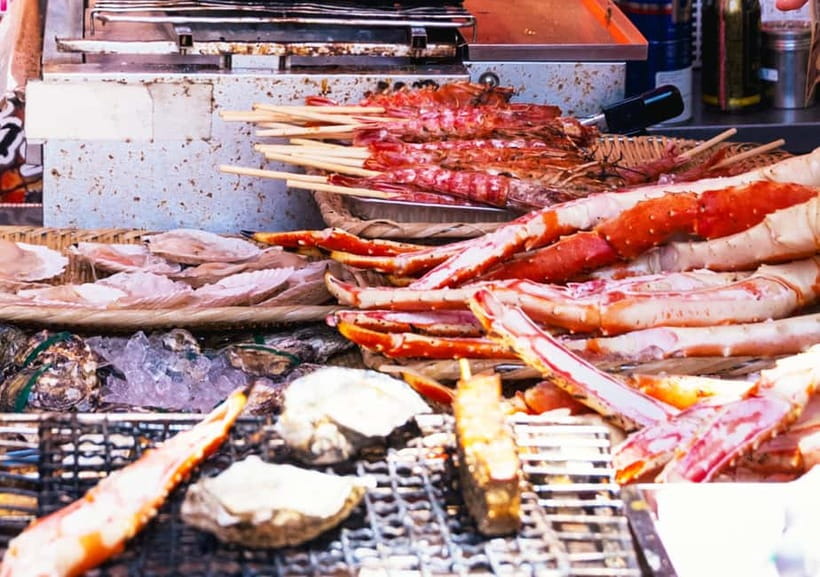
The next 30 minutes take you through the fish-market area, where professional traders operate. This is different from the consumer-facing food stalls. Here, the market’s working side comes into view.
The value of this stop is context. You can better understand that Tsukiji is not just a sightseeing district built around snacks. It remains connected to the business of buying, selling, preparing, and serving seafood.
Your guide can explain how the market works and point out details that are easy to miss on your own. That is one of the strongest reasons to book a guided walk here. Without help, you might see counters and crates but not understand the work taking place around you.
Crowds are the major practical issue. One account described the market as too busy around the New Year period, with the guide not always waiting for the group. Another person found the whole outing hectic and skipped some stalls because of the crowd. I would book outside the busiest holiday periods if your schedule allows, and I would stay near the guide rather than lingering at a stall.
A group of up to 30 people can also make this section harder. The tour is presented as small-group, but the stated maximum is large enough to affect the experience. In narrow lanes, the back of the group may not hear every explanation or see every demonstration.
More Markets and Food Halls in Tokyo
- Tokyo Tsukiji Fish Market Food and Culture Walking Tour
★ 5.0 · 3,184 reviews - Tokyo: Tsukiji Fish Market Food and Walking tour
★ 5.0 · 1,724 reviews - Senkyaku Banrai Toyosu Manyo Club Onsen Experience in Tokyo
★ 4.7 · 1,690 reviews - Tokyo: Tsukiji Fish Market Guided Walking Tour
★ 4.9 · 1,397 reviews
A short visit to Tsukiji Hongwanji Temple
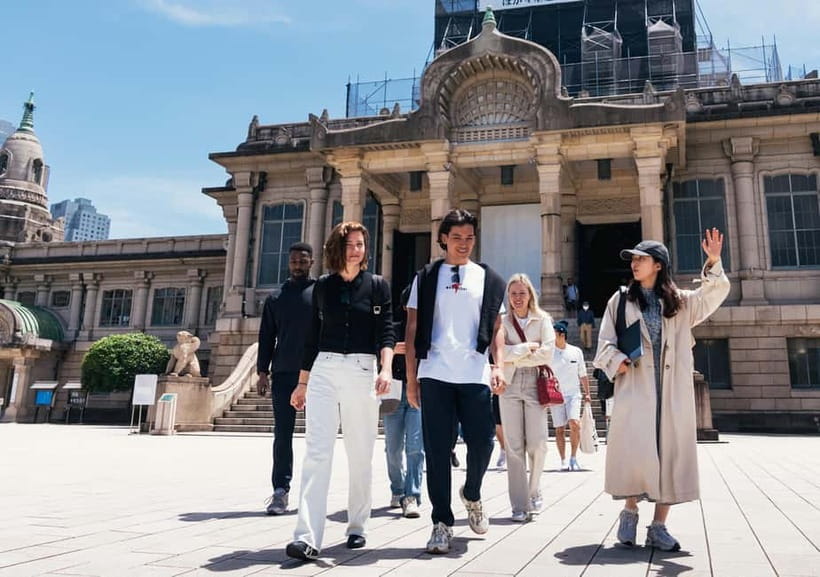
The final 15-minute stop is Tsukiji Hongwanji Temple. A local guide explains the temple’s appeal and introduces aspects of Buddhism and Japanese culture.
This is a brief visit, not a full temple tour. That matters when you set expectations. You will receive a compact cultural introduction, but you should not expect a long architectural lecture or extended time for quiet reflection.
Some people found the temple stop added little to the tour. I can understand that reaction, especially if your main reason for booking is food. Fifteen minutes is enough for orientation and a few points of context, but not enough for a detailed study of Buddhism.
For others, the temple provides a welcome change of pace after food stalls and market crowds. It gives the route a more complete view of Tsukiji, linking eating, work, religion, and local life in one compact walk.
What the guides add to the experience
The guide quality will shape this tour more than almost anything else. George received strong praise for leading people to good places to try food, while Tomo was singled out for explaining history and culture clearly in English.
That difference is useful to understand. Some guides may focus more on tasting and stall selection. Others may give you more background about Tokyo, the market, and Japanese customs. The basic route stays similar, but the balance between food and explanation may vary.
Good guiding is especially valuable in Tsukiji because the setting can overwhelm you. A guide can help you choose where to pause, explain unfamiliar ingredients, and keep the group moving. The best accounts describe guides who explained things well and made the market easier to understand.
Communication can be a problem in a crowded outdoor setting. One person found a guide’s voice too quiet to hear, particularly with people and activity around the group. If you have trouble hearing, tell the guide early and stay close. If you need regular shade breaks, mention that before the walking portion begins. One person specifically felt that requests to avoid direct sun were not handled well.
The provider is called Local Guide Stars, and the experience has a five-out-of-five average from 669 ratings, with 99 percent recommending it. Those numbers suggest a generally strong experience, but the individual accounts show why guide style, crowd levels, and group management still matter.
Is $33.16 a fair price?
At $33.16 per person, this is a modestly priced guided experience for Tokyo. The value depends on how much help you want inside the market.
If you only want to walk around Tsukiji and choose your own food, you can explore independently and keep the cost focused on what you eat. That may suit confident visitors who enjoy finding their own way and do not need explanations.
The tour earns its price through the human guidance, fish-cutting demonstration, cultural interpretation, and organized route. For a first visit, I like the way it combines food with a little context rather than treating the market as a simple eating stop.
The value becomes weaker if you expect every tasting to be covered or if you want a detailed historical tour. Meals are not included, and some people found the history limited. The temple stop is short, and crowd delays can reduce the amount of time you spend actually seeing market stalls.
I would consider the price fair for a short introduction, especially if you are new to Japanese food culture. I would be less eager to book it if your main goal is a quiet, unhurried market visit or a full meal included in the ticket.
Who will enjoy this market walk?
I would recommend the tour most to:
- First-time visitors to Tsukiji who want help choosing what to see and eat
- People interested in Japanese cooking, seafood, and knife skills
- Visitors who enjoy a guided introduction rather than independent wandering
- Families using a stroller, since the activity is listed as stroller accessible
- Wheelchair users looking for an accessible market experience
- Anyone with only two hours who wants food, culture, and a temple visit in one outing
You may want to skip it if you dislike seafood, need a very quiet tour, or prefer detailed history over food stops. It may also frustrate you during a very crowded period, particularly if staying close to the guide is difficult.
The experience is listed as accessible for wheelchairs and strollers, and most people can participate. Even so, market conditions can change how easy the walk feels. A crowded public market is still a crowded public market, so ask the provider about the expected group size and route if you have specific mobility needs.
Timing, weather, and practical planning
Plan on two hours, though waiting and crowd control may affect the pace. The four planned sections add up to the full duration: 45 minutes in the outer market, 30 minutes for the fish-cutting show and seafood bowl, 30 minutes around the working fish market, and 15 minutes at the temple.
Wear comfortable shoes and arrive ready to stay with the group. The market route involves frequent stops, and losing sight of the guide can be easy when several people gather around a food stall.
Bring extra spending money because meals are not included. The seafood bowl is part of the stated sequence, but the description does not make clear whether its cost is covered, so confirm that point before booking.
The tour requires good weather. If poor weather causes cancellation, you will be offered another date or a full refund. You can also cancel for a full refund up to 24 hours before the start time. Changes or cancellations made less than 24 hours ahead are not accepted, and the cut-off uses Tokyo local time.
Should you book the Tsukiji food tour?
Book it if you want an easy first look at Tsukiji, enjoy trying food with guidance, and like the idea of seeing a whole fish prepared in traditional fashion. The fish-cutting show, seafood focus, and help from guides such as George or Tomo give the tour more purpose than simply walking through the market alone.
Think twice if you want a small, quiet group, a long history lesson, or food included in the ticket. A maximum of 30 people can feel large, and crowding may lead to waiting, missed stalls, or difficulty hearing.
For most first-time visitors who want a short and affordable introduction, I would book it, then arrive hungry and prepared to pay separately for food. If you already know Tsukiji well, you may get more value by exploring independently and spending the same money on dishes you choose yourself.
FAQ
How long does the Tsukiji Fish Market tour last?
The tour lasts approximately two hours.
Where does the tour begin?
It begins at Tsukiji Hongwanji Temple, at 3-chōme-15-1 Tsukiji, Chuo City, Tokyo 104-0045, Japan.
Where does the tour end?
The activity ends back at the meeting point.
Is the tour wheelchair accessible?
Yes. The tour is listed as wheelchair accessible.
Is the tour stroller accessible?
Yes. The tour is listed as stroller accessible.
What is included in the experience?
The tour includes a guided visit to Tsukiji Fish Market and insights into Japanese cooking and ingredients. Admission to the fish-cutting show is included.
Are meals included?
Meals are listed as not included. The experience describes a seafood bowl after the fish-cutting show, so confirm with the provider whether that bowl requires separate payment.
How many people can join the tour?
The activity can have a maximum of 30 travelers.
Can I cancel for a full refund?
Yes. You can cancel at least 24 hours before the start time for a full refund. Cancellations or changes made less than 24 hours before the start time are not accepted, and poor-weather cancellations offer a different date or a full refund.
More Walking Tours in Tokyo
- Tokyo: Imperial Palace and Shogun Historical Walking Tour
★ 5.0 · 2,251 reviews - Tokyo: Shinjuku Local Bar and Izakaya Guided Walking Tour
★ 4.9 · 1,794 reviews - Tokyo: Asakusa Walking Tour with Sensoji Temple Visit
★ 4.8 · 1,583 reviews - Tokyo Castle & Imperial PalaceーShogun Walking Tour
★ 4.7 · 1,068 reviews
Just added in Tokyo
- A One-of-a-Kind Sushi Experience in a Special Place of Japan★ 5.0 · 15 reviews
- Tokyo Cute Bento Cooking Class – Make a Kawaii Character Lunchbox★ 5.0 · 126 reviews
- Japanese Home Cooking Class & Walk in Todoroki Temple Tokyo★ 5.0 · 88 reviews
- Japan Tokyo Tower Observatory Deck E-Ticket★ 4.0 · 34 reviews
- Catch a Baseball Game in Tokyo with a Local – Tickets Included★ 5.0 · 24 reviews
- Japan Classic 10 Day – One Life Adventures★ 5.0 · 129 reviews
- JDM Experience with Fast&Furious RX-7 (English speaking Driver)★ 5.0 · 57 reviews
- Tokyo Private Day Tour by Car with English speaking Driver Guide★ 4.0 · 29 reviews
Markets and Food Halls, compared.
Tokyo Tsukiji Fish Market Food and Culture Walking Tour
Read our review →

Senkyaku Banrai Toyosu Manyo Club Onsen Experience in Tokyo
Read our review →
Nishiki Market Brunch Walking Tour (7 Tastings + Brunch)
Read our review →
Tokyo Sushi Making Class in Tsukiji with Professional Chef
Read our review →
Tsukiji Fish Market Guided Tour and Sushi Making with Pro Chef
Read our review →Browse the lists this tour appears in