
Reviewed · SUMO EXPERIENCES
Tokyo Sumo Experience: Chanko & Mochi with a Former Pro
Sumo is more fun up close. In Ryogoku, Tokyo’s sumo district, you sit beside the dohyo and watch powerful wrestlers demonstrate techniques, training, and real bouts at close range. I like the mix of good food and hands-on fun, especially the chanko nabe meal and mochi pounding. The main drawback is that this is an entertaining introduction to sumo, not a quiet look at serious morning training.
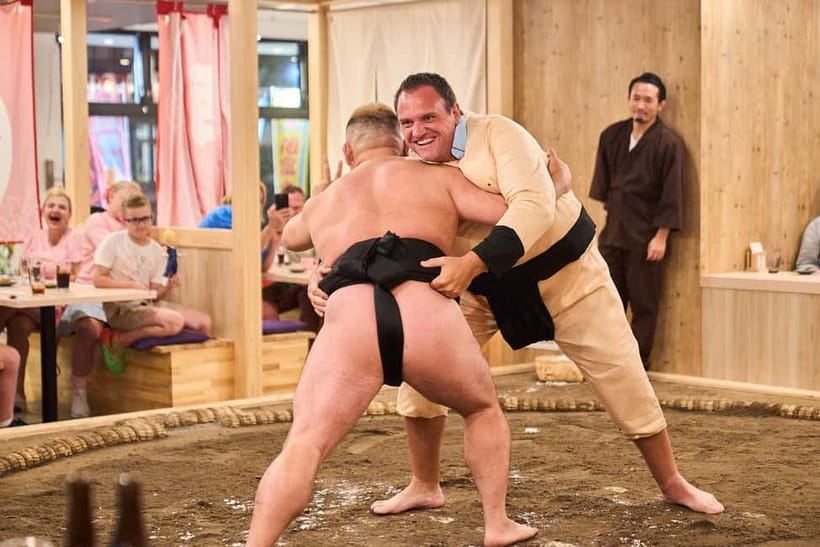
The second strength is the friendly, well-managed audience participation. You can try sumo techniques, step onto the ring, and test your strength against a wrestler, while children and adults are encouraged to join. At $103 per person for two hours, it is not a cheap meal, but the show, food, instruction, and activities make the price reasonable for families and first-time sumo fans.
In This Review
- Key Things to Know Before You Go
- Why Ryogoku Is the Right Place for a Sumo Experience
- Sitting Beside the Dohyo
- Chanko Nabe, the Sumo Stable Meal
- Mochi Pounding Is the Most Playful Part
- Your Turn on the Sumo Ring
- What the Two-Hour Schedule Feels Like
- How Much Value Do You Get for $103?
- Who Will Enjoy This Most?
- Booking Advice and Final Call
- FAQ
- Where does the Tokyo Sumo Experience take place?
- How long does the experience last?
- How much does it cost?
- Is a meal included?
- Can I try sumo wrestling?
- Is mochi making included?
- What languages are available?
- Can children participate?
- Can dietary meals be arranged?
- Is the experience wheelchair accessible?
- Can I choose my seat?
- Can I cancel my reservation?
Key Things to Know Before You Go
- Ryogoku setting: The venue is a short walk from Ryogoku Station, marked by a large sumo wrestler sign and flags.
- Chanko nabe included: You eat the hot pot associated with the sumo lifestyle, with its flavor supervised by wrestlers from an actual stable.
- Three ways to participate: You can pound mochi, practice sumo techniques, and wrestle on the dohyo.
- Family-friendly format: Children and adults can take part, but standard seats require a separate reservation for every person.
- Assigned seating: You cannot choose or request a particular seat. Box seats can hold up to six people and allow a child to sit on a lap.
- Dietary planning matters: Vegetarian, vegan, and gluten-free meals are available if requested at least two days ahead. Halal meals are not available.
Why Ryogoku Is the Right Place for a Sumo Experience
Ryogoku is not a random Tokyo neighborhood chosen for convenience. It is the city’s traditional sumo center, so the setting gives this short activity some useful context before the action begins.
The meeting point is on the first floor, close to Ryogoku Station. Look for the large sumo wrestler sign and flags. One practical tip: allow extra time to find the entrance. The venue can be a little hard to spot, and arriving early is wiser than racing in after the doors open.
Ryogoku also works well as part of a larger day. You can pair the activity with Asakusa, Akihabara, Nihonbashi, or Tokyo Skytree. That makes the two-hour format handy. You get a focused cultural activity without giving up an entire day of sightseeing.
The instruction is offered in English and Japanese. That matters here because the experience depends on explanation, not just watching large men push each other around. You learn about sumo training, techniques, food, and the wrestlers’ lifestyle as the session moves along.
More Sumo Experiences in Tokyo
- Tokyo: Sumo Show Experience with Chicken Hot Pot and a Photo
★ 4.8 · 6,678 reviews - Tokyo: Sumo Live Show with Photo in Shinjuku
★ 5.0 · 3,438 reviews - Tokyo: Sumo Show and Dining Experience
★ 4.8 · 2,742 reviews
Sitting Beside the Dohyo
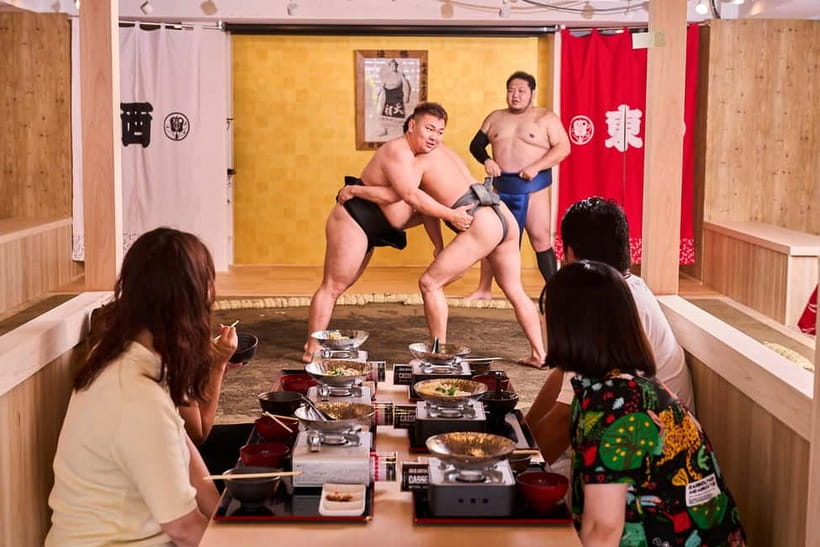
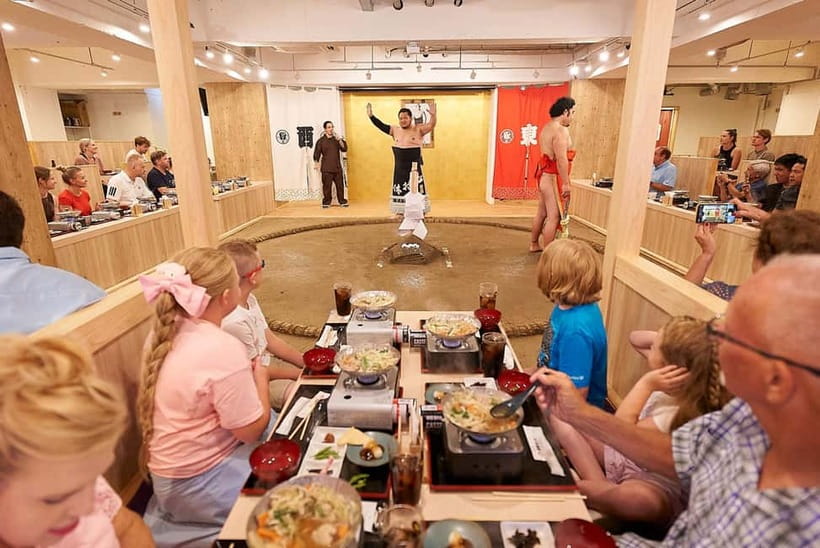
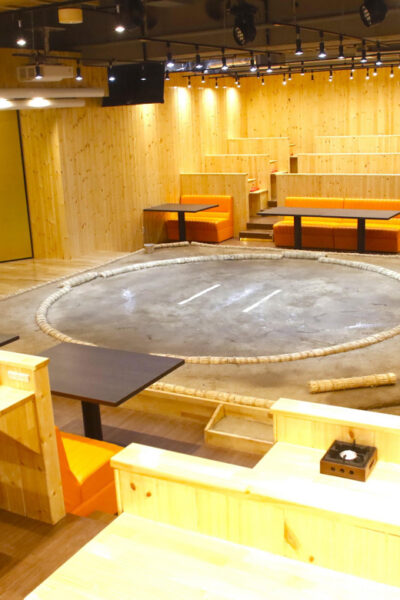
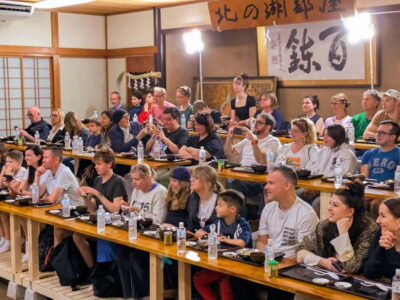
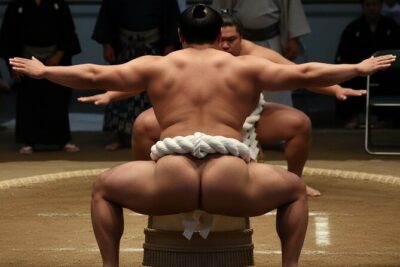
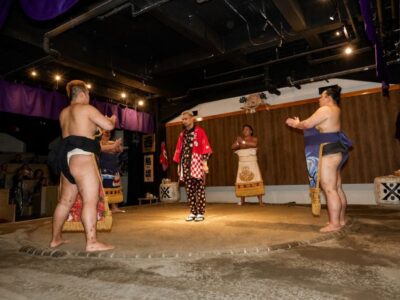
Once seated, you have a close view of the dohyo, the raised sumo ring where the demonstrations and audience activities take place. The central appeal is simple: the wrestlers are directly in front of you, not far away in a giant tournament arena.
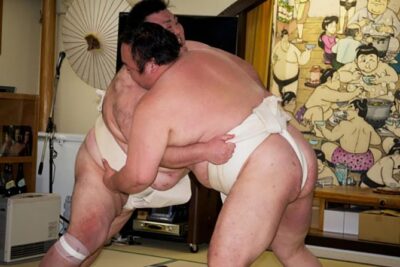
The demonstration portion gives you a sense of sumo’s force and control. You see training movements and techniques, followed by wrestling demonstrations that show how a bout can be won through balance, timing, and position. One session can include several rounds, giving the show enough variety to keep children and adults interested.
I especially like the way the format combines explanation with action. A serious tournament has its own quiet rituals and strict pace, while this experience is built for participation and laughter. You get an accessible introduction rather than a formal sporting event.
That distinction is important. If you want to study professional sumo in silence or watch a full tournament schedule, this is not the right substitute. The presentation is designed as entertainment for adults and children. The wrestlers and host invite you into the action, and the atmosphere is intentionally relaxed.
For most people visiting Tokyo, that is a plus. You do not need to understand the rules before you arrive. The demonstrations give you enough background to appreciate what you are seeing, and the host helps keep the pace moving.
Chanko Nabe, the Sumo Stable Meal
The meal is chanko nabe, a hot pot closely linked with sumo stables. It is served as part of the experience, not added as an afterthought, and the flavor is supervised by wrestlers from an actual stable.
Chanko nabe is a sensible dish for this setting. It is warming, filling, and made to feed people well. The meal has also been praised as fresh, healthy, tasty, and more substantial than some people expected. Even a six-year-old has enjoyed it, which is a useful clue for parents trying to please several age groups at once.
I like that the food connects the show to daily sumo life. You are not merely eating a generic Japanese meal while watching a performance. You are tasting a dish tied to the wrestlers’ diet and training culture.
The food is also part of the value calculation. At $103, you are paying for more than a plate of dinner, but dinner helps make the price easier to accept. You receive the meal, a demonstration, instruction, mochi making, and a chance to participate in sumo. If you would pay separately for a cultural show and a Japanese hot pot meal, the combined cost becomes easier to justify.
A complimentary sour plum drink may also be served. If you have an alcohol allergy, ask about the drink before accepting it, since one version may contain alcohol. This is a small point, but it is worth knowing in advance.
Vegetarian, vegan, and gluten-free meals can be arranged if you notify the venue at least two days before your reservation. Halal meals cannot be provided. You may bring your own food if you need a halal option.
Mochi Pounding Is the Most Playful Part
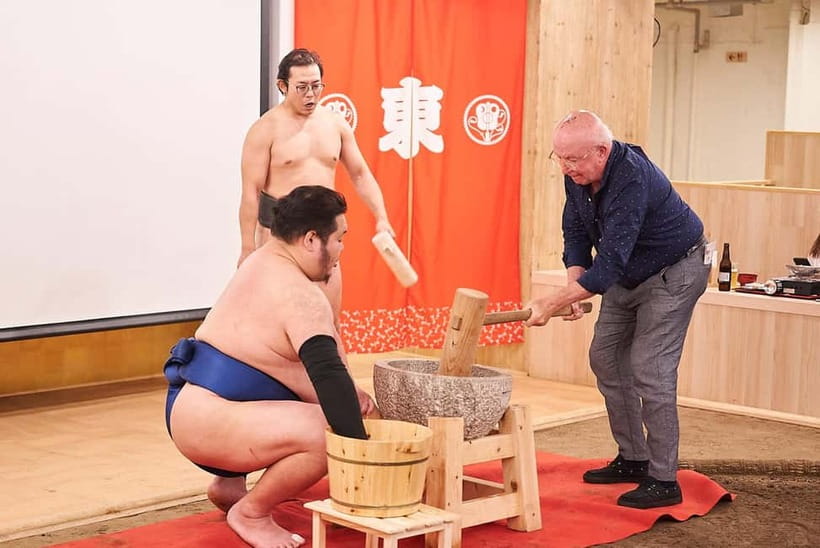
The mochi activity gives the session a second traditional Japanese element. You watch a demonstration of the pounding process, then get a chance to help pound the rice with the wrestlers.
There is a rhythm to mochi pounding. One person strikes the rice with a wooden mallet while another turns and wets it at the right moment. The demonstration is impressive because the timing must be exact. It also makes a good group activity, since the fun comes from taking a turn rather than simply watching a professional do everything.
Afterward, you enjoy sweet mochi for dessert. This is a smart part of the program. The activity is physical enough to be memorable, but the reward is simple and tasty.
Children often respond especially well to the mochi portion because it feels like a game. Adults tend to enjoy it for the same reason. You get to do something with your hands, make a few photographs, and share a laugh without needing athletic ability.
Comfortable clothing is a good idea. You do not need special equipment, but you should expect to move around during the activities. Bring a camera, and keep in mind that the wrestlers, food, mochi, and ring all provide strong photo opportunities.
A completely different kind of day out:
- Tokyo Disney Resort – Tokyo Disneyland & Tokyo DisneySea Park Tickets
★ 4.8 · 99,488 reviews - SHIBUYA SKY Ticket
★ 4.7 · 46,509 reviews - JR Whole Japan Rail Pass
★ 4.8 · 29,150 reviews - Mt Fuji and Hakone 1-Day Bus Tour Return by Bullet Train
★ 5.0 · 26,383 reviews
Your Turn on the Sumo Ring
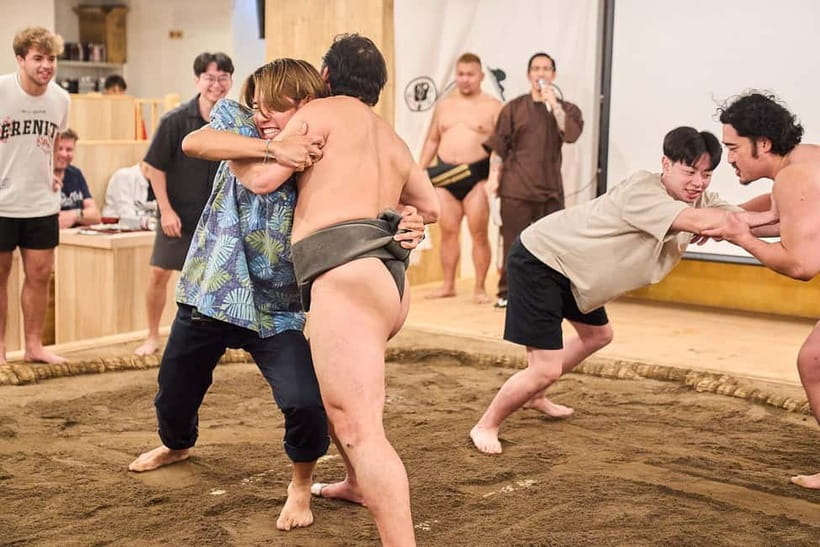
The most talked-about part of the experience is stepping onto the dohyo. You can learn basic sumo techniques and then try a short bout with a wrestler.
This is not a test of who is strongest. The wrestlers control the activity and keep it safe and entertaining. You get the sensation of pushing into a sumo wrestler, while the demonstration shows just how much skill and balance sit behind the sport.
Participation is optional, but I would encourage you to join if you are comfortable. Watching is fun, yet trying the techniques gives you a much clearer sense of sumo’s demands. Even a small movement from a trained wrestler can show how quickly balance disappears.
The format works for mixed groups. Parents can watch children take their turn, friends can encourage one another, and adults who usually avoid audience participation can join without needing to perform alone. The host helps bring people forward and keeps the mood welcoming.
There is a safety detail for families. In standard seats, it is considered dangerous to sit while holding a child on your lap, so reserve a place for every person, including children. Box seats are different: they can seat up to six people and allow a child to sit on a lap.
The activity is not suitable for wheelchair users. That limitation should shape your plans before booking, since the sumo participation and seating setup may not work for anyone who needs wheelchair access.
What the Two-Hour Schedule Feels Like
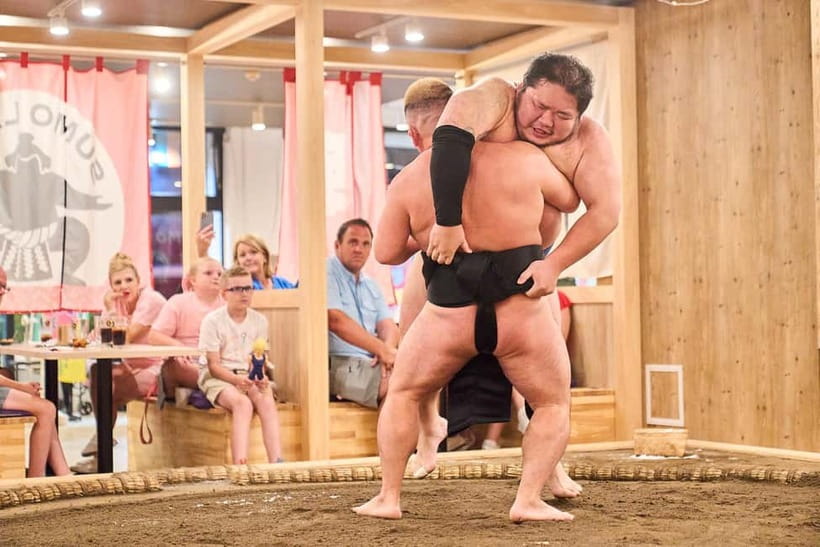
The exact order can vary, but you should expect the two hours to combine four main elements:
- A sumo presentation with demonstrations and explanations
- Chanko nabe served while you watch
- Mochi pounding and sweet mochi dessert
- Audience participation, including sumo techniques and wrestling
This is a compact program, and that is one of its strengths. You get a full taste of the subject without a long lecture. The host moves between food, explanation, demonstrations, and activities, so the session rarely stays in one mode for too long.
The pace also helps families. Younger children may not sit quietly through a long cultural talk, but they can watch a demonstration, eat, make mochi, and then see someone their own age try the ring. Teenagers and adults have enough background to make the activity feel more than a novelty.
You should not expect a private lesson or a long conversation with one wrestler. The experience is structured for a group, and the seating is assigned by the venue. You cannot select a preferred seat or request a specific location.
That lack of seat choice is a minor inconvenience, especially if you are hoping to sit directly beside the dohyo. Still, the venue is built around a close view, and the activities bring the action to the audience. I would treat assigned seating as a planning detail rather than a major weakness.
How Much Value Do You Get for $103?
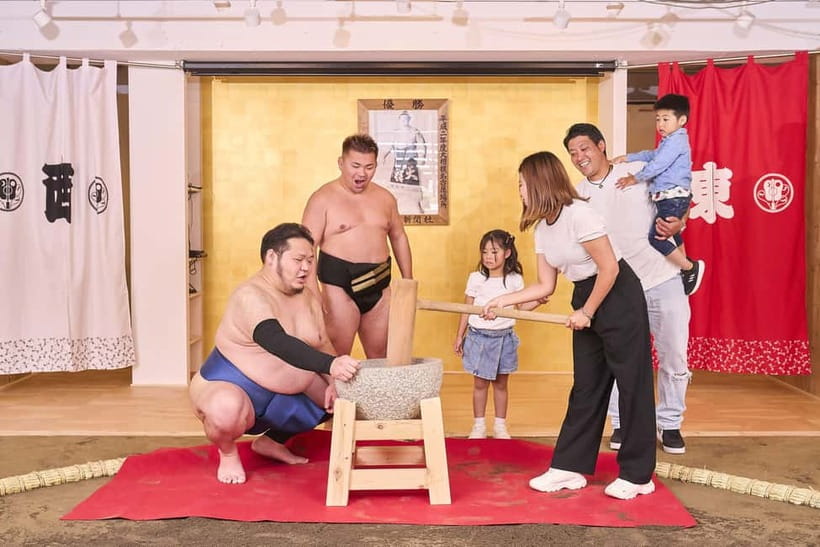
At $103 per person, this sits above the price of a basic Tokyo meal or a simple museum visit. The question is what kind of day you want.
The price makes sense if you want several experiences in one booking. You receive a hot pot meal, a sumo show, cultural explanation, mochi dessert, a demonstration of traditional mochi preparation, and the chance to wrestle with a professional. For a family, the built-in structure can also save the trouble of finding a meal and a separate activity that suits different ages.
The value is strongest when you participate. If you only watch, you are paying for a show and meal. If you pound mochi, practice techniques, and step onto the dohyo, the experience feels more personal and memorable.
It is also a useful choice outside the main sumo tournament season. You do not need to plan your Tokyo visit around official tournament dates to see sumo up close. The activity gives you a taste of the sport during an ordinary sightseeing day.
I would be less enthusiastic if your main goal is strict sporting authenticity. This is an entertaining cultural presentation, not a morning training visit at a stable and not a formal tournament. The demonstrations are serious enough to show real power and technique, but the mood is friendly and playful.
Who Will Enjoy This Most?
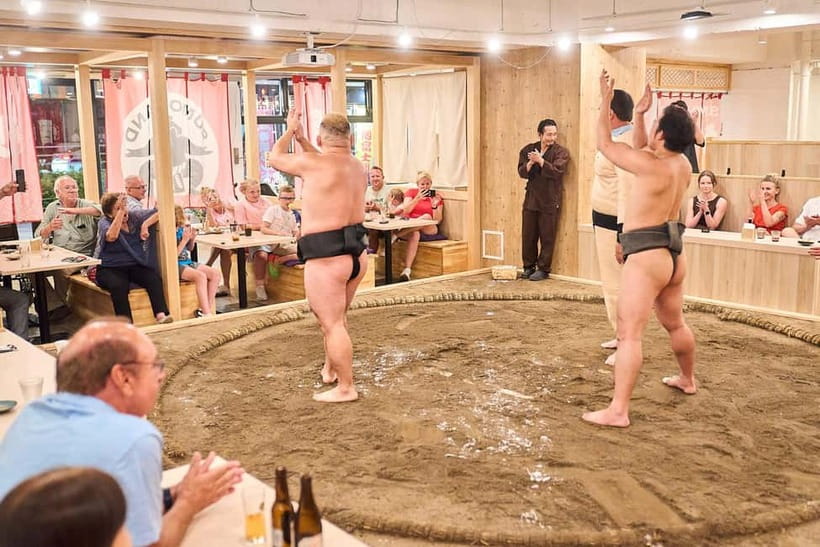
I would recommend it most strongly to first-time visitors to Japan, families, and anyone curious about sumo but unsure how to approach it. You receive enough explanation to understand the basics, and you do not need previous knowledge.
It also suits groups looking for a shared activity. The mochi pounding and wrestling create natural moments for friends, work groups, and families to laugh together. The hosts are attentive and encourage participation without making the event feel intimidating.
Food-focused visitors will appreciate the chanko nabe. It is not presented as a luxury meal, but it is filling and tied directly to the sport. If you like learning about a culture through what people eat, this is a worthwhile detail.
I would hesitate if you dislike audience participation, need complete control over your seat, or want a quiet and serious sporting event. You can watch without joining every activity, but the session is at its best when you take part.
Bring comfortable clothes, especially if you plan to wrestle. Smoking is not allowed. If you need a vegetarian, vegan, or gluten-free meal, make the request at least two days before the date you reserve.
Booking Advice and Final Call
The activity offers free cancellation up to 24 hours before the start time, with a full refund, and you can reserve now and pay later. That flexibility helps if your Tokyo schedule is still shifting.
I would arrive early because the entrance can be a little difficult to find near Ryogoku Station. Once inside, let the staff guide you through the seating and activities. You cannot request a particular seat, so focus on enjoying the program rather than trying to control the view.
My final advice is simple: book this if you want sumo with food, laughter, and participation. The strongest parts are the close demonstrations, the friendly wrestlers, the tasty chanko nabe, and the chance to try techniques yourself.
Skip it if you want serious morning training or official tournament competition. For everyone else, especially families and first-time visitors, two hours in Ryogoku offers an easy and memorable way to meet Japan’s sumo tradition without making it feel formal or difficult.
FAQ
Where does the Tokyo Sumo Experience take place?
It takes place in Ryogoku, near Ryogoku Station on Honshu, Japan. The store is on the first floor and is marked by a large sumo wrestler sign and flags.
How long does the experience last?
The experience lasts two hours.
How much does it cost?
The price is $103 per person.
Is a meal included?
Yes. Chanko nabe, a traditional sumo hot pot dish, is included.
Can I try sumo wrestling?
Yes. You can try sumo techniques and wrestle with the wrestlers on the dohyo.
Is mochi making included?
Yes. You can take part in mochi pounding, watch a demonstration of the traditional process, and enjoy sweet mochi for dessert.
What languages are available?
The experience is offered in English and Japanese.
Can children participate?
Yes. The experience is designed for both adults and children. In standard seats, you must reserve a place for every person because holding a child on your lap is considered dangerous. Box seats can seat up to six people and allow a child to sit on a lap.
Can dietary meals be arranged?
Vegetarian, vegan, and gluten-free meals can be provided if requested at least two days before the reservation date. Halal meals cannot be provided, but you may bring your own food.
Is the experience wheelchair accessible?
No. The activity is not suitable for wheelchair users.
Can I choose my seat?
No. Seat locations are assigned by the venue, and you cannot choose or request a specific seat.
Can I cancel my reservation?
Yes. You can cancel up to 24 hours in advance for a full refund. You can also reserve now and pay later.
Just added in Tokyo
- A One-of-a-Kind Sushi Experience in a Special Place of Japan★ 5.0 · 15 reviews
- Tokyo Cute Bento Cooking Class – Make a Kawaii Character Lunchbox★ 5.0 · 126 reviews
- Japanese Home Cooking Class & Walk in Todoroki Temple Tokyo★ 5.0 · 88 reviews
- Japan Tokyo Tower Observatory Deck E-Ticket★ 4.0 · 34 reviews
- Catch a Baseball Game in Tokyo with a Local – Tickets Included★ 5.0 · 24 reviews
- JDM Experience with Fast&Furious RX-7 (English speaking Driver)★ 5.0 · 57 reviews
- Tokyo Private Day Tour by Car with English speaking Driver Guide★ 4.0 · 29 reviews
- Japan Classic 10 Day – One Life Adventures★ 5.0 · 129 reviews
Sumo Experiences, compared.
Sumo Show Experience with Chicken Hot Pot and a Photo
Read our review →
Tokyo Shinjuku Sumo Show & Experience with Photo
Read our review →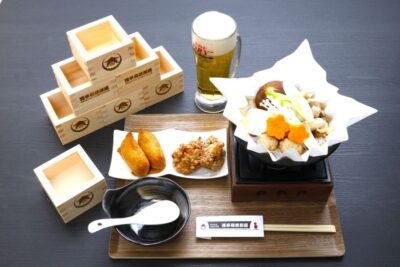
Asakusa Sumo Club Sumo Show Admission with Chankonabe in Tokyo
Read our review →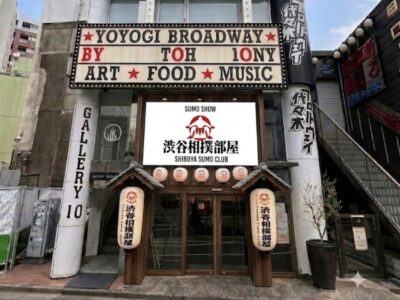
Tokyo Ginza Sumo Experience: Performance vs Pure Practice
Read our review →Browse the lists this tour appears in