
Reviewed · SUMO EXPERIENCES
Tokyo Sumo Morning Practice: Viewing & Exclusive Interaction
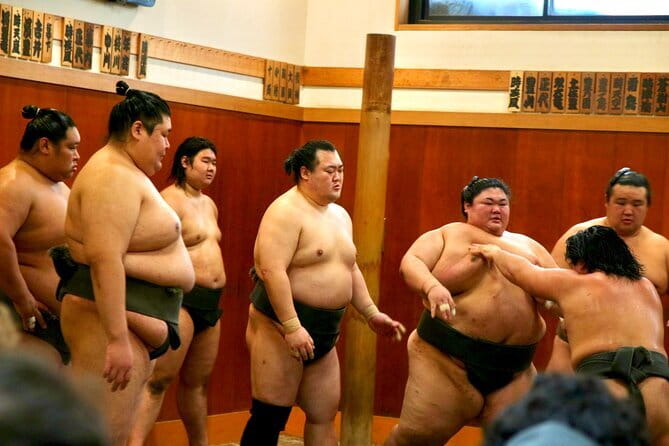
Sumo begins before Tokyo wakes. This three-hour morning experience takes you from Narihira Park into an active sumo stable, where you watch real wrestlers train rather than sit through a staged dinner show. I like the close view of serious daily practice and the chance to ask active wrestlers about their lives afterward. The main consideration is simple: you must remain quiet during training, and much of the best seating uses traditional floor cushions.
The tour also handles the cultural translation well. Guides such as Haru, Momo, Sana, Sarah, Ryoko, and others explain the rules and manners before you enter, then help with questions afterward. I especially like the flexible seating, since stools are available if sitting on the floor is uncomfortable. Food, drinks, recording, and flash photography are not allowed, so this is an attentive cultural visit rather than a casual photo stop.
In This Review
- Key Details Before You Book
- Why Watching Practice Beats a Sumo Dinner Show
- Starting at Narihira Park
- Entering the Stable for Morning Training
- Meeting Wrestlers After the Practice
- The Banzuke and the Final Question Session
- What $93 Includes and What It Does Not
- Timing During Grand Sumo Tournament Months
- Who Will Enjoy This Experience Most
- Practical Tips for a Better Morning
- Should You Book the Tokyo Sumo Morning Practice?
- FAQ
- Where does the Tokyo sumo morning practice tour meet?
- How long does the experience last?
- What languages are available?
- Is transportation to the meeting point included?
- Can I sit on the floor?
- Are stools available?
- Can I take photographs?
- Can I record video or audio?
- Can I speak with the wrestlers?
- What souvenir is included?
- Is food allowed inside?
- Are young children permitted?
- What changes during Grand Sumo Tournament periods?
- Can I cancel for a refund?
- Do I have to pay when booking?
Key Details Before You Book
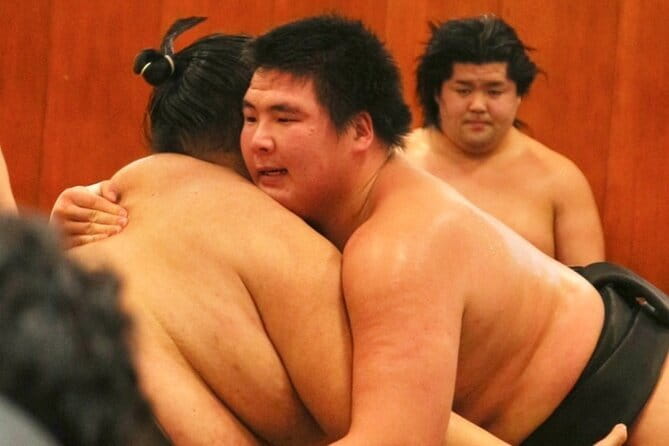
- Real morning practice: Watch current wrestlers warm up, perform drills, and spar inside an active stable.
- Meeting point at Narihira Park: Gather near the multipurpose restroom, where the guide checks names and explains etiquette.
- Direct wrestler interaction: Ask questions and take commemorative photos after training, with the guide helping translate when needed.
- Two seating choices: Use a front-row zabuton cushion or a stool toward the back.
- A useful souvenir: You receive an official banzuke, the sumo ranking sheet, in a special folder.
- Three hours for $93: The price includes the stable visit, English or Japanese guidance, and the souvenir, but not transportation to Narihira Park.
Why Watching Practice Beats a Sumo Dinner Show
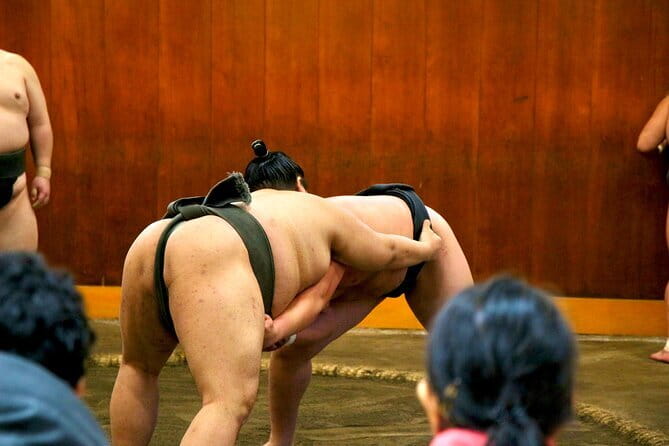
The best reason to book this outing is that it shows sumo as a working sport. You are not watching a performance arranged for tourists. You are watching athletes follow their demanding morning routine in the stable where they train.
That difference matters. A tournament bout is the polished public face of sumo, complete with ceremony, crowd noise, and dramatic entrances. Practice is quieter and more repetitive. You see warmups, physical drills, and sparring. The repetition helps you understand that sumo is built on strength, balance, timing, stamina, and strict discipline.
The atmosphere can feel intense. One review described the experience as slightly overwhelming, which is useful to know. The wrestlers are large, powerful athletes, and the sound of bodies colliding at close range is more forceful than a television broadcast suggests.
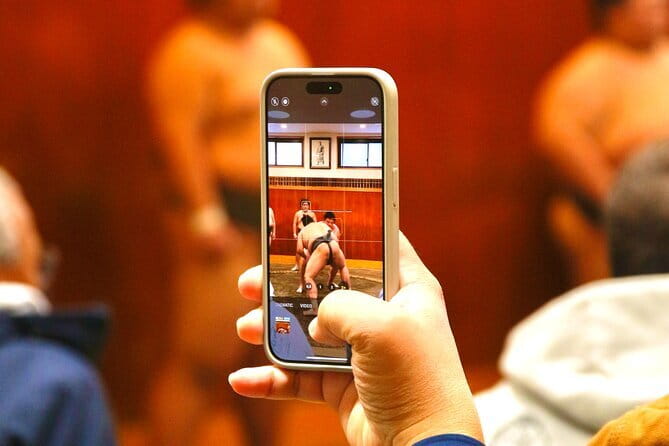
You also need to respect the setting. The stable is a serious workplace and a traditional training space. The guide gives you the rules before you enter, and you must stay quiet during practice. No flash photography, video, or audio recording is permitted. Photography is allowed only within the stable’s instructions, including rules about your seating position.
For me, this is the kind of cultural visit that rewards attention. You are not simply collecting a photograph. You are seeing how the sport is practiced when there is no audience cheering.
More Sumo Experiences in Tokyo
- Tokyo: Sumo Show Experience with Chicken Hot Pot and a Photo
★ 4.8 · 6,678 reviews - Tokyo: Sumo Live Show with Photo in Shinjuku
★ 5.0 · 3,438 reviews - Tokyo: Sumo Show and Dining Experience
★ 4.8 · 2,742 reviews
Starting at Narihira Park
The tour begins in the early morning at Narihira Park in Sumida. Meet near the multipurpose restroom. That landmark is practical, but do not treat the meeting point casually. You need to arrive ready for a prompt start, since the walk to the stable follows the introduction.
At the park, the guide checks your name, hands out sumo-related materials, and explains important manners. This opening session gives the visit some structure before you enter a setting where rules matter.
The introduction covers sumo history, rules, and etiquette. You will learn enough to recognize what you are seeing and understand why the wrestlers perform certain rituals. The explanations also prepare you to behave properly inside the stable, where silence and careful photography are part of showing respect.
This is one of the tour’s strongest features. Sumo has many customs that can look mysterious if you watch without context. A short briefing turns the practice into something you can follow. You begin to notice the difference between warming up, drilling, and sparring instead of seeing one long session of bodies pushing and crashing.
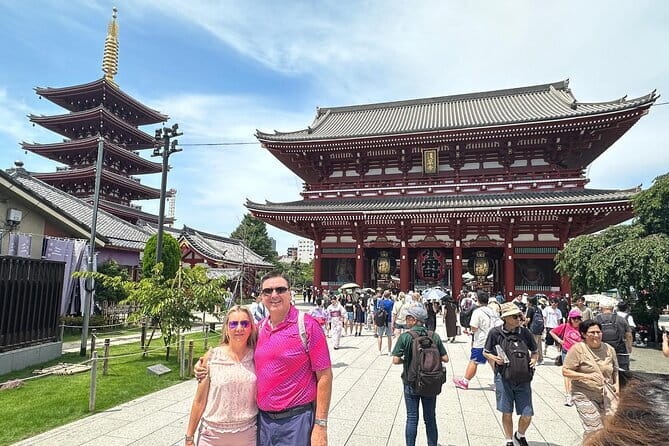
Transportation to Narihira Park is not included, so plan that part yourself. The activity ends around 11:00 AM, which gives you a useful half-day starting point for nearby Tokyo Skytree or Asakusa.
Entering the Stable for Morning Training
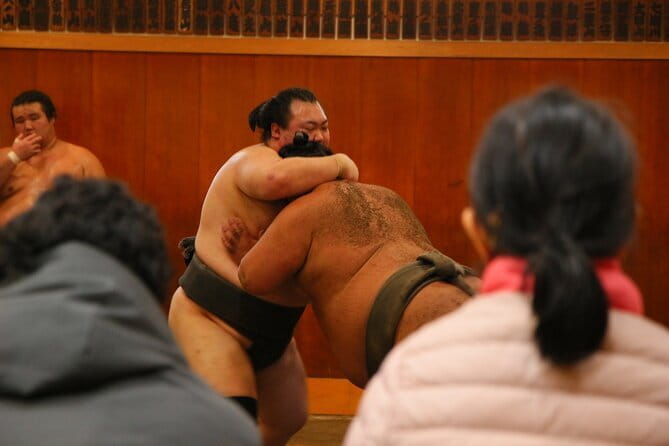
After the park briefing, you take a short walk to an active sumo stable. The stable visit is the heart of the experience, and the contrast with the quiet park is striking. Inside, you watch the wrestlers train at close range, following the stable’s rules about silence and movement.
The exact rhythm of practice can vary, but the supplied experience describes warmups, training, and sparring. These are current athletes preparing for their professional work, not performers repeating a routine for an audience.
You may sit on a traditional zabuton cushion in the front row. This gives you a close, low-level view of the training and makes the session feel very immediate. If floor seating is not suitable, stools are available at the back. That option is important because sitting on the floor for an extended period can be uncomfortable for some people.
The seating choice involves a tradeoff. The front cushions offer a more direct view, while the rear stools provide a bit more physical ease. Neither option changes the need to stay quiet and follow the stable’s instructions.
Do not expect to narrate the action as it happens. You cannot record audio or video, and flash photography is forbidden. The guide’s explanations come before and after the practice, allowing the stable to function without interruption.
The session may be particularly valuable if you have only seen sumo during tournament broadcasts. Here you can observe the less glamorous side of the sport: preparation, repetition, effort, and concentration. The point is not a single dramatic bout. It is seeing the work that supports the public spectacle.
Meeting Wrestlers After the Practice
Once training ends, the mood changes. You have an opportunity to speak directly with active wrestlers and take commemorative photographs with them. The guide helps you ask about daily life, training, and the mindset required to compete.
This interaction is the tour’s most personal element. Watching practice shows you the physical side of sumo. The question session lets you connect that effort to the people doing it.
The guides have received strong praise for making this part easy. Haru is described as friendly and helpful, while Momo is noted for clear explanations and practical information. Sarah and Sana are also praised for being professional and supportive. Ryoko is described as kind and helpful. The guide team can make a difference, especially when you want to ask a detailed question but do not speak Japanese.
You might ask about the wrestlers’ routine, their training, or how they approach the sport mentally. The available information does not promise a fixed list of questions or a set amount of conversation time, so the flow may depend on the stable and the group. Still, direct access to active wrestlers is a rare feature and gives the visit more substance than simply observing from a distance.
Some sessions may include a playful chance for male audience members to try a short wrestling exchange with a professional. This was mentioned in one account, but it should not be treated as a guaranteed part of every departure. If it happens, it adds humor and shows how difficult even a basic sumo contest can be.
Photography is part of the closing interaction, but remember the rules from the start. The stable does not allow flash, video, or audio recording. Follow the guide’s instructions so the photo session does not interfere with the wrestlers or the stable.
A completely different kind of day out:
- Tokyo Disney Resort – Tokyo Disneyland & Tokyo DisneySea Park Tickets
★ 4.8 · 99,488 reviews - SHIBUYA SKY Ticket
★ 4.7 · 46,509 reviews - JR Whole Japan Rail Pass
★ 4.8 · 29,150 reviews - Mt Fuji and Hakone 1-Day Bus Tour Return by Bullet Train
★ 5.0 · 26,383 reviews
The Banzuke and the Final Question Session
After leaving the stable, you return to Narihira Park for the final portion of the tour. You receive an official banzuke, or sumo ranking sheet, inside a specially designed souvenir folder.
A banzuke is more interesting than a generic tour gift because it connects directly to the sport you have just seen. It gives you a physical reminder of sumo’s ranking system and provides something useful to keep with your Tokyo mementos.
The closing session is not a rushed meal. Instead, the guide stays at the park for a final question period. You can ask about traditions you noticed during practice or request suggestions for the rest of your Tokyo visit.
That format suits curious people. The early briefing gives you the basic framework, and the final session lets you return to details you did not understand at first. You might think of a question only after watching the wrestlers train. Having time afterward means you do not need to interrupt the practice or save every question for a hurried goodbye.
The experience finishes around 11:00 AM. From there, the nearby Tokyo Skytree or Asakusa area makes a natural next stop. The timing also works well if you want to spend the afternoon elsewhere in the city.
What $93 Includes and What It Does Not
At $93 per person, this is not a bargain-basement Tokyo activity. I think the price makes sense if you place a high value on access, interpretation, and the wrestler interaction.
The cost includes the sumo stable visit, an English or Japanese-speaking guide, and the banzuke souvenir. You are paying for entry into a setting that is normally closed to the public, plus the work of explaining its etiquette and customs.
The price does not include transportation to the meeting point. You need to arrange your own route to Narihira Park, so add that cost and travel time when comparing this with other Tokyo activities.
Value depends on what you want. If you only need a quick photograph connected to sumo, $93 may feel high. If you want to understand how professional practice works and speak with active wrestlers, the cost is easier to justify. The experience is also more substantial than a short photo opportunity because it combines a briefing, a full stable visit, interaction afterward, a souvenir, and a final question session.
The high rating of 4.9 from 74 reviews supports the idea that the activity delivers what it promises. The most praised points are consistent: the stable feels genuine, the guides are warm and well prepared, the training is intense, and the wrestler Q&A adds a personal touch.
Timing During Grand Sumo Tournament Months
There is an important schedule change during the Grand Sumo Tournament periods, approximately two weeks in January, May, and September.
During those periods, practice starts 30 minutes earlier, and the viewing time is about one hour. That is shorter than the usual practice visit, so check the available start time carefully before booking.
The shorter viewing period does not necessarily make the experience poor. Tournament season is a meaningful time in the sumo calendar, and you may still see serious preparation. But you should understand that the stable portion changes during those weeks. Do not assume the regular timing applies.
The tour remains a morning activity, and the final finish is planned around 11:00 AM under the normal schedule. Confirm the exact departure time for your date, especially if you are arranging breakfast, transport, or another timed attraction afterward.
Who Will Enjoy This Experience Most
This outing suits you if you want direct contact with Japanese culture and do not mind following firm rules. It is especially good for people who enjoy watching how a tradition works in daily life rather than only seeing its public version.
It is also a strong choice if you have an interest in sports. You do not need to know sumo beforehand. The guide’s introduction covers the basics, and the practice itself gives you plenty to observe.
Families should note that children under six are not suitable for this activity. Older children may enjoy the physical spectacle and the chance to see professional athletes, but they must be able to remain quiet during practice.
You should think twice if you need a flexible, noisy, or casual morning. Food is not allowed, and the stable requires concentration and restraint. You also cannot make video clips or audio recordings. This is a watch-and-listen experience, with photography allowed only under the stable’s rules.
Floor seating should not automatically put you off. Zabuton cushions are available in the front, and stools are available at the back. If you prefer not to sit on the floor, choose the stools and accept that you may be farther from the action.
Practical Tips for a Better Morning
Arrive at Narihira Park with enough time to find the multipurpose restroom meeting point. The guide checks names and distributes materials there, so arriving at the wrong part of the park could create needless stress.
Wear clothing that lets you sit comfortably if you choose a zabuton. If floor seating is not appealing, tell yourself that the rear stool is not a lesser version of the tour. Comfort helps you pay attention.
Keep your phone ready for permitted photographs, but switch off flash and do not use it for recording. The stable’s rules matter more than getting one perfect shot.
Listen closely to the first explanation. The rituals, training stages, and etiquette make much more sense once the guide explains them. Save extra questions for the wrestler interaction or the final park session.
If you hope to visit Tokyo Skytree or Asakusa afterward, the 11:00 AM finish is helpful. The tour gives you a focused morning without taking up the whole day.
Cancellation is free up to 24 hours before the activity for a full refund, and you can reserve now and pay later. Those policies help if your Tokyo schedule is still shifting, but they do not replace checking the exact start time for your date.
Should You Book the Tokyo Sumo Morning Practice?
Book it if you want real training rather than a staged show, and if you value the chance to speak with active wrestlers. The close viewing, serious atmosphere, capable guides, and banzuke souvenir make this one of the more substantial sumo experiences available in Tokyo.
Skip it if you need a relaxed meal, unrestricted photography, or a guaranteed chance to wrestle with a professional. The practice requires silence, recording is forbidden, and the occasional playful sparring opportunity is not promised.
For most culturally curious visitors, I would recommend it. The $93 price is fair when you consider the stable access, guide service, personal Q&A, photo session, and souvenir. Just arrive at Narihira Park prepared to listen, follow the rules, and let the wrestlers’ work provide the spectacle.
FAQ
Where does the Tokyo sumo morning practice tour meet?
The meeting point is near the multipurpose restroom at Narihira Park in Sumida.
How long does the experience last?
The standard duration is three hours, with the tour wrapping up around 11:00 AM.
What languages are available?
Guidance is available in English and Japanese.
Is transportation to the meeting point included?
No. Transportation to Narihira Park is not included.
Can I sit on the floor?
Yes. Traditional zabuton cushions are available, including front-row seating.
Are stools available?
Yes. Stools are available toward the back for people who prefer not to sit on the floor.
Can I take photographs?
Photography is allowed, but you must remain quiet during practice and follow instructions about flash and seating. Flash photography is not allowed.
Can I record video or audio?
No. Video and audio recording are not allowed.
Can I speak with the wrestlers?
Yes. After practice, you can ask active wrestlers questions and take commemorative photographs with them.
What souvenir is included?
You receive an official banzuke, or sumo ranking sheet, in a specially designed souvenir folder.
Is food allowed inside?
No. Food, alcohol, and drugs are not allowed.
Are young children permitted?
Children under six are not suitable for this experience.
What changes during Grand Sumo Tournament periods?
During the tournament periods in January, May, and September, practice starts 30 minutes earlier and viewing lasts about one hour.
Can I cancel for a refund?
Yes. You can cancel up to 24 hours in advance for a full refund.
Do I have to pay when booking?
No. The reserve-now, pay-later option lets you hold a place without paying immediately.
Just added in Tokyo
- A One-of-a-Kind Sushi Experience in a Special Place of Japan★ 5.0 · 15 reviews
- Tokyo Cute Bento Cooking Class – Make a Kawaii Character Lunchbox★ 5.0 · 126 reviews
- Japanese Home Cooking Class & Walk in Todoroki Temple Tokyo★ 5.0 · 88 reviews
- Japan Tokyo Tower Observatory Deck E-Ticket★ 4.0 · 34 reviews
- Catch a Baseball Game in Tokyo with a Local – Tickets Included★ 5.0 · 24 reviews
- JDM Experience with Fast&Furious RX-7 (English speaking Driver)★ 5.0 · 57 reviews
- Tokyo Private Day Tour by Car with English speaking Driver Guide★ 4.0 · 29 reviews
- Japan Classic 10 Day – One Life Adventures★ 5.0 · 129 reviews
Sumo Experiences, compared.
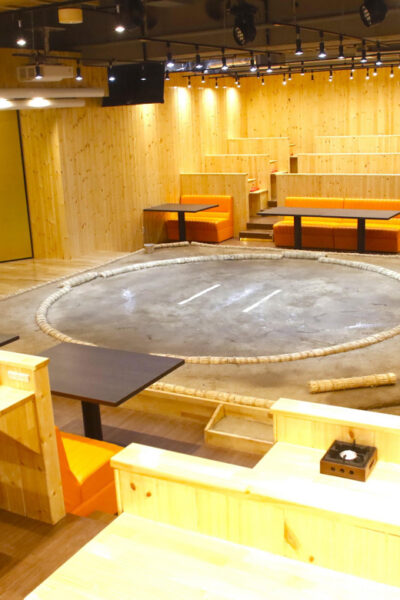
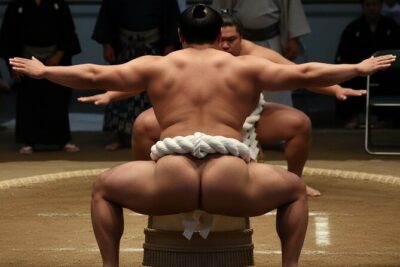
Sumo Show Experience with Chicken Hot Pot and a Photo
Read our review →
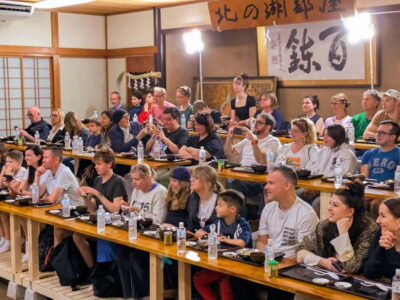
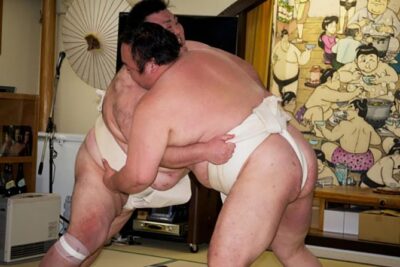
Tokyo Shinjuku Sumo Show & Experience with Photo
Read our review →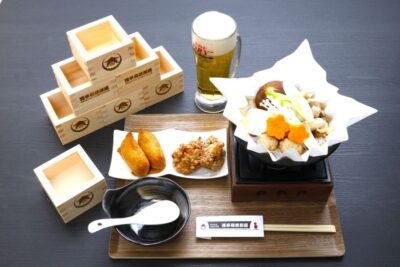
Asakusa Sumo Club Sumo Show Admission with Chankonabe in Tokyo
Read our review →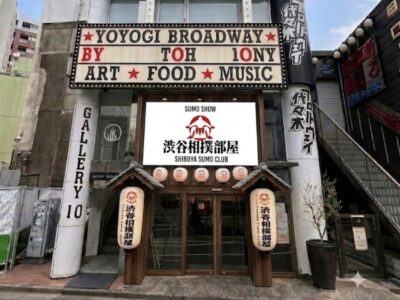
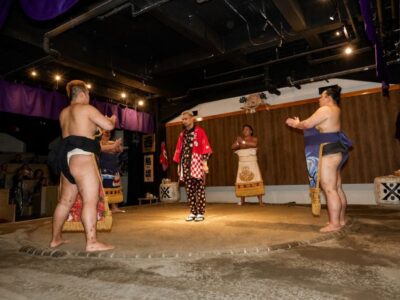
Tokyo Ginza Sumo Experience: Performance vs Pure Practice
Read our review →Browse the lists this tour appears in