
Reviewed · SUMO EXPERIENCES
Tokyo: Sumo Morning Practice Viewing Tour at a Real Stable
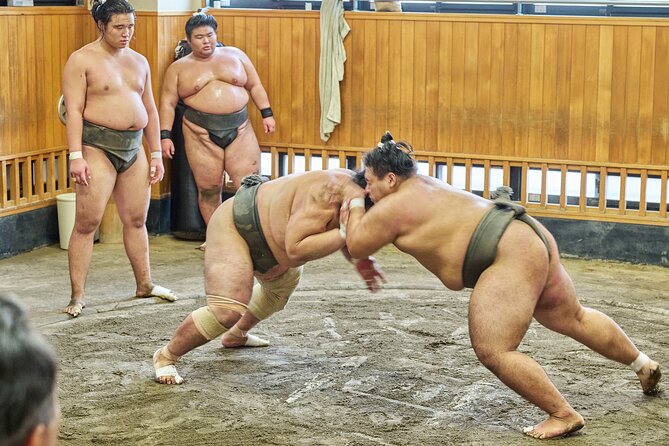
Sumo is best seen before the crowds wake up. This two-hour visit takes you inside a real training stable in Tokyo’s historic sumo district, where wrestlers live, eat, train, and prepare for professional tournaments. This is not a staged demonstration. You sit close to the ring while the wrestlers work through their demanding morning routine.
I especially like the close view of genuine practice and the way an English-speaking guide explains what you are seeing instead of leaving you to guess. The chance to speak with wrestlers after training adds a human touch, too. Guides such as Mao, Kawa, Yuki, and Tomo have been praised for clear, friendly explanations.
The main drawback is the strict etiquette. You must remain quiet, keep your phone silent, dress modestly, and stay until practice ends. Arriving late can mean missing the stable entirely, so this is one Tokyo activity where arriving early matters.
In This Review
- Key Points Before You Book
- Why a Sumo Stable Visit Feels Different
- Meeting at Kiyosumi-Shirakawa Station
- The Guide’s Introduction to Sumo
- Sitting Beside the Ring During Practice
- Meeting Wrestlers After Training
- How Much Value Do You Get for $98?
- Who Should Take This Tour?
- Practical Advice for a Smooth Morning
- Is This Authentic Sumo or a Tourist Show?
- Should You Book the Morning Stable Tour?
- FAQ
- Where does the tour meet?
- How long does the experience last?
- When does sumo practice usually end?
- Can I leave the stable early?
- Can I speak with the wrestlers?
- Can I take photographs?
- What should I wear?
- Are children allowed on the tour?
- What happens if I arrive late?
Key Points Before You Book
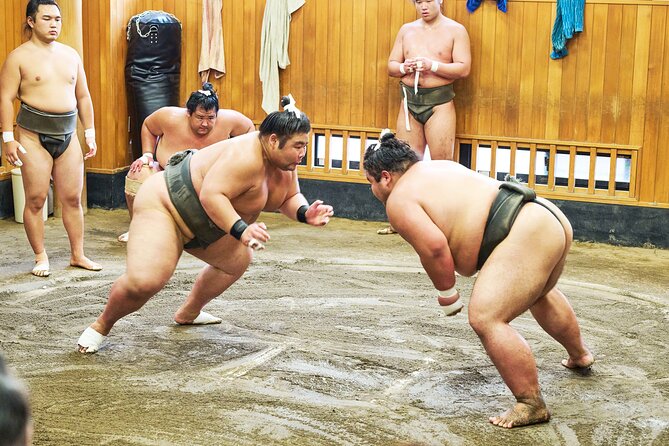
- Watch real morning practice at close range: You sit beside the ring while wrestlers train without performing for visitors.
- Meet wrestlers after practice: Speaking with them is possible outside training hours, and photographs may sometimes be allowed.
- Learn the meaning behind the rituals: Your guide explains the rules, Shinto influences, training customs, and tournament system.
- Allow extra time before the 2-hour tour: Late arrival may prevent entry, and the group may travel by train after meeting at the station.
- Expect strict stable etiquette: No noise, standing, walking around, eating, or phone use during practice.
- Best for older children and adults: The tour is not suitable for children under 11.
Why a Sumo Stable Visit Feels Different
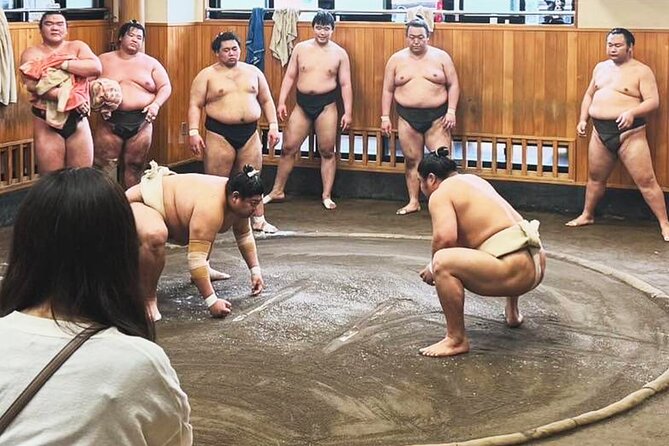
A sumo stable is not a theater built for tourists. It is a working place where wrestlers follow a demanding daily routine. The stable is also their home, dining place, and training base, which gives this visit a different feel from watching a tournament in a large arena.
The stable is normally closed to the public. Access was once limited mainly to sponsors, so even people living in Tokyo rarely get this kind of view. The tour gives you a rare look at the sport before the polished public spectacle begins.
You will see young wrestlers training beside more advanced competitors. Their goal is to rise through the rankings, and the session shows how much physical effort that requires. Sumo may look slow from a distance, but up close the speed, balance, flexibility, and force are startling.
The wrestlers do not perform for the group. They train as they normally would, paying little attention to the people sitting nearby. That is exactly why the experience feels authentic. You are watching work, not a tourist show.
More Sumo Experiences in Tokyo
- Tokyo: Sumo Show Experience with Chicken Hot Pot and a Photo
★ 4.8 · 6,678 reviews - Tokyo: Sumo Live Show with Photo in Shinjuku
★ 5.0 · 3,438 reviews - Tokyo: Sumo Show and Dining Experience
★ 4.8 · 2,742 reviews
Meeting at Kiyosumi-Shirakawa Station
The tour begins at Kiyosumi-Shirakawa Station, Exit A1, served by the Toei Oedo Line and the Hanzomon Line. Look for the guide holding a sign marked Local Guide Stars.
I would build in at least 30 minutes of extra travel time. Tokyo’s rail system is efficient, but stations can be large, and a missed connection or wrong exit can quickly make you late. The tour information makes clear that late arrival may mean no entry, so do not plan to reach the meeting point at the last possible minute.
After the group meets, you may travel by train to the stable. The final location can differ from the meeting point, so do not assume you will finish exactly where you started. If you have a reservation, train, or other fixed commitment afterward, tell the guide in advance. Practice can run a little shorter or longer than expected.
The tour lasts about two hours, but the stable portion follows the wrestlers’ schedule rather than a perfect clock. You must stay until the end of practice, which is generally around 9:00 to 10:00 in the morning.
The Guide’s Introduction to Sumo
Before entering the stable, your English-speaking guide gives you the basic framework for understanding the action. This briefing is important because sumo has its own rules, vocabulary, rituals, and ranking system.
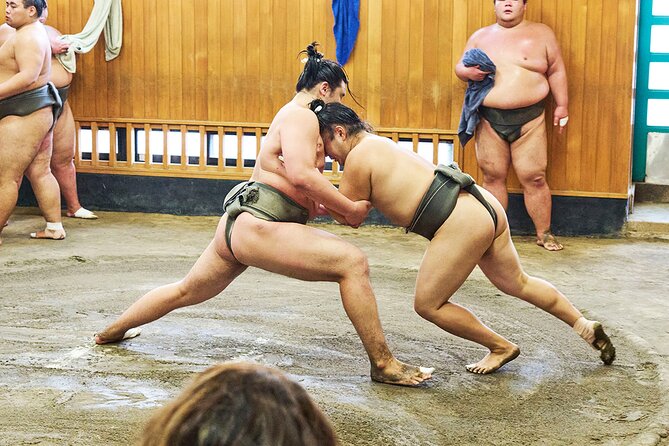
You will learn that a match is won by forcing an opponent outside the ring or making any part of the opponent’s body, apart from the soles of the feet, touch the ground. That simple rule hides a great deal of technique. A bout can end in seconds, but the wrestlers spend years building the strength, timing, flexibility, and balance needed to win it.
Your guide also explains the spiritual side of the sport. Sumo is rooted in ancient Shinto beliefs, so the movements around the match are not just decoration. Rituals help purify the ring and prepare the wrestlers. Once you understand this, the repeated gestures and careful preparation have more meaning.
The guides receive especially strong praise for making this information easy to follow. Mao is described as well prepared, patient, and clear in English. Kawa is praised for explaining both sumo and everyday Japanese life. Yuki and Tomo are also noted for friendly, useful commentary without overwhelming the group.
That balance matters. You need enough background to understand what is happening, but not so much that the morning becomes a lecture. The strongest part of the tour is the handoff from explanation to observation: first you learn what to watch for, then you see it happening a few feet away.
Sitting Beside the Ring During Practice
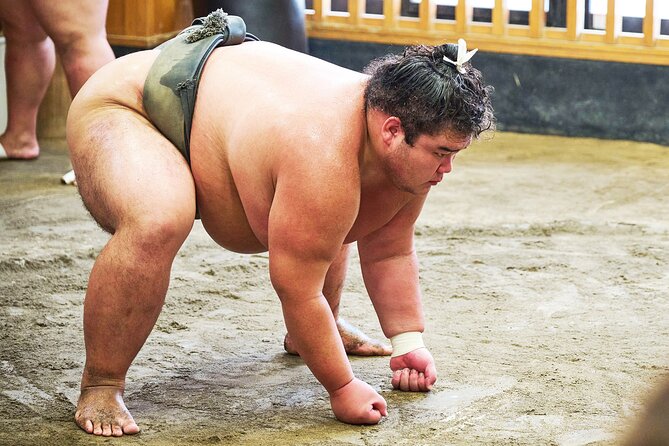
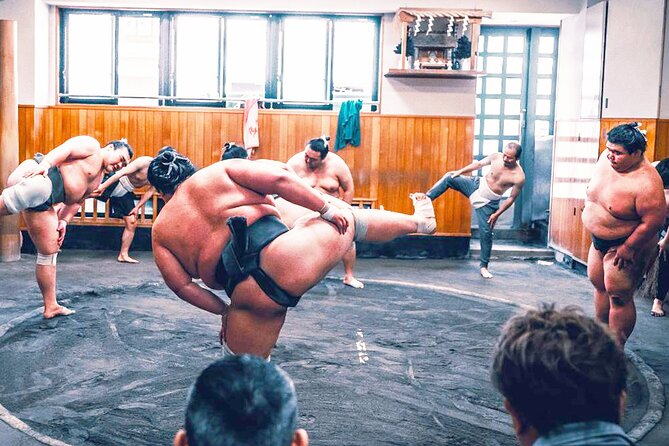
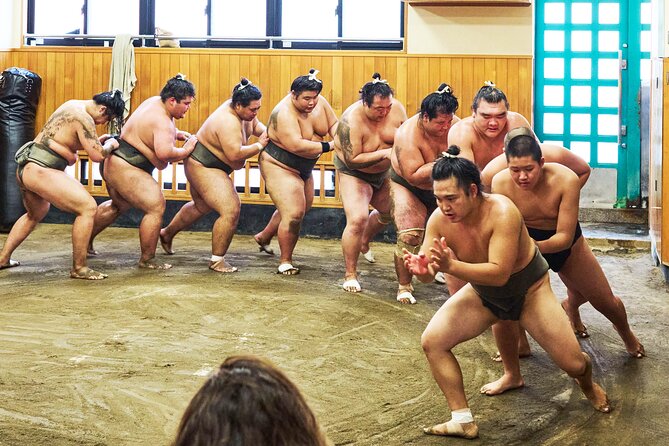
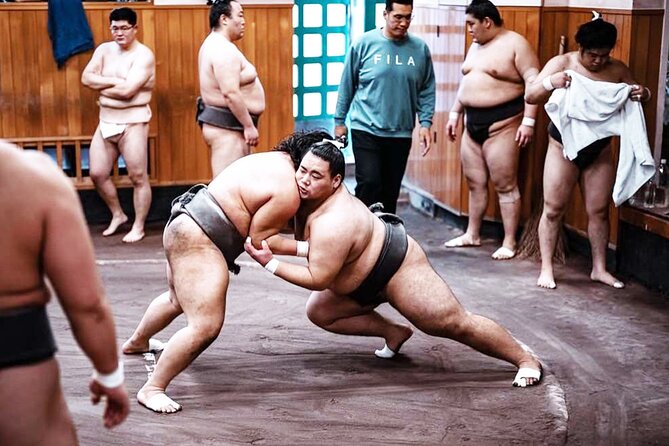
Once inside, you sit beside the ring and watch the morning session in silence. This is the moment that makes the $98 price easier to judge. You are not watching from a distant stadium seat or through a screen. You are close enough to hear the physical force of the training.
Expect loud slaps, heavy footwork, and the sound of bodies meeting. The wrestlers work through exercises and bouts with serious concentration. Their size is obvious, but so are their flexibility and speed. One participant was fortunate enough to see a yokozuna, the highest rank in sumo, though seeing a particular wrestler cannot be guaranteed.
The atmosphere depends on your discipline. You cannot stand up, shift around repeatedly, or walk about during practice. Your phone must be silent, and the stable does not allow noise. You should use the restroom before entering and finish food and drinks beforehand. Water is the only exception mentioned.
These restrictions may feel severe if you are used to casual sightseeing. Here, they protect the wrestlers’ concentration and show respect for a working religious and sporting environment. The quiet also improves your view. Instead of hearing a group chatter, you hear the training itself.
You must remain until the session ends. That is both a limitation and a benefit. You cannot pop in for ten minutes and leave when the action slows, but you also get to see the practice as a complete working session rather than a quick sample.
A completely different kind of day out:
- Tokyo Disney Resort – Tokyo Disneyland & Tokyo DisneySea Park Tickets
★ 4.8 · 99,488 reviews - SHIBUYA SKY Ticket
★ 4.7 · 46,509 reviews - JR Whole Japan Rail Pass
★ 4.8 · 29,150 reviews - Mt Fuji and Hakone 1-Day Bus Tour Return by Bullet Train
★ 5.0 · 26,383 reviews
Meeting Wrestlers After Training
The opportunity to speak with wrestlers comes outside training hours. This is a useful counterpoint to the silent observation period. During practice, the wrestlers are focused on their work. Afterward, you may have a chance to ask questions and connect the physical display with the people living this demanding life.
Photographs may be possible, depending on the circumstances. One account describes being able to take pictures with the wrestlers, but you should treat that as a possibility rather than a promise. The stable remains a place of work, and the wrestlers’ schedule and comfort come first.
This part can help correct a common misunderstanding. Sumo wrestlers are not simply large athletes who push one another around. They follow a highly structured life built around training, rank, ritual, and dedication. A short conversation can make that system feel less distant.
How Much Value Do You Get for $98?
At $98 per person, this is not a bargain basement Tokyo activity. You are paying for access to a place that is normally closed, an English-speaking guide, transportation guidance from the meeting point, and interpretation of a sport that can be difficult to understand on your own.
The price makes the most sense if you value access and context. You could watch sumo-related material elsewhere for less, but you would not get the same close view of a working practice stable. You also would not have a guide explaining the rituals and rules as they happen.
The value drops if you want a flexible, casual morning. This tour has firm behavior rules, an early schedule, and a required stay through the end of practice. It also does not promise a particular rank of wrestler, a specific stable, or a guaranteed photograph.
For me, the strongest value is the combination of access and authenticity. The session is not arranged as a show, and that means you see the sport’s discipline rather than only its most entertaining moments. If that sounds more interesting than a polished performance, the price is reasonable for Tokyo.
Who Should Take This Tour?
I would recommend it to adults, older children, and anyone who wants a cultural experience with real rules and real working conditions. It suits people who enjoy learning how a tradition functions from the inside, not just collecting a photograph.
It is particularly good for first-time visitors who know little about sumo. The guide’s introduction gives you enough background to follow the action, while the stable provides something you cannot get from a general city tour.
It is also a strong choice for repeat visitors to Tokyo. You may already have seen temples, shopping streets, and observation decks. A morning at a sumo stable offers a more unusual look at Japanese life.
I would think twice if you dislike sitting quietly for an extended period, need to leave at a fixed time, or prefer activities with frequent movement. The under-11 age restriction is firm, and the etiquette may be difficult for very young children even if they were old enough to attend.
Modest clothing is required. Choose something respectful and comfortable for sitting. The stable is a place of work, so treat it with the same care you would show in a religious site or private home.
Practical Advice for a Smooth Morning
- Arrive at Exit A1 early, preferably with at least 30 minutes of spare time.
- Confirm your route using the Toei Oedo Line or Hanzomon Line.
- Wear modest clothing.
- Use the restroom before entering the stable.
- Silence your phone before practice begins.
- Do not eat, drink, stand, or move around during the session.
- Plan no tight appointment immediately afterward.
- Stay until practice finishes because re-entry is not allowed after you leave.
- Listen carefully to the guide’s instructions, especially if the group travels by train.
The group size can vary. One recent group had 11 people, while another had 14. A smaller group makes it easier to hear the guide and may feel less crowded beside the ring, but the experience still depends on everyone arriving on time and following the rules.
Free cancellation is available up to 24 hours before the start for a full refund. You can also reserve now and pay later, which helps if your Tokyo schedule is still changing.
Is This Authentic Sumo or a Tourist Show?
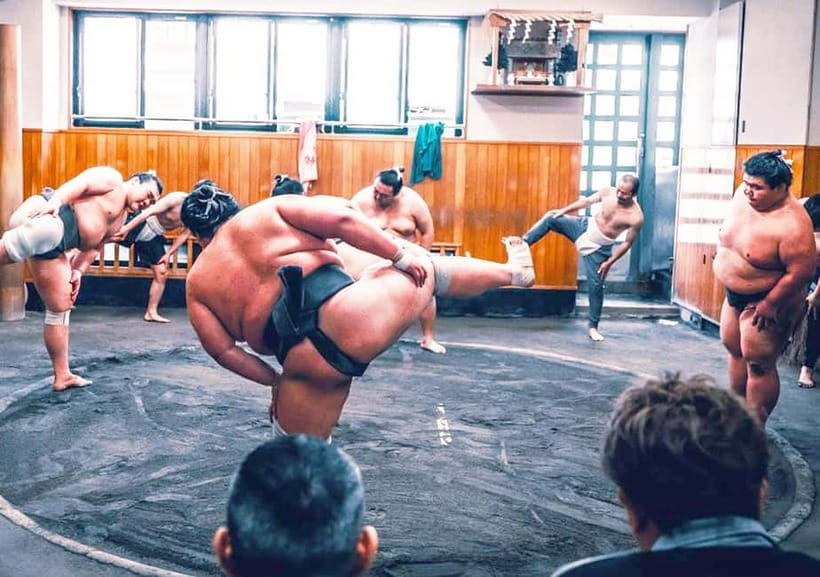
It is authentic in the most useful sense: the wrestlers are conducting their own morning practice, not putting on a special match for the group. Their lack of attention to the audience is part of the appeal.
That authenticity also creates uncertainty. Practice may be a little shorter or longer than expected, and you cannot control who trains that morning. You may see a top-ranked wrestler, or you may mainly watch younger rikishi working through their routines.
That is a fair trade. A staged performance would be more predictable, but it would also tell you less about the daily life of a stable. Here, you see the effort, repetition, silence, and structure that support the public tournaments.
Should You Book the Morning Stable Tour?
Book this tour if you want a close, serious look at sumo as a way of life, not just a sport. The best features are the ringside position, the clear English explanations, and the chance to see wrestlers training without a performance created for visitors.
Do not book it if you need a flexible departure time or dislike strict silence. Arrive early, dress modestly, prepare to stay through the full practice, and accept that the morning follows the stable’s schedule.
For the right person, this is one of Tokyo’s more memorable cultural experiences. You leave with a better sense of why every stomp, slap, bow, and shove matters.
FAQ
Where does the tour meet?
Meet the guide in front of Kiyosumi-Shirakawa Station at Exit A1. The station is served by the Toei Oedo Line and the Hanzomon Line.
How long does the experience last?
The tour lasts about two hours. The practice may be slightly shorter or longer than expected.
When does sumo practice usually end?
Practice generally ends around 9:00 to 10:00 in the morning. You must remain until the session ends.
Can I leave the stable early?
No. You must stay until the end of practice. Once you leave the stable, re-entry is not allowed.
Can I speak with the wrestlers?
You may have an opportunity to speak with the wrestlers outside training hours, after practice.
Can I take photographs?
Photographs may be possible, depending on the circumstances. You should follow the guide’s instructions and respect the stable’s rules.
What should I wear?
Modest clothing is required because the stable is a place of work and training.
Are children allowed on the tour?
The tour is not suitable for children under 11 years of age.
What happens if I arrive late?
Late arrival may mean that entry to the stable is not possible. Allow plenty of extra travel time before the meeting point.
Just added in Tokyo
- A One-of-a-Kind Sushi Experience in a Special Place of Japan★ 5.0 · 15 reviews
- Tokyo Cute Bento Cooking Class – Make a Kawaii Character Lunchbox★ 5.0 · 126 reviews
- Japanese Home Cooking Class & Walk in Todoroki Temple Tokyo★ 5.0 · 88 reviews
- Japan Tokyo Tower Observatory Deck E-Ticket★ 4.0 · 34 reviews
- Catch a Baseball Game in Tokyo with a Local – Tickets Included★ 5.0 · 24 reviews
- JDM Experience with Fast&Furious RX-7 (English speaking Driver)★ 5.0 · 57 reviews
- Tokyo Private Day Tour by Car with English speaking Driver Guide★ 4.0 · 29 reviews
- Japan Classic 10 Day – One Life Adventures★ 5.0 · 129 reviews
Sumo Experiences, compared.
Sumo Show Experience with Chicken Hot Pot and a Photo
Read our review →
Tokyo Shinjuku Sumo Show & Experience with Photo
Read our review →
Asakusa Sumo Club Sumo Show Admission with Chankonabe in Tokyo
Read our review →
Tokyo Ginza Sumo Experience: Performance vs Pure Practice
Read our review →Browse the lists this tour appears in