
Reviewed · SUMO EXPERIENCES
Tokyo Sumo Morning Training/ Sumo Practice with Wrestlers
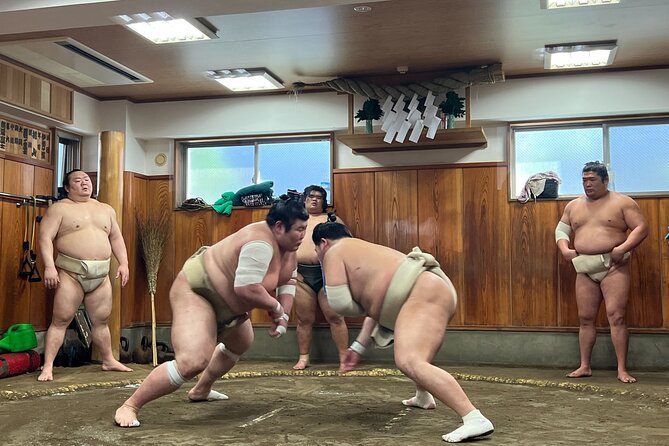
Sumo practice is not a staged performance. That is what makes this Tokyo morning experience so interesting: you sit close to a working stable and watch wrestlers repeat the hard, disciplined routines that support Japan’s national sport. I like the close view of real training and the chance to take a photo with a wrestler afterward. I also like having a guide explain the rules, customs, and daily life of the athletes.
The main catch is that this is a quiet observation experience, not a tournament match. Practice times and length can change, the stable may be chilly, and you may sit on the floor for a long period. If you want loud crowd energy and dramatic bouts, buy a tournament ticket instead.
In This Review
- Key Things to Know Before You Go
- What This Sumo Experience Really Offers
- Meeting Near Sumida and Heading to the Stable
- Entering a Working Sumo Stable
- Watching the Training Up Close
- Seating, Temperature, and Clothing
- Meeting the Wrestlers After Practice
- Authentic Practice or Tourist Demonstration?
- Is $99.10 a Fair Price?
- Who Should Book This Visit?
- Final Verdict: Book It for the Training, Not the Show
- FAQ
- How long does the Tokyo sumo practice experience last?
- Where does the experience start and end?
- Can the meeting time or stable location change?
- Can I take photos inside the stable?
- Can I leave during the practice?
- Is food allowed inside the stable?
- Do I need to sit on the floor?
- Can women join the Sumo Practice with Wrestlers option?
Key Things to Know Before You Go
- You watch inside a real sumo stable, not from a distant arena seat.
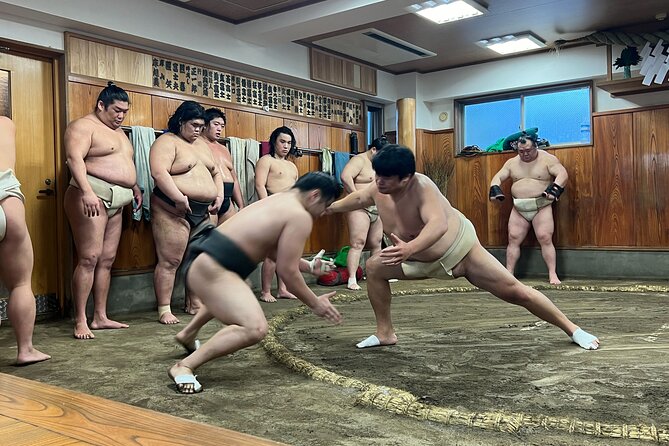
- Practice is silent and respectful, with no flash, videos, or shutter sounds.
- A guide explains the training, history, rules, and customs, sometimes through a headset or written notes.
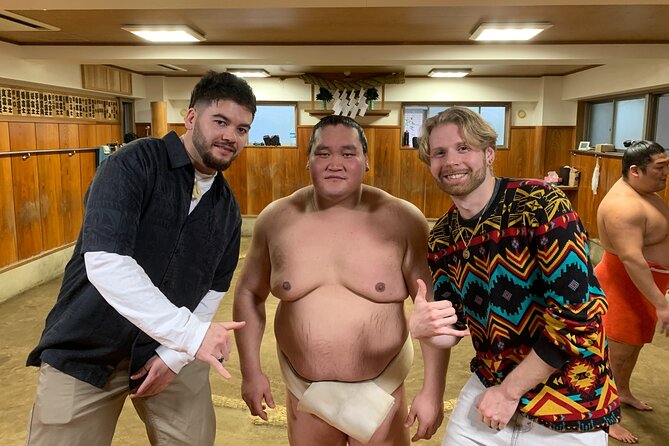
- A photo with a sumo wrestler is included, though the wrestlers present can vary by date.
- The stable location and start time can change, so check the provider’s message after booking.
- Floor seating, cold conditions, and a no-exit rule make practical preparation important.
What This Sumo Experience Really Offers
For about $99.10 per person, this is a short but unusual Tokyo experience. You are paying for access to a place most independent visitors cannot simply walk into, plus interpretation from a guide and a brief personal connection with the wrestlers.
The heart of the visit is watching practice. You may see warmups, repeated bouts, footwork, pushing drills, and the intense concentration that defines the sport. The appeal is not a polished show. It is seeing the work behind the spectacle.
That difference matters. Some people arrive expecting a mini sumo match arranged for tourists and leave disappointed because there is more watching than performing. Others find the lack of stagecraft to be the best part. I would book it if you want to understand how sumo wrestlers train, not if you need constant action or a guaranteed appearance by a famous champion.
The experience has earned a 4.8 rating from 135 ratings, with 96 percent recommending it. The strongest praise centers on the close seating, clear explanations, intense practice, and the friendliness of the wrestlers during the photo opportunity.
More Sumo Experiences in Tokyo
- Tokyo: Sumo Show Experience with Chicken Hot Pot and a Photo
★ 4.8 · 6,678 reviews - Tokyo: Sumo Live Show with Photo in Shinjuku
★ 5.0 · 3,438 reviews - Tokyo: Sumo Show and Dining Experience
★ 4.8 · 2,742 reviews
Meeting Near Sumida and Heading to the Stable
The listed starting point is 1-chōme-2-8 Chitose in Sumida City, Tokyo, and the activity ends back at the same meeting point. It is near public transportation, but do not assume the posted address is the final stable entrance. The provider sends the exact meeting time and location after you reserve because both can change by date.
That message is important. One cancellation complaint involved notice arriving only shortly before the scheduled start, after the participant was already on the train. I would check messages from Japan Wonder Travel carefully on the day before and the morning of the visit. If no update arrives, contact the provider rather than relying only on the original booking details.
The first part takes about five minutes. You meet the guide, hear an introduction to sumo, and then walk to the stable. If the briefing takes place beside a busy road or station, it may be harder to hear, so stay close to the guide. Some sessions use headsets, and others may provide written notes during practice.
Use the restroom before meeting up. Once practice begins, leaving is not permitted, and you cannot re-enter after leaving the stable.
Entering a Working Sumo Stable
The stable is the special part. A sumo stable, or heya, is where wrestlers train and live under the direction of a stablemaster. This visit gives you a look at that working environment rather than a performance built for an audience.
The supplied schedule allows about 55 minutes inside, but actual practice can be shorter or longer. Other accounts describe sessions lasting close to two hours, especially when the stable’s normal morning routine runs at full length. The difference comes from the date, the stable, the training schedule, and the approach of a Grand Tournament.
That uncertainty is worth accepting before you book. The stable may end practice earlier than usual, particularly before a major tournament, and there is no refund or compensation for a shorter session caused by the stable’s schedule. You are observing a real routine, so the timetable is not fully under tour control.
Inside, you are expected to watch quietly. Cellphones must be silent. Photos are allowed without flash or shutter sounds, but videos are not permitted. Do not stretch your legs toward the ring, since showing the soles of your feet to the wrestlers is considered rude. These rules are not decorative etiquette. The wrestlers need focus, and the room is their training space.
Watching the Training Up Close
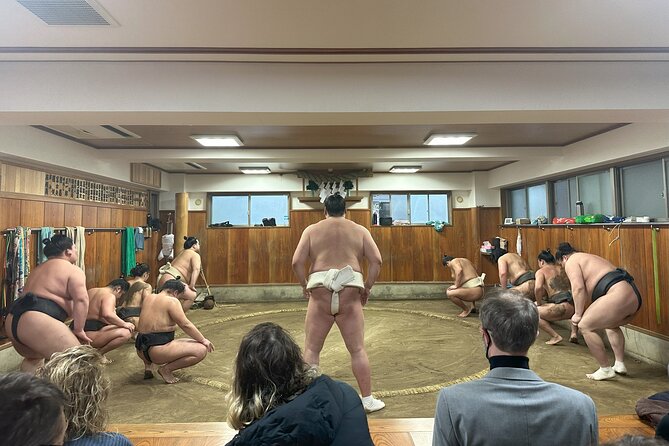
The best moments come when you notice how much of sumo happens before a match. A bout may last only seconds, but the preparation involves repeated movement, strength work, balance, timing, and mental control.
The training can look surprisingly severe. You may see wrestlers working continuously, with little of the theatrical atmosphere that surrounds a professional tournament. The room’s respect and quiet can make each clash feel more serious. One of the most praised features is the chance to watch the full sequence of practice, rather than a short demonstration.
A guide adds useful context. The explanations can cover sumo’s rules, the wrestlers’ daily routine, the meaning of their movements, and the structure of the sport. This is especially helpful if you know sumo only from television or have never watched a full bout.
Still, the guide’s role can cut both ways. Some people appreciate constant commentary and live explanations. Others find a talkative guide distracting when the training itself is easy to follow. If you prefer silence, you may want to focus on the ring and treat the commentary as background information.
The small group size helps. The maximum is 25 people, though the stable itself may feel more intimate than that. A close view is a major reason to consider the price reasonable, particularly for someone who has already tried the usual Tokyo attractions.
A completely different kind of day out:
- Tokyo Disney Resort – Tokyo Disneyland & Tokyo DisneySea Park Tickets
★ 4.8 · 99,488 reviews - SHIBUYA SKY Ticket
★ 4.7 · 46,509 reviews - JR Whole Japan Rail Pass
★ 4.8 · 29,150 reviews - Mt Fuji and Hakone 1-Day Bus Tour Return by Bullet Train
★ 5.0 · 26,383 reviews
Seating, Temperature, and Clothing
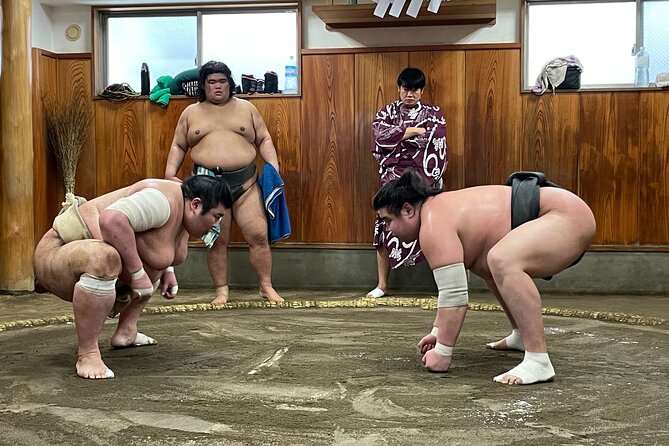
Do not assume you will get a chair. Some stables have no chairs, and you may sit on a floor mat, sometimes cross-legged, for much of the practice. A session lasting an hour may be manageable for most people, but longer training can become uncomfortable, especially for anyone with knee, hip, or back problems.
Wear comfortable clothing. The information for the Sumo Practice with Wrestlers option specifically asks participants to dress comfortably. You will also remove your shoes before entering the practice area. Men must remove their shoes before stepping onto the dohyō, the sumo ring, if that option includes ring access.
The stable can be cold. A December visit on a rainy day involved waiting outside and then sitting in a chilly room. I would check the forecast and dress in warm layers, even if Tokyo feels mild elsewhere. Bring water, since drinking water and sports drinks is allowed inside, but eating is not.
If you feel unwell, do not join. The no-exit rule makes this especially important. You need to remain until the practice ends, and you should not attend if you may need frequent breaks.
Meeting the Wrestlers After Practice
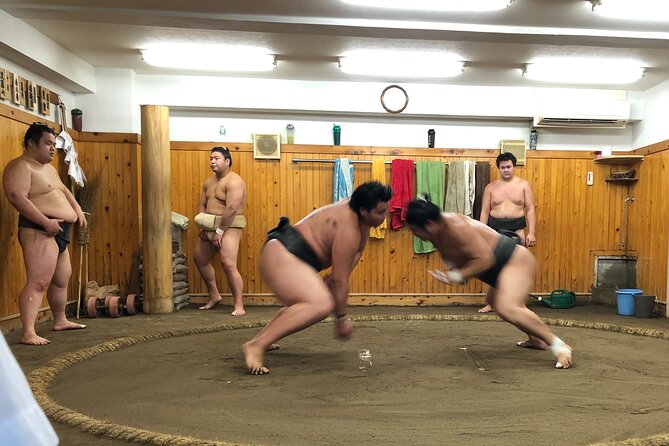
The included photo is one of the most appealing extras. After the training, wrestlers may pose with the group, and you may have a short chance to speak with them. These moments can turn a formal observation into a personal memory.
Keep expectations sensible. The photo is not a promise that a particular star will be present, and the athletes’ time and mood depend on the day’s schedule. The stable is where a Yokozuna trains, but you are not told until the morning whether that Yokozuna will actually attend.
On one especially fortunate visit, the group saw high-ranking makuuchi wrestlers and former Yokozuna Hakuho, now known as Miyagino Oyakata. That is a memorable possibility, not a guaranteed part of the booking.
The people available can also vary. Some dates may feature active professional wrestlers, while another version of the experience may include retired wrestlers or hands-on training. One account described interaction with retired sumo wrestlers who were friendly and accommodating, but less impressive than a previous visit with active professionals.
Read the exact option name and current description before paying. The core stable visit is about observing practice. A different Sumo Practice with Wrestlers option may include demonstrations, limited training, or contact with former wrestlers. The distinction affects the value considerably.
Authentic Practice or Tourist Demonstration?
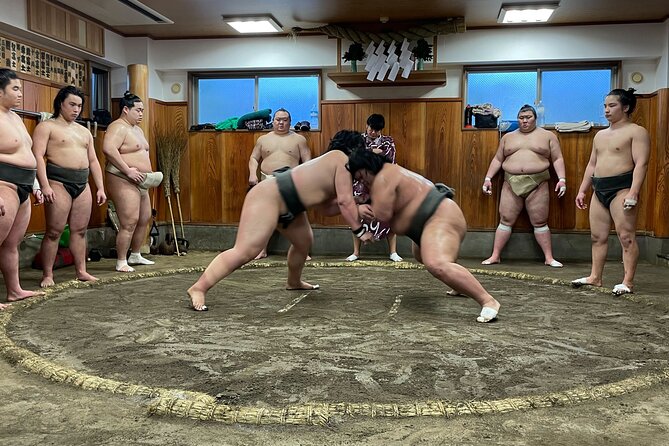
This is the most important question. The stable observation can feel very genuine because you are watching wrestlers follow their daily routine in their own training space. It is quiet, disciplined, and not arranged like a stage show.
But the wider product name can create confusion. Some versions may include a brief amateur sumo activity or hands-on practice, and one harsh assessment described only a minute of amateur wrestling with nonprofessional performers. That is a very different experience from watching an active stable train.
I would not assume every date offers the same format. Confirm three points before booking:
- Is the session mainly observation inside a stable?
- Are the wrestlers active professionals, retired wrestlers, or demonstrators?
- Does the selected option include hands-on practice, ring access, or only viewing?
For a sumo fan, the difference between a genuine training session and a tourist demonstration is huge. For a family with children, a short interactive portion may be welcome. For someone seeking serious sporting culture, the real-stable observation is likely the better choice.
Women can join the Sumo Practice with Wrestlers option. Due to religious and cultural traditions at that facility, women cannot enter the dohyō. They can still watch the training fully from designated seating areas. Men may be allowed onto the ring under the specific rules of that option, but shoes must be removed first.
Is $99.10 a Fair Price?
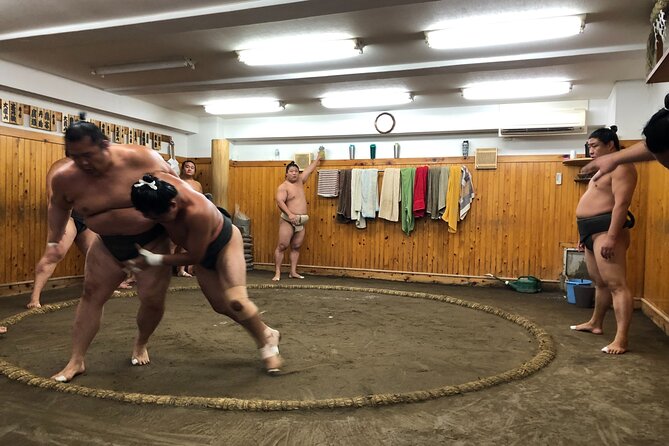
At first glance, $99.10 for about an hour may seem steep. You are not buying a long tour, a meal, or a full day of entertainment. The price makes more sense if you value access rather than duration.
A sumo stable is not a normal sightseeing stop. The guide, arrangements, translation, group handling, and access all matter because this is a private working environment with strict behavior rules. The close view of training is also something you cannot reproduce from a stadium seat.
The value drops if your date has a very short practice, poor communication, or a demonstration that does not match your expectations. A session can end early, and the famous wrestler you hoped to see may not be there. For that reason, I would treat the experience as a specialist purchase for sumo fans, culture-minded visitors, and people who value access to places outside the standard Tokyo route.
The strongest case for the price is a full practice, a good guide, and a respectful photo opportunity afterward. The weakest case is a short session with little wrestling action and a format that was not clearly explained before booking.
Free cancellation is available until 24 hours before the start time. Inside that window, cancellations and changes are not accepted, and the local time cutoff applies.
Who Should Book This Visit?
I would recommend it to you if you are curious about how sumo wrestlers train, enjoy watching real athletic preparation, or want a cultural experience that feels different from a normal Tokyo attraction. It works well for first-time sumo viewers because the guide explains what you are seeing.
Families can enjoy it, especially when children are interested in the wrestlers and the photo afterward. However, young children must be able to sit quietly and remain in place. The no-exit rule and silence requirements may be difficult for restless children.
It is also a good choice for repeat visitors to Tokyo. You do not need another general sightseeing tour. You get a look at a specialized part of Japanese sport and daily life.
I would skip it if you want a guaranteed Yokozuna, a full tournament bout, loud excitement, video footage, or a flexible come-and-go schedule. I would also think twice if floor seating or a cold room could cause you pain.
Final Verdict: Book It for the Training, Not the Show
This is a strong choice when you understand what you are buying. The close view of practice, clear explanations, strict atmosphere, and possible photo with a wrestler make it a memorable Tokyo experience. The most rewarding sessions reveal the force, repetition, and concentration behind sumo.
Book only after checking the exact option, meeting details, and schedule message. Arrive on time, use the restroom first, wear warm comfortable clothes, and prepare to sit quietly without video. If you can accept an uncertain timetable and the possibility of not seeing a star, I think the access is worth the $99.10. If you want guaranteed action, choose a tournament instead.
FAQ
How long does the Tokyo sumo practice experience last?
The advertised visit takes about one hour, including roughly five minutes for the introduction and about 55 minutes inside the stable. The actual practice may be shorter or longer depending on the stable’s schedule.
Where does the experience start and end?
The listed meeting point is 1-chōme-2-8 Chitose in Sumida City, Tokyo. The activity ends back at the meeting point.
Can the meeting time or stable location change?
Yes. The location and morning practice time may vary by date. Japan Wonder Travel sends the specific details after booking.
Can I take photos inside the stable?
Photos are allowed without flash or shutter sounds. Video recording is not allowed.
Can I leave during the practice?
No. You cannot leave the stable in the middle of practice, and you cannot re-enter after leaving. Use the restroom before arriving.
Is food allowed inside the stable?
No. Eating is not allowed. You may drink water and sports drinks inside.
Do I need to sit on the floor?
Possibly. Some stables do not have chairs, so you may need to sit on a floor mat. Comfortable clothing is recommended.
Can women join the Sumo Practice with Wrestlers option?
Yes. Women may join, but cultural and religious rules at that facility do not permit female participants to enter the dohyō. Women can watch from designated seating areas.
Just added in Tokyo
- Tokyo Sunset Boat Party with Music Drinks and Vibes★ 5.0 · 15 reviews
- 【SUMO FESTIVAL】Tokyo Ginza: Sumo Show & Photo Experience★ 4.5 · 41 reviews
- Tokyo Sumo Experience with Live Show & Audience Challenge★ 5.0 · 38 reviews
- Premium 14-Piece Sushi & Cultural Discovery with Chef Interaction★ 5.0 · 57 reviews
- Tokyo Street Food Tour – 7 Japanese Foods★ 5.0 · 16 reviews
- Tokyo Morning Tour : Meiji Shrine, Asakusa and Fish Market★ 5.0 · 102 reviews
- Tokyo: Visit Sumo Morning Practice with English Guide★ 4.5 · 22 reviews
- Asakusa: TOKYO SKYTREE Exploration after History Tour★ 5.0 · 21 reviews
Sumo Experiences, compared.
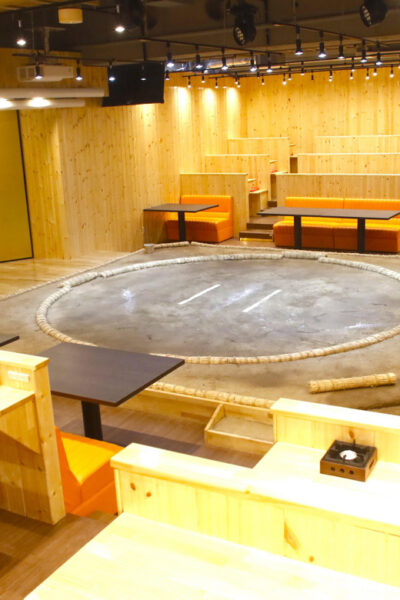
Sumo Show Experience with Chicken Hot Pot and a Photo
Read our review →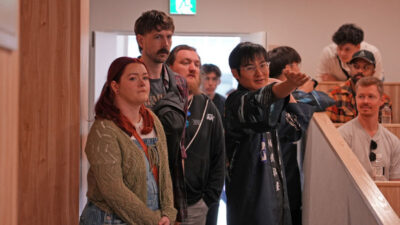
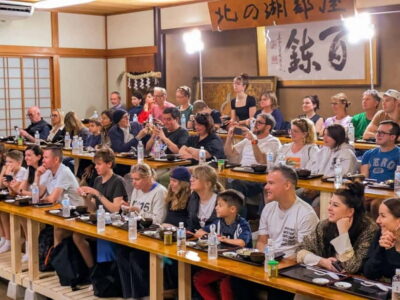
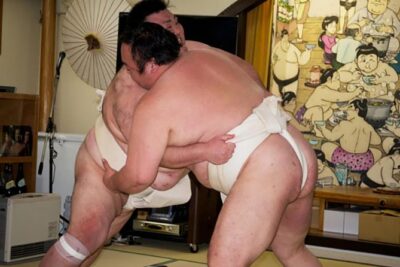
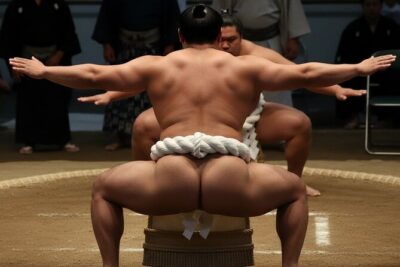
Tokyo Shinjuku Sumo Show & Experience with Photo
Read our review →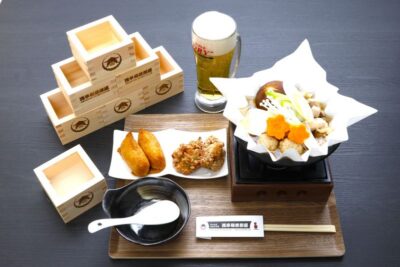
Asakusa Sumo Club Sumo Show Admission with Chankonabe in Tokyo
Read our review →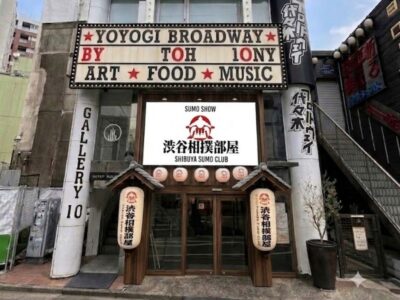
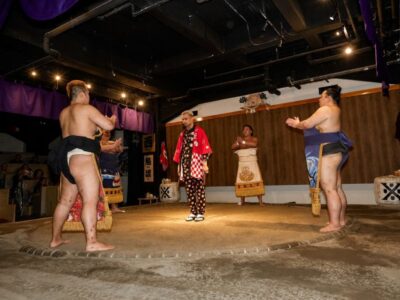
Tokyo Ginza Sumo Experience: Performance vs Pure Practice
Read our review →Browse the lists this tour appears in