Reviewed · SHOW
Traditional Japanese Comedy, Juggling & Magic Live Show in Tokyo
Three old art forms share one small stage. This 90-minute show near Akihabara brings together Rakugo comedy, Daikagura juggling, and Wazuma magic in an easy, welcoming format for international visitors. I especially like the clear interpretation and the chance to try parts of the performance yourself, rather than simply sitting and watching.
The setting is another strong point: EDOCCO STUDIO sits inside the grounds of historic Kanda Myoujin Shrine. At $36.24 per person, the price feels fair for three different acts, audience participation, and a small traditional gift. The main consideration is timing: the performance is offered at 2 p.m. on Thursday, so it may not fit a short Tokyo schedule or a visitor who wants an evening activity.
In This Review
- Key Things to Know Before You Go
- Finding EDOCCO STUDIO at Kanda Myoujin Shrine
- Rakugo: Comedy With Almost No Props
- Daikagura and the Spinning Umbrella
- Wazuma: Magic You Can Repeat at Home
- Why the Translation Matters
- A 90-Minute Cultural Break Near Akihabara
- Is $36.24 a Fair Price?
- Who Will Enjoy This Show Most?
- Practical Details for a Smoother Visit
- Should You Book the Kanda Myoujin Comedy and Magic Show?
- FAQ
- Where does the show take place?
- What time does the performance begin?
- How long does the experience last?
- Do I need to speak Japanese?
- What types of entertainment are included?
- Is cancellation free?
Key Things to Know Before You Go
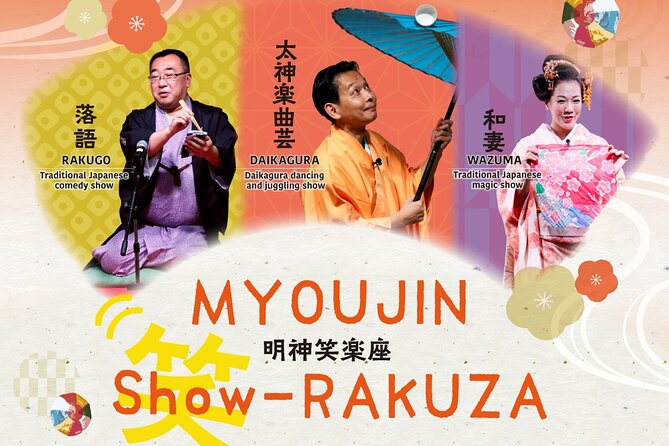
- Three traditional acts in 90 minutes: You get Rakugo comedy, Daikagura acrobatics and juggling, plus Wazuma magic in one compact performance.
- Translation makes the show accessible: You do not need Japanese language skills, and interpretation helps explain the comedy and demonstrations.
- You can take part: The performers teach simple Rakugo expressions, Daikagura techniques and basic magic tricks.
- The shrine setting adds context: EDOCCO STUDIO is inside Kanda Myoujin Shrine, only a few minutes from Akihabara.
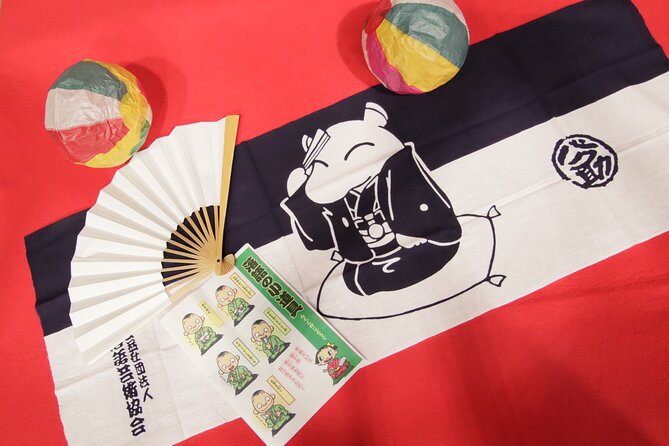
- A small cultural gift is included: You may receive items such as a tenugui hand towel, folding fan or paper balloon.
- Plan around Thursday at 2 p.m.: Doors open at 1:30 p.m., and the activity returns to the same meeting point after the show.
Finding EDOCCO STUDIO at Kanda Myoujin Shrine
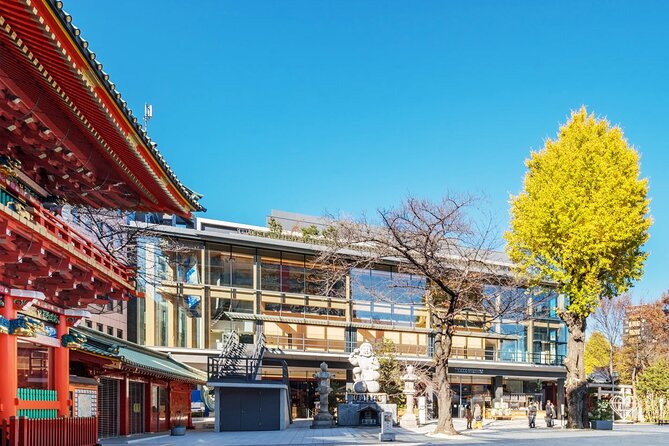
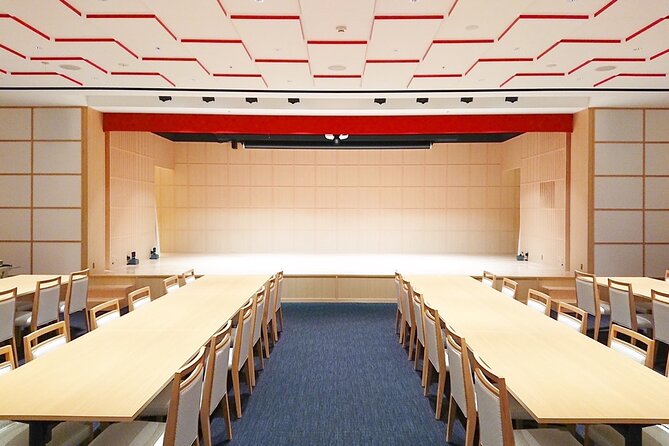
The experience begins at EDOCCO STUDIO, located at 2-chōme-16-2 Sotokanda in Chiyoda City. The studio is within Kanda Myoujin Shrine, giving you a useful combination of old and new Tokyo before the performance even starts.
You enter a modern indoor theater at a traditional shrine site. That contrast is part of the appeal. You are not being taken to a distant cultural attraction or asked to spend a whole day on a formal heritage tour. Instead, you get a focused introduction to Japanese stage arts, with the shrine providing a meaningful setting.
The venue is near public transportation and only a few minutes from Akihabara. That makes it easy to pair with time in the electronics and anime district, though I would leave enough time to locate the studio and settle in before the 1:30 p.m. doors-open time.
The audience limit is 100 people. That is large enough to create a lively room, but still more intimate than a major theater production. The smaller setting matters here because several parts of the show depend on direct contact between performers and audience members.
A few more options to weigh up in Tokyo
- Mt Fuji & Hakone Cruise, Drum Show Bullet Train 1 Day from Tokyo
★ 4.0 · 7,413 reviews - Tokyo: Sumo Show Experience with Chicken Hot Pot and a Photo
★ 4.8 · 6,678 reviews - Tokyo: Sumo Live Show with Photo in Shinjuku
★ 5.0 · 3,438 reviews
Rakugo: Comedy With Almost No Props
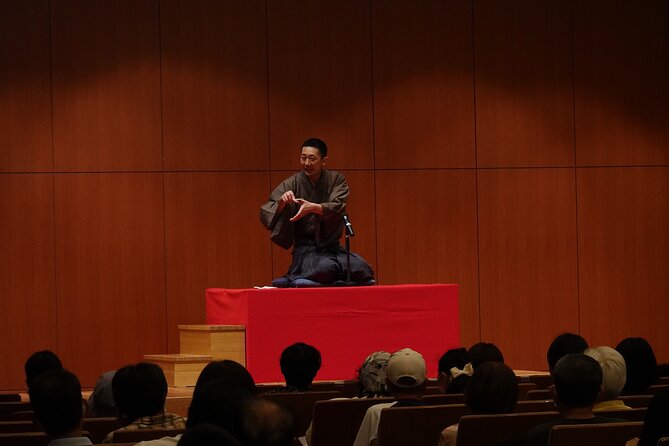
Rakugo is a traditional Japanese comic storytelling form. The performer generally works from a seated position and uses small movements, changes in voice and a few simple props to create a scene. The humor comes from the story, the characters and the performer’s timing, not from elaborate scenery.
For an international audience, Rakugo can sound difficult at first because the original language carries much of the wordplay. The interpretation helps you follow the setup and understand the basic expressions. You should not expect every Japanese joke to have a perfect English equivalent, but the format is presented in a way that gives you a clear entry point.
One especially useful part comes after the performance, when the Rakugo master teaches basic expressions and lets you try the style. You may even get to perform on the Rakugo stage. That turns an unfamiliar art form into something you can remember through your own participation.
I like this section because it avoids treating Japanese culture as something sealed behind glass. You see how the performer uses posture, voice and imagination, then get a small chance to copy the method yourself. It is playful rather than academic.
The comedy segment may suit families particularly well, since the presentation is described as friendly and family-oriented. Still, you should allow room for some humor to depend on explanation. The show is designed for people without Japanese skills, but it is not the same as watching a fully translated Western comedy performance.
Daikagura and the Spinning Umbrella
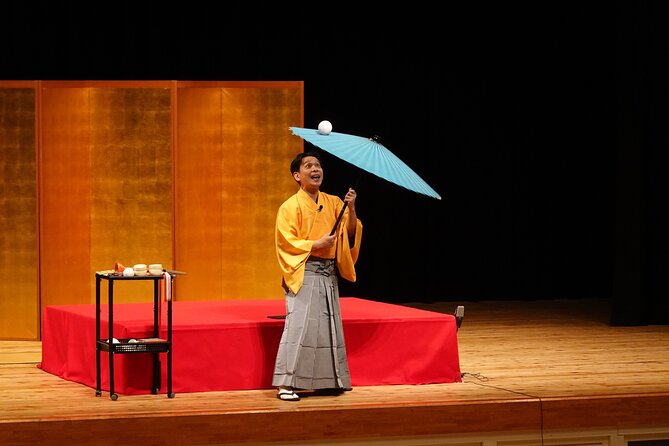
Daikagura is the physical centerpiece of the program. It combines juggling, balancing and traditional performance skills. One of the most praised moments is the umbrella act, in which an umbrella is spun as part of the performance.
The umbrella may sound simple on paper, but that is part of the charm. Traditional stage arts often make ordinary objects seem unexpectedly difficult and graceful. The act gives you a direct look at control, balance and practice without requiring a long explanation.
You also get the chance to try Daikagura firsthand. The exact activity can vary, but the point is not to become an expert in a few minutes. It is to feel how much concentration goes into a polished act. A small demonstration can change the way you watch the professional performance that follows.
This part should appeal to families and groups, especially if you like activities that get you out of your seat or at least invite a little audience participation. The participation is described as interactive without being overly forceful, which is important if you are shy or attending alone.
If you prefer a quiet theater show with no involvement, you should keep that in mind. This is not a passive concert. The friendly interaction is one of its strengths, but it also means you may be invited to join in.
Wazuma: Magic You Can Repeat at Home
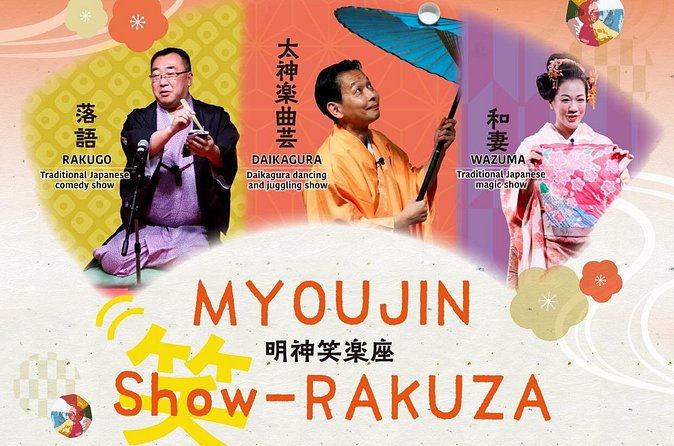
Wazuma is Japanese magic, and it forms the third part of the performance. The magic show receives particular praise for being entertaining and hands-on. The magician teaches basic tricks that you can try yourself, giving this section more value than a standard stage illusion show.
The lesson is aimed at simple participation rather than expert technique. You will not leave as a professional magician, but you can take away a trick or two to show friends. That practical element gives the performance a light, social finish.
The included mini gift adds to the idea. Traditional items may include a tenugui hand towel, folding fan or paper balloon, along with props connected to the show. The exact item may vary, so I would treat the gift as a pleasant extra rather than the main reason to book.
I find the Wazuma section especially useful for families. Children can watch the illusion, learn a basic method and leave with something tangible. Adults who enjoy small cultural souvenirs will also appreciate that the gift is linked to Japanese performance traditions rather than being a generic Tokyo keepsake.
A completely different kind of day out:
- Tokyo Disney Resort – Tokyo Disneyland & Tokyo DisneySea Park Tickets
★ 4.8 · 99,488 reviews - SHIBUYA SKY Ticket
★ 4.7 · 46,509 reviews - JR Whole Japan Rail Pass
★ 4.8 · 29,150 reviews - Mt Fuji and Hakone 1-Day Bus Tour Return by Bullet Train
★ 5.0 · 26,383 reviews
Why the Translation Matters
The show is built for an international audience, and the interpretation is central to its success. You do not need Japanese language ability to participate, follow the main explanations or understand what each performer is demonstrating.
That does not mean every cultural reference will carry exactly the same meaning in English. Comedy is particularly difficult to translate, and Rakugo depends on language, character voices and timing. Even so, the interpretation gives you the structure you need to enjoy the act instead of watching from the outside.
The staff are described as kind, welcoming and involved with the audience. That matters in a small theater, where the attitude of the hosts can shape the entire afternoon. Clear guidance also helps if you arrive alone. You can enjoy the show independently without needing a group to make the interactive parts work.
The best approach is to come ready to watch, listen and perhaps take a small turn onstage or in front of the audience. The performers are not asking you to master a skill. They are giving you a quick, friendly taste of how these traditions work.
A 90-Minute Cultural Break Near Akihabara
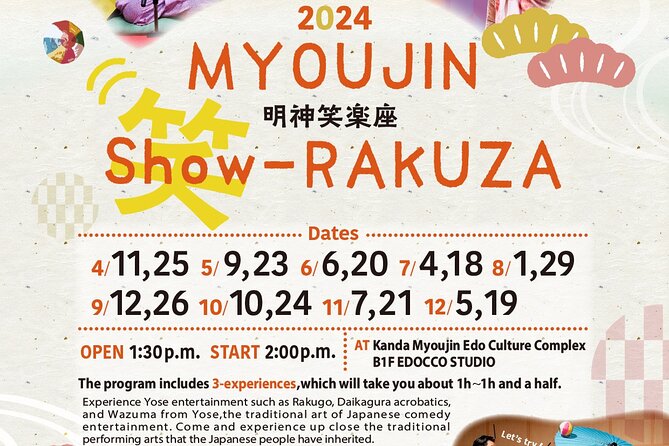
The total duration is about 1 hour and 30 minutes. That is long enough to give each art form a proper introduction, but short enough to fit into a larger Tokyo day.
The schedule is straightforward:
- Doors open at 1:30 p.m.
- The show begins at 2 p.m. on Thursday.
- The activity finishes back at EDOCCO STUDIO.
The fixed afternoon time is both useful and limiting. If you are spending the morning around Asakusa, Ueno or Akihabara, the show can provide a calm indoor stop before dinner. If your plans center on a museum with a timed entry, a day trip or Tokyo nightlife, the Thursday schedule may be harder to arrange.
The indoor venue is helpful in poor weather, though the supplied conditions state that the experience requires good weather and may be canceled if conditions are unsuitable. If that happens, you are offered another date or a full refund. That policy is worth remembering when planning a tightly timed itinerary.
The activity has a maximum of 100 people. It is not a private performance, but the audience size remains controlled. That should help preserve the personal feel needed for the lessons and demonstrations.
Is $36.24 a Fair Price?
At $36.24, this is not the cheapest cultural activity in Tokyo, but it offers more than a single short stage act. Your admission covers three different forms of entertainment, interpretation, audience participation and a mini gift.
The strongest value comes from variety. If you paid for separate introductions to Rakugo, traditional juggling and Japanese magic, you would spend more time and likely more money. Here, you can sample all three in one afternoon and decide which art form interests you most.
The price also includes an experience that is difficult to recreate independently. You can visit shrines and watch performances elsewhere in Japan, but arranging a translated, hands-on introduction to these three forms would not be simple for a first-time visitor.
Still, value depends on your interests. If you already have tickets for several Japanese performing arts shows, this may feel introductory. It is best suited to someone who wants an accessible first look, not to someone seeking a long, specialist presentation of one art form.
The gift should be considered a bonus. The real value is the chance to learn a few expressions, tricks and performance skills in a welcoming room.
Who Will Enjoy This Show Most?
I would recommend this experience to:
- First-time visitors who want a simple introduction to Japanese culture
- Families looking for a short, interactive activity
- Solo visitors who appreciate a welcoming setting
- Couples and friends who want something different from sightseeing and shopping
- Anyone curious about traditional entertainment but concerned about the language barrier
- Visitors staying near Akihabara, Kanda or central Tokyo
It may be less suitable if you want a large-scale theatrical production, a fully serious historical lecture or a performance with no audience involvement. The show is friendly and accessible, not formal or highly specialized.
The mix also gives you a useful range of experiences. Rakugo focuses on story and language. Daikagura brings physical skill and visual surprise. Wazuma adds a trick-based lesson you can remember later. If one act does not appeal to you, another probably will.
Practical Details for a Smoother Visit
Your mobile ticket is accepted for the activity, and confirmation is normally received at booking. If you book within two hours of the start time, confirmation arrives as soon as possible and depends on availability.
The meeting point and end point are the same, at EDOCCO STUDIO. Service animals are allowed, and most people can participate. Since the event includes demonstrations and audience interaction, you should be comfortable taking part in a general theater activity, though no special skill is required.
Free cancellation is available up to 24 hours before the 2 p.m. start time for a full refund. Changes or cancellations within 24 hours are not accepted for a refund. Since the schedule is limited, booking about two months ahead may be sensible, particularly if Thursday afternoon is the only time that works for you.
I would also check the day and start time carefully before confirming. The event information identifies Thursday, with doors at 1:30 p.m. and the performance at 2 p.m.
Should You Book the Kanda Myoujin Comedy and Magic Show?
Book it if you want a short, friendly and participatory introduction to Japanese performing arts. The translation removes much of the language barrier, and the three-part format gives you more variety than a single cultural demonstration. The shrine setting, small gift and chance to try Rakugo, Daikagura and Wazuma make the afternoon memorable without taking over your Tokyo itinerary.
I would skip it only if your schedule cannot accommodate Thursday at 2 p.m., or if you want an advanced performance devoted to one traditional art. For most first-time visitors, $36.24 is a reasonable price for an entertaining cultural break near Akihabara, especially when you value personal instruction as much as watching the professionals.
FAQ
Where does the show take place?
The show takes place at EDOCCO STUDIO, located within Kanda Myoujin Shrine at 2-chōme-16-2 Sotokanda, Chiyoda City, Tokyo 101-0021, Japan.
What time does the performance begin?
Doors open at 1:30 p.m., and the show begins at 2 p.m. on Thursday.
How long does the experience last?
The performance lasts approximately 1 hour and 30 minutes.
Do I need to speak Japanese?
No. The experience is designed for international visitors, and interpretation is provided to help you understand the performances and activities.
What types of entertainment are included?
The program includes Rakugo comedy, Daikagura acrobatics and juggling, and Wazuma, a Japanese magic performance.
Is cancellation free?
You can cancel up to 24 hours before the start time for a full refund. Cancellations or changes made less than 24 hours before the experience are not refunded.
Just added in Tokyo
- Tokyo Like a Local: Private & Personalised Experience (2-3 hours)★ 4.5 · 81 reviews
- Samurai Experience – Learn Bushido through Kendo, in Tokyo★ 5.0 · 88 reviews
- Tokyo Layover 5 Hours Private Tour★ 5.0 · 40 reviews
- Tokyo: SEGA Joypolis E-Tickets with Optional Tokyo Metro Pass★ 4.0 · 14 reviews
- Experience Big soba knife Soba Making Class in Tokyo Kappabashi★ 5.0 · 71 reviews
- Imperial Palace Tour: Discover Samurai History with a Local Guide★ 5.0 · 20 reviews
- Tokyo Imperial Palace with Kagurazaka Alley Tour★ 5.0 · 54 reviews
- Tokyo Ikebukuro Evening Tour Dive into Japanese culture★ 5.0 · 15 reviews
Show, compared.

Mt Fuji & Hakone Cruise, Drum Show Bullet Train 1 Day from Tokyo
Read our review →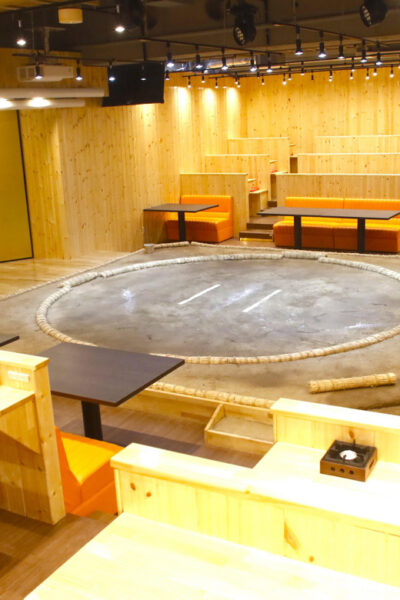
Sumo Show Experience with Chicken Hot Pot and a Photo
Read our review →
Tokyo Shinjuku Sumo Show & Experience with Photo
Read our review →
Asakusa Sumo Club Sumo Show Admission with Chankonabe in Tokyo
Read our review →