
Reviewed · CYCLING AND E-BIKE TOURS
Tsuwano Cycling Tour with Local Guide
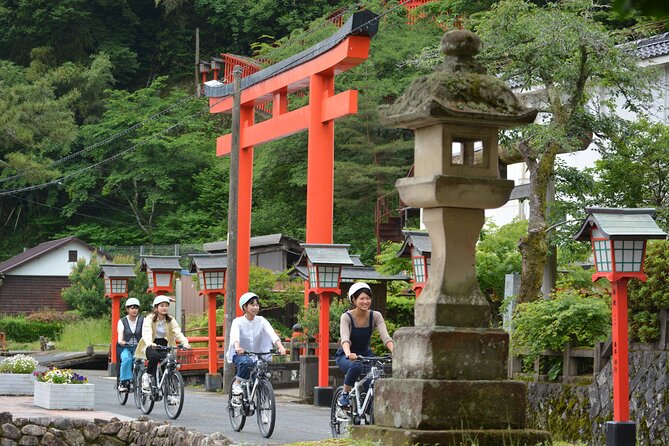
Tsuwano rewards a slower look. This three-hour electric bike tour gives you an easy way to see the old castle town, its shrines, rural scenery, and lesser-known corners while comparing modern Tsuwano with the Edo-period paintings known as the Tsuwano Hyakkeizu. I especially like the thoughtful use of historic images and the personal guiding from people such as Ale, Alessandro, and Yui. The main consideration is the weather: this is an outdoor ride, so a rainy day can lead to a date change or cancellation.
I also like the small maximum group size of six. That keeps the ride personal and makes it easier to ask questions, pause for photographs, or discuss an unusual detail without being swallowed by a large crowd. At $99, the price is not bargain-basement, but the bicycle, guide, several admission-free stops, and access to stories you could easily miss on your own make it a reasonable half-day choice.
In This Review
- Key points at a glance
- Why the Tsuwano Hyakkeizu makes this ride different
- Starting near Tsuwano Station
- Tonomachi Street: Tsuwano’s main road
- Yasaka Shrine and the stories behind old scenes
- Narutaki Jinja: a waterfall and a quiet pause
- Washibara Hachiman Shrine and the old horse track
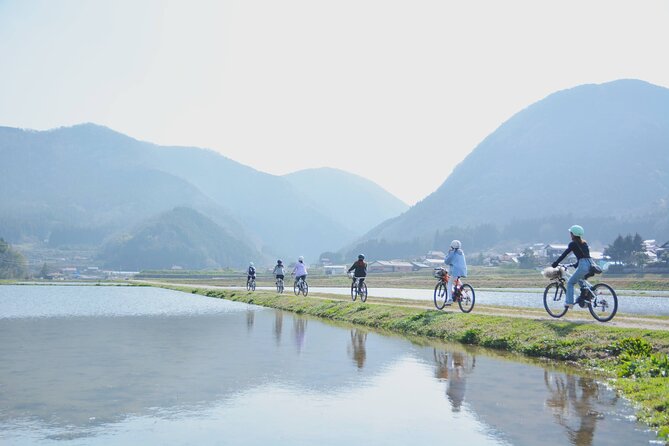
- Tsuwano Shrine and the countryside beyond town
- The thousand-year cedar at the finish
- What $99 gets you
- Who will enjoy this tour most
- Practical details before you book
- Should you book the Tsuwano Cycling Tour?
- FAQ
- Where does the Tsuwano Cycling Tour start?
- Where does the tour end?
- How long does the cycling tour last?
- What is included in the price?
- Are snacks included?
- How many people can join the tour?
- Is the tour suitable for most people?
- What happens if the weather is poor?
Key points at a glance
- Edo-era scenes come to life: Compare present-day Tsuwano with the 100 paintings of the Tsuwano Hyakkeizu, created about 160 years ago.
- Electric bikes keep the pace comfortable: You can enjoy the three-hour route without needing to be a serious cyclist.
- The group is capped at six: Expect a more personal outing, with room for questions and conversation.
- The route mixes famous and quiet places: Tonomachi Street shares time with a waterfall, shrine grounds, a horse track, and a huge cedar.
- Guides add the real value: Ale, Alessandro, and Yui have been praised for clear explanations, warmth, enthusiasm, and local perspective.
- It returns to Tsuwano Station: The tour begins and ends near Tsuwano Station, making it practical for a short visit.
Why the Tsuwano Hyakkeizu makes this ride different
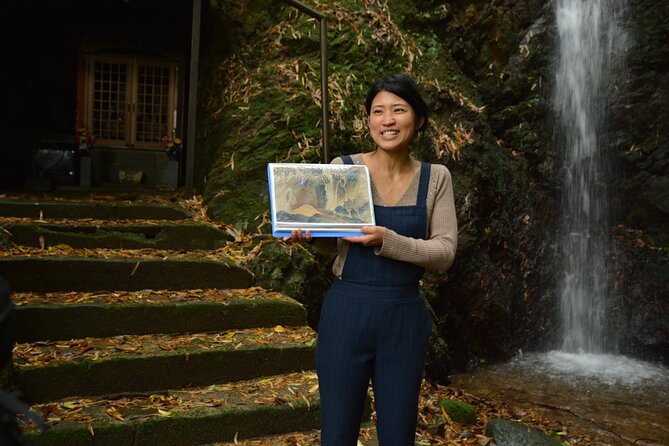
Many town bike tours are simply a string of stops. This one has a strong idea holding it together: look at Tsuwano as it appears now, then compare it with the same town as artists recorded it in the late Edo period.
The Tsuwano Hyakkeizu, or One Hundred Sceneries of Tsuwano, shows scenes from the former Tsuwano domain about 160 years ago. The collection has National Heritage recognition, and it gives the ride a clear purpose. You are not only hearing that Tsuwano is old. You are being asked to notice what has remained, what has changed, and how the town’s traditions fit into its present-day life.
I find this far more useful than a rapid list of dates. A street, shrine, or field becomes easier to understand when you can see how it looked in an earlier period. The old paintings also encourage you to pay attention to details you might otherwise pass without a second thought.
The tour is described as Yu-na’s signature introduction to Tsuwano. That makes sense. In three hours, you get a broad first look at the town without committing to a full-day outing. If the experience leaves you wanting more, the longer course mentioned by the guide could be a natural next step, though its details are not provided here.
More Bike Tours in Japan:
- Bike Tour Exploring North Kyoto plus Lunch
★ 5.0 · 1,087 reviews - Tokyo Great Cycling Tour
★ 5.0 · 811 reviews - Tokyo Top Highlights 3h Guided E-bike Tour
★ 5.0 · 714 reviews
Starting near Tsuwano Station
The meeting point is in front of Tsuwano Station in Ushiroda, Tsuwano. That is convenient if you are arriving by train or using public transportation, and the return to the same meeting point simplifies the rest of your day.
The ride begins with the use of an electric bicycle and a local guide. The electric assistance matters because the tour covers more than one compact shopping street. It reaches shrines and countryside settings around town, and the electric motor helps keep the outing accessible to people who are uncertain about their fitness.
You should still think of this as an active outdoor experience. The information says most people can participate, but it does not provide bike specifications, helmet details, clothing guidance, or a route profile. Wear practical clothing and shoes, and plan for changing weather. Snacks are not included, so bring something if you know you will need food during or immediately after the ride.
The group limit of six is one of the strongest practical features. A guide can explain a painting, answer a question, or adjust the pace more easily with six people than with a large group. The tour also appears to rely on conversation, not just prepared announcements, so the small size should suit anyone who likes a more flexible introduction.
Tonomachi Street: Tsuwano’s main road
The first stop is Tonomachi Street, the main street of Tsuwano. You cycle along it with the guide for about 30 minutes, using this central stretch to get your bearings.
This is a sensible opening. You start in the part of town most likely to appear on a first visit, then learn to read it with more care. Rather than rushing straight to a distant shrine, the guide can establish how the historic town fits together and point out details connected with the old paintings.
I would pay attention here to the contrast between an active modern street and the older character the town has preserved. The value is not simply seeing Tonomachi Street. It is learning how the guide connects an ordinary present-day view with Tsuwano’s earlier identity.
There is no admission charge for this stop. The 30-minute timing also gives you a gentle beginning before the route moves farther into quieter settings.
Yasaka Shrine and the stories behind old scenes
The tour then continues to Yasaka Shrine for about 30 minutes. Here, the guide explains the shrine’s history and shares less obvious stories connected with the Tsuwano Hyakkeizu.
This is likely one of the best places to understand the tour’s main theme. The paintings are not being used as decoration. They become a way to frame the visit, helping you imagine the town in the late Edo period and recognize the link between a historic image and the view in front of you.
The word hidden can be overused in tour advertising, but the useful point here is that the guide supplies context you may not find on a sign. One of the strongest aspects of the experience is the clear, friendly explanation of local culture. Ale and Alessandro are specifically praised for their warmth, easy conversation, and ability to make the town’s past understandable. Yui is also singled out for friendly, enthusiastic guiding.
Yasaka Shrine is another admission-free stop. If you enjoy local religious sites but do not want a lecture filled with specialist terms, this part should fit well. You can ask questions and use the historic paintings to keep the discussion grounded.
A few more options to weigh up in Japan
- Tokyo 6hr Private Tour with Government-Licensed Guide
★ 5.0 · 3,902 reviews - (Okinawa’s No. 1 Popular Northern Day Trip) Chinese-speaking guide · Includes admission tickets · 1 person can book: Churaumi Aquarium · Cape Manzamo · Kouri Island · American Village
★ 4.7 · 1,846 reviews - Shiraito Falls & Forest Cafe & Handmade Flower Salt Pudding & Grilled Seafood & Totoro Forest & Sakurai Futamigaura & Angel’s Wings & Coconut Tree Swing Day Tour (Departing from Hakata Station, with Mandarin, English, and Cantonese speaking guide)
★ 4.9 · 1,840 reviews - Tokyo: Shinjuku Local Bar and Izakaya Guided Walking Tour
★ 4.9 · 1,794 reviews
Narutaki Jinja: a waterfall and a quiet pause
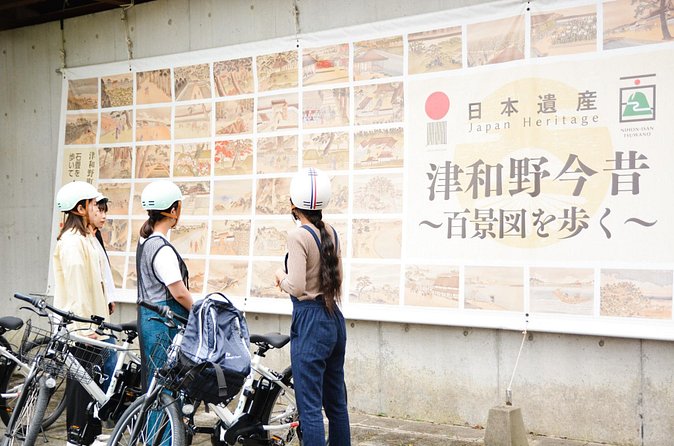
Narutaki Jinja changes the rhythm. The 30-minute visit includes a hidden waterfall spot, more history about Tsuwano, and simple meditation practice.
After the main street and a central shrine, a waterfall gives the tour a welcome sense of quiet. The setting lets you experience the natural side of the town rather than seeing Tsuwano only as a collection of old buildings and religious sites.
The meditation practice is described as simple, which is important. You are not being asked to prepare for a formal retreat. Instead, this seems to be a short chance to slow down and notice the surroundings. The peaceful setting has been especially meaningful for people looking for a break from busy city life.
I would treat this stop as a pause, not a performance. The strength of the experience is likely its calm pace and the guide’s explanation of why the place matters. The data does not specify the waterfall’s size, the meditation method, or the walking conditions, so do not arrive expecting a major hiking excursion. It is one part of a cycling route, not a separate nature trek.
Washibara Hachiman Shrine and the old horse track
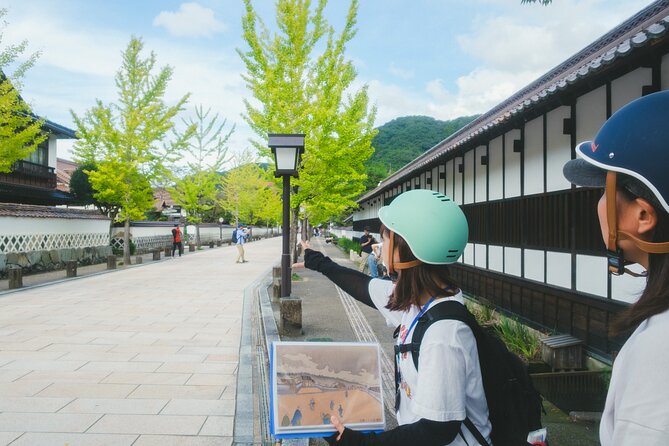
The route next reaches Washibara Hachiman Shrine. Here, you learn about the large joyato, or stone lantern, and the baba, the horse track used for the Yabusame horseback archery ritual.
This is a particularly good stop for understanding how history remains active in Tsuwano. The horse track is not just a relic from an old story. It is tied to Yabusame, a traditional ceremony that combines horsemanship and archery. The guide explains the meaning behind the site, giving you a better sense of the ceremonies and local customs connected with the shrine.
The large stone lantern provides another visual anchor. Details like this are easy to pass without context, especially when you are exploring on your own. A guide can explain why the object matters and how it fits into the shrine grounds.
The tour’s connection with the Yabusame festival also gives you a useful reason to return at another time of year. The provider specifically hopes to welcome visitors back for the horseback archery festival or cherry blossom season. Those seasonal events are not included in the tour, but they show how this experience can serve as an introduction rather than a complete account of Tsuwano.
Tsuwano Shrine and the countryside beyond town
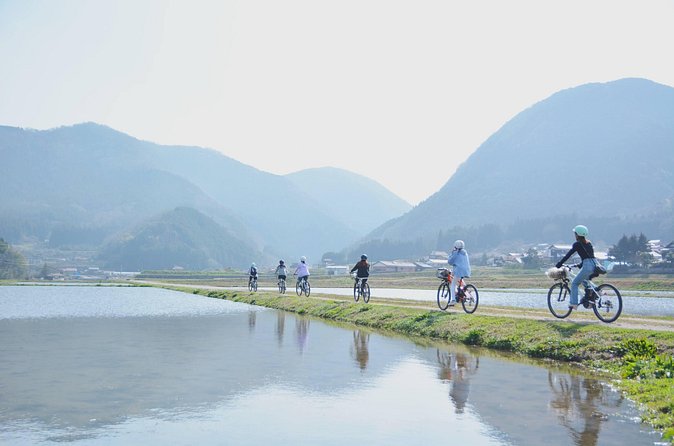
Tsuwano Shrine brings you into the rural surroundings outside the most central streets. The 30-minute stop includes views of the countryside and stories about former lords of the Tsuwano domain.
This is where the electric bike earns its keep. You are able to move between the town center and more open surroundings without turning the outing into a test of endurance. The route gives you a broader sense of Tsuwano’s setting, not just its historic core.
The stories of the former domain lords add political and social context to the earlier stops. You have already seen streets, shrines, and ritual spaces. Now the guide can help connect those places with the people who once governed the area.
I like this balance. The ride does not stay in one carefully polished center. It includes rural views, which helps explain why Tsuwano can feel removed from modern city life. Several comments about the tour describe a strong sense of nostalgia and a town that seems to have paused in time. That feeling comes from the combination of preserved traditions, open scenery, and the guide’s storytelling, not from any single attraction.
The thousand-year cedar at the finish
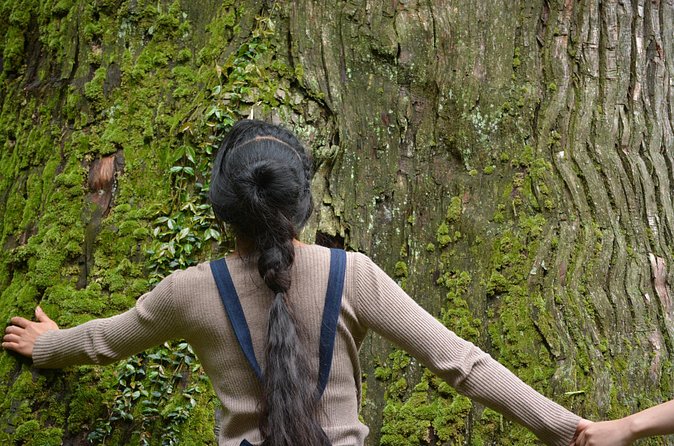
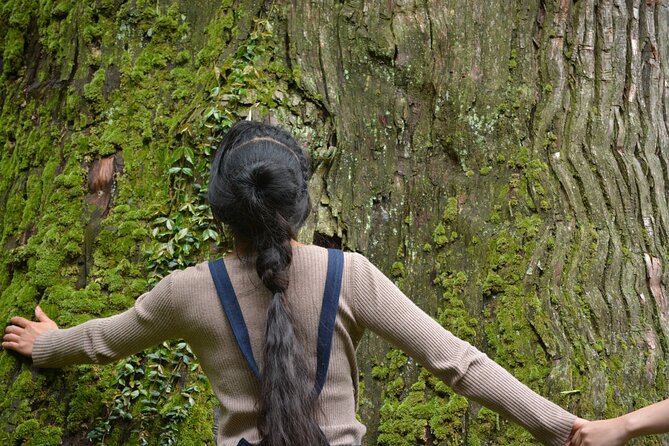
The final portion returns to Washibara Hachiman Shrine, where you visit a giant cedar said to have watched over Tsuwano for more than 1,000 years.
Ending with a tree gives the route a fitting final image. After the paintings, shrines, horse track, and stories of local rulers, the cedar shifts your attention to the long passage of time. It is a simple but memorable way to close a tour built around continuity.
The itinerary lists Washibara Hachiman Shrine twice, first for the joyato and horse track, then for the cedar. Think of these as two parts of the same area rather than two completely separate destinations. The guide first explains the shrine’s ceremonial connections, then finishes with the tree and its place in local memory.
By the end, you have spent about 30 minutes at each of six listed stops. The schedule is structured, but it should not feel like a rushed checklist if the guide maintains the careful pace praised in the feedback. One participant specifically appreciated that the electric bike and measured speed made the outing enjoyable despite uncertainty about physical fitness.
What $99 gets you
At $99, this is not the cheapest way to rent a bicycle in Japan. But it is not simply a bicycle rental. The price includes the bike and a guide, while the route brings you to several places that do not charge admission.
The real value is interpretation. You could cycle along Tonomachi Street, locate shrines, and admire the countryside independently. What would be harder is understanding the relationship between present-day Tsuwano and the Tsuwano Hyakkeizu, hearing the stories behind the horse track, or knowing why the giant cedar matters.
The six-person maximum also matters when judging the price. You are paying for a small-group experience rather than a mass outing. If your ideal tour includes plenty of background information, local anecdotes, and the chance to ask questions, $99 is easier to justify.
If you prefer to move at your own speed, stop for food, or spend a long time taking photographs, the fixed three-hour format may feel restrictive. Snacks are not included, and the tour ends back at the station meeting point, so you should plan your meal before or after the ride.
Who will enjoy this tour most
I would recommend this experience to anyone visiting Tsuwano for the first time, especially if you want an introduction that joins town history with rural scenery. It suits people who prefer seeing a place through local stories rather than simply collecting photographs.
The electric bike makes it a good option for people who are comfortable cycling but do not want a demanding ride. The information says most people can participate, and the guide’s pace has been praised as careful and manageable.
It should also suit repeat visitors who want more than the usual central sights. The Hyakkeizu theme encourages you to notice places you might otherwise pass, and the route includes a waterfall, horse track, countryside, and old cedar.
You may want to skip it if rain is likely, if you strongly dislike guided activities, or if you want a long independent ride. This is a weather-dependent, story-focused tour. Its appeal comes from the combination of cycling and explanation.
Practical details before you book
The activity lasts about three hours and starts and ends at the Tsuwano Station meeting point in Ushiroda. Confirmation is provided when you book, and the tour is near public transportation.
The maximum is six people. The price is $99, with bicycle use and a guide included. Snacks are not included.
Free cancellation is available until 24 hours before the start time for a full refund. Cancellations or changes made less than 24 hours before the start are not accepted for a refund. If poor weather causes the operator to cancel, you can choose another date or receive a full refund.
Because the exact bike equipment and route conditions are not specified, I would ask the provider any bike or clothing questions before departure if you have a particular concern. The tour requires good weather, so keep your schedule flexible when possible.
Should you book the Tsuwano Cycling Tour?
I would book this tour if you have three hours in Tsuwano and want a strong first introduction rather than a do-it-yourself ride. The best reasons are specific: the Edo-period paintings give the route a clear focus, the electric bicycle keeps the outing manageable, and the small group allows for personal guiding.
The experience is especially worthwhile for history fans, curious cyclists, and anyone drawn to quiet towns with old customs still visible in daily life. I also like that it reaches beyond Tonomachi Street to Narutaki Jinja, Washibara Hachiman Shrine, Tsuwano Shrine, and the ancient cedar.
Book with the weather in mind, and bring a snack if needed. If you want to understand why Tsuwano feels so different from a quick stop on a train itinerary, this tour gives you a thoughtful and practical way to begin.
FAQ
Where does the Tsuwano Cycling Tour start?
The tour starts in front of Tsuwano Station at Ushiroda, Tsuwano, in Shimane Prefecture.
Where does the tour end?
The activity ends back at the meeting point near Tsuwano Station.
How long does the cycling tour last?
The tour lasts approximately three hours.
What is included in the price?
The price includes use of a bicycle and a guide.
Are snacks included?
No. Snacks are not included.
How many people can join the tour?
The tour has a maximum of six participants.
Is the tour suitable for most people?
The provided information says most people can participate. The electric bicycle and careful pace can help people who are unsure about their physical fitness, though the experience still requires outdoor cycling.
What happens if the weather is poor?
The experience requires good weather. If the operator cancels because of poor weather, you can select a different date or receive a full refund.
Just added in Japan
- A One-of-a-Kind Sushi Experience in a Special Place of Japan★ 5.0 · 15 reviews
- Tokyo Cute Bento Cooking Class – Make a Kawaii Character Lunchbox★ 5.0 · 126 reviews
- Japanese Home Cooking Class & Walk in Todoroki Temple Tokyo★ 5.0 · 88 reviews
- Japan Tokyo Tower Observatory Deck E-Ticket★ 4.0 · 34 reviews
- Catch a Baseball Game in Tokyo with a Local – Tickets Included★ 5.0 · 24 reviews
- JDM Experience with Fast&Furious RX-7 (English speaking Driver)★ 5.0 · 57 reviews
- Tokyo Private Day Tour by Car with English speaking Driver Guide★ 4.0 · 29 reviews
- Japan Classic 10 Day – One Life Adventures★ 5.0 · 129 reviews
Cycling and E-Bike Tours, compared.


3h Tokyo E-Bike Tour: Hidden Gems, and Local Life with guide
Read our review →
Arashiyama Bamboo Forest & Hidden Gems Bike Tour (Early Bird)
Read our review →
5 Top Highlights of Kyoto Full Day Bike Tour (E-bike option)
Read our review →

Hiroshima 2hr Peace Cycling Tour with Local Guide
Read our review →Browse the lists this tour appears in