
Reviewed · MULTI-DAY TOURS
Walk Japan – Kumano Kodo Trail 12-Day Tour by Explore! – Reviews & Prices
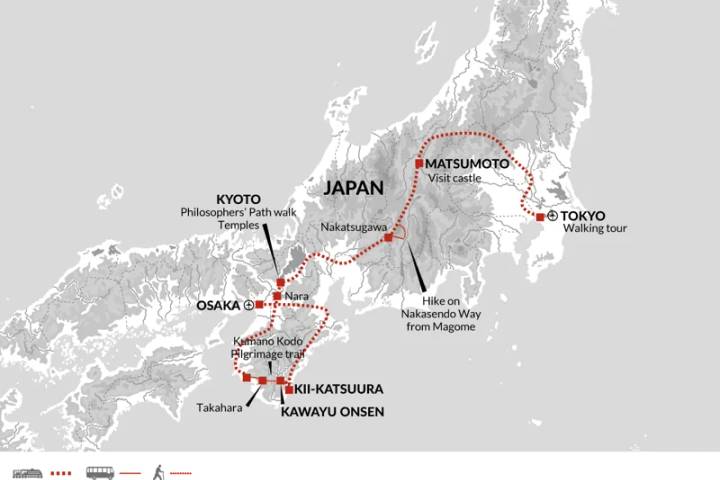
The Kumano Kodo is the heart of this 12-day trip: a set of old pilgrimage paths through cedar forest, mountain villages and shrine country on Japan’s Kii Peninsula. But this is not a trail-only holiday. You also walk Tokyo’s residential lanes, cross the Nakasendo Way between Edo-era post towns, and spend time among the temples of Kyoto and Nara.
I like the contrast between big-name sights and quieter rural Japan, and the way walking gives you time to notice details you might miss from a train window. I also like the mix of simple, practical hotels and a ryokan stay, where tatami rooms and communal hot-spring baths add a genuine change of pace.
The main consideration is the steady activity level. You walk on eight days, sometimes for up to six hours, and the forest paths include hills, stone paving and steps. This is a moderate walking trip, but some stretches may feel strenuous if you are used to flat city strolls rather than hiking.
In This Review
- The trip’s key details
- Tokyo begins with neighborhood walks
- Matsumoto Castle and the old Nakasendo road
- Kyoto on foot, from Philosopher’s Path to Gion
- Nara’s deer and Uji’s matcha
- The Kumano Kodo starts in the forest
- Ridge walks, shrine country and a river boat
- Osaka ends the trip, not the sightseeing
- What the price covers, and what it does not
- Who should book this walking tour?
- FAQ
- How long is the tour?
- How much does the tour cost?
- How much walking is involved?
- What fitness level do I need?
- How many people are in the group?
- What kind of accommodation is included?
- Are onsen baths included?
- Which meals are included?
- Are international flights included?
- Which months does the tour operate?
The trip’s key details
- Four days around the Kumano Kodo: Walk forest routes to Takahara, Chikatsuyu and Hongu, then reach Nachi Shrine by the old Daimonzaka stairway.
- An Edo-era trail before the pilgrimage: The 8-kilometre Nakasendo walk links the preserved post towns of Magome and Tsumago.
- A strong city-and-country mix: Tokyo, Kyoto, Nara and Osaka bring urban culture; the Kii Peninsula brings forest, hot springs and small towns.
- A traditional ryokan stay: Sleep on futons over tatami and use communal onsen baths. Pack for one night without your main luggage.
- Small group, active days: Groups have 7 to 16 people, with an English-speaking tour leader and walks ranging from about one to six hours.
- From $6,160: The price covers the scheduled accommodation, activities and meals, but not international flights, insurance, visa costs, tips or spending money.
Tokyo begins with neighborhood walks
Day 1 is for arriving and settling in at the Sunroute Asakusa Hotel. If you arrive in time, meet the group at 6:30 p.m. and share an included dinner at an izakaya, a casual Japanese restaurant where the meal is built around a variety of dishes. Late arrivals can catch the main briefing and dinner on Day 2 instead.
Tokyo gets one full day, so an extra night before the tour is worth considering if you want time for major sights beyond the walk. On Day 2, you head through Nippori, Yanesen and Nezu, residential neighborhoods that show a quieter side of the capital. The roughly 8-kilometre route takes about four hours and ends near Ueno Market, where you can find lunch.
The afternoon is free, and an IC card provides unlimited public transport for getting around the city. You could visit Meiji Shrine, explore the shops in Shinjuku or take a boat ride on the Sumida River. The choice is useful, but don’t mistake one guided walk for a full Tokyo sightseeing program.
A few more options to weigh up in Tokyo
- Tokyo Disney Resort – Tokyo Disneyland & Tokyo DisneySea Park Tickets
★ 4.8 · 99,488 reviews - SHIBUYA SKY Ticket
★ 4.7 · 46,509 reviews - JR Whole Japan Rail Pass
★ 4.8 · 29,150 reviews
Matsumoto Castle and the old Nakasendo road
On Day 3, an express train carries you from Shinjuku to Matsumoto through the Japanese Alps. The town’s best-known sight is its 500-year-old black castle, nicknamed Crow Castle. Its original wooden interior includes a hidden floor, a moon-viewing pavilion and defensive features that make the building more interesting than its dark exterior first suggests.
There is time to walk around the historic quarter, with an optional stop at the Matsumoto City Museum of Art, which includes works by Yayoi Kusama. Your main luggage goes ahead to Kyoto, so bring an overnight bag for this stop.
Day 4 starts early. After a train to Nakatsugawa and a bus to Magome, you walk about 8 kilometres on the Nakasendo Way to Tsumago. The route crosses countryside and hamlets on a mainly stone-paved, undulating path, linking two preserved post towns that once served people traveling between Kyoto and Edo, now Tokyo.
This is a satisfying walk for anyone who likes a cultural setting as much as the scenery. The wooden streets and old inns give the route a clear sense of its past, though the towns can feel like attractions rather than places untouched by tourism. After the walk, trains take you via Nagoya to Kyoto, including a ride on the shinkansen, Japan’s high-speed bullet train.
Kyoto on foot, from Philosopher’s Path to Gion
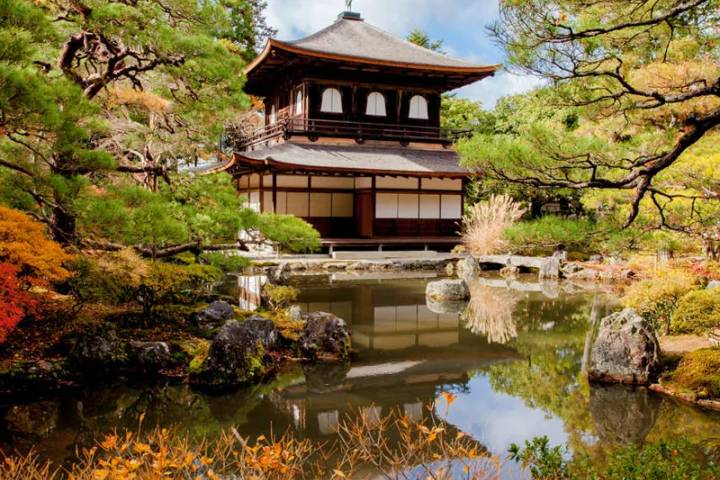
Kyoto gets three nights, but the sightseeing is energetic. Day 5 is a roughly 12-kilometre walk that lasts about seven hours with stops. You follow Philosopher’s Path along a canal lined with cherry trees, then visit the Silver Pavilion and Eikando Temple in the Higashiyama area.
Lunch is planned at Nishiki Market, where you can choose from street-food options such as seafood, seasonal fruit, tempura, sushi and gyoza. In the afternoon, the walk continues through Pontocho, beside the Kamo River and into Gion, ending in the historic lanes around Kiyomizu. You can add Kiyomizu Temple or browse the old shopping streets of Ninenzaka and Sanenzaka.
The day gives you a useful introduction to several distinct parts of Kyoto, but it is a lot of ground to cover. If you prefer to spend longer inside temples or gardens, you may have to choose which stops matter most. You also have a free afternoon on Day 2 in Tokyo, but little spare time in Kyoto for a slower, unplanned day.
Nara’s deer and Uji’s matcha
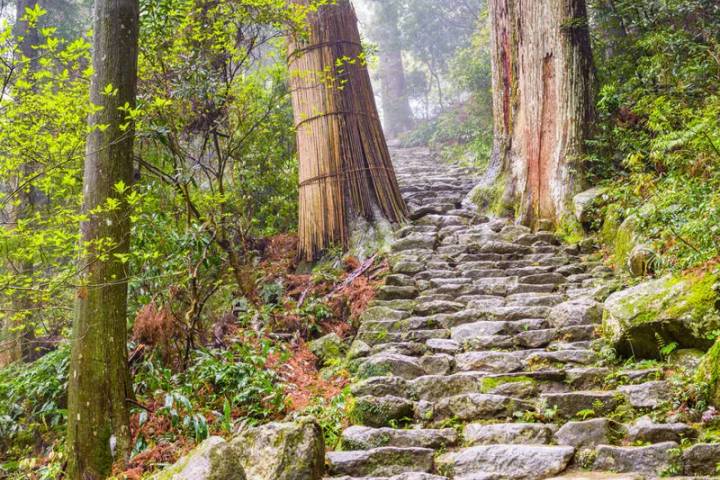
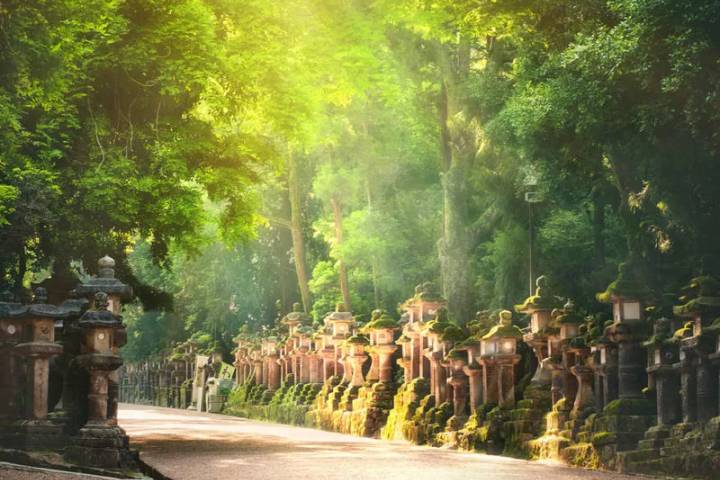
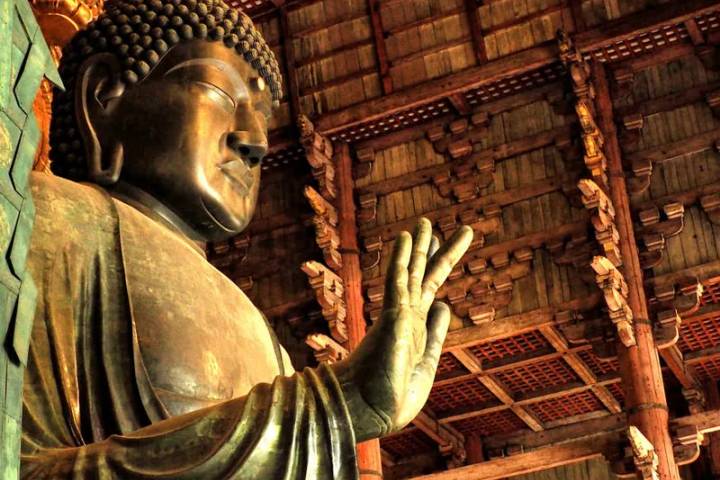
Day 6 pairs Nara with Uji, with about 10 to 12 kilometres of walking over six to seven hours including sightseeing. In Nara, you walk through the park past deer that are protected by city law and visit Todaiji, home to a monumental bronze Buddha, and Kasuga Taisha Shrine.
The deer are memorable, but they are only part of the appeal. The temples and wooded park make Nara a gentler change from Kyoto’s busy sightseeing routes. Then you travel to Uji, known for high-quality green tea, to see Byodoin Temple and try matcha sweets and ice cream before returning to Kyoto.
It is a full day with two destinations, so expect more walking and transport than lingering. Still, pairing Uji with Nara makes good use of the day and adds a food detail that connects directly to the region.
A completely different kind of day out:
- Mt Fuji and Hakone 1-Day Bus Tour Return by Bullet Train
★ 5.0 · 26,383 reviews - TOKYO SKYTREE® Ticket
★ 4.7 · 25,136 reviews - teamLab Borderless Tickets: MORI Building DIGITAL ART MUSEUM
★ 4.7 · 24,126 reviews - teamLab Planets TOKYO Ticket
★ 4.7 · 21,663 reviews
The Kumano Kodo starts in the forest
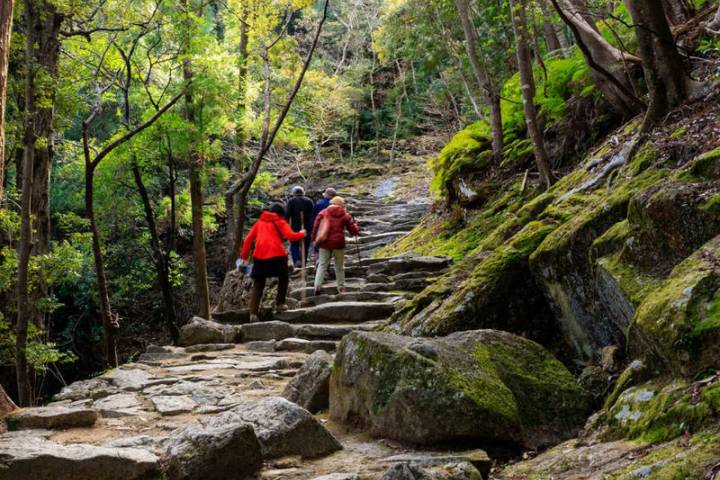
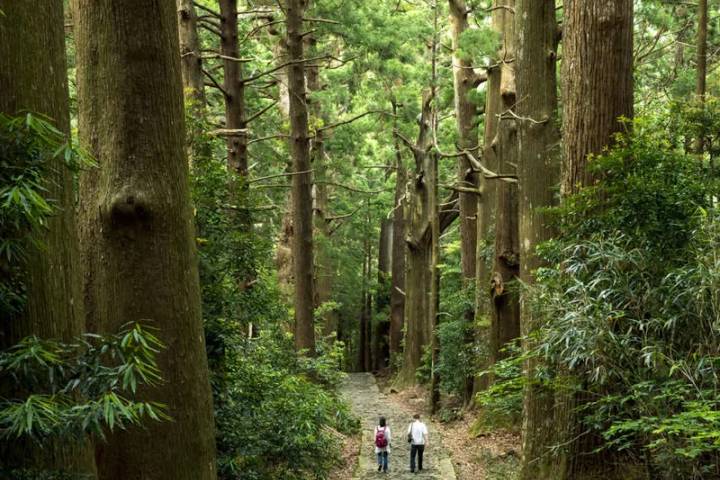
On Day 7, the tour leaves the cities for the Kii Peninsula. Trains and buses take you to Takijiri-Oji, the starting point for the route. From there, the first Kumano Kodo hike climbs through ancient forest to Takahara, a ridge-top village known for mist over the valleys. The walk is about 5 kilometres and takes roughly two and a half hours, with a steep climb at the start.
You then travel to Tanabe and stay at Yunomineso, a ryokan, for three nights. Rooms have tatami floors, and futons are laid out at night. The bathing routine is traditional: wash yourself at a hand-held shower in the shared bathing area before entering the same-sex communal onsen. Private baths may be available, but cannot be reserved in advance.
This is one of the trip’s most distinctive stays, and a highlight for many people who enjoy the combination of Japanese hospitality, quiet rooms and hot springs. It is also less like a standard hotel. If you prefer a private bath or a western-style room, check the accommodation details for your departure, since some groups use another ryokan and room arrangements can vary.
Ridge walks, shrine country and a river boat
Day 8 returns you to Takahara for a longer 10-kilometre hike to Chikatsuyu. The trail passes the remains of the Uwada-jaya Teahouse and crosses Hashiori-toge Pass, marked by the Gyubadoji statue. Expect about six hours of walking, with roughly 590 metres of ascent and 640 metres of descent. An included lunch stop breaks up the day, but the total climb and uneven ground call for good footwear and a steady pace.
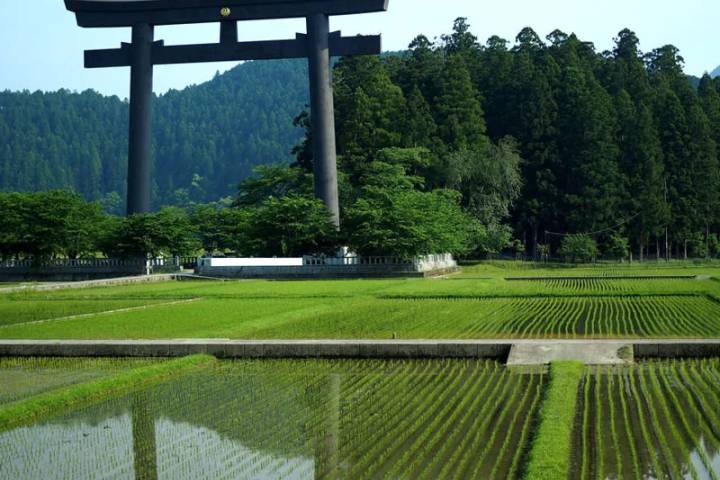
On Day 9, you walk from Hosshinmon to Hongu Taisha, the principal shrine of the Kumano area and the head shrine for thousands of Kumano shrines across Japan. The 7-kilometre route takes about three and a half hours, mostly downhill, before a visit to the World Heritage Centre. A bus takes you to Kawayu Onsen, where you can rest and bathe.
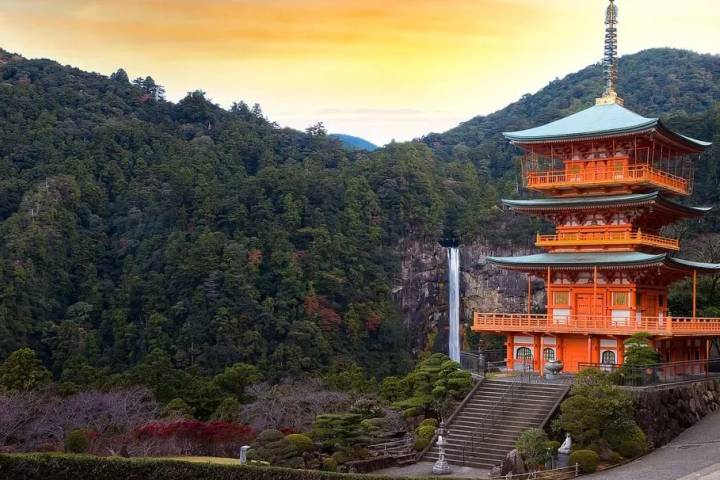
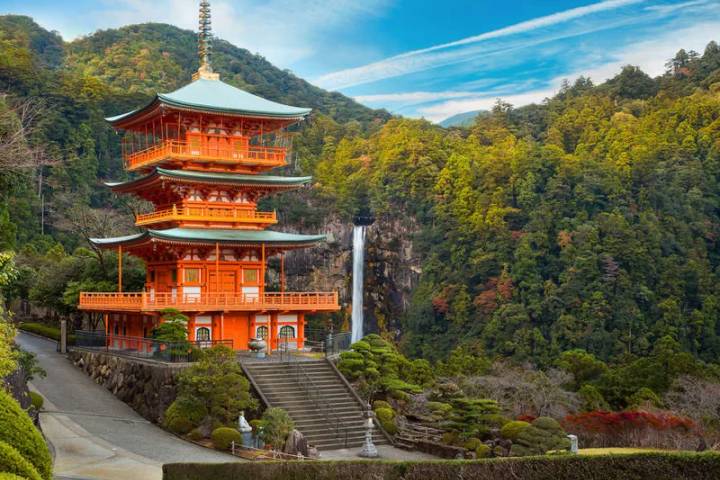
Day 10 shifts the pace. A boat carries you along the Kumano River to Hatayama Taisha, following a traditional approach used by pilgrims. After lunch, a bus takes you to Daimonzaka for a walk up the old cobbled route to Nachi Taisha. The climb includes 267 steps beneath cedar and bamboo, with a red pagoda and Nachi-no-Otaki, Japan’s tallest waterfall, as the reward. You then continue to Kii-Katsuura, a coastal town with hot springs and a fishing-town character.
The last Kumano days are the trip’s strongest stretch if you want nature and religious history together. In May, one tour leader named Jennifer Fujino shared stories about pilgrimage beliefs and local practices; assistant guide Asai Tomoko also led some days. Guide lineups vary, but the value of a strong leader is clear here: the shrines and paths make more sense when someone explains how they remain part of local life.
Osaka ends the trip, not the sightseeing
Day 11 starts with free time in Kii-Katsuura. You can join the tour leader for a town walk and an early-morning fish market visit, then take a roughly five-hour train journey to Osaka. Dinner at a local restaurant is included, and the city offers plenty of opportunities to try regional dishes such as takoyaki, or octopus balls, and okonomiyaki, savory pancakes.
The tour ends after breakfast on Day 12. You have little time in Osaka unless you add a night, so consider extending your stay if you want to explore Namba’s covered arcades and waterways or visit the Instant Ramen Museum. The hotel can store luggage if you have a later departure.
What the price covers, and what it does not
At $6,160 and up, this is not a budget way to see Japan. The price includes 11 breakfasts, 4 lunches, 5 dinners, scheduled accommodation, activities and the tour leader. Trains, buses and a boat trip are built into the program, and luggage forwarding on selected days saves you from hauling a full suitcase on the trail.
The value comes from combining long-distance planning, guided walks and rural logistics that can be awkward to arrange independently. You are not paying for every meal or every city attraction, however. International flights, insurance, visa costs, tips, spending money and optional activities are extra. The lower price is based on the cheapest room, and extra nights at either end cost more.
Explore has more than 40 years of experience running small-group trips and is a certified B Corp. On this tour, the group size of 7 to 16 is small enough for shared meals and trail briefings, without promising a private or custom-paced experience. The overall ratings are strongest for guides and transport, with accommodation rated a little lower, which fits the practical hotel stays and simpler ryokan style.
Who should book this walking tour?
Book it if you want Japan’s main cultural centers alongside real time on historic trails, and if you are comfortable walking several hours on hilly, uneven paths. It suits curious walkers who like temples, local food, train travel and shared group experiences, and who are willing to adapt to communal bathing at the ryokan.
Think twice if you want a slow temple holiday, a luxury hotel standard throughout or a dedicated hiking expedition with longer daily trail mileage. The Kumano Kodo is the main event, but the tour also gives substantial time to cities and cultural stops. For most active first-time visitors who want both sides of Japan, that balance is its best argument.
FAQ
How long is the tour?
The trip lasts 12 days, starting in Tokyo and ending in Osaka.
How much does the tour cost?
Prices start at $6,160, based on the cheapest room. International flights, insurance, visa costs, tips and spending money are not included.
How much walking is involved?
There are walks on eight days, ranging from about one to six hours. City walks are mainly flat, while the Nakasendo Way and Kumano Kodo include hills, stone paths and steps.
What fitness level do I need?
The walking grade is moderate. You should be comfortable walking for several hours and handling uneven, hilly paths. Some walks may feel strenuous depending on your fitness level.
How many people are in the group?
The group size is 7 to 16 people. The tour is fully guided in English and is open to people aged 16 and older.
What kind of accommodation is included?
The tour uses three-star hotels in Tokyo, Matsumoto, Kyoto and Osaka, plus other hotels in the Kumano area. For three nights, you stay at a ryokan, generally in Japanese-style rooms with tatami floors and futon beds.
Are onsen baths included?
The ryokan has same-sex communal onsen baths. Private baths may be available, but cannot be booked in advance. There is also an opportunity to use the hot springs at Kawayu Onsen.
Which meals are included?
The tour includes 11 breakfasts, 4 lunches and 5 dinners. Meals not specified as included are at your own expense.
Are international flights included?
No. International flights are not included. An airport transfer is complimentary if you arrive on Day 1 or depart on Day 12 and have provided your international flight information.
Which months does the tour operate?
Departures are listed for May, September, October and November.
Just added in Tokyo
- Wonders Of Japan 10-Day Tour by Travel Talk★ 4.5 · 14 reviews
- Wonders of Japan end Tokyo GO 15-Day Tour by Europamundo★ 4.2 · 10 reviews
- Wonders of Japan end Tokyo 15-Day Tour by Europamundo★ 4.2 · 10 reviews
- Wonders of Japan End Osaka by Europamundo – 12-Day Tour★ 4.2 · 58 reviews
- Wonders of Japan End Osaka (including Fukuyama) 12-Day Tour by Europamundo★ 4.2 · 58 reviews
- Wonders of Japan End Osaka GO by Europamundo – 12-Day Tour★ 4.2 · 58 reviews
- Visions of Japan with Hiroshima & Osaka 15-Day Tour by Globus★ 5.0 · 75 reviews
- Upgraded – Discover Japan 9-Day Tour by Explore!★ 4.8 · 6 reviews
Multi-Day Tours, compared.
9D Splendid Japan-Private 3 Star Hotels-Osaka to Tokyo by Stunning Tours
Read our review →
Japan Essentials 9 Day – One Life Adventures: Tokyo to Osaka
Read our review →

Tokyo to Osaka by Rail – Private Tour (14 Days) with Explore!
Read our review →
13-Day Japan Tour: Tokyo, Mount Fuji, Kyoto, Nara, Osaka & Beyond by The Dragon Trip
Read our review →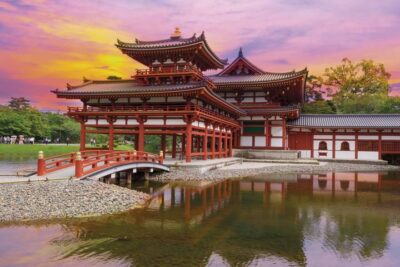
Browse the lists this tour appears in