
Reviewed · CASTLES AND HISTORIC SITES
15 Days Japan Autumn Castles Expedition by UME Travel – Tokyo to Osaka – Reviews & Prices
Japan’s autumn color is the thread tying this 15-day trip together: from golden ginkgo trees in Tokyo to maple gardens in Kyoto and Mount Fuji views near Lake Kawaguchi. You get a broad sweep of the country, with temples, city neighborhoods, mountain scenery, and several castles along the way.
I like two things in particular: the route gives gardens and fall foliage proper time, and the mix of English-speaking guides, bullet trains, and arranged transport takes much of the strain out of a complicated trip. The included hotel breakfasts and central locations also make early starts easier.
One caution: the title promises a castle expedition, but the listed route does not include Himeji or Okayama castles. There is also a mismatch between the stated starting price of $7,390 and a provider reply quoting $7,490 per person, plus an Osaka-day activity described as taking place in Asakusa. Confirm those details before paying.
In This Review
- At a glance: what this 15-day route covers
- Tokyo begins with shrine paths and garden color
- Nikko, Mount Fuji, and a Hakone transfer
- Kyoto gives temples and gardens room to breathe
- Hiroshima and Miyajima add history and a change of tone
- Osaka leaves room for your own plans
- What the price pays for, and what to verify
- Who should book this Japan route?
- FAQ
- Does the tour visit Himeji Castle or Okayama Castle?
- What is included in the tour price?
- Are international flights included?
- What is the group size?
- Is the tour available outside autumn?
- What meals are included, and can dietary needs be accommodated?
At a glance: what this 15-day route covers
- Autumn gardens anchor the trip: Rikugien, Lake Kawaguchi’s Momiji Corridor, and Kyoto temple gardens are among the key seasonal stops.
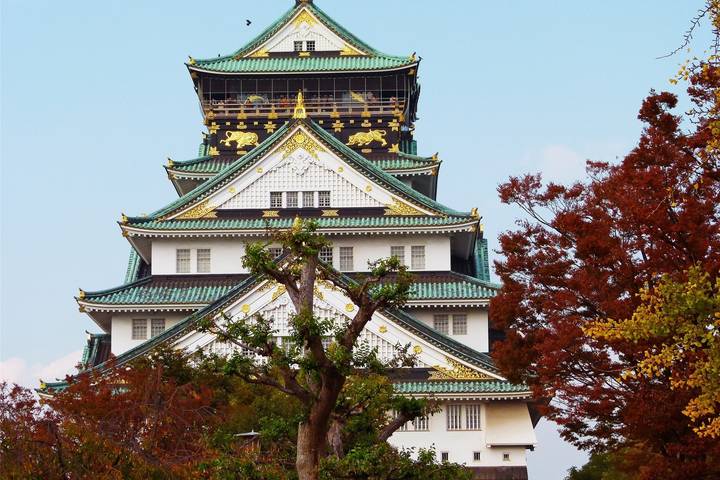
- Castles are included, but not the headline pair: You visit Nijo, Hiroshima, and Osaka castles. Himeji and Okayama, named in the tour overview, are not in the day-by-day plan.
- The route moves fast across Honshu: Tokyo, Nikko, Hakone, Kyoto, Uji, Nara, Hiroshima, Miyajima, and Osaka all feature.
- Transport and hotels are a major part of the price: The package includes accommodation, breakfast, listed internal transport, admissions, and guiding.
- It is guided, but not every hour is scheduled: The tour is described as partially guided, and Day 13 in Osaka is free.
- Check the fine print on the quote: International flights are excluded, and the supplied price information gives two different per-person amounts.
Tokyo begins with shrine paths and garden color
Your first day is for arrival, a private airport transfer, and check-in at Mitsui Garden Hotel Shiodome Italia-gai or a similar four-star hotel. That welcome transfer is useful after a long flight, especially if this is your first visit to Tokyo. The first full day then pairs Meiji Jingu Shrine with Meiji Jingu Gaien, Senso-ji, and Rikugien.
Meiji Jingu’s broad, wooded grounds offer a quiet start in the middle of a huge city. The nearby ginkgo avenue is a different kind of autumn scene: 146 trees form a long golden corridor, with the Meiji Memorial Picture Gallery at the end. The exact color depends on the season, so treat the foliage timing as a guide rather than a promise.
At Senso-ji, Tokyo’s oldest Buddhist temple, the setting shifts to Asakusa’s busy temple precinct. Rikugien closes the day on a gentler note, with maple color around its pond, teahouse, and bridges. The listed peak for its foliage is late November to early December. If your dates fall earlier or later, the garden remains part of the visit, but the color may not match the ideal.
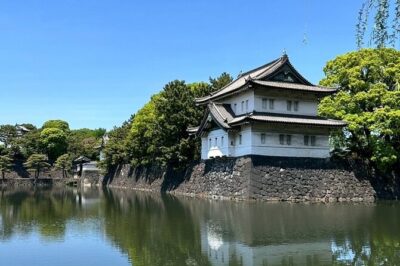
Day 3 takes in Shibuya Crossing, Odaiba, the Imperial Palace gardens, Tokyo Tower, and Akihabara. It is a big sampler, moving from the city’s busiest intersection to waterfront views, imperial history, a tower panorama, and shops devoted to electronics and manga. A traditional Japanese lunch is included. The trade-off is that this is a wide-ranging day, not a deep visit to any one neighborhood.
More Castles and Historic Sites in Tokyo
- Tokyo: Imperial Palace and Shogun Historical Walking Tour
★ 5.0 · 2,251 reviews - Tokyo Castle & Imperial PalaceーShogun Walking Tour
★ 4.7 · 1,068 reviews - Tokyo: Samurai Ninja Museum Guided tour and Experience
★ 4.6 · 1,010 reviews
Nikko, Mount Fuji, and a Hakone transfer
Nikko adds a mountain setting and a change of pace. At Toshogu Shrine, elaborate decoration honors Tokugawa Ieyasu, founder of the Tokugawa shogunate. Kegon Falls supplies the natural drama, and you choose between time at Chuzenji Lake, with views toward Mount Nantai, or a hot spring visit. The schedule lists both as options, so ask how the choice is arranged and whether either involves extra cost.
The next day focuses on Lake Kawaguchi’s Momiji Corridor, Arakurayama Sengen Park, and West Lake Village. The maple-lined corridor is the clearest autumn set piece, while Arakurayama is known for views over Fujiyoshida toward Mount Fuji. West Lake Village offers thatched-roof cottages and a quieter rural stop. Fuji views are weather-dependent, so it is wise to think of them as a possibility, not a guarantee.
That night is at Laforet Club Hakone Gora Yunosumika or a similar hotel. Day 6 then combines a cruise on Lake Ashi, the Hakone Ropeway, and the volcanic area of Owakudani before a Shinkansen ride from Odawara to Kyoto. The lake and ropeway are scenic, but this is also a transfer day with several moving parts. The itinerary mentions the sulfur smell and steam at Owakudani, plus the chance to buy a local black item described as black jade. Purchases are optional.
Kyoto gives temples and gardens room to breathe
Kyoto gets four nights at Daiwa Roynet Hotel Kyoto-ekimae or a similar hotel, with guided outings across several days. Day 7 pairs Eikando, Kitano Tenmangu, and Sanzenin in rural Ohara. Eikando’s pond and maple setting are especially suited to fall, while Kitano Tenmangu’s garden is illuminated during the autumn season. Sanzenin offers moss-covered gardens and stone figures, with an earlier autumn display than some central Kyoto sites.
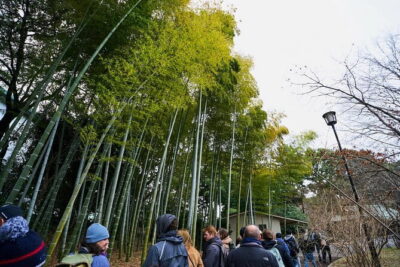
Day 8 heads west to Arashiyama for a half-day walk. Tenryuji Temple’s gardens, the Sagano Bamboo Forest, Togetsukyo Bridge, and Okochi-Sanso Villa make a satisfying mix of famous sights and traditional architecture. A cup of matcha is included at the villa’s teahouse. The bamboo grove is popular, so this stop is more about seeing a distinctive place than finding solitude.
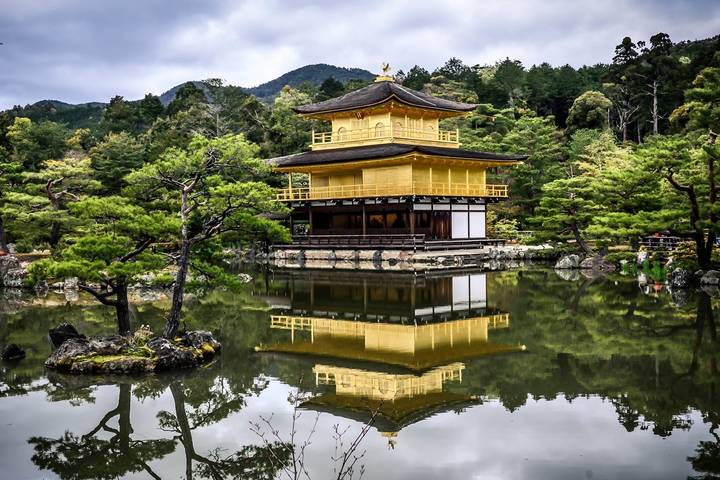
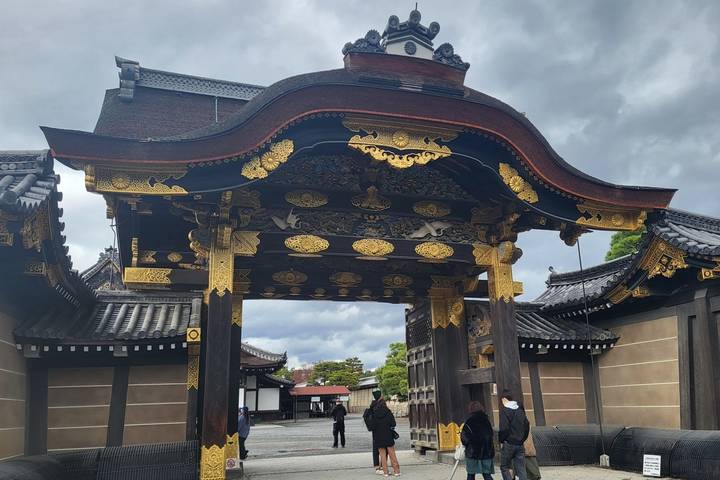
The following day packs in Kiyomizu-dera, Kinkaku-ji, and Nijo Castle, all UNESCO World Heritage sites. Kiyomizu-dera is known for its wooden stage and hillside setting; Kinkaku-ji for its gold-covered pavilion reflected in a pond. Nijo Castle is the strongest match for the tour’s castle theme, built in 1603 as a Kyoto residence for the first Tokugawa shogun. With three major sites in one day, expect a full schedule and plenty of walking.
Day 10 starts at Fushimi Inari Taisha, where rows of red torii gates climb through the shrine grounds. You then visit Uji, known for matcha and its place in Japan’s tea-growing story, before continuing to Nara Park and Todai-ji. Nara’s deer roam freely, but the tour information specifically notes that the deer on Miyajima are not to be fed; follow local signs and guide instructions at both stops. Todai-ji’s scale makes it a fitting end to a day that spans several distinct places.
Hiroshima and Miyajima add history and a change of tone
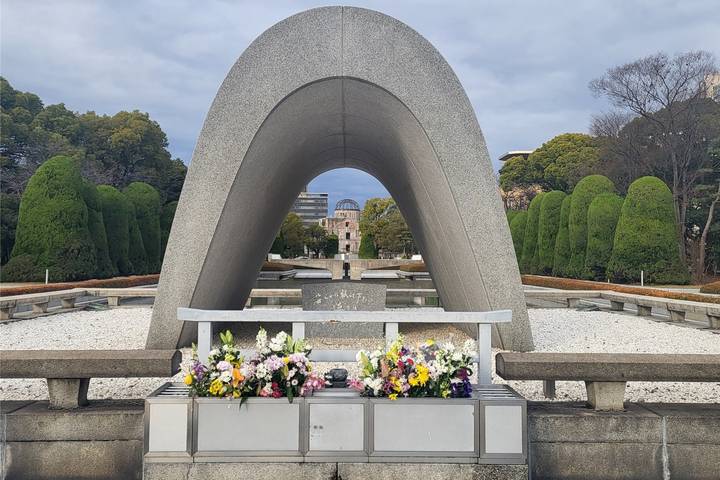
From Osaka, you take a bullet train to Hiroshima with an English-speaking guide. The Atomic Bomb Dome and Peace Memorial Park are moving places, and they call for time and attention rather than a quick photo stop. The park covers more than 120,000 square meters, with trees, lawns, and paths set beside the city center.
Hiroshima Castle, also called Carp Castle, completes the day. The original structure was destroyed in the bombing, then rebuilt in 1958; today it serves as a museum focused on the city’s prewar history. This stop gives the castle theme a local historical dimension, though it is not one of the named Himeji or Okayama castles.
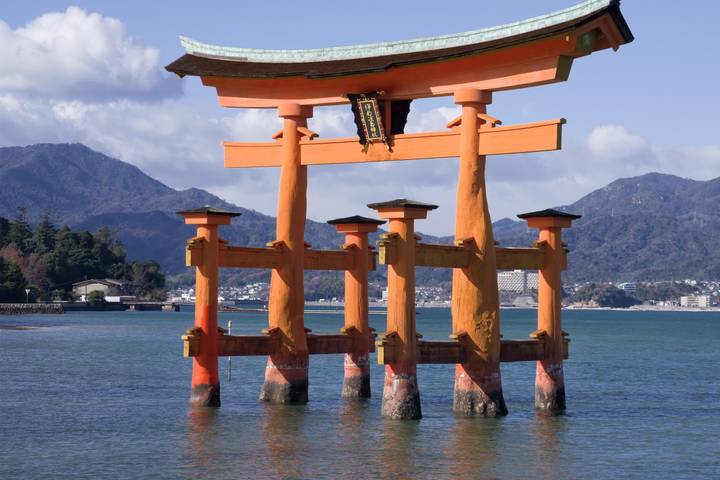
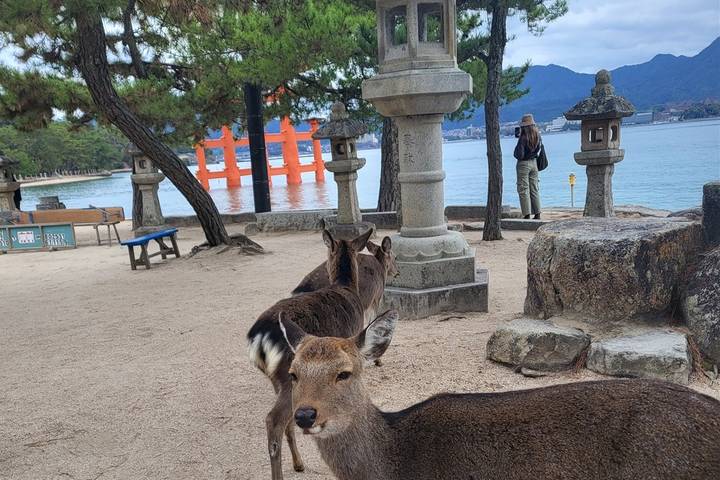
The next day is Miyajima, reached with a guide and included transport. Itsukushima Shrine is famous for the torii gate that appears to float when high water covers the ground around it. The island also has forests, temples, and deer. You return to Osaka by train that day, so it is a substantial excursion rather than an overnight island stay.
A completely different kind of day out:
- Tokyo Disney Resort – Tokyo Disneyland & Tokyo DisneySea Park Tickets
★ 4.8 · 99,488 reviews - SHIBUYA SKY Ticket
★ 4.7 · 46,509 reviews - JR Whole Japan Rail Pass
★ 4.8 · 29,150 reviews - Mt Fuji and Hakone 1-Day Bus Tour Return by Bullet Train
★ 5.0 · 26,383 reviews
Osaka leaves room for your own plans
Day 13 is free. That flexibility is welcome after a run of scheduled sightseeing, and it lets you rest or explore Osaka at your own pace. The tour does not specify activities for this day, so any extra outings, meals, or admissions you arrange are your responsibility.
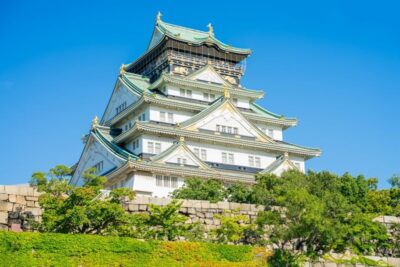
The guided final day includes Osaka Castle Park and Osaka Castle, followed by a ninja-themed activity described as taking place in Asakusa. That location is in Tokyo, not Osaka, so clarify whether the activity is actually part of this Osaka day or whether the itinerary text is in error. The day then turns to the Donki Ferris wheel and Dotonbori, where neon signs, shopping, and street food define the evening. Takoyaki, okonomiyaki, yakitori, and other local dishes are listed as things to try, but the description does not say that these meals are included.
On Day 15, a guide is scheduled to take you to Kansai International Airport. International flights are not part of the package, so you will need to arrange your own airfare.
What the price pays for, and what to verify
The displayed price starts at $7,390, while a provider response quotes $7,490 per person. Treat neither as a final total until you receive a written quote for your dates and room setup. The stated price basis is the cheapest room, and accommodation is based on two people sharing; a single supplement applies if you want your own room.
The value depends on how much planning help you want. The package includes selected four-star hotels, breakfast, listed internal trains and cruises, private air-conditioned vehicle transport where specified, admission fees, an English-speaking local guide, and basic insurance during the tour services. Day 3 includes lunch. Vegetarian, vegan, and halal food options can be requested. International flights and optional extras are excluded.
The hotels are described as centrally located, with convenient transport and restaurants nearby. That matters on a route with multiple early departures and city changes. The itinerary lists hotels in Tokyo, Hakone, Kyoto, Osaka, and Hiroshima, but names may be replaced by similar properties. Ask for the confirmed hotel list before booking if location or room type is important to you.
There are a few details worth resolving in writing. The tour is called both a group tour for two to ten people and a private guide and driver trip; it is also described as partially guided. Ask which sightseeing days are private, which are shared, and when you will travel by public transport versus private vehicle. The day-by-day plan says personal guide on many outings, but does not give guide names or a precise transport breakdown for every day.
Timing matters, too. The tour operates year-round, but the autumn colors are seasonal. The supplied timing notes point to late November and early December for Rikugien, mid-November for Eikando and Sanzenin, and late October to early December for Kitano Tenmangu’s illuminated garden. If autumn foliage is your main reason for going, request departure-specific expectations rather than assuming every stop will be at peak color.
Who should book this Japan route?
I would consider this tour if you want a broad first trip through Japan and value arranged transport, hotel stays, and English-language guiding more than independent planning. It suits people who enjoy temples, gardens, city highlights, and seasonal scenery, and who are comfortable with a steady pace and several long sightseeing days. The advertised activity level is low, but the itinerary includes walking at temple grounds, gardens, and city sites.
It is less convincing if your priority is specifically Japan’s most famous castles. Himeji and Okayama are named in the overview but absent from the detailed schedule, so ask for a revised day plan if those are must-sees. Also resolve the price difference and the Asakusa activity location before booking. With those points clarified, the tour offers a practical route through many of Honshu’s best-known cultural stops, with autumn gardens as its strongest seasonal draw.
FAQ
Does the tour visit Himeji Castle or Okayama Castle?
Neither appears in the detailed day-by-day schedule, although both are named in the overview. The scheduled castles are Nijo Castle, Hiroshima Castle, and Osaka Castle. Ask the operator to confirm whether Himeji or Okayama can be added.
What is included in the tour price?
The package includes listed accommodation, breakfast, admissions, internal transport such as trains and cruises, an English-speaking local guide, private air-conditioned vehicle services where specified, and basic insurance during the arranged tour. International flights and optional extras are not included.
Are international flights included?
No. You arrange and pay for your international flights separately.
What is the group size?
The tour information gives a group size of two to ten people. It also describes private guides and drivers on some services, so confirm which days are private and which, if any, are shared.
Is the tour available outside autumn?
Yes. Departures are listed year-round. However, the maple and ginkgo colors are seasonal, and the best timing varies by location.
What meals are included, and can dietary needs be accommodated?
Breakfast is included at the hotels, and Day 3 includes a traditional Japanese lunch. Vegetarian, vegan, and halal meal options are available on request.
Just added in Tokyo
- Mt. Fuji & Hakone Cherry Blossom private One Day Tour★ 4.5 · 35 reviews
- Fish Market & Tokyo Skyline Private Walking Tour★ 5.0 · 14 reviews
- 25-Min Downtown Helicopter Tour : Tokyo Skytree and Tokyo Tower★ 5.0 · 19 reviews
- Private Tour with a Local Guide – Learn about daily life in Japan★ 5.0 · 22 reviews
- Tokyo: 3-Hour Bike/E-Bike Tour of the City’s Highlights★ 5.0 · 209 reviews
- Official Japan Go-Kart Through Tokyo Bay / Ginza (IDP Required)★ 4.5 · 71 reviews
- 30-Min Tokyo Central Private Heli Tour– Asakusa, Skytree, Shibuya★ 5.0 · 13 reviews
- Tokyo 2-Hour Genuine Samurai Experience: Kendo in Japan★ 5.0 · 112 reviews
Castles and Historic Sites, compared.
Imperial Palace and Shogun Historical Walking Tour
Read our review →
Tokyo Castle & Imperial PalaceーShogun Walking Tour
Read our review →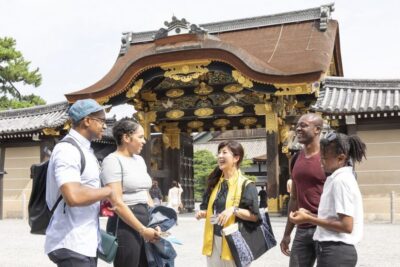
Nijo-jo Castle and Ninomaru Palace Guided Tour
Read our review →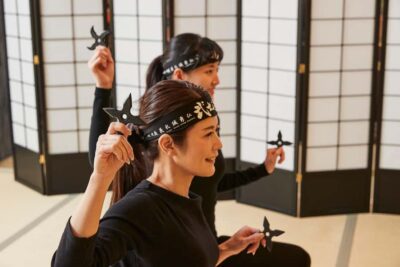
Samurai Ninja Museum Guided tour and Experience
Read our review →Browse the lists this tour appears in