
Reviewed · MULTI-DAY TOURS THAT VISIT SHIRAKAWA-GO
10 Days Classic Japan Super Mini Tour from Tokyo by Agate Travel Review
Mount Fuji from a ropeway above Hakone, a giant bronze Buddha in Nara, and the quiet that settles over Hiroshima’s Peace Memorial Park: this 10-day route gives you a striking range of Japan in one trip. I like that it pairs headline sights with smaller, characterful places such as Kanazawa’s samurai district and the thatched houses of Shirakawa-go.
I also like the small group size, capped at six, and the mix of guided visits and reserved intercity trains. Guides can help explain what you’re seeing, while a few rail legs leave you room to manage the journey yourself.
The trade-off is pace. You change cities several times, and some travel days include your own station transfers or onward journeys. If you want slow mornings and plenty of unplanned time, this route may feel packed.
- Hakone’s mountain train, ropeway and Lake Ashi cruise make the Mount Fuji day about the journey as well as the view.
- Kyoto and Nara combine famous temples and shrines with a chance to see deer roaming Nara Park.
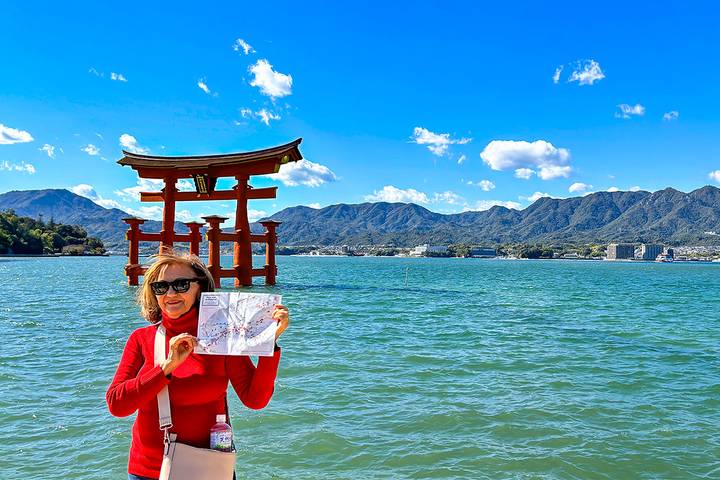
- Hiroshima and Miyajima put a moving modern history visit alongside Itsukushima Shrine, a UNESCO World Heritage Site.
- Kanazawa and Shirakawa-go add garden design, samurai-era streets and traditional gassho-zukuri houses to the usual first-trip route.
- English-speaking guides and reserved train tickets simplify much of the planning, though you’ll handle some train trips and transfers on your own.
In This Review
- A broad route, with little time to linger
- Tokyo’s markets, shrines and old-town streets
- Hakone’s mountain railway and Mount Fuji views
- Kyoto’s temples and the evening feel of Gion
- Osaka’s castle and lively shopping streets
- Hiroshima and Miyajima in one full day
- Kanazawa’s garden and samurai quarter
- Shirakawa-go’s thatched houses and return to Tokyo
- What the price covers, and where the value lies
- Who should book this Japan route?
- FAQ
- How long is the tour?
- What is the starting price?
- How large is the group?
- Are English-speaking guides included?
- Which meals are included?
- Are train tickets included?
- Are international flights included?
- Is luggage handled during the trip?
- Is the tour suitable for wheelchair users?
A broad route, with little time to linger
The route covers Tokyo, Hakone, Kyoto, Nara, Osaka, Hiroshima, Miyajima Island, Kanazawa and Shirakawa-go, then returns to Tokyo. That’s a strong range: modern capital, sacred sites, mountain scenery, a working city, a historic garden town and a village known for its steep thatched roofs.
The reward is variety. The cost is time spent moving between places, with one or two major visits on many days and several hotel changes. Most touring days are described as low intensity, but that doesn’t mean little walking. Temple grounds, shopping streets, stations and village lanes all add up.
The group is limited to two to six people, and English-speaking guides lead the visits specified in the schedule. The arrangement is not guide-at-your-elbow every minute: you take some reserved train journeys independently, then meet a local guide at your destination. If you’re comfortable following station signs and managing your bags, that balance can work well.
Tokyo’s markets, shrines and old-town streets
Day one is for arrival. An English-speaking assistant meets you at the airport and helps you board a shared car to your hotel. If your flight lands after 8:30 p.m., you’ll need to arrange your own ride or book a private pickup. That cutoff is worth checking against your flight time before you book.
The city tour on day two moves from Tsukiji Outer Market to Meiji Jingu Shrine and the Imperial Palace, then across town to Asakusa and Senso-ji. The range is more useful than a day devoted only to grand buildings: the market gives you a taste of food culture, Meiji Jingu brings you into a wooded shrine setting, and Asakusa’s Nakamise-dori leads through a line of shops toward one of Tokyo’s best-known temples.
You’ll see several of the city’s major sights, but this is an introduction, not a full exploration of Tokyo. There’s little time listed for independent wandering, so consider adding a night before or after the tour if you want to explore neighborhoods at your own pace. One family who traveled with a nine-year-old praised guide Kaito for including the child in conversation and helping the family find sushi at the market. That’s a useful reminder: a good guide can turn a busy sightseeing day into something more personal.
A few more options to weigh up in Tokyo
- Tokyo Disney Resort – Tokyo Disneyland & Tokyo DisneySea Park Tickets
★ 4.8 · 99,488 reviews - SHIBUYA SKY Ticket
★ 4.7 · 46,509 reviews - JR Whole Japan Rail Pass
★ 4.8 · 29,150 reviews
Hakone’s mountain railway and Mount Fuji views
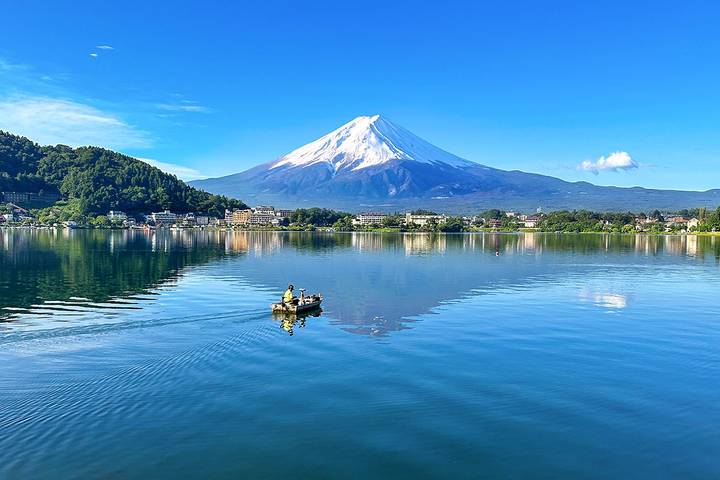
Day three takes you from Tokyo to Hakone by express train. The day’s transport is part of the attraction: a mountain railway climbs toward Gora in a zigzag, followed by a cable car and the Hakone Ropeway. At Owakudani, you can see steaming volcanic remains and catch the valley’s sulfur smell. It’s a vivid contrast to the polished shrine grounds and city streets elsewhere on the trip.
The route continues to Lake Ashi for a 30-minute cruise on a pirate-themed ship. In clear weather, Mount Fuji may be visible across the water or from the ropeway. Weather matters here. A clear view is never guaranteed, so treat Fuji as a bonus rather than the sole reason to book the day. One traveler who visited in March described being fortunate with the weather, and another particularly enjoyed the mountain scenery.
You return to Tokyo that evening, which makes the day efficient but long. You’ll ride several types of transport and retrace your route rather than staying overnight in Hakone. If you tire easily, keep in mind that getting around the mountain involves a sequence of connections, not just a scenic coach ride.
Kyoto’s temples and the evening feel of Gion
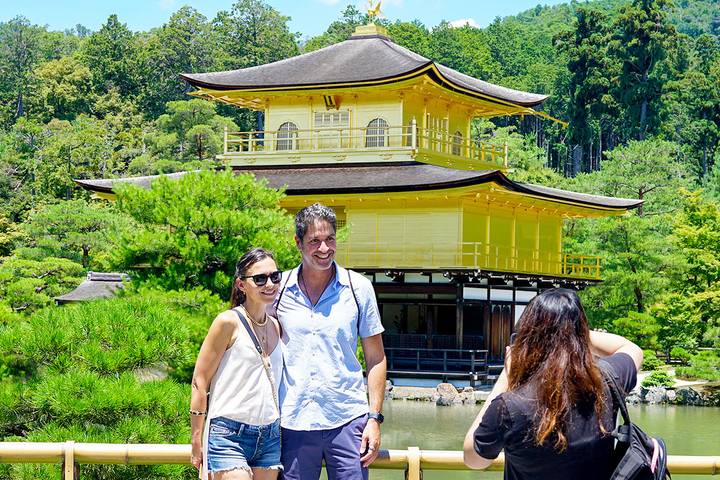
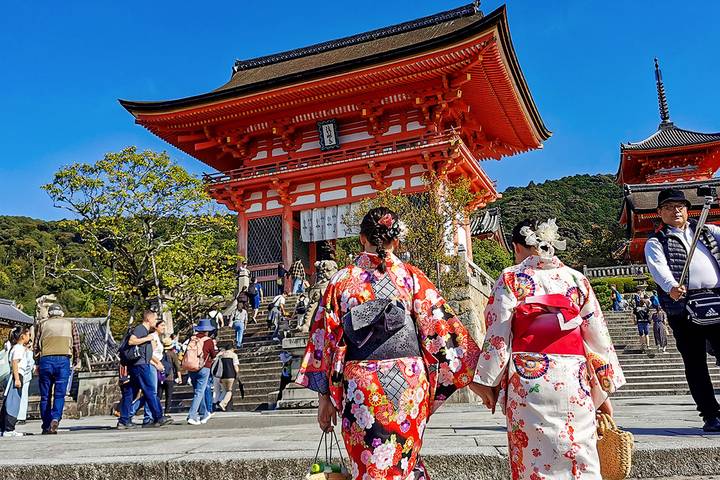
On day four, you take a reserved bullet train to Kyoto on your own, a journey of about two and a half hours. A guide meets you at Kyoto Station and takes you to Kinkaku-ji, the Golden Pavilion, then Kiyomizu-dera, followed by the sloping lanes of Sannenzaka and Ninenzaka. The day ends in Gion, where traditional wooden buildings give the evening a different mood from the shopping streets.
The route brings together distinct sides of Kyoto: a celebrated pavilion, a major temple and historic streets where you can browse for local goods and snacks. The drawback is that these are popular places, and the schedule gives you limited time to wander without a guide. A guide can help explain the sites and orient you, while an extra night would give you room to return to the places you like best.
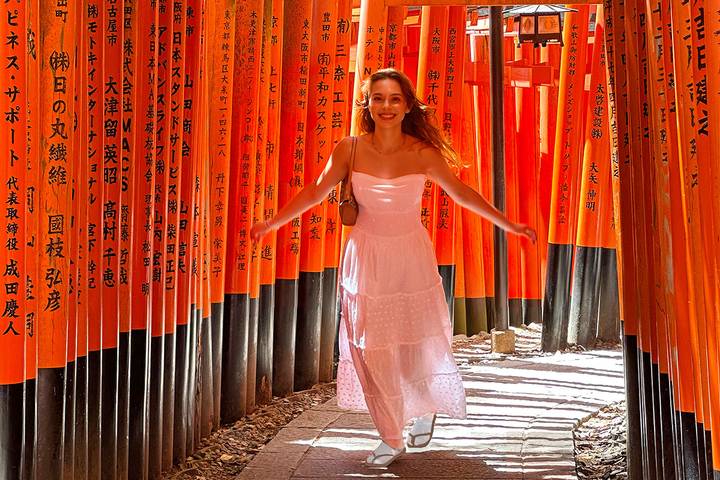
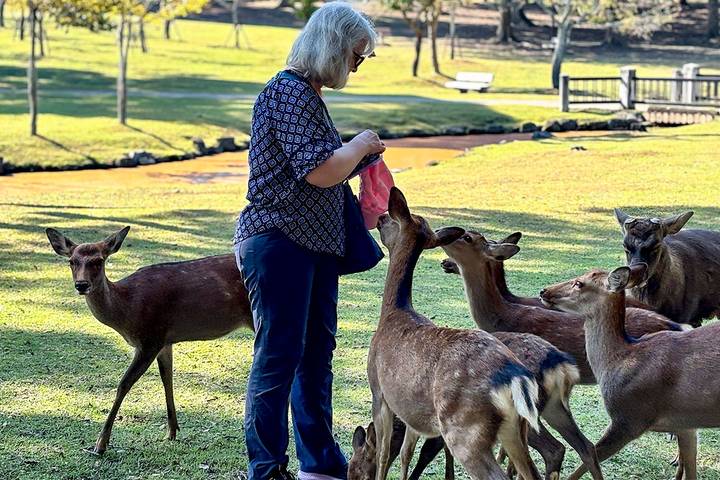
Day five begins at Fushimi Inari Shrine, known for its rows of red torii gates climbing the hillside. You then take the train to Nara, where the park’s free-roaming deer are an immediate draw. Todai-ji, the Great Eastern Temple, and Kasuga Taisha Shrine bring religious and architectural weight to the day. Goryo Shrine and the Naramachi Lattice House are possible additions if time allows, not guaranteed stops.
The Kyoto-to-Nara train trip is short, but the day has several stops and plenty of walking. The deer are charming, but they’re not the whole point: Todai-ji and Kasuga Taisha help make Nara a worthwhile visit even if you’re not especially taken with the animals.
Osaka’s castle and lively shopping streets
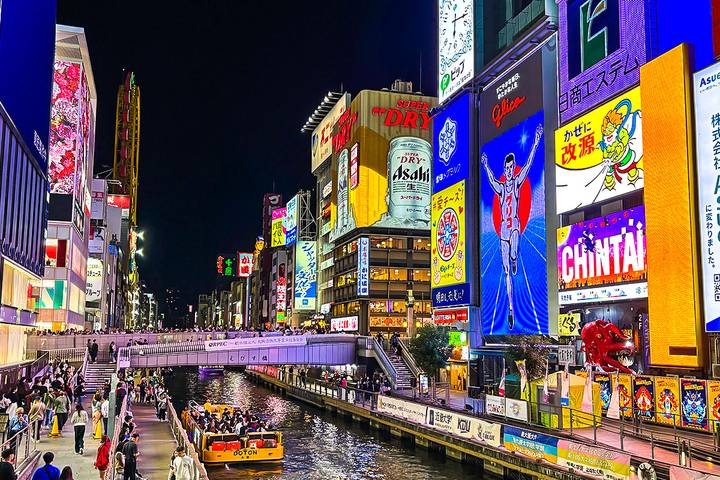
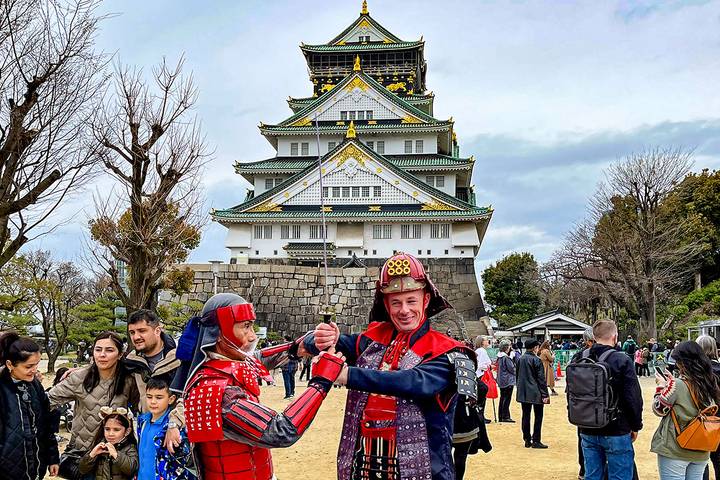
Day six begins at Nijo Castle in Kyoto before you travel by train to Osaka with your guide. The program then takes in Osaka Castle, Dotonbori, Shinsaibashi and the compact Hozen-ji Temple. The contrast is the pleasure here: a castle visit followed by commercial streets full of shops and places to eat, with a small temple tucked amid the activity.
You can head back to the hotel with the guide or continue exploring around Shinsaibashi on your own. The hotel is described as about a 10-minute walk from the street, making this one of the easier evenings to extend independently. If food is high on your list, save room for an unscheduled meal rather than treating the sightseeing schedule as a promise of included lunches or dinners. Hotel breakfasts are included; other meals generally are not.
A completely different kind of day out:
- Mt Fuji and Hakone 1-Day Bus Tour Return by Bullet Train
★ 5.0 · 26,383 reviews - TOKYO SKYTREE® Ticket
★ 4.7 · 25,136 reviews - teamLab Borderless Tickets: MORI Building DIGITAL ART MUSEUM
★ 4.7 · 24,126 reviews - teamLab Planets TOKYO Ticket
★ 4.7 · 21,663 reviews
Hiroshima and Miyajima in one full day
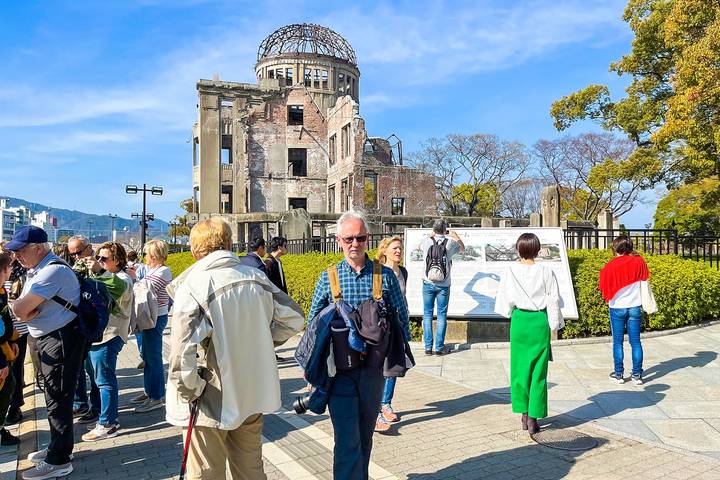
Day seven is a round trip from Osaka to Hiroshima. You take a reserved bullet train on your own, a journey of about an hour and a half, and meet a local guide at Hiroshima Station. A boat takes you to Miyajima Island to see Itsukushima Shrine, then you return to the city for the Atomic Bomb Dome, Peace Memorial Park and Peace Memorial Museum.
This is a powerful pairing. Miyajima offers a sacred site in an island setting; Hiroshima’s memorials ask you to face the human cost of war. The museum’s photographs and artifacts can be difficult to see, but they give context to the city’s memorials and are an important part of the visit. You return to Osaka by train on your own with a ticket provided by the guide.
It’s a substantial day, and the independent return means you’ll need to keep track of the train departure and make your own way from Osaka station to the hotel. The rail plan is handled for you, but you still need to manage the connection and your luggage.
Kanazawa’s garden and samurai quarter
On day eight, you travel from Osaka to Kanazawa by train, changing at Tsuruga Station. The trip takes more than two hours in total, and the tickets are reserved. A local guide meets you in Kanazawa and takes you to Kenroku-en, a carefully designed garden of ponds, pavilions and paths, then to the Higashichaya geisha district and Nagamachi samurai district.
Kanazawa is a welcome change of pace after the big-city days. Kenroku-en rewards a slow walk, while the historic districts give you a sense of how different groups once lived and worked. The schedule includes all three areas in one afternoon after the train ride, so it’s more of an introduction than a deep visit. If gardens or traditional architecture are a major interest, consider asking whether the trip can be adjusted to allow more time.
Shirakawa-go’s thatched houses and return to Tokyo
Day nine takes you by bus from Kanazawa to Shirakawa-go, about an hour and a half each way. The visit includes Wada House, Kada House and the Ogimachi Castle Observation Deck. The steep, thatched gassho-zukuri houses are the village’s signature, and the lookout offers a view over the settlement.
The village stop adds a rural chapter to a tour otherwise centered on cities and historic sites. You can leave luggage at Kanazawa’s bus station, which is a practical point to settle before setting out. After the visit, you return to Kanazawa and take the train to Tokyo. The guide sees you off at the station, but you arrange your own transfer from Tokyo Station to your hotel.
Day ten is a free morning and departure from Tokyo. The stated airport journey from downtown is about one to one and a half hours, so plan your transfer around your flight rather than assuming the hotel is close to the terminal. An airport transfer or see-off service can be arranged separately.
What the price covers, and where the value lies
The stated starting price is from $5,539, with the listed price based on three-star hotels. Prices depend on dates, room arrangements and hotel category, so check the exact quote before comparing it with a self-booked trip. The four-star option uses named hotels or similar properties, and you should confirm the price difference for your dates.
The package includes hotel breakfasts, accommodation, English-speaking guides for the specified visits, listed entrance fees, and public transport such as express buses and bullet trains. That’s meaningful value in a country where linking several cities can take planning, especially when you also need to coordinate local guides and attraction visits. International flights, lunches, dinners, personal expenses, visa fees and peak-season surcharges are not included.
I see the strongest value in the logistics: key rail tickets are reserved, guides meet you in several cities, and the route connects places that would take time to plan independently. Still, this isn’t a door-to-door escorted trip. You handle some station journeys and transfers, and you carry your own luggage. Confirm how many nights are included in your specific booking; the described city stays add up to nine hotel nights, though the package summary refers to 10 nights.
The operator’s tour rating is 4.8 out of 5 from 12 ratings, while itinerary, transport, guides, accommodation and food each have category scores of 4.5. In written comments, the most consistent praise is for responsive planning, helpful guides and well-organized transport. Guides named in trip accounts include Kaito in Tokyo, Kei in Kyoto, and Yoko and Tomo on private family departures. Those names are examples from past tours, not a promise of who will guide your departure.
There are a few useful cautions. One account describes a guide delayed by a train accident, so even well-planned rail days can be disrupted. A family of three found the hotel locations convenient but wished the rooms were larger. If you need a room for three or want a specific hotel category, ask about room size and the exact property before paying.
Who should book this Japan route?
I’d choose this tour if you want a strong first look at Japan without arranging every train, hotel and guide yourself. It suits people who like a full sightseeing schedule, can manage some independent rail travel, and are comfortable changing hotels several times. Families may appreciate the small group cap and guides who can adapt to children, though room size is worth checking.
I’d look elsewhere, or request changes, if you want long stays in each city, a quiet pace or a fully escorted journey from hotel door to hotel door. The trip covers a lot, and that is both its appeal and its limitation. Before booking, confirm the hotel category, exact number of nights, airport transfers, luggage arrangements and which train legs you’ll take without a guide.
FAQ
How long is the tour?
The itinerary runs for 10 days, starting in Tokyo and ending in Tokyo. The accommodation details list stays through day nine, so confirm the number of hotel nights included in your booking.
What is the starting price?
The stated price starts at $5,539 and is based on the cheapest room and three-star hotels. Your price may vary by departure date, room arrangement and hotel category.
How large is the group?
The listed group size is two to six people.
Are English-speaking guides included?
Yes. English-speaking guides are included for the visits specified in the itinerary. You take some train journeys independently and meet a guide at the destination.
Which meals are included?
Breakfast at the hotels is included. Meals not specified in the itinerary, including lunches and dinners, are not included.
Are train tickets included?
Reserved tickets are included for the train journeys specified in the itinerary. Some journeys are taken independently, including the Tokyo-to-Kyoto trip and the return train from Hiroshima to Osaka.
Are international flights included?
No. International flights are not included.
Is luggage handled during the trip?
No. You are responsible for your luggage during the tour. The tour information says hotel staff may be able to help arrange advance delivery.
Is the tour suitable for wheelchair users?
No. The tour is listed as unsuitable for wheelchair users and people over 80.
Just added in Tokyo
- Mt. Fuji & Hakone Cherry Blossom private One Day Tour★ 4.5 · 35 reviews
- Fish Market & Tokyo Skyline Private Walking Tour★ 5.0 · 14 reviews
- Tokyo: 3-Hour Bike/E-Bike Tour of the City’s Highlights★ 5.0 · 209 reviews
- 25-Min Downtown Helicopter Tour : Tokyo Skytree and Tokyo Tower★ 5.0 · 19 reviews
- Private Tour with a Local Guide – Learn about daily life in Japan★ 5.0 · 22 reviews
- Official Japan Go-Kart Through Tokyo Bay / Ginza (IDP Required)★ 4.5 · 71 reviews
- 30-Min Tokyo Central Private Heli Tour– Asakusa, Skytree, Shibuya★ 5.0 · 13 reviews
- Tokyo 2-Hour Genuine Samurai Experience: Kendo in Japan★ 5.0 · 112 reviews
Multi-Day Tours That Visit Shirakawa-go, compared.

Visions of Japan with Hiroshima & Osaka 15-Day Tour by Globus
Read our review →
14 Days Japan Panoramic (Private 3 Star Hotels) by Stunning Tours
Read our review →
15 Days Discover Japan with Hiroshima by Tomato Travel
Read our review →
Ancient & Modern Japan 14-Day Tour by Exodus Adventure Travels
Read our review →
A Classic 11 Day Japan Holiday by Wonderful Holidays UK
Read our review →
Classic Japan (from Tokyo to Osaka) 11-Day Tour by Intrepid Travel
Read our review →
Magical and Dreamy Japan 14-Day Tour by Europamundo
Read our review →
Highlights of Japan 13-Day Tour by Travel Chasers
Read our review →Browse the lists this tour appears in