
Reviewed · MULTI-DAY TOURS THAT VISIT NARA
3 Day Kyoto, Osaka & Nara Tour from Tokyo by Tourist Journey Review
Kyoto’s red torii gates, Osaka’s neon-lit Dotonbori and Nara’s deer all fit into this three-day trip, with Kyoto as your base. I like the mix of guided walks and time on your own, and I like that the package includes two hotel nights and the bullet train from Tokyo.
One point to weigh: this is a partly guided tour, not a fully escorted trip. You take the bullet train without a guide, and the listed group size ranges from 1 to 50, so don’t count on a small group every day.
- The Tokyo to Kyoto train is included, but you’ll need to navigate the station and board on your own.
- Two nights in Kyoto let you return to the same hotel after your Osaka day.
- Local guides lead selected outings, with a different guide each day.
- Day three covers a lot of ground, from Fushimi Inari and Arashiyama to Nara.
- Budget extra for meals and admission fees, which are not included.
- The tour ends in Kyoto, not Tokyo, with an estimated finish around 6 p.m. on day three.
In This Review
- A three-day taste of Kansai, with Kyoto as your base
- Day one: Tokyo to Kyoto, then into Gion
- Two Kyoto hotel nights make the route simpler
- Day two: Osaka Castle, Dotonbori and time to roam
- Day three: torii gates, Golden Pavilion, bamboo and Nara
- What the guides add, and what “partly guided” means
- Is $660 good value?
- Who should book this trip?
- FAQ
- Does the tour start in Tokyo and end in Kyoto?
- Is the Tokyo to Kyoto bullet train included?
- Will a guide meet me at the Tokyo train station?
- How many nights are included?
- Which Kyoto hotels may be used?
- Are meals included?
- Are entrance fees included?
- What time does the tour end on day three?
- Is the group guaranteed to be small?
- Can I arrange a return to Tokyo or an airport transfer?
A three-day taste of Kansai, with Kyoto as your base
This tour is a quick introduction to Japan’s Kansai region, not a slow visit to any one city. You travel from Tokyo to Kyoto, make a day trip to Osaka, then spend the final day on a Kyoto and Nara circuit. The range is appealing: shrine gates, a castle, temple architecture, deer and a famous shopping district all show different sides of the region.
The trade-off is the pace. You see many headline sights, but the itinerary leaves limited room for lingering, spontaneous detours or a second visit to a place you love. If you have only three days for Kansai, that can be a fair exchange. If you have more time, you could cover the same ground independently at a gentler pace.
The tour’s shape also matters: it starts in Tokyo but ends in Kyoto. Your first train ticket is included, but your return to Tokyo, airport transfer and onward travel are not part of the standard package. Treat this as a one-way trip unless you arrange extra transport.
Day one: Tokyo to Kyoto, then into Gion
You take the bullet train from Tokyo to Kyoto in the morning. The train ticket is included, but there is no guide accompanying you on this leg. The operator provides instructions and says you check in at your Kyoto hotel before meeting the guide for the evening outing. That arrangement keeps you from carrying your luggage around Gion, but it means you should be comfortable finding your train and following the directions on your own.
There is a confusing transport description in the itinerary, which refers to a flight in one spot. The tour information elsewhere specifies a bullet train, and the included transport is described as train travel. Confirm the exact departure point, train details and meeting instructions with the operator before travel, rather than relying on that stray flight reference.
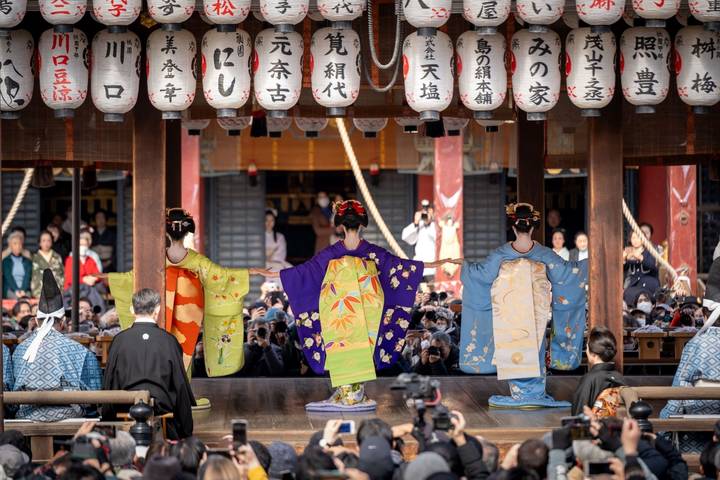
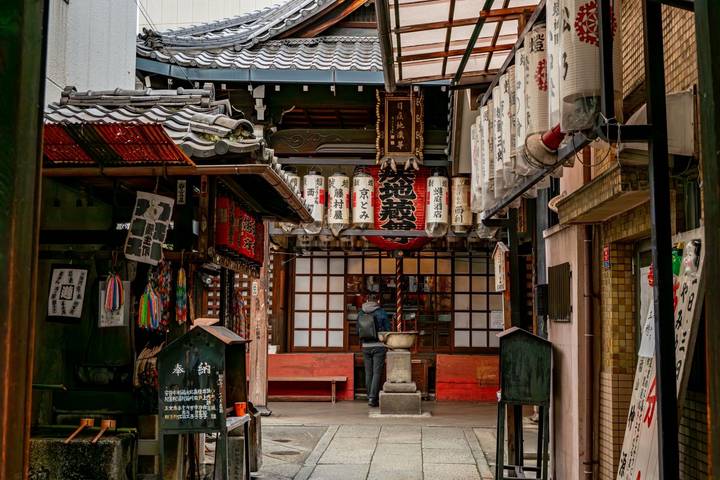
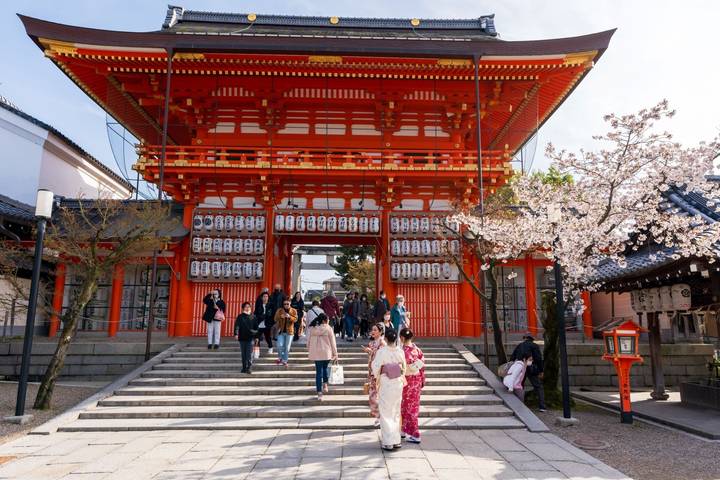
The evening walk introduces central Kyoto through Pontocho Alley, the statue of Izumo-no-Okuni, Gion, Gion Corner, Yasaka Shrine and Hanamikoji Street. Pontocho’s narrow lane and traditional wooden buildings give you a close-up look at an older style of Kyoto street. The statue of Izumo-no-Okuni connects the area to the origins of kabuki, a useful bit of cultural context before you continue into Gion.
Gion is known for its tea houses and geisha culture. It is a living neighborhood, not a stage set, so follow your guide’s lead and be considerate around residents and businesses. Gion Corner is included as a stop, but the schedule does not specify a performance or ticketed show. Yasaka Shrine gives the walk a quieter, more open pause, while Hanamikoji Street is a chance to take in the district’s traditional façades.
The first evening is guided, but the day is not a continuous escorted transfer from Tokyo. That distinction is important if you expect someone to meet you at the Tokyo station or shepherd you through Kyoto Station. You meet the local guide in Kyoto after checking in.
A few more options to weigh up in Tokyo
- Tokyo Disney Resort – Tokyo Disneyland & Tokyo DisneySea Park Tickets
★ 4.8 · 99,488 reviews - SHIBUYA SKY Ticket
★ 4.7 · 46,509 reviews - JR Whole Japan Rail Pass
★ 4.8 · 29,150 reviews
Two Kyoto hotel nights make the route simpler
You stay in Kyoto on both nights, with the named options including Comfort Inn Kyoto Shijokarasuma, Daiwa Roynet Hotel Kyoto Ekimae PREMIER and The Thousand Kyoto. The assigned hotel depends on the chosen accommodation category and booking. The information says hotels are selected near meeting points, but transfers between hotels and stations are not included.
Staying put is practical: you don’t need to repack for Osaka, and you return to the same base after the second day. It also makes Kyoto the natural place to extend your trip. Ask which hotel category and property you are being quoted before paying, since the options range from three-star to four-star and the starting price is based on the cheapest room.
Day two: Osaka Castle, Dotonbori and time to roam
You travel by train from Kyoto to Osaka, visit Osaka Castle, then have free time for lunch and exploring before heading to Dotonbori. The castle is the day’s major historical stop, set within its grounds and presented as a 16th-century landmark. The itinerary does not specify an included interior visit or admission, so check what your tour price covers if entering the castle is important to you.
The free lunch is a useful chance to choose your own meal, but it is an additional cost. It also gives you a breather between the castle and the busier evening area. Osaka Metro travel is recommended, and the pass is optional rather than included. The tour does include train transfers between Kyoto and Osaka, but you should clarify exactly which local transit is covered.
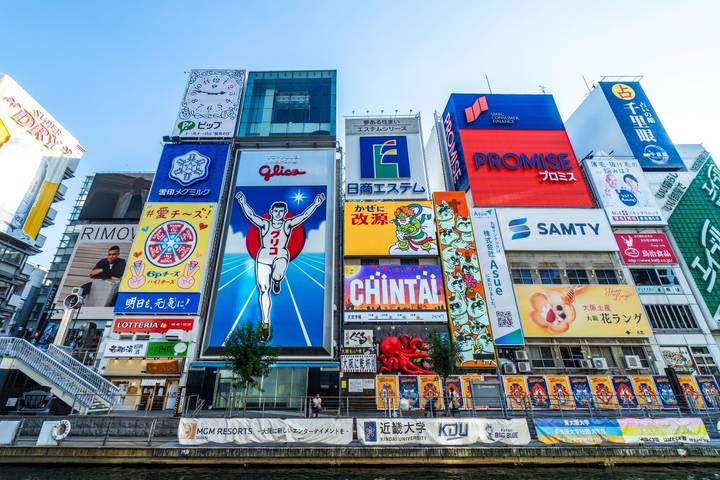
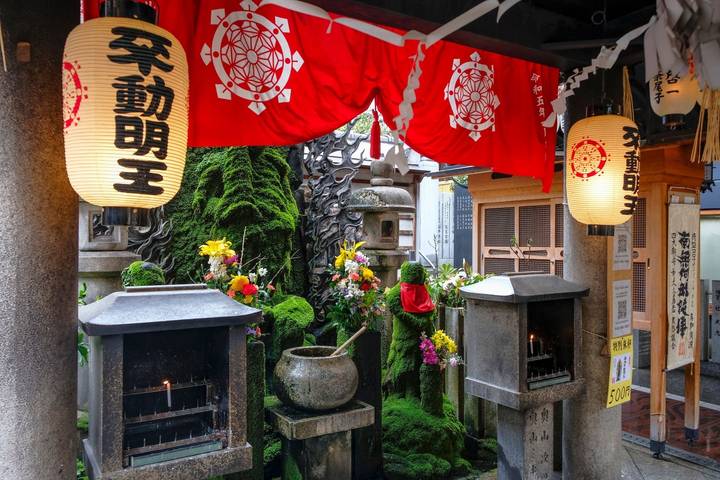
Dotonbori is Osaka at full volume: canal-side movement, bright signs and plenty to look at. The Glico Man sign is an easy photo stop, while nearby Hozenji Temple offers a more subdued pause amid the commercial streets. You have time to explore at your own pace, but the schedule does not promise a set amount of free time or a particular restaurant stop.
Afterward, you take the train back to Kyoto for the second night. The day is straightforward in outline, though urban transit can feel less simple if you are unfamiliar with Japanese stations. A little preparation helps: keep your meeting instructions handy and ask the operator whether you need to purchase an Osaka Metro pass before departure.
Day three: torii gates, Golden Pavilion, bamboo and Nara
The final day packs several major sights into one route. You begin at Fushimi Inari Shrine, walking beneath rows of red torii gates. The gates create a striking passage through the shrine grounds, and even a short walk gives you a sense of the scale. The itinerary does not say how far you walk, so wear comfortable shoes and be ready for steps and uneven paths.
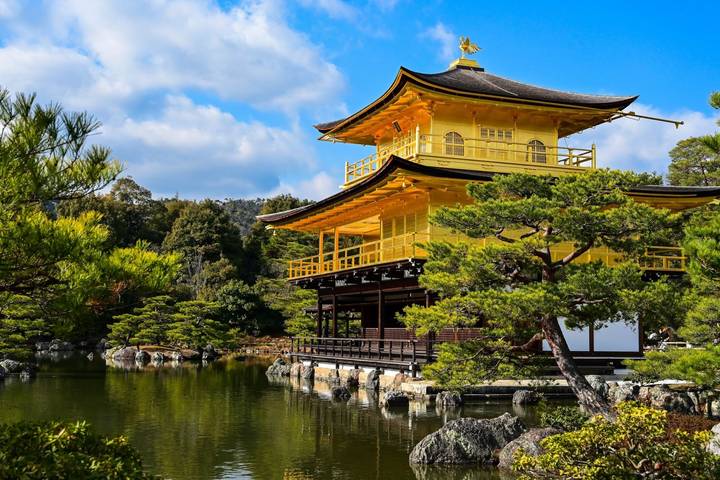
Next comes Kinkaku-ji, the Golden Pavilion. Its bright exterior and setting make it one of Kyoto’s most recognizable temple sights. The visit is likely to be more about viewing and walking the grounds than settling in for a long stay. The schedule lists Kyoto and Nara entrance fees at approximately 1,300 yen per person, so keep some extra money aside for admissions.
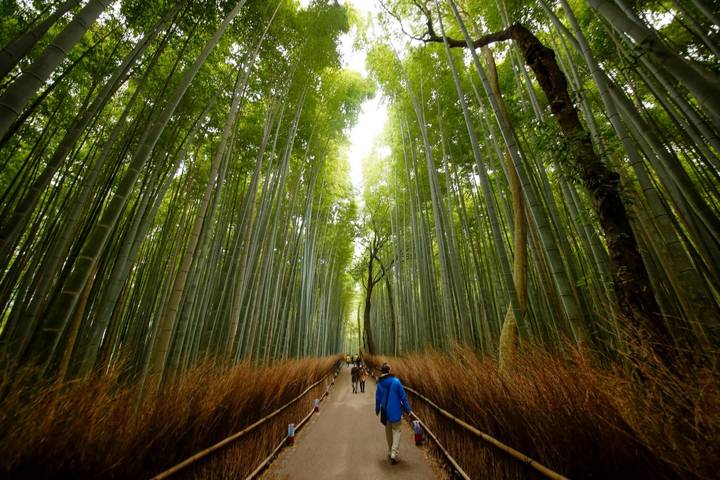
At Arashiyama, you stroll through the bamboo forest, then have lunch on your own. The bamboo path is atmospheric, but it is a short, popular route rather than a remote wilderness walk. Your time here depends on the day’s pacing, so don’t plan on an extended hike or a long stop for other Arashiyama sights unless the guide confirms there is room.
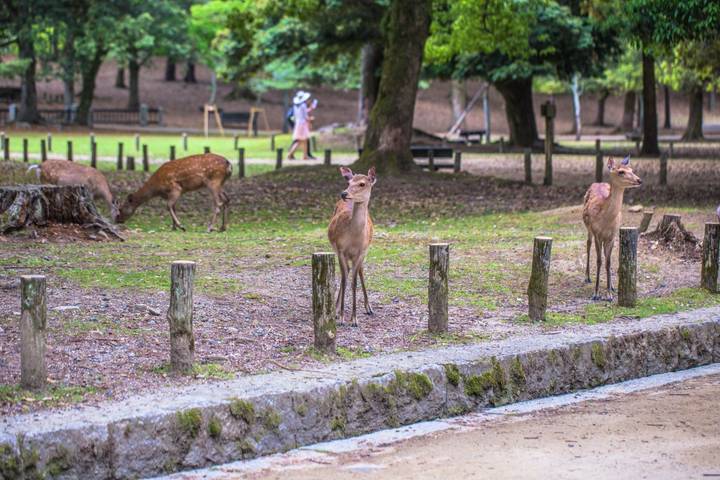
The route then continues to Nara. At Todai-ji Temple, you see the Great Buddha, a major highlight for its scale and religious significance. Nara Park provides time to see the Sika deer, which roam freely. They are accustomed to people, but they are still animals, so follow local guidance and treat them respectfully.
This is the busiest day of the trip, combining several stops with travel between Kyoto and Nara. One account of the tour’s pacing described about an hour at each stop, split between guide-led explanation and independent time. Use that as a rough sense of the rhythm, not a guarantee: traffic, crowds and the day’s schedule can affect how long you have at each place. The estimated return is around 6 p.m., though traffic may change that.
A completely different kind of day out:
- Mt Fuji and Hakone 1-Day Bus Tour Return by Bullet Train
★ 5.0 · 26,383 reviews - TOKYO SKYTREE® Ticket
★ 4.7 · 25,136 reviews - teamLab Borderless Tickets: MORI Building DIGITAL ART MUSEUM
★ 4.7 · 24,126 reviews - teamLab Planets TOKYO Ticket
★ 4.7 · 21,663 reviews
What the guides add, and what “partly guided” means
English-speaking local guides lead the selected excursions, and the operator assigns a different guide each day. That rotating approach can bring fresh local perspectives, particularly on the Gion walk and the cultural context of Kyoto’s shrines and temples. The tour information does not provide guide names, so you cannot assess the individual guides in advance.
The strongest reported qualities are the guides’ local knowledge and the informative, well-paced feel of the sightseeing. One account describes a useful balance: the guide explains the site for part of the visit, then leaves time for photos and independent walking. That format suits you if you want context without having someone narrate every minute.
But guided support has clear limits. The bullet train from Tokyo is unaccompanied, and the tour is partly guided overall. The group-size range is 1 to 50, which is broad; although the tour is described as a small-group experience, you should confirm the expected size for your departure if that matters to you.
Is $660 good value?

At a starting price of $660, the main value is the combination of two Kyoto hotel nights, the Tokyo to Kyoto bullet train, train transfers for the Osaka day and guided sightseeing. Buying each component separately would take planning, especially if you are new to Japanese rail travel or want a guide to explain the major cultural stops.
The headline price is not the full trip budget. Meals are not included, and the Kyoto and Nara admissions are estimated at about 1,300 yen per person. The Osaka Metro pass is an optional extra. Airport transfers, personal travel insurance, gratuities, hotel-to-station transfers and any transport after the tour are also outside the package. Train tickets are non-refundable.
Value depends on how much structure you want. You pay for a planned route and local guides at selected sights, not for a fully escorted holiday with every meal and transfer taken care of. If you are comfortable managing the station journey and paying for some details as you go, the package can simplify a demanding three days.
Who should book this trip?
I’d consider this tour if you have limited time, want to see the best-known sights in Kyoto, Osaka and Nara, and prefer having local guides for selected visits. It can also suit families and a wide age range, since the tour is open to all ages and rated low intensity. Still, the schedule includes plenty of walking and several stops, so comfortable footwear and realistic expectations are sensible.
It is less suitable if you want a fully escorted trip from Tokyo, a guaranteed small group, long stretches of free time or a slow, in-depth visit to each destination. It may also frustrate you if you assume the tour returns you to Tokyo. The finish is in Kyoto, and onward travel must be arranged separately.
Before booking, confirm your hotel category, precise Tokyo meeting and train instructions, what local Osaka transit is covered, and how the operator handles your onward journey. Book it if the compact itinerary and guided context are worth more to you than flexibility. If you can spare extra days, travelling independently lets you slow down and choose which of these places deserves a longer visit.
FAQ
Does the tour start in Tokyo and end in Kyoto?
Yes. It starts in Tokyo, travels to Kyoto by bullet train, and ends in Kyoto on day three. Return travel to Tokyo is not included in the standard tour.
Is the Tokyo to Kyoto bullet train included?
Yes. The train ticket is included, but you travel without a guide on that leg. The train tickets are non-refundable.
Will a guide meet me at the Tokyo train station?
The included information says you meet your guide for the evening tour in Kyoto, not for the bullet train journey. You are given the ticket and instructions for the train.
How many nights are included?
Two hotel nights in Kyoto are included, on the first and second nights of the tour.
Which Kyoto hotels may be used?
The listed options are Comfort Inn Kyoto Shijokarasuma, Daiwa Roynet Hotel Kyoto Ekimae PREMIER and The Thousand Kyoto. The assigned hotel depends on the accommodation category and booking.
Are meals included?
No meals are listed as included. You have free time for lunch on the Osaka day and the Kyoto and Nara day, so budget separately for food.
Are entrance fees included?
Kyoto and Nara entrance fees are not included. The stated estimate is approximately 1,300 yen per person.
What time does the tour end on day three?
The estimated return is around 6 p.m., but the timing is approximate and can depend on local traffic.
Is the group guaranteed to be small?
No. The stated group size ranges from 1 to 50. Confirm the expected size for your departure if group size is important to you.
Can I arrange a return to Tokyo or an airport transfer?
Airport transfers are optional extras, and onward travel is not included in the base price. The tour information says a return train to Tokyo can be arranged separately.
Just added in Tokyo
- Fish Market & Tokyo Skyline Private Walking Tour★ 5.0 · 14 reviews
- Mt. Fuji & Hakone Cherry Blossom private One Day Tour★ 4.5 · 35 reviews
- 25-Min Downtown Helicopter Tour : Tokyo Skytree and Tokyo Tower★ 5.0 · 19 reviews
- Private Tour with a Local Guide – Learn about daily life in Japan★ 5.0 · 22 reviews
- Tokyo: 3-Hour Bike/E-Bike Tour of the City’s Highlights★ 5.0 · 209 reviews
- Official Japan Go-Kart Through Tokyo Bay / Ginza (IDP Required)★ 4.5 · 71 reviews
- 30-Min Tokyo Central Private Heli Tour– Asakusa, Skytree, Shibuya★ 5.0 · 13 reviews
- Tokyo 2-Hour Genuine Samurai Experience: Kendo in Japan★ 5.0 · 112 reviews
Multi-Day Tours That Visit Nara, compared.

9D Splendid Japan-Private 3 Star Hotels-Osaka to Tokyo by Stunning Tours
Read our review →

Essential Japan GO by Europamundo – 7-Day Tokyo to Osaka Tour
Read our review →
8D Splendid Japan-Private 3 Star Hotels-Osaka to Tokyo by Stunning Tours
Read our review →
Stunning Japan with Shirakawa-go by Stunning Tours – 8-Day Osaka to Tokyo Tour
Read our review →
Japan Delight with Hiroshima 8-Day Tour by Stunning Tours
Read our review →
Visions of Japan with Hiroshima & Osaka 15-Day Tour by Globus
Read our review →Browse the lists this tour appears in