
Reviewed · WORKSHOPS
Asakusa Calligraphy Workshop Craft Your Own Art in Tokyo
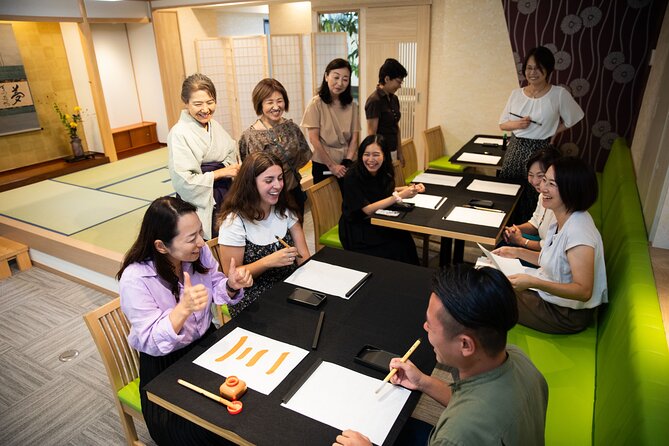
Brushes, ink, and a little patience make a fine Tokyo souvenir. This Asakusa workshop gives you a hands-on introduction to Japanese calligraphy, with direct instruction on brush grip, stroke order, and control. I like the small maximum group of 10, which should give you useful access to the teacher, and I like that you practice with both a traditional brush and a modern fude pen. The finished work goes home with you.
The main consideration is time. At about 90 minutes, this is a focused introduction rather than a full course in Japanese calligraphy. If you arrive late, you may miss important instruction. Still, the $40 price is fair for a guided cultural activity that includes materials, your artwork, and souvenirs.
In This Review
- Key Points to Know Before Booking
- Why Calligraphy Works So Well in Asakusa
- What Happens During the 90-Minute Class
- Traditional Brushes and the Modern Fude Pen
- Choosing Characters and Creating a Keepsake
- The Teacher and the Value of a Small Group
- Is $40 a Good Price?
- Timing, Transport, and Meeting Details
- Who Will Enjoy This Workshop Most?
- Practical Tips for a Better Session
- Cancellation and Booking Notes
- Should You Book the Asakusa Calligraphy Workshop?
- FAQ
- Where does the calligraphy workshop begin?
- Where does the activity end?
- How long does the workshop last?
- How much does the workshop cost?
- How many people can join the class?
- Is the workshop suitable for beginners?
- Do I use a traditional brush?
- Do I use a modern writing tool?
- Can I choose which characters to write?
- What do I take home?
- Is bottled water included?
- Can I cancel for a full refund?
Key Points to Know Before Booking
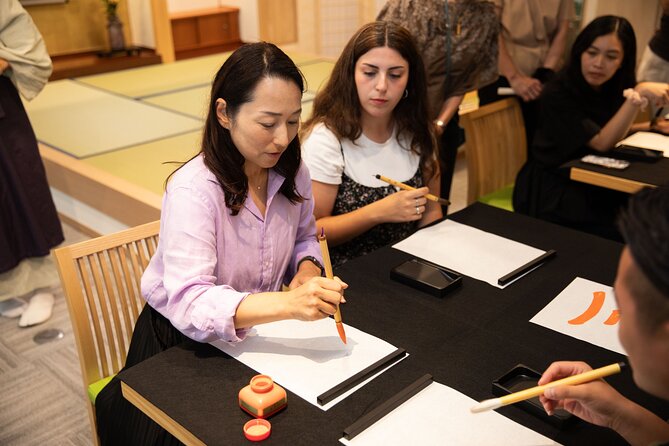
- Practice both old and new tools: You use a traditional brush as well as a modern fude pen, so you can compare classic brush writing with a more controlled method.
- Small group setting: The class accepts no more than 10 people, a useful limit for a skill that depends on watching hand position and stroke movement.
- Choose your own characters: You can select from different characters to write, giving your finished piece a personal touch.
- Take home more than a memory: Your calligraphy artwork and special souvenirs are included.
- Easy Asakusa meeting point: The class begins and ends at Tokyo Tourist Lounge Asakusa, near public transportation.
- A patient instructor may help if plans go wrong: Mei waited for one late-arriving participant and offered a shortened session, though arriving on time is still the wise move.
Why Calligraphy Works So Well in Asakusa
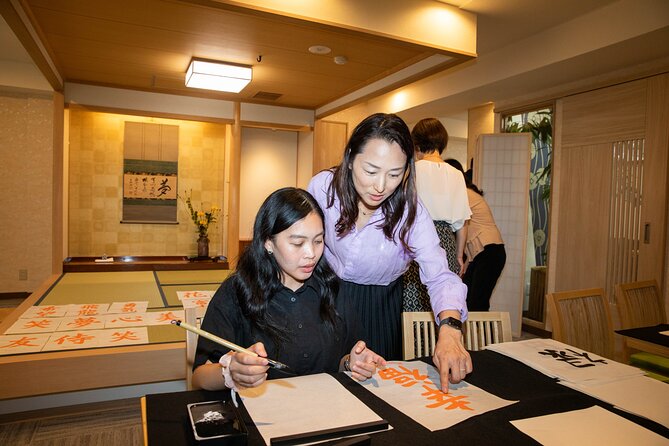
Asakusa is one of Tokyo’s best areas for a cultural activity. It is known for its traditional atmosphere, and a Japanese calligraphy class fits the setting better than another quick stop at a shopping center.
You are not only looking at Japanese art. You are handling the tools, learning the order of the strokes, and trying to create something yourself. That physical connection matters. A brush does not respond like a ballpoint pen, and the results depend on pressure, speed, and direction.
I also like that the activity gives you a calm break from sightseeing. Tokyo can fill a day with trains, crowds, signs, shops, and temples. Ninety minutes spent concentrating on one character offers a different pace. You do not need prior artistic training, and the class is designed for beginners.
The setting at Tokyo Tourist Lounge Asakusa makes the activity easy to add to a day in the district. The address is 5F, 2-18-15 Kaminarimon, Taito City, Tokyo 111-0034. The workshop returns to this same meeting point, so you do not need to work out a separate end location.
A few more options to weigh up in Tokyo
- Tokyo Disney Resort – Tokyo Disneyland & Tokyo DisneySea Park Tickets
★ 4.8 · 99,488 reviews - SHIBUYA SKY Ticket
★ 4.7 · 46,509 reviews - JR Whole Japan Rail Pass
★ 4.8 · 29,150 reviews
What Happens During the 90-Minute Class
The session begins with the basics. You learn how to hold the brush, how to control its movement, and how stroke order shapes the final character. These are the parts that can be hard to understand from a book or online video because small changes in hand position can affect the line.
Expect the teacher to focus on technique before asking you to create a finished piece. That is the right order. If you rush straight into writing a character, you may produce something attractive by chance, but you will not understand why the strokes look the way they do.
Brush control is one of the most useful skills here. Japanese calligraphy is not simply neat handwriting. The brush can create different widths and textures depending on how you move it. The supplied information does not promise advanced mastery, so I would treat this as a practical first lesson, not a professional training session.
You then practice writing characters. You can choose from different options, which gives you room to select something that feels meaningful or simply looks appealing. Since the exact character choices are not specified, you should be ready to choose from the selection available during the class rather than expect a particular word.
Traditional Brushes and the Modern Fude Pen
The use of two writing tools is one of the strongest features of the workshop. The traditional brush connects you with the classic form of Japanese calligraphy. It also demands more control, which is part of the challenge and part of the fun.
The modern fude pen offers a different feel. It has a brush-style tip but is easier to manage for precise writing. This lets you practice calligraphy techniques in a form that may be simpler to continue using at home.
I find this combination valuable because it keeps the class from becoming only a one-time craft activity. You get an introduction to the traditional method, then a tool that may be more convenient for future practice. The class specifically teaches techniques you can practice at home, and the fude pen is a practical bridge between the workshop and your own desk.
Do not expect the two tools to produce identical results. That difference is useful. You can see how the tool affects the line and how your grip and pressure change the writing. For a beginner, this comparison can make the lesson more memorable.
Choosing Characters and Creating a Keepsake
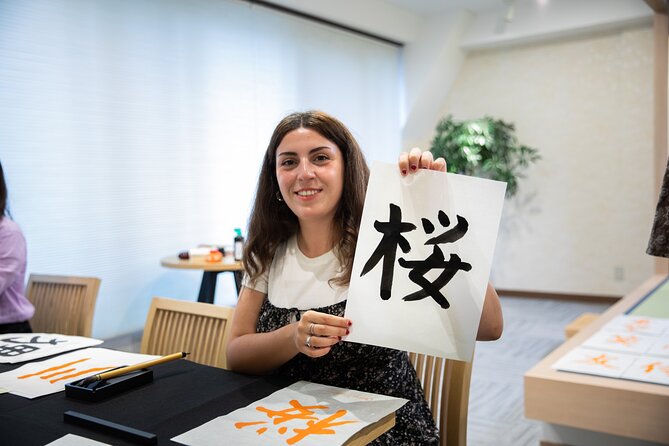
The finished artwork is the part you will probably value most after returning home. You choose a character from the available options, practice it, and then produce a final piece to keep.
Because the character is selected by you, the souvenir feels more personal than a standard printed item. Your handwriting becomes part of the object. It may not look perfect, but that is not the point. The piece records a real attempt to learn a Japanese art form.
The class also includes special souvenirs in addition to the calligraphy artwork. The details of those items are not specified, so I would not book this expecting a particular type of gift. The safe expectation is that you leave with your own written artwork and additional souvenirs supplied as part of the session.
This is a good choice if you want a compact keepsake that is easy to carry. It also works well for a family member or friend who would appreciate something made in Tokyo rather than another mass-produced souvenir.
A completely different kind of day out:
- Mt Fuji and Hakone 1-Day Bus Tour Return by Bullet Train
★ 5.0 · 26,383 reviews - TOKYO SKYTREE® Ticket
★ 4.7 · 25,136 reviews - teamLab Borderless Tickets: MORI Building DIGITAL ART MUSEUM
★ 4.7 · 24,126 reviews - teamLab Planets TOKYO Ticket
★ 4.7 · 21,663 reviews
The Teacher and the Value of a Small Group
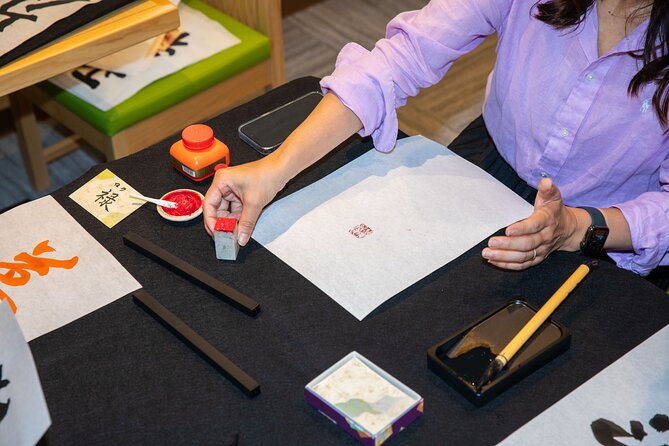
A calligraphy class depends heavily on instruction. You need someone to correct your grip, show the movement, and explain why a stroke should begin or end in a certain way.
The group limit of 10 is important here. A large class could turn the activity into a demonstration followed by solitary practice. With fewer people, you have a better chance of seeing the teacher clearly and receiving help when your brush movement goes off track.
One participant had a difficult start after getting stuck in traffic. Mei waited and provided a shortened session. That shows a helpful level of patience, but it should not be treated as permission to arrive late. A shortened class means less time for practice and less chance to understand the early instruction.
If Mei is teaching your session, you can expect an instructor who has shown care toward a participant in an awkward situation. The supplied information does not identify every teacher, so I would avoid assuming Mei will lead every class. The important point is that the experience is instructor-led rather than self-guided.
Is $40 a Good Price?
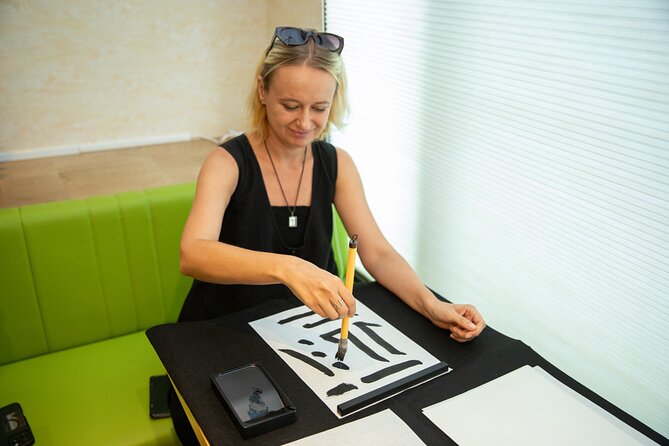
At $40 per person, this is not the cheapest activity you can add to a Tokyo day. You can see plenty of Japanese culture without paying for a class. The price makes more sense when you consider what is included: instruction, the entrance fee, use of the workshop, your finished artwork, and special souvenirs.
You are also paying for access to techniques that are difficult to pick up alone. Brush grip and stroke order are simple terms, but a teacher can show the difference between an uncertain movement and a controlled one. That direct correction is the main value.
The 90-minute length helps keep the cost reasonable. You are not committing half a day, and the class can fit around other plans in Asakusa. At the same time, the short format limits how far you can progress. If you already practice Japanese calligraphy, you may want a longer or more advanced course. If you are starting from zero, the length should be enough for a useful first try.
The free Tokyo Tourist Lounge service is also included. The exact nature of the service is not explained, so I would view it as a bonus rather than a central reason to book. The calligraphy instruction and take-home work are the main reasons to pay.
Timing, Transport, and Meeting Details
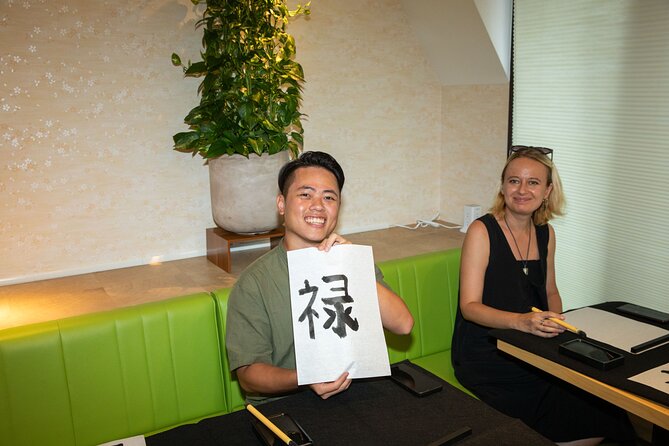
The workshop begins at Tokyo Tourist Lounge Asakusa and ends there. It is near public transportation, making it a practical addition to a day in the district.
Your mobile ticket is accepted, and confirmation is provided at booking. I would keep the ticket easy to open on your phone and allow extra time to reach the fifth floor at the listed address. Since the activity is short and instructor-led, arriving a few minutes early is more useful than cutting it close.
The official duration is approximately one hour and 30 minutes, while the class is also described as lasting one to one and a half hours. Plan for about 90 minutes, but leave a little flexibility around it if you have a timed reservation afterward.
Bottled water is not included. That is a minor issue, but you should carry your own drink if you want one during the session.
The activity is near public transportation, and most people can participate. No special accessibility details are provided, so you should contact the provider directly if you need specific arrangements.
Who Will Enjoy This Workshop Most?
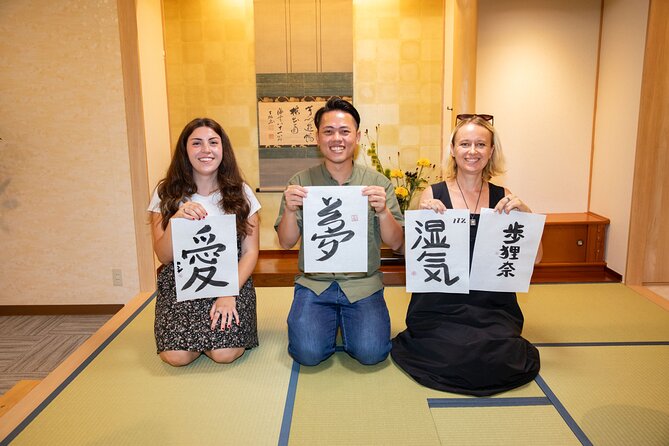
I would recommend this class to first-time visitors who want more than sightseeing photos. It gives you a direct way to take part in a Japanese tradition without needing previous skill.
It is also a good fit for:
- People who want a personal Tokyo souvenir
- Couples looking for a quiet cultural activity
- Families and small groups interested in making something together
- Beginners curious about Japanese writing
- Art-minded visitors who want to practice with real brush tools
- Anyone with a free 90-minute window in Asakusa
You should think twice if you dislike guided instruction or hands-on crafts. The class involves practice, repetition, and accepting that your first strokes may not look polished. It is not a passive show.
You may also want a different option if your main goal is advanced calligraphy. The session teaches essential methods and home-practice techniques, but it is presented as a beginner-friendly introduction.
Practical Tips for a Better Session
Arrive on time. The late participant who received help from Mei was fortunate, but missing the first part can mean missing the explanation of grip and stroke order.
Wear or bring nothing that you would worry about around ink. The supplied details do not describe the work surfaces or protective clothing, so it is sensible to approach the class as a real art activity rather than a spotless demonstration.
Think ahead about the kind of character you might want to write, but do not assume every character will be available. The class provides different choices, and selecting from those options is part of the activity.
Save room in your luggage for the finished work. The artwork is a personal keepsake, and bending or crushing it would be a poor end to an otherwise enjoyable class.
Finally, plan the workshop alongside Asakusa sightseeing rather than far across Tokyo. Since the meeting point is in the Kaminarimon area, you can keep the day simple and avoid losing time on cross-city transport.
Cancellation and Booking Notes
You can cancel for a full refund up to 24 hours before the local start time. Cancellations or changes made less than 24 hours before the start are not accepted for a refund.
The activity has a maximum of 10 participants, and more than 10 bookings were made in the previous month. That suggests steady interest, so book ahead if your Tokyo schedule has little spare room.
Should You Book the Asakusa Calligraphy Workshop?
I would book this workshop if you want a short, practical cultural activity with something personal to take home. The combination of traditional brush practice, a modern fude pen, character choice, and a small group makes the $40 price reasonable.
I would skip it if you want a long, advanced lesson or prefer to spend every minute visiting temples and shops. For most first-time beginners, though, this is a pleasant change of pace and a more meaningful souvenir than another keychain. Give yourself 90 minutes, arrive on time, and approach the brush with patience. Your first character may wobble, but that is part of learning.
FAQ
Where does the calligraphy workshop begin?
It begins at Tokyo Tourist Lounge Asakusa, located on the fifth floor at 2-18-15 Kaminarimon, Taito City, Tokyo 111-0034, Japan.
Where does the activity end?
The workshop ends back at the meeting point, Tokyo Tourist Lounge Asakusa.
How long does the workshop last?
The activity lasts approximately one hour and 30 minutes. It is also described as lasting between one and one and a half hours.
How much does the workshop cost?
The listed price is $40 per person.
How many people can join the class?
The activity has a maximum of 10 participants.
Is the workshop suitable for beginners?
Yes. The class teaches essential techniques, including brush grip, control, and stroke order, and is described as suitable for beginners.
Do I use a traditional brush?
Yes. You practice with traditional calligraphy brushes during the class.
Do I use a modern writing tool?
Yes. The workshop also includes practice with a modern fude pen, or brush pen.
Can I choose which characters to write?
Yes. You can choose from different characters available during the session.
What do I take home?
You take home your finished calligraphy artwork and special souvenirs.
Is bottled water included?
No. Bottled water is not included.
Can I cancel for a full refund?
Yes. You can cancel at least 24 hours before the local start time for a full refund. Cancellations made less than 24 hours before the start are not refunded.
Just added in Tokyo
- Mt. Fuji & Hakone: Fuji Sengen Shrine, Cruise, and Ramen-Making★ 5.0 · 124 reviews
- Daruma Workshop by Making your Own Japanese Souvenir in Shinjuku★ 5.0 · 25 reviews
- Day Trip to Kamakura & Enoshima: Shrines, Seaside, Temples & Tea★ 5.0 · 32 reviews
- DAIKOKU excursion by car DRIFT automobile encounter★ 4.5 · 19 reviews
- Daikoku Car meet: Tokyo Drift Car Club membership★ 4.5 · 21 reviews
- Real Tokyo Runner Club : Daikoku Car Meet Night Tour with JDM Car★ 5.0 · 25 reviews
- Tokyo Toilet Tour★ 5.0 · 18 reviews
- Tokyo Private Tour with Customized Itinerary★ 5.0 · 24 reviews
Workshops, compared.
Sushi Making Tokyo Roll and Authentic Japanese Sushi Class
Read our review →
Gion Make Your Own Chopsticks with Engraving Option
Read our review →
Roll and Authentic Sushi Making Class in Asakusa
Read our review →
Ramen Cooking Class at Ramen Factory in Kyoto
Read our review →
Tokyo Asakusa Chopsticks Workshop: Make Your Own Pair
Read our review →
Ring Making Workshop : Vintage Japanese Coin Ring
Read our review →Browse the lists this tour appears in