
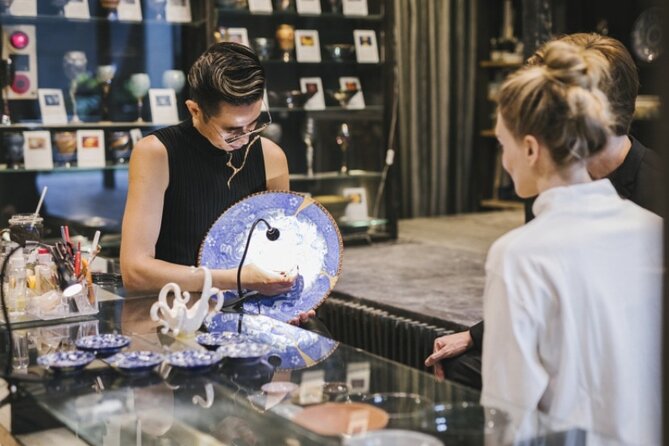
Reviewed · WORKSHOPS
Authentic Pure Gold Kintsugi Workshop with Master Taku in Tokyo
Broken pottery gets a second life. This small workshop in Tokyo lets you practice authentic kintsugi with real urushi lacquer and pure gold powder, rather than simply watching a demonstration. I like the calm, hands-on format and the fact that you leave with a plate you repaired yourself. The main catch is the non-refundable booking policy, so you will want to be certain of your schedule before paying.
I also like the personal instruction. The group is limited to five people, and Master Taku or an assisting instructor can guide you through each stage at a comfortable pace. The studio can be a little hard to find, so allow extra time for the meeting point in Minami-Aoyama.
In This Review
- Key points to know before booking
- Why kintsugi makes a good Tokyo souvenir
- Arriving at the Minami-Aoyama studio
- Meeting Master Taku and learning the craft
- Option A: traditional gold kintsugi in 110 minutes
- Option B: black and gold Shikkokurai
- Option C: trying yobitsugi with added decoration
- What the two-hour schedule feels like
- What is included, and what you take home
- The most praised part: patient, calm instruction
- A souvenir with more meaning than a purchase
- Important practical limits
- Who should book this workshop?
- Should you book the Pure Gold Kintsugi Workshop?
- FAQ
- Where does the kintsugi workshop take place?
- How long does the workshop last?
- What kintsugi materials are used?
- Do I receive a plate to take home?
- How many people can join the class?
- Is the booking refundable?
Key points to know before booking
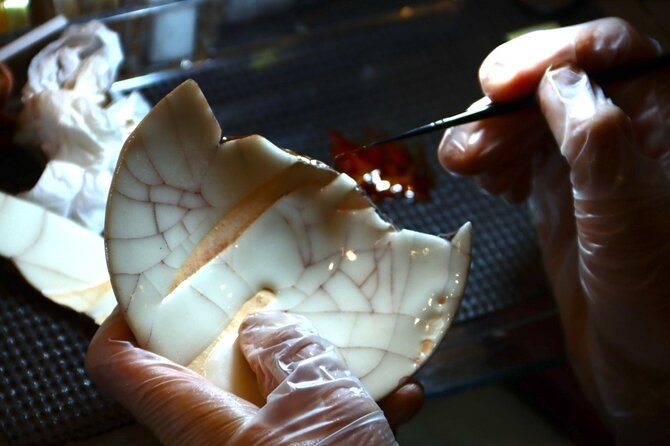
- Real gold and urushi lacquer: The main workshop uses natural lacquer and pure gold powder, not a quick decorative imitation.
- A handmade plate is included: You work on pottery made by Master Taku and take the finished piece home that day.
- Three styles are available: Choose traditional gold repair, a black-and-gold plate, or a decoration-based yobitsugi repair.
- Very small groups: A maximum of five people makes it easier to ask questions and get help with delicate steps.
- A quiet break from Tokyo sightseeing: The two-hour session gives you time to focus on one careful task instead of rushing between landmarks.
- Master Taku leads the studio: His work follows the idea of making a repaired object more beautiful and stronger than before it broke.
Why kintsugi makes a good Tokyo souvenir
Tokyo offers no shortage of things to buy, from ceramics to stationery to fashion. A repaired plate gives you something different: a souvenir connected to your own hands and choices.
Kintsugi is the Japanese practice of repairing broken pottery with lacquer and highlighting the repaired lines with gold. The break is not hidden. It becomes part of the finished design, which connects the craft with the ideas of wabi-sabi, or beauty found in imperfection and age.
That idea gives the workshop more weight than a standard craft class. You are not simply decorating a blank object. You are helping restore a vessel that already has character, including the rustic lacquer treatment prepared for the lesson.
I especially like the environmental angle. Instead of treating broken pottery as useless, kintsugi gives it another life. You do not need to arrive with your own damaged plate, either. The studio supplies the pottery and materials, so you can take part even if you are new to ceramics.
A few more options to weigh up in Tokyo
- Tokyo Disney Resort – Tokyo Disneyland & Tokyo DisneySea Park Tickets
★ 4.8 · 99,488 reviews - SHIBUYA SKY Ticket
★ 4.7 · 46,509 reviews - JR Whole Japan Rail Pass
★ 4.8 · 29,150 reviews
Arriving at the Minami-Aoyama studio
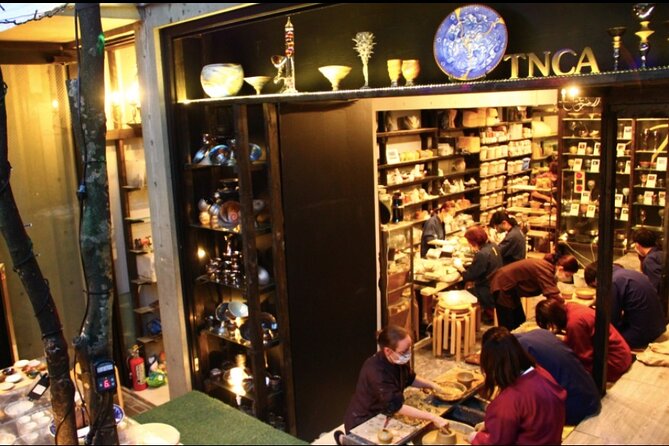
The meeting point is TNCA Minami-Aoyama Studio at 3-chōme-8-2 Minamiaoyama, in Minato City. The studio is near public transportation, but finding the entrance may take a little effort. One participant arrived late after getting lost, so I would not cut your timing close.
Minami-Aoyama is a fitting setting for this class. The neighborhood is known for fashion and design, and it gives the activity a more creative feel than a large tourist attraction. Still, the location is not a sightseeing stop with obvious signs and a big ticket counter. Use the supplied address carefully and plan to arrive early.
The class ends at the same place. There is no hotel pickup, drop-off, meal, or drink included, so think of this as a compact studio visit rather than a packaged half-day tour.
Meeting Master Taku and learning the craft
Taku Nakano is a ceramist who operates a pottery studio in Omotesando. His approach centers on making an object even more beautiful and more robust than before it broke. That philosophy gives the lesson a clear purpose from the start.
The instruction covers both technique and meaning. You learn where kintsugi comes from, how the repair process works, and why the gold line is meant to be visible. The class is taught in English, and the instruction has been described as clear, patient, and easy to follow.
Master Taku may teach the session himself, while assistants such as Junko can also guide participants through the repair. Junko helped one group restore its plates at a steady pace, and the practical value of that support is easy to understand. Kintsugi involves small, careful movements, so having someone close by matters.
The small group limit is one of the strongest features here. With no more than five people, you are not left trying to copy a demonstration from across a crowded room. You can ask for help when applying lacquer, placing gold, or working on an awkward section of the pottery.
Option A: traditional gold kintsugi in 110 minutes
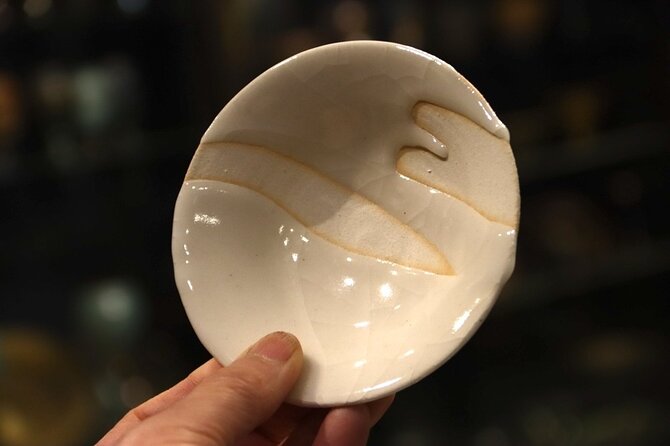
Option A is the most traditional choice and the best fit if you want the full lesson. It takes about 110 minutes and uses real natural urushi lacquer with pure gold.
The plate is supplied by the studio and has been prepared with a rustic lacquer finish. You then learn how the damaged areas are treated and how the gold is applied along the repaired lines. The point is not to make every line look factory-perfect. The final design keeps the evidence of repair visible.
This option gives you the clearest connection to the philosophy of kintsugi. You work with an object that is already imperfect, and the repair becomes its main visual feature. If you want the most traditional result and have close to two hours available, this is the option I would choose.
The finished plate can be taken home the same day. That is useful for anyone with a tight Tokyo itinerary, since you do not need to return later to collect it.
A completely different kind of day out:
- Mt Fuji and Hakone 1-Day Bus Tour Return by Bullet Train
★ 5.0 · 26,383 reviews - TOKYO SKYTREE® Ticket
★ 4.7 · 25,136 reviews - teamLab Borderless Tickets: MORI Building DIGITAL ART MUSEUM
★ 4.7 · 24,126 reviews - teamLab Planets TOKYO Ticket
★ 4.7 · 21,663 reviews
Option B: black and gold Shikkokurai
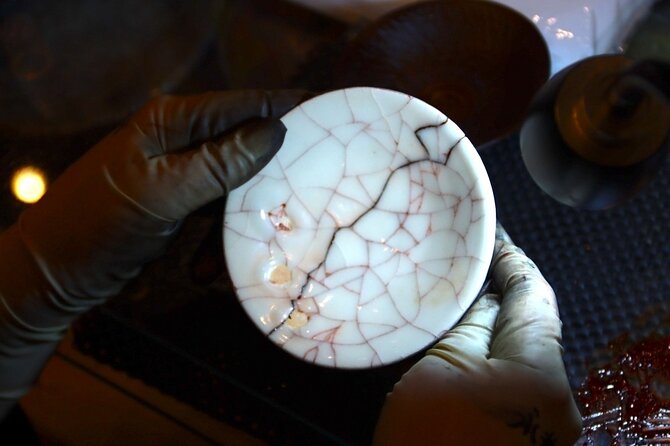
Option B takes about 90 minutes and uses a black plate. The repair method is the same as Option A, but the dark surface creates a more modern and dramatic look when paired with gold.
I would pick this version if you prefer a cleaner, cooler style over the rustic appearance of the traditional option. The black-and-gold combination is also a practical choice if you want a plate that feels more like contemporary design.
Because this version is shorter, it may fit better between other plans. You still receive the same basic instruction and work with the same kintsugi approach, but you have less time in the studio than with Option A.
Option C: trying yobitsugi with added decoration
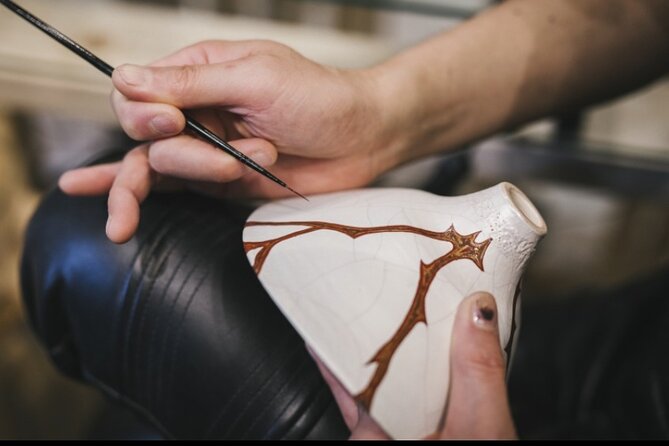
Option C introduces yobitsugi, described as the highest technique among the available kintsugi methods. Instead of only joining a break, you attach different decorations and materials to missing sections.
This option is appealing if you want a more unusual final piece. A missing area becomes an opportunity for design, rather than a problem to disguise. It also gives you a chance to see how kintsugi can go beyond a simple repair line.
At about 90 minutes, it is as compact as the black-and-gold choice. I would choose it if the idea of filling a missing section with a contrasting decorative element interests you more than a classic gold seam.
What the two-hour schedule feels like
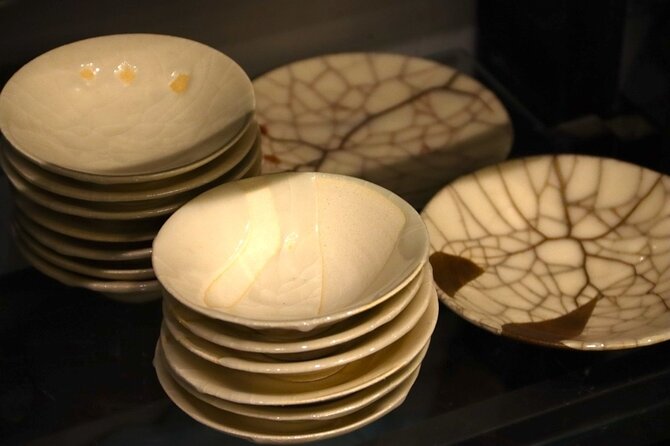
The advertised duration is about two hours, while the individual choices take roughly 90 or 110 minutes. That leaves room for the introduction, explanation of the materials, choosing your plate or style, and finishing the piece.
You begin with an explanation of kintsugi and its connection to wabi-sabi. Then you move into the practical work, with the instructor demonstrating the process and helping you complete your own plate.
The pace appears suited to beginners. Several participants found the instructions easy to understand, and one group completed its project within the allotted time. That does not mean you should rush. The value is in the careful process, not in producing a perfect plate as quickly as possible.
The activity also has a quiet, almost meditative quality. You focus on a small surface, follow a sequence of steps, and watch the repair become part of the object. After a day of Tokyo crossings, train platforms, and crowded shopping streets, that change of pace can be welcome.
What is included, and what you take home
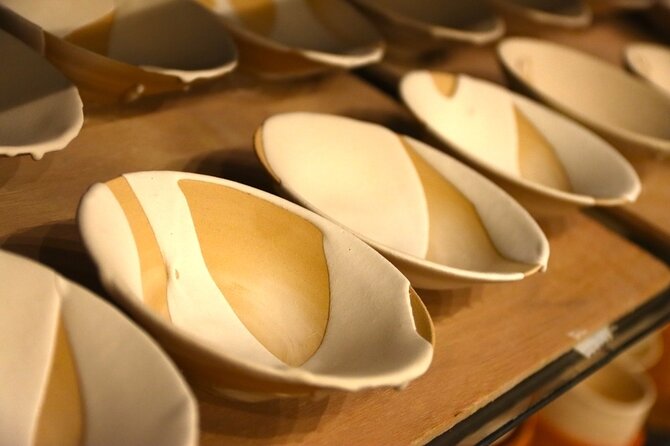
The price is $142.60 per person. That includes the lesson, taxes, fees, equipment, materials, and the plate used during the class.
The most important inclusion is the plate itself. You are not paying for a demonstration only. You leave with an object made by your own work, using the techniques shown in the studio.
At first glance, the price may seem high for a 90 to 110-minute class. The value improves when you consider the small group, the handmade pottery, the use of real urushi lacquer and pure gold powder, and the specialist instruction.
You are also paying for access to a craft that is difficult to arrange independently during a first visit to Tokyo. Buying a ready-made kintsugi piece would be easier, but it would not carry the same personal connection.
Food and drinks are not included. Since the session is relatively short, this is not a major problem, but you should plan your meal or coffee separately in Minami-Aoyama.
The most praised part: patient, calm instruction
The strongest pattern in the feedback is the quality of the teaching. People repeatedly valued the clear explanations, patience, and friendly manner of the instructors.
One especially warm account described Master Taku helping a participant cool down after arriving hot and perspiring. That small act gives you a useful picture of the studio atmosphere: personal, relaxed, and attentive rather than stiff or overly formal.
Another participant arrived 15 minutes late after getting lost and was still welcomed kindly. I would not treat that as a reason to arrive late, but it does suggest that the teaching style is forgiving when Tokyo directions cause trouble.
The English instruction is another practical advantage. You do not need prior knowledge of Japanese pottery or kintsugi to follow the class. The process is explained at a manageable pace, and help is available as you work.
A souvenir with more meaning than a purchase
The plate is the lasting reward, but the process is what makes it memorable. You see the object change from a prepared piece of pottery into something marked by your own decisions.
That makes this a good choice for couples, parent-and-child outings, and friends who want a shared activity. A mother and daughter found the class especially meaningful because it combined the craft with an explanation of its philosophy.
It also suits solo visitors. The small group gives you enough support to work independently without making the class feel isolated. You can concentrate on your plate while still sharing the room with other people working on their own designs.
If you are interested in ceramics, Japanese design, repair crafts, or mindful activities, the class has a clear appeal. It can also suit someone who does not usually take craft classes but wants a souvenir that cannot be duplicated.
Important practical limits
The activity is non-refundable and cannot be changed after booking. That is the biggest practical drawback. Book only when your Tokyo schedule is firm, since a change of plans does not qualify for a refund.
Confirmation is sent within 48 hours, subject to availability. The class also requires a minimum number of participants, and if that minimum is not reached, the operator offers another date or experience, or a full refund.
Most people can participate, and the maximum group size is five. The supplied information does not describe specific accessibility arrangements, so contact the provider before booking if you have mobility or other access needs.
The exact plate selection may vary by option and availability. The studio provides the starting pottery, and one participant appreciated being offered multiple choices. You can ask about the available pieces when you arrive.
Who should book this workshop?
I would recommend it most strongly to you if you want an activity rather than another sightseeing stop. The lesson asks you to slow down, listen, and work with care.
It is also a strong pick if you value authentic materials. The use of natural urushi lacquer and pure gold powder makes this more than a simple gold-colored decoration class.
Choose Option A if you want the fullest traditional kintsugi lesson. Choose Option B for a shorter session and a black-and-gold look. Choose Option C if you like the idea of adding different materials to missing areas and want to try yobitsugi.
You may want to skip it if your itinerary is uncertain, you dislike careful handwork, or $142.60 feels too high for a short activity. The workshop is about the process and the finished plate, not a long tour through Tokyo or a meal-based cultural event.
Should you book the Pure Gold Kintsugi Workshop?
Yes, if you want a personal souvenir and a calm creative hour in Tokyo. The maximum five-person group, real gold, handmade pottery, and patient instruction give the price a reasonable basis.
Book Option A for the most complete experience, and arrive early because the Minami-Aoyama studio can be tricky to locate. If you prefer a shorter class, the black-and-gold or yobitsugi options still offer a genuine hands-on introduction.
With a perfect five-star rating from 217 ratings and a 100 percent recommendation rate, the activity has a strong record. More important, its appeal is easy to understand: you repair something imperfect, learn why that matters in Japanese craft, and carry the result home in your own hands.
FAQ
Where does the kintsugi workshop take place?
The workshop begins and ends at TNCA Minami-Aoyama Studio, 3-chōme-8-2 Minamiaoyama, Minato City, Tokyo 107-0062, Japan.
How long does the workshop last?
The overall experience lasts about two hours. Option A takes about 110 minutes, while Options B and C take about 90 minutes.
What kintsugi materials are used?
Option A uses real natural urushi lacquer and pure gold powder. The workshop also provides the equipment and other materials needed for the lesson.
Do I receive a plate to take home?
Yes. A plate is included for the lesson, and you can take your finished piece home on the day of the workshop.
How many people can join the class?
The activity has a maximum of five participants.
Is the booking refundable?
No. The experience is non-refundable and cannot be changed for any reason. If the minimum number of participants is not reached and the operator cancels, you are offered another date or experience, or a full refund.
Just added in Tokyo
- A One-of-a-Kind Sushi Experience in a Special Place of Japan★ 5.0 · 15 reviews
- Tokyo Cute Bento Cooking Class – Make a Kawaii Character Lunchbox★ 5.0 · 126 reviews
- Japanese Home Cooking Class & Walk in Todoroki Temple Tokyo★ 5.0 · 88 reviews
- Japan Tokyo Tower Observatory Deck E-Ticket★ 4.0 · 34 reviews
- Catch a Baseball Game in Tokyo with a Local – Tickets Included★ 5.0 · 24 reviews
- JDM Experience with Fast&Furious RX-7 (English speaking Driver)★ 5.0 · 57 reviews
- Tokyo Private Day Tour by Car with English speaking Driver Guide★ 4.0 · 29 reviews
- Japan Classic 10 Day – One Life Adventures★ 5.0 · 129 reviews
Workshops, compared.
Sushi Making Tokyo Roll and Authentic Japanese Sushi Class
Read our review →
Gion Make Your Own Chopsticks with Engraving Option
Read our review →
Roll and Authentic Sushi Making Class in Asakusa
Read our review →
Ramen Cooking Class at Ramen Factory in Kyoto
Read our review →
Tokyo Asakusa Chopsticks Workshop: Make Your Own Pair
Read our review →
Ring Making Workshop : Vintage Japanese Coin Ring
Read our review →Browse the lists this tour appears in