
Reviewed · MARKETS AND FOOD HALLS
Awesome Private Tour: Tsukiji, Asakusa, Shinjuku, Shibuya
Tokyo reveals itself one neighborhood at a time. This private tour gives you a flexible way to connect Tsukiji, Asakusa, Shibuya, and Shinjuku, while your English-speaking host adjusts the day to your interests. You can focus on temples, food, shopping, pop culture, or a little of everything.
I like the personal attention of a private group, and I like the practical local advice, especially around Tsukiji food stalls and Asakusa shops. The main drawback is pace: $116 per person is fair for a tailored guide, but transportation, food, and attraction tickets cost extra, and the full route is far too large for four hours.
In This Review
- Key details before you book
- A private Tokyo day with room to change course
- Tsukiji begins with food, temples, and practical advice
- Ginza shows Tokyo’s polished side
- Asakusa delivers old Tokyo in one compact walk
- Tokyo Skytree needs a decision, not an automatic stop
- Akihabara and Ueno suit different interests
- Shibuya makes the best modern Tokyo photo stop
- Shinjuku finishes with narrow lanes and late-night character
- Yanaka and Kichijoji offer a calmer alternative
- What $116 buys you, and what it does not
- How to shape the best four hours
- Who should book this Tokyo experience?
- Should you book it?
- FAQ
- How long does the tour last?
- Is the tour private?
- Is the guide available in English?
- Are subway fares included?
- Are food, drinks, and attraction tickets included?
- Can I cancel for a full refund?
Key details before you book
- You choose the style of the day: Ask for temples and old Tokyo, fashion and youth culture, food, shopping, or modern city sights.
- The guide can help beyond the tour: Hosts such as Abu, Maruf, and Ayoub have provided restaurant tips, photo help, neighborhood advice, and ideas for the rest of your stay.
- The advertised stops form a menu, not a realistic four-hour route: Tsukiji, Ginza, Asakusa, Skytree, Akihabara, Ueno, Shibuya, and Shinjuku need careful trimming.
- Public transport shapes the experience: Subway rides are included in the route plan, but you pay your own fares.
- You get a private experience: The small-group format lets you slow down, skip places, or add areas that match your interests.
- The tour works best with a clear plan: Tell your host your top two priorities before setting out.
A private Tokyo day with room to change course
The appeal here is not simply seeing famous Tokyo names. It is having someone help you decide which parts of this huge city fit your limited time.
A standard sightseeing route can leave you racing from one photo stop to the next. This experience is more useful if you tell your host what you want from Tokyo. If this is your first visit, you might choose Asakusa and Shibuya for a strong contrast between old and new. If you care more about food and traditional neighborhoods, Tsukiji and Yanaka may suit you better.
The tour is described as a four-hour half-day experience, with availability extending from four to eight hours. That difference matters. In four hours, you can comfortably cover two or three nearby areas with some walking and local explanation. An eight-hour version gives you more room for long subway connections, breaks, meals, and shopping.
The host is also part guide and part trip planner. Abu has helped with ramen suggestions and Tsukiji food choices. Maruf has been praised for planning the route and taking good photos. Ayoub has led a pleasant neighborhood-focused visit. Your exact guide may differ, so the personal style can vary, but the format gives you direct help instead of a fixed script.
More Markets and Food Halls in Tokyo
- Tokyo Tsukiji Fish Market Food and Culture Walking Tour
★ 5.0 · 3,184 reviews - Tokyo: Tsukiji Fish Market Food and Walking tour
★ 5.0 · 1,724 reviews - Senkyaku Banrai Toyosu Manyo Club Onsen Experience in Tokyo
★ 4.7 · 1,690 reviews
Tsukiji begins with food, temples, and practical advice
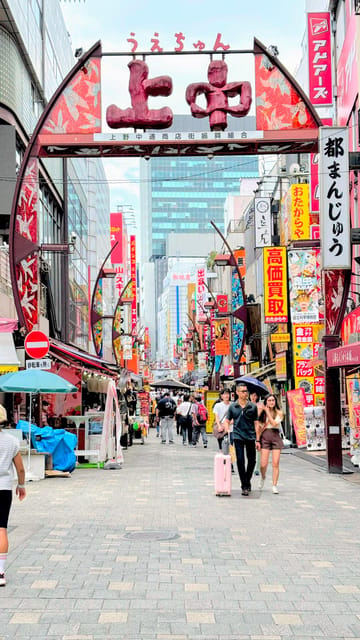
Tsukiji Outer Market is an excellent opening if you want Tokyo to feel immediate and local. The market is best treated as a place to browse, snack, and watch daily commerce rather than as one single attraction with a formal entrance.
You get about 30 minutes here on the shorter route. That is enough for a quick walk, a few photographs, and some shopping, but not enough for a leisurely meal crawl. If food is a major reason for booking, tell your host in advance and ask for more time.
This is where local guidance can save you from wandering without a plan. Abu has helped visitors choose food around the fish market, then offered more eating advice later in the day. That kind of help is one of the stronger reasons to book a private tour instead of simply following a map.
A short walk brings you to Tsukiji Hongan-ji, an unusual Buddhist temple with a distinctive architectural style. The visit is only about 15 minutes in the suggested schedule, so expect a brief look and explanation rather than a long religious or architectural study.
From there, the route can pass Kabuki-za before reaching Ginza. Passing the theater is a useful way to connect Tsukiji with Tokyo’s luxury center, though a kabuki performance is not included and would require separate time and admission.
Ginza shows Tokyo’s polished side
Ginza changes the mood completely. Here, you see high-end shops, polished streets, refined cafes, and restaurants aimed at special occasions. The suggested stop lasts around 15 minutes, which makes it more of a look at the district than a serious shopping session.
I would use Ginza as a short contrast stop unless luxury retail is one of your main interests. The area is also home to Kabuki-za, so fans of traditional theater can ask whether a performance fits the schedule. The tour does not include theater tickets, and the timetable may not leave room for a full show.
Ginza is useful early in the day because it helps you understand Tokyo’s range. In a short distance, you move from market stalls and temple worship to designer stores and formal architecture. A private host can explain that shift as you walk, rather than leaving you to see only disconnected sights.
Asakusa delivers old Tokyo in one compact walk
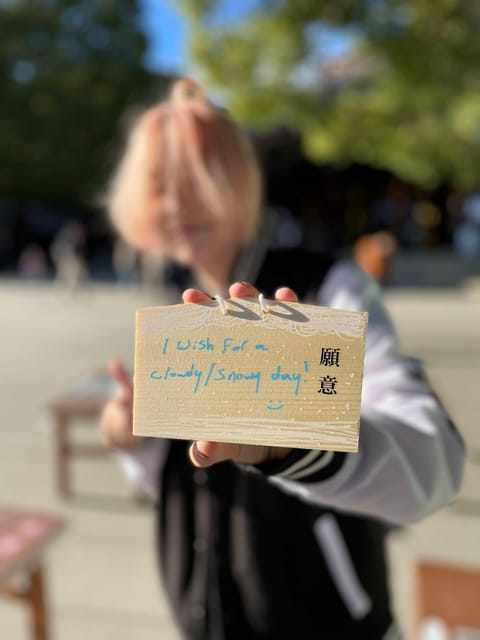
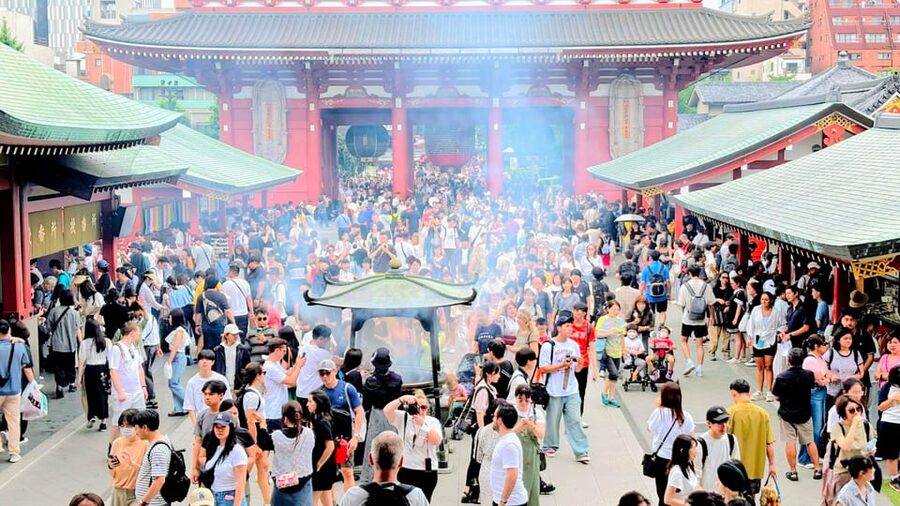
Asakusa is the strongest choice for a first-time visitor who wants a clear sense of Tokyo’s older character. The area centers on Senso-ji, the city’s oldest and most important Buddhist temple, and the approach through Nakamise Shopping Street is part of the experience.
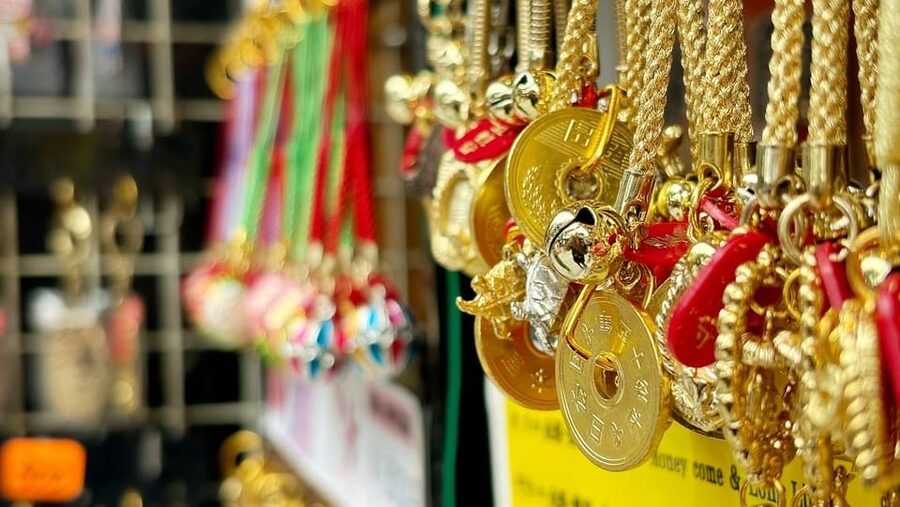
Nakamise is lined with stalls selling snacks, small gifts, and traditional items. The suggested visit lasts about 20 minutes, followed by roughly 30 minutes at Senso-ji for photographs, sightseeing, free time, and shopping.
Give yourself time to look upward as well as forward. The street leads toward the temple gate and main hall, while the surrounding district offers a useful mix of historic atmosphere and modern city life. Your host can point out shops and suggest what is worth buying, a service that proved especially useful to Jennifer, who received shopping advice near the temple.
The tradeoff is crowding and limited time. Asakusa is a popular stop, so a short visit can feel rushed if you want to browse every stall or spend quiet time at the temple. If Senso-ji is your priority, ask to make Asakusa the main focus rather than adding too many distant neighborhoods.
More Private Tours in Tokyo
- Tokyo 6hr Private Tour with Government-Licensed Guide
★ 5.0 · 3,902 reviews - Private Tour to Mt. Fuji and Hakone (Fully Licenced Operator)
★ 5.0 · 1,910 reviews - Tokyo Customized Private Tour (Must See Places in 1 Day)
★ 5.0 · 1,499 reviews - Mount Fuji Full-Day Private Tour from Tokyo (Customizable)
★ 4.9 · 1,470 reviews
Tokyo Skytree needs a decision, not an automatic stop
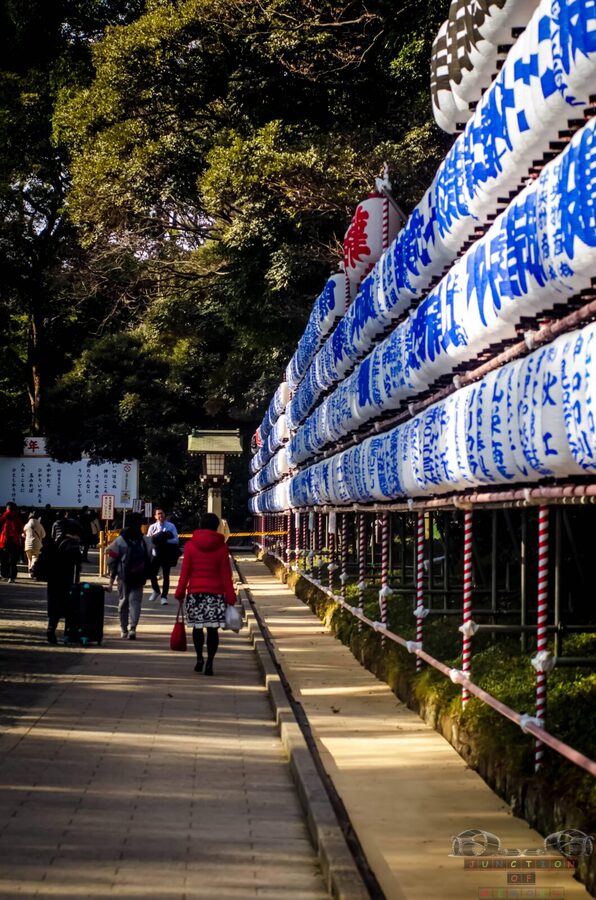
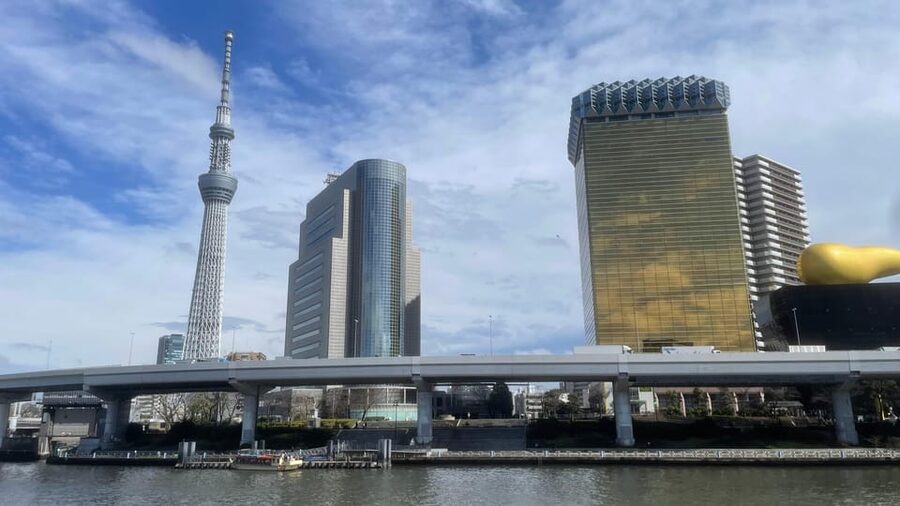
The suggested schedule allows 2.5 hours at Tokyo Skytree. That is the single biggest time commitment in the route, and it changes the entire nature of the tour.
If you want views, shopping, and free time in the Skytree complex, this can be worthwhile. You may find that the stop feels more like a major attraction visit than a quick guided neighborhood walk. Entrance fees are not included, so check the cost before committing.
There is also a practical issue. A visit of this length leaves little time for Shibuya, Shinjuku, Akihabara, or Ueno on a four-hour tour. I would choose Skytree only if you specifically want it, and I would not combine it with every other listed area.
The route includes a subway ride from Asakusa to Skytree of about 15 minutes. Transportation costs are yours to cover, and the exact travel time can vary. Still, the connection is much more sensible than trying to cross the whole city by taxi or on foot.
Akihabara and Ueno suit different interests
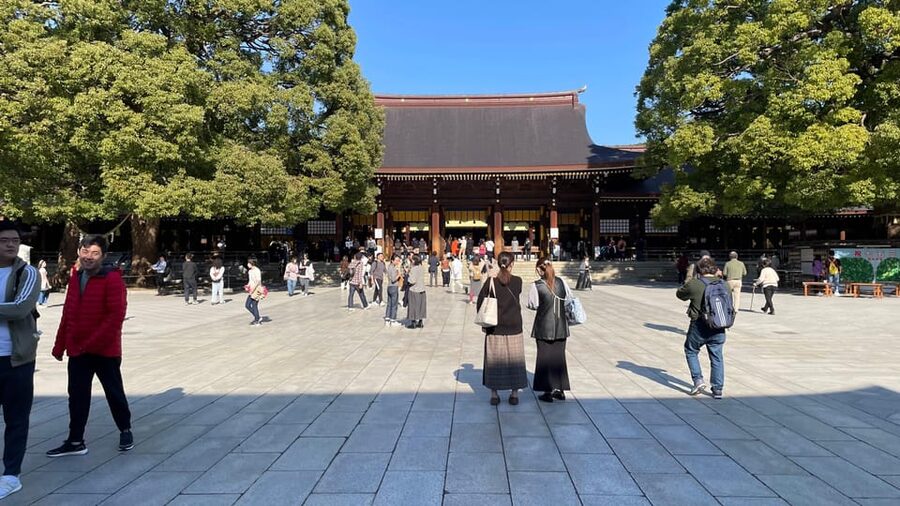
Akihabara is the natural choice for manga, anime, electronics, and Japanese pop culture. The suggested stop is about 30 minutes, so it works as an introduction to the district, not as a full shopping expedition.
If you collect figures, browse games, or want to understand Tokyo’s pop culture side, ask for more time here. Nakano is another strong option for manga, anime, and collectibles, with Nakano Broadway offering a different feel from Akihabara. The tour can be shaped around either area.
Ueno follows well with Akihabara because the neighborhoods are relatively close compared with other Tokyo pairings. The suggested visit is about 20 minutes and includes sightseeing, walking, and a possible class or short cultural activity. The data does not specify the class, so ask your host what is available on your date before counting on it.
Ueno is a good pick if you want a more traditional and local-feeling part of northern Tokyo. It also gives the itinerary a break from retail and giant crossings. With only 20 minutes, though, you will need to keep your expectations modest.
Shibuya makes the best modern Tokyo photo stop
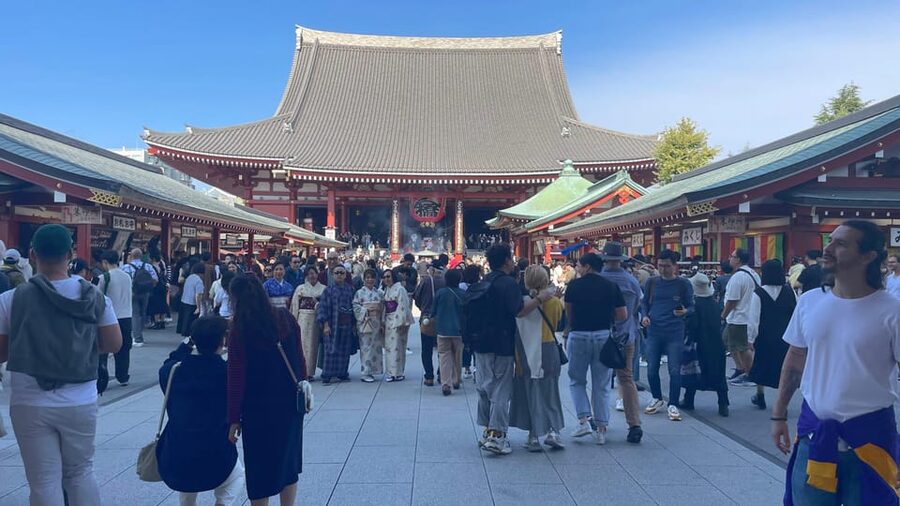
Shibuya Crossing is one of Tokyo’s clearest symbols. The suggested stop lasts about 30 minutes, enough to watch the crossing, take photographs, and see the surrounding shopping and entertainment streets.
The nearby Hachiko Statue adds a small human story to the district. It honors the loyal dog who waited each day for his owner, and it gives your host an easy way to connect a busy public square with a touching piece of Tokyo memory.
Shibuya works particularly well after Asakusa. One stop shows temple gates, incense, and traditional shopping streets. The other shows traffic, screens, fashion, and crowds moving in every direction. You get a strong picture of Tokyo without needing a long lecture.
Harajuku can replace or follow Shibuya if fashion, youth culture, or shrine architecture interests you. Takeshita Street offers quirky cafes and trendy shops, while Meiji Shrine provides a quieter setting among trees. These two sights sit close enough in spirit to form a good half-day theme, but you still need to limit shopping time if you want a proper shrine visit.
Shinjuku finishes with narrow lanes and late-night character
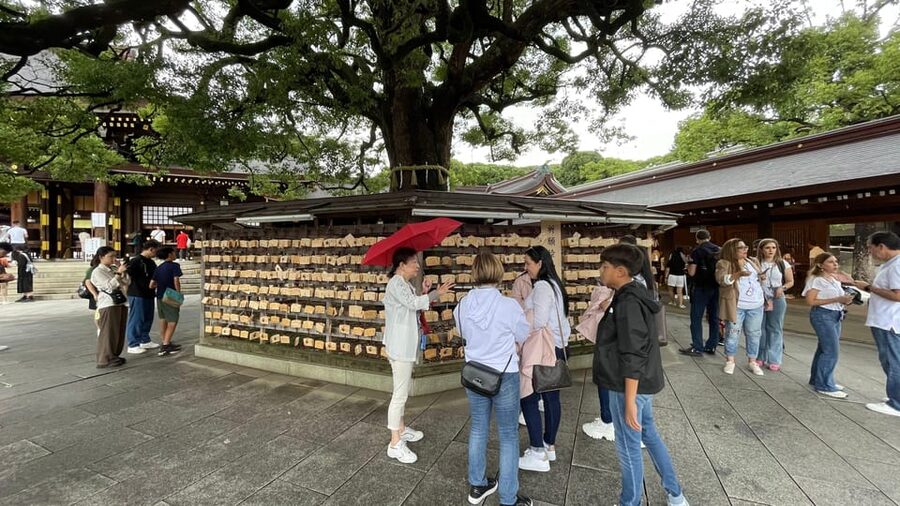
The Shinjuku portion of the suggested route includes Omoide Yokocho, Kabukicho, and Golden Gai. Together, they show a more intimate side of Tokyo’s nightlife district.
Omoide Yokocho is a short stop of around 20 minutes. Its narrow lanes and small eateries offer a sharp contrast to the wide streets and tall buildings nearby. It is a good place to ask your host about food, but additional meals are not covered.
Kabukicho receives about 30 minutes. You can look around, take photographs, and get a sense of the district’s entertainment identity. Golden Gai follows with roughly 20 minutes, giving you a glimpse of its tiny bars and closely packed lanes.
These stops are best treated as introductions. You will not have time for a long dinner, several drinks, or a full night out while staying on schedule. If you want to eat in Shinjuku, ask your host to shorten the sightseeing list and leave room for a meal.
Yanaka and Kichijoji offer a calmer alternative
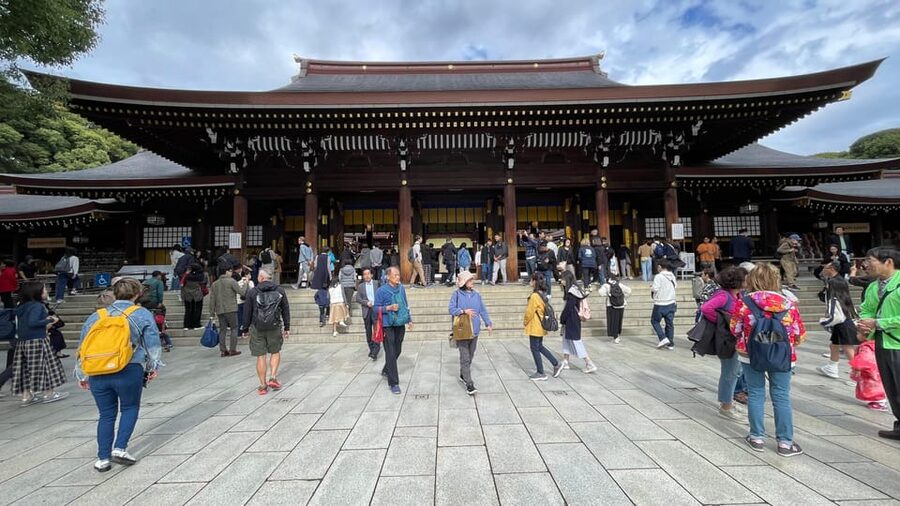
The tour is not limited to the major stops. Yanaka is a smart choice if you want old neighborhood streets, temples, local shops, and Yanaka Ginza. The district preserves more of Tokyo’s traditional downtown mood than the major commercial centers, and its narrow lanes make it well suited to a walking tour.
Kichijoji offers a different kind of break. Inokashira Park has a boating lake, while the surrounding streets include cafes, vintage shops, and food markets. The area has a relaxed, slightly bohemian feel and can be a better fit than Shibuya if you have already seen major city centers.
I would not try to squeeze Yanaka, Kichijoji, Shibuya, and Asakusa into four hours. Choose one style. Yanaka suits history and quiet streets. Kichijoji suits parks and cafes. Shibuya suits city energy and photographs.
What $116 buys you, and what it does not
At $116 per person, this is not the cheapest way to sightsee in Tokyo. You are paying for a private group, an English-speaking host, a custom route, and direct help with the rest of your trip.
The value is strongest when you have limited time, several competing interests, or family members who do not want the same standard route. It is also useful if Tokyo feels too large to organize on your own. The host can help you avoid wasting half the day on poor connections or neighborhoods that do not match your goals.
The value is weaker if you only want to see one famous place and can manage the subway yourself. You also need to budget for train fares, food, drinks, and entrance tickets. The first booking note described the experience as a walking tour, so comfortable shoes are sensible, even though subway rides connect the main areas.
The private format is especially helpful in hot weather. Jennifer appreciated the breaks built into the day during very warm conditions, as well as being taken near a ramen place for lunch before another tour in Akihabara. That is a useful example of the tour’s practical side: the host can help you transition between plans instead of ending at a random station.
How to shape the best four hours
Before meeting your host, decide on two must-see areas and one backup. This prevents the common Tokyo mistake of trying to collect every famous name in a single day.
Here are sensible pairings:
- Tsukiji and Asakusa: Best for food, temples, traditional streets, and shopping.
- Asakusa and Skytree: Best for old Tokyo, city views, and a slower pace.
- Harajuku and Shibuya: Best for youth culture, fashion, shrine scenery, and modern Tokyo.
- Akihabara and Ueno: Best for pop culture followed by a more traditional district.
- Yanaka and Ueno: Best for quieter streets, temples, and northern Tokyo.
- Shinjuku only: Best if you want Omoide Yokocho, Kabukicho, and Golden Gai without spending the day crossing the city.
Ask your host to explain the subway route before you begin. The listed connections range from 15 to 25 minutes, and each transfer takes time beyond the ride itself. A careful plan will give you more actual sightseeing and less station navigation.
The experience is wheelchair accessible, and the private format allows more flexibility than a large fixed group. Still, many stops involve walking, shopping streets, temple grounds, and busy public areas, so discuss your preferred pace at the start.
Who should book this Tokyo experience?
I would recommend it to first-time visitors who want help sorting Tokyo into manageable pieces. It suits couples, families, and small private groups with mixed interests, especially when one person wants temples, another wants food, and someone else wants anime or shopping.
It is also a good choice for a short stay. One booking can give you orientation, neighborhood ideas, eating suggestions, and a plan for the next few days. Abu’s food recommendations and the helpful drop-off near a later ramen stop show why this can be more useful than a standard sightseeing loop.
I would skip it if you prefer complete independence, want to spend hours inside one attraction, or are mainly looking for a low-cost walking tour. I would also avoid booking the four-hour version with the expectation of seeing every place listed. Tokyo is too large for that, and the experience works best when you choose depth over a checklist.
Should you book it?
Book this tour if you value a flexible route and direct local help more than the lowest possible price. Tell your host your priorities, request two or three areas at most, and decide in advance if food, temples, pop culture, or city views matter most.
For the best balance, I would choose Tsukiji with Asakusa, or Harajuku with Shibuya. Add Skytree, Akihabara, Yanaka, Kichijoji, or the Shinjuku night districts only when one of them is a true priority. With that approach, $116 can buy a useful first look at Tokyo rather than a rushed race across the map.
FAQ
How long does the tour last?
The experience is offered for four to eight hours. The half-day version is four hours, while longer options may allow more stops and breaks.
Is the tour private?
Yes. It is a private group experience with a flexible itinerary and personalized attention.
Is the guide available in English?
Yes. The tour includes a live English-speaking guide, and English is the stated tour language.
Are subway fares included?
No. You are responsible for transportation expenses during the tour, including subway or metro fares.
Are food, drinks, and attraction tickets included?
No. You pay separately for additional food and drinks, as well as admission fees for attractions or activities.
Can I cancel for a full refund?
Yes. You can cancel up to 24 hours in advance for a full refund. You can also reserve now and pay later.
Just added in Tokyo
- A One-of-a-Kind Sushi Experience in a Special Place of Japan★ 5.0 · 15 reviews
- Tokyo Cute Bento Cooking Class – Make a Kawaii Character Lunchbox★ 5.0 · 126 reviews
- Japanese Home Cooking Class & Walk in Todoroki Temple Tokyo★ 5.0 · 88 reviews
- Japan Tokyo Tower Observatory Deck E-Ticket★ 4.0 · 34 reviews
- Catch a Baseball Game in Tokyo with a Local – Tickets Included★ 5.0 · 24 reviews
- JDM Experience with Fast&Furious RX-7 (English speaking Driver)★ 5.0 · 57 reviews
- Tokyo Private Day Tour by Car with English speaking Driver Guide★ 4.0 · 29 reviews
- Japan Classic 10 Day – One Life Adventures★ 5.0 · 129 reviews
Markets and Food Halls, compared.
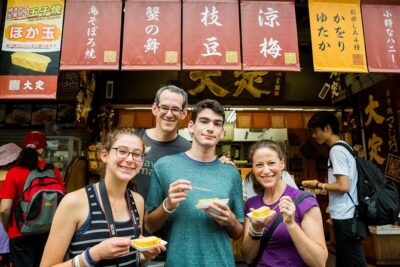
Tokyo Tsukiji Fish Market Food and Culture Walking Tour
Read our review →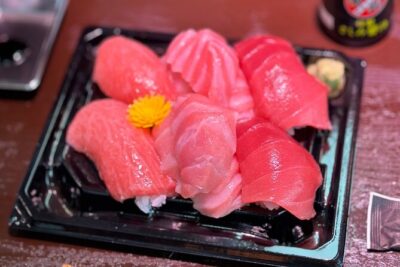
Senkyaku Banrai Toyosu Manyo Club Onsen Experience in Tokyo
Read our review →
Nishiki Market Brunch Walking Tour (7 Tastings + Brunch)
Read our review →
Tokyo Sushi Making Class in Tsukiji with Professional Chef
Read our review →
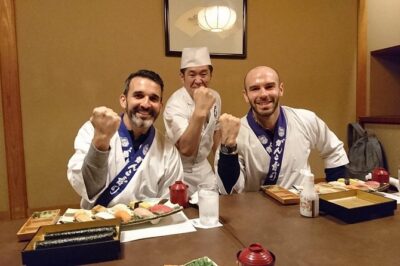
Tsukiji Fish Market Guided Tour and Sushi Making with Pro Chef
Read our review →Browse the lists this tour appears in