Reviewed · TOKYO TOURS
Calligraphy Culture SHODO Experience in Tokyo
Brush, ink, and a little patience go far. This 90-minute shodo class gives you a friendly introduction to Japanese calligraphy, from holding the brush and sitting correctly to writing your name or favorite word in Japanese. I like the small groups, limited to five people, and the chance to leave with your own finished work on a calligraphy board.
I also like the easy location, only a five-minute walk from Iriya Station and close to Asakusa and Ueno. Teachers such as Sachie and Zuisen have earned praise for their patience, clear English, and warm teaching style. The main thing to consider is the setting: the class takes place in a hostel space, and one attendee found shared kitchen activity distracting.
In This Review
- Key Points To Know Before You Book
- What This Tokyo Shodo Class Really Offers
- Arriving At Tokyo Iriya Shodo Club
- The First Lesson: Posture, Brush Grip, and Basic Lines
- Practicing Hiragana, Katakana, and Kanji
- Choosing A Name Or Favorite Word
- Making The Final Calligraphy Board
- Why The Small Group Size Matters
- The Teachers Make The Difference
- What The $33.03 Price Gets You
- Fitting The Class Into A Tokyo Day
- Who Will Like This Experience Most
- Cancellation And Practical Booking Notes
- Should You Book The Tokyo Shodo Experience?
- FAQ
- Where does the calligraphy experience take place?
- How long does the activity last?
- How many people can join the class?
- Is the class near public transportation?
- Can I write my name in Japanese?
- Are calligraphy supplies included?
- Can I take my calligraphy home?
- Does the activity end at the same place where it starts?
- Can I cancel for a full refund?
Key Points To Know Before You Book
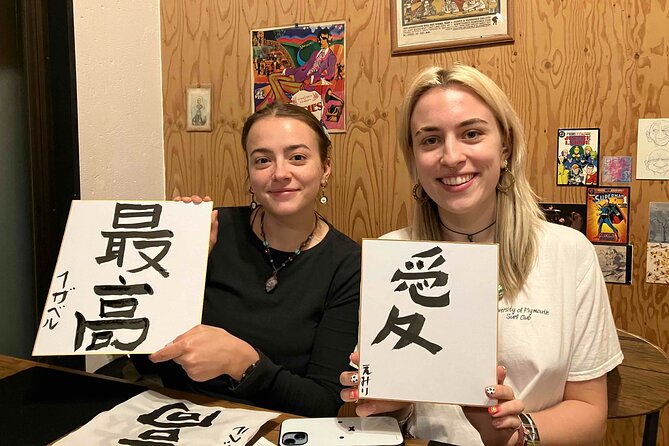
- Your final artwork becomes a compact souvenir: You write a name, favorite word, or chosen kanji on a board to take home.
- The class stays small: A maximum of five people allows for individual help and a relaxed pace.
- You learn more than brush strokes: The lesson covers posture, brush grip, basic lines, hiragana, katakana, and kanji.
- Iriya makes a useful base: The studio is about five minutes from Iriya Station, with Asakusa and Ueno nearby for extra sightseeing.
- English support is part of the appeal: Sachie and Zuisen are praised for patient instruction and strong English communication.
- The room is practical rather than polished: It operates in a hostel or boarding-house setting, which can feel local but may bring interruptions.
What This Tokyo Shodo Class Really Offers
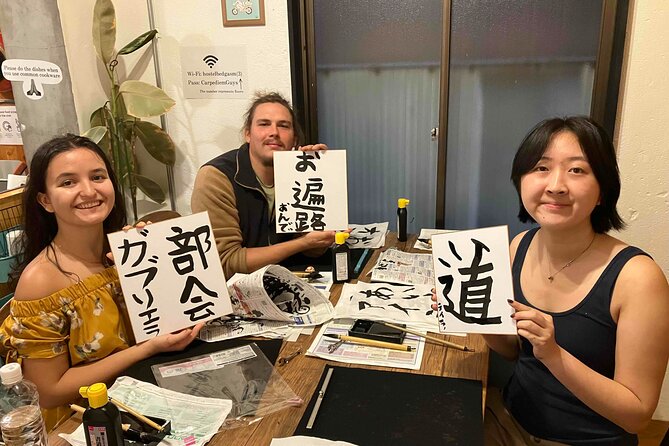
Japanese calligraphy, known as shodo, is not simply Japanese handwriting with a larger brush. The practice gives weight to posture, breathing, pressure, balance, and the order of each stroke. Even a simple character can look wrong if the brush starts too heavily or finishes without enough control.
That makes this class a good choice if you want more than a quick craft activity. In about an hour and a half, you get a short lesson in a traditional art, guided practice, and a finished piece to carry home. You will not become a calligrapher in one sitting, but you can understand why the art demands such care.
The format is aimed at foreign visitors, so the instruction begins with the basics rather than assuming you can read Japanese. You can work toward your name in Japanese or choose a favorite word in kanji. Some people have used katakana for their names, while others have taken on more difficult words, including a character combination for knitting.
That flexibility matters. You are not forced to copy one standard phrase. You can create something personal, though the complexity of your chosen word may affect how much practice time you have.
A few more options to weigh up in Tokyo
- Tokyo Disney Resort – Tokyo Disneyland & Tokyo DisneySea Park Tickets
★ 4.8 · 99,488 reviews - SHIBUYA SKY Ticket
★ 4.7 · 46,509 reviews - JR Whole Japan Rail Pass
★ 4.8 · 29,150 reviews
Arriving At Tokyo Iriya Shodo Club
The meeting point is Tokyo Iriya Shodo Club in Taito City, at 2-chome 29-2, on the second floor. The activity ends at the same place, so you do not need to figure out a second meeting point or arrange a separate return journey.
The club is about a five-minute walk from Iriya Station. That is useful in Tokyo, where a simple route can make a short activity much easier to fit into a busy day. The space is also near Asakusa and Ueno, so you can pair the class with sightseeing in Taito.
One practical detail deserves attention. The class may be held in a hostel or shared boarding-house area, and you may need to ask inside when you arrive. This gives the experience a lived-in, local feel rather than the atmosphere of a formal art school. It also means the room may not be silent or exclusively devoted to your group.
One attendee reported interruptions from people using the shared space for cooking and laundry. That appears to be a possible drawback rather than the usual focus of the class, but it is worth knowing if you want a highly polished studio environment.
The First Lesson: Posture, Brush Grip, and Basic Lines
The session starts with fundamentals. You learn how to hold the brush, how to position your body, and how to draw basic lines. These steps can feel simple, but they set up everything that follows.
The instructor’s job here is to help you control pressure and direction. A brush does not behave like a pen. The line changes according to how firmly you press, how quickly you move, and how you lift away from the paper. Your first attempts may look uneven, and that is part of the point.
The emphasis on posture is especially useful for beginners. It keeps you from treating the class as a quick handwriting exercise and helps you understand the calm, controlled quality associated with shodo. I like that the lesson begins with physical technique instead of rushing straight to a decorative final piece.
Teachers Sachie and Zuisen receive especially strong praise for patience and personal guidance. In a group of five or fewer, you can show your work and get corrections without waiting long. If you are the only person booked for your time, the lesson may become almost private.
Practicing Hiragana, Katakana, and Kanji
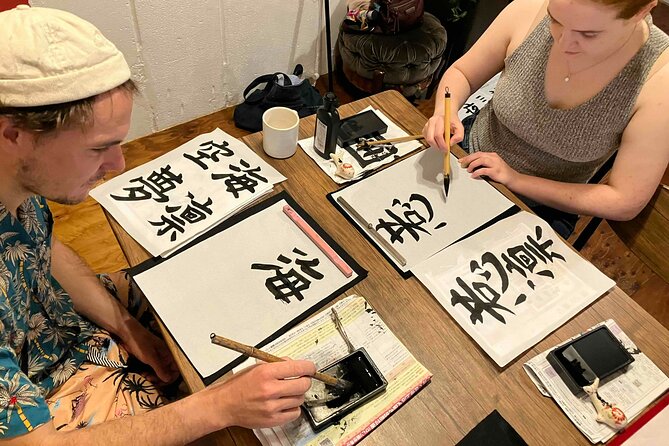
Once you have practiced lines and brush movement, the class introduces different Japanese writing systems. Hiragana and katakana are phonetic scripts, while kanji characters carry meanings and can require more complex brush work.
This is where the experience becomes more than a souvenir workshop. You begin to see that Japanese writing is not one single alphabet. Your name will often be written in katakana, while a favorite idea or word may be represented with kanji. The teacher can help you choose a form that works for the activity.
One useful detail from the class feedback is that a participant wrote a name in katakana calligraphy and found that Google Translate recognized it. That is a small but satisfying test of whether your characters are readable, and it shows the practical side of writing a foreign name in Japanese.
You will practice several shapes and words before moving to your final work. Do not expect every character to look perfect. The value lies in seeing how the pieces are built, then trying to make your own version with the brush.
If you select a complicated word, you may spend more time learning the character structure. That can be rewarding, but a simple word may give you a more polished souvenir by the end of the session.
A completely different kind of day out:
- Mt Fuji and Hakone 1-Day Bus Tour Return by Bullet Train
★ 5.0 · 26,383 reviews - TOKYO SKYTREE® Ticket
★ 4.7 · 25,136 reviews - teamLab Borderless Tickets: MORI Building DIGITAL ART MUSEUM
★ 4.7 · 24,126 reviews - teamLab Planets TOKYO Ticket
★ 4.7 · 21,663 reviews
Choosing A Name Or Favorite Word
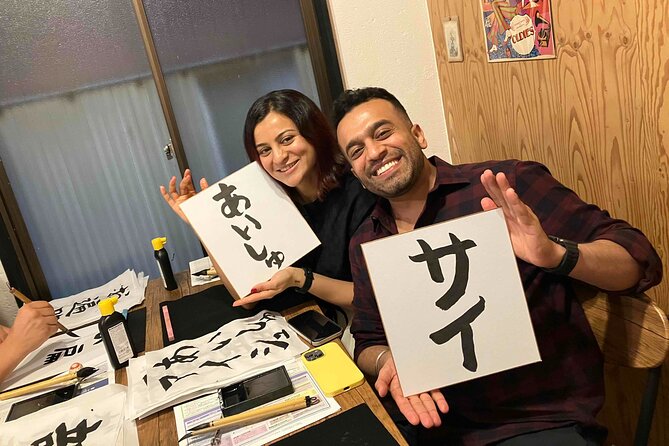
The personal choice is one of the best parts of this activity. You can write your name in Japanese, select a favorite word, or work with a kanji character that has meaning for you.
A name in katakana is a clear option for first-time students. It connects the class to your trip and gives you a piece of Japanese writing that is easy to explain when you show it to friends. A kanji word can look more traditional, though you should ask the teacher about the meaning before you settle on one.
The class gives you room to experiment. One participant chose knitting, which involves complicated characters, and still found the attempt worthwhile. That is a good reminder that the goal is not a perfect professional result. It is the experience of learning how the word is formed and putting your own hand to it.
I would decide on a short list of possible words before class, then let the teacher help you choose. The supplied information does not specify a fixed selection process, so having several ideas gives you flexibility without assuming the teacher can accommodate every phrase.
Making The Final Calligraphy Board
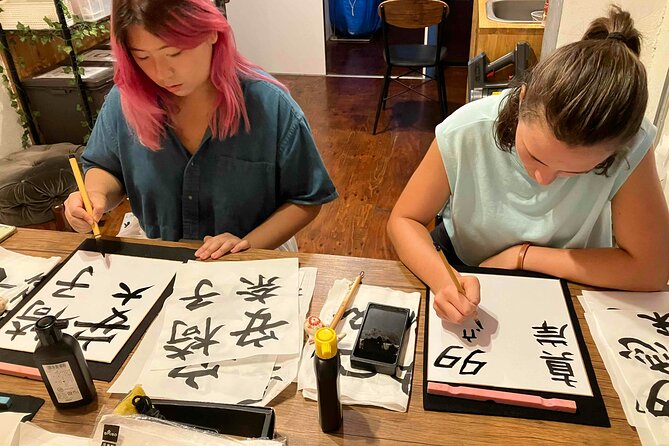
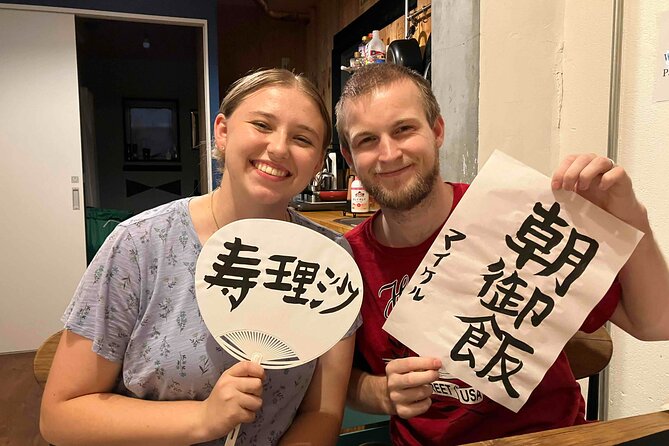
Toward the end, you choose one of your practiced words or names and write it on a nice calligraphy board or autograph board. This is the piece you take home.
The final board turns a temporary lesson into a physical memory. Unlike a mass-produced souvenir, it records your own brushwork, including the small imperfections that show it was made during your trip. You may not produce museum material, but you will have something personal and lightweight.
The teacher’s support matters most at this stage. After practice, you can focus on spacing, brush pressure, and the overall balance of the characters. The finished work may be simple, but it gives you a visible sense of progress from your first practice lines.
Calligraphy supplies are included, so you do not need to bring your own brush, ink, or paper. The activity also uses a mobile ticket, which is convenient for keeping the booking details on your phone.
Why The Small Group Size Matters
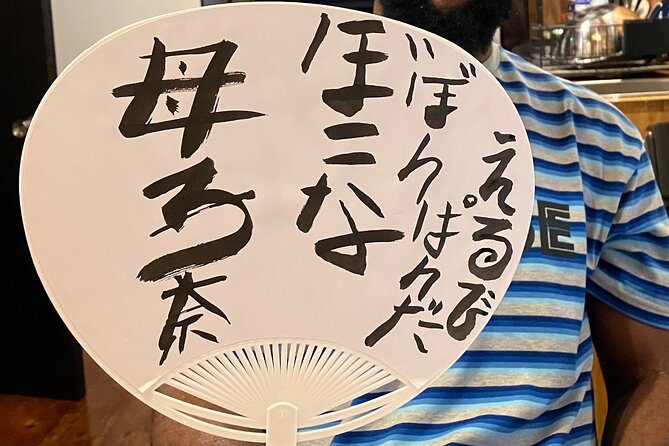
The maximum group size is five people. That is small enough to keep the lesson personal, especially when compared with large craft classes where an instructor has to demonstrate once and move on.
I like this format for beginners who may feel self-conscious about making mistakes. You can ask how to hold the brush again, request help with a character, or show the teacher a practice attempt without turning the class into a public performance.
The small size also suits families and couples. A family who took the class together particularly enjoyed Sachie’s engaging style. A group of four described the room as cozy and relaxed, with the atmosphere of an actual Japanese language school.
The trade-off is that the class may feel less formal than you expect. You are not entering a grand calligraphy hall. You are joining a compact lesson in a shared hostel setting, with the possibility of ordinary household activity nearby.
The Teachers Make The Difference
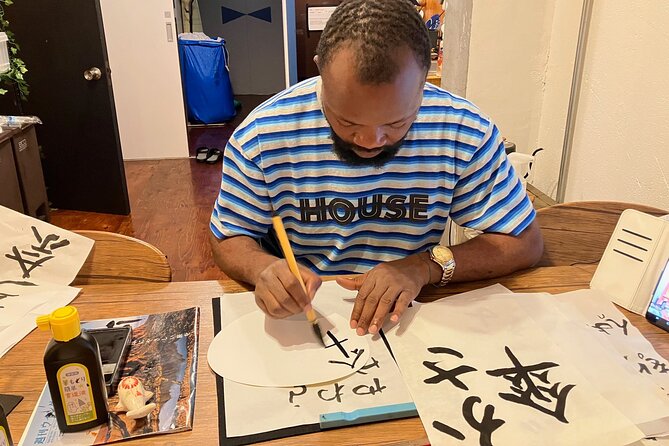
The most consistent strength of the experience is the teaching. Sachie is described as kind, helpful, talented, and patient. Zuisen is praised for strong English, clear instruction, and a genuine desire to share the art.
That combination is important because calligraphy can be frustrating when instructions are vague. A brush stroke that looks easy in a demonstration can be surprisingly difficult in your own hand. A patient teacher can explain the movement again, adjust your grip, and help you understand why a line went wrong.
The available information identifies both Sachie and Zuisen, but your specific instructor depends on the session. You should expect a personal teaching style rather than a scripted performance. That is a plus if you enjoy conversation and correction as you work.
The class also appears comfortable for people who do not think of themselves as artistic. One participant described being far from naturally artistic but still feeling encouraged by the teacher. You do not need drawing experience to participate.
What The $33.03 Price Gets You
At $33.03 per person, this is reasonably priced for a 90-minute small-group activity in Tokyo. The fee covers the calligraphy supplies and guided instruction, plus the board with your own final work.
The value is strongest if you care about participation rather than simply collecting a souvenir. You are paying for time with an instructor, repeated practice, help with Japanese writing, and a finished item that you made yourself.
It is less compelling if you only want a quick photo or a professionally perfect piece. This is a beginner lesson, and some of your practice sheets will look exactly like what they are: practice sheets. The final result depends on your patience, your chosen word, and the teacher’s help.
The small group cap improves the value. At five people or fewer, your fee supports a lesson with real individual attention rather than a brief demonstration in a crowded room.
Fitting The Class Into A Tokyo Day
The activity lasts about 1 hour and 30 minutes and returns you to the meeting point. Since it is close to Iriya Station, you can plan it as a compact stop in Taito City.
Asakusa and Ueno are nearby, making this area useful for a full day of sightseeing. You could schedule the calligraphy before or after exploring those districts, but leave enough time to find the second-floor meeting point and get settled.
The activity is near public transportation, which helps if you are staying elsewhere in Tokyo. The precise route depends on where you begin, so check your train connection and allow extra time for Tokyo’s large stations.
Because the session is short, it works well for families, first-time visitors, and anyone who wants a cultural activity without giving up half a day. It also fits travelers who need an indoor plan or a quieter break between major sights.
Who Will Like This Experience Most
I would recommend this class to you if you want to make something connected to Japan rather than buy another factory-made item. It is a good fit for people curious about the difference between hiragana, katakana, and kanji, even if they cannot read Japanese.
Families can enjoy the shared activity, and solo visitors may receive especially close instruction if the group is small. The lesson also suits adults who believe they are not artistic. The teachers focus on technique and encouragement, not on judging your natural talent.
You may want to choose another activity if you need a silent, formal studio or a carefully designed tourist venue. The hostel setting is part of the character, but shared use of the space can interrupt the lesson.
You should also be realistic about the finished work. Your board will be a personal souvenir, not a masterwork. That is precisely why it can be meaningful.
Cancellation And Practical Booking Notes
You receive confirmation at booking, and free cancellation is available until 24 hours before the experience begins. Canceling less than 24 hours before the start time does not qualify for a refund, and changes within that period are not accepted.
The cutoff uses Tokyo local time. Most people can participate, and the activity is near public transportation. The mobile ticket keeps the booking on your phone, while the small maximum group size makes advance planning sensible, particularly since the experience is commonly booked several weeks ahead.
Should You Book The Tokyo Shodo Experience?
I would book this if you want a friendly, hands-on cultural lesson with a personal souvenir at the end. The strongest reasons are the small group size, the patient teachers, the included supplies, and the chance to write something meaningful to you in Japanese.
The main caution is the setting. A shared hostel room can feel more local and informal, but it may not provide the calm of a dedicated studio. If that trade-off is acceptable, $33.03 buys a thoughtful 90-minute introduction rather than a rushed photo opportunity.
Choose a simple name or word if you want the best chance of a polished final board. Choose a more complex kanji phrase if learning the structure matters more than perfect presentation. Either way, this is a practical way to spend part of a Tokyo day near Iriya, Ueno, and Asakusa.
FAQ
Where does the calligraphy experience take place?
It takes place at Tokyo Iriya Shodo Club in Taito City, Tokyo, at Iriya 2-chome 29-2, on the second floor.
How long does the activity last?
The experience lasts approximately 1 hour and 30 minutes.
How many people can join the class?
The activity has a maximum of five participants.
Is the class near public transportation?
Yes. The meeting point is about a five-minute walk from Iriya Station and is near public transportation.
Can I write my name in Japanese?
Yes. You can try writing your name in Japanese, including katakana, or choose a favorite word in kanji.
Are calligraphy supplies included?
Yes. Calligraphy supplies are included in the activity price.
Can I take my calligraphy home?
Yes. At the end of the lesson, you can take home a calligraphy or autograph board featuring your own work.
Does the activity end at the same place where it starts?
Yes. The activity ends back at the Tokyo Iriya Shodo Club meeting point.
Can I cancel for a full refund?
Yes, if you cancel at least 24 hours before the experience start time. Cancellations or changes made less than 24 hours before the start time are not accepted for a refund.
Just added in Tokyo
- A One-of-a-Kind Sushi Experience in a Special Place of Japan★ 5.0 · 15 reviews
- Tokyo Cute Bento Cooking Class – Make a Kawaii Character Lunchbox★ 5.0 · 126 reviews
- Japanese Home Cooking Class & Walk in Todoroki Temple Tokyo★ 5.0 · 88 reviews
- Catch a Baseball Game in Tokyo with a Local – Tickets Included★ 5.0 · 24 reviews
- Japan Tokyo Tower Observatory Deck E-Ticket★ 4.0 · 34 reviews
- JDM Experience with Fast&Furious RX-7 (English speaking Driver)★ 5.0 · 57 reviews
- Tokyo Private Day Tour by Car with English speaking Driver Guide★ 4.0 · 29 reviews
- Japan Classic 10 Day – One Life Adventures★ 5.0 · 129 reviews
Tokyo Tours, compared.

Tokyo Disney Resort – Tokyo Disneyland & Tokyo DisneySea Park Tickets
Read our review →
Mt Fuji and Hakone 1-Day Bus Tour Return by Bullet Train
Read our review →

teamLab Borderless Tickets: MORI Building DIGITAL ART MUSEUM
Read our review →