
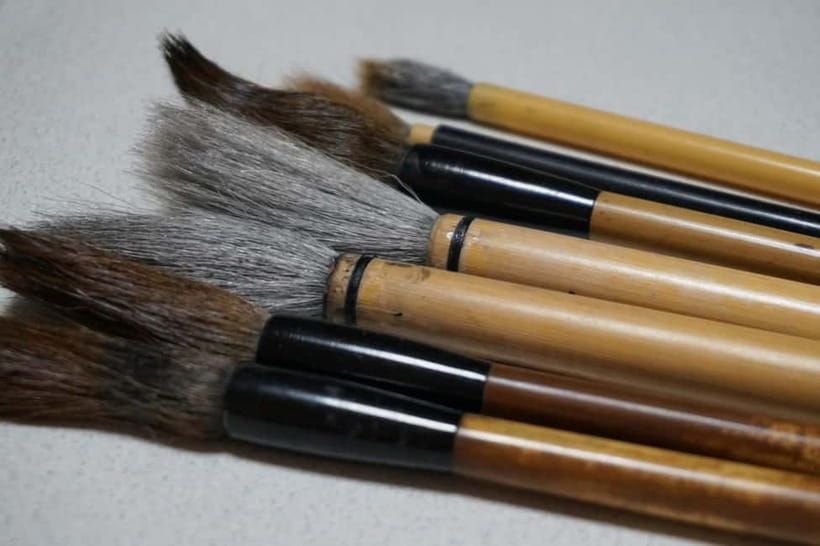
Reviewed · WORKSHOPS
Tokyo: Calligraphy Workshop Craft Your Own Art in Asakusa
Slow brush strokes can reset a busy Tokyo day. This 90-minute Asakusa workshop gives you a calm, hands-on introduction to Japanese calligraphy, led in English by the friendly instructor Mei. I like the generous practice time, which lets beginners work on stroke control before attempting a final piece, and I like that you can use both a traditional brush and a modern fude pen. The main consideration is that the experience is focused on learning and making one artwork, not touring Asakusa or seeing a formal calligraphy performance.
The class takes place at the Tokyo Tourist Lounge Asakusa, on the fifth floor of the building. It costs $38 per person, a fair price for a small group capped at 10 people, the materials, personal instruction, and a finished souvenir. If you want a quiet cultural activity with something tangible to take home, this is a strong choice.
In This Review
- Key Points to Know Before Booking
- Arriving at the Tokyo Tourist Lounge Asakusa
- The First Lesson: Brush Control and Stroke Order
- Traditional Brushes and the Modern Fude Pen
- Choosing Characters and Designing Your Artwork
- Mei’s Teaching Style and the Cultural Context
- How the 90 Minutes Usually Feels
- Why $38 Is Fair Value
- Who Will Enjoy This Asakusa Workshop
- Practical Tips for a Better Class
- Booking Flexibility and Access
- Should You Book This Calligraphy Class?
- FAQ
- Where does the calligraphy workshop take place?
- How long does the workshop last?
- How much does the workshop cost?
- Is the class taught in English?
- Do I need previous calligraphy experience?
- What will I learn during the class?
- Which tools will I use?
- Can I take home something I make?
- Is the workshop wheelchair accessible?
Key Points to Know Before Booking
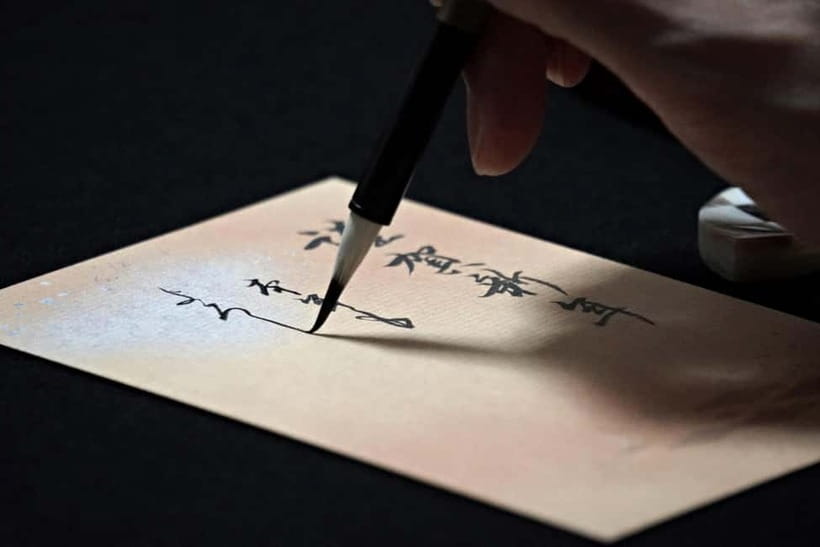
- Mei is the main reason this class works: She is patient, warm, and clear in English, with a talent for helping beginners feel at ease.
- You practice before making your final art: Time is set aside for brush control, stroke order, and repeated attempts.
- You use two types of tools: Traditional brushes offer the classic feel, while a fude pen gives you more control.
- You choose a personal finished piece: The artwork may be made on a scroll, fan, or hard-backed square.
- The group stays small: With no more than 10 participants, you should receive useful individual help.
- It fits well into an Asakusa day: The workshop lasts about 90 minutes to 1.5 hours and does not require previous experience.
Arriving at the Tokyo Tourist Lounge Asakusa
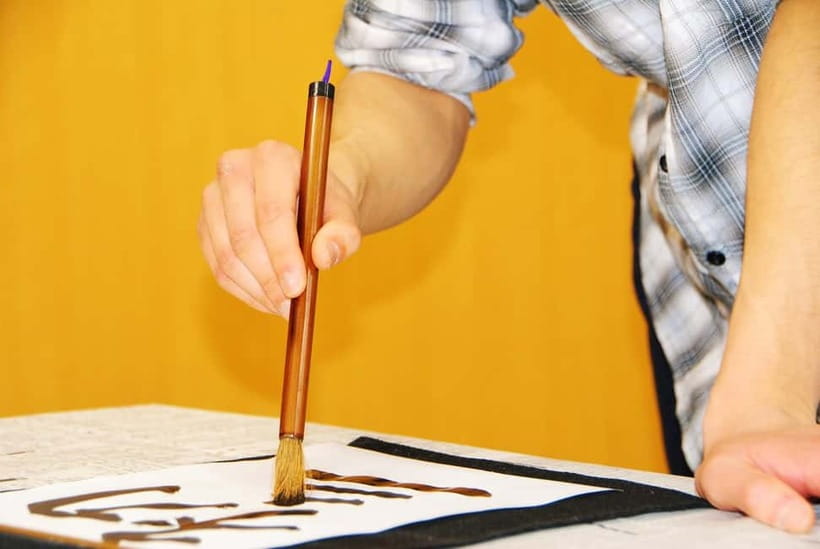
The meeting point is the Tokyo Tourist Lounge Asakusa, located on the fifth floor of its building. That detail matters in a busy district where a familiar name at street level does not always mean the class itself is on the ground floor. Give yourself enough time to find the building and reach the correct floor without rushing in with your coat and daypack still in hand.
Transportation to the workshop is not included, so you make your own way there. The activity is wheelchair accessible, which is useful for anyone checking practical access before booking.
The setting is designed for a workshop rather than a large tour group. The room and materials are prepared for hands-on work, and the group limit of 10 keeps the lesson personal. Several participants found the environment calm and easy to find, a welcome change from the noise and speed of central Tokyo.
A few more options to weigh up in Tokyo
- Tokyo Disney Resort – Tokyo Disneyland & Tokyo DisneySea Park Tickets
★ 4.8 · 99,488 reviews - SHIBUYA SKY Ticket
★ 4.7 · 46,509 reviews - JR Whole Japan Rail Pass
★ 4.8 · 29,150 reviews
The First Lesson: Brush Control and Stroke Order
You begin with the basics. That means learning how to hold and control the brush, how much ink to use, and how Japanese characters are built through a set order of strokes. These early exercises may look simple, but they are the heart of the lesson.
Calligraphy is not just about copying a character until it looks attractive. The direction, pressure, speed, and finish of each line all affect the result. A brush can create a thick line with pressure and a fine line with a lighter touch. Your hand has to learn that range before the final artwork begins.
This is where the class suits first-time learners particularly well. You do not need to recognize Japanese characters or arrive with artistic training. Mei introduces the history and cultural meaning of shodo, Japanese calligraphy, then breaks the physical technique into steps you can follow.
The practice sheets and writing templates are especially useful. They give you a clear model instead of leaving you to guess the proportions of each character. If your first attempts look uneven, that is normal. The point is to understand how the marks are made and gradually gain control.
One of the strongest features of the class is the teacher’s patience. Mei has been praised for giving repeated guidance without making slower learners feel embarrassed. She encourages you to try, corrects your technique, and helps you reach a final result that suits your skill level.
Traditional Brushes and the Modern Fude Pen
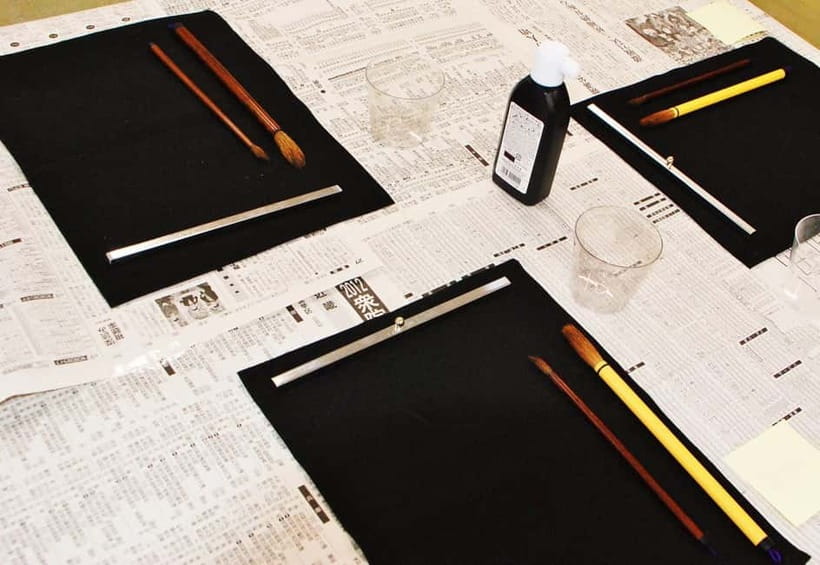
The workshop uses traditional calligraphy brushes, so you get the full physical experience of brush writing. The brush responds to every small change in your hand. That makes it expressive, but it also means it can feel less predictable at first.
You also work with a modern fude pen, or brush pen. This tool offers more precision and may feel easier if you are new to brush writing. It still gives you a brush-like line, but with a more controlled tip.
I like this two-tool approach because it avoids treating tradition as a museum piece. You can appreciate the classic method while also seeing why a modern tool is useful for practice. The fude pen is not a shortcut that replaces the brush. It is another way to understand line quality and character shape.
For a child or an adult who worries about making a mess, the pen may provide a little confidence. For someone who wants the most traditional feel, the brush remains the more memorable part. You do not have to arrive knowing which one you will prefer.
Choosing Characters and Designing Your Artwork
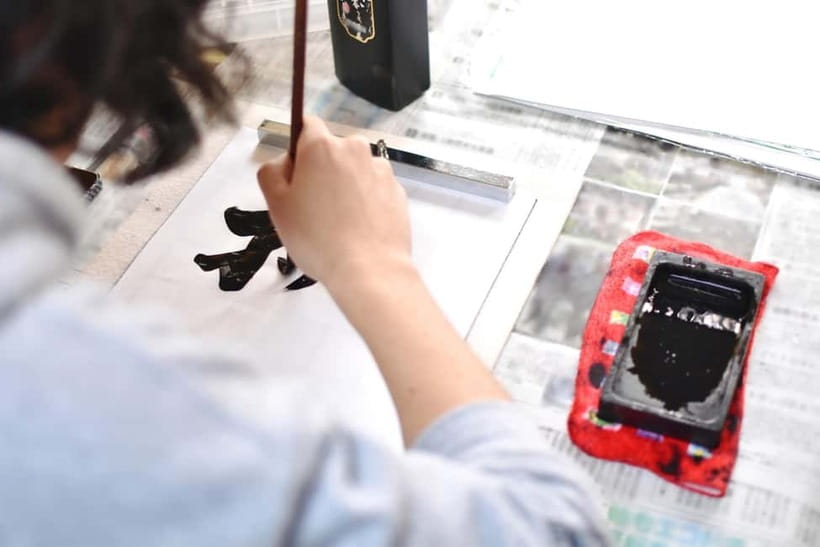
Once you have practiced the basic movements, you can write characters of your choice. This gives the activity a personal touch. Instead of taking home a generic class exercise, you create something connected to your own interests, intentions, or memories of Japan.
The exact character choice is important. If you already have a Japanese word in mind, you can use it as the basis for your art. If you do not, the instructor can help you work with the available writing templates and choose something appropriate for your final piece.
You then produce a finished artwork on a selected format. Examples include a scroll, a fan, or a hard-backed square. These options give the final stage a more finished appearance than a loose practice sheet.
Do not expect museum-quality calligraphy after one short class. That would miss the point. Your artwork records what you learned and the effort you put into it. The best result is not necessarily the most technically perfect one. It is the piece you are happy to display because you remember making it.
This is also where the class offers better value than a simple demonstration. You are not only watching an instructor write a beautiful character. You are learning enough technique to create your own version and take it home.
A completely different kind of day out:
- Mt Fuji and Hakone 1-Day Bus Tour Return by Bullet Train
★ 5.0 · 26,383 reviews - TOKYO SKYTREE® Ticket
★ 4.7 · 25,136 reviews - teamLab Borderless Tickets: MORI Building DIGITAL ART MUSEUM
★ 4.7 · 24,126 reviews - teamLab Planets TOKYO Ticket
★ 4.7 · 21,663 reviews
Mei’s Teaching Style and the Cultural Context
Mei receives the strongest praise for her manner in class. She is described as kind, gentle, friendly, and highly patient. Those qualities matter in calligraphy because the activity can feel intimidating at first. A strict or rushed instructor could turn a peaceful lesson into a test.
Instead, Mei explains the strokes clearly and gives people time to practice. She also talks about the development and importance of Japanese calligraphy, connecting the hand movements to Japanese culture rather than treating them as mere decoration.
Several people found the session calming and almost meditative. That does not mean you should expect a formal meditation class. The quiet concentration comes from slowing down, repeating a movement, and paying attention to the brush. It can feel refreshing after a day spent crossing streets, shopping, and keeping up with Tokyo’s quick pace.
Her English is described as excellent, which removes one of the main worries people can have about a craft lesson abroad. You can ask questions, receive corrections, and understand the cultural explanation without relying only on demonstration.
The class also welcomes different skill levels. An artist may appreciate the details of line and form, while a complete beginner can simply learn how to hold the brush and follow the templates. Mei adjusts her help to the person in front of her.
How the 90 Minutes Usually Feels
The advertised duration is 90 minutes, with the general description allowing about 1 to 1.5 hours. That is enough time for an introduction, practice, creative work, and a final piece without taking over your day in Tokyo.
A likely flow looks like this:
- Introduction to Japanese calligraphy and its cultural background
- Practice with brush control and basic strokes
- Guidance on stroke order and character form
- Work with traditional brushes and a fude pen
- Selection of a character and artwork format
- Creation of your finished piece to take home
The exact pacing can depend on the group. A larger group may require a little more waiting between individual corrections, although the 10-person limit keeps that manageable. One session was described as lasting about two hours, so I would avoid scheduling a tight appointment immediately afterward.
That extra time may be useful if you want careful help with the final piece. Still, you should book it as a compact workshop rather than assuming it will fill half a day. The activity is short enough to combine with other Asakusa plans.
Why $38 Is Fair Value
At $38, this workshop sits in a comfortable middle ground for a Tokyo cultural activity. You are paying for an instructor-led lesson, the use of materials, access to both brush types, and a finished artwork that you can carry home.
The value improves if you care about personal instruction. A mass-market souvenir can cost money without giving you any connection to how it was made. Here, the object comes with a story: you practiced the strokes, chose the character, and made the final piece yourself.
The small-group limit also matters. With up to 10 participants, Mei can move around the room, answer questions, and help adjust your technique. It is not private instruction, so you should not expect uninterrupted attention. But it is much more personal than a large demonstration.
The price does not include transportation, so you need to account for getting to Asakusa. It also does not promise a professionally mounted artwork beyond the formats provided in class. If you want a polished framed piece, you may need to arrange that later. For a hands-on cultural lesson and a meaningful souvenir, the cost is reasonable.
Who Will Enjoy This Asakusa Workshop
I would recommend this class to adults, children, couples, friends, solo visitors, and families looking for an activity that does not depend on good weather. One person found it an excellent option on a rainy Tokyo day, and that is a practical advantage.
It is especially good for:
- First-time visitors who want more than sightseeing photos
- People curious about Japanese writing and culture
- Beginners who feel nervous about artistic activities
- Artists who want to study brush movement and line control
- Families seeking an activity suitable for adults and children
- Anyone who wants a small, personal souvenir rather than a shop-bought item
You may want to skip it if your main goal is a fast-paced tour of Asakusa or a formal performance by a master calligrapher. This is a participation class. You will spend much of the time holding a brush, practicing, and making mistakes.
It is also not ideal if you have only a few hours in Tokyo and cannot spare at least 90 minutes plus local transportation. The workshop has a calm rhythm, so it rewards people willing to slow down.
Practical Tips for a Better Class
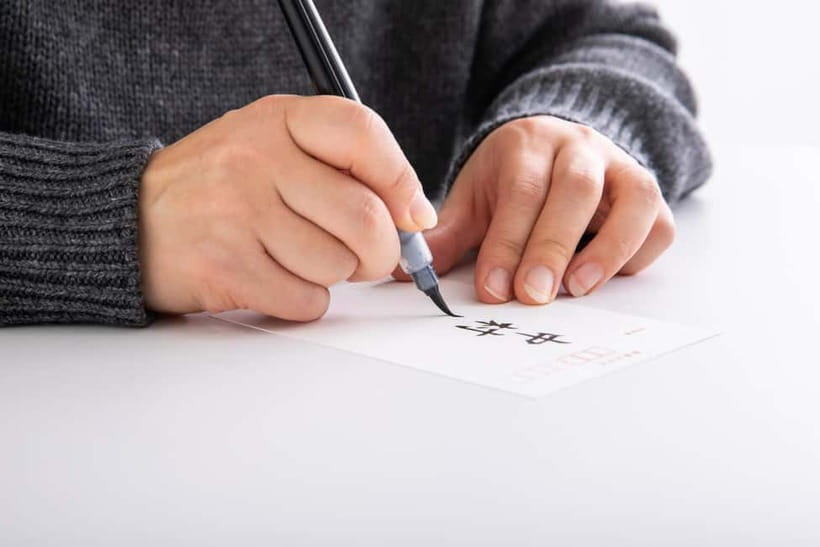
Arrive ready to practice, not just to pose for photographs. Your first strokes may be clumsy, and that is part of the lesson. The templates and repeated exercises are there to help you improve before you make the final artwork.
Think ahead about what kind of character or theme you might like to create. You do not need to prepare a Japanese word in advance, but having an idea can make the creative portion more satisfying.
Wear something you can relax in and pay attention to during brush work. The activity involves ink and careful hand movements, so a calm approach is more useful than trying to finish quickly.
If you are traveling with friends, remember that each person’s final work may look different. That is a feature, not a problem. Mei helps match the finished piece to each person’s ability, so a beginner does not have to imitate an experienced artist.
I would also leave some room in your schedule after class. The official duration is 90 minutes, but some sessions may run longer when the group is enjoying the practice or receiving extra help.
Booking Flexibility and Access
You can cancel up to 24 hours before the activity for a full refund. The reserve-now-and-pay-later option lets you hold a place without paying immediately, which is useful when your Tokyo schedule is still changing.
The instructor teaches in English. No previous calligraphy experience is required, and the workshop is suitable for beginners. The venue is wheelchair accessible, and the group is limited to 10 participants.
Check the available starting times before booking, since the schedule can determine how easily you fit the class around temples, shopping, meals, or other plans in Asakusa.
Should You Book This Calligraphy Class?
Book it if you want a quiet, personal way to connect with Japanese culture and you like the idea of making something yourself. Mei’s patient teaching, the practice time, and the choice between brush and fude pen make this more than a quick souvenir activity.
At $38, it offers good value for a small group and a finished artwork. Just keep your expectations realistic: you are learning the foundations of calligraphy, not becoming an expert in one afternoon. If that sounds right for you, this is an easy activity to recommend, especially on a rainy day or after a busy morning in Tokyo.
FAQ
Where does the calligraphy workshop take place?
The workshop meets at Tokyo Tourist Lounge Asakusa, located on the fifth floor of the building.
How long does the workshop last?
The stated duration is 90 minutes. The activity description also gives a general duration of 1 to 1.5 hours.
How much does the workshop cost?
The price is $38 per person.
Is the class taught in English?
Yes. The instructor teaches in English.
Do I need previous calligraphy experience?
No. The workshop is suitable for beginners, and no prior experience is required.
What will I learn during the class?
You will practice brush control, stroke order, and basic Japanese calligraphy techniques. You will also learn about the history and cultural importance of the craft.
Which tools will I use?
You will use traditional calligraphy brushes and a modern fude pen, also called a brush pen.
Can I take home something I make?
Yes. You create a personal calligraphy artwork to take home. The finished work may be made on a scroll, fan, or hard-backed square.
Is the workshop wheelchair accessible?
Yes. The activity is wheelchair accessible.
Just added in Tokyo
- A One-of-a-Kind Sushi Experience in a Special Place of Japan★ 5.0 · 15 reviews
- Tokyo Cute Bento Cooking Class – Make a Kawaii Character Lunchbox★ 5.0 · 126 reviews
- Japanese Home Cooking Class & Walk in Todoroki Temple Tokyo★ 5.0 · 88 reviews
- Japan Tokyo Tower Observatory Deck E-Ticket★ 4.0 · 34 reviews
- Catch a Baseball Game in Tokyo with a Local – Tickets Included★ 5.0 · 24 reviews
- JDM Experience with Fast&Furious RX-7 (English speaking Driver)★ 5.0 · 57 reviews
- Tokyo Private Day Tour by Car with English speaking Driver Guide★ 4.0 · 29 reviews
- Japan Classic 10 Day – One Life Adventures★ 5.0 · 129 reviews
Workshops, compared.
Sushi Making Tokyo Roll and Authentic Japanese Sushi Class
Read our review →
Gion Make Your Own Chopsticks with Engraving Option
Read our review →
Roll and Authentic Sushi Making Class in Asakusa
Read our review →
Ramen Cooking Class at Ramen Factory in Kyoto
Read our review →
Tokyo Asakusa Chopsticks Workshop: Make Your Own Pair
Read our review →
Ring Making Workshop : Vintage Japanese Coin Ring
Read our review →Browse the lists this tour appears in