
Reviewed · WORKSHOPS
Calligraphy Workshop at Traditional Folk Craft Shop in Hiroshima
Let the brush slow your day. This 45-minute Hiroshima workshop pairs hands-on calligraphy with the atmosphere of Takumi, a 50-year-old folk craft shop decorated with ukiyo-e prints. I especially like the use of handmade brushes from Kumano, Hiroshima’s famous brush-making town, and the gentle guidance from award-winning instructor Sensai Ryosei. The main consideration is the short session, which gives you a meaningful introduction but not enough time for advanced study.
The central Hiroshima location makes this easy to fit between sightseeing stops. You can walk here in about five minutes from the Atomic Bomb Dome or three minutes from Hiroden Hondori Station. At $32.81 per person, the price is fair for a private activity with all materials, instruction, and a handmade souvenir included, though you should confirm whether your session uses the fan or shikishi board as the final artwork.
In This Review
- Key points before you book
- Why this Hiroshima calligraphy workshop is worth your time
- Finding Takumi near the Atomic Bomb Dome
- Meeting the tools from Kumano
- From dots and lines to hiragana and kanji
- Creating your fan or shikishi artwork
- The atmosphere inside a 50-year-old folk craft shop
- Is $32.81 good value?
- Who will enjoy this activity most?
- Timing this around your Hiroshima sightseeing
- What the strongest praise tells you
- Should you book the Hiroshima calligraphy workshop?
- FAQ
- Where does the calligraphy workshop take place?
- How long does the experience last?
- How much does the workshop cost?
- Is the activity suitable for beginners?
- What calligraphy tools are provided?
- What will I create during the workshop?
- Can I take my artwork home?
- Who teaches the workshop?
- Is photography available during the activity?
- Is the workshop private?
- How close is the workshop to the Atomic Bomb Dome?
- How close is it to public transportation?
Key points before you book
- Practice with Kumano brushes: Use handmade tools from Hiroshima’s best-known brush-making town.
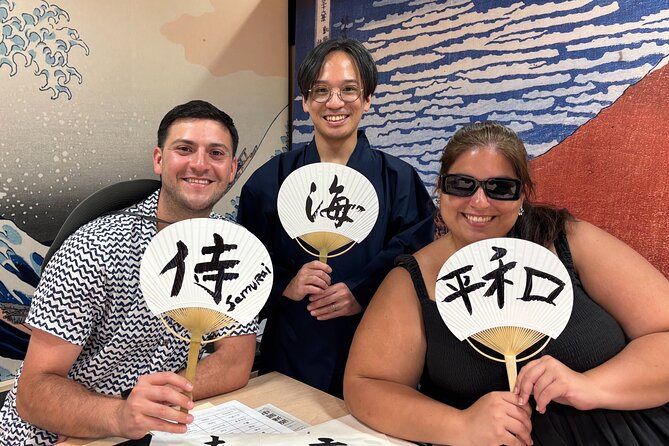
- Write a personal souvenir: Create calligraphy on a traditional Japanese hand fan or shikishi board.
- Learn with Sensai Ryosei: The instructor is praised for a patient, calm teaching style.
- Enjoy Takumi’s folk-craft setting: The workshop takes place in a 50-year-old shop with an ukiyo-e decorated wall.
- Fit it into a Hiroshima day: The shop is five minutes from the Atomic Bomb Dome and three minutes from Hiroden Hondori Station.
- Keep the timing in mind: The session lasts about 45 minutes, so it is ideal for a first taste rather than a long course.
Why this Hiroshima calligraphy workshop is worth your time
Hiroshima is often approached through its Peace Memorial sites, museums, and solemn history. Those places matter, but your visit can also benefit from a quieter activity. Sitting down with a brush gives you a chance to slow your pace and take part in a traditional Japanese practice rather than only looking at exhibits.
Calligraphy, or shodo, is more than decorative writing. The movement of the brush requires attention to pressure, direction, spacing, and rhythm. Even if your final character is not perfectly balanced, the process asks you to focus on one stroke at a time.
I like that this workshop does not require previous experience. You do not need to know kanji, own calligraphy tools, or prepare a phrase in advance. The instructor introduces the tools, demonstrates basic strokes, and helps you work toward a finished piece.
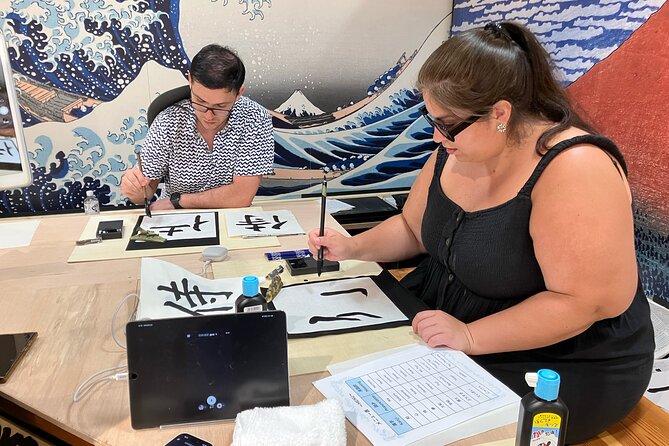
The setting also adds something important. Takumi is not a modern classroom or a hotel meeting room. It is a traditional folk craft shop that has been operating for about 50 years, with Japanese crafts from across the country and a wall decorated with ukiyo-e prints. You get a short lesson in a working craft space, then have time to look around before or after the activity.
A few more options to weigh up in Hiroshima
- Peaceful Hiroshima & Miyajima UNESCO 1 Day Bus Tour
★ 5.0 · 5,309 reviews - Hiroshima Peace Memorial Museum Ticket
★ 4.8 · 2,727 reviews - Hiroshima: Hiroshima and Miyajima UNESCO Sites 1-Day Tour
★ 4.9 · 2,330 reviews
Finding Takumi near the Atomic Bomb Dome
The meeting point is Bonkogei Takumi at 2-chome-2-18 Kamiyacho, Naka Ward, Hiroshima. The shop is on the fifth floor of Sanmall Mall. A useful landmark is UNIQLO on the second floor, which can help you orient yourself inside the building.
The location is one of the strongest practical features. From the Atomic Bomb Dome, the walk takes about five minutes. From Hiroden Hondori Station, it takes about three minutes, so you can reach the workshop by Hiroshima’s streetcar system without arranging a private transfer.
That makes this a sensible activity for a day built around central Hiroshima. You might visit the Peace Memorial Park, walk through the shopping streets, and then stop at Takumi for a calm change of pace. Since the workshop ends back at the meeting point, you can continue exploring the city immediately afterward.
The shop is near public transportation, but parking fees and private transportation are not included. If you are driving, treat parking as a separate cost and plan for it before arrival.
Meeting the tools from Kumano
The workshop begins with an introduction to the main calligraphy tools. You will work with a brush, ink, and paper, and all materials are supplied. That is good news for anyone packing light, since you do not need to bring equipment or protective supplies.
The brushes come from Kumano, a town in Hiroshima known as Japan’s leading brush-making area. This detail gives the session a stronger local connection. You are not using a random souvenir-shop brush. You are handling a traditional tool made in the same prefecture you are visiting.
A calligraphy brush does not behave like a ballpoint pen. The pressure of your hand changes the width and character of each mark. The instructor’s opening explanation helps you understand that the tool is part of the art, not just a way to put ink on paper.
You should arrive ready to follow directions rather than trying to produce perfect writing immediately. The point is not to copy a printed character with mechanical accuracy. It is to learn how basic movements create the shape and energy of the writing.
From dots and lines to hiragana and kanji
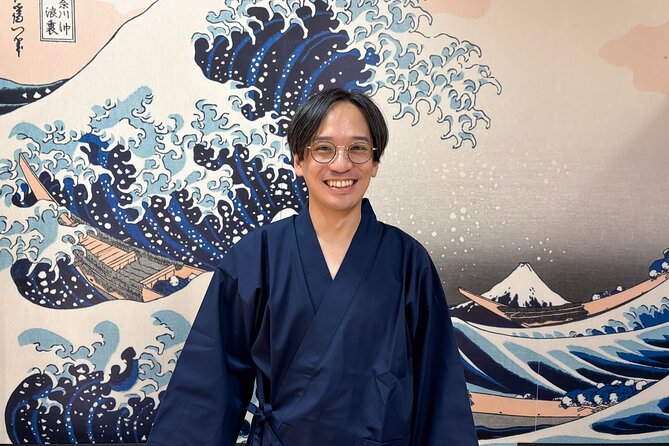
After the introduction, you practice basic strokes. These include dots, lines, and sweeping movements. This stage matters because Japanese calligraphy is built from controlled brush movements, and even a simple character can look very different depending on how the stroke begins and ends.
The sequence is friendly to first-timers. You start with small actions, then try writing hiragana and kanji. Hiragana offers flowing, rounded forms, while kanji can feel more structured and bold. You do not need to arrive with a favorite character, since you can choose a word during the session with guidance.
Sensai Ryosei leads the activity with a calm, patient approach. That quality is especially useful for beginners, because calligraphy can feel intimidating when you first see an experienced artist move quickly. Clear step-by-step teaching gives you room to make mistakes without turning the lesson into a test.
The workshop is also described as a form of meditation. You should not expect a formal meditation class, but the repeated strokes and quiet concentration can create that effect. For many people, the best part may be the change in pace after a morning of sightseeing.
A completely different kind of day out:
- Hiroshima Peace Memorial Museum Admission
★ 4.6 · 1,308 reviews - Hiroshima / Miyajima Full-day Private Tour with Government Licensed Guide
★ 5.0 · 1,298 reviews - Hiroshima Historical Walking Tour – Why A-Bomb was Dropped
★ 4.8 · 893 reviews - Hiroshima Peace (Heiwa) Walking Tour at World Heritage Sites
★ 5.0 · 872 reviews
Creating your fan or shikishi artwork
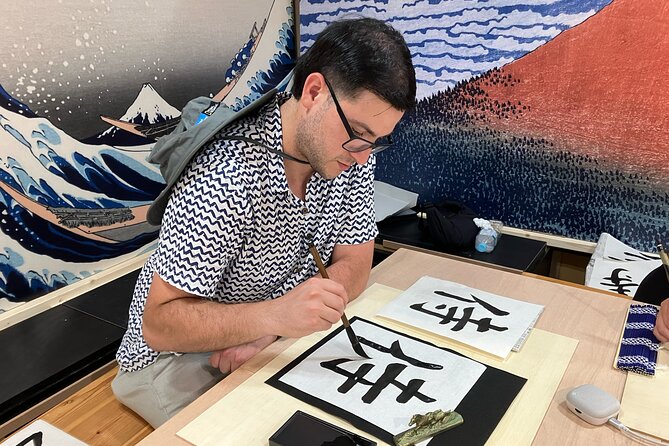
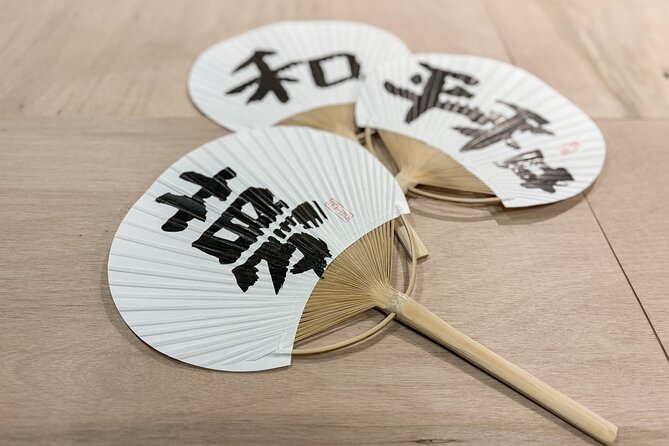
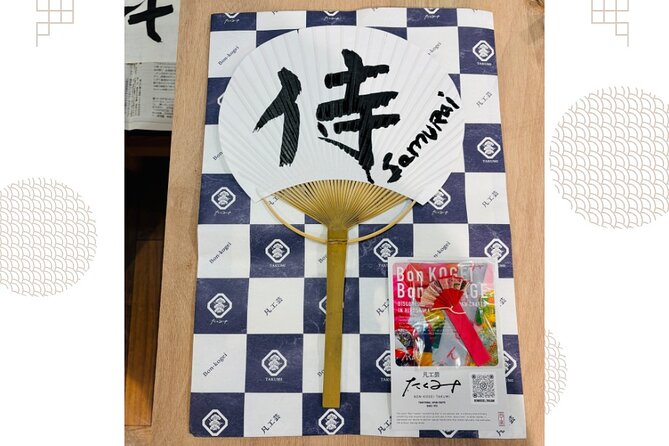
The final stage is your own calligraphy artwork. You choose a word and write it on either a traditional Japanese hand fan, called an uchiwa, or a calligraphy board known as a shikishi.
The fan is the more distinctive souvenir. It is light, easy to pack, and immediately recognizable as a Japanese craft item. A shikishi board offers a more formal surface for display and may suit you if you want something that looks like a small piece of wall art.
The available information describes the experience as including an original calligraphy fan souvenir, while the workshop outline also gives you the choice of a fan or shikishi. Because of that slight difference, ask at the start which surface is available for your booking. Either way, you leave with something you made yourself, not a mass-produced item selected from a shelf.
Choosing a word can be part of the fun. You might select a concept linked to your trip, a personal value, or a Japanese character you simply like. If you do not know enough Japanese to choose confidently, the instructor can help you work through the writing process.
Do not judge the result only by neatness. The value of the souvenir is that it records a short moment of concentration in Hiroshima. The brush marks will show your hand, your confidence, and perhaps a few perfectly understandable beginner wobbles.
The atmosphere inside a 50-year-old folk craft shop
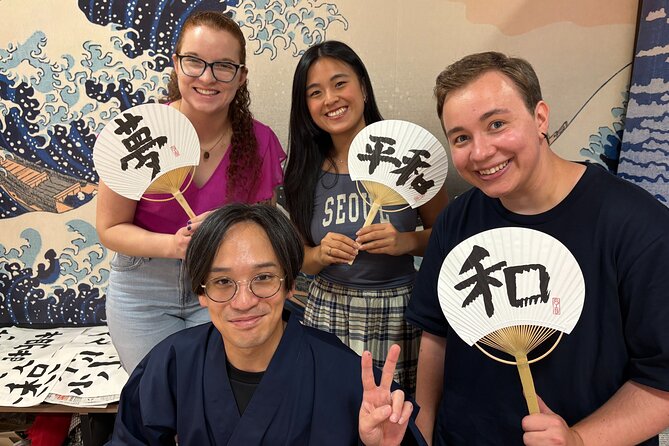
Takumi gives the activity a sense of place. The shop is known as one of Hiroshima’s leading craft stores and carries traditional items from different parts of Japan. Even if your main reason for entering is the workshop, the wider shop helps connect calligraphy with Japan’s broader craft culture.
The ukiyo-e prints on one wall create an artistic backdrop for the lesson. They also make the space useful for photographs, especially if you want a record of yourself working with the brush. The optional photo service allows the staff to take pictures during the session and send them to you digitally at no extra charge.
That photo service is a practical bonus. It means you can concentrate on the activity instead of asking a companion to document every step. If you are visiting alone, it is particularly useful.
The space may not suit you if you want a large, elaborate studio with plenty of time for independent practice. The workshop takes place within a retail craft setting, and the full activity lasts about 45 minutes. For most first-timers, that short format is a strength. It keeps the experience easy to fit into a busy day, but it also limits how much technique you can cover.
Is $32.81 good value?
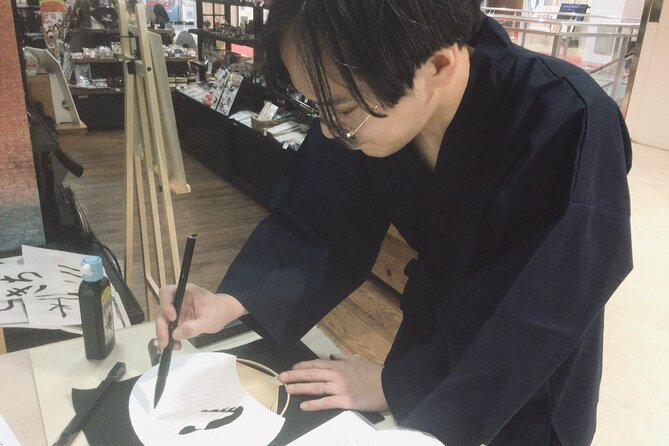
At $32.81 per person, this is a reasonably priced cultural activity in central Hiroshima. The cost covers the venue, calligraphy tools, instruction, and an original artwork to take home. You are paying for more than a short demonstration, since you actually practice the strokes and produce a finished souvenir.
The handmade brush connection improves the value. Kumano brushes are tied to the region, so the workshop gives you an experience connected to Hiroshima rather than a generic craft lesson that could take place anywhere.
The private format is another point to consider. Only your group participates, which can make the teaching more personal and reduce the pressure of working in front of strangers. It also means the experience may be a better choice for families, couples, or friends who want to share a quiet activity together.
The price is less attractive if you want a long technical course. Forty-five minutes is enough for an introduction, practice, and one final piece, but not enough for extensive study of brush control or Japanese characters. Think of it as a compact cultural experience with a keepsake, not a professional training session.
Who will enjoy this activity most?
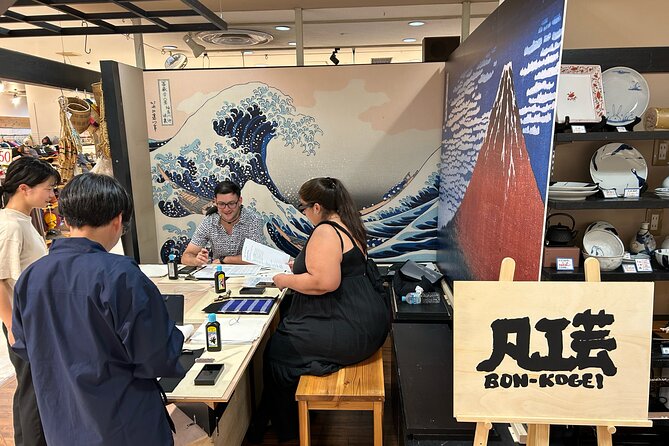
This workshop is a strong match for first-timers. You receive basic instruction from the start, and the format does not assume that you can read or write Japanese.
It also suits anyone interested in Japanese culture who wants to make something rather than only buy something. The finished fan or board carries a personal connection to your time in Hiroshima.
Families may appreciate the short duration and central location, though the supplied information does not give a minimum age. If you are booking for children, confirm age suitability before paying. The private format can be helpful for keeping the pace comfortable within your own group.
Couples and friends can use the activity as a quieter break from sightseeing. It is also a useful option on a rainy day because the lesson takes place indoors at the Sanmall Mall location.
You may want to skip it if your main goal is advanced calligraphy training, a long artistic session, or a broad tour of Hiroshima’s craft traditions. Takumi offers traditional items from across Japan, but the booked activity itself focuses on calligraphy rather than a full guided shop tour.
Timing this around your Hiroshima sightseeing
The 45-minute length makes planning simple. Place it before or after a visit to the Atomic Bomb Dome, since the walk from there is about five minutes. You can also connect it with a ride on the Hiroden network, using Hondori Station as your nearby stop.
Allow enough time to find the fifth-floor shop inside Sanmall Mall. The UNIQLO location on the second floor is a useful internal reference, but you should still check the building layout when you arrive.
The activity starts and ends at Takumi. There is no private transportation included, and the experience does not take you to additional city sites. That is not a weakness if you want control of your day. You can arrange the workshop around your own museum, park, shopping, and food plans.
A mobile ticket makes entry convenient. Confirmation is sent within 48 hours of booking, subject to availability, so you should not assume the reservation is final until you receive that confirmation.
Free cancellation is available if you cancel at least 24 hours before the local start time. Changes or cancellations inside that window are not accepted for a refund, so check your sightseeing schedule before booking.
What the strongest praise tells you
The most highly praised part of this activity is the teaching. Sensai Ryosei is described as patient and calm, with a teaching method that makes the workshop easy to follow. That is exactly what you want in a hands-on art lesson, especially when the writing system is unfamiliar.
The second major strength is the meditative quality. The workshop gives you a quiet, focused hour in the middle of a city visit. It may become one of the more memorable parts of your Japan itinerary precisely because it asks you to slow down.
The location also earns practical credit. Being on the top floor of a central shopping center makes the activity easy to reach, and the nearby Atomic Bomb Dome gives you a clear landmark.
The only clear limitation is the brief format. You will get a well-organized introduction and a personal artwork, but you should not expect a deep technical course. Go in with the right goal and the session delivers good value.
Should you book the Hiroshima calligraphy workshop?
Book this activity if you want a calm, beginner-friendly way to connect with Japanese culture in central Hiroshima. The Kumano brush, ukiyo-e setting, patient instruction from Sensai Ryosei, and handmade souvenir give the 45 minutes real substance.
I would especially recommend it for first-time calligraphy students, people looking for a thoughtful souvenir, and anyone who wants a quieter activity after visiting the city’s Peace Memorial sites. The $32.81 price is fair because materials, instruction, the private session, venue, and final artwork are included.
Before you confirm, check the available final surface, fan or shikishi, and make sure the timing fits your day. If you want advanced practice, this will feel short. If you want a peaceful, accessible introduction with something personal to take home, it is an easy choice.
FAQ
Where does the calligraphy workshop take place?
It takes place at Bonkogei Takumi, located at 2-chome-2-18 Kamiyacho, Naka Ward, Hiroshima, on the fifth floor of Sanmall Mall.
How long does the experience last?
The workshop lasts approximately 45 minutes.
How much does the workshop cost?
The listed price is $32.81 per person.
Is the activity suitable for beginners?
Yes. The workshop includes step-by-step guidance and is designed for first-time participants.
What calligraphy tools are provided?
All needed materials are provided, including brushes, ink, and paper.
What will I create during the workshop?
You will create a calligraphy artwork using a word of your choice on either a traditional hand fan or a shikishi calligraphy board.
Can I take my artwork home?
Yes. An original calligraphy souvenir is included, described as a calligraphy fan in the included features.
Who teaches the workshop?
The session is led by award-winning calligrapher Sensai Ryosei.
Is photography available during the activity?
Yes. The staff can take photos during the session and send them to you digitally at no additional charge.
Is the workshop private?
Yes. Only your group participates in the private activity.
How close is the workshop to the Atomic Bomb Dome?
The shop is about a five-minute walk from the Atomic Bomb Dome.
How close is it to public transportation?
It is about a three-minute walk from Hiroden Hondori Station and is located near public transportation.
Just added in Hiroshima
- Hiroshima Peace Memorial Museum Ticket★ 4.8 · 2,727 reviews
- Hiroshima Peace Memorial Museum Admission★ 4.6 · 1,308 reviews
- Private Full Day Hiroshima Tour★ 4.5 · 29 reviews
- The Peace Memorial to Miyajima : Icons of Peace and Beauty★ 4.5 · 31 reviews
- Shore Excursion from Hiroshima Port : Private Tour in Hiroshima★ 5.0 · 17 reviews
- Hiroshima & Miyajima All-Inclusive Tour w/Licensed guide Pancho★ 5.0 · 54 reviews
- Hiroshima Country Cycling: Explore Rural Life 1 HR from City★ 5.0 · 22 reviews
- Hiroshima Saijo Sake Tasting Tour with visit to 7 Breweries★ 5.0 · 104 reviews
Workshops, compared.
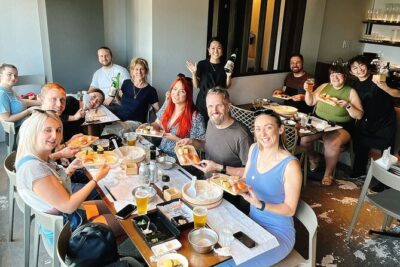
Sushi Making Tokyo Roll and Authentic Japanese Sushi Class
Read our review →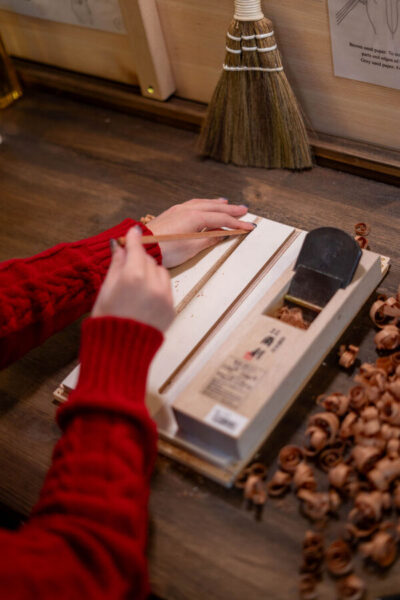
Gion Make Your Own Chopsticks with Engraving Option
Read our review →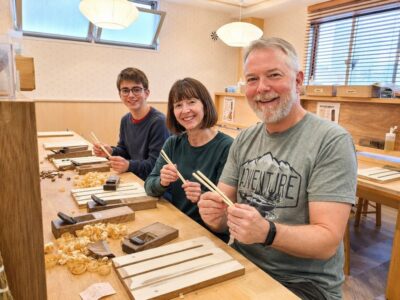
Roll and Authentic Sushi Making Class in Asakusa
Read our review →
Ramen Cooking Class at Ramen Factory in Kyoto
Read our review →
Tokyo Asakusa Chopsticks Workshop: Make Your Own Pair
Read our review →
Ring Making Workshop : Vintage Japanese Coin Ring
Read our review →Browse the lists this tour appears in