
Reviewed · MARKETS AND FOOD HALLS
Complete Tuna Auction & Toyosu Fish Market Tour
The fish market starts before sunrise. This Toyosu tour makes that early alarm worthwhile with front-row auction access and a guided walk through the market’s wholesale and food areas. I especially like the help with the observation-deck lottery and the reserved sushi breakfast, two details that can turn a confusing visit into a smooth one. The catch is simple: you must pay separately for the taxi and breakfast, and the 4:30 a.m. start is not for late sleepers.
Guide Fumi has more than 10 years of experience and brings handouts, food knowledge, and plenty of Tokyo context. I also like the small group size, which gives you room to ask questions. Just keep in mind that the best deck view depends on a lottery, so even a well-planned visit cannot guarantee that spot.
In This Review
- Key points at a glance
- Why Toyosu is worth an early morning
- Meeting Fumi at 4:30 a.m.
- Watching the tuna auction from 5:00 to 6:30
- Exploring the market after the auction
- The sushi breakfast around 7:00 to 9:00
- Fumi’s teaching style and local context
- Group size, privacy, and the pace
- Who will get the most from this tour
- Practical booking advice for Toyosu
- Should you book this Toyosu tuna auction tour?
- FAQ
- What time does the tour start?
- Is hotel pickup included?
- Is the sushi breakfast included in the price?
- Can I visit the observation deck?
- Where does the tour end?
- What happens if bad weather cancels the tour?
Key points at a glance
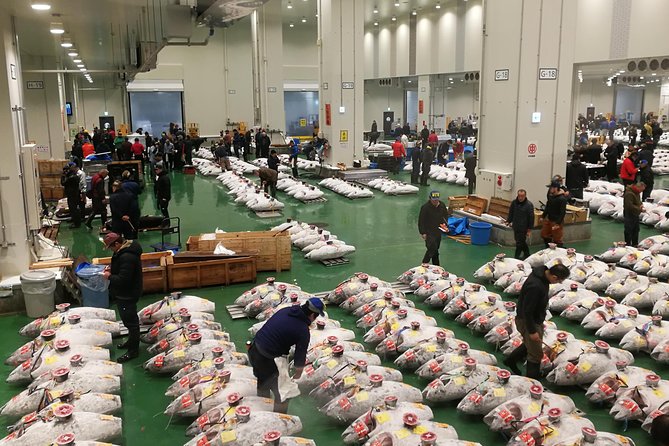
- See the tuna auction from 5:00 to 6:30 a.m.: Watch the inspection, bidding, and bluefin sales from public viewing areas, with a chance to apply for the observation deck lottery.
- Meet guide Fumi at your hotel around 4:30 a.m.: He helps arrange the taxi to Toyosu, though you reimburse the fare separately.
- Eat sushi without facing the market’s breakfast scramble: A restaurant reservation is included, but the meal itself is not.
- Go beyond the tuna floor: The tour covers seafood wholesale areas, specialty foods, knives, sake, miso, nori, pickles, sweets, and other Japanese ingredients.
- Expect a small group: The activity accepts up to 13 people, with arrangements described as up to two groups and a maximum of six guests in total, while groups of four or more become private tours.
- Plan for a long, early morning: The full experience lasts about four to five hours and ends near Shijo-mae Station around 9:00 a.m.
Why Toyosu is worth an early morning
Toyosu is not just a place to watch fish change hands. It is a working food center, and its tuna auction shows how Japanese seafood moves from the fishing industry to restaurants and, eventually, your sushi plate.
The auction begins at a serious hour. You meet your guide around 4:30 a.m., then make your way into the market before the main public activity gathers pace. That timing matters because the guide aims to enter at opening and secure a good viewing position.
Toyosu replaced Tokyo’s former Tsukiji wholesale market, and the move changed more than the address. The newer complex has organized wholesale halls, public viewing spaces, restaurants, and a neighboring retail area. Fumi uses this setting to explain the difference between the old and new markets, along with the role each part plays in Japan’s food system.
I like this approach because you are not simply pointed toward a window and left to guess what is happening. The auction moves fast, and the hand signals, inspections, bells, and bids can be hard to follow on your own. Fumi uses printed visual aids and comic-style handouts to explain the process, sushi etiquette, fish preparation, and Japanese food terms.
More Markets and Food Halls in Tokyo
- Tokyo Tsukiji Fish Market Food and Culture Walking Tour
★ 5.0 · 3,184 reviews - Tokyo: Tsukiji Fish Market Food and Walking tour
★ 5.0 · 1,724 reviews - Senkyaku Banrai Toyosu Manyo Club Onsen Experience in Tokyo
★ 4.7 · 1,690 reviews
Meeting Fumi at 4:30 a.m.
The tour offers hotel pickup, with the meeting time generally around 4:30 a.m. This is a useful service in Tokyo, where finding the right train or taxi before dawn can add needless stress.
The taxi ride is not included in the tour price. Fumi can arrange the cab, and you reimburse the fare. That arrangement received strong praise because it removes the hassle of making a pre-dawn transport plan, but you should budget for it separately.
The stated starting point is Toyosu Market at 6 Chome-6 Toyosu in Koto City. If you are staying in Ginza or another central Tokyo area, the taxi may be the most practical choice at that hour. The tour ends near Shijo-mae Station, so you can continue by train or have the guide help see you off by taxi.
The early start is the main physical demand. You need to be awake, dressed, and ready to follow a group through a working market before most Tokyo attractions open. If you are fine with that, the schedule gives you a full morning afterward.
Watching the tuna auction from 5:00 to 6:30
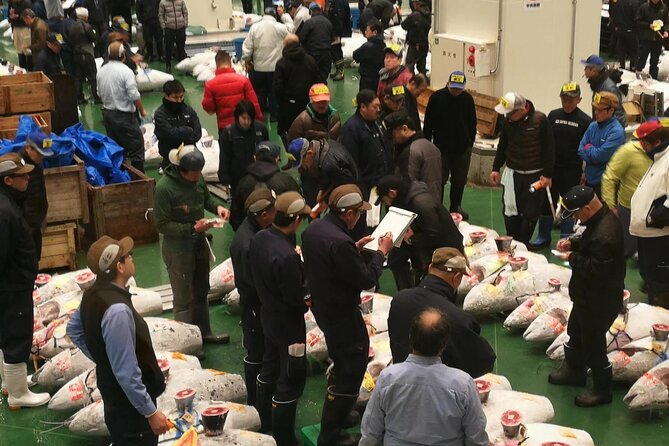
The main event runs from about 5:00 to 6:30 a.m. You watch the tuna process from inspection through the final bluefin sales. This is the part that gives the tour its name, but it is also the section where expectations need careful handling.
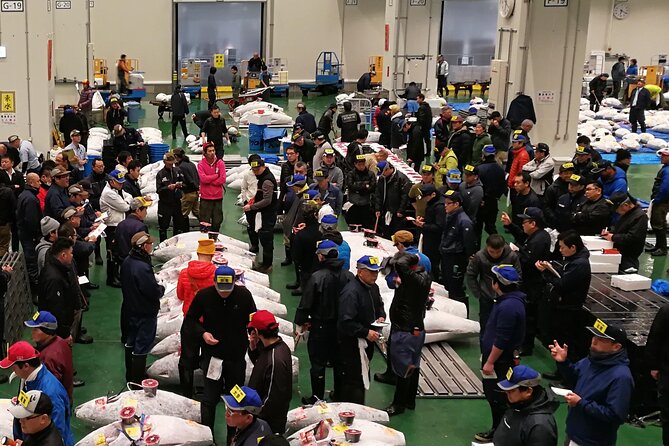
Toyosu offers public viewing areas, including an elevated observation deck that requires a lottery. Fumi can help you apply before the deadline, and you can also enter on your own. Winning the lottery gives you a closer view from above the auction floor, behind glass. One family described being able to see and hear the action clearly from that position.
The deck is not guaranteed. A participant who missed the lottery still had a good view from the regular area, with Fumi explaining the rapid sales using visual material. That distinction is important: the tour helps you pursue the best access, but it cannot promise a lottery result.
From the public viewing area, you can expect to see the auction rather than participate in it. The tuna sales are fast, practical, and businesslike. Fumi’s role is to provide the missing context: what buyers inspect, how the sales move, and why the fish are handled with such care.
I would not book this expecting a theatrical show. The appeal is seeing a real wholesale operation at work. The action may feel brief or distant if you arrive without background, which is why the guide’s explanation adds real value.
Exploring the market after the auction
After the auction, the tour continues through Toyosu from about 6:30 to 9:00 a.m. This longer section is where the experience broadens beyond tuna.
You visit wholesale areas and learn about seafood such as shrimp, crab, octopus, eel, and other products. The guide also introduces the food supply chain, from the source of the fish to the way chefs prepare and serve it.
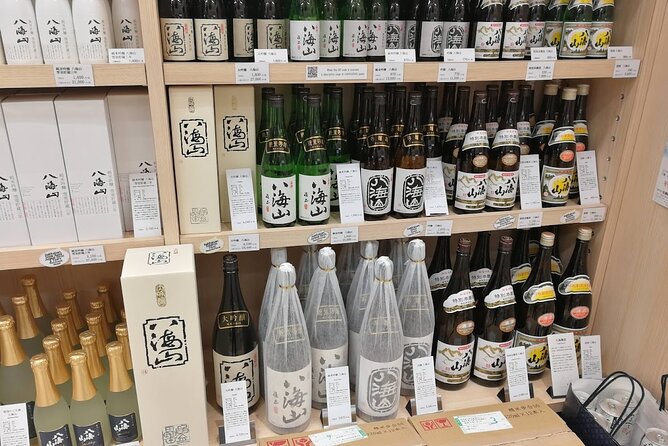
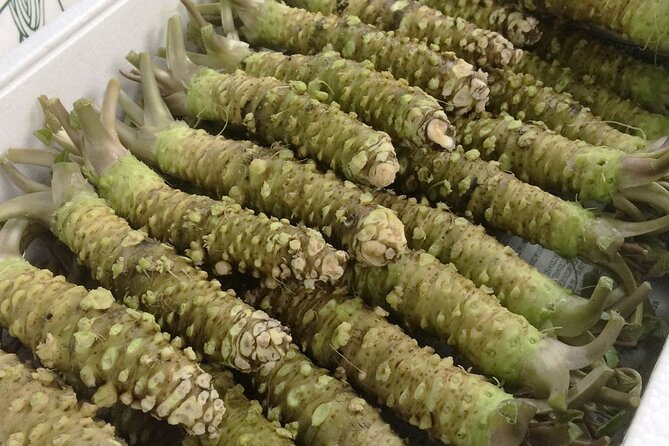
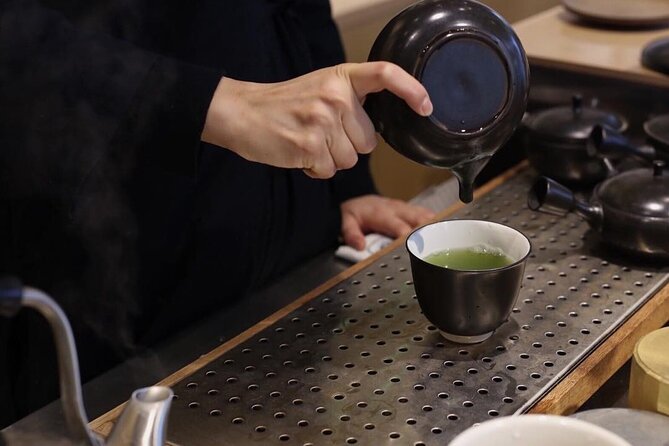
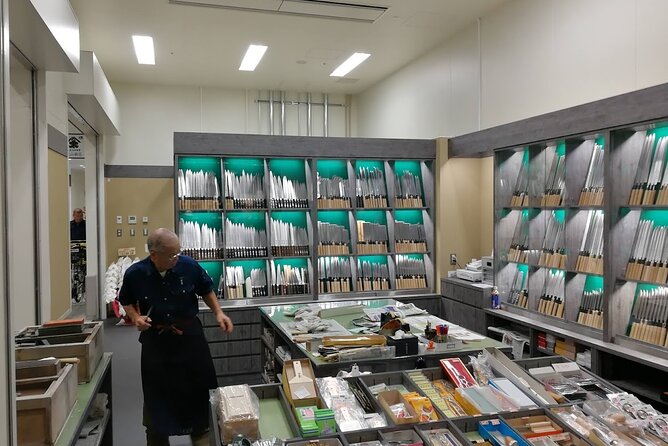
The market is not only about seafood. Depending on the day and the shops open, you might sample or browse specialty Japanese products such as pickled vegetables, matcha, sake, nori, bakery goods, dairy items, miso, and sweets. There is also a knife shop, including discussion of the many specialized knives used for tuna preparation.
These stops give you useful shopping context. You can ask what an ingredient is, how it is used, and which items make sense to take home. Souvenirs from specialty shops are included, though the details of those souvenirs are not specified, so do not treat this as a shopping allowance.
The guide’s printed material is another practical touch. Handouts cover sushi etiquette, sashimi, fish preparation, and language tips. You can look at them while the market activity continues around you, which helps when a demonstration or auction detail moves too quickly to absorb by ear.
A completely different kind of day out:
- Tokyo Disney Resort – Tokyo Disneyland & Tokyo DisneySea Park Tickets
★ 4.8 · 99,488 reviews - SHIBUYA SKY Ticket
★ 4.7 · 46,509 reviews - JR Whole Japan Rail Pass
★ 4.8 · 29,150 reviews - Mt Fuji and Hakone 1-Day Bus Tour Return by Bullet Train
★ 5.0 · 26,383 reviews
The sushi breakfast around 7:00 to 9:00
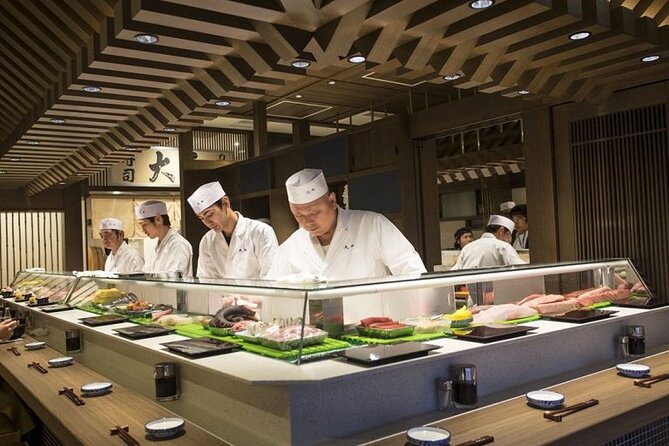
A reserved seat at a market sushi restaurant is included, but your food bill is not. This is one of the tour’s strongest practical features because popular market restaurants can be difficult to approach casually during the morning rush.
The meal is usually arranged after the auction, and the restaurant named in the tour details is Ichiba sushi. The exact dishes and final bill are not listed, so you should plan to choose and pay for breakfast yourself. One option mentioned in the experience is omakase, the chef’s choice, but it is not presented as a required menu.
This meal gives the market visit a clear payoff. After learning how fish is inspected and sold, you get to taste the finished product in a proper market setting. I like that the breakfast is not treated as a quick snack between stops. It is part of the food story.
Still, budget beyond the $125.19 tour fee. You are paying for the guide, access planning, market interpretation, restaurant reservation, and souvenirs. You are not paying for the taxi or sushi. For many people, that is fair value, especially if this is your first Toyosu visit and you want help with the auction and breakfast. If you only want to wander through the public market and grab an inexpensive meal, the price will feel high.
Fumi’s teaching style and local context
Fumi is the central reason this tour feels different from simply finding the market on a map. He was born and raised in Tokyo, holds a government tour guide license, and has more than 10 years of experience.
His strongest quality is preparation. He sends information ahead of time about the observation-deck lottery, helps with the early taxi, and arrives ready with printed material. That matters at Toyosu because the setting is large, the timing is strict, and the tuna sales move quickly.
Fumi also connects the auction to Japanese culture. You learn about sushi, sashimi, fish preparation, food history, sake, miso, knives, and dining etiquette. Families especially seem to benefit from this broad approach because children can ask questions and adults can connect the market to meals they may encounter elsewhere in Japan.
The main caution is communication. One participant found Fumi’s accent difficult to understand, even after asking him to speak more slowly. If you are hard of hearing or depend heavily on spoken explanation, the handouts and visual aids will help, but you should consider this point before booking.
Group size, privacy, and the pace
The experience is designed to stay fairly small. The information allows up to two groups, with a maximum of six guests in total, and says groups of four or more automatically become private tours with no limit on participants. It also gives a maximum activity size of 13 people.
Those rules are not perfectly clear, so I would confirm the final group arrangement before paying if privacy matters to you. A small group is useful here because you move through active market spaces and may want to ask about unfamiliar foods or tools.
The pace is steady but not described as physically demanding. You spend about 90 minutes at the auction and another two and a half hours exploring and eating. Most people can participate, but the combination of standing, walking, and a pre-dawn start may be tiring for some.
The tour ends around 9:00 a.m. at Shijo-mae Station, or the guide can help arrange a cab. That leaves most of the day free for another Tokyo neighborhood, a rest at your hotel, or a second breakfast if sushi was not enough.
Who will get the most from this tour
I would recommend it most strongly to first-time Toyosu visitors, sushi fans, families, and anyone who wants the market explained rather than simply photographed.
It is also a good fit if the tuna auction is high on your Tokyo wish list but you do not want to manage the lottery, taxi, entrance timing, restaurant reservation, and market navigation alone. The guide cannot guarantee the observation deck, but he improves your preparation and gives you a good fallback if you miss it.
You may want to skip it if you dislike early mornings, have limited interest in seafood, or prefer independent wandering. The $125.19 price becomes harder to justify once you add breakfast and transportation, especially if you only want a short look at the market.
Practical booking advice for Toyosu
Provide your hotel in the special requests section so pickup arrangements can be discussed. Confirmation is sent within 48 hours, subject to availability.
Ask about the observation-deck lottery deadline as soon as you book. The guide can assist with the application, and you should not assume that booking the tour itself automatically gives you deck access.
Keep cash or a payment method ready for the taxi and breakfast. Neither cost is included. Also remember that the experience depends on good weather. If poor weather causes cancellation, you are offered another date or a full refund.
The tour has a free cancellation policy if you cancel at least 24 hours before the start time. Changes or cancellations inside that window are not accepted for a refund.
Should you book this Toyosu tuna auction tour?
Book it if you want the full morning: auction, market education, food shopping, and sushi. Fumi’s advance help with the lottery and taxi is especially useful, and his handouts make the rapid auction easier to understand.
Go in with realistic expectations. The observation deck is a lottery, breakfast and transport cost extra, and the day begins at 4:30 a.m. If those terms suit you, the tour offers far more than a quick look at tuna sales. It gives you a working understanding of how Japanese seafood reaches the table, followed by the pleasant task of eating it.
FAQ
What time does the tour start?
The meeting time is around 4:30 a.m., with the tuna auction portion scheduled from approximately 5:00 to 6:30 a.m.
Is hotel pickup included?
Hotel pickup is offered. You should provide your hotel information in the special requests section. The taxi fare from your hotel to Toyosu is not included and must be reimbursed separately.
Is the sushi breakfast included in the price?
No. A reserved seat at a market sushi restaurant is included, but the cost of breakfast is separate.
Can I visit the observation deck?
You can apply for the observation-deck lottery with help from the guide before the deadline. Deck access is not guaranteed because it depends on winning the lottery.
Where does the tour end?
The tour ends around 9:00 a.m. near Shijo-mae Station in Toyosu. The guide can either help arrange a taxi or take you to the station.
What happens if bad weather cancels the tour?
If poor weather causes cancellation, you are offered a different date or a full refund. You can also cancel at least 24 hours before the start time for a full refund.
Just added in Tokyo
- Very popular in Harajuku♡Animal petting zoo★ 4.6 · 39 reviews
- Yokohama Port: Private Customizable Tour with Transfer★ 5.0 · 19 reviews
- Warner Bros. Studio Tour Tokyo – The Making of Harry Potter★ 4.8 · 181 reviews
- Yanaka District: Historical Walking Tour in Tokyo’s Old Town★ 4.8 · 117 reviews
- Wagyu & Sake 8 Course Tasting Dinner in Shinjuku★ 4.9 · 20 reviews
- Tokyo: Classic Tsukiji Food Tour★ 4.9 · 78 reviews
- Tokyo: Tsukiji Fish Market Tour with 6 Stops & Seafood Lunch★ 4.5 · 165 reviews
- Tokyo Wagyu & Sake Pairing Tasting Experience with Local Flavors★ 5.0 · 108 reviews
Markets and Food Halls, compared.
Tokyo Tsukiji Fish Market Food and Culture Walking Tour
Read our review →
Senkyaku Banrai Toyosu Manyo Club Onsen Experience in Tokyo
Read our review →
Nishiki Market Brunch Walking Tour (7 Tastings + Brunch)
Read our review →
Tokyo Sushi Making Class in Tsukiji with Professional Chef
Read our review →
Tsukiji Fish Market Guided Tour and Sushi Making with Pro Chef
Read our review →Browse the lists this tour appears in