
Reviewed · MARKETS AND FOOD HALLS
Private Toyosu & Tsukiji Market Adventure with Tuna Auction
Tokyo’s fish markets wake before the city does. This three-hour private tour pairs the early-morning tuna auction at Toyosu with the food stalls and small shops of Tsukiji, giving you a clear look at how seafood moves from market to meal. I especially like the guide-led explanations at Toyosu and the freedom to choose foods and shops at Tsukiji. The main drawback is the very early start, plus the first-floor auction viewing requires winning a market lottery.
I also like the personal scale. Your guide can meet you at a hotel or Shijō-mae Station, explain the auction with diagrams and pictures, and steer you toward good-value sushi, eel, mochi, tea, and kitchenware. Just remember that taxis, breakfast, drinks, and the bus fare cost extra, so the $153 price is not the full morning budget.
In This Review
- Key points at a glance
- Why the 5 a.m. start matters
- Toyosu’s tuna auction, explained properly
- The auction lottery and second-floor view
- Walking through Toyosu beyond the auction
- Breakfast at Toyosu or Tsukiji
- Taking the bus from Toyosu to Tsukiji
- Tsukiji Outer Market, where the morning gets tastier
- What the private format is really worth
- Guides who make the difference
- Practical preparation for a smoother morning
- Should you book it?
- FAQ
- How long does the tour last?
- Where do I meet the guide?
- Can the guide meet me at my hotel?
- Is the taxi fare included?
- Is breakfast included?
- Can I watch the tuna auction from the first floor?
- What happens if I do not win the auction lottery?
- Can I see the first-floor auction in December?
- Is the tour suitable for wheelchair users and children?
- Can vegetarian or vegan visitors participate?
- What should I bring?
Key points at a glance
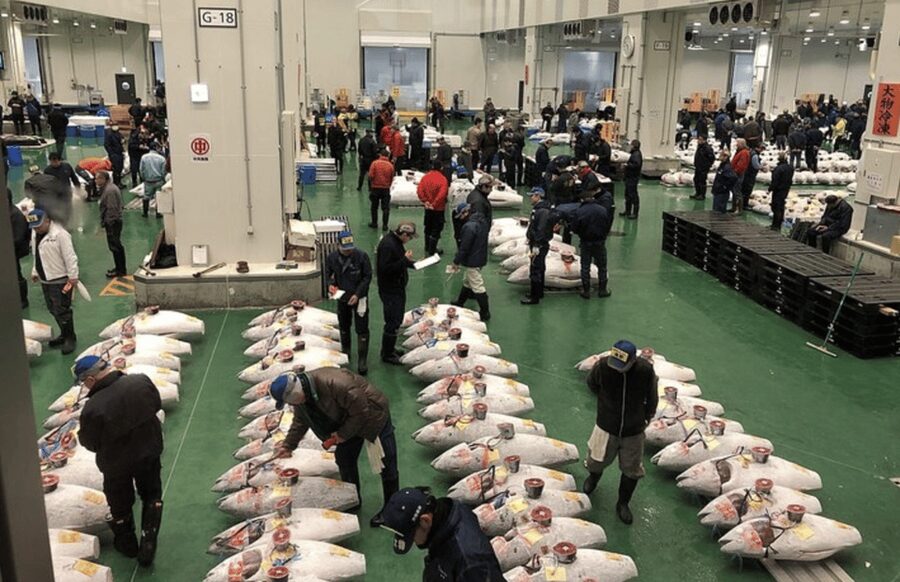
- The tuna auction begins the day: Watch professional buyers inspect and bid on bluefin tuna at Toyosu Market.
- First-floor viewing is not guaranteed: You must enter the official lottery, but the second-floor viewing area remains available if you do not win.
- Two markets, two different moods: Toyosu is modern and orderly, while Tsukiji’s Outer Market is better for browsing, snacking, and shopping.
- Your guide does the explaining: Guides such as Nobby, Sachiyo, Yumi, Emi, Mayumi, and Eriko have helped visitors understand the auction and find good places to eat.
- Food is paid separately: Sushi, sashimi, grilled eel, tamago, matcha, mochi, and other foods are available, but they are not included.
- Small and flexible: The private group can include up to 10 people, and the pace can be adjusted around your interests.
Why the 5 a.m. start matters
This is not a casual late-morning market stroll. Your guide may meet you at your hotel at around 5 a.m., or you can meet at the ticket gate of Shijō-mae Station on the Yurikamome Line.
At that hour, public transportation is limited or not running, so you will likely need a taxi to Toyosu. The taxi fare is your responsibility and depends on your hotel location. Staying in Toyosu, Tsukiji, or Ginza can keep that cost more manageable.
If you meet at Shijō-mae Station, note that the escalator shutters do not open until 5 a.m. Use the stairs or elevator to reach the second-floor ticket gate. This is the sort of small detail that matters when you are standing outside before sunrise with a sleepy family in tow.
The early start has a real payoff. You reach the market while the day’s work is underway, rather than seeing a polished attraction after the action has ended. Still, I would avoid scheduling another demanding activity immediately afterward. The tour is short, but waking early takes something out of you.
More Markets and Food Halls in Tokyo
- Tokyo Tsukiji Fish Market Food and Culture Walking Tour
★ 5.0 · 3,184 reviews - Tokyo: Tsukiji Fish Market Food and Walking tour
★ 5.0 · 1,724 reviews - Senkyaku Banrai Toyosu Manyo Club Onsen Experience in Tokyo
★ 4.7 · 1,690 reviews
Toyosu’s tuna auction, explained properly
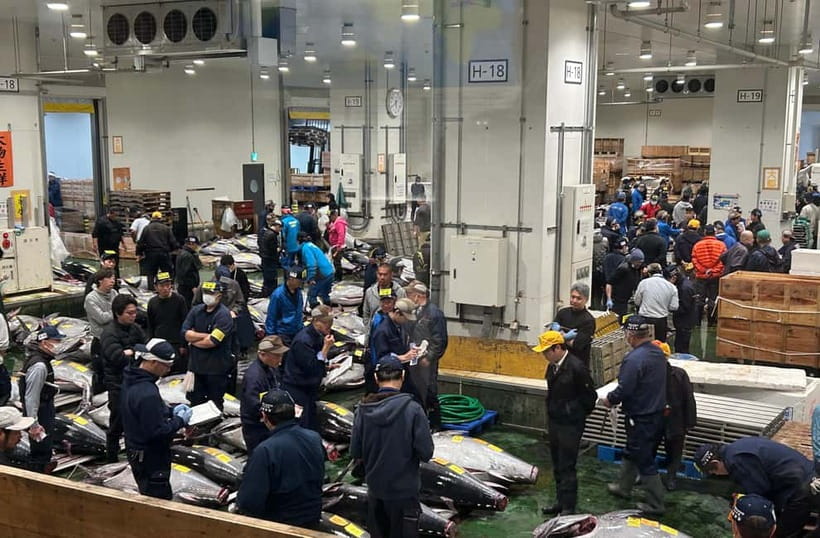
Toyosu Market is the new home of Tokyo’s wholesale fish trade, and the tuna auction is its headline event. From the viewing areas, you can watch buyers inspect large bluefin tuna before bidding begins.
The auction itself can be quick and difficult to understand without context. Buyers look closely at the fish, assess quality, and use a fast bidding process that can seem mysterious if you do not know what to watch for. A good guide turns those movements into a story about seafood quality, fishing, pricing, and Japanese food culture.
Several guides, including Sachiyo and Eriko, have used visual aids, binders, diagrams, and photographs to explain the process. That help is valuable. You are not simply staring through a window at people in work clothes. You can follow what is happening and understand how the tuna moves through the market.
The auction is also more controlled than the old Tsukiji market experience many people remember. Toyosu is clean, organized, and built for modern market operations. One useful surprise is that the market may have far less fishy smell than you expect, even though you are in the center of a major seafood operation.
The auction lottery and second-floor view
The most exciting viewing option is the first-floor observation deck. It puts you closer to the auction action, but access is handled by a lottery run by the market authorities.
To take part, you must book by the 5th day of the previous month and register through the official link. The tour company sends a reminder and registration link through the GetYourGuide app. Winning is not guaranteed, so do not book this morning solely on the promise of a first-floor spot.
If you win, bring your passport or another accepted ID card on the tour day. If you do not win, you can still watch from the second-floor viewing area. The tour continues either way, and the guide’s explanations remain a major part of the experience.
The lottery does create uncertainty. One visitor found the auction smaller than expected, with only two small auctions taking place. That is a useful warning: a real working market does not perform on cue for sightseeing. Some mornings will feel more dramatic than others.
In December, the lottery does not take place at the end of the month, and viewing is from the second floor. Plan accordingly if the closest possible view is important to you.
Walking through Toyosu beyond the auction
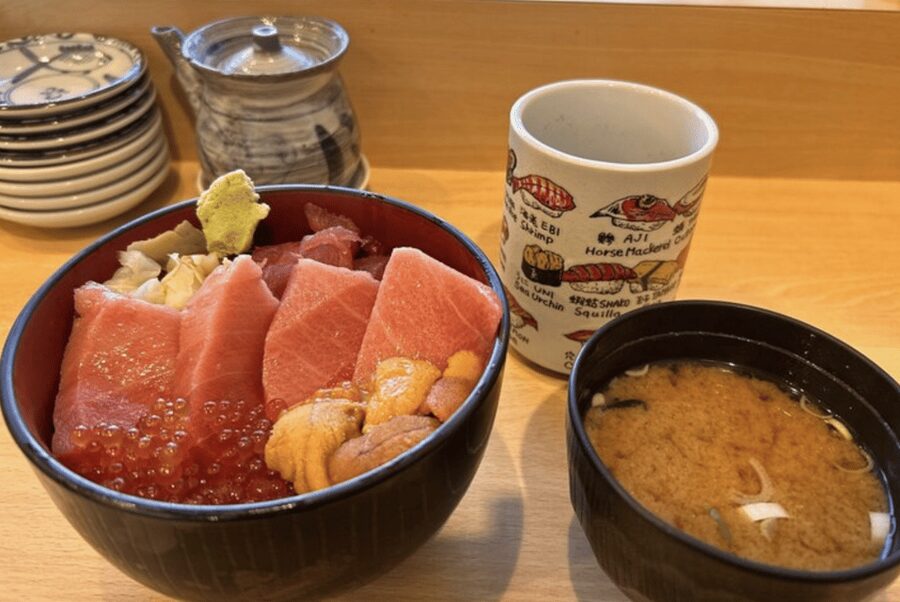
The Toyosu portion lasts about 70 minutes. After the auction, your guide takes you through professional market areas and points out shops connected to Japanese cooking.
You might browse Japanese knives, pottery, chopsticks, matcha whisks, wasabi graters, miso, pickles, sake, dried mushrooms, and dried kombu. These are practical souvenirs, not just decorative objects. A good knife or tea whisk can be useful at home, while smaller items such as chopsticks or a wasabi grater fit easily into luggage.
This part is especially helpful if you would not know how to judge a kitchen tool or where to buy it. Your guide can explain what the shop sells and help with communication. Some guides have also helped visitors locate tax-free refund services, which can be useful when purchasing higher-priced goods.
You will need to pay for anything you buy. Bring cash, as the tour information specifically recommends it. Also remember that market shops may have their own opening hours and stock, so no single item should be treated as guaranteed.
A completely different kind of day out:
- Tokyo Disney Resort – Tokyo Disneyland & Tokyo DisneySea Park Tickets
★ 4.8 · 99,488 reviews - SHIBUYA SKY Ticket
★ 4.7 · 46,509 reviews - JR Whole Japan Rail Pass
★ 4.8 · 29,150 reviews - Mt Fuji and Hakone 1-Day Bus Tour Return by Bullet Train
★ 5.0 · 26,383 reviews
Breakfast at Toyosu or Tsukiji
Breakfast is not included, but food is central to the morning. Depending on timing and your preferences, you may eat sushi or seafood at Toyosu or wait until Tsukiji.
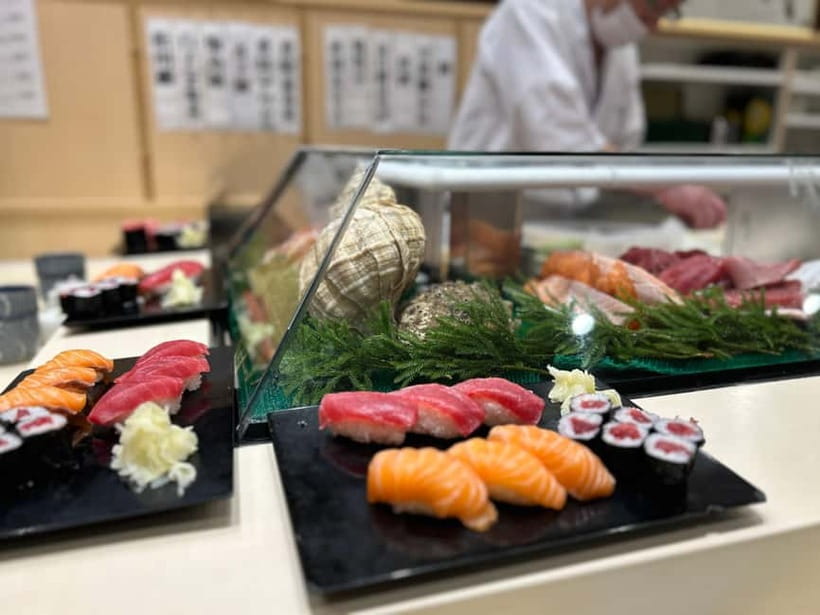
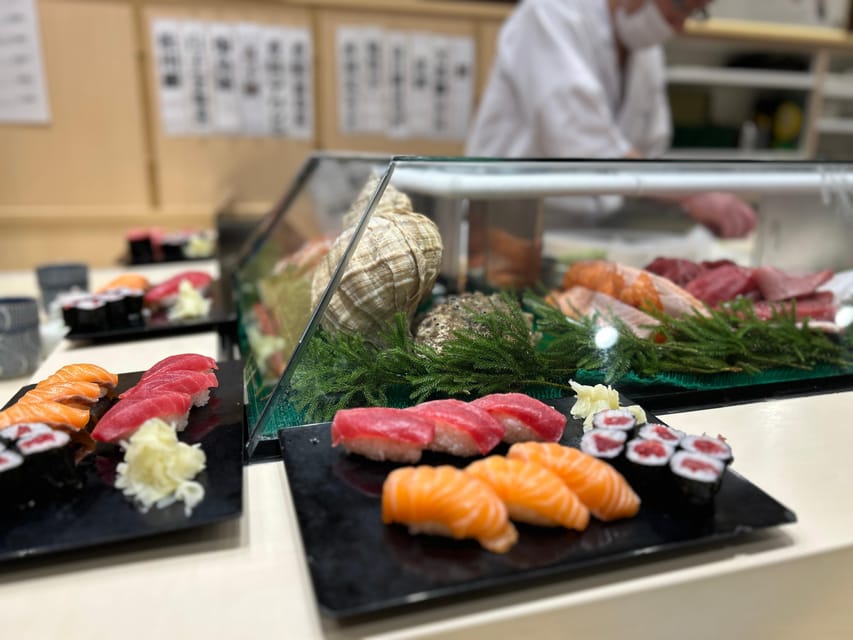
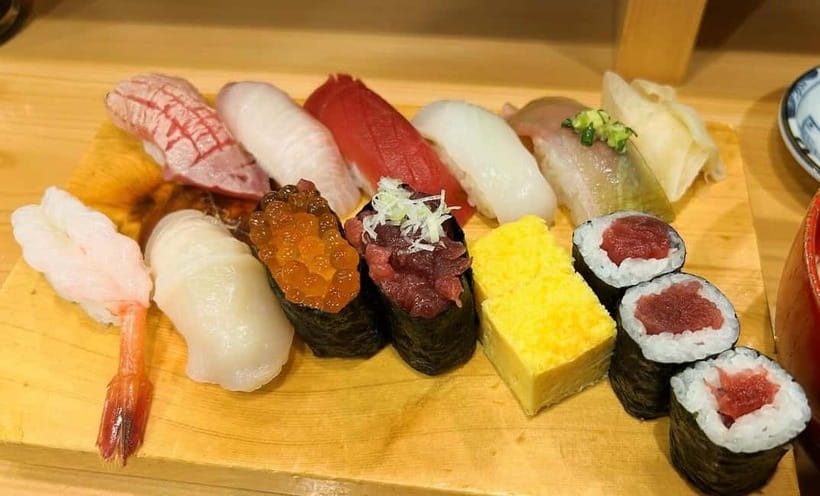
Fresh sushi early in the morning is one of the pleasures of this experience. You might also try sashimi, grilled eel, tamago, tuna steak, yakitori, mochi, matcha treats, seasonal foods, or other market snacks. Your guide can point out places for a sit-down breakfast or smaller stalls for quick tastings.
The private format helps here. You can ask to focus on seafood, try several small portions, or slow down for a proper breakfast. Guides have recommended both famous food items and less crowded places that cost less. That distinction matters in Tsukiji, where popular foods can carry a premium simply because they photograph well.
A practical point: you are making food choices very early, sometimes while still waking up. One person found it hard to discuss restaurant options during the taxi ride at that hour. If you need coffee before making decisions, tell your guide. The tour is flexible enough to account for different appetites, but the food bill remains yours.
Vegetarian and vegan participants are welcome, and the guide can help you find suitable ingredients. Still, this is a seafood market tour, so anyone with strict dietary needs should explain those needs clearly before ordering.
Taking the bus from Toyosu to Tsukiji
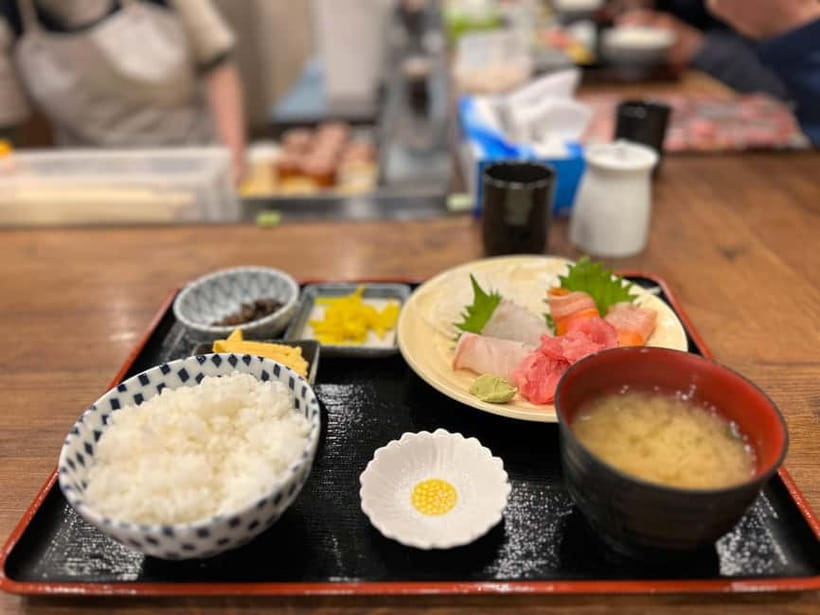
After Toyosu, the group takes a local bus to Tsukiji. The ride is listed at about 15 minutes, and the bus fare is not included.
This transfer gives the morning a useful rhythm. Toyosu shows you the wholesale side of the seafood trade. Tsukiji’s Outer Market then brings you closer to retail shopping, street food, and the everyday cooking culture that visitors usually picture when they hear the name Tsukiji.
The tour ends at Tsukiji Outer Market, so you can continue browsing or make your own way elsewhere afterward. That makes the location convenient if you want to stay for lunch, shop for souvenirs, or visit nearby Ginza.
Tsukiji Outer Market, where the morning gets tastier
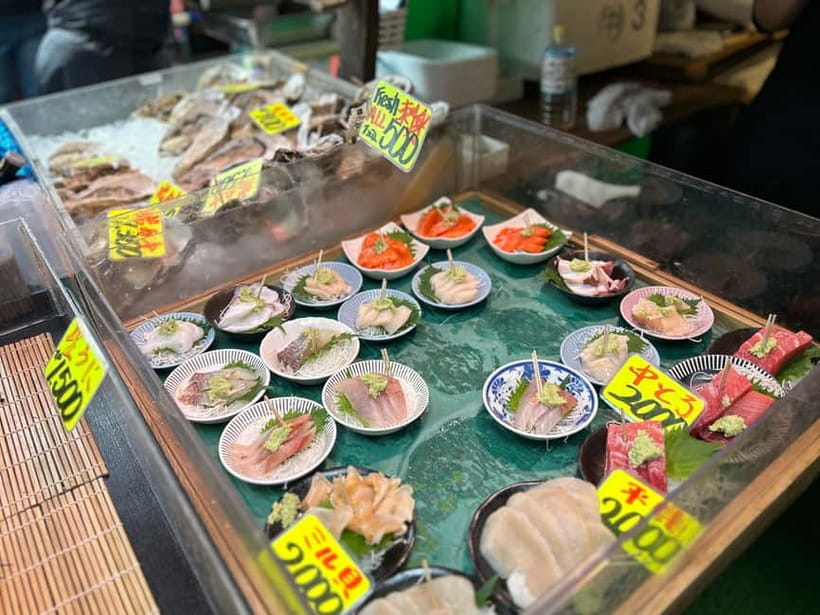
Tsukiji Outer Market is the more relaxed and browse-friendly half of the tour. Its narrow streets and small shops offer a mix of food, cookware, ingredients, and quick bites.
Your guide may lead you to pottery shops, sushi counters, sashimi vendors, eel grills, yakitori stalls, fruit and vegetable sellers, mochi shops, and stores selling tea or Japanese cooking tools. There is no need to rush through every stop. The private setup lets you spend more time on the things you actually care about.
This is also where a guide can save you from random guessing. Tsukiji offers many choices, and the best option depends on what you want to eat and how much you want to spend. Nobby has been praised for finding popular foods for families with teenagers, while other guides have directed people to less expensive restaurants with excellent food.
You might find that the most memorable part is not the biggest stall or most famous dish. It may be a small knife shop, a cup of matcha, a neatly arranged tray of pickles, or a vendor explaining a seasonal ingredient. Keep some room in your bag and your stomach.
An optional visit to a local shrine can add a quieter moment to the morning. It is not guaranteed as a central stop, so think of it as a possible addition if time and group interest allow.
What the private format is really worth
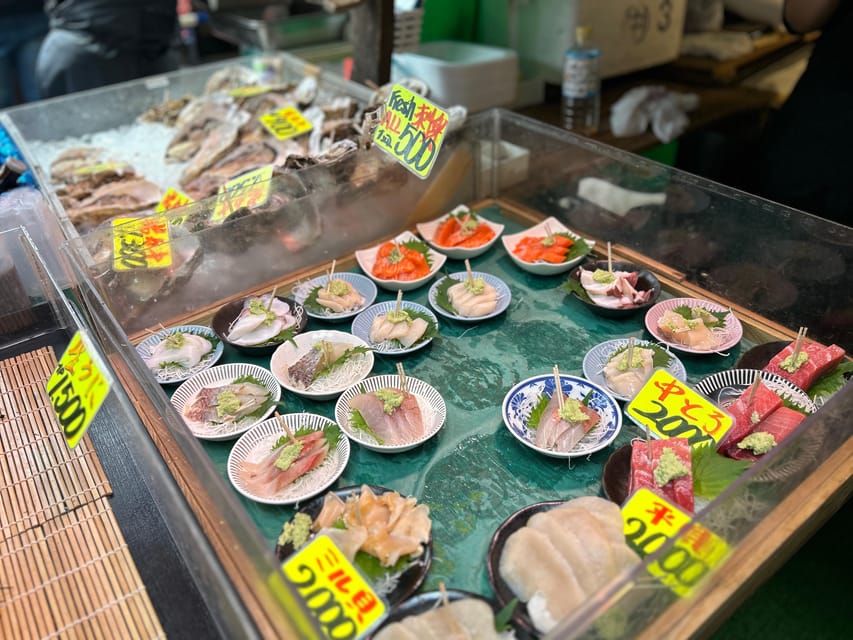
At $153 per person, this is not the cheapest way to visit Toyosu and Tsukiji. You still pay for your taxi, bus ride, breakfast, drinks, and purchases. If you only want to look around the markets, going independently will cost less.
The value comes from access to interpretation and personal help. Toyosu’s auction is easy to watch but harder to understand. Tsukiji is easy to enter but harder to navigate when you want a specific food, shop, or cooking item. A private English-speaking guide brings the two experiences together and can adjust the route around your group.
The group limit is up to 10 people, but the experience is described as private rather than a large shared walk. That makes it a strong choice for families, couples, or friends who want to ask questions without holding up a big crowd.
I would also consider the value of time. In three hours, you see both the modern professional market and the older-style Outer Market, then finish in a place where you can continue on your own. If you tried to research the auction rules, find the right viewing area, choose breakfast, and navigate both markets alone, you might spend much of the morning simply working out where to go.
Guides who make the difference
The guide is the most important variable in this experience, and the praise has been remarkably consistent across several names.
Nobby has been described as friendly, punctual, and strong at explaining Japanese culture, fishing, and the auction. Sachiyo has used clear visual material, helped groups find good auction viewing positions, and stayed patient while answering questions. Yumi has been praised for an organized route and warm manner, while Emi has helped with hotel meetups, food choices, and auction explanations.
Mayumi has been especially useful for visitors who wanted background on both markets and recommendations for less expensive food. Eriko has helped groups understand the auction with graphs and visual aids. Other guides, including Hiroshi, Yoko, Tomoko, and Naomi, have also received strong praise for communication and clear explanations.
You should not choose the tour based on one particular guide, since assignments can vary. But the repeated pattern is encouraging: expect the guide to be more than someone who points out stalls. You are paying for local judgment, translation help, and a way to make sense of a complicated morning.
Practical preparation for a smoother morning
Download WhatsApp before you go. The guide may contact you through WhatsApp or the GetYourGuide app, and you should provide an accurate phone number with notifications enabled for Japanese numbers.
Bring your passport or ID, especially if you win first-floor auction access. Carry cash for transport, food, and shopping. Wear comfortable shoes, since the tour includes walking through both market areas.
Wheelchair and stroller users can join, and children are welcome. The early hour may be the larger issue for young children than the walking itself. Families should consider the taxi cost, the breakfast budget, and whether everyone can manage a 5 a.m. meeting.
The tour is offered in English and includes a live English-speaking guide. You can cancel up to 24 hours in advance for a full refund, and you may reserve now and pay later, which helps if your Tokyo schedule is still changing.
Should you book it?
Book this tour if you want the tuna auction to make sense, like trying several Japanese foods, and value a guide who can help you move through two very different markets. It is particularly good for first-time visitors, families, food-focused groups, and anyone interested in Japanese kitchen tools.
Skip it if you dislike early mornings, want a slow independent market visit, or are counting every expense. The first-floor auction view is never certain, and the total cost rises once you add taxis, food, bus fare, and shopping.
For most people who can handle the alarm, the combination is strong: Toyosu gives you the working market, Tsukiji gives you the food and shopping, and a private guide connects the two. Just set realistic expectations about the lottery and arrive ready for breakfast before most of Tokyo has opened its eyes.
FAQ
How long does the tour last?
The tour lasts about three hours. The planned Toyosu visit is about 70 minutes, the bus ride to Tsukiji takes about 15 minutes, and the Tsukiji visit lasts about 70 minutes.
Where do I meet the guide?
You can meet the guide at the ticket gate of Shijō-mae Station on the Yurikamome Line, or choose hotel pickup if that option is available.
Can the guide meet me at my hotel?
Yes. The guide can meet you in your hotel lobby or at the front of the hotel, generally around 5 a.m. The taxi to Toyosu is not included.
Is the taxi fare included?
No. You pay the taxi fare from your hotel to the market. The amount depends on your hotel’s location and distance from Toyosu.
Is breakfast included?
No. Sushi, seafood, drinks, and other food purchases are paid for separately.
Can I watch the tuna auction from the first floor?
You can apply for the official first-floor observation lottery. You must book by the 5th of the previous month and register through the official link, but winning is not guaranteed.
What happens if I do not win the auction lottery?
You can still watch the tuna auction from the second-floor observation area.
Can I see the first-floor auction in December?
The lottery does not take place at the end of December. Viewing is from the second floor during that period.
Is the tour suitable for wheelchair users and children?
Yes. The tour is accessible for wheelchair and stroller users, and children are welcome to join.
Can vegetarian or vegan visitors participate?
Yes. The guide can help you find suitable vegetarian or vegan ingredients during the market visit.
What should I bring?
Bring your passport or ID, cash for food and shopping, and a phone with WhatsApp or the GetYourGuide app available for guide communication.
Just added in Tokyo
- Tokyo Cute Bento Cooking Class – Make a Kawaii Character Lunchbox★ 5.0 · 126 reviews
- Japanese Home Cooking Class & Walk in Todoroki Temple Tokyo★ 5.0 · 88 reviews
- A One-of-a-Kind Sushi Experience in a Special Place of Japan★ 5.0 · 15 reviews
- Japan Tokyo Tower Observatory Deck E-Ticket★ 4.0 · 34 reviews
- Catch a Baseball Game in Tokyo with a Local – Tickets Included★ 5.0 · 24 reviews
- JDM Experience with Fast&Furious RX-7 (English speaking Driver)★ 5.0 · 57 reviews
- Tokyo Private Day Tour by Car with English speaking Driver Guide★ 4.0 · 29 reviews
- Japan Classic 10 Day – One Life Adventures★ 5.0 · 129 reviews
Markets and Food Halls, compared.
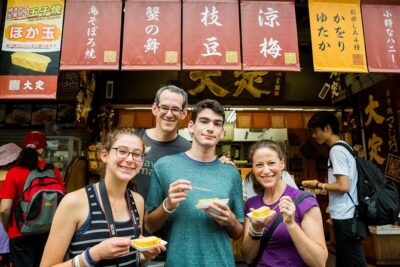
Tokyo Tsukiji Fish Market Food and Culture Walking Tour
Read our review →

Senkyaku Banrai Toyosu Manyo Club Onsen Experience in Tokyo
Read our review →
Nishiki Market Brunch Walking Tour (7 Tastings + Brunch)
Read our review →
Tokyo Sushi Making Class in Tsukiji with Professional Chef
Read our review →
Tsukiji Fish Market Guided Tour and Sushi Making with Pro Chef
Read our review →Browse the lists this tour appears in