
Reviewed · WORKSHOPS
Experience the Soul of Hiroshima: A Peaceful Koto Workshop
Let music carry Hiroshima’s message of peace. This 90-minute koto workshop gives you a rare chance to play a traditional Japanese instrument while learning about its long connection to Japan and Fukuyama City, the country’s main koto-making center. I especially like the small six-person group, which leaves room for clear instruction, and the chance to perform a complete piece by the end rather than simply plucking a few test notes.
I also appreciate the thoughtful link between music and Hiroshima’s past. The peace-themed composition, Echo of Serenity, gives the lesson emotional weight without turning it into a lecture. The main limitation is time: 90 minutes is enough for a strong introduction, but not enough to become fully comfortable with the instrument. One visitor specifically wished for a longer class.
In This Review
- Key points to know before you book
- Why a koto lesson belongs in a Hiroshima visit
- What happens during the 90-minute session
- The sound and meaning of Echo of Serenity
- Why Fukuyama-made kotos matter
- The instructors and teaching style
- Meeting point and getting there
- Who will enjoy this workshop most
- Is $50 a fair price?
- Souvenirs with more meaning than a magnet
- Practical tips for making the most of it
- Should you book the Hiroshima koto workshop?
- FAQ
- How long does the koto workshop last?
- Where does the workshop take place?
- How do I reach the meeting point by streetcar?
- Is the lesson taught in English?
- Do I need previous musical experience?
- What age is the activity suitable for?
- What is included after the performance?
Key points to know before you book
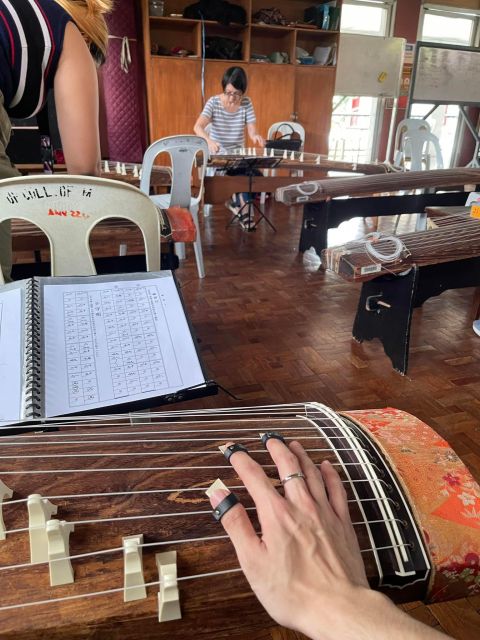
- You play a real 13-string koto: The instruments are made in Fukuyama City, where more than 70 percent of Japan’s kotos are produced.
- The lesson is entirely in English: You learn posture, plucking, basic notation, and a complete piece without needing Japanese.
- The peace theme is central: You perform Echo of Serenity, a composition honoring the victims of the atomic bombing.
- The finale is a group performance: You play alongside the instructor and other participants, then receive a recording of the result.
- The group is limited to six people: That makes individual help much more likely than in a large cultural demonstration.
- You receive two meaningful keepsakes: A video of your performance and a folded origami crane, Hiroshima’s symbol of peace.
Why a koto lesson belongs in a Hiroshima visit
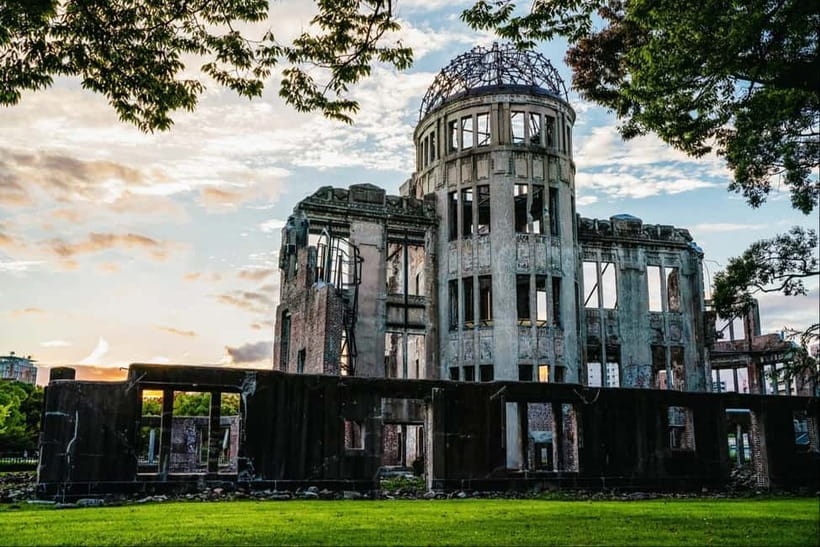
Hiroshima is a city where history is impossible to ignore. The Peace Memorial Park and museum ask you to listen, reflect, and remember. This workshop approaches the same subject through sound and participation.
That difference matters. You are not simply watching a performance or hearing a guide explain an instrument. You place your hands on the strings, learn how the koto responds, and help create a piece connected to peace. The result is quieter than many sightseeing activities, but it can stay with you longer.
The koto itself has about 1,300 years of history in Japan. It is a long, elegant instrument with 13 strings, and each part carries meaning within its traditional design. The workshop gives you an introduction to that background before moving into practice, so the instrument feels like more than a large wooden object with strings.
You also learn about Fukuyama City in Hiroshima Prefecture. Fukuyama is the heartland of koto craftsmanship, and more than 70 percent of Japan’s kotos are made there. That local connection gives the lesson a strong sense of place. You are not learning an imported version of Japanese music in a generic studio. You are playing instruments tied to the region.
A few more options to weigh up in Hiroshima
- Peaceful Hiroshima & Miyajima UNESCO 1 Day Bus Tour
★ 5.0 · 5,309 reviews - Hiroshima Peace Memorial Museum Ticket
★ 4.8 · 2,727 reviews - Hiroshima: Hiroshima and Miyajima UNESCO Sites 1-Day Tour
★ 4.9 · 2,330 reviews
What happens during the 90-minute session
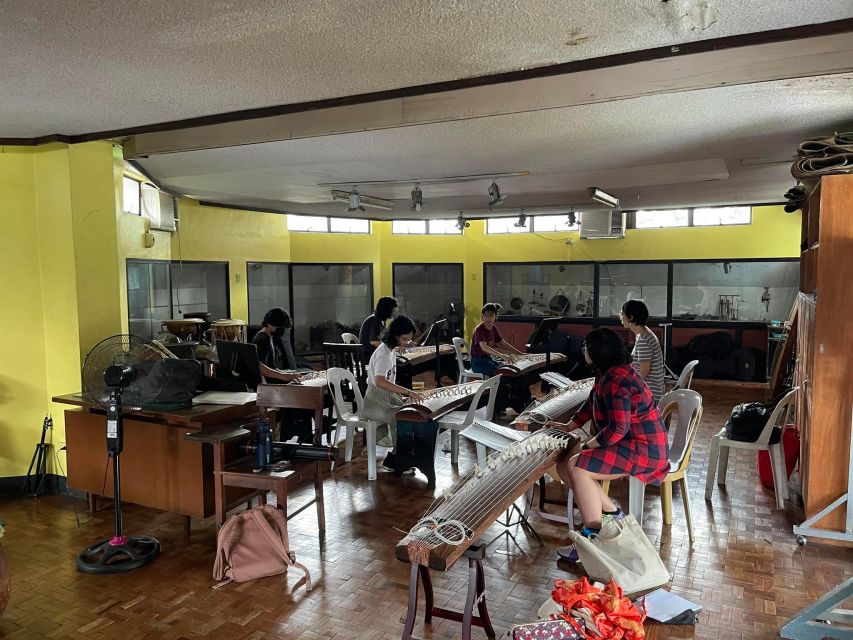
The class takes place in a peaceful studio on the second floor of Ishida No. 2 Building, within walking distance of Peace Memorial Park. The setting is practical and calm, a good change of pace after visiting memorial sites or walking around central Hiroshima.
The session begins with an introduction to the koto’s history, construction, and role in Japanese culture. You learn why the instrument looks the way it does and how its strings, bridges, and body work together. This opening section helps you understand the instrument before you start making sound.
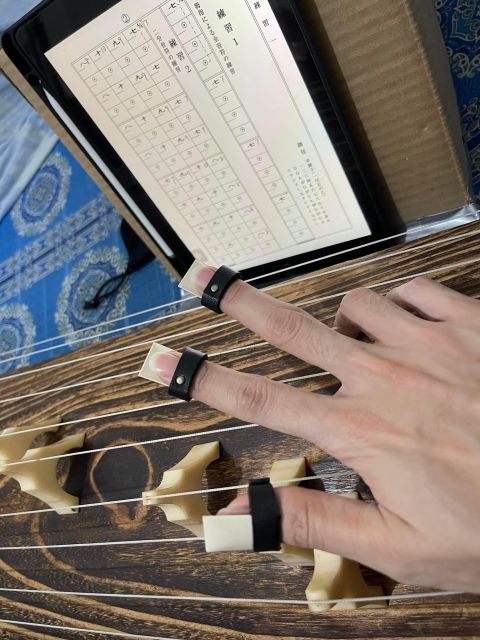
Then the instructor covers the basics. You learn how to sit, position your hands, and use the picking technique. The aim is not to rush you through technical jargon. It is to get you producing controlled notes quickly, then build those notes into a melody.
The English instruction is a major benefit. You do not need Japanese, and the teachers explain the process in a clear, friendly way. The class can suit someone who has never touched a Japanese instrument before. Several participants found that the instructor made the steps easy to follow, even when learning both the playing technique and koto notation in a short period.
The lesson works toward a complete piece. Depending on the session, this may include Echo of Serenity, the locally connected peace composition, or another piece such as Sakura. The supplied experiences describe both, so the exact musical selection may vary. If playing the peace piece is especially important to you, ask when booking or at the start of the session.
The final stage is a group performance. You play with the other participants and the instructor, often with the teacher providing accompaniment. This is where the class becomes more than a beginner exercise. You hear how separate notes come together, and you get a sense of what the instrument can express.
A recording of the performance is provided as a keepsake. It is a useful touch because your first attempt at koto playing is otherwise easy to remember only in fragments. You can share the video with family or friends, or simply keep it as a record of your time in Hiroshima.
The sound and meaning of Echo of Serenity
The workshop’s most distinctive feature is its peace-centered musical focus. Echo of Serenity was composed to honor the victims of the atomic bombing, and its slow, reflective character allows the koto’s sound to carry emotion without many words.
This does not turn the class into a formal memorial ceremony. You still learn practical music skills, laugh, make mistakes, and work toward a performance. But the piece gives the activity a clear purpose. Playing it in Hiroshima connects your hands to the city’s call for peace in a direct, personal way.
For some people, that connection will be the main reason to book. For others, the workshop may simply be an enjoyable cultural activity after a morning at the Peace Memorial Park. Both approaches are reasonable. You are not expected to bring musical training or a particular emotional response.
The tone of the experience is calm rather than heavy. That makes it suitable for people who want time to reflect but prefer an activity that involves doing something. Music can create a different kind of attention, and the long, resonant notes of the koto are well suited to that mood.
Why Fukuyama-made kotos matter
The instruments used in the workshop come from Fukuyama City, known for its superior koto craftsmanship. This detail adds value because you are handling instruments made in a region with a direct connection to the craft.
You also hear about the koto’s design and symbolism. The workshop does not promise to cover everything in 90 minutes, and that is worth keeping in mind. You will receive a well-shaped introduction, not a full course in Japanese instrument making.
The difference between instruments may become noticeable during the session. One participant enjoyed seeing how the kotos varied and how quickly a beginner could produce a beautiful sound with proper guidance. For a first lesson, that comparison can make the instrument feel more alive and less intimidating.
If you become particularly interested, the studio may allow you to purchase a koto on the spot. Online lessons are also available after you return home. That option is unusual for a short cultural activity, though buying an instrument is a much bigger commitment than paying for a one-time class. Ask about the instrument, price, shipping, and lesson arrangements before deciding.
A completely different kind of day out:
- Hiroshima Peace Memorial Museum Admission
★ 4.6 · 1,308 reviews - Hiroshima / Miyajima Full-day Private Tour with Government Licensed Guide
★ 5.0 · 1,298 reviews - Hiroshima Historical Walking Tour – Why A-Bomb was Dropped
★ 4.8 · 893 reviews - Hiroshima Peace (Heiwa) Walking Tour at World Heritage Sites
★ 5.0 · 872 reviews
The instructors and teaching style
The instructors are English-speaking and include Vincent and Nicholas, both praised for their clear explanations and friendly approach. The names are useful to know because the teaching style appears to be a major part of the experience.
Vincent is described as an excellent teacher who explains the koto’s background before guiding students through exercises and the final group performance. Nicholas led a session that included koto history, technique, and Sakura. Other participants described the teacher as patient, encouraging, funny, and passionate about the instrument.
That combination matters for a short lesson. A teacher can know the instrument well and still move too fast for beginners. Here, the instruction is built around simple exercises that lead toward a real piece. You get a satisfying result without pretending that one session makes you a koto player.
The class can also work for mixed musical ability. A complete beginner can follow the steps, while someone who already plays an instrument may enjoy the unfamiliar technique and notation. The small group limit of six helps the instructor spot problems with posture or plucking.
Meeting point and getting there
The studio is at Ishida No. 2 Building, close enough to reach on foot from Peace Memorial Park. If you use the streetcar, get off at Tatemachi Station.
From there, walk straight from the corner with the Tully’s Coffee shop, heading toward the YMCA. When you reach the Gokku okonomiyaki restaurant, turn right. Look for the workshop sign and go to the second floor.
This route uses recognizable landmarks, which is helpful in central Hiroshima. Still, allow a little extra time to find the building. The meeting point is not described as a major attraction in its own right, so focus on locating the sign rather than looking for a large storefront.
A smart plan is to pair the class with the Peace Memorial Park on the same day. The studio’s location makes that easy, though you may prefer to schedule the workshop before rather than immediately after the museum if you want a quieter period for reflection. The 90-minute duration fits neatly into a half-day plan.
Who will enjoy this workshop most
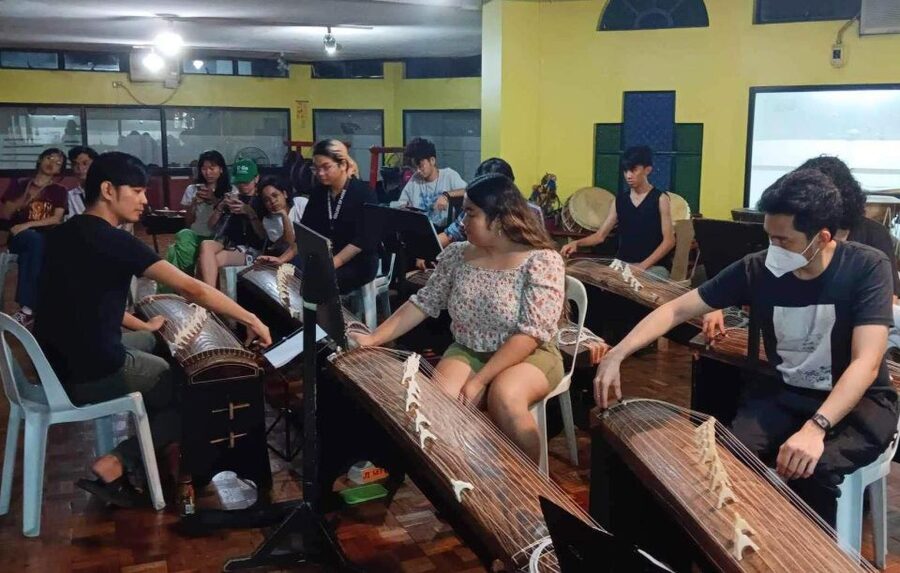
This is a good choice for couples, families with older children, friends, and solo visitors. Children must be at least 10 years old, so it is not suitable for younger kids. The activity requires attention and patience, but no musical background.
You should consider booking if you want:
- A hands-on Japanese cultural activity rather than a demonstration
- An English-language lesson in central Hiroshima
- A calm activity connected to the city’s message of peace
- A memorable experience for a couple or small family group
- A way to try a traditional instrument without committing to a long course
- A personal video rather than only a souvenir bought in a shop
It may be less suitable if you want a long, detailed music course. The class moves from introduction to technique to performance in only 90 minutes. That quick pace is part of the fun, but it also limits how much practice you can get.
A family should also consider the child’s attention span. The age rule begins at 10, but interest in music matters more than age alone. A child who enjoys trying instruments will likely have a good time. Someone expecting a fast, noisy activity may find the calm pace less exciting.
Is $50 a fair price?
At $50 per person, the workshop is not the cheapest activity in Hiroshima, but the price includes more than a short demonstration. You receive 90 minutes of instruction, access to a traditional koto, an English-speaking teacher, a complete musical piece, a group performance, a video recording, an origami crane, and a free soft drink afterward.
The value is strongest if you care about participation. You are paying for guided access to an instrument that would be difficult to try casually, plus the chance to create something connected to Hiroshima. The recording also gives the experience a lasting value beyond the class itself.
Coffee, tea, and juice are available after the session, including pineapple juice. That refreshment is a pleasant extra, but it should not be the reason you book. The real value lies in the teaching, the instruments, and the peace-related performance.
The price is harder to justify if you only want to hear the koto played by an expert. In that case, a concert or cultural performance may offer more music for your money. This workshop makes sense because you take part.
Free cancellation is available up to 24 hours in advance for a full refund, and you can reserve now and pay later. Those policies are useful when you are building a busy Hiroshima schedule, especially if your arrival time is not fixed.
Souvenirs with more meaning than a magnet
The performance video is the strongest keepsake. It captures a moment you helped create, including the sound of the group and the instructor’s accompaniment. For a solo visitor, it can be a way to share the experience with people back home.
The folded origami crane has a clear connection to Hiroshima. Cranes represent peace and hope in the city, so this small souvenir carries more meaning than a generic craft item. You can keep it, give it to someone, or use it to explain the workshop’s purpose to friends and family.
The option to continue with online lessons is worth noting if the koto catches your interest. A 90-minute class gives you a taste, not mastery. Continuing at home lets you build on the basic posture, plucking, and notation introduced during the session.
Practical tips for making the most of it
Arrive with enough time to follow the streetcar directions and locate the second-floor studio. Tatemachi Station, Tully’s Coffee, the YMCA, and Gokku are the key markers.
Wear something that allows you to sit comfortably and keep your hands free. The provided information does not specify a dress code, so simple, comfortable clothing is the sensible choice.
Do not worry about reading music before you arrive. The lesson is designed for beginners, and the instruction is in English. Pay attention to hand position and plucking technique early on, since those basics make the later group performance easier.
If you have a strong preference between Echo of Serenity and Sakura, confirm the day’s program. Both pieces are associated with the sessions described, but the exact selection is not guaranteed in the available details.
Remember that the class is a shared performance. You are not expected to play like a professional. The goal is to learn enough to contribute to a complete piece, and that is what makes the finale satisfying.
Should you book the Hiroshima koto workshop?
I would book this if you want a small, thoughtful activity that connects traditional Japanese music with Hiroshima’s peace message. The English instruction, six-person limit, Fukuyama-made instruments, and performance video make the $50 fee reasonable for someone who values personal participation.
I would skip it if you want a long technical lesson or a polished concert. The class is brief, and you will only learn the essentials. But if you like trying something unfamiliar, want a break from standard sightseeing, and appreciate experiences with a sense of place, this is an excellent fit.
The best time to schedule it is during a Hiroshima day that already includes Peace Memorial Park. After looking at the city’s difficult past, you can spend 90 minutes making something gentle and hopeful. That is a simple idea, but it gives the workshop its lasting power.
FAQ
How long does the koto workshop last?
The workshop lasts 90 minutes.
Where does the workshop take place?
It takes place at Ishida No. 2 Building in Hiroshima, in a studio within walking distance of Peace Memorial Park. The class is held on the second floor.
How do I reach the meeting point by streetcar?
Get off at Tatemachi Station. Walk straight from the corner with Tully’s Coffee toward the YMCA. At the Gokku okonomiyaki restaurant, turn right, then look for the workshop sign and go to the second floor.
Is the lesson taught in English?
Yes. All instruction is conducted in English.
Do I need previous musical experience?
No. The session is designed for beginners and teaches basic posture, plucking technique, notation, and how to play a complete piece.
What age is the activity suitable for?
The workshop is suitable for participants aged 10 and older. Children under 10 cannot take part.
What is included after the performance?
You receive a video recording of the group performance and a folded origami crane. Coffee, tea, juice, and a free soft drink service are also provided after the session.
Just added in Hiroshima
- Hiroshima Peace Memorial Museum Ticket★ 4.8 · 2,727 reviews
- Hiroshima Peace Memorial Museum Admission★ 4.6 · 1,308 reviews
- Private Full Day Hiroshima Tour★ 4.5 · 29 reviews
- The Peace Memorial to Miyajima : Icons of Peace and Beauty★ 4.5 · 31 reviews
- Shore Excursion from Hiroshima Port : Private Tour in Hiroshima★ 5.0 · 17 reviews
- Hiroshima & Miyajima All-Inclusive Tour w/Licensed guide Pancho★ 5.0 · 54 reviews
- Hiroshima Country Cycling: Explore Rural Life 1 HR from City★ 5.0 · 22 reviews
- Hiroshima Saijo Sake Tasting Tour with visit to 7 Breweries★ 5.0 · 104 reviews
Workshops, compared.
Sushi Making Tokyo Roll and Authentic Japanese Sushi Class
Read our review →
Gion Make Your Own Chopsticks with Engraving Option
Read our review →
Roll and Authentic Sushi Making Class in Asakusa
Read our review →
Ramen Cooking Class at Ramen Factory in Kyoto
Read our review →
Tokyo Asakusa Chopsticks Workshop: Make Your Own Pair
Read our review →
Ring Making Workshop : Vintage Japanese Coin Ring
Read our review →Browse the lists this tour appears in