
Reviewed · WORKSHOPS
Handmade Japanese Glass Art Sandblasting Workshop in Tokyo
Make a souvenir with your own hands. This 90-minute Tokyo workshop lets you decorate a glass with Japanese images, then use sandblasting to turn your design into a finished keepsake. I like the maximum of four participants, which gives the workshop owner time to help each person. I also like the mix of simple craft, Japanese motifs, and a useful souvenir you can take home.
The main consideration is time. Ninety minutes is enough for a guided project, but not for a long, leisurely art session with endless design changes. At $53.43 per person, the value depends on how much you enjoy making something yourself. If you prefer sightseeing with little hands-on work, this may feel like a costly detour. If you want a quiet break from Tokyo’s busy streets, it makes good sense.
In This Review
- Key points to know before you book
- Why this Asakusabashi workshop is worth your time
- Arriving at 1-chōme-26-12 Asakusabashi
- Choosing your Japanese motif and planning the glass
- Learning the sandblasting technique step by step
- The finished glass and what you take home
- Why families and first-time artists fit well here
- How this compares with ordinary Tokyo souvenirs
- Price, timing, and who gets the best value
- Should you book the Japanese glass sandblasting workshop?
- FAQ
- Where does the glass sandblasting workshop begin?
- Where does the activity end?
- How long does the workshop last?
- How many people can join the class?
- What designs can I use for the glass?
- Do I need previous art experience?
- Are materials and tools included?
- Is hotel pickup and drop-off included?
- Is the workshop suitable for families?
- Can I cancel for a full refund?
Key points to know before you book
- Small groups of four: You get direct help instead of trying to follow a crowded class.
- Aki-san teaches the workshop: The owner provides step-by-step instruction and a patient hand when your design gets tricky.
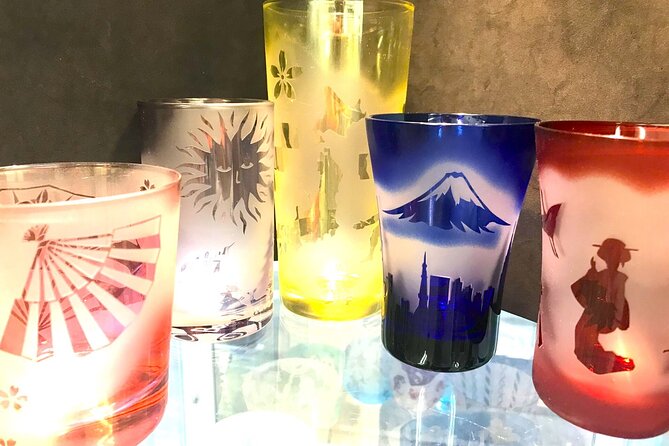
- Traditional Japanese designs: You can work with images such as Mount Fuji, geisha, kimono patterns, and samurai.
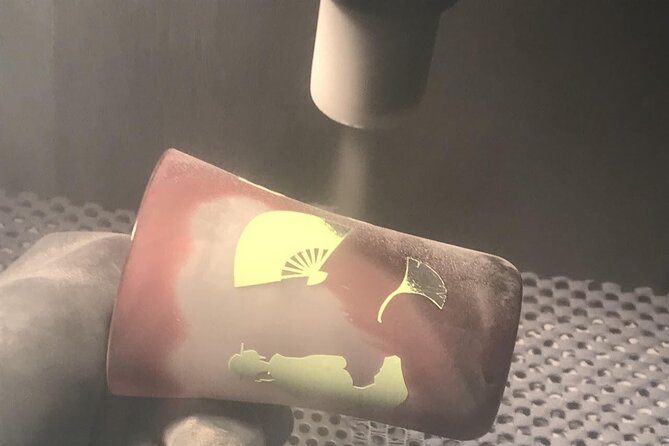
- A real sandblasting finish: The machine brings your chosen design onto the glass, giving the souvenir a handmade look.
- Family-friendly creative time: Both children and adults can take part, and all materials and tools are supplied.
- A central Tokyo meeting point: The workshop begins and ends at 1-chōme-26-12 Asakusabashi in Taito City, near public transportation.
Why this Asakusabashi workshop is worth your time
Tokyo gives you plenty of chances to buy souvenirs. Far fewer opportunities let you make one yourself. That difference is the heart of this experience. You are not simply choosing a cup from a shop shelf. You are selecting an image, arranging it on glass, and watching a machine create the final pattern.
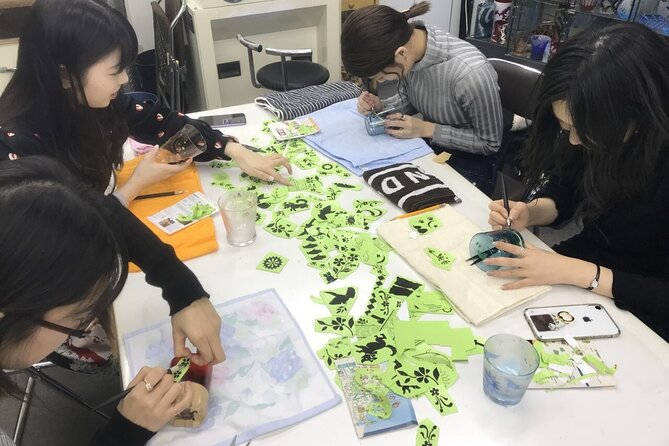
I especially like the scale of the class. With no more than four people, the owner can keep an eye on each design and offer help as needed. That matters for beginners. Glass decoration can look simple at first, but small choices in placement and pattern affect the finished piece.
The workshop also offers a useful pause in a busy day. You sit down, work with your hands, and focus on one task for a while. You will not see major Tokyo sights during the 90 minutes, but you will get a different view of the city, one tied to craft and personal creativity.
The experience has a current rating of 5 out of 5 from 12 ratings, with 100 percent recommending it. That is a small sample, so I would not treat it as proof that every person will love it. Still, the consistent praise for the patient instruction, calm setting, and finished souvenir points to the workshop’s main strengths.
A few more options to weigh up in Tokyo
- Tokyo Disney Resort – Tokyo Disneyland & Tokyo DisneySea Park Tickets
★ 4.8 · 99,488 reviews - SHIBUYA SKY Ticket
★ 4.7 · 46,509 reviews - JR Whole Japan Rail Pass
★ 4.8 · 29,150 reviews
Arriving at 1-chōme-26-12 Asakusabashi
Your meeting point is 1-chōme-26-12 Asakusabashi, Taito City, Tokyo 111-0053. The activity is near public transportation, which makes it practical to add before or after other plans in eastern Tokyo.
The class starts and finishes at the same location. That is helpful because you do not need to arrange a separate return transfer or figure out where the activity ends. Hotel pickup and drop-off are not included, so you are responsible for reaching the workshop and continuing on afterward.
I would allow enough time to find the address without rushing. The supplied directions do not give a specific station name or walking time, so check your route before leaving. Arriving early may be worthwhile. One participant arrived ahead of time and found an easel outside with their name on it. The owner also brought that person inside early, although you should not assume early entry is always possible.
The workshop is in Asakusabashi, a useful location for visitors who want to combine a craft activity with other Tokyo plans. Since the class lasts about an hour and a half, it can fit into a morning or afternoon without taking over your whole day.
Choosing your Japanese motif and planning the glass
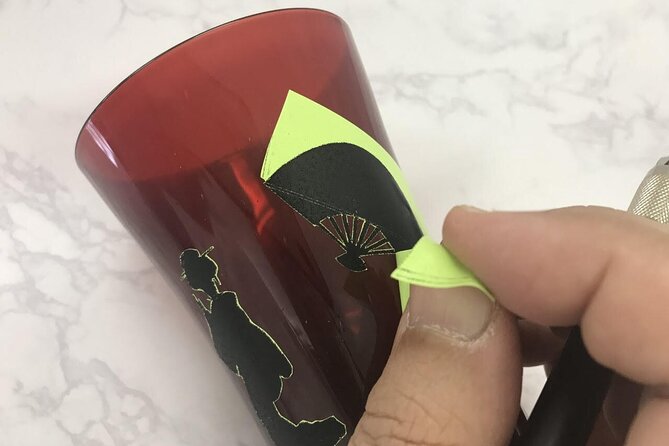
Once the class begins, you work on a design for your glass. The available images include Mount Fuji, geisha, kimono patterns, samurai, and other Japanese motifs. You are given many pictures to help shape the design, so you do not need to arrive with a finished drawing.
That choice is part of the fun, but it can also be where the clock starts to matter. With only 90 minutes, you will want to settle on a direction rather than spend most of the class comparing every possible image. A simple, clear composition may produce a better result than an ambitious design that you cannot finish comfortably.
The design stage also makes this suitable for different ages. Children can choose familiar images, while adults may prefer a kimono pattern or a more detailed Japanese scene. The supplied materials and tools remove much of the worry for first-time participants.
I would think about the person who will receive the glass before you arrive. A Mount Fuji design may make a strong general souvenir. A samurai, geisha, or kimono pattern may feel more personal if it matches your interests. You can also treat the piece as a memory of your own trip rather than as a gift.
Learning the sandblasting technique step by step
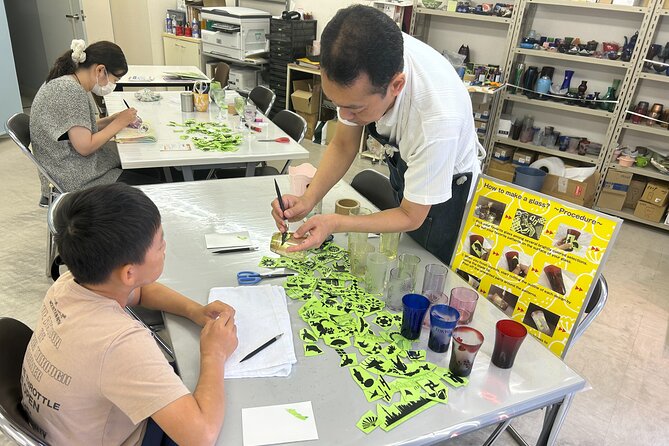
The owner guides you through the basics of sandblasting and shows you how to complete the project. This is not a class where you are handed materials and left alone. The instruction is meant to take you from choosing a motif to producing a finished piece.
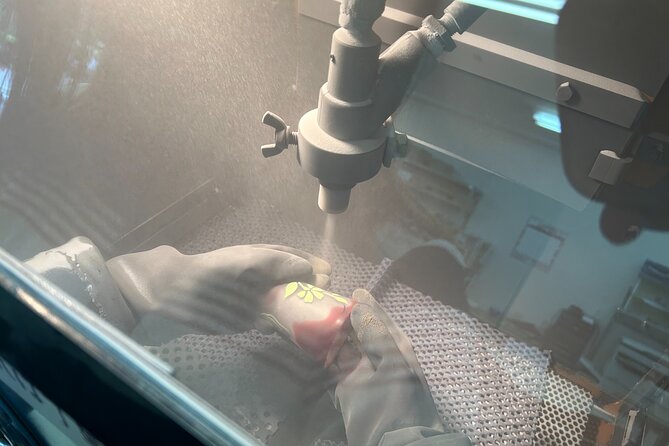
Sandblasting gives the glass its decorated surface. The technique uses a machine to alter the glass according to your design. You will not simply paint a picture and walk away. The final effect comes from the contrast between the treated areas and the untouched glass.
That process is especially rewarding for beginners because you can see a clear change between the starting glass and the final artwork. It also gives the souvenir a stronger connection to the class itself. You know how the design came together because you took part in each stage.
A patient teacher matters here. Aki-san, the workshop owner, is praised for being helpful and calm while explaining the work. That kind of support is valuable for children, first-time artists, and anyone who worries about making a mistake. You can ask for direction as your design develops instead of guessing your way through the project.
The class is suitable for most people, and no artistic background is required. Still, you should expect to participate actively. This is not a demonstration where you sit back and watch an artist create the piece for you.
A completely different kind of day out:
- Mt Fuji and Hakone 1-Day Bus Tour Return by Bullet Train
★ 5.0 · 26,383 reviews - TOKYO SKYTREE® Ticket
★ 4.7 · 25,136 reviews - teamLab Borderless Tickets: MORI Building DIGITAL ART MUSEUM
★ 4.7 · 24,126 reviews - teamLab Planets TOKYO Ticket
★ 4.7 · 21,663 reviews
The finished glass and what you take home
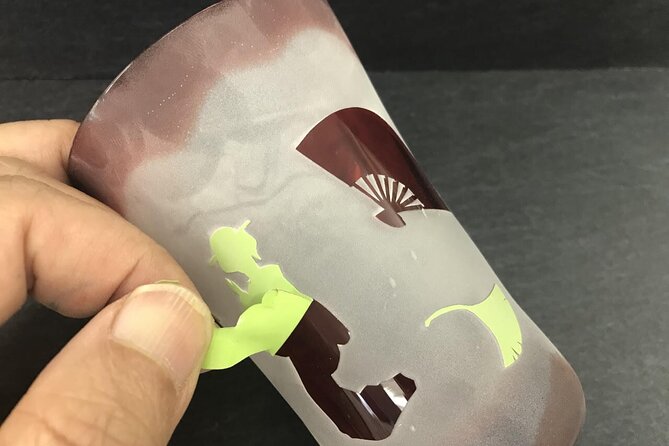
The end result is a personalized glass artwork, described in one account as a drinking glass. It is both a souvenir and a record of the choices you made during the class. The finished object should feel more personal than a mass-produced Tokyo purchase because you selected and shaped the design yourself.
The workshop provides the material fee, lesson fee, and consumption tax in the listed price. You do not need to buy separate supplies. That makes the $53.43 cost easier to judge because the main activity costs are already covered.
At the same time, the price is not bargain entertainment. You are paying for a small class, instruction from the owner, the materials, machine use, and the finished glass. I think it offers fair value for someone who actively enjoys crafts and wants a keepsake. If you are mainly looking for a low-cost activity, you may find the price harder to justify.
The piece also has practical limits. It is a glass object, so you will need to pack it carefully for the journey home. The supplied information does not specify packaging or shipping arrangements, so ask the workshop directly if you have concerns about carrying it in luggage. Do not assume hotel delivery or international shipping is included.
Why families and first-time artists fit well here
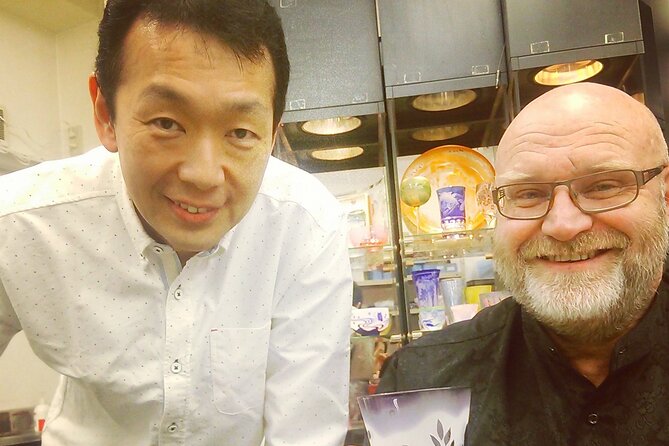
This workshop has a strong family angle because adults and children can work on a creative project together. The class is not described as requiring previous art experience, and most people can participate. The owner’s step-by-step guidance gives beginners a clear path through the activity.
Children may enjoy choosing the image and seeing the sandblasting machine create the result. Adults may appreciate the slower pace and the chance to make something that is not just another photograph. The shared activity can also give a family a break from temples, shopping streets, and long train rides.
You should still consider your child’s ability to focus for 90 minutes. The supplied details do not give a minimum age, so contact the provider if age is important to your plans. The workshop is family-friendly, but every child has a different tolerance for careful design work.
Solo visitors fit well, too. One participant had the class alone and received especially direct attention. A solo booking may not always produce a private session, but the maximum group size keeps the format personal either way.
How this compares with ordinary Tokyo souvenirs
A purchased souvenir takes minutes. This activity asks you to slow down and make decisions. That is the trade-off.
I like the workshop for visitors who want an object with a story behind it. When you use the glass later, you can remember the motif you selected, the design process, and the time spent making it in Tokyo. That personal link is the strongest reason to choose this experience.
The activity also introduces a specific Japanese craft method without asking you to commit to a full-day cultural program. You get a short lesson, a practical result, and a clear beginning and ending. It is a good fit for an itinerary that needs one calm indoor activity.
The limitation is that the class focuses on one glass project. You will not tour a larger studio, visit several craft sites, or receive a broad lesson in Japanese glass history. If you want a long cultural explanation or a more advanced art course, this workshop may feel brief.
Price, timing, and who gets the best value
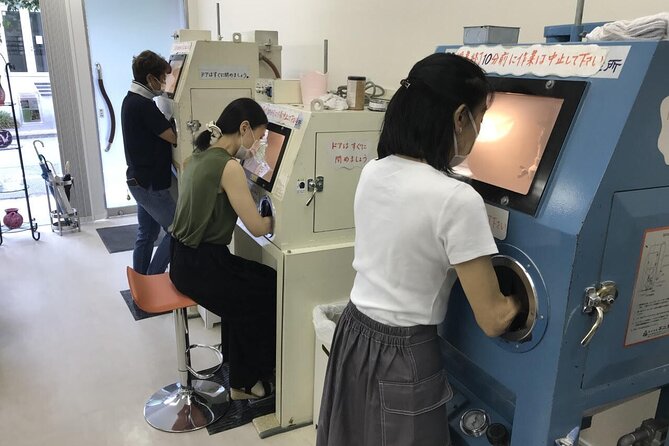
At $53.43 per person, the workshop sits in the midrange for a short Tokyo activity. The price covers the lesson, materials, and consumption tax, so you can compare it more fairly with activities that advertise a low starting price but add equipment or supply fees later.
I would book it if you place real value on personal instruction and a handmade souvenir. The group limit of four is important. A cheaper class with a large group might not offer the same amount of help, especially when you are learning a technique for the first time.
The average booking time is 88 days in advance. That suggests you should plan ahead, particularly if you need a specific date or are visiting during a busy season. Confirmation arrives within 48 hours of booking, subject to availability. I would not wait until the last day of your Tokyo stay if carrying the finished glass home matters to you.
The activity lasts about 1 hour and 30 minutes. Add your travel time to and from Asakusabashi when planning the day. The workshop itself ends back at the meeting point, so you can continue with your own plans from there.
Free cancellation is available if you cancel at least 24 hours before the start time. Inside that 24-hour window, the payment is not refunded and changes are not accepted. The cut-off uses Tokyo local time, so check carefully if you are changing plans from another time zone.
Should you book the Japanese glass sandblasting workshop?
I would book this experience if you want a small, calm, hands-on activity and a souvenir that carries your personal mark. The combination of four-person maximum, patient instruction from Aki-san, Japanese motifs, and included materials gives it a clear advantage over simply buying another gift.
Families, couples, solo visitors, and first-time artists can all fit comfortably into the format. It is also a smart choice when you need an indoor break from Tokyo’s fast pace. The 5 out of 5 rating and full recommendation rate support that positive picture, though the sample is limited.
I would skip it if you want a major sightseeing stop, a long craft lesson, or the cheapest possible souvenir. The $53.43 price is easiest to justify when the making matters as much as the object. For the right visitor, that is exactly the point: you leave Tokyo with something you helped create, not just something you picked up.
FAQ
Where does the glass sandblasting workshop begin?
It begins at 1-chōme-26-12 Asakusabashi, Taito City, Tokyo 111-0053, Japan.
Where does the activity end?
The activity ends back at the meeting point.
How long does the workshop last?
The workshop lasts approximately 1 hour and 30 minutes.
How many people can join the class?
The maximum group size is four participants.
What designs can I use for the glass?
Available Japanese motifs include Mount Fuji, geisha, kimono patterns, samurai, and more.
Do I need previous art experience?
No. The workshop is suitable for beginners and art lovers, and step-by-step instruction is provided.
Are materials and tools included?
Yes. The material fee, lesson fee, consumption tax, materials, and tools are included.
Is hotel pickup and drop-off included?
No. Hotel pickup and drop-off are not included.
Is the workshop suitable for families?
Yes. The activity is described as suitable for the whole family, and most people can participate.
Can I cancel for a full refund?
Yes, if you cancel at least 24 hours before the experience start time. Cancellations within 24 hours are not refunded, and changes during that period are not accepted.
Just added in Tokyo
- A One-of-a-Kind Sushi Experience in a Special Place of Japan★ 5.0 · 15 reviews
- Tokyo Cute Bento Cooking Class – Make a Kawaii Character Lunchbox★ 5.0 · 126 reviews
- Japanese Home Cooking Class & Walk in Todoroki Temple Tokyo★ 5.0 · 88 reviews
- Japan Tokyo Tower Observatory Deck E-Ticket★ 4.0 · 34 reviews
- Catch a Baseball Game in Tokyo with a Local – Tickets Included★ 5.0 · 24 reviews
- JDM Experience with Fast&Furious RX-7 (English speaking Driver)★ 5.0 · 57 reviews
- Tokyo Private Day Tour by Car with English speaking Driver Guide★ 4.0 · 29 reviews
- Japan Classic 10 Day – One Life Adventures★ 5.0 · 129 reviews
Workshops, compared.

Sushi Making Tokyo Roll and Authentic Japanese Sushi Class
Read our review →
Gion Make Your Own Chopsticks with Engraving Option
Read our review →
Roll and Authentic Sushi Making Class in Asakusa
Read our review →
Ramen Cooking Class at Ramen Factory in Kyoto
Read our review →
Tokyo Asakusa Chopsticks Workshop: Make Your Own Pair
Read our review →
Ring Making Workshop : Vintage Japanese Coin Ring
Read our review →Browse the lists this tour appears in