
Reviewed · TEMPLES AND SHRINES
Ise Jingu(Ise Grand Shrine) Full-Day Private Tour with Government-Licensed Guide
Sacred Japan rewards a slower look. This six-hour private tour pairs Ise Jingu’s Naiku and Geku with Okage Yokocho and the coastal sights around Meoto Iwa, giving you religious history, local food, and traditional architecture in one well-planned day. I like the flexibility of choosing three or four sites, and I like having a government-licensed English-speaking guide explain rituals that are easy to miss on your own. The main catch is that this is a walking and public-transport tour, so you pay transportation, meals, and entrance fees separately.
The price is $153.50 per person, which is fair if you are traveling with family or want the day shaped around your interests. Guides Yuka and Yoshinari Nishio, also called Yoshi, have earned especially warm praise for their care, clear planning, and personal connection with their groups. Just remember that a six-hour schedule cannot comfortably cover every listed stop.
In This Review
- Key points to know before booking
- Why Ise Jingu deserves a full day
- Starting at Geku, the outer shrine
- Walking through Naiku, the heart of Ise Jingu
- Okage Yokocho for food and old Ise
- Meoto Iwa and the coast near Futami
- Futami Okitama Shrine beside the Married Couple Rocks
- Hinjitsukan and Meiji-era elegance
- What the guide adds to the day
- Price, pace, and what you pay separately
- Is this tour manageable for you?
- Should you book the Ise Jingu private tour?
- FAQ
- How long does the Ise Jingu private tour last?
- How many sites can I visit?
- Is transportation included?
- Is hotel pickup available?
- Is lunch included?
- Are entrance fees included?
- Is this a private tour?
- Can I cancel for a full refund?
Key points to know before booking
- Choose three or four sites: The tour is customizable, but the six-hour schedule is not designed for a full visit to every listed attraction.
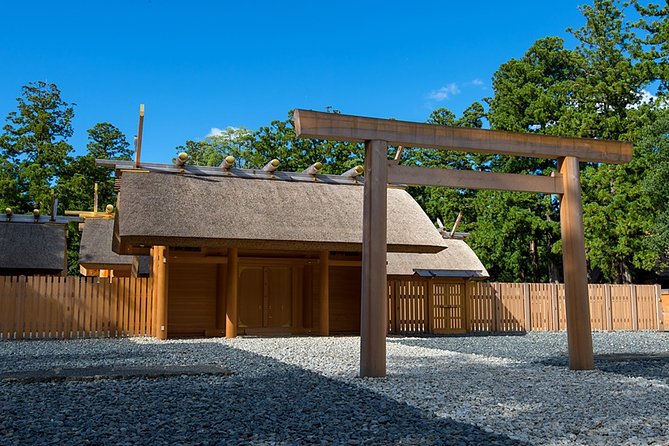
- Ise Jingu has two major areas: Naiku honors Amaterasu Omikami, while Geku is the other main shrine area and an important part of the traditional visit.
- Okage Yokocho adds food and old-town atmosphere: The street recreates an Edo and Meiji-era townscape near Naiku’s entrance, with shops and restaurants.
- Meoto Iwa brings a coastal finish: The sacred Married Couple Rocks sit offshore near Futami Okitama Shrine and offer a very different setting from the shrine grounds.
- You walk and use public transport: Pickup is on foot within a designated area. Private transportation is not included.
- The guide is the main value: Admission tickets, transport, lunch, and personal spending are extra, but the guide helps connect the places into one meaningful visit.
Why Ise Jingu deserves a full day
Ise Jingu is about 2,000 years old and is regarded as Japan’s most sacred Shinto shrine. The central religious focus is Amaterasu Omikami, the sun goddess, enshrined at Naiku. That gives the visit a weight that goes beyond checking off another Japanese landmark.
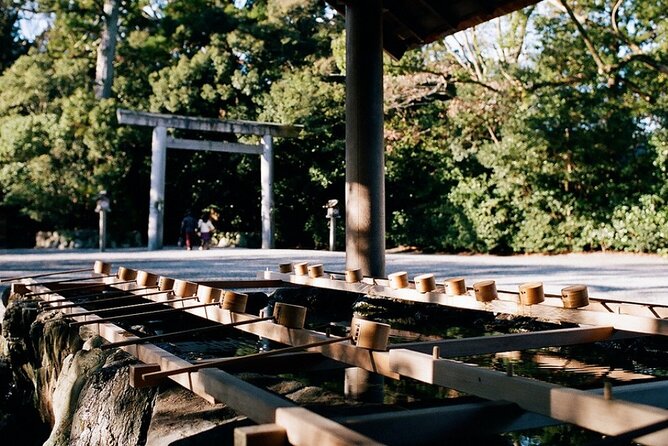
I like this tour because it does not treat Ise Jingu as a single building. The experience includes the shrine grounds, purification areas, the Isuzugawa River, an old-style shopping street, and coastal shrines connected with marriage and good fortune. You get a better sense of how worship, nature, food, and local history fit together.
A guide matters here. Shinto shrines have customs and rituals that can appear simple from the outside. Your guide can explain what you are seeing at Geku and Naiku, how the sacred grounds are used, and why the river and purification areas matter. Without that help, you may still enjoy the trees and architecture, but the visit can feel like a quiet walk through a beautiful site without much context.
The tour is private, so only your group participates. That gives you room to ask questions, set a comfortable pace, and request changes in advance. It also makes the outing a good match for families or groups with different interests.
More Private Tours in Japan:
- Tokyo 6hr Private Tour with Government-Licensed Guide
★ 5.0 · 3,902 reviews - Private Tour to Mt. Fuji and Hakone (Fully Licenced Operator)
★ 5.0 · 1,910 reviews - Tokyo Customized Private Tour (Must See Places in 1 Day)
★ 5.0 · 1,499 reviews
Starting at Geku, the outer shrine
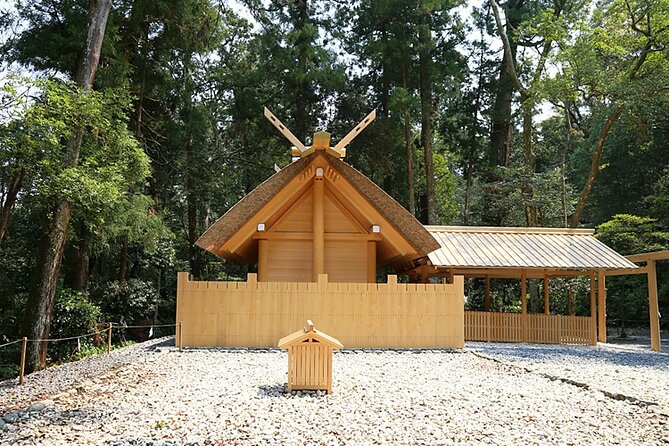
Geku, or Ise Shrine Geku, is one of the two major shrine areas associated with Ise Jingu. It is often included as part of the traditional way to approach the Ise visit, and your guide can explain the history and rituals connected with this sacred ground.
The supplied schedule gives Geku about one hour. That is enough for an introduction, but not a slow, exhaustive visit. You will want to walk calmly, listen to the guide, and leave time for the next stop rather than trying to inspect every corner.
This is one reason the custom planning option is useful. If your group cares most about Shinto practice and shrine history, you can give Geku and Naiku more attention. If you would rather balance religion with food and coastal scenery, your guide can build a broader route around three or four sites.
Entrance fees are not included. The tour information says guide entry fees are covered only for sights listed under the expected stops, so confirm any special request or added attraction before the day begins. That small check can prevent confusion about who pays for what.
Walking through Naiku, the heart of Ise Jingu
Naiku is the part of Ise Jingu associated with Amaterasu Omikami. For many people, this is the emotional center of the visit, and the tour allows about an hour here.
The shrine grounds are not a quick curbside stop. You should expect long distances on foot, and the tour specifically warns that Ise Jingu requires substantial walking. Wear comfortable shoes and keep your schedule open enough that you are not rushing through the most important site of the day.
Naiku also offers more than shrine buildings. The Isuzugawa River runs along the grounds and is visited by pilgrims and sightseers for purification and the surrounding nature. This setting helps explain why the site feels spiritual even before your guide begins talking about its religious role.
I appreciate that the guide can connect the physical setting to the worship taking place there. You are not simply looking at a gate, path, or river. You are learning why these elements matter to the people who come to pay respect to Amaterasu Omikami.
The one-hour allocation is practical but brisk. If you want extended quiet time, photography, or a slower walk, choose fewer additional stops. Trying to squeeze every location into the day would likely make Naiku feel hurried.
Okage Yokocho for food and old Ise
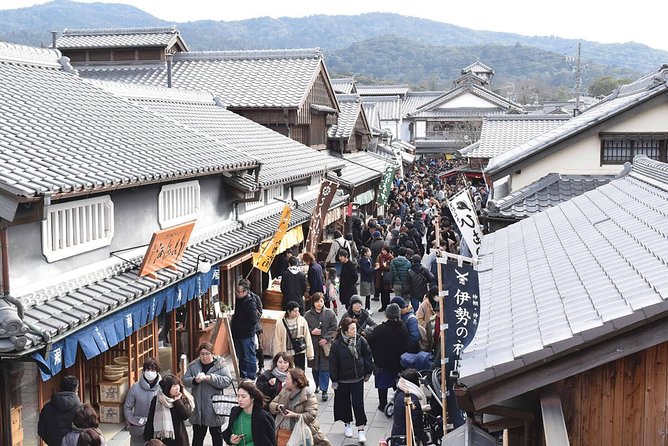
Okage Yokocho sits in front of Naiku’s gate. Built in 1993, it recreates the townscape of Ise during the Edo and Meiji periods. The street has shops and restaurants, making it a natural change of pace after the solemn shrine grounds.
This is where the tour becomes especially useful for first-time visitors. You can ask your guide about traditional Japanese foods, local customs, and which parts of the street fit your group’s interests. Lunch is not included, and you pay for food yourself, but the setting gives you a convenient place to make that break part of the day.
I like the contrast. Ise Jingu asks for quiet attention, while Okage Yokocho gives you a chance to browse, eat, and see how the shrine supports a wider local culture. It is not an untouched Edo street, since it was created in 1993, but it is designed to show the area’s older town character and offers a pleasant link between worship and daily life.
The listed time is about one hour. That can work for a meal and some browsing, though your actual time will depend on what you choose to eat and how much shopping interests you. If your group has a strong food focus, tell the guide before the tour so the schedule can be adjusted.
More Temples and Shrines in Japan:
- [Kyoto & Nara Day Tour] Sagano Scenic Railway & Nara Park & Fushimi Inari Taisha Thousand Torii Gates & Togetsukyo Bridge & Bamboo Grove & Kimono Forest (Departing from Osaka)
★ 4.9 · 10,942 reviews - Mount Fuji & Hakone – Lake Ashi Torii Gate, Hakone Shrine, Hakone Pirate Ship, Hakone Ropeway, Owakudani, Lake Yamanaka & Oshino Hakkai Day Trip: Sea, Land, and Air Panoramic Tour from Tokyo
★ 4.8 · 7,989 reviews - Kyushu One-Day Tour: Yufuin no Mori Train & Yufuin Town & Nyoirin-ji Temple & Dazaifu & Hell Hot Springs (Departing from Fukuoka)
★ 4.9 · 4,474 reviews - Kyoto: Fushimi Inari, Kinkakuji, Bamboo Grove 1 Day Bus Tour
★ 4.8 · 4,316 reviews
Meoto Iwa and the coast near Futami
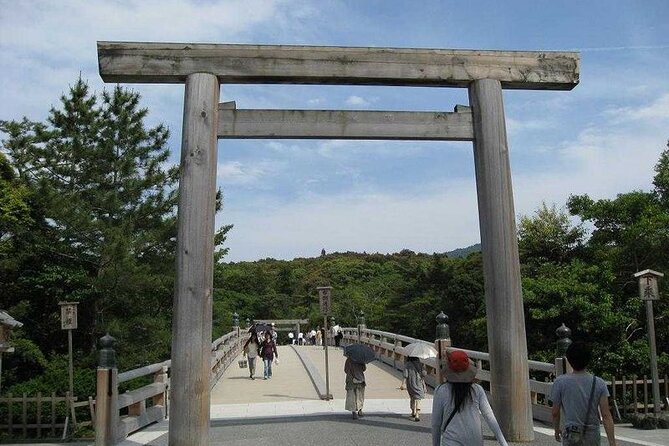
Meoto Iwa, known as the Married Couple Rocks, gives the day a completely different mood. The two sacred rocks sit in the ocean near Futami, with the larger rock paired with the smaller one. They are linked to Futami Okitama Shrine and serve as a symbolic torii gate for the sacred Okino-shiraishi rock offshore.
The site is known for blessings connected with marriage. You do not need to be on a honeymoon to appreciate it. The rocks offer a simple, memorable image and a strong connection between Shinto belief and the sea.
A visit here is valuable because it broadens your understanding of Ise. Naiku and Geku are grand religious destinations, while Meoto Iwa shows how sacred meaning can be tied to natural features. The change from wooded shrine grounds to the coast also keeps a long day from feeling repetitive.
The tour lists about one hour for Meoto Iwa and Meoto Yokocho. Transportation fees are extra, and the tour uses public transport rather than a private vehicle. That means you should expect some time spent moving between sites. Your guide handles the route, but you should not think of this as a drive-up sightseeing tour.
Futami Okitama Shrine beside the Married Couple Rocks
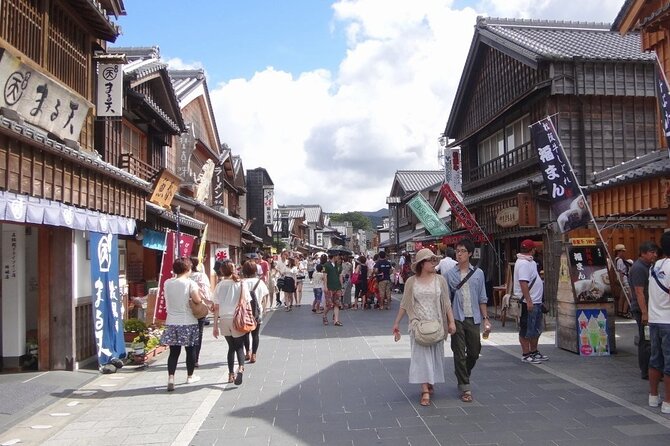
Futami Okitama Shrine is the shrine associated with Meoto Iwa. It is known for the rocks and their symbolic role as a torii gate toward Okino-shiraishi in the sea. Admission is listed as free, though you still cover transportation and any personal purchases.
The shrine works well as part of a coastal combination. You can look at the rocks, learn about their religious meaning, and see how the shrine relates to the surrounding water. The stop has a clear purpose, unlike a generic scenic lookout.
Because the schedule names Meoto Iwa and Futami Okitama Shrine separately, ask your guide how the time will be divided. The tour is customizable and generally includes three or four sites, so these may be treated as one coastal visit rather than two completely separate stops.
Hinjitsukan and Meiji-era elegance
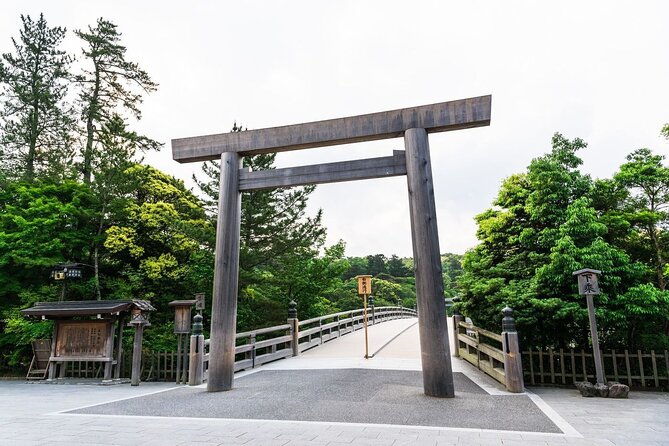
Hinjitsukan was a historic guesthouse that hosted members of the imperial family and other distinguished guests. Its preserved tatami rooms offer a look at the refined style of Japan’s Meiji era.
This stop is a good choice if you enjoy architecture, interiors, and social history. It also adds variety to a day otherwise centered on shrines, rivers, shops, and the sea. You will see a different side of the Ise area, one tied to hospitality and formal Japanese rooms.
The visit is listed as about one hour, and entrance fees are not included. If Hinjitsukan is important to you, mention it when arranging the itinerary. Since the tour includes only three or four sites, adding it may mean leaving out another stop.
What the guide adds to the day
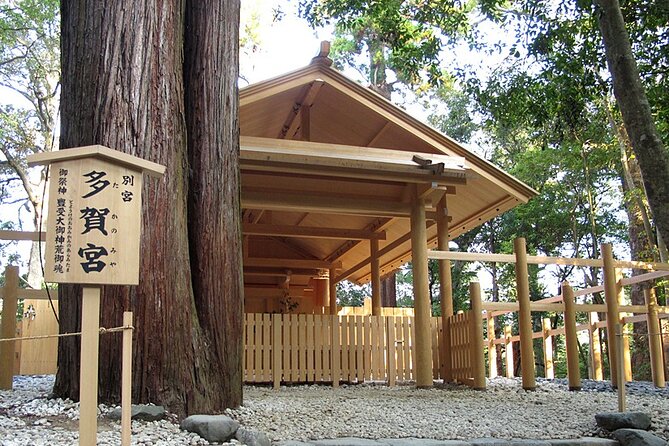
The guide is the strongest reason to book this experience instead of visiting Ise on your own. You receive a licensed local English-speaking guide, and the tour provider allows special requests in advance.
Yuka received high praise for being at the hotel lobby before the agreed pickup time, briefly reviewing the plan, and explaining the classic way to approach the area. That kind of early orientation is useful because it lets you understand the day before the walking begins.
Yoshinari Nishio, known as Yoshi, planned a family outing that included Yokoyama Bay before visiting Geku and Naiku. He explained the history and rituals of the sacred grounds and helped shape the day around the family, including the traveler’s parents. That suggests the guide can be especially helpful when a group has mixed ages or needs a gentler pace.
I also like the human side of the feedback. Yuka and Yoshi both responded with warmth and personal appreciation, not just a standard service message. The experience appears to rely on guides who care about conversation as well as facts.
Still, guide quality can vary by assignment. The named examples are encouraging, but you should not assume you will receive a specific guide unless the provider confirms it. You can request preferences in advance, but availability is not stated.
Price, pace, and what you pay separately
At $153.50 per person, this is not the cheapest way to see Ise. The price covers the private licensed guide and the customized planning, but not transportation, entrance fees, lunch, or other personal expenses.
The value improves when you are traveling as a private group and want expert help with a place that has religious customs and several separate sights. A private guide can save you from wasting time on transport decisions and can adjust the day around your interests.
The value is weaker if you want only a short look at Naiku or prefer to organize public transport yourself. The six-hour schedule, walking requirement, and extra costs mean you should budget beyond the headline price.
Group discounts are available, which may help families or larger private groups. You cannot combine multiple tour groups, so this is designed for one party traveling together.
The tour is often booked 102 days ahead on average. That is a useful signal for planning, especially if you have fixed dates in Mie. Confirmation arrives at booking, and cancellation is free up to 24 hours before the start time. Changes or cancellations inside that 24-hour window are not accepted for a refund.
Is this tour manageable for you?
Most people can participate, and service animals are allowed. The main physical issue is distance, not technical difficulty. You walk through shrine grounds and use public transport, with no private vehicle included.
I would choose this tour if you:
- Want clear English explanations at Japan’s most sacred Shinto site
- Prefer a private day instead of a shared group
- Are traveling with parents or family members who need a flexible schedule
- Want to combine shrine visits with food, traditional architecture, and coastal sights
- Are comfortable paying separately for transport, lunch, and admissions
I would think twice if you dislike walking, need door-to-door transportation, or want to cover all six listed stops in detail. The guide can customize the route, but six hours is still six hours.
Pickup is offered on foot within a designated area of Ise. That wording matters. You do not receive private hotel transportation around the region, so clarify the meeting point and allow time to reach it.
Should you book the Ise Jingu private tour?
Book it if you want Ise to make sense, not just look pretty. The private format, licensed English-speaking guide, and choice of three or four sites give you a useful amount of control. I especially like the chance to pair Naiku and Geku with Okage Yokocho or Meoto Iwa, depending on whether your group prefers food, architecture, or the coast.
For the best value, decide your priorities before the day begins. Choose Naiku and Geku for religious context, add Okage Yokocho for food and shopping, or select the Futami area for Meoto Iwa and Hinjitsukan. Keep the long walking distances in mind, bring comfortable shoes, and budget for transport and entrance fees.
If you want an efficient, personal introduction to Ise, this is a strong choice. If you want a self-guided stroll with minimal extra expense, you may prefer to arrange the sights yourself.
FAQ
How long does the Ise Jingu private tour last?
The tour lasts approximately six hours.
How many sites can I visit?
The tour is customizable and includes three or four sites chosen from the expected stops. The full list contains more locations, but the schedule is not intended to cover every stop in depth.
Is transportation included?
No. Transportation fees are not included, and the tour uses public transportation. Private transportation is also not included.
Is hotel pickup available?
Pickup is offered on foot within a designated area of Ise. The tour does not include private vehicle pickup.
Is lunch included?
No. Lunch and other personal expenses are paid separately.
Are entrance fees included?
Admission fees are generally not included. Guide entry fees are covered only for sights listed under the expected stops.
Is this a private tour?
Yes. Only your group participates, and multiple tour groups cannot be combined.
Can I cancel for a full refund?
Yes, if you cancel at least 24 hours before the experience start time. Cancellations or changes made less than 24 hours before the start time are not accepted for a refund.
Just added in Japan
- A One-of-a-Kind Sushi Experience in a Special Place of Japan★ 5.0 · 15 reviews
- Tokyo Cute Bento Cooking Class – Make a Kawaii Character Lunchbox★ 5.0 · 126 reviews
- Japanese Home Cooking Class & Walk in Todoroki Temple Tokyo★ 5.0 · 88 reviews
- Japan Tokyo Tower Observatory Deck E-Ticket★ 4.0 · 34 reviews
- Catch a Baseball Game in Tokyo with a Local – Tickets Included★ 5.0 · 24 reviews
- JDM Experience with Fast&Furious RX-7 (English speaking Driver)★ 5.0 · 57 reviews
- Tokyo Private Day Tour by Car with English speaking Driver Guide★ 4.0 · 29 reviews
- Japan Classic 10 Day – One Life Adventures★ 5.0 · 129 reviews
Temples and Shrines, compared.
Kyushu One-Day Tour: Yufuin no Mori Train & Yufuin Town & Nyoirin-ji Temple & Dazaifu & Hell Hot Springs (Departing from Fukuoka)
Read our review →
Fushimi Inari, Kinkakuji, Bamboo Grove 1 Day Bus Tour
Read our review →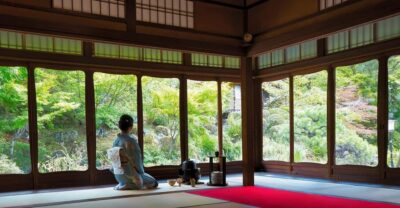
Tea Ceremony in a Traditional Tea House in Kiyomizu
Read our review →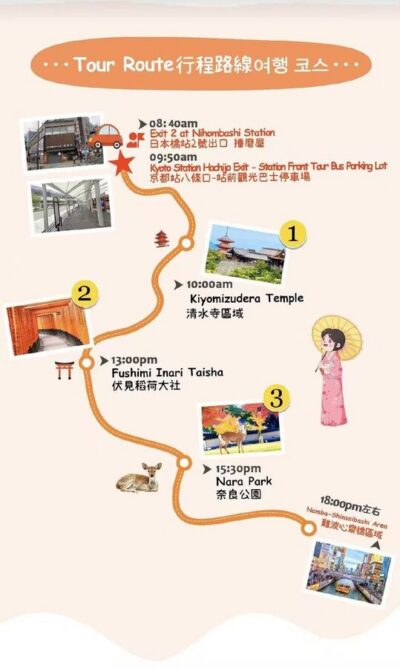
Kyoto Nara Day Trip │ Kiyomizu-dera Temple + Fushimi Inari-taisha Shrine + Nara Park (Departing from Osaka/Kyoto)
Read our review →
Browse the lists this tour appears in