
Reviewed · TEMPLES AND SHRINES
Ise Jingu(Ise Grand Shrine) Half-Day Private Tour with Government-Licensed Guide
Sacred Japan feels different at Ise. This four-hour private tour gives you focused guidance through Naiku and Geku, while also opening the door to Shinto customs, shrine upkeep, and local places such as Okage Yokocho. I especially like the one-guide-to-one-group format and the chance to shape the outing around two or three sites. The main catch is simple: transportation and entrance costs are extra, so the advertised price is not your full day’s budget.
The guide can also help you avoid a common mistake: trying to fit Geku, Naiku, and Meoto Iwa into four hours without planning the transfers. Tetsuya Tanahashi advised one group to hire a taxi on a busy Sunday, while another route used public buses and included Sarutahiko Shrine. That kind of practical help is a strong reason to book a private tour rather than just walk around with a guidebook.
In This Review
- Key points to know before booking
- Why Ise Jingu benefits from a private guide
- Naiku, the home of Amaterasu Omikami
- Geku, the Outer Shrine with its own purpose
- Isuzugawa River and the quiet side of Naiku
- Okage Yokocho, food and shopping near Naiku
- Meoto Iwa and the extra transfer to Futami
- What the private format really gives you
- Timing, transport, and the four-hour limit
- Is $108.38 per person a fair price?
- Who should book this Ise tour?
- Should you book it?
- FAQ
- How long does the Ise Jingu private tour last?
- Is the tour private?
- Does the tour include private transportation?
- Which sites can be included?
- Is an English-speaking guide included?
- Are entrance fees and lunch included?
- Can I cancel for a full refund?
Key points to know before booking
- Choose two or three sites: The outing is customizable, but four hours is not enough for every possible stop at a relaxed pace.
- Expect a walking and public-transport tour: Pickup is offered within a designated area, but private transportation is not included.
- Naiku and Geku explain different sides of Ise: Your guide can put the shrine buildings, rituals, and sacred paths into cultural context.
- Okage Yokocho adds everyday flavor: Shops and food stalls recreate an Edo to Meiji-era townscape near Naiku.
- Meoto Iwa needs careful timing: The Wedded Rocks are outside the main shrine area, so reaching them can require a taxi or public bus.
- The private format has real value: Only your group participates, making it easier to ask questions, adjust the route, or slow down at meaningful spots.
Why Ise Jingu benefits from a private guide
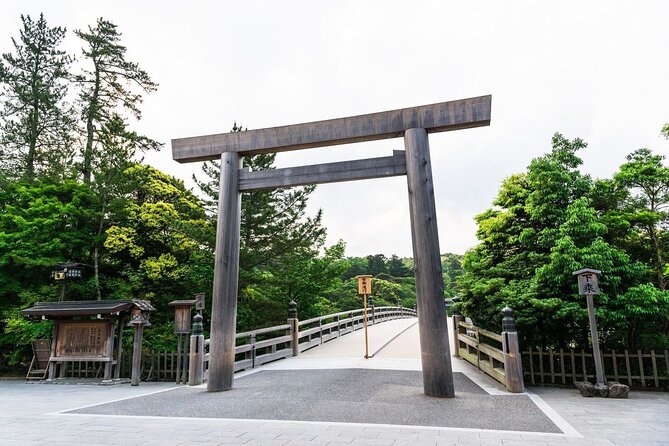
Ise Jingu is not just a famous Japanese shrine with attractive gates and quiet forest paths. It is one of the country’s most important Shinto sites, and the meaning behind the rituals can be easy to miss if you visit alone.
A guide can explain how to approach the shrine, how to pray, which areas are restricted, and why certain paths and structures matter. One guide, Yoshi, also explained the people who work at the shrines and pointed out a route reserved for the emperor of Japan at the largest shrine compounds. Those are details you are unlikely to pick up from a quick walk and a few signs.
The tour is private, so you are not trying to keep up with a large group or waiting for strangers to finish photographs. You can ask about Shintoism, Japanese customs, shrine construction, or the regular rebuilding of the structures. One especially useful subject is the way the buildings are maintained, a detail that helped make the shrine’s age and continuing religious role easier to understand.
The price is listed at $108.38 per person. That is not a bargain if you only want a short introduction to the grounds, especially since transport, lunch, entrance fees, and personal expenses are excluded. It becomes better value when you want a personal explanation of the rituals and need help combining several parts of Ise in a limited amount of time.
More Private Tours in Japan:
- Tokyo 6hr Private Tour with Government-Licensed Guide
★ 5.0 · 3,902 reviews - Private Tour to Mt. Fuji and Hakone (Fully Licenced Operator)
★ 5.0 · 1,910 reviews - Tokyo Customized Private Tour (Must See Places in 1 Day)
★ 5.0 · 1,499 reviews
Naiku, the home of Amaterasu Omikami
Naiku, also called the Inner Shrine, is devoted to Amaterasu Omikami, the sun goddess and supreme deity of Ise Jingu. For many people, this is the central purpose of visiting Ise.
You can expect the guide to focus on the sacred character of the grounds, the structure of the shrine compounds, and the proper way to pay respect. The setting includes more than the main buildings. The approach, purification areas, river, trees, and carefully controlled spaces all form part of the experience.
A guide is particularly helpful here because the most important buildings are not treated like ordinary tourist attractions. You may not be able to inspect every structure closely, and some places are reserved for religious use. Instead of simply asking why you cannot go farther, you can learn what the boundaries mean and how the shrine functions.
The listed time for Naiku is about one hour. That gives you enough room for a clear introduction, but it is not a leisurely exploration of every path. If Naiku matters most to you, tell the guide before the tour begins so the schedule gives it proper attention.
Admission is not included. The experience information also says guide entry fees are covered only for sights included under the expected stops, so ask the operator exactly which fees apply to your chosen route.
Geku, the Outer Shrine with its own purpose
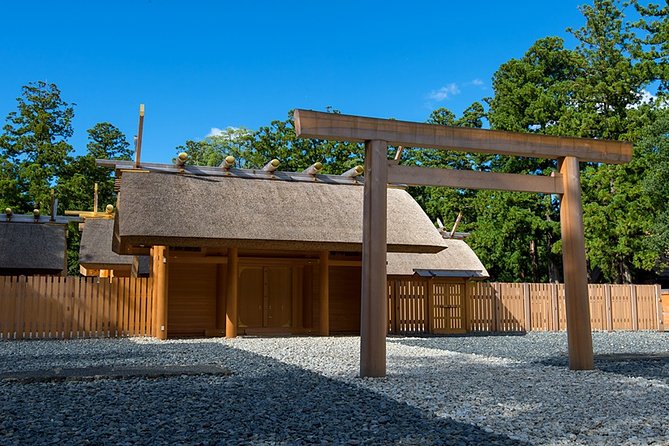
Geku, or the Outer Shrine, is another major part of Ise Jingu. It is not simply a smaller warm-up before Naiku. The two shrine areas have different religious roles, and visiting both gives you a fuller picture of Ise.
A good guide can explain the relationship between Geku and Naiku, then show you how the grounds differ in feel and layout. The time allowance is about one hour, which suits a guided introduction and leaves room for the other selected stops.
This is also where planning matters. Some visitors try to see Geku, Naiku, Meoto Iwa, and the shopping streets in the same four-hour block. That can work only with tight timing and sensible transport. Tetsuya Tanahashi’s advice to use a taxi on a busy Sunday is worth taking seriously, particularly if your group wants all three major areas.
Another guide route began at Ise City Station, continued to Geku, used a public bus toward Naiku, and stopped at Sarutahiko Shrine. The exact route can be discussed with your guide by email after booking, which makes this useful for people who already know which part of Ise matters most to them.
Isuzugawa River and the quiet side of Naiku
The Isuzugawa River runs beside the Naiku grounds and forms part of the shrine’s purification experience. It also gives the visit a natural pause between formal shrine spaces.
The river is free to visit and does not require a separate admission ticket. Your guide can explain how purification fits into a Shinto visit and why the water and surrounding nature are part of the religious setting rather than just pleasant scenery.
This stop is best for you if you want to understand how Ise combines worship and the natural world. It may be less important if your priority is seeing every major shrine building or fitting in Meoto Iwa.
Because the river is connected to Naiku, it can often be included without adding a separate long transfer. Still, the time available depends on your selected two or three sites. Tell the guide if you prefer more time by the river instead of extra shopping.
More Temples and Shrines in Japan:
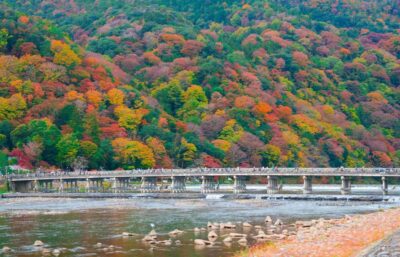
- [Kyoto & Nara Day Tour] Sagano Scenic Railway & Nara Park & Fushimi Inari Taisha Thousand Torii Gates & Togetsukyo Bridge & Bamboo Grove & Kimono Forest (Departing from Osaka)
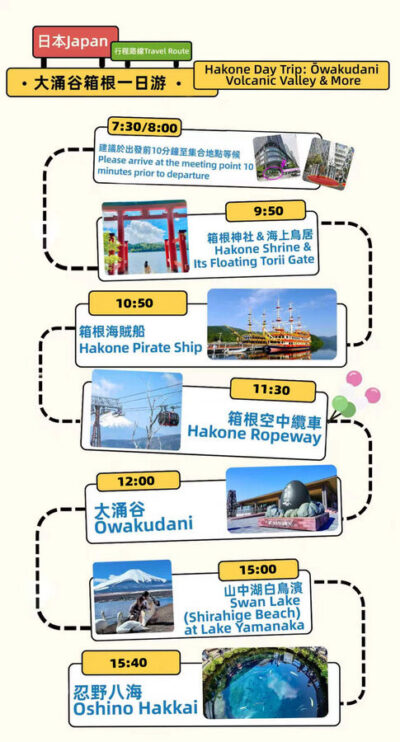
★ 4.9 · 10,942 reviews - Mount Fuji & Hakone – Lake Ashi Torii Gate, Hakone Shrine, Hakone Pirate Ship, Hakone Ropeway, Owakudani, Lake Yamanaka & Oshino Hakkai Day Trip: Sea, Land, and Air Panoramic Tour from Tokyo
★ 4.8 · 7,989 reviews - Kyushu One-Day Tour: Yufuin no Mori Train & Yufuin Town & Nyoirin-ji Temple & Dazaifu & Hell Hot Springs (Departing from Fukuoka)
★ 4.9 · 4,474 reviews - Kyoto: Fushimi Inari, Kinkakuji, Bamboo Grove 1 Day Bus Tour
★ 4.8 · 4,316 reviews
Okage Yokocho, food and shopping near Naiku
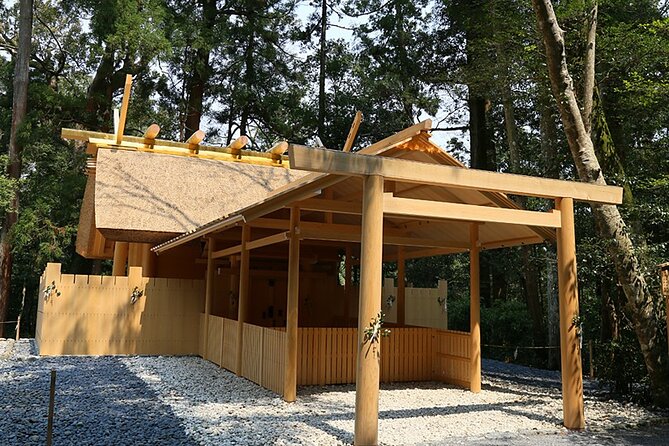
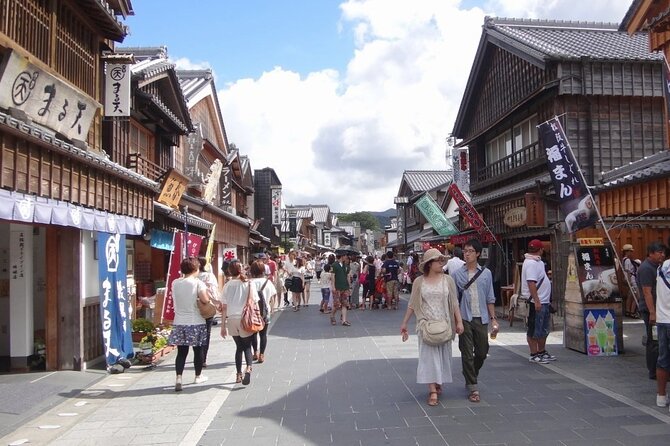
Okage Yokocho sits in front of Naiku’s gate and recreates the townscape of Ise from the Edo and Meiji periods. It was built in 1993, so this is not an untouched old quarter. Its appeal comes from the way it gathers traditional-looking streets, shops, restaurants, and local treats beside the shrine.
The setting makes a useful contrast with the solemnity of Naiku. You can move from quiet ritual grounds to a place where you can browse, eat, and see how Ise presents its local culture to visitors.
One hour is listed for this stop. That is enough for an introduction and some browsing, but you may want extra time if food and shopping are a major part of your plan. Lunch is not included, and neither are personal purchases, so budget separately.
I like this part of the tour because it keeps the visit from becoming an all-shrine experience. You get a clearer sense of how the religious center connects with the town around it. Just remember that the street is popular, and a busy day can slow down your walking and shopping.
Meoto Iwa and the extra transfer to Futami
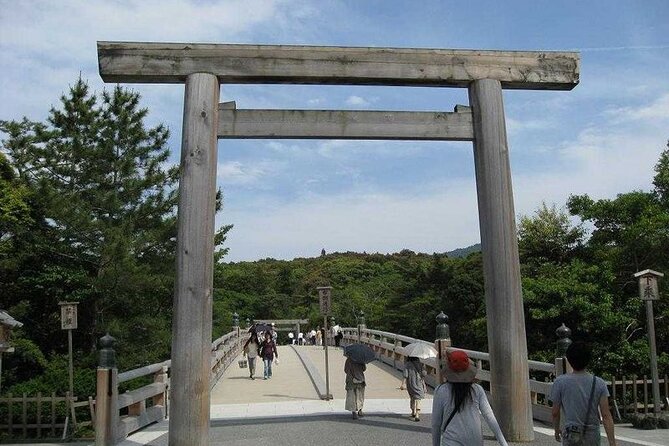
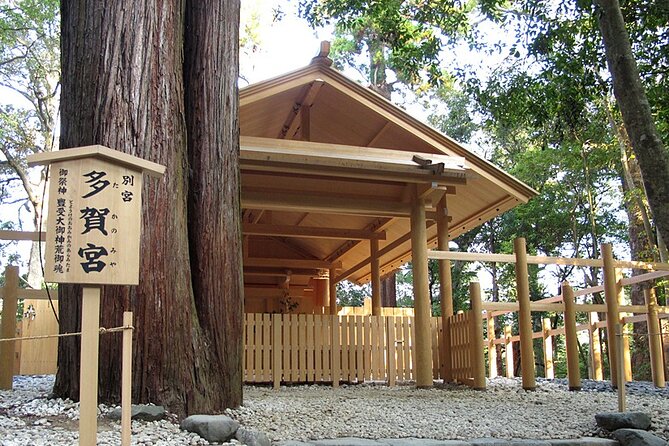
Meoto Iwa, known as the Wedded Rocks, is in the coastal area of Futami within Ise City. Two sacred rocks sit offshore, with the larger rock joined to the smaller one by a sacred rope. The view is a memorable change from the shrine compounds and city streets.
The tour allows about one hour here. That sounds comfortable, but the stop is the clearest reason not to underestimate transport time. Meoto Iwa is not beside Naiku or Geku, and private transportation is not part of the package.
If you want to include the rocks, discuss the route before the day begins. A taxi may save time, while public transport may suit you if you prefer to control spending. The guide can help organize the plan, but the fares remain your responsibility.
This stop is best for you if you want a broader picture of Ise rather than only the two main shrines. It is less suitable if you dislike changing locations during a short tour or want a slow, contemplative morning at Naiku.
What the private format really gives you
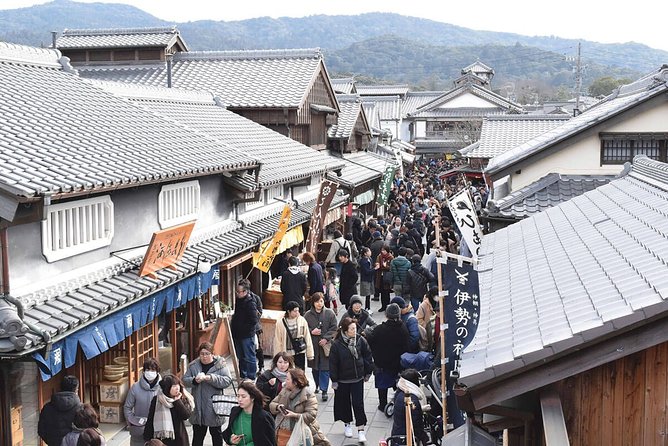
The strongest feature here is not simply having a guide. It is having a guide whose attention is reserved for your group.
You can ask for a slower explanation of Shinto prayer, request more time at the shrine buildings, or switch the balance between sacred sites and local streets. You cannot combine multiple tour groups, so the experience remains limited to your own party.
The available feedback points to guides with different strengths. Tetsuya Tanahashi was praised for planning the two shrines and shopping streets, as well as explaining how the buildings and structures are maintained. Yoshi was appreciated for explaining Shinto, shrine workers, prayer customs, and restricted imperial routes. Nishio worked with a group by email to settle the meeting point, time, and route in advance.
Those examples suggest you should contact the guide early with a clear wish list. Ask for two or three priorities, not five equal priorities. A private guide can adjust the day, but cannot remove the distance between Geku, Naiku, and Futami.
Timing, transport, and the four-hour limit
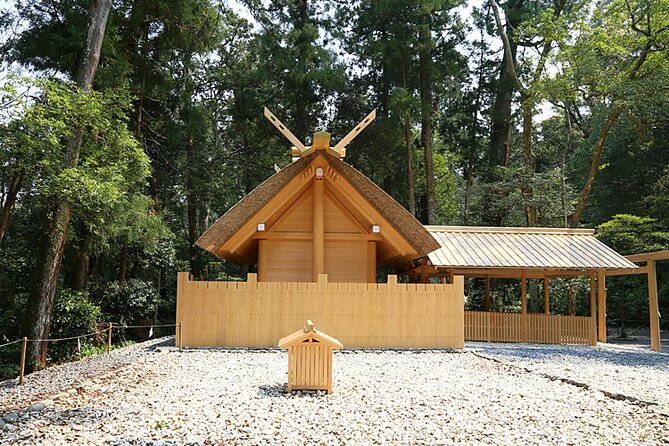
The tour lasts about four hours. Pickup or meetup is on foot or by public transport within a designated area of Ise, not by included private vehicle.
That distinction matters. You are paying for the licensed English-speaking guide, not a car and driver. Transportation fees, entrance fees, lunch, and other personal expenses are not included.
The best plan depends on your chosen sites:
- Geku and Naiku make a sensible shrine-focused route.
- Naiku, Isuzugawa, and Okage Yokocho create a compact mix of worship, nature, and local shopping.
- Geku, Naiku, and Meoto Iwa offer the broadest coverage but require careful transfers.
- A route with Sarutahiko Shrine can be arranged in place of another stop, as shown by one suggested public-bus itinerary.
Sunday crowds may make the schedule tighter. If your visit falls on a busy day, ask the guide about taxi use before arrival. I would not assume that every listed stop can be enjoyed fully just because each has a one-hour estimate.
Is $108.38 per person a fair price?
The answer depends on how much help you need. For a simple shrine visit, the price may feel high once you add transport and other costs. You can walk through the public areas of Ise without paying for a private guide.
The value improves if you are new to Shinto customs, have limited time, or want to combine sites that are not next to one another. A guide can reduce confusion, explain what you are seeing, and help you avoid wasting half the tour on an inefficient route.
The private arrangement is also more useful for families or small groups with different interests. You can ask for more shopping, more religious context, or a shorter route without negotiating with a busload of strangers. Group discounts are offered, which may improve the per-person cost for a larger private party.
I would treat the $108.38 as the guide fee and plan a separate transport budget. That keeps the final cost honest and prevents an unpleasant surprise when Meoto Iwa or a taxi becomes part of the plan.
Who should book this Ise tour?
I recommend it most to first-time visitors who want cultural explanation rather than a quick photo stop. It also suits small groups, families, and anyone who wants to ask detailed questions about Shinto practice.
It is a good match for you if you want to choose two or three priorities and appreciate help with public transport. The tour also works well for people who want both sacred spaces and local life at Okage Yokocho.
I would be more cautious if you have only one fixed goal. If you want a slow, unhurried visit to Naiku alone, four hours with multiple possible stops may be more than you need. If Meoto Iwa is essential, confirm the transport plan before booking and allow for extra fares.
The tour has a five-star rating from 17 reviews, with 100 percent recommending it. That is a small sample, but the repeated praise centers on useful qualities: clear explanations, thoughtful planning, friendly guides, and efficient routing.
Should you book it?
Book this tour if you want Ise Jingu to make sense, not just look beautiful. The strongest reason to pay for it is the chance to understand the shrine’s rituals, sacred boundaries, maintenance, and place in Japanese culture while keeping the route private.
Choose the shrine-focused option if you value calm and context. Add Okage Yokocho for food and local streets, or Meoto Iwa if you want a wider day and are ready to pay for transport. With realistic planning, this is a well-focused introduction to Ise, but it is not an all-inclusive sightseeing package.
FAQ
How long does the Ise Jingu private tour last?
The tour lasts approximately four hours.
Is the tour private?
Yes. Only your group participates, and multiple tour groups cannot be combined.
Does the tour include private transportation?
No. The meetup and travel are on foot or by public transport within the designated area. Private transportation and transportation fees are not included.
Which sites can be included?
The tour can be customized around two or three sites from the listed options, including Naiku, Geku, Isuzugawa River, Okage Yokocho, and Meoto Iwa. Other route arrangements may be discussed with the guide.
Is an English-speaking guide included?
Yes. A licensed local English-speaking guide is included.
Are entrance fees and lunch included?
No. Entrance fees, lunch, transportation, and personal expenses are not included. Guide entry fees are covered only for sights included under the expected stops.
Can I cancel for a full refund?
Yes, if you cancel at least 24 hours before the experience start time. Cancellations or changes made less than 24 hours before the start time are not accepted for a refund.
Just added in Japan
- A One-of-a-Kind Sushi Experience in a Special Place of Japan★ 5.0 · 15 reviews
- Tokyo Cute Bento Cooking Class – Make a Kawaii Character Lunchbox★ 5.0 · 126 reviews
- Japanese Home Cooking Class & Walk in Todoroki Temple Tokyo★ 5.0 · 88 reviews
- Japan Tokyo Tower Observatory Deck E-Ticket★ 4.0 · 34 reviews
- Catch a Baseball Game in Tokyo with a Local – Tickets Included★ 5.0 · 24 reviews
- JDM Experience with Fast&Furious RX-7 (English speaking Driver)★ 5.0 · 57 reviews
- Tokyo Private Day Tour by Car with English speaking Driver Guide★ 4.0 · 29 reviews
- Japan Classic 10 Day – One Life Adventures★ 5.0 · 129 reviews
Temples and Shrines, compared.
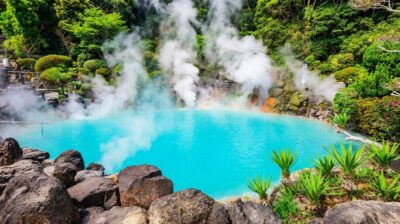
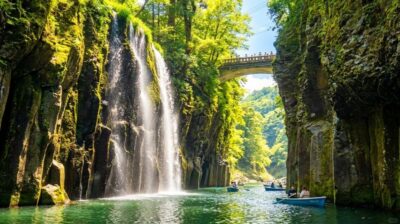
Kyushu One-Day Tour: Yufuin no Mori Train & Yufuin Town & Nyoirin-ji Temple & Dazaifu & Hell Hot Springs (Departing from Fukuoka)
Read our review →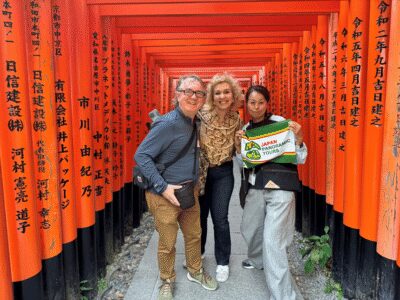
Fushimi Inari, Kinkakuji, Bamboo Grove 1 Day Bus Tour
Read our review →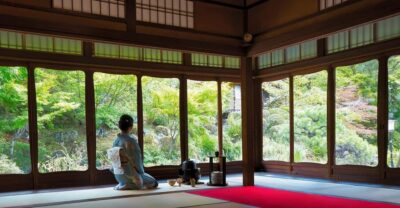
Tea Ceremony in a Traditional Tea House in Kiyomizu
Read our review →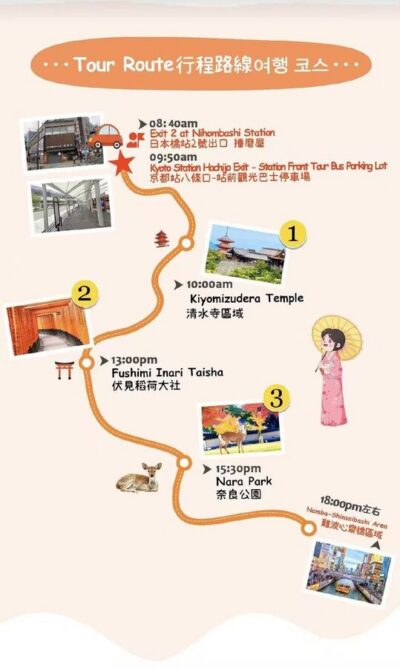
Kyoto Nara Day Trip │ Kiyomizu-dera Temple + Fushimi Inari-taisha Shrine + Nara Park (Departing from Osaka/Kyoto)
Read our review →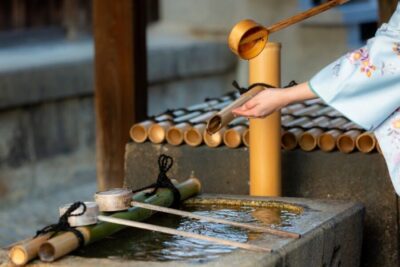
Browse the lists this tour appears in